
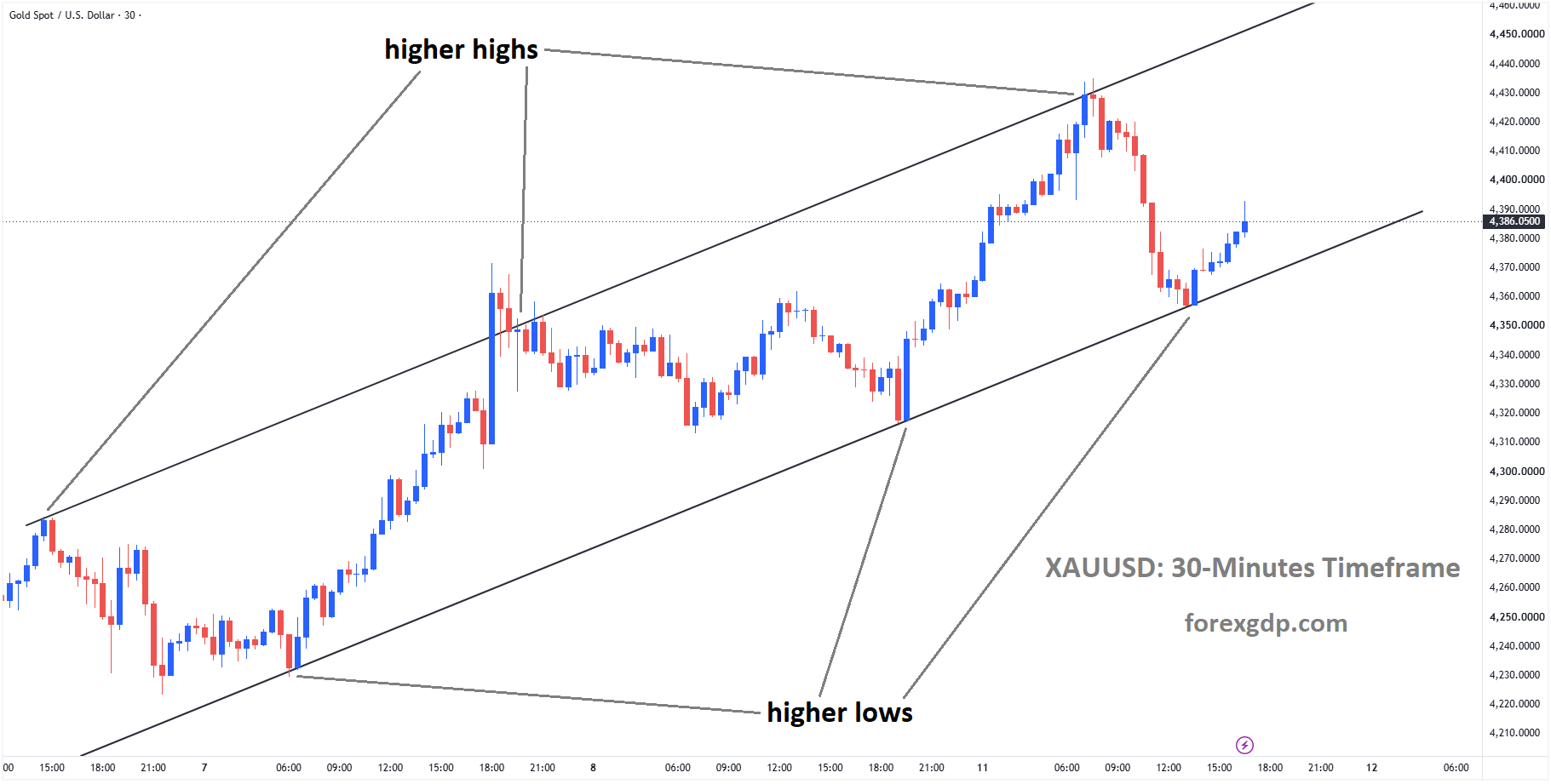
XAUUSD is moving in an ascending channel, and the market has rebounded from the higher low area of the channel
Gold lost some momentum on Tuesday after reaching its strongest level in two months during Asian trading. The precious metal remained broadly stable, but its earlier advance faded as investors weighed renewed inflation concerns, uncertainty surrounding the Strait of Hormuz, and changing expectations for US interest rates.
The latest pullback does not mean demand for gold has disappeared. Geopolitical tensions remain high, and ongoing disagreements between the United States and Iran continue to support interest in traditional safe-haven assets. However, the same conflict is also keeping oil costs elevated, creating fresh concerns about inflation and the possible response from the Federal Reserve.
This has placed gold in a complicated position. Political and military uncertainty can increase demand for the metal, but higher interest rates and a stronger US dollar can reduce its appeal. Investors are now waiting for upcoming US inflation data and watching diplomatic developments in the Middle East for clearer direction.
Strait of Hormuz Dispute Keeps Energy Markets on Edge
The future of the Strait of Hormuz remains one of the most important issues affecting global markets. The narrow waterway is a major route for international energy shipments, meaning any prolonged disruption could have serious consequences for oil supplies and transportation costs.
Iran has said it will not reopen the strait unless Washington agrees to pay war reparations and accepts several additional conditions. Tehran is also demanding the removal of sanctions, the release of frozen Iranian assets, an end to military threats, and the lifting of the US naval blockade.
These demands underline the deep divide between the two countries. They also suggest that a quick agreement may be difficult, even as regional governments continue to support diplomatic efforts.
US President Donald Trump has rejected Iran’s position and responded with a compensation demand of his own. In a post on Truth Social, Trump said the United States would seek payment from Iran for people it claims were killed or seriously injured by Iranian actions.
The competing demands have increased uncertainty over whether negotiations can produce a workable settlement. Until there is a credible agreement, concerns about the movement of oil through the Strait of Hormuz are likely to remain a major influence on energy markets.
Diplomatic Talks Show Signs of Progress
Despite the sharp disagreement between Washington and Tehran, there have been some encouraging diplomatic signals.
Qatar has reported that negotiations involving Iran and Oman have reached an advanced stage. Qatari officials also said they had received positive responses from both sides. Oman has often played an important role as a diplomatic bridge in regional disputes, making its involvement particularly significant.
Still, positive comments do not guarantee a final deal. Negotiations may be progressing, but the conditions presented by Iran cover sanctions, military policy, frozen funds, and compensation. Each of these issues could require difficult political decisions.
Markets are therefore likely to react quickly to any new statement from Iran, the United States, Qatar, or Oman. Clear evidence of an agreement could ease concerns about global oil supplies. On the other hand, delays or renewed threats could keep energy costs under pressure and strengthen demand for defensive assets.
For gold, the outcome is not straightforward. An improvement in diplomacy could reduce safe-haven buying. Yet it might also lower oil-related inflation concerns, weaken expectations for higher interest rates, and create a more supportive environment for the metal.
Rising Oil Costs Revive Inflation Concerns
Oil’s strong advance this week has brought inflation back to the center of investor attention.
Higher energy costs can affect the wider economy in several ways. Businesses may face larger transportation and production expenses, while households can experience increased fuel and utility bills. Companies often pass at least part of these higher costs on to consumers, which can make inflation more difficult to control.
This matters because the Federal Reserve bases its interest-rate decisions partly on whether inflation is moving toward a stable and sustainable level. If energy costs remain elevated for an extended period, policymakers may become more cautious about easing monetary policy.
Markets briefly reduced expectations for a Federal Reserve rate increase after the July US employment report came in weaker than anticipated. The softer Nonfarm Payrolls data suggested that the labor market may be losing some strength, which would normally reduce the need for tighter monetary policy.
However, the renewed rise in oil has complicated that outlook. Investors are once again considering the possibility that the Fed could raise borrowing costs at its September meeting if inflation pressures remain persistent.
Why Higher Interest Rates Create Challenges for Gold
Gold does not provide regular interest payments. As a result, it can face pressure when investors expect interest rates to stay high or rise further.
Higher rates can make interest-bearing assets, including government bonds, more attractive. They may also support the US dollar because global investors can seek dollar-based assets offering stronger returns. Since gold is commonly traded in dollars, a firmer US currency can make the metal more expensive for buyers using other currencies.
US Treasury yields have remained elevated, while the dollar has held above its recent lows. Together, these factors have limited gold’s ability to extend its recovery, even though geopolitical risks remain significant.
This creates a tug-of-war in the gold market. Safe-haven demand linked to the US-Iran conflict offers support, while concerns about tighter Federal Reserve policy work in the opposite direction.
The metal’s near-term path will likely depend on which force becomes more influential: fear surrounding the Middle East conflict or expectations that inflation will lead to higher US interest rates.
US Inflation Data Could Shape the Next Move
Investors are now preparing for the latest US Consumer Price Index report. The data will provide a clearer picture of how inflation behaved in July and could influence expectations ahead of the Federal Reserve’s September policy meeting.
A stronger-than-expected reading may increase concerns that inflation is becoming more persistent. That could reinforce the case for tighter monetary policy, support the dollar, and create additional pressure on gold.
A softer report could have the opposite effect. It may reduce the perceived need for a rate increase and allow investors to focus more heavily on geopolitical risk and safe-haven demand.
TD Securities expects a moderate rebound in July inflation but does not believe the report alone will be enough to push the Fed toward higher rates. The bank argues that some of the expected strength may simply reflect a reversal of unusually weak factors seen in June.
According to its assessment, policymakers may prefer to wait for August inflation figures before making a final decision at the September meeting. The Producer Price Index report will also be closely followed because it helps analysts estimate changes in the Personal Consumption Expenditures measure, which is an important inflation gauge for the Fed.
US-Iran Headlines Remain a Major Short-Term Driver
While inflation data will attract considerable attention, political developments may remain just as important.
Any announcement about reopening the Strait of Hormuz could quickly change the outlook for oil supplies, inflation expectations, and Federal Reserve policy. A diplomatic breakthrough may calm energy markets, while a breakdown in negotiations could increase fears of a prolonged disruption.
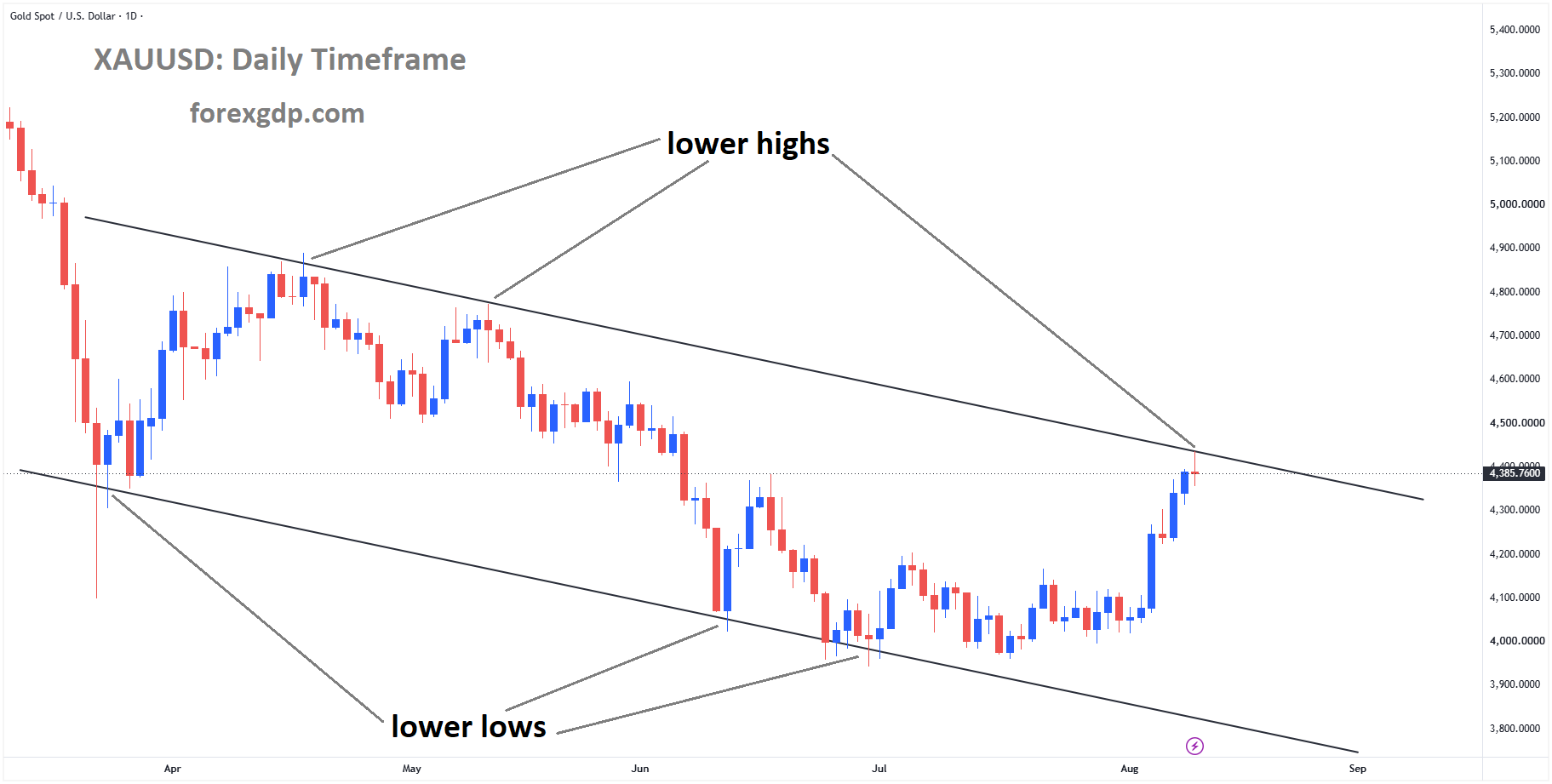
XAUUSD reached the lower high area of the descending channel
Gold is likely to remain sensitive to both sides of this story. Escalating tensions could strengthen its role as a safe haven, but another surge in energy costs could also increase expectations for tighter monetary policy.
Until investors receive clearer information, trading conditions may remain cautious and headline-driven.
Summary
Gold has stepped back after reaching a two-month high as rising oil costs revived concerns about inflation and a possible Federal Reserve rate increase. The dispute over the Strait of Hormuz continues to create uncertainty, with Iran and the United States making competing demands for compensation.
Diplomatic efforts involving Iran, Oman, and Qatar have reportedly made progress, but major political and economic disagreements remain unresolved. At the same time, elevated Treasury yields and a supported US dollar are making it harder for gold to build a stronger recovery.
The next US inflation reports will be important for expectations surrounding the Fed’s September decision. Until then, developments in US-Iran relations and negotiations over the Strait of Hormuz are likely to remain the main forces shaping sentiment toward gold.