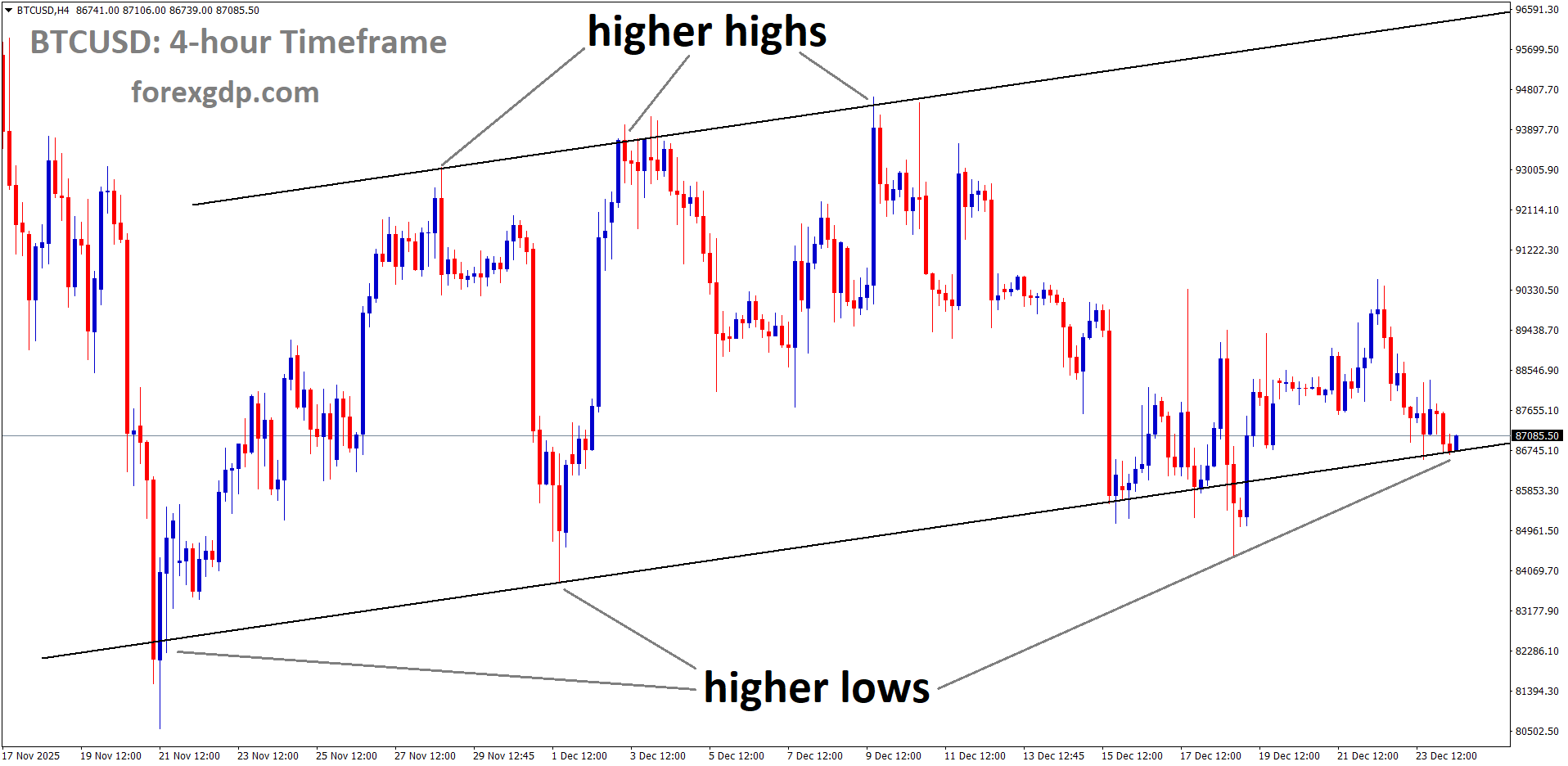
XAUUSD is moving in Ascendding channel, andthe market has reached a higher high area of the channel
Gold is back in the spotlight, climbing to new all-time highs for the third day in a row. On Wednesday, the precious metal kept its strong momentum during the European trading hours, supported by a mix of rising global uncertainty, renewed trade worries, and nervous market sentiment.
While the US Dollar showed a small bounce, it was not enough to slow gold’s bigger trend. Many investors continue to treat gold as a reliable shelter when confidence in financial markets starts to shake. With fresh political headlines and growing volatility across global assets, gold remains one of the biggest winners.
Why Gold Is Rising Again
Gold tends to perform best when people feel uncertain about the future. Right now, uncertainty is coming from several directions at once. Trade tensions are heating up again, political disagreements are growing louder, and investors are becoming more cautious with their money.
On Wednesday, one major trigger came from the United States. President Donald Trump warned about new tariffs that could affect several European countries. These nations reportedly opposed his plan related to Greenland, and the pushback has created fresh friction between the US and parts of Europe.
Any time tariffs enter the conversation, markets react quickly. Investors start to worry about higher costs, slower trade, and potential retaliation. That kind of fear often pushes money away from riskier assets and into traditional safe havens like gold.
Volatility is adding fuel to the move
Another reason gold is gaining strength is the rise in volatility. When markets become unstable, investors often look for something that can hold value during sudden swings. Gold has historically played that role, especially during periods of global tension.
As volatility rises, gold demand often rises with it. This pattern is showing up again as traders react to new geopolitical headlines and uncertainty about what could happen next.
Trade Frictions and the Greenland Dispute Shake Investor Confidence
The situation involving Greenland has become more than just a political debate. It is now influencing global markets, raising questions about alliances, and increasing uncertainty around international cooperation.

President Trump said there is “no going back” on his plan to acquire Greenland, pointing to security concerns in the Arctic region. He also argued that Denmark is not able to protect Greenland well enough. These comments have stirred strong reactions across Europe and added tension to relationships that are already strained.
French President Emmanuel Macron responded by emphasizing that respect and cooperation should define relationships between allies, rather than pressure or threats.
This type of disagreement matters to investors because it signals instability between major global powers. When trust between allies weakens, markets tend to assume that more conflict could follow—whether through economic action, political standoffs, or changes in global strategy.
Rising bond yields are also supporting gold
In addition to the political tension, global bond markets have been reacting sharply. A sudden jump in bond yields has added another layer of stress for investors.
When yields move quickly, it can unsettle markets and trigger broader risk-off behavior. That means investors may pull back from stocks and other higher-risk assets, increasing demand for safer choices like gold.
Gold benefits from this kind of environment because it is seen as a store of value during unstable periods.
The “Sell America” Trend and What It Means for Gold
One of the biggest themes supporting gold right now is what many traders call the “Sell America” trade. This phrase refers to investors reducing their exposure to US assets, including the US Dollar, due to concerns about political uncertainty, trade disputes, and long-term financial stability.
When the US Dollar weakens, gold often becomes more attractive. That’s because gold is priced in dollars, so a softer dollar can make gold cheaper for international buyers, increasing demand.
Even though the Dollar showed a small rebound on Wednesday, many traders believe that the bigger trend still limits any meaningful recovery. With the “Sell America” mood still present, gold continues to look supported.
De-dollarization fears are growing
Another important factor is the ongoing discussion around de-dollarization. Some countries and investors have been exploring ways to reduce their reliance on the US Dollar in global trade and reserves.
This trend doesn’t happen overnight, but even the idea of it can influence market behavior. When investors think the dollar could lose influence over time, they often look for alternative stores of value. Gold is one of the most common choices because it is not tied to any single government or central bank.
That long-term narrative is adding strength to gold’s current rally.
Why the US Dollar Isn’t Helping Much
Normally, a stronger US Dollar can put pressure on gold. That’s because gold does not offer interest or yield, and a rising dollar can make it less attractive compared to cash or bonds.
On Wednesday, the Dollar did rise slightly, which helped keep gold below the $4,900 level during part of the session. Still, that move was modest and did not change the overall tone.
One reason the Dollar is struggling is the uncertainty created by trade threats and global tension. Investors don’t like unclear outcomes, and the current headlines have made the outlook harder to predict.
Changing expectations around interest rates
There is also a shift happening in how traders view future US interest rate cuts. Some investors have trimmed expectations for multiple rate cuts in 2026, especially after Trump signaled he would prefer to keep National Economic Council director Kevin Hassett in his current position.
Normally, fewer rate cuts could support the Dollar. But in this case, the broader uncertainty appears to be outweighing any benefit. Many traders still see the bigger picture as negative for the Dollar, which keeps gold supported.
What Investors Are Watching Next
Even though gold has been moving higher, markets are not just reacting to politics. Economic data still matters, and traders are preparing for key updates that could influence both the US Dollar and gold.
The next major event on the calendar is the release of the US Personal Consumption Expenditure (PCE) Price Index on Thursday. This report is closely watched because it is one of the Federal Reserve’s preferred measures of inflation.
Alongside the PCE report, investors will also see the final US Q3 GDP growth report. Together, these updates could help shape expectations about future Federal Reserve policy.
If inflation appears sticky or economic growth remains strong, the Fed may feel less pressure to cut rates quickly. On the other hand, weaker data could revive expectations for easier policy, which would typically support gold.
Gold remains strong even with short-term caution
It’s also worth noting that gold is showing signs of being overbought in the short term. This simply means it has risen very quickly in a short amount of time, and some traders may expect small pullbacks.
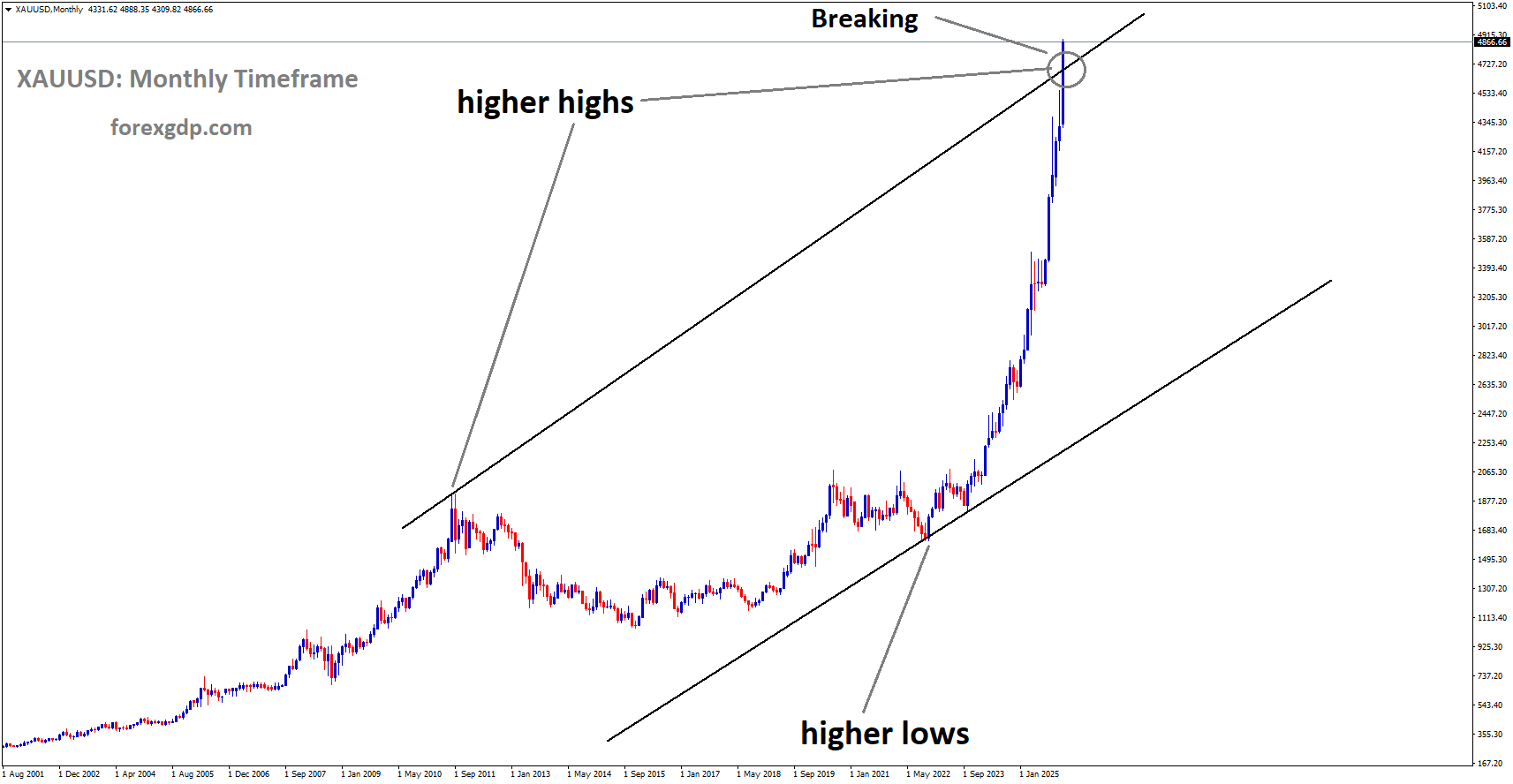
XAUUSD is breaking the higher high area of the uptrend channel
However, the current mood suggests that any dips could attract new buyers rather than trigger a major reversal. The underlying drivers—trade fears, geopolitical risk, and a cautious market tone—are still in place.
As long as uncertainty remains high, gold is likely to stay in demand.
Final Summary
Gold has reached new record highs for a third straight day as investors react to rising trade tensions, political uncertainty, and increased market volatility. Tariff threats tied to the Greenland dispute have strained US-European relations and pushed traders toward safer assets. At the same time, the “Sell America” trend and growing de-dollarization concerns are limiting US Dollar strength, giving gold even more support. With key US inflation and growth data arriving soon, markets are watching closely—but for now, gold remains firmly favored in a risk-off environment.