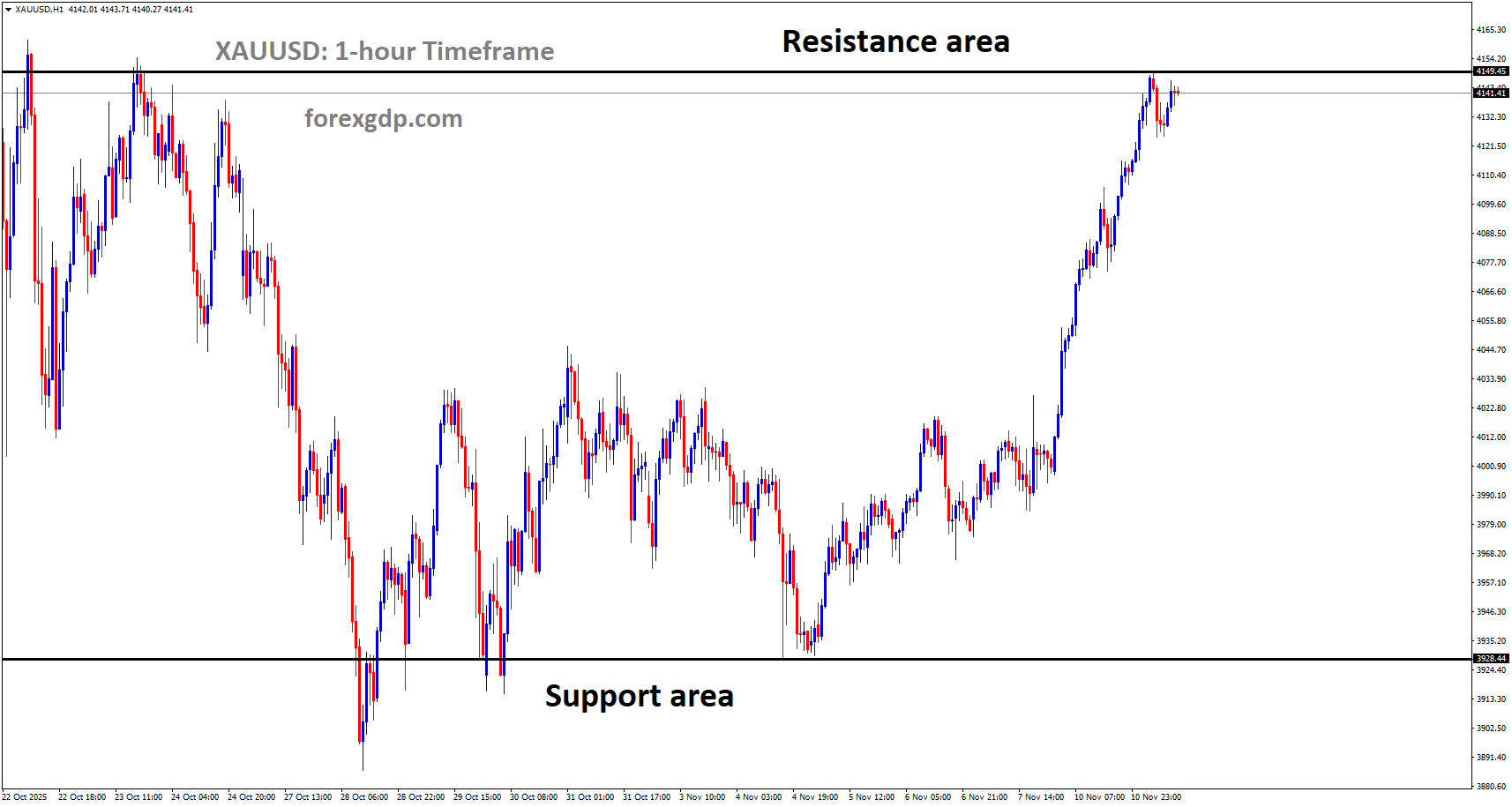
XAUUSD is moving in a box pattern, and the market has reached the resistance area of the pattern
Gold has once again found itself in the spotlight, gaining steady momentum as global investors turn their attention toward economic uncertainty in the United States. With growing concerns about the prolonged U.S. government shutdown and expectations of another Federal Reserve rate cut, the yellow metal continues to attract investors looking for safety. Let’s dive deep into what’s driving this renewed interest in gold, why it’s becoming the preferred safe-haven asset once again, and what factors could shape its future direction.
Why Gold Is Back in Demand
Gold’s recent strength isn’t just a coincidence—it’s the result of a perfect mix of economic uncertainty, monetary policy expectations, and investor sentiment. Let’s break it down.
1. Growing Concerns Over the U.S. Economy
The United States has been facing serious economic headwinds, largely due to the ongoing government shutdown. The prolonged closure, which has stretched on longer than any previous shutdown in history, has raised concerns about its impact on economic activity. When the government shuts down, public services pause, federal workers remain unpaid, and economic data releases get delayed. All of this creates a fog of uncertainty that investors naturally want to avoid.
In such times, gold becomes a preferred choice because it holds its value even when other markets look shaky. Investors see it as a shield against economic turbulence, and right now, that’s exactly what they’re looking for.
2. Anticipation of More Rate Cuts by the Federal Reserve
One of the most influential factors supporting gold prices right now is the growing belief that the Federal Reserve will continue cutting interest rates. The market is already pricing in another potential rate cut in December. According to data from the CME Group’s FedWatch Tool, there’s more than a 60% chance that the Fed will lower rates again soon.
Rate cuts generally make gold more attractive because lower interest rates reduce the opportunity cost of holding non-yielding assets like gold. In simpler terms, when savings accounts or bonds offer lower returns, investors tend to shift towards assets like gold that preserve value rather than generate income.
This dovish outlook from the Fed has been a strong tailwind for the yellow metal, keeping bullish sentiment alive despite occasional pullbacks.
Economic Indicators Fueling the Gold Rally
The signs of economic strain in the U.S. are becoming increasingly clear. One key indicator, the University of Michigan’s Consumer Sentiment Index, fell sharply in November to its lowest level since mid-2022. This drop highlights how consumer confidence is weakening amid the ongoing government closure and uncertainty about future growth.
Low consumer confidence typically signals slower spending and reduced business optimism—factors that can drag down overall economic performance. As fears of a slowdown rise, gold naturally benefits as investors look for stability and security in volatile times.
Moreover, with many investors expecting delayed economic data releases due to the shutdown, the lack of clear information adds another layer of uncertainty. When people can’t accurately gauge the health of the economy, they often turn to gold as a safer bet.
The Market Mood: Risk Appetite vs. Safe-Haven Demand
Interestingly, even though there’s some optimism in the broader financial markets due to talks of reopening the U.S. government, gold’s bullish tone remains intact. Investors appear cautious, aware that temporary optimism can fade quickly if underlying economic problems persist.
The Role of the U.S. Dollar
Typically, gold and the U.S. dollar move in opposite directions—when the dollar strengthens, gold tends to weaken, and vice versa. However, in the current scenario, even a modest rise in the dollar hasn’t been enough to weigh down gold’s momentum. That’s because rate cut expectations continue to limit the dollar’s potential upside, leaving room for gold to shine.
A Cautious Market Environment
The overall trading activity has been somewhat subdued due to a U.S. bank holiday, which means thinner market volumes and less aggressive positioning. However, the underlying tone remains positive for gold. Investors seem willing to hold onto their bullish outlook, waiting for more clarity from the Federal Reserve’s upcoming statements and economic speeches.
With Veterans Day observed in the U.S., markets are in a holding pattern, but all eyes are now on what Fed officials will signal next about monetary policy. Any indication of a softer stance could give gold another strong push upward.
Why Investors Are Sticking With Gold
So, what makes gold such a consistent favorite during uncertain times? It’s not just tradition—it’s about trust and long-term value preservation.

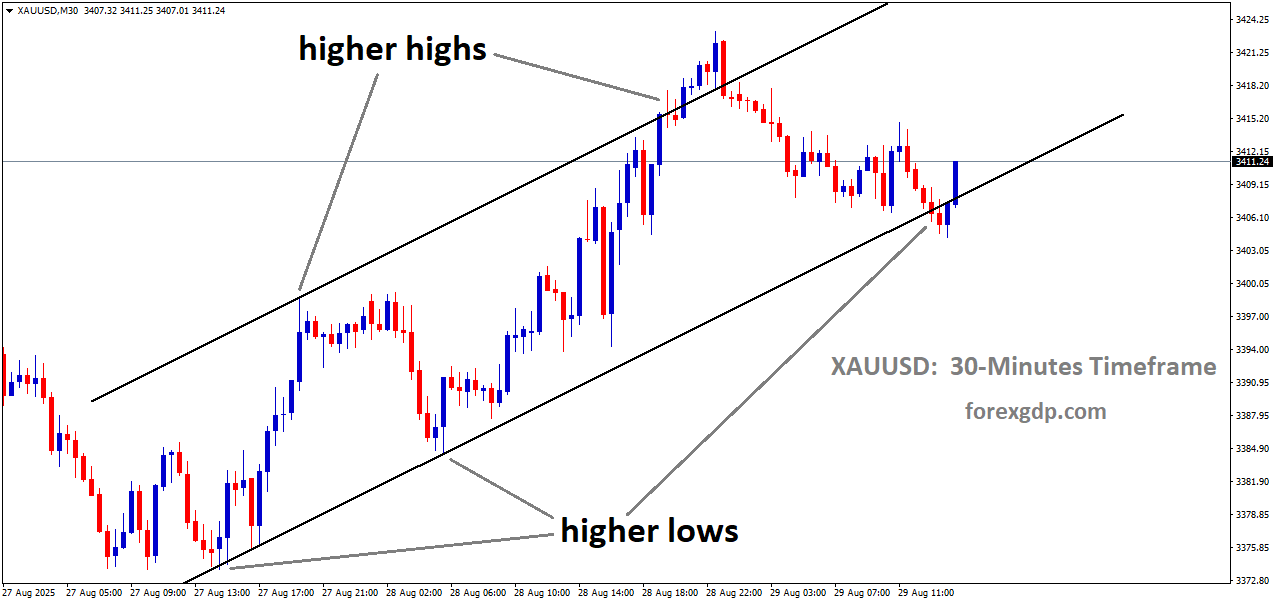
XAUUSD is moving in an uptrend channel, and the market has reached a higher high area of the channel
-
Protection Against Inflation and Weak Currency:
When central banks cut interest rates, currencies can lose value, and inflation often follows. Gold acts as a hedge against both, holding its purchasing power even when fiat currencies weaken. -
Safe Haven During Crises:
Whether it’s a financial crash, geopolitical tension, or a government shutdown, gold’s reputation as a safe-haven asset makes it an essential part of any diversified investment portfolio. -
Limited Supply and Global Demand:
Unlike paper money, gold cannot be printed. Its scarcity adds to its long-term appeal, especially when global uncertainty rises. -
Investor Psychology:
During volatile times, investors prefer something tangible. Gold provides that sense of security—something physical that can be held, stored, and traded universally.
The Road Ahead for Gold
The coming weeks could be critical in determining how gold performs next. Much depends on how the Federal Reserve responds to growing concerns about slowing growth and weak consumer sentiment. If the Fed continues to signal more rate cuts, gold could remain in demand well into the next quarter.
On the other hand, if government operations resume smoothly and economic data show signs of recovery, investors might temporarily shift towards riskier assets. However, given the broader uncertainty, it’s unlikely that gold’s appeal will fade anytime soon.
Investors will be watching the upcoming speeches from key Fed officials closely. Any dovish remarks—indicating a willingness to ease monetary policy further—could strengthen gold’s upward trend. Conversely, a more neutral or hawkish tone might trigger short-term corrections, but the underlying bullish foundation remains solid.
Final Summary
Gold’s current strength is built on more than just short-term speculation—it’s backed by a mix of economic caution, dovish monetary policy expectations, and shaken consumer confidence. With the U.S. government shutdown casting a long shadow over the economy and the Federal Reserve likely to adopt a more accommodative stance, the yellow metal stands well-positioned to benefit from ongoing uncertainty.
Even if temporary optimism or a stronger dollar creates minor pullbacks, the overall outlook for gold remains favorable. Investors around the world continue to view it as a reliable store of value—a timeless asset that thrives when the world’s economic picture grows cloudy.
In uncertain times like these, gold isn’t just a shiny metal—it’s a symbol of security, trust, and resilience.