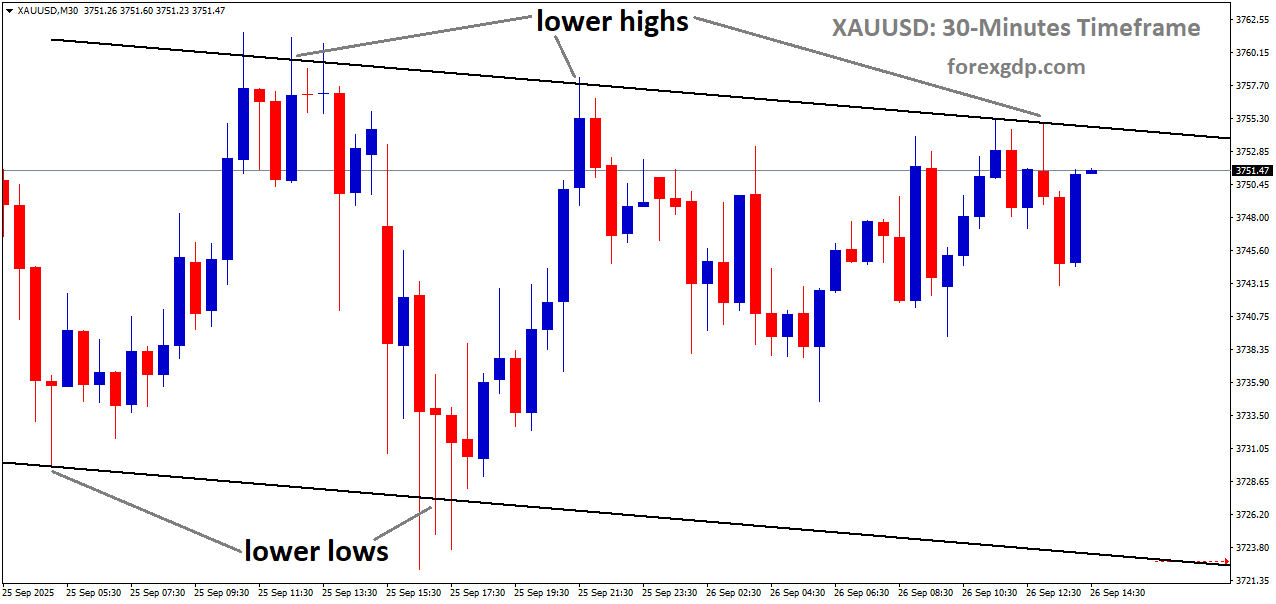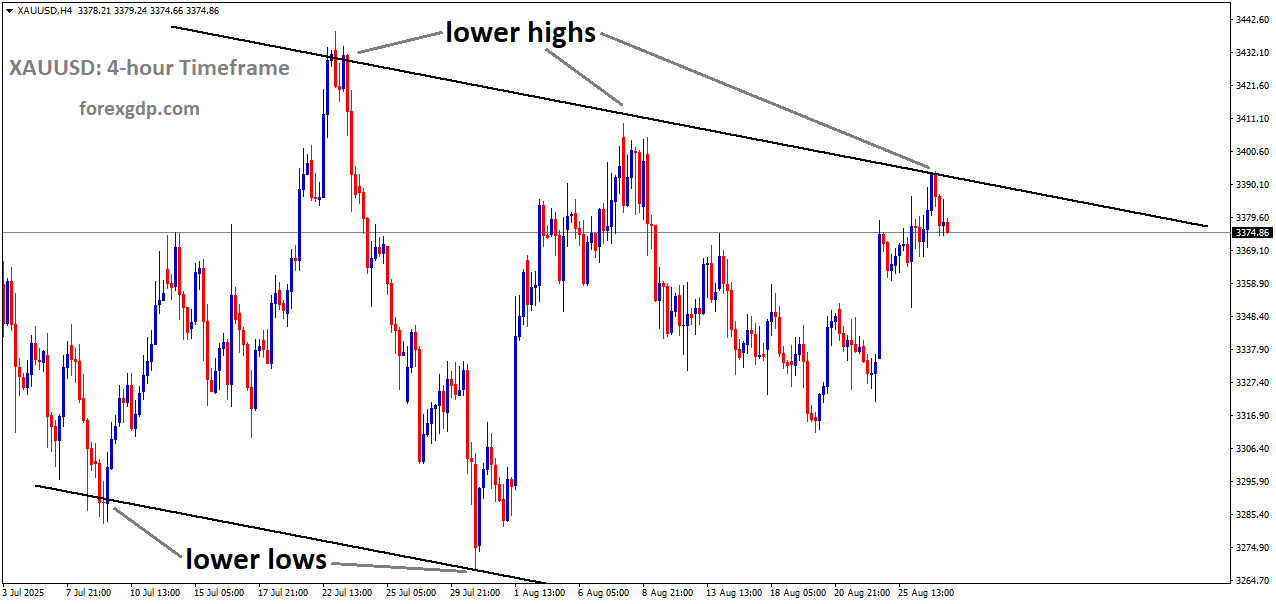

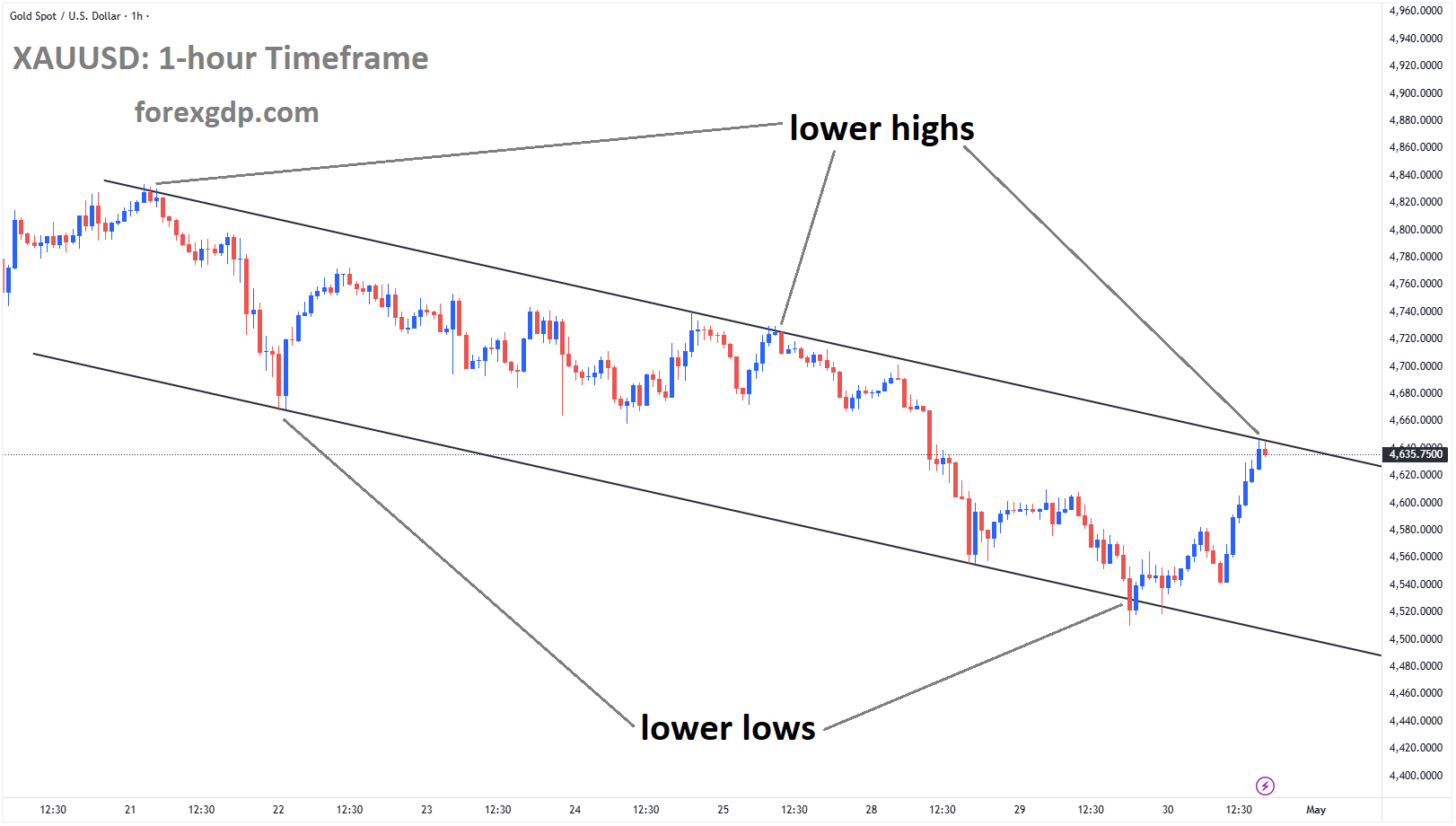
XAUUSD is moving in a descending channel, and the market has reached the lower high area of the channel
Gold has started to regain some strength after a recent dip, attracting fresh buying interest in the market. This rebound comes at a time when the US Dollar remains firm, and global economic and political factors continue to influence investor sentiment. While gold is showing some upward movement, several underlying forces may limit how far it can rise in the near term.
Gold Finds Support After Recent Decline
After falling to its lowest level in a month, gold prices have bounced back and moved closer to the $4,600 mark during early trading hours in Europe. This recovery suggests that some investors are stepping back into the market, seeing value in gold after its recent drop.
One of the key reasons behind this recovery is the current behavior of the US Dollar. After reaching its highest level in weeks, the dollar has entered a phase of consolidation. This means it is holding steady rather than continuing to rise sharply. A stable dollar often gives gold some breathing room, allowing prices to recover slightly.
However, the relationship between gold and the US Dollar remains complex. Since gold does not offer interest or yield, it often struggles to compete when the dollar is strong. This dynamic continues to play a major role in shaping gold’s overall direction.
Federal Reserve Policy Shapes Market Expectations
The recent decision by the US Federal Reserve has added another layer of influence to the gold market. As expected, the central bank chose to keep interest rates unchanged. While this decision was widely anticipated, what stood out was the level of disagreement among policymakers.
There were multiple dissenting votes, marking the highest level of internal disagreement in decades. Some officials felt the policy statement was too soft, while one member even supported a rate cut. Despite these differences, the overall message from the Federal Reserve leaned toward caution.
During the press conference, Federal Reserve Chair Jerome Powell explained that the discussion was more about how to present the policy stance rather than whether to raise rates immediately. Even so, the market reacted by adjusting its expectations.
Traders have now reduced their expectations for future rate cuts and are beginning to consider the possibility of a rate increase later in the year. This shift in outlook supports the US Dollar and creates pressure on gold, as higher interest rates tend to make non-yielding assets like gold less attractive.
Rising Energy Prices Add to Inflation Concerns
Another major factor influencing gold is the ongoing rise in energy prices. Crude oil prices have been climbing, largely due to geopolitical tensions and supply disruptions. Higher energy costs often lead to increased inflation, which can impact both the economy and financial markets.
In theory, gold is often seen as a hedge against inflation. When prices rise, investors sometimes turn to gold to protect their purchasing power. However, the current situation is more complicated.
Why Inflation Isn’t Fully Supporting Gold

Even though inflation concerns are growing, the response from central banks plays a crucial role. If inflation remains high, central banks may keep interest rates elevated or even raise them further. This strengthens the currency and reduces the appeal of gold.
So, while rising oil prices are adding to inflation fears, they are also supporting expectations of tighter monetary policy. This creates a mixed environment for gold, limiting its ability to move significantly higher.
Geopolitical Tensions Keep Markets on Edge
The ongoing tensions between the United States and Iran are another important factor shaping the market. Peace talks between the two countries have stalled, and recent developments suggest that a resolution may not come soon.
The US government has rejected a proposal from Iran aimed at ending the conflict. At the same time, strong statements from US leadership indicate that any agreement would require major concessions from Iran, particularly regarding its nuclear program.
Impact on Global Energy Supply
The situation has also affected global energy supply routes. A naval blockade of Iranian ports is disrupting the flow of oil through the Strait of Hormuz, one of the world’s most important shipping lanes. These disruptions are contributing to higher energy prices and increasing uncertainty in global markets.
In times of geopolitical tension, the US Dollar often benefits because of its status as a global reserve currency. Investors tend to move their money into the dollar during uncertain times, seeking safety and stability. This shift strengthens the dollar and makes it harder for gold to gain momentum.
Gold Faces Mixed Signals from the Market
At the moment, gold is navigating a mix of supportive and limiting factors. On one hand, the recent price recovery shows that buyers are still interested in the metal, especially after its decline. On the other hand, strong support for the US Dollar and expectations of higher interest rates continue to act as barriers.
The current environment highlights the delicate balance in the gold market. Small changes in economic data or global events can quickly shift investor sentiment in either direction.
Key Economic Events to Watch
Looking ahead, several important economic updates could influence the direction of gold and the broader financial markets.
US Economic Data
Investors are closely watching upcoming reports such as the Advance GDP data for the first quarter and the Personal Consumption Expenditures (PCE) Price Index. These reports provide insights into economic growth and inflation trends in the United States.

XAUUSD is moving in an ascending channel, and the market has fallen from the higher high area of the channel
Stronger-than-expected data could reinforce the idea that the economy remains resilient, which may support the US Dollar. On the other hand, weaker data could raise concerns and potentially give gold more room to rise.
Central Bank Decisions
In addition to US data, policy updates from the Bank of England and the European Central Bank are also in focus. These decisions can influence global currency movements and overall market sentiment.
Changes in interest rate policies or economic outlooks from these central banks may create volatility in the markets, indirectly affecting gold prices.
Summary
Gold has managed to recover slightly after hitting a recent low, supported by a pause in the US Dollar’s upward movement. However, the broader environment remains challenging for sustained gains. A strong dollar, cautious signals from the Federal Reserve, rising energy prices, and ongoing geopolitical tensions are all shaping the market.
While gold continues to attract interest during periods of uncertainty, its path forward is far from clear. Investors are now turning their attention to key economic data and central bank decisions, which are likely to determine the next phase for gold and global financial markets.