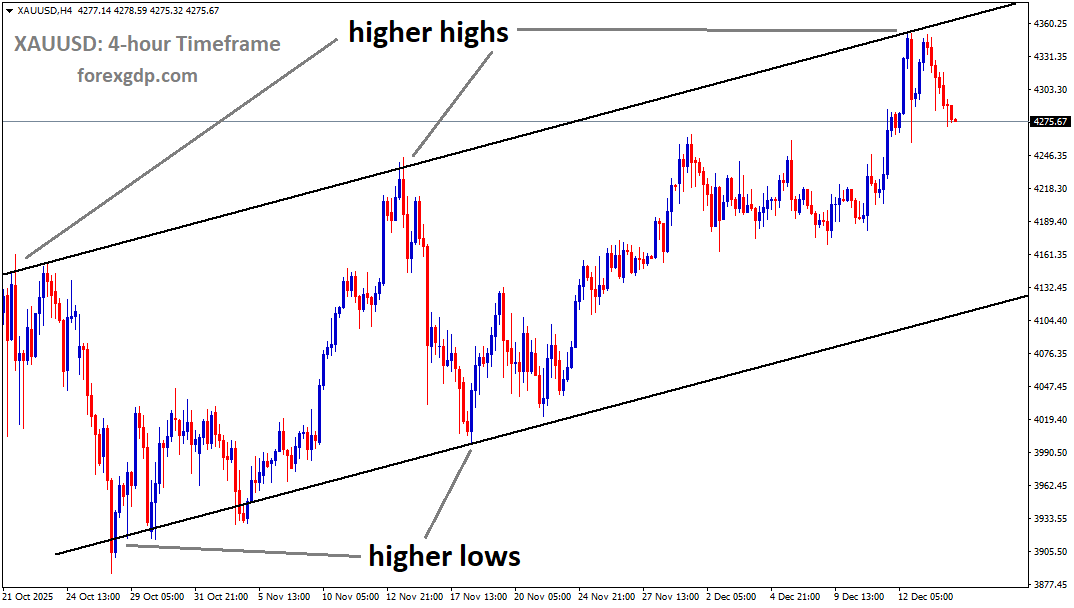
XAUUSD is moving in an uptrend channel, and the market has fallen from the higher high area of the channel
Gold (XAU/USD) started Tuesday on a softer note in early European trading, drifting below the $4,300 area. The move wasn’t driven by one big shock. Instead, it looks like a mix of normal profit-taking, some futures traders stepping away from earlier bullish bets, and a noticeable lift in optimism around Ukraine peace efforts.
Gold often shines when investors feel nervous. So when the mood turns even slightly more hopeful—especially around major global conflicts—demand for safe-haven assets can cool down. At the same time, the outlook for US interest rates remains a key force in the background, and it’s adding another layer of push-and-pull for the market.
Why Gold Is Pulling Back Right Now
One of the simplest reasons gold is losing ground is that traders are taking profits after recent gains. When an asset has been moving higher, it’s common to see short-term traders lock in returns, especially in futures markets where positions can change quickly. That kind of activity can create short bursts of selling pressure, even if the bigger picture still looks supportive.
Another factor weighing on gold is improving sentiment around Ukraine peace talks. Reports on Monday suggested that a deal aimed at ending the war with Russia could be close, even though major issues—such as territorial disagreements and the shape of long-term security guarantees—still need to be resolved. Markets don’t require perfection to react; even the idea that progress is being made can reduce the urgency to hold defensive assets like gold.
Gold is not just a “fear trade,” but fear does play a role. When risk appetite rises, money often rotates into assets that are seen as more growth-linked, and away from traditional shelters.
Interest Rates Still Matter, and the Fed Is in Focus
Even with Tuesday’s dip, gold isn’t necessarily set up for a deep slide. A major reason: the US Federal Reserve has already moved toward lower interest rates. The Fed delivered its third rate cut of the year last week and also signaled the possibility of additional reductions in 2026.
That matters because gold doesn’t pay interest. When rates are high, investors can earn attractive returns from cash-like assets and bonds, making gold comparatively less appealing. When rates fall, that “opportunity cost” drops, which can make gold more attractive again—especially for longer-term holders who care about preserving value over time.
Still, the Fed’s messaging has been cautious. According to the Fed’s Summary of Economic Projections (often called the “dot plot”), the median forecast points to only one 25-basis-point rate cut by the end of 2026. That is a more restrained path than many traders had expected. It also explains why gold can struggle to build momentum on days when the market shifts back toward a “rates may stay higher for longer” mindset.
A Gap Between Fed Projections and Market Expectations
Here’s where things get interesting. While the dot plot suggests only one cut by the end of 2026, financial markets have been leaning toward at least two cuts over that same period. This difference creates ongoing uncertainty—and uncertainty tends to keep markets choppy.
Right now, Fed funds futures are also showing a strong expectation that the central bank will keep rates unchanged at its January meeting. According to the CME Group’s FedWatch tool, markets are pricing in roughly a 75.6% chance of a hold, which hasn’t changed much from the previous day.
In other words, traders are not expecting an immediate rush of rate cuts. But they also aren’t ruling out easing later on, depending on how the economy performs.
The Data Calendar: Jobs, Spending, and Business Activity
This week’s US economic data could play a big role in where gold heads next. A temporary US government shutdown delayed the release of several key reports, and those numbers are expected later on Tuesday. When data is delayed and then dropped in a cluster, markets can react more sharply because investors are trying to catch up all at once.
Nonfarm Payrolls Could Set the Tone
The main event is the US Nonfarm Payrolls (NFP) report. This is one of the most watched indicators in global markets because it provides a clear snapshot of the labor market. The Fed cares deeply about employment, and changes in hiring trends can influence how quickly the central bank is willing to cut rates.
-
If the NFP report shows a clear slowdown in job growth, markets may lean more strongly toward future rate cuts. That could support gold.
-
If hiring looks resilient and wages stay firm, expectations for rate cuts could cool, which may weigh on gold.
Retail Sales and PMI Also Matter
Two other releases are also on the radar: US Retail Sales and Purchasing Managers Index (PMI) data.
-
Retail Sales offer clues about consumer strength, which is a big driver of overall economic growth in the United States.
-
PMI readings help investors gauge how businesses are performing, often giving early signals about expansion or slowdown.
Together, these reports can shape expectations about whether the US economy is cooling smoothly, stalling, or staying strong. For gold, the “sweet spot” is often when growth is slowing enough to push the Fed toward rate cuts, but not collapsing in a way that triggers disorderly market stress.
What Fed Officials Are Signaling
Recent comments from Fed officials suggest a mix of confidence and caution.
New York Fed President John Williams said monetary policy is in a good place heading into next year after last week’s rate reduction, while also noting elevated risks to employment and somewhat lower inflation risks. That kind of message can be read two ways: the Fed isn’t panicking, but it is watching the job market carefully.
Meanwhile, Fed Governor Stephen Miran repeated his view that policy remains overly restrictive. He also indicated he is likely to remain at the central bank after his term expires until a replacement is confirmed. While personnel details aren’t usually a direct market driver, investors pay attention when policymakers speak consistently about policy being “too tight,” because it can keep the idea of further easing alive.
Ukraine Peace Developments and Safe-Haven Demand
Geopolitics can shift gold sentiment quickly, and Ukraine remains a major focus. Reports indicate that discussions toward ending the war may be nearing an agreement, but key challenges remain unresolved—especially around territorial questions and credible security guarantees from the US and Europe.
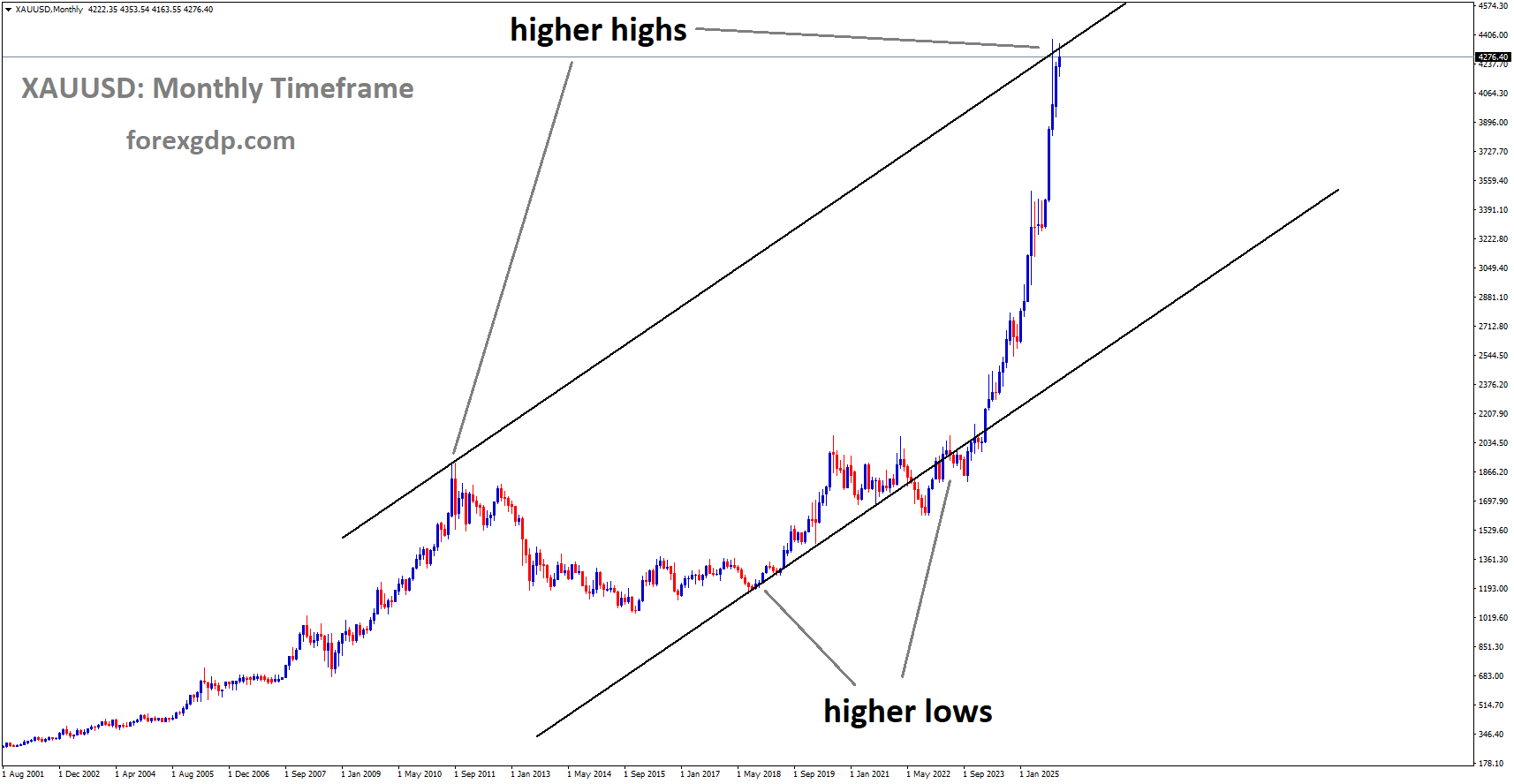
XAUUSD is moving in an Ascending channel, and the market has reached a higher high area of the channel
For gold, this kind of story creates a tug-of-war:
-
If optimism grows, safe-haven demand can fade, and gold may struggle to rally.
-
If talks stall or tensions rise again, investors often return to gold as a hedge against uncertainty.
Markets tend to react not just to outcomes, but to momentum—whether the news flow feels like it’s moving toward stability or back toward risk.
Summary
Gold softened in early European trading on Tuesday, slipping below $4,300 as short-term profit-taking met a more optimistic tone around Ukraine peace efforts. At the same time, the US interest-rate outlook continues to pull gold in both directions: lower rates can support a non-yielding asset like gold, but the Fed’s projections point to a slower pace of cuts than many traders expect. With delayed US data—especially the Nonfarm Payrolls report—due later Tuesday, fresh signals on jobs, consumer spending, and business activity could quickly reshape rate expectations and set the next move for gold.