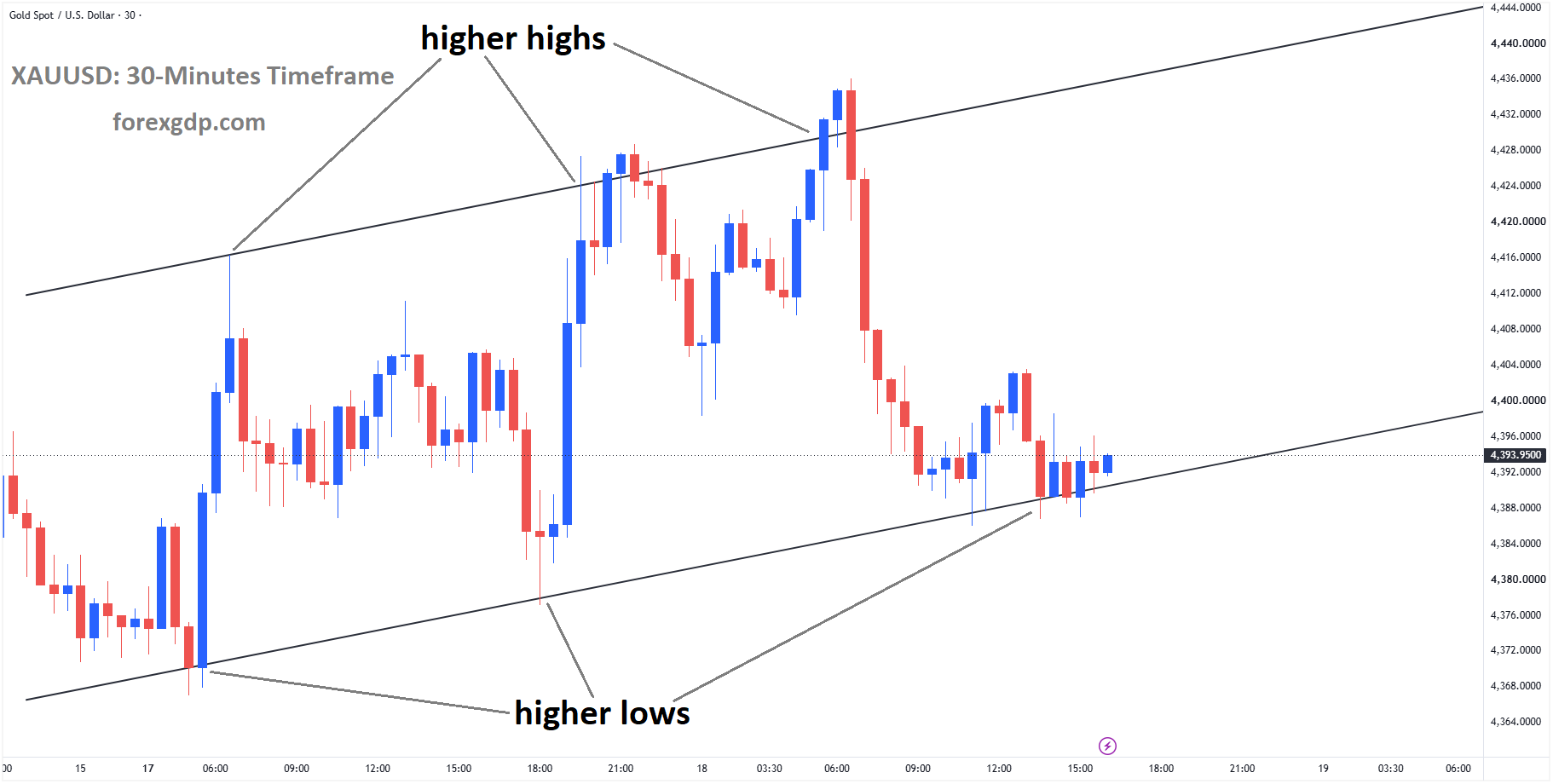
XAUUSD reached the higher low area of the ascending channel
Gold moved lower on Tuesday, ending a two-day period of gains as rising US Treasury yields and a stronger US Dollar reduced demand for the precious metal. The pullback came during a wider sell-off in global government bonds, driven by renewed concerns about inflation, energy costs, and public finances.
Despite the latest decline, gold remains supported by growing doubts that the Federal Reserve will raise interest rates at its next policy meeting. Recent US economic reports have shown weakness in employment and consumer spending, while inflation data has also been softer than expected. These developments have encouraged investors to lower their expectations for an immediate rate increase.
Gold is therefore caught between two powerful forces. Higher bond yields and Dollar strength are creating pressure, while a less aggressive Federal Reserve outlook is helping to limit deeper losses.
Rising Treasury Yields Put Pressure on Gold
One of the main reasons behind gold’s decline is the sharp rise in long-term US Treasury yields. Government bond yields have climbed as investors demand greater returns for lending money over longer periods.
This environment is generally difficult for gold because the metal does not pay interest. When government bonds offer higher returns, some investors may prefer income-generating assets instead of holding gold. This increases what economists call the opportunity cost of owning a non-yielding asset.
The rise in borrowing costs is not limited to the United States. Long-term bond yields have also increased in the United Kingdom, Germany, and Japan. In several cases, borrowing costs have reached levels not seen for many years.
The global nature of the bond sell-off suggests that investors are responding to a shared set of concerns. These include the possibility of renewed inflation, growing government debt, and uncertainty about how central banks will manage interest rates in the months ahead.
Higher borrowing costs can also affect businesses, households, and governments. Companies may face more expensive loans, consumers may pay more for mortgages and credit, and governments may have to spend a larger share of their budgets on debt payments.
Oil Supply Concerns Add to Inflation Fears

Energy markets have become another important factor for gold and global bonds. Oil supply concerns have increased as tensions between the United States and Iran continue, particularly around the Strait of Hormuz.
The waterway is one of the world’s most important routes for energy shipments. Any threat to the movement of oil through the area can raise concerns about global supply. When traders fear that deliveries could be disrupted, energy costs often rise.
The latest political tension followed the expiration of a memorandum of understanding between Washington and Tehran. US President Donald Trump said the United States was not seeking to extend the agreement, adding to uncertainty surrounding future relations between the two countries.
Strategists at Brown Brothers Harriman have noted that renewed strength in crude oil is contributing to higher bond yields and weaker risk sentiment. More expensive energy can feed into transportation, manufacturing, and household costs, making inflation more difficult to control.
It can also worsen government finances. If policymakers respond to rising energy costs with subsidies, tax relief, or additional spending, public debt concerns may increase. Bond investors may then demand higher returns, pushing long-term yields even further upward.
Gold is often viewed as protection against inflation and political uncertainty. However, its immediate response can be mixed when inflation fears also lead to higher bond yields and expectations of tighter monetary policy.
Stronger US Dollar Limits Gold Demand
The US Dollar has also recovered after recently falling to its weakest point in several weeks. Because gold is usually valued in Dollars, a stronger US currency can make the metal more expensive for buyers using other currencies.
This relationship does not always move in a perfect opposite direction, but Dollar strength often creates short-term pressure on gold. The latest rebound in the Greenback has therefore added to the negative effect of rising Treasury yields.
However, Brown Brothers Harriman believes that further Dollar gains may remain limited. The firm argues that investors could continue moving toward a more cautious view of Federal Reserve policy. If markets increasingly expect the central bank to avoid raising rates, the Dollar may struggle to hold strong rebounds.
This could provide indirect support for gold. A weaker or less dominant Dollar would make the precious metal more accessible to international buyers and could improve demand from investors looking for protection against political and economic uncertainty.
Federal Reserve Expectations Offer Support
Higher oil costs have kept the possibility of another Federal Reserve rate increase in the discussion. If energy-driven inflation becomes more persistent, policymakers may feel pressure to maintain restrictive borrowing conditions or consider further action.
At the same time, other parts of the US economy are showing signs of losing momentum. Employment figures have weakened, consumer spending has slowed, and recent inflation readings have been relatively soft. Together, these signals have reduced confidence that the central bank will raise rates at its September meeting.
Financial markets now lean toward the Federal Reserve leaving borrowing costs unchanged next month. This shift in expectations is important for gold because the metal usually benefits when investors believe interest rates have reached their peak or are unlikely to rise further.
A pause would not necessarily mean that rate cuts are coming soon. Federal Reserve officials may still want to wait for more evidence that inflation is under control. Even so, the reduced risk of an immediate increase helps balance the pressure created by higher long-term bond yields.
FOMC Minutes and Middle East Developments Take Focus
The US economic calendar is relatively quiet this week, which may leave gold more sensitive to central bank communication and geopolitical news.
The main scheduled event is the release of the Federal Open Market Committee meeting minutes on Wednesday. Investors will examine the document for details about how policymakers view inflation, employment, consumer demand, and the impact of higher energy costs.
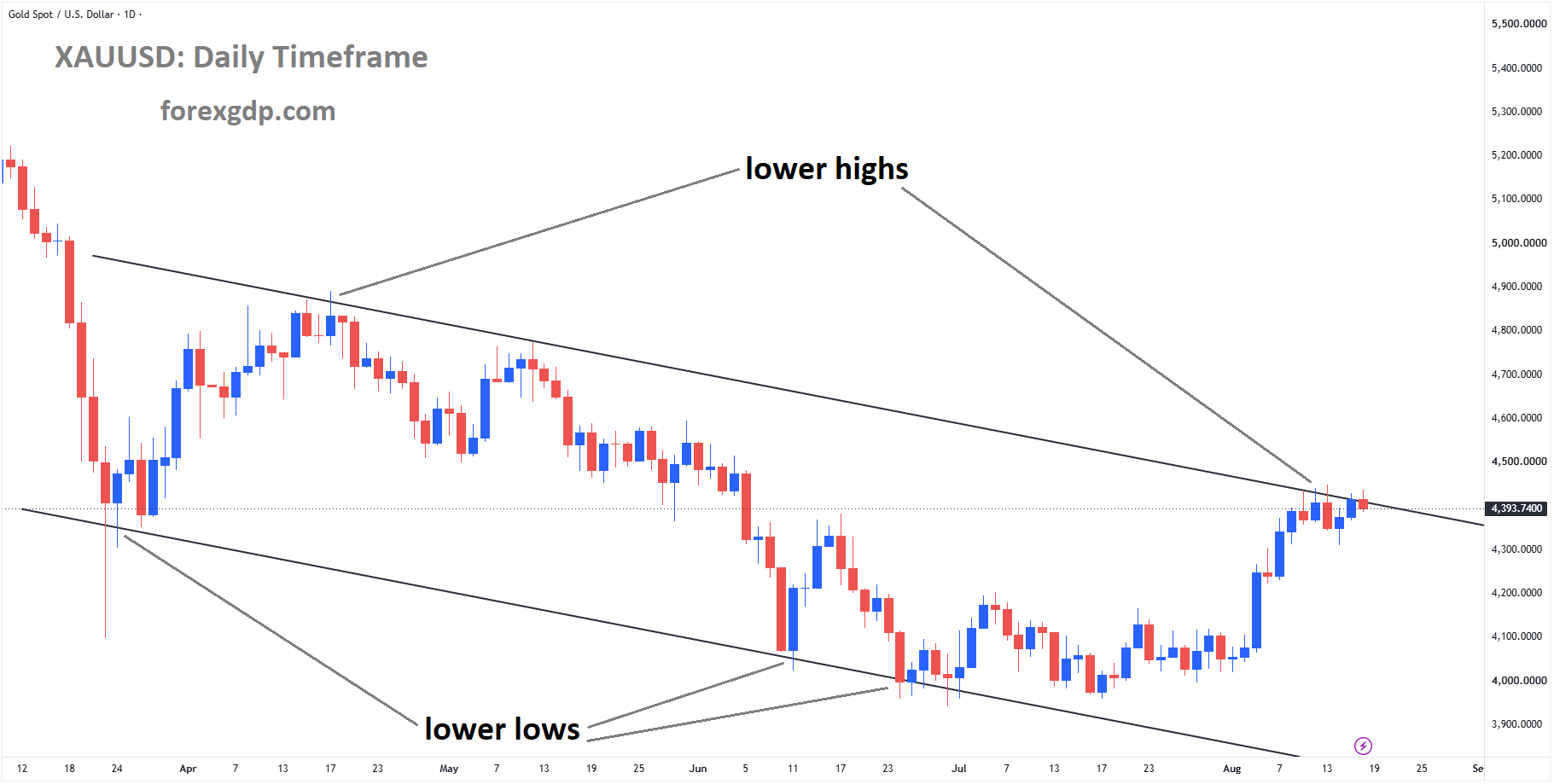
XAUUSD reached the lower high area of the descending channel
The minutes could also show whether officials are becoming more divided over the future direction of interest rates. Any sign that the Federal Reserve is prepared to remain patient may weaken the Dollar and support gold. On the other hand, concerns about energy inflation could strengthen the case for keeping policy restrictive.
Developments in the Middle East will remain equally important. Any escalation involving the United States, Iran, or the Strait of Hormuz could increase demand for safe-haven assets. However, if tensions push oil costs and bond yields higher, gold may continue to face conflicting pressures.
Summary
Gold has ended its short winning run as rising US Treasury yields and a firmer Dollar reduce its appeal. A global bond sell-off, stronger oil costs, inflation concerns, and uncertainty about government finances are all contributing to the pressure.
At the same time, weaker US employment, spending, and inflation data have lowered expectations of a September Federal Reserve rate increase. That shift is helping to prevent a more severe decline in gold demand.
The precious metal is likely to remain influenced by the balance between higher bond yields and a more cautious Federal Reserve outlook. Investors will closely watch the upcoming FOMC meeting minutes and developments surrounding the Strait of Hormuz for clearer direction.