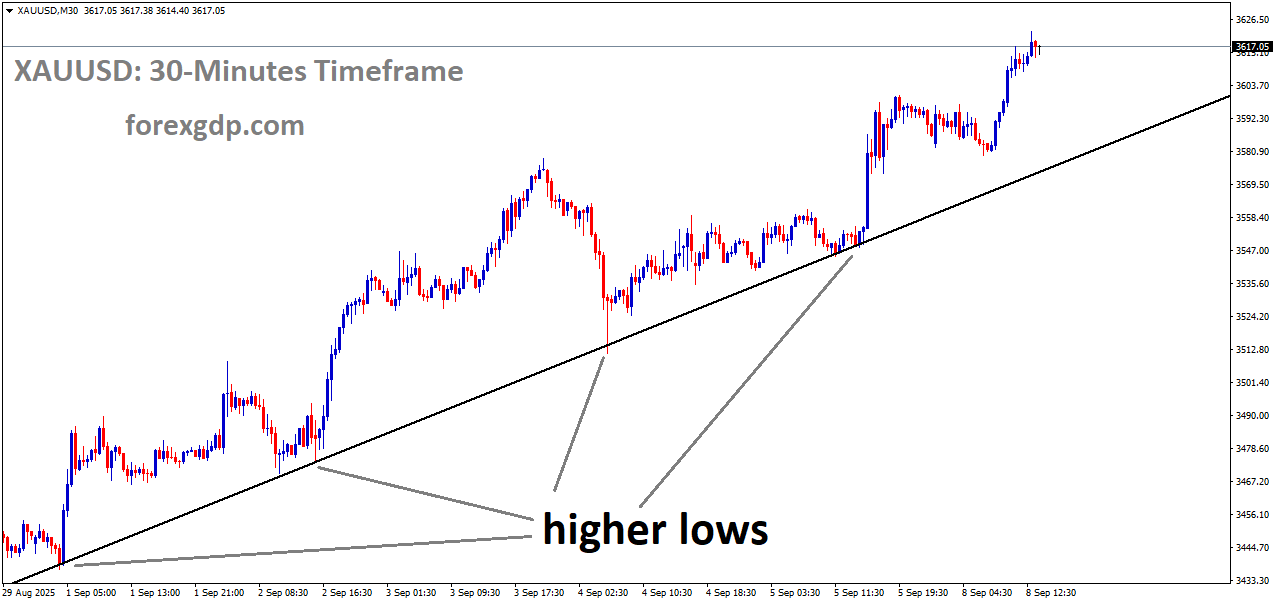

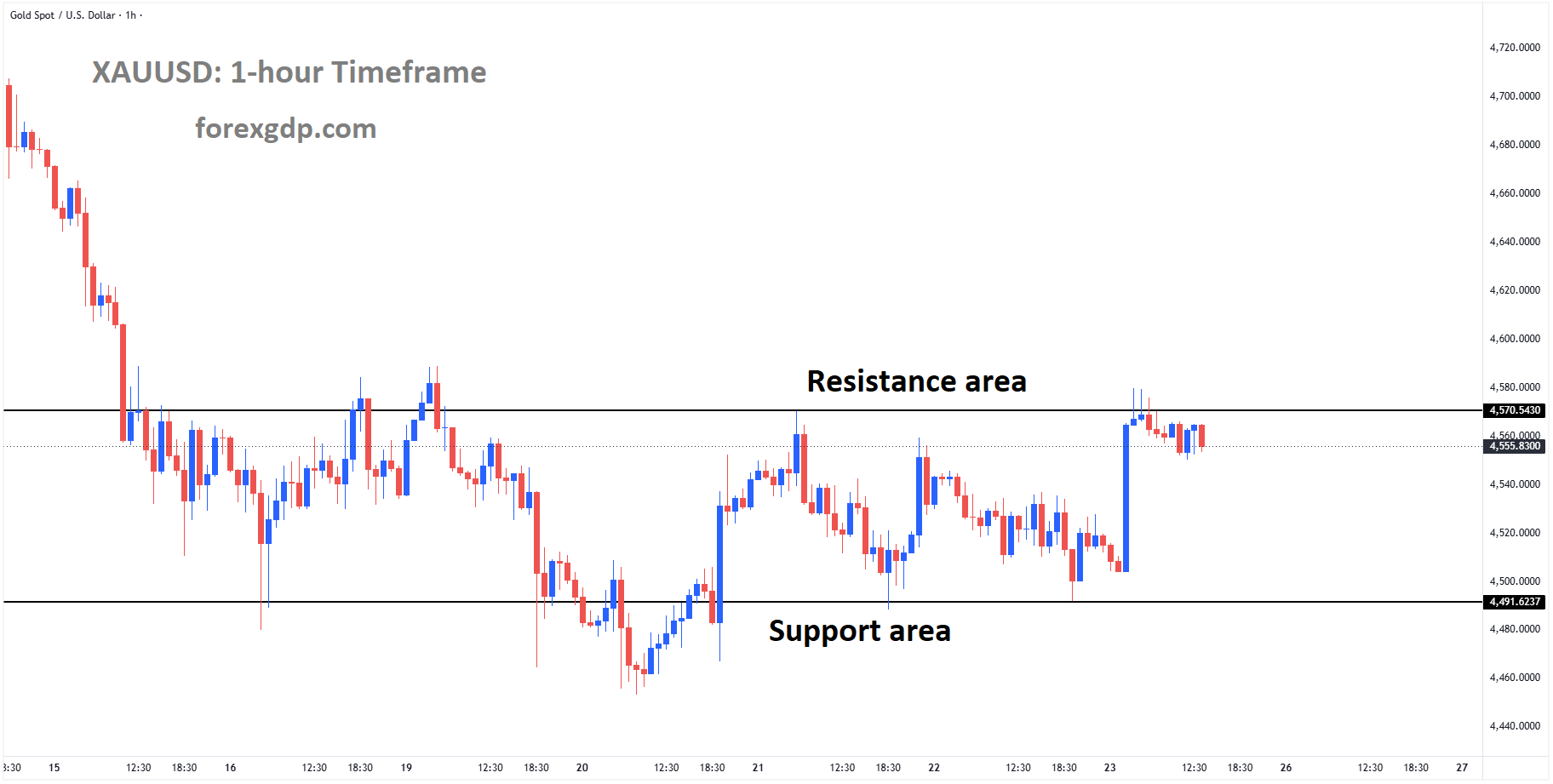
XAUUSD reached the resistance area of the box pattern
Gold prices moved higher on Monday after recovering from recent losses, as traders reacted to fresh developments surrounding negotiations between the United States and Iran. Growing optimism about a possible agreement between the two countries helped weaken the US Dollar and pushed oil prices sharply lower, creating a more supportive environment for gold.
At the latest reading, Gold (XAU/USD) was trading near $4,556, gaining around 1% during the day. Investors shifted their attention toward geopolitical developments and their potential impact on inflation, interest rates, and global market sentiment.
US-Iran Negotiations Lift Market Sentiment
The rebound in gold came after reports suggested progress in discussions between Washington and Tehran. US President Donald Trump stated that negotiations with Iran were moving forward in an “orderly and constructive manner,” encouraging hopes that tensions in the Middle East could ease in the coming weeks.
According to reports, a possible agreement may include a temporary ceasefire extension lasting 60 days, along with the reopening of the Strait of Hormuz. The deal could also involve removing the US naval blockade affecting Iranian ports while discussions over Iran’s nuclear activities continue.
The Strait of Hormuz remains one of the world’s most important energy routes, carrying a significant share of global oil exports. Any sign of stability in the region immediately affects oil markets and broader investor confidence.
Iranian officials also confirmed that negotiations had made progress. Foreign Ministry spokesman Esmaeil Baghaei reportedly said that meaningful advancements had been achieved in a large part of the discussions through talks mediated by Pakistan. However, he added that a final agreement was still not close, signaling that uncertainty remains.
President Trump also noted that there was “no rush” to complete the negotiations, suggesting that discussions could continue for some time before a formal agreement is reached.
Oil Prices Fall Sharply After Headlines
One of the biggest market reactions came from the energy sector. Crude oil prices dropped sharply after the latest headlines increased expectations that disruptions in Middle East oil supply could ease.
West Texas Intermediate (WTI) crude fell more than 5% during Monday’s session. Traders reacted to the possibility that the reopening of the Strait of Hormuz could improve oil flows and reduce supply concerns that had built up since the conflict began.
Lower oil prices often influence inflation expectations because energy costs play a major role in global inflation trends. When oil prices rise, inflation tends to increase, leading central banks to consider tighter monetary policies. On the other hand, falling oil prices can reduce inflation pressure and lower expectations for future interest rate hikes.
The sharp decline in crude oil helped support gold’s recovery by changing the overall market narrative that had pressured the precious metal in recent weeks.
US Dollar Weakens Alongside Falling Oil
The US Dollar also moved lower during Monday’s trading session. The US Dollar Index (DXY), which measures the strength of the Greenback against a basket of major currencies, slipped toward the 99.00 level.
A weaker US Dollar generally benefits gold because bullion becomes cheaper for investors holding other currencies. This often increases international demand for the precious metal.
The recent decline in the dollar reflected improving market sentiment and reduced fears surrounding the Middle East conflict. Investors appeared less interested in holding safe-haven currencies as hopes for diplomatic progress increased.
Gold and the US Dollar often move in opposite directions, and Monday’s market action followed that pattern closely.
Interest Rate Expectations Remain Important
Although gold recovered strongly, investors remain cautious because interest rate expectations continue to play a major role in determining the metal’s direction.
Since gold does not generate interest or yield, it can become less attractive when central banks raise borrowing costs. Higher interest rates increase returns on assets such as bonds and savings products, reducing the appeal of holding gold.
Earlier in the conflict, rising oil prices increased fears that inflation could remain elevated for longer. This strengthened expectations that major central banks, including the Federal Reserve, might need to maintain tighter monetary policies or even raise rates again.
Market participants are currently pricing in a notable chance that the Federal Reserve could still deliver another rate increase later this year. Expectations continue to shift depending on inflation data, economic performance, and geopolitical developments.
If oil prices continue to decline because of a successful US-Iran agreement, inflation concerns could ease further. That may reduce pressure on the Federal Reserve to tighten monetary policy again, which would likely provide additional support for gold.
Gold Still Faces Uncertainty
Despite Monday’s rebound, gold’s outlook remains uncertain in the short term. Much depends on whether negotiations between the US and Iran continue progressing or face new obstacles.
Investors are closely watching headlines related to the talks because market sentiment can change rapidly. Any signs of delays, disagreements, or rising tensions could quickly reverse recent optimism.
For now, gold prices are being influenced mainly by three major factors:
- Movements in the US Dollar
- Changes in crude oil prices
- Expectations surrounding future interest rates
As long as uncertainty remains around these areas, gold may continue to experience periods of volatility.
Central Bank Demand Supports Long-Term Outlook
Even with short-term market swings, gold continues to receive strong long-term support from central bank buying and steady investment demand.
Many central banks around the world have increased their gold reserves over the past few years as part of efforts to diversify away from traditional reserve assets. This trend has helped create a solid foundation for gold prices even during periods of weakness.
Investment demand has also remained relatively stable as many investors continue viewing gold as a hedge against economic uncertainty, inflation risks, and geopolitical tensions.
These longer-term factors are helping limit deeper declines in bullion prices despite changing market conditions.
Investors Await Key Economic Data
Looking ahead, traders are expected to remain highly focused on developments related to the US-Iran negotiations. However, attention will soon shift toward important US economic data and comments from Federal Reserve officials.
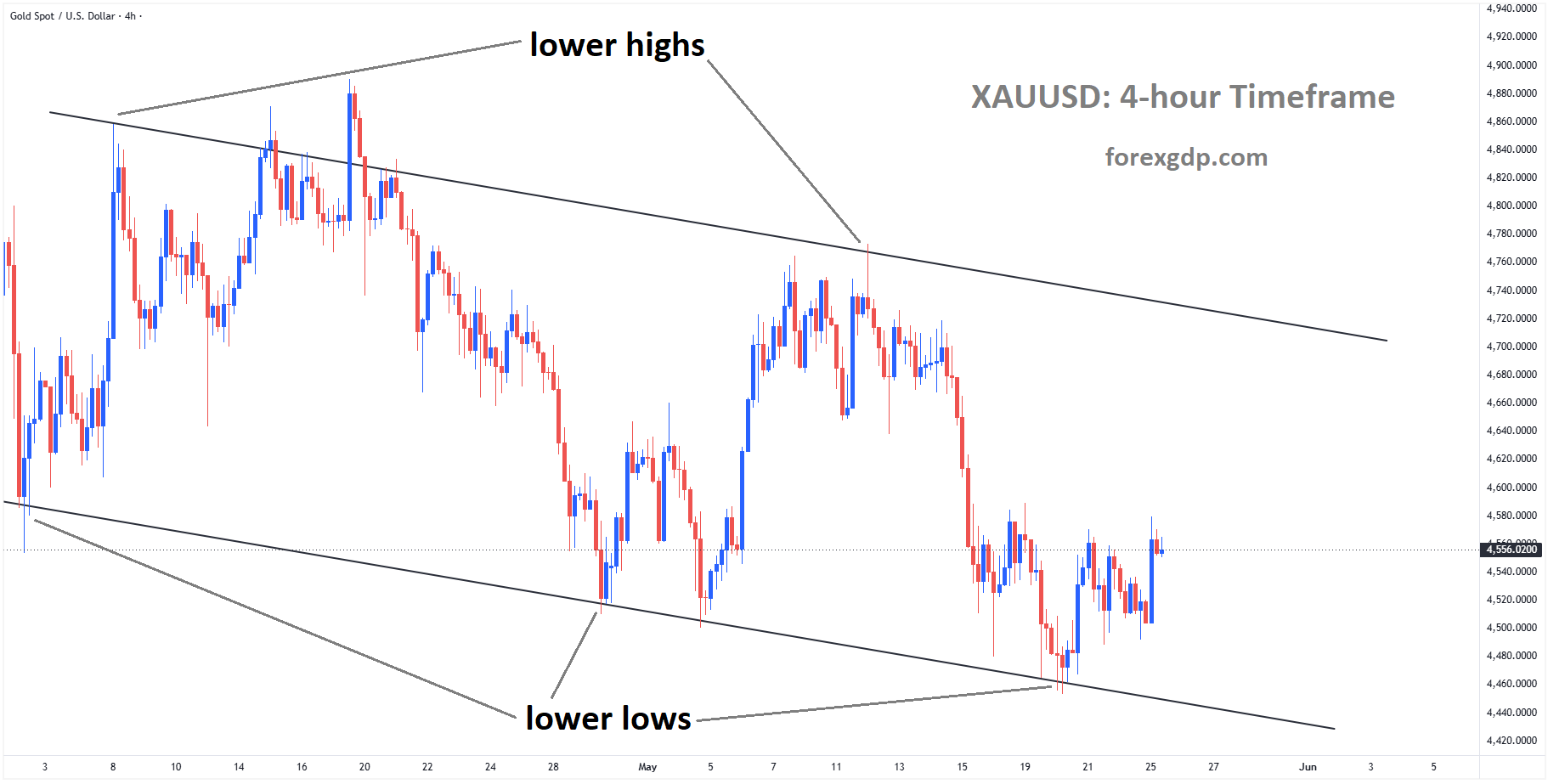
XAUUSD is moving in a descending channel, and the market has rebounded from the lower low area of the channel
One of the most closely watched events this week will be the release of the US Personal Consumption Expenditures (PCE) inflation report. The PCE index is the Federal Reserve’s preferred inflation measure and often has a major impact on market expectations for future interest rate decisions.
Speeches from Fed policymakers later this week could also provide fresh clues about the central bank’s outlook on inflation and monetary policy.
Any signals suggesting that inflation pressures are easing could support gold further, especially if the US Dollar remains under pressure.
Summary
Gold prices rebounded strongly after renewed optimism surrounding US-Iran negotiations weakened both oil prices and the US Dollar. Hopes for a possible agreement, including the reopening of the Strait of Hormuz, reduced concerns about energy supply disruptions and inflation risks.
The drop in crude oil prices helped improve sentiment toward gold by lowering expectations for future interest rate hikes. Meanwhile, a softer US Dollar added additional support for bullion.
Even though uncertainty remains around the ongoing negotiations, long-term demand from central banks and investors continues to provide support for gold prices. Market participants are now turning their attention toward upcoming US inflation data and Federal Reserve commentary for further direction.