
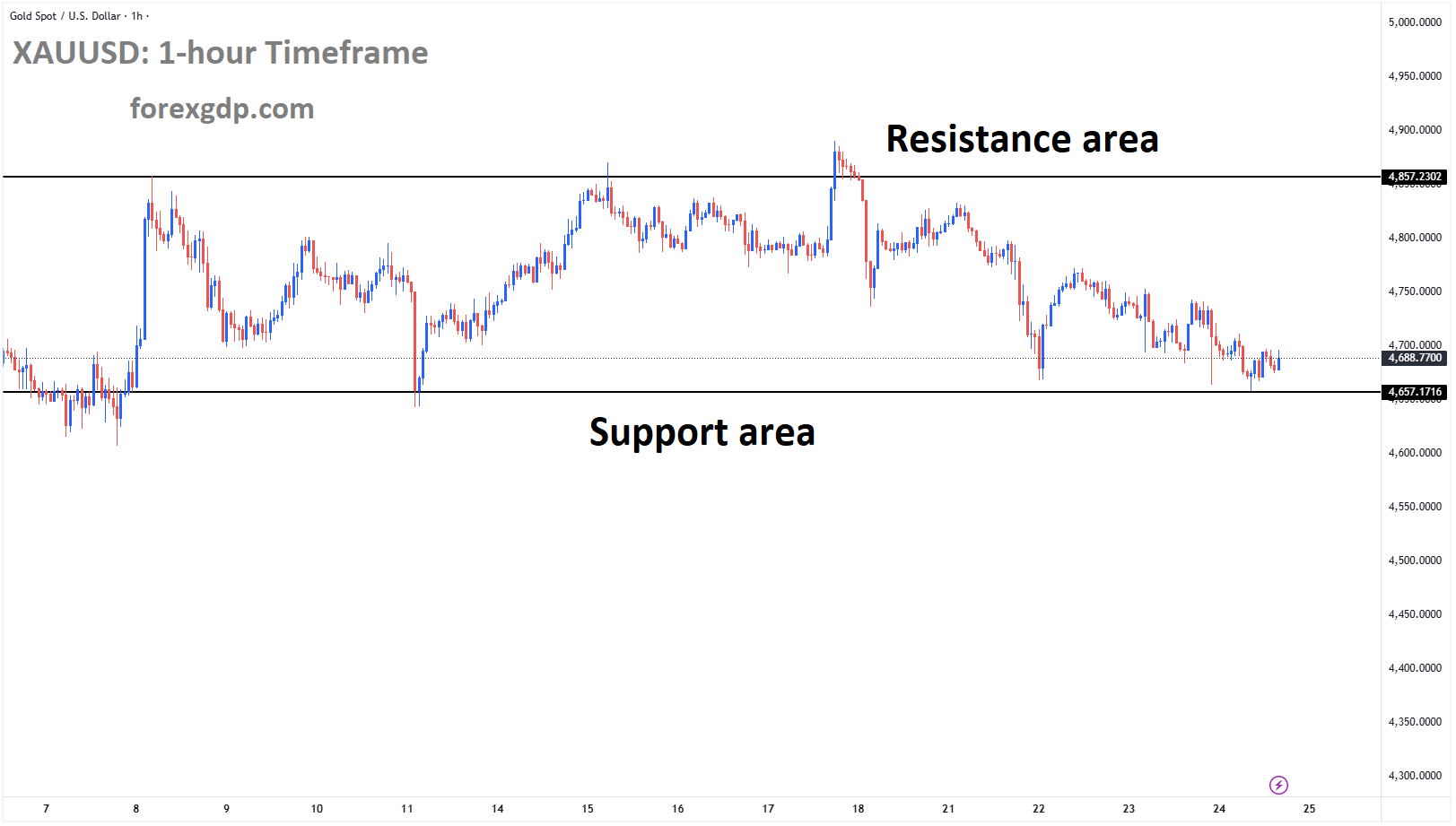
XAUUSD is moving in a box pattern, and the market has reached the support area of the pattern
Gold prices are showing signs of stability after a volatile week, holding above the $4,700 level despite ongoing pressure from global economic and political factors. While the precious metal has managed to recover slightly in recent trading sessions, it still appears set to close the week with losses. A mix of geopolitical developments, central bank expectations, and currency movements continues to influence its direction.
Gold Finds Support but Faces Ongoing Pressure
Gold (XAU/USD) moved higher toward the end of the week, recovering from earlier declines. After dipping to an intraday low near $4,657, the metal climbed back to trade around $4,730. This rebound reflects a temporary shift in sentiment, largely driven by a softer US Dollar and cautious optimism around global diplomacy.
However, despite this upward movement, the overall trend remains under pressure. Broader economic concerns, especially related to interest rates and inflation, continue to limit strong gains. Gold often performs well during uncertainty, but current conditions are creating mixed signals for investors.
US Dollar Weakness Offers Short-Term Relief
One of the key reasons behind gold’s recent recovery is the slight decline in the US Dollar. The dollar weakened after reports suggested a possible easing in tensions between the United States and Iran. News of Iran’s Foreign Minister traveling to Islamabad sparked hopes that diplomatic discussions could eventually take place, even though no direct talks with the US are currently confirmed.
This development helped ease some immediate geopolitical fears, leading to reduced demand for the dollar as a safe-haven currency. As a result, gold received a modest boost, since it typically moves inversely to the US Dollar.
The US Dollar Index, which measures the currency against a basket of major global currencies, slipped slightly after reaching a recent high. This pullback created room for gold to recover, though the impact appears limited for now.
Geopolitical Tensions Continue to Drive Market Sentiment

While there are signs of possible diplomatic engagement, tensions in the Middle East remain high. The situation around the Strait of Hormuz is especially important, as it plays a critical role in global oil supply.
Despite a ceasefire extension announced by the US, both sides continue to exchange strong statements. Iran has criticized the US naval presence in the region, calling it a violation of the ceasefire and a major barrier to peace talks. At the same time, US leadership has maintained a firm stance, warning of potential military action if agreements are not reached.
This ongoing standoff keeps markets on edge. Investors are closely watching every update, as any escalation could quickly impact global financial conditions.
Rising Oil Prices Add to Inflation Concerns
One of the biggest effects of the geopolitical situation is the sharp rise in oil prices. Crude oil has surged significantly over the week, driven by concerns over supply disruptions in the Strait of Hormuz.
Higher oil prices often lead to increased inflation, as energy costs influence many parts of the economy. This creates a challenging environment for central banks, especially the US Federal Reserve.
When inflation rises, central banks may choose to keep interest rates higher for longer to control price growth. While this approach helps stabilize the economy, it tends to reduce the appeal of gold. Unlike interest-bearing assets, gold does not provide regular returns, making it less attractive when interest rates are elevated.
Interest Rate Expectations Limit Gold’s Upside
The idea of “higher-for-longer” interest rates is one of the main reasons gold is struggling to gain strong momentum. Investors expect the Federal Reserve to maintain its cautious stance due to persistent inflation risks.
This expectation supports the US Dollar and government bond yields, both of which compete with gold for investor attention. When yields rise, investors often prefer assets that generate income, reducing demand for gold.
As a result, even though gold has managed to recover slightly, its upside remains limited. The broader economic outlook continues to weigh on sentiment, preventing a sustained rally.
Economic Data Reflects Mixed Consumer Sentiment
Recent economic data from the United States provides additional insight into the current environment. The University of Michigan’s Consumer Sentiment Index showed a slight improvement, indicating that consumer confidence is stabilizing.
The index rose to 49.8, exceeding expectations and matching previous levels. Similarly, the Consumer Expectations Index also improved, suggesting that people are becoming slightly more optimistic about future economic conditions.
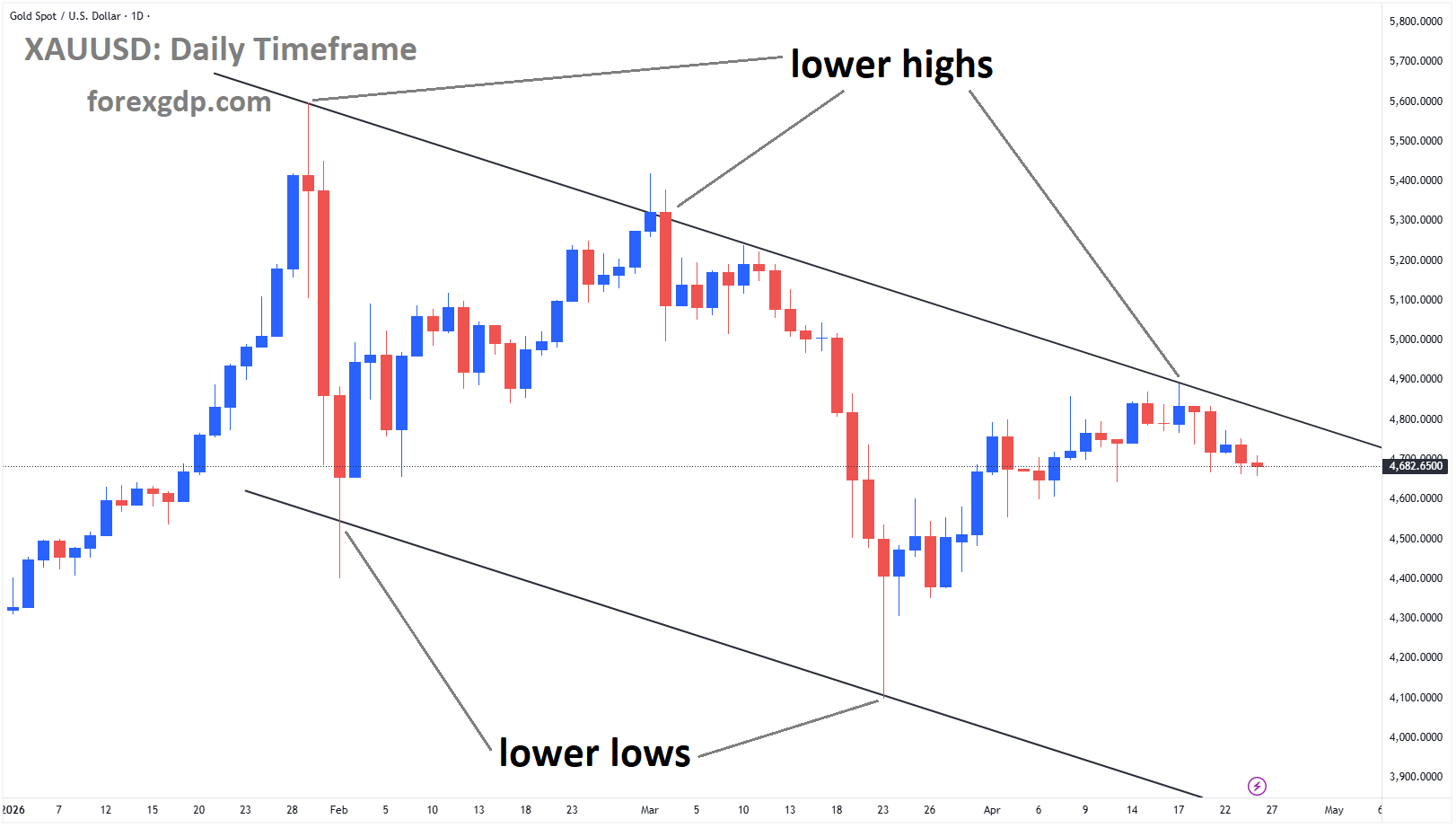
XAUUSD is moving in a descending channel
At the same time, inflation expectations presented a mixed picture. Short-term expectations eased slightly, while long-term projections edged higher. This combination highlights ongoing uncertainty, as consumers remain cautious about the future.
For gold, this type of data creates a balanced impact. While improved sentiment can reduce safe-haven demand, ongoing inflation concerns continue to support the case for holding gold as a protective asset.
Market Outlook Remains Uncertain
Looking ahead, gold’s direction will largely depend on how key global factors evolve. Geopolitical developments, especially involving the US and Iran, will continue to play a major role in shaping market sentiment.
At the same time, movements in the US Dollar and changes in interest rate expectations will remain critical. If inflation continues to rise and central banks maintain tight policies, gold may struggle to break higher.
On the other hand, any signs of easing tensions or a shift toward lower interest rates could provide stronger support for gold prices.
Final Summary
Gold is holding steady above $4,700 after a week of mixed movements, supported by a softer US Dollar and cautious optimism around global diplomacy. However, rising oil prices, persistent geopolitical tensions, and expectations of prolonged high interest rates continue to limit its upward potential.
The balance between safe-haven demand and economic pressures is keeping gold in a tight range. As global events unfold, investors will remain focused on key signals from central banks and geopolitical developments, which will ultimately shape the next move in gold prices.