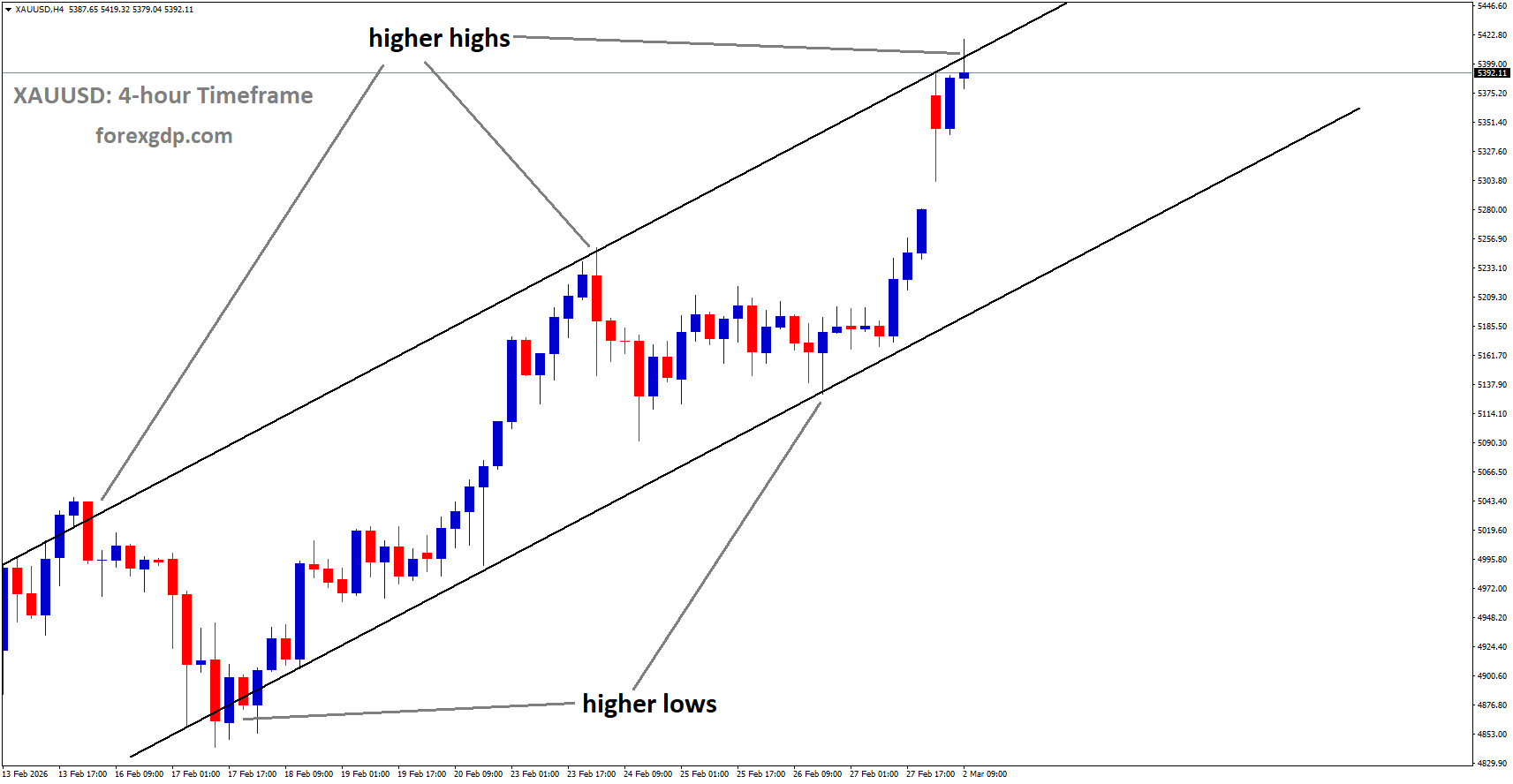
XAUUSD is moving in an Ascending channel, and the market has reached a higher high area of the channel
Gold started the week on a strong note, opening with a bullish gap as rising tensions in the Middle East pushed investors toward safe-haven assets. When fear spreads across global markets, many traders and institutions quickly move their money away from risky investments and into assets that are considered more stable. Gold has long held that reputation, and once again, it is benefiting from uncertainty.
Even though the US Dollar has seen strong demand, gold continues to hold its gains. At the same time, growing worries about inflation and slowing economic growth are adding further support to the precious metal. Together, these factors are creating a powerful mix that is lifting gold higher.
Geopolitical Crisis Fuels Demand for Safe-Haven Assets

One of the main drivers behind gold’s sharp move upward is the sudden escalation of conflict in West Asia. Over the weekend, global markets were shaken by reports of a coordinated military strike by the United States and Israel on Iran. The strike reportedly resulted in the death of Iran’s Supreme Leader, Ayatollah Ali Khamenei.
The situation became even more serious when Iran’s Islamic Revolutionary Guard Corps Navy announced the closure of the Strait of Hormuz. This narrow waterway is one of the world’s most important routes for oil shipments. Any disruption in this area can affect global energy supplies and increase economic uncertainty.
When geopolitical tensions reach this level, investors typically seek assets that can protect their wealth. Gold is often the first choice. It does not depend on any single country’s economy or government policy, which makes it attractive during times of conflict.
The fear of a prolonged war in the Middle East has increased global risk aversion. Stock markets around the world have felt pressure, and investors are reducing exposure to assets that could be affected by political instability. In this environment, gold’s appeal grows stronger.
Stagflation Fears Add More Support to Gold
Beyond geopolitical tensions, economic concerns are also playing a major role in gold’s strength. Recent data on US producer prices showed that inflation remains stubborn. This has renewed fears that price pressures are not fading as quickly as many had hoped.
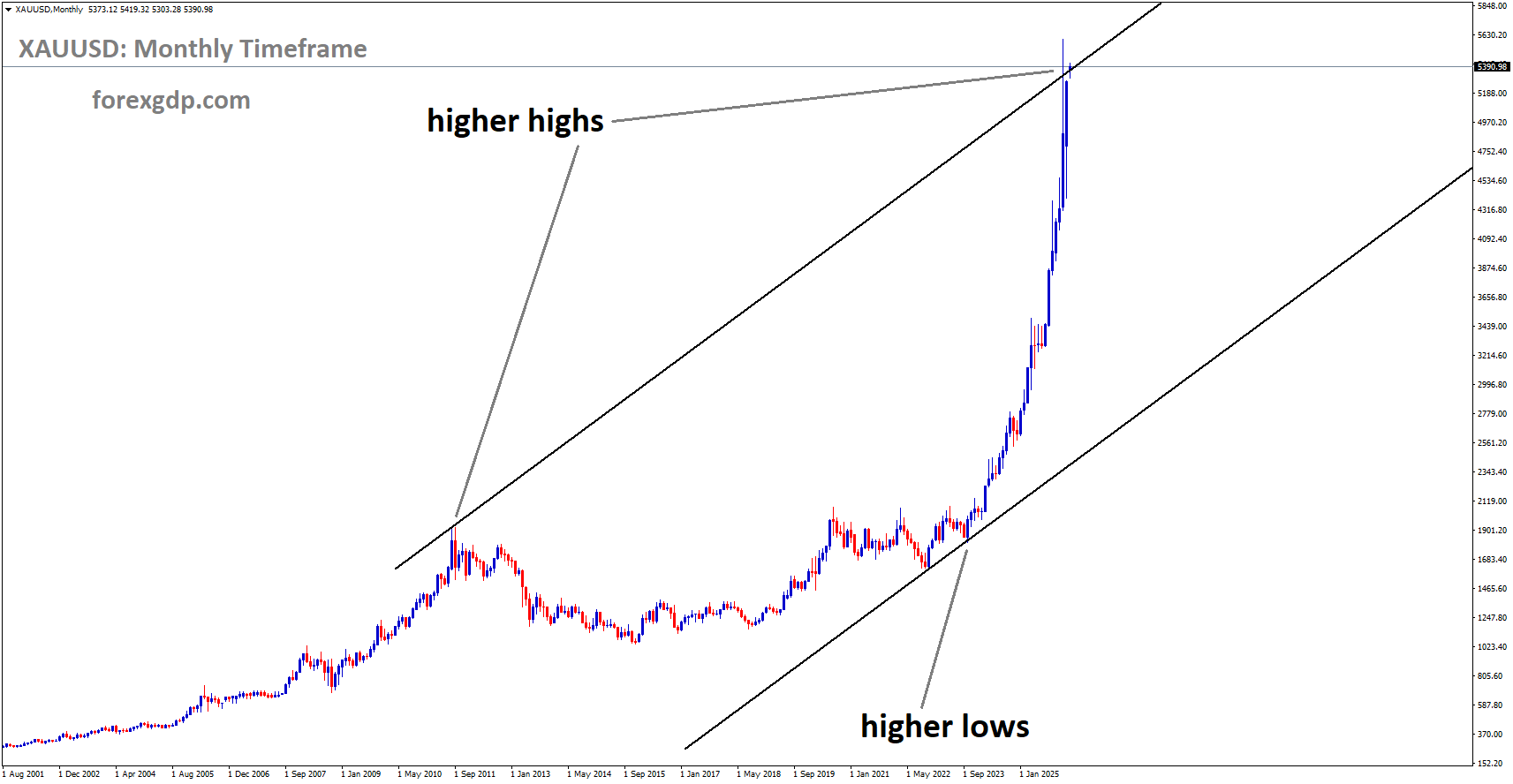
XAUUSD is moving in an uptrend channel, and the market has reached a higher high area of the channel
At the same time, economic growth appears to be slowing. When inflation remains high while growth weakens, it creates a difficult situation known as stagflation. This scenario is especially challenging for central banks.
The Federal Reserve’s Difficult Position
The Federal Reserve now faces a complex balancing act. If it decides to lower interest rates to support economic growth, it risks pushing inflation higher again. On the other hand, if it keeps rates steady or tightens policy further to control inflation, it could slow the economy even more.
This uncertainty makes investors nervous. Gold often performs well in such conditions because it is seen as a hedge against inflation and economic instability. Unlike bonds or savings accounts, gold does not offer interest payments. However, when real returns on other assets become uncertain or negative, the lack of yield becomes less important.
These stagflation fears are adding another layer of support to gold prices, reinforcing the impact of geopolitical tensions.
Strong US Dollar Fails to Stop Gold’s Momentum
Typically, a stronger US Dollar can limit gains in gold. Since gold is priced in dollars, a stronger currency makes it more expensive for buyers using other currencies. This can reduce demand and slow down price increases.
Recently, the US Dollar has climbed to its highest level in several weeks. Normally, this would create pressure on gold. However, the current wave of safe-haven buying appears strong enough to offset the impact of the rising dollar.
This unusual situation highlights how powerful the current risk-off mood is. When fear dominates market sentiment, investors prioritize safety over currency fluctuations. As a result, gold continues to hold firm despite the dollar’s strength.
Key US Economic Reports Ahead
While geopolitical developments are at the center of attention, this week also brings several important US economic reports that could influence market direction.
ISM Manufacturing and Services Data
The week begins with the release of the ISM Manufacturing Purchasing Managers’ Index (PMI). This report gives insight into the health of the manufacturing sector. If the data shows weakness, it could reinforce concerns about slowing growth.
Later in the week, the ISM Services PMI will provide a snapshot of the services sector, which makes up a large portion of the US economy. Any signs of slowdown could add to recession fears.
Employment Data in Focus

Investors will also closely watch the ADP private-sector employment report and the official Nonfarm Payrolls (NFP) data. These reports offer important information about the labor market.
A strong labor market can support economic growth and help reduce fears of a downturn. However, if job growth slows significantly, it could increase worries about economic weakness. On the other hand, overly strong job numbers might raise concerns that inflation will remain elevated.
The combination of these economic reports and ongoing geopolitical developments will likely shape gold’s direction in the coming days.
Global Risk Sentiment Remains the Main Driver
Although economic data matters, the bigger story remains the rising tensions in the Middle East. Markets are highly sensitive to news related to military actions, diplomatic responses, and energy supply disruptions.
If the conflict expands or continues for an extended period, gold could see sustained demand. Investors will be monitoring headlines closely for any signs of escalation or de-escalation.
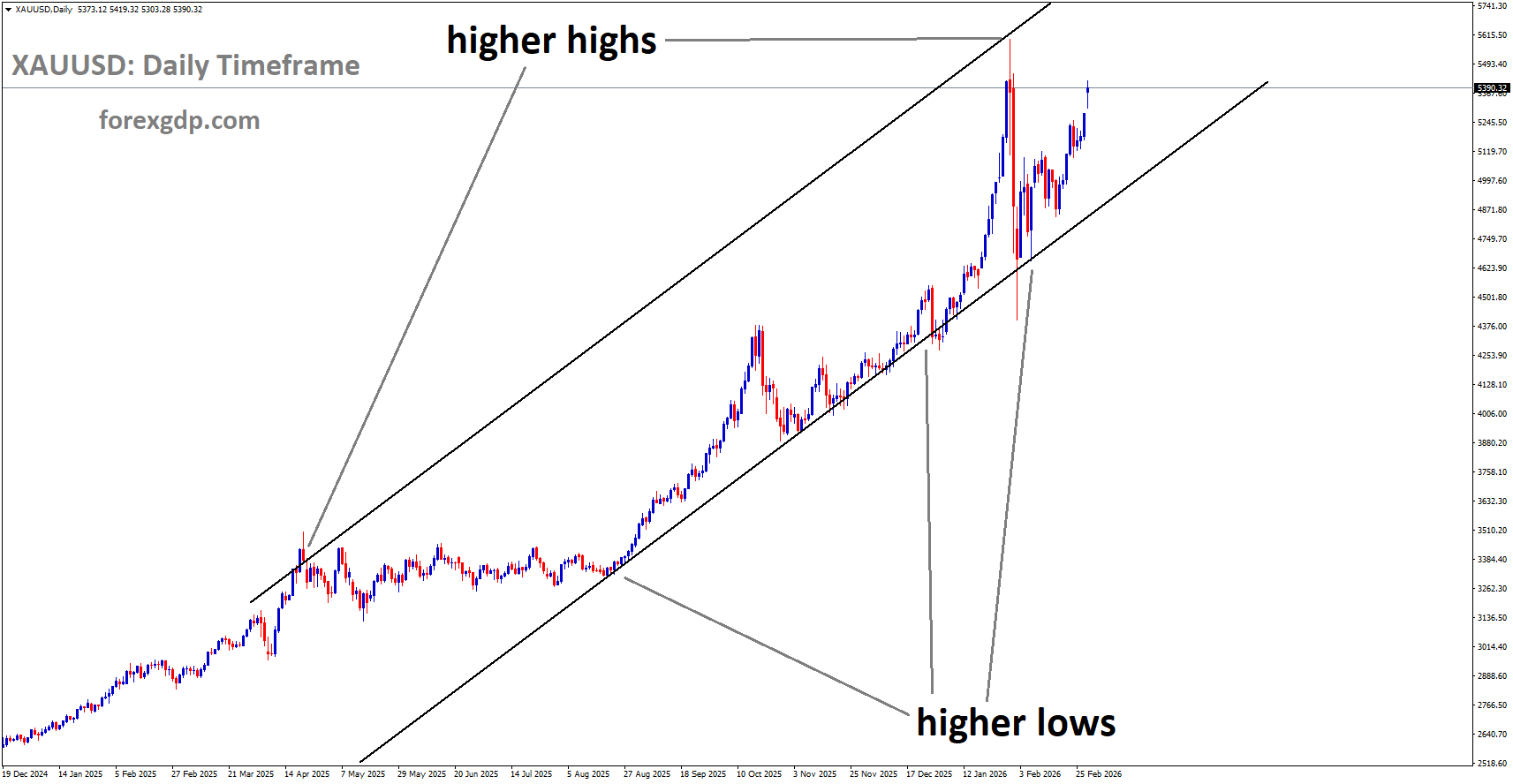
XAUUSD is moving in an uptrend channel, and the market has rebounded from the higher low area of the channel
Energy markets are also closely tied to this situation. The closure of key shipping routes can affect oil supplies, which in turn can influence inflation. Higher energy costs can increase overall price pressures, adding another reason for investors to seek protection through gold.
In times like these, emotions often play a major role in financial decisions. Fear, uncertainty, and the desire to preserve capital can drive strong market movements. Gold’s recent performance reflects this shift in sentiment.
Final Thoughts
Gold has started the week with strong upward momentum, supported by escalating geopolitical tensions and growing economic concerns. The conflict in the Middle East has pushed investors toward safe-haven assets, while fears of stagflation are adding further support.
Even a stronger US Dollar has not been enough to slow gold’s rise. As traders look ahead to key US economic reports, market sentiment will likely remain sensitive to both data releases and geopolitical headlines.
In uncertain times, gold often regains its shine. With global tensions high and economic risks still present, the precious metal continues to attract attention as a reliable store of value.