
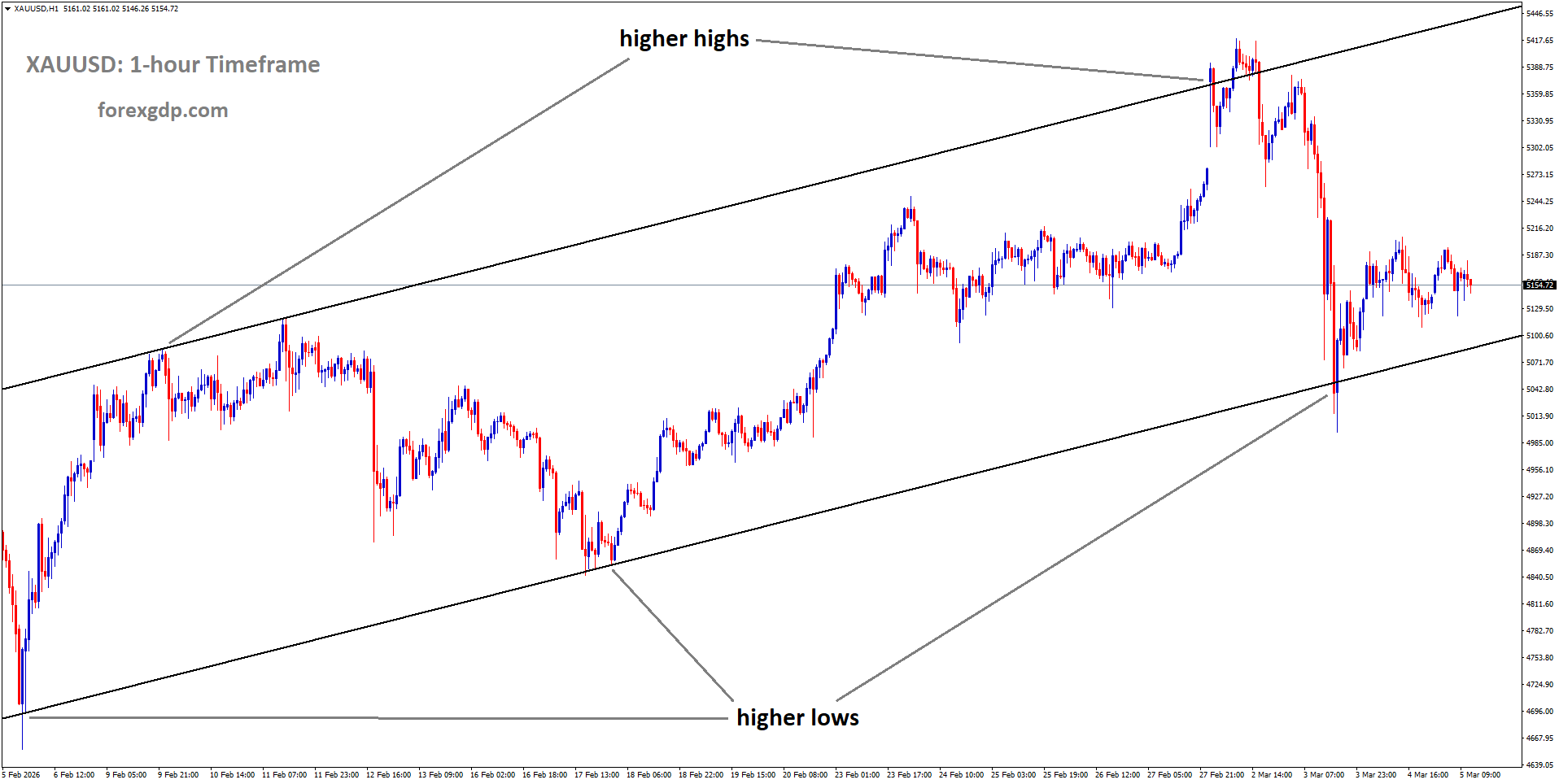
XAUUSD is moving in Ascending channel
Gold is gaining attention again as global tensions rise in the Middle East. Investors often turn to gold when the world feels uncertain, and the ongoing conflict involving Iran has increased that sense of uncertainty. As military actions intensify and economic concerns grow, many traders are moving their funds into safer assets such as gold.
At the same time, changes in the value of the US Dollar and new economic policies from the United States are shaping the market environment. Together, these developments are pushing gold higher as investors look for stability during a turbulent period.
Rising Tensions in the Middle East Drive Safe-Haven Demand
The conflict involving Iran has now entered its sixth day, and the situation remains tense across the Middle East. Military operations have expanded as the United States and Israel continue strikes inside Iranian territory. In response, Iran has launched missile and drone attacks targeting military sites and regional locations throughout the area.
This cycle of attack and retaliation has increased fears that the conflict could spread further. The broader the confrontation becomes, the greater the potential impact on global security and the economy. As a result, financial markets are reacting with caution.
A particularly dramatic development came when reports suggested that a US submarine sank an Iranian warship near the coast of Sri Lanka. If confirmed, it would mark a rare and significant military action at sea. US Defense Secretary Pete Hegseth described the event as the first attack of its kind on an enemy vessel since World War II.
Such developments highlight how serious the situation has become. Each new escalation increases global anxiety, and that uncertainty encourages investors to shift money toward assets that historically hold value during times of crisis.
Gold has long served that role. When geopolitical tensions rise or markets become unstable, many investors view gold as a reliable store of value. This renewed demand is helping the metal maintain its upward momentum.
Weakening US Dollar Adds Support to Gold
Another key factor behind gold’s strength is the recent movement in the US Dollar. Since gold is priced in dollars, changes in the currency can directly influence global demand.

When the US Dollar weakens, gold becomes cheaper for buyers using other currencies. This makes it more attractive for international investors and often increases purchasing activity around the world.
In the current environment, the dollar has shown signs of softness. Part of this weakness comes from cautious optimism that the Middle East conflict may not last as long as initially feared. If the situation stabilizes sooner rather than later, it could affect how investors view the US economy and monetary policy.
As the dollar loses some of its strength, gold naturally becomes more appealing. The combination of geopolitical stress and currency movements is creating a supportive backdrop for the precious metal.
Uncertain Signals About Possible Negotiations
There have also been mixed reports about potential diplomatic efforts to ease the conflict. According to a report cited by Reuters from The New York Times, Iran’s Ministry of Intelligence allegedly sent a signal to the US Central Intelligence Agency suggesting that Tehran might be open to discussions aimed at ending the war.
Such a signal raised hopes that negotiations could eventually reduce the tensions. However, Iranian officials later rejected the report, denying that any such communication took place.
This contradiction has left markets unsure about what may happen next. On one hand, the possibility of talks could calm fears. On the other hand, the denial reinforces the uncertainty surrounding the situation.
For investors, uncertainty often translates into caution. And in financial markets, caution frequently leads to stronger demand for traditional safe-haven assets like gold.
Trade Policy Changes Add Another Layer of Uncertainty
Beyond the conflict itself, investors are also watching new economic developments coming from the United States. The government is preparing to introduce a temporary global tariff of 15 percent.
This new rate replaces an earlier 10 percent tariff policy that had been put in place after the US Supreme Court invalidated several previous trade measures introduced under President Donald Trump. The court’s decision forced policymakers to adjust the tariff structure.
US Treasury Secretary Scott Bessent explained that the new tariff could eventually revert to earlier levels. However, that change would depend on the outcome of new trade investigations, which are expected to continue over the coming months.
Trade policy changes can influence global supply chains, economic growth, and investor sentiment. Even temporary adjustments create uncertainty about how businesses and international markets may respond.
For financial markets already dealing with geopolitical stress, additional policy shifts can further encourage investors to move toward assets perceived as stable.
Inflation Concerns and Bond Yields Could Limit Gains
While gold is benefiting from safe-haven demand, some factors could limit how far it rises. One major concern involves energy prices.
The ongoing conflict in the Middle East has pushed oil and gas prices higher. Rising energy costs can lead to increased inflation because they affect transportation, manufacturing, and everyday goods.
When inflation pressures build, central banks may hesitate to reduce interest rates. In the United States, traders have been closely watching signals from the Federal Reserve regarding possible rate cuts.
If inflation remains elevated, the Fed may choose to keep interest rates higher for longer than expected. Higher interest rates often strengthen yields on government bonds, which can make assets like gold less attractive since gold does not generate interest.
This dynamic is already visible in the bond market. The yield on the US 10-year Treasury note has climbed for four consecutive sessions, reaching 4.11 percent. Rising yields reflect investors adjusting their expectations about economic policy, inflation, and the broader global outlook.
The combination of geopolitical developments, trade policy changes, and economic data is making the financial environment more complex. Investors are weighing all of these factors as they decide where to allocate their funds.
How Global Events Are Shaping Investor Behavior
Periods of geopolitical tension often create ripple effects across multiple markets. The current situation involving Iran illustrates how closely connected political events and financial markets can be.
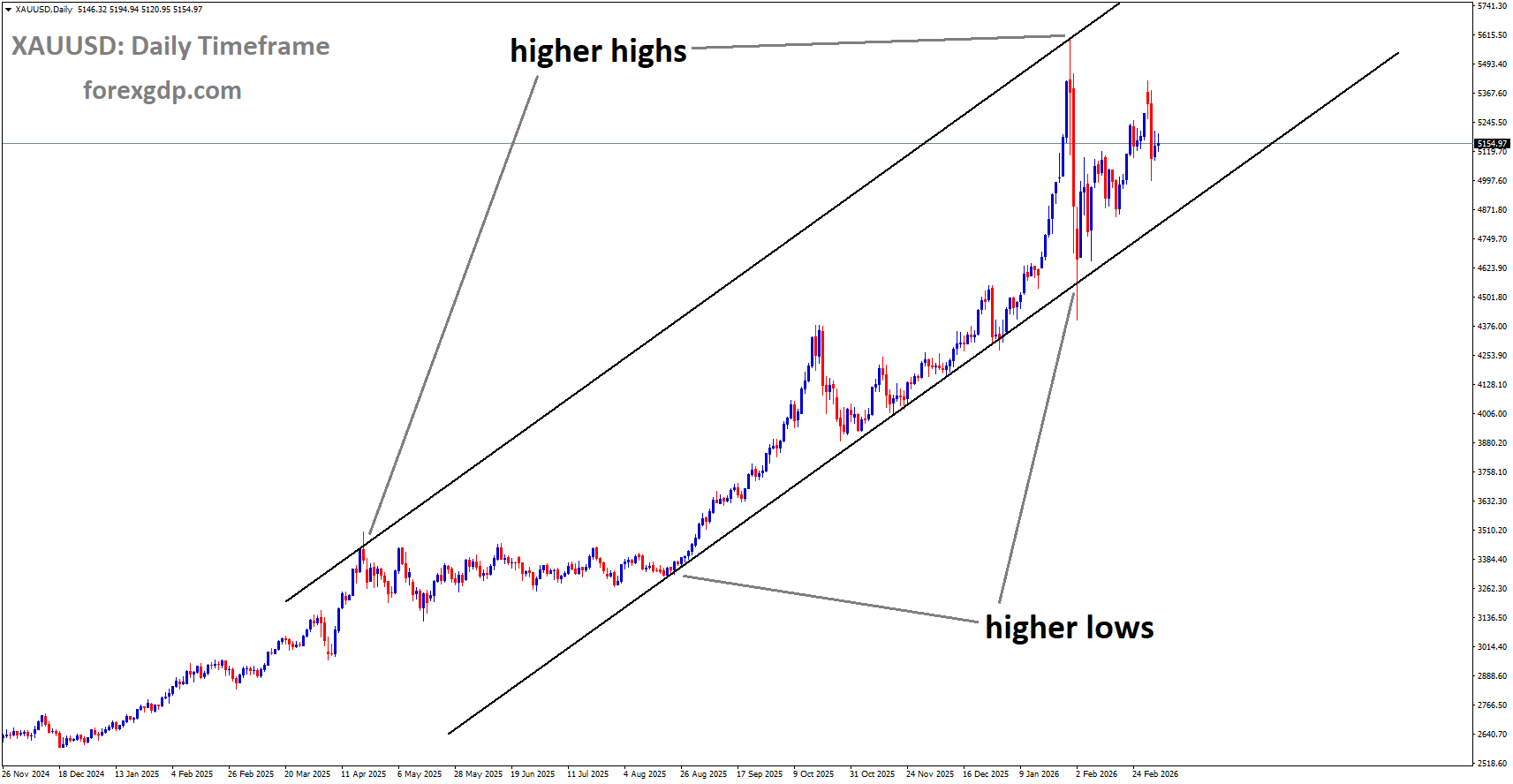
XAUUSD is moving in Ascending channel and market has rebounded from the higher low area of the channel
Military actions can influence energy supplies, international trade, and diplomatic relations. These changes can then affect currencies, commodities, and investor confidence around the world.
When the outlook becomes uncertain, investors frequently move toward assets that have historically held value during difficult times. Gold, government bonds, and certain currencies often benefit from this shift in sentiment.
At the same time, markets remain highly sensitive to new information. Any sign of diplomatic progress or further escalation could quickly change the direction of investor sentiment.
Because of this, traders and analysts are closely watching headlines related to the Middle East conflict, US economic policies, and global financial conditions.
Summary
Gold is rising as global investors seek safety during a period of heightened uncertainty. The ongoing conflict involving Iran has increased geopolitical tensions across the Middle East, encouraging many market participants to turn toward traditional safe-haven assets.
A softer US Dollar has also supported demand for gold by making it more affordable for buyers using other currencies. Meanwhile, reports about possible diplomatic talks have added another layer of uncertainty, especially after conflicting statements from Iranian officials.
At the same time, new US trade tariffs and rising energy prices are contributing to a complex economic environment. Inflation concerns and increasing government bond yields may limit how much gold can climb, but the broader atmosphere of caution continues to support demand.
With geopolitical risks, economic policy shifts, and global market reactions unfolding simultaneously, investors are likely to remain focused on developments in both politics and economics. Gold’s role as a safe and stable asset keeps it at the center of attention whenever uncertainty spreads across the world.