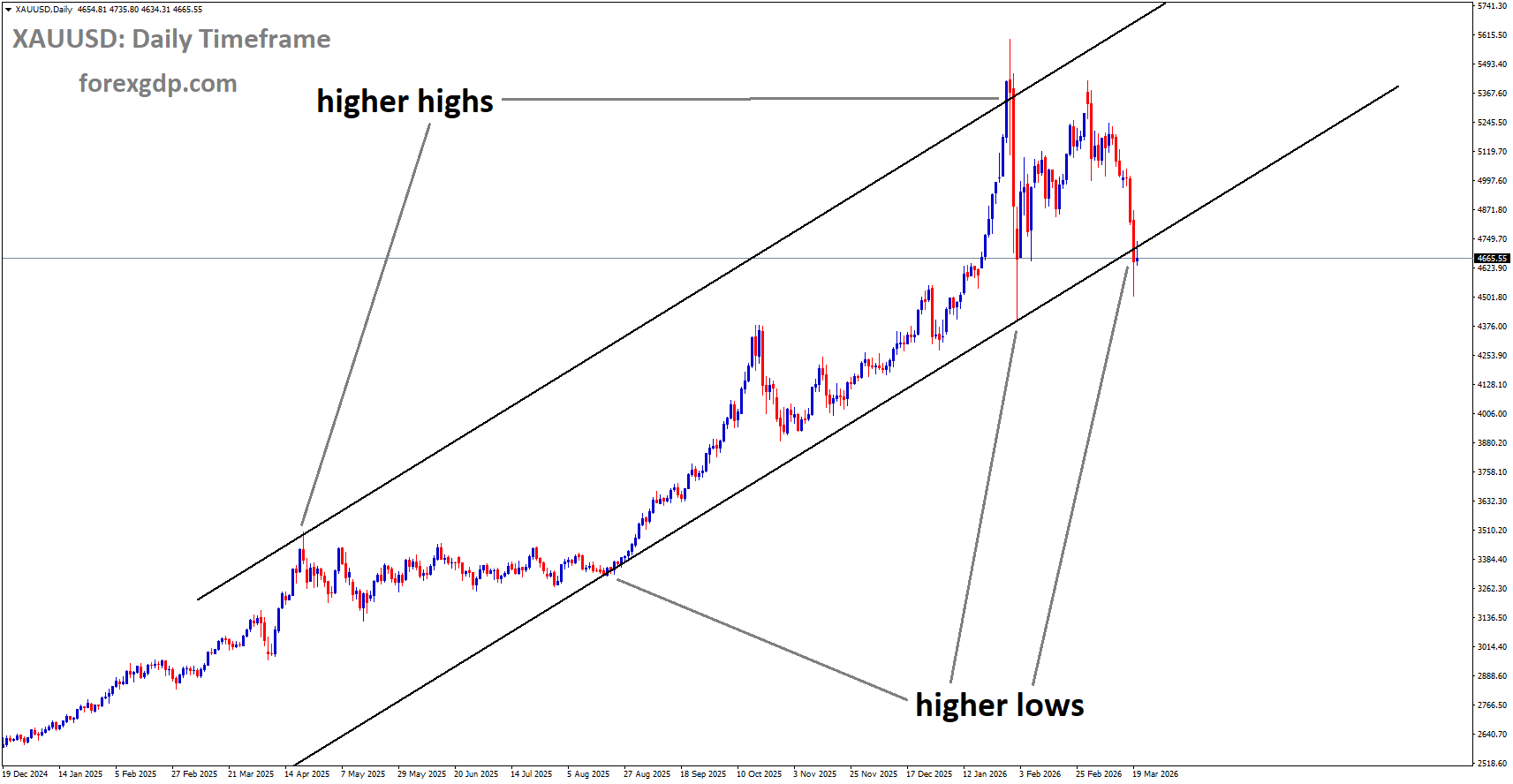
XAUUSD is moving in an uptrend channel, and the market has reached a higher low area of the channel
Gold has started to recover after several days of decline, gaining strength during early European trading on Friday. The precious metal moved closer to the $4,670 mark, breaking a seven-day losing streak. This upward movement reflects growing concerns in global markets, especially as geopolitical tensions rise and economic uncertainty deepens.
Investors often turn to gold during uncertain times, and recent developments in the Middle East have once again highlighted its role as a safe-haven asset.
Rising Geopolitical Tensions Drive Demand for Gold
One of the main reasons behind gold’s recent rebound is the increasing tension in the Middle East. Ongoing conflicts involving the United States, Iran, and Israel have raised fears of a wider regional crisis. When such risks increase, investors typically look for assets that can hold value during instability, and gold is often at the top of that list.
Iran has issued strong warnings, signaling that it may respond aggressively if its energy infrastructure is attacked again. At the same time, Saudi Arabia has also made it clear that its patience has limits and that it could take military action if needed. These statements have added to the uncertainty surrounding the region.
As tensions rise, global markets become more cautious. Investors begin shifting their money away from riskier investments and into safer options. Gold benefits directly from this shift, as it is widely seen as a reliable store of value during times of crisis.
Safe-Haven Appeal Strengthens Gold’s Position
Gold’s reputation as a safe-haven asset plays a crucial role during periods of instability. Unlike stocks or currencies, gold is not directly tied to the performance of any single economy. This makes it attractive when confidence in financial systems weakens.
In times of geopolitical stress, demand for gold usually increases because investors want to protect their wealth. The current situation in the Middle East has triggered exactly this kind of response. With uncertainty growing, gold becomes a preferred choice for many traders and institutions.
This renewed interest has helped gold recover from its recent losses. After a week of downward movement, the shift in sentiment has brought buyers back into the market.
Inflation Concerns Create Mixed Signals
While geopolitical tensions support gold, there are also factors that could limit its gains. One of the biggest concerns right now is rising inflation, especially due to increasing energy prices.
The ongoing conflict has pushed oil prices higher, which often leads to increased costs across the global economy. When energy becomes more expensive, it can drive up the prices of goods and services. This creates inflationary pressure, which central banks try to control through interest rate policies.
Higher inflation can have a complex effect on gold. On one hand, gold is often used as a hedge against inflation, which supports demand. On the other hand, if central banks respond by keeping interest rates high or even raising them, gold may become less attractive.
Central Bank Policies Influence Market Sentiment
The US Federal Reserve recently decided to keep interest rates unchanged, but it also expressed concern about rising inflation due to higher oil prices. This cautious stance suggests that policymakers are not ready to ease financial conditions anytime soon.
In fact, discussions about possible rate hikes have been mentioned, indicating that the central bank is still focused on controlling inflation. When interest rates remain high, assets like gold can lose some appeal because they do not generate income.
Investors often compare gold with interest-bearing assets such as bonds. When returns on those assets increase, some investors may choose them over gold. This creates a balancing effect, where gold’s safe-haven demand is offset by the impact of higher interest rates.
Stronger US Dollar Adds Pressure

Another important factor affecting gold is the strength of the US Dollar. When the dollar rises, gold becomes more expensive for buyers using other currencies. This can reduce demand and limit price increases.
Recent comments from Federal Reserve officials have supported the dollar, as they signal a firm stance on interest rates. A stronger dollar often puts pressure on gold prices, especially in the short term.
This creates a situation where gold is influenced by two opposing forces: rising geopolitical risks pushing it higher, and economic policies pulling it back.
Market Volatility and Liquidity Challenges
Global markets have also been experiencing increased volatility. During such periods, investors sometimes sell even safe-haven assets like gold to meet urgent financial needs.
For example, when markets face sharp declines, traders may need to cover losses or meet margin requirements. To do this, they often sell liquid assets quickly, and gold is one of the most liquid assets available.
This can lead to short-term declines in gold prices, even when the overall outlook remains supportive. In other words, gold can be temporarily affected by broader market behavior, even if its long-term appeal stays strong.
There is also a possibility that investors shift funds from gold into other opportunities that they believe have overreacted to the current situation. This kind of repositioning can create additional pressure on gold in the short term.
What Investors Are Watching Next
Market participants are closely monitoring several key developments. The situation in the Middle East remains the biggest factor, as any escalation could further increase demand for safe-haven assets.

XAUUSD is moving in an uptrend channel, and the market has fallen from the higher high area of the channel
At the same time, economic data and central bank decisions will continue to play an important role. Investors are paying attention to inflation trends, energy prices, and signals from policymakers about future interest rates.
The balance between these factors will determine the direction of gold in the coming days and weeks. If geopolitical risks continue to rise, gold may find strong support. However, if economic pressures increase and interest rates remain high, gains could be limited.
Summary
Gold has shown signs of recovery after a period of decline, supported mainly by rising geopolitical tensions in the Middle East. Its role as a safe-haven asset has attracted investors seeking stability during uncertain times. However, the outlook is not entirely straightforward.
Concerns about inflation, higher energy prices, and central bank policies are creating challenges for gold. A stronger US Dollar and ongoing market volatility also add complexity to its price movement.
As a result, gold is currently influenced by both supportive and limiting factors. Its future direction will depend on how global tensions evolve and how economic conditions shape investor sentiment.