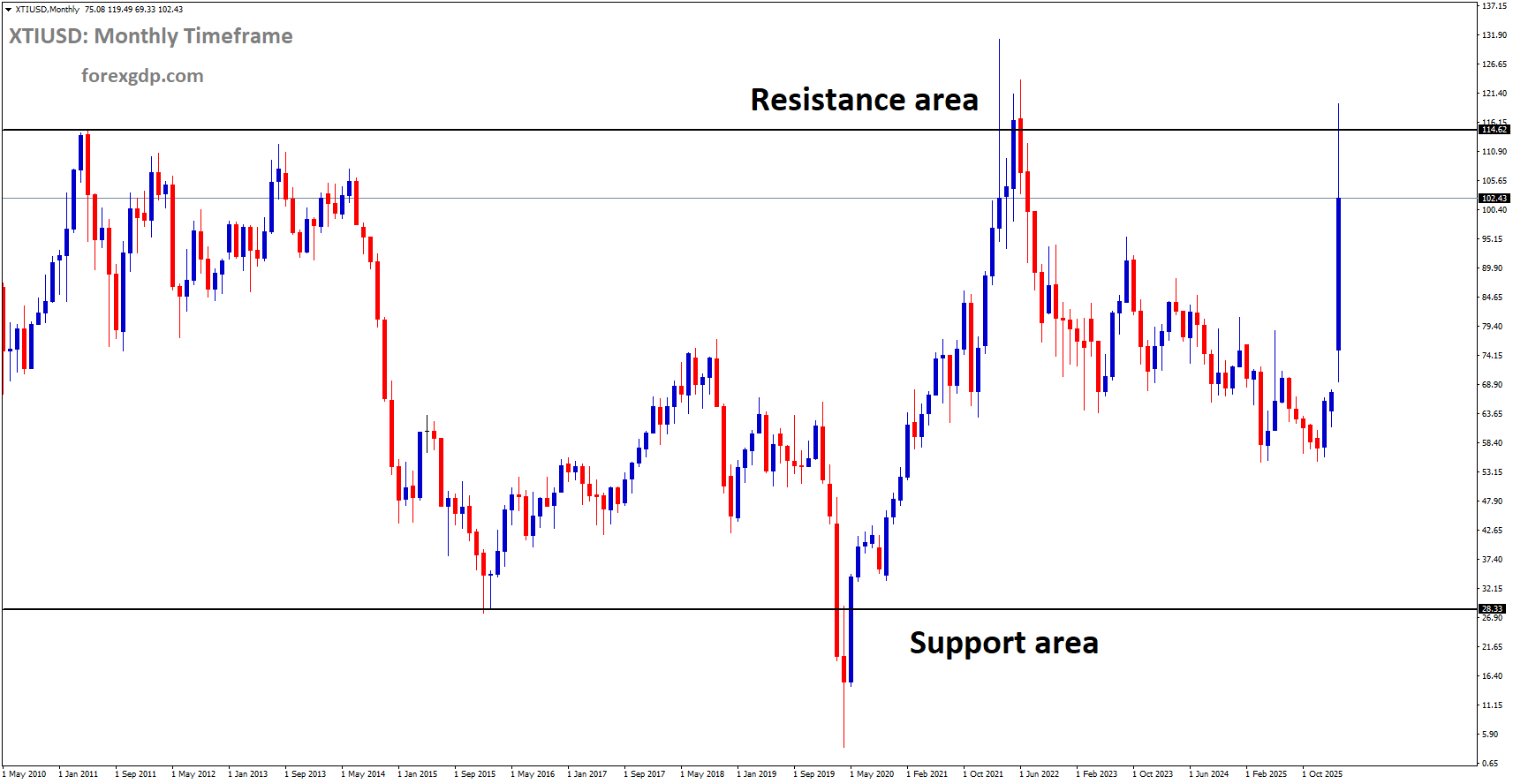
XTIUSD is moving in a box pattern, andthe market has reached the resistance area of the pattern
Global energy markets experienced a sudden jolt as oil prices surged sharply at the start of the trading week. US crude briefly climbed to around $120 per barrel before easing back to roughly $107, while Brent crude reached about $113 before also retreating. Even after the pullback, both major oil benchmarks remain above the $100 level, signaling strong pressure in the energy market.
This sudden spike is closely linked to rising geopolitical tensions in the Middle East. A major political development in Iran has reduced hopes for diplomatic progress with the United States. As a result, fears of a prolonged regional conflict have intensified, raising concerns about disruptions to global energy supplies.
The Middle East holds enormous importance for the world’s energy system. The region contains roughly half of global oil reserves and around 40 percent of natural gas reserves. When instability affects this region, energy markets around the world react quickly.
The Strait of Hormuz: A Critical Energy Lifeline
One of the biggest concerns for global markets is the Strait of Hormuz. This narrow waterway connects the Persian Gulf with international shipping routes and serves as one of the most important energy chokepoints on the planet.
Approximately 20 percent of the world’s oil and liquefied natural gas passes through this strait. When shipping traffic is disrupted or halted, the effects ripple through global energy markets almost immediately.
With the strait currently closed, the movement of large amounts of energy supplies has been severely restricted. This disruption is creating uncertainty about how quickly global supply chains can adapt.
Natural gas markets are also reacting strongly. US natural gas prices have already risen significantly, and European energy markets are expected to open the week under heavy pressure.
China’s Strategic Move
China has already taken steps to secure its domestic supply. The country reportedly instructed its largest refiners to stop exporting refined petroleum products. This move helps preserve fuel for domestic use but further tightens global supply.
Meanwhile, the United States may need to rely on its Strategic Petroleum Reserve (SPR). The SPR currently holds around 415 million barrels of oil. While this reserve can provide temporary relief, it is much smaller than it was just a few years ago, when it held about 640 million barrels.
This means the reserve can act as a short-term buffer, but it may not be enough to fully offset a long-lasting supply disruption.
High Energy Prices and the Return of Inflation
Oil prices rarely remain elevated forever, but periods of high prices can last weeks or even months during major geopolitical crises. Eventually, energy costs usually stabilize as supply chains adjust and new production enters the market.
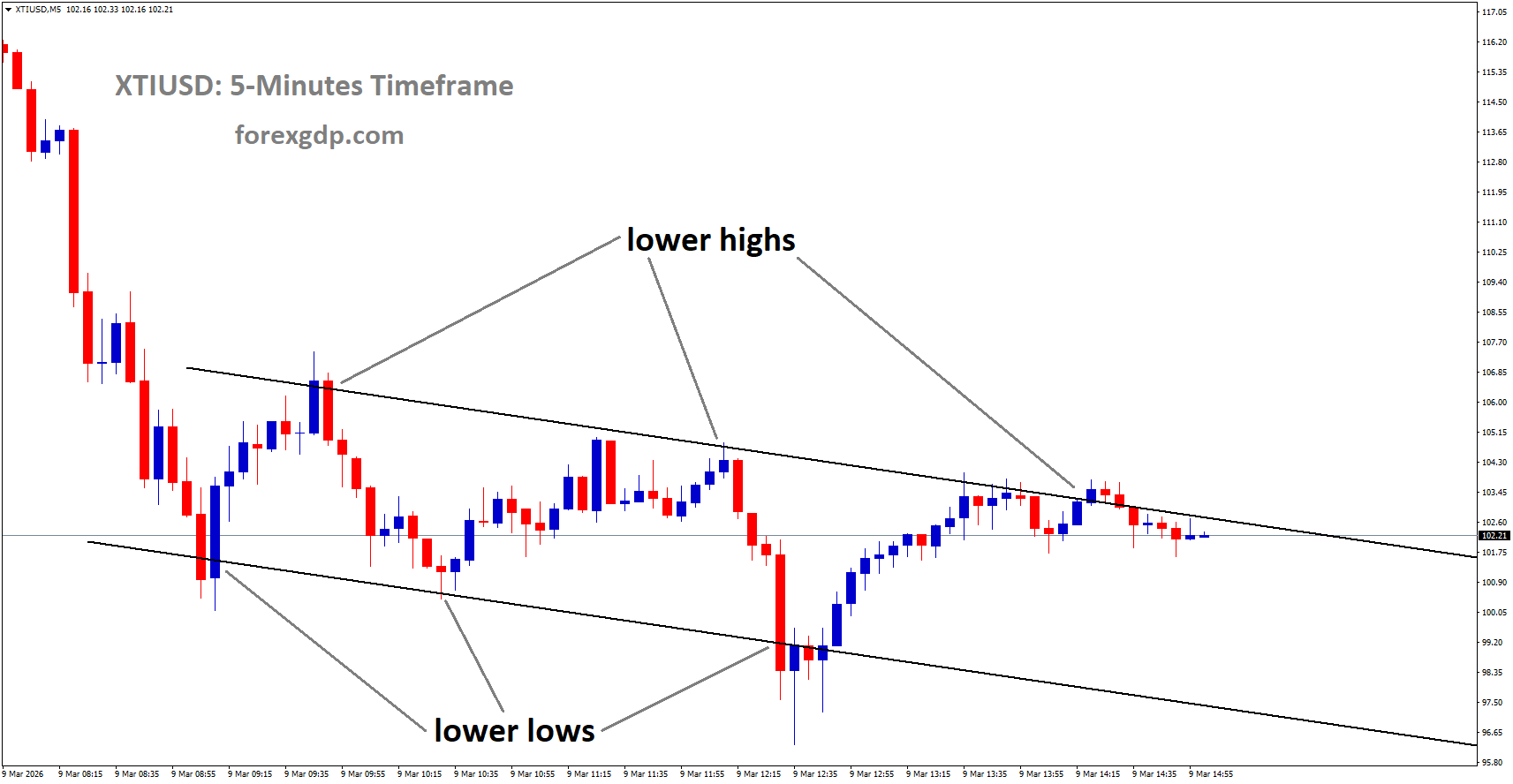
XTIUSD is moving in a descending channel, andthe market has reached a lower high area of the channel
However, the short-term effects can be significant. Rising energy costs tend to push inflation higher across the global economy.
Energy plays a major role in consumer price changes. In many countries, fluctuations in energy costs can account for between one-third and one-half of overall inflation movements. When oil and gas prices rise quickly, the impact spreads across transportation, manufacturing, and household expenses.
Businesses face higher operating costs, and those costs often get passed on to consumers. This creates upward pressure on prices across many sectors.
Economic Weakness Is Already Emerging
The timing of this energy shock is particularly challenging because parts of the global economy are already slowing.
The euro area economy had already begun losing momentum before the current crisis. Growth expectations were weakening, and industrial activity was softening.
The United States also shows signs of economic strain despite strong investment in emerging technologies like artificial intelligence. While those investments boost headline growth numbers, they do not fully reflect broader economic conditions.

Recent labor market data highlights this weakness. Instead of adding jobs, the US economy lost tens of thousands of positions in February. Manufacturing employment also declined, and previous job numbers were revised downward.
At the same time, the unemployment rate increased unexpectedly. Wage growth, however, continued to accelerate, creating a difficult situation for policymakers.
A Complicated Inflation Picture
When wages rise while employment weakens, it creates mixed signals for the economy. Strong wage growth can push inflation higher, even when job creation slows.
Retail sales have remained relatively strong, largely because wealthier households continue spending. But the combination of rising wages, job losses, and increasing energy costs has made investors uneasy.
As energy prices climb, inflation expectations tend to rise as well. Markets are already anticipating that higher fuel costs will eventually show up in consumer prices.
Central Banks Face a Difficult Choice
Central banks around the world are closely watching the situation. Rising inflation expectations could force policymakers to reconsider their strategies.
Government bond yields have already started moving higher as investors anticipate that central banks might need to keep interest rates elevated.
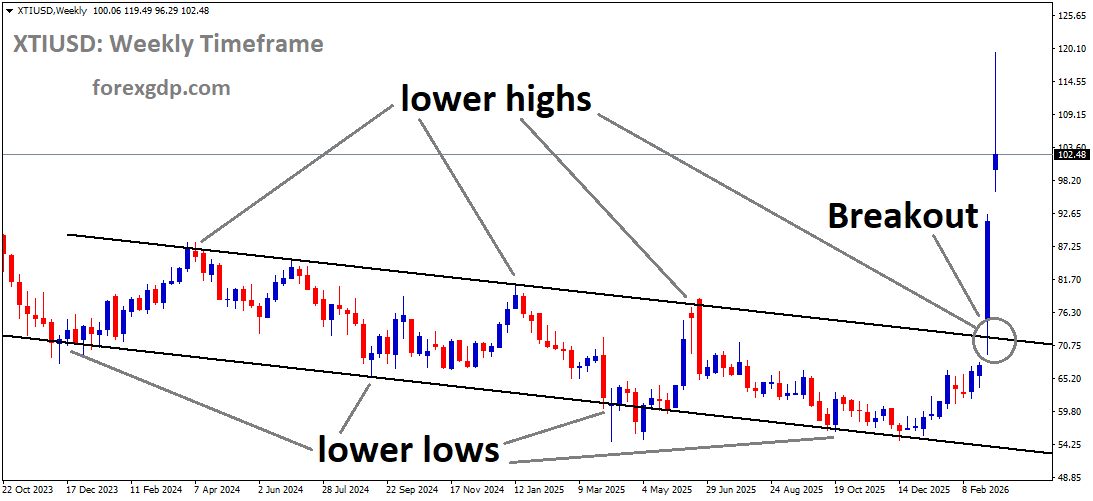
XTIUSD has broken the descending channel in upside
In the United States, Treasury yields rose sharply following the latest labor market report. Similar trends are appearing in other parts of the world.
Higher energy costs make inflation harder to control. If inflation accelerates again, central banks may feel pressure to tighten monetary policy rather than loosen it.
Financial markets are reacting quickly. Stock markets across Asia opened the week with significant losses, and futures for US and European markets point to further declines.
Safe Havens Are Shifting
During times of uncertainty, investors usually move money into assets considered safe. Traditionally, gold is one of the most popular safe-haven assets.
However, gold has not benefited from the current situation as much as expected. Reports suggest that logistical disruptions in the Middle East may be affecting gold shipments, making it harder to move the precious metal through key trading hubs.
Instead, the US dollar appears to be attracting most of the safe-haven demand. Investors often turn to the dollar during global crises because of its stability and the size of the US financial system.
Food Prices Could Be the Next Concern
Energy markets are not the only area facing risk. Food prices may also rise if disruptions in the Middle East continue.
A key factor involves fertilizer production. Modern agriculture depends heavily on nitrogen fertilizers produced using the Haber-Bosch process, a technology developed more than a century ago.
This process combines nitrogen from the air with hydrogen to produce fertilizer, and natural gas is a major component of the process.
The Gulf region plays a large role in the global trade of nitrogen fertilizers. If shipping routes remain blocked and energy supplies remain tight, fertilizer production and exports could be disrupted.
Since nitrogen fertilizer supports roughly half of global food production, any shortage could eventually push food prices higher around the world.
The Federal Reserve’s Growing Challenge

All eyes are now turning toward upcoming inflation data. Investors will closely watch new consumer price figures to gauge how quickly rising energy costs are feeding into the broader economy.
Even if the next inflation report appears moderate, markets may already be looking ahead to higher readings in the months that follow.
Before tensions escalated in the Middle East, many investors expected the US Federal Reserve to lower interest rates this year. Those expectations are now becoming less certain.
If energy prices remain high, the Fed may struggle to justify rate cuts. Cutting rates while inflation pressures are rising could undermine confidence in monetary policy.
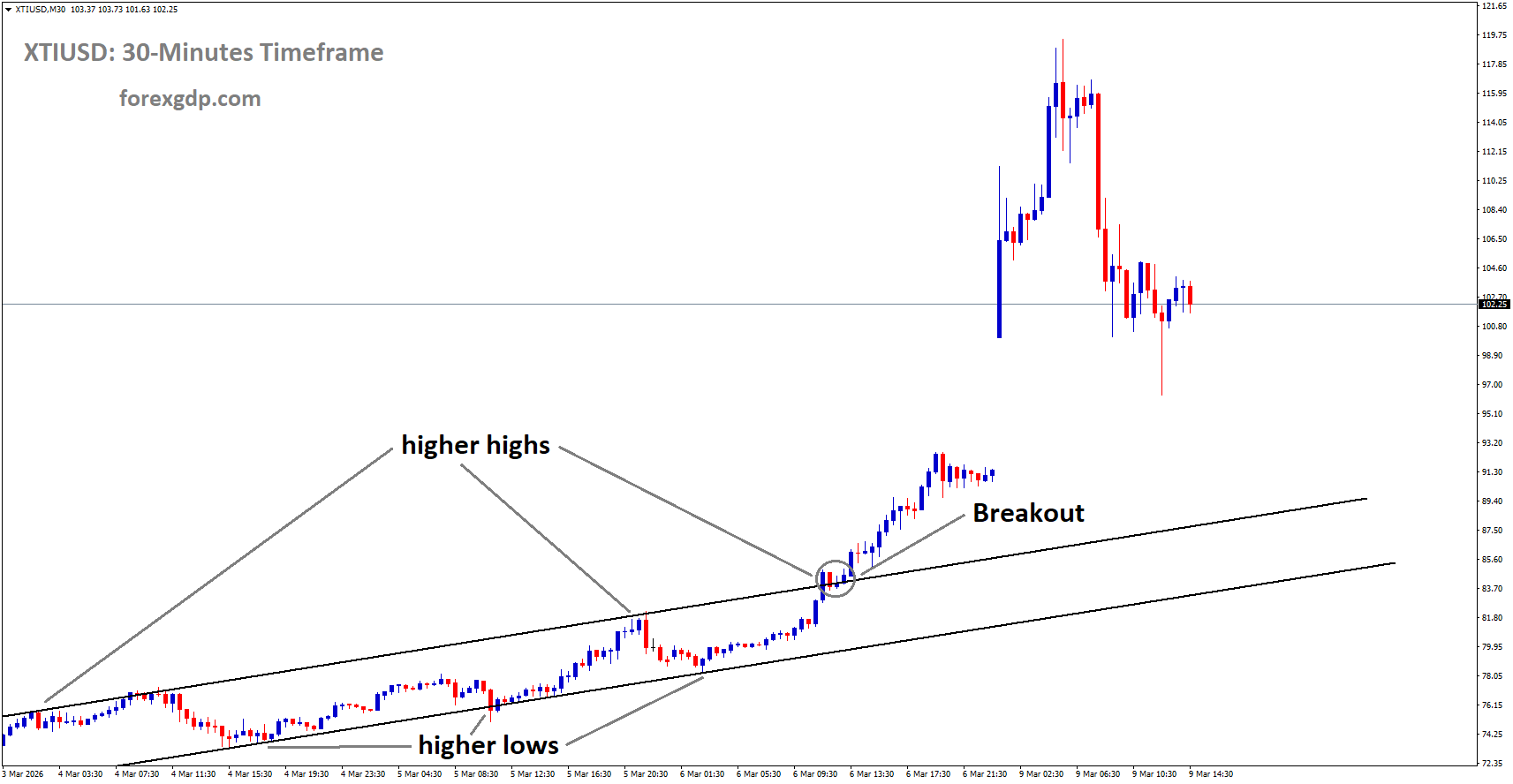
XTIUSD has broken the Ascending channel in upside
There is also another risk. Even if the Fed decides to lower interest rates, financial markets may not respond as expected. Investors could push government bond yields higher if they believe rate cuts are not justified by economic conditions.
This situation has happened before. In late 2024, a large interest rate cut was followed by a sharp rise in long-term bond yields, showing that market expectations can diverge from central bank decisions.
Summary
The recent surge in oil prices reflects deepening geopolitical tensions and disruptions in critical energy supply routes. With the Strait of Hormuz closed and uncertainty spreading across the Middle East, global energy markets are facing significant stress.
Higher energy costs are likely to fuel inflation, pressure economic growth, and complicate the decisions of central banks. At the same time, disruptions to fertilizer trade could eventually push food prices higher, adding another layer of inflation risk.
Financial markets are already reacting with rising bond yields, falling stock markets, and increased demand for safe assets like the US dollar. As the situation evolves, the global economy may face weeks or months of uncertainty driven by energy, inflation, and geopolitical risk.