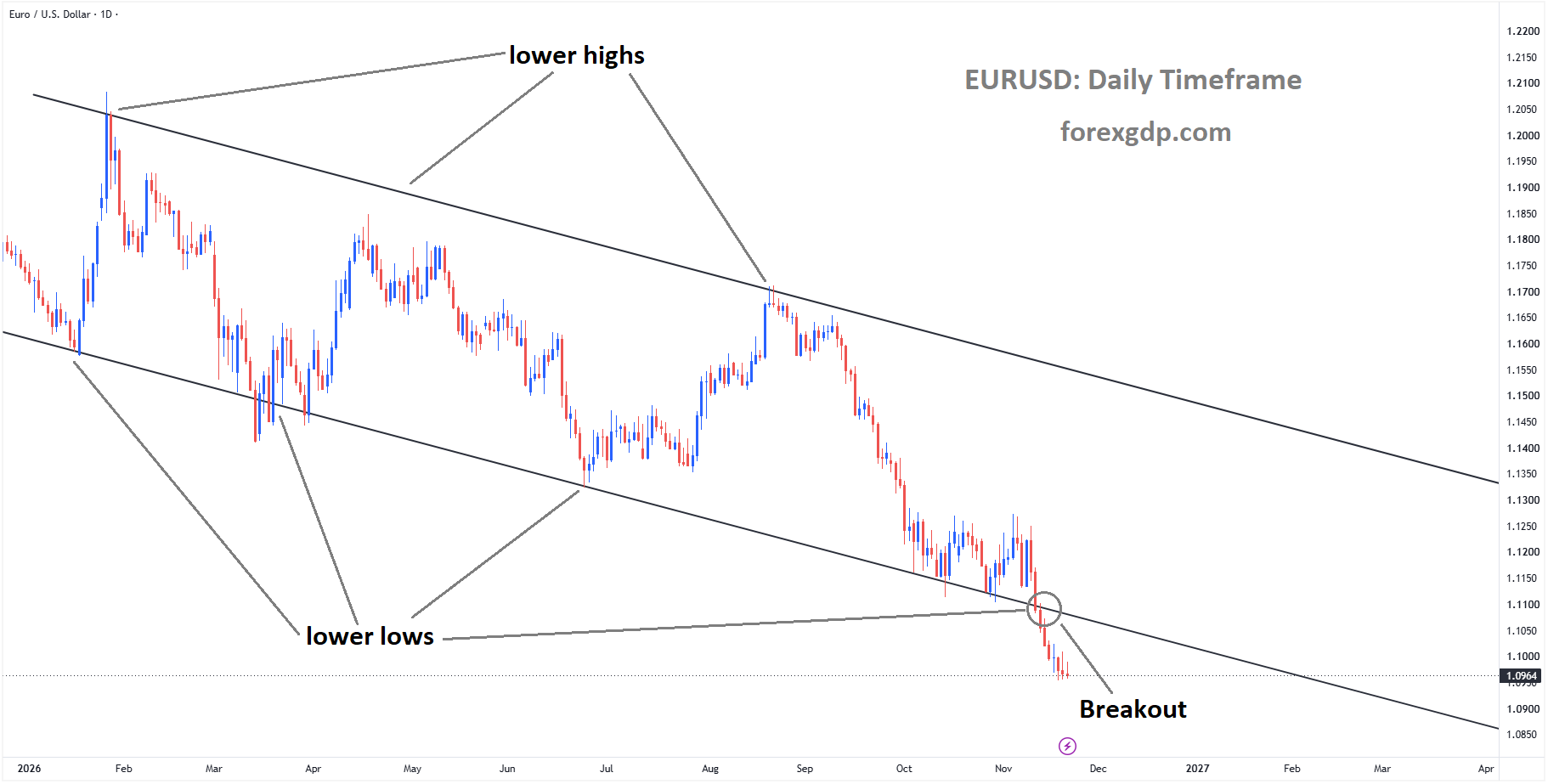
EURUSD has broken the descending channel to the downside
EURUSD Shows Signs of Recovery as German Manufacturing Pressures Intensify
The Euro (EUR) managed to regain some ground against the US Dollar (USD) on Friday, supported by stronger-than-expected inflation figures from Germany and a modest weakening of the American currency. However, the recovery remained fragile as uncertainty across global financial markets continued to influence investor confidence.
Germany’s latest Producer Price Index (PPI) report revealed a significant increase in factory-gate inflation, raising expectations that the European Central Bank (ECB) could maintain its tighter monetary policy approach. Despite this development, the Euro struggled to attract sustained buying interest as investors remained cautious about the broader economic outlook.
Meanwhile, weakness in US equity markets contributed to changing demand for the US Dollar, providing some temporary relief to the European currency. The combination of persistent inflation, central bank expectations, and cautious market sentiment continues to shape the relationship between the Euro and the US Dollar.
German Producer Price Inflation Rises Sharply in October
Germany’s latest producer inflation figures highlighted growing price pressures across Europe’s largest economy. According to data published by Germany’s Federal Statistical Office, Destatis, the Producer Price Index increased by 8.1% in October compared with the same month a year earlier.
This represented a notable acceleration from September’s annual increase of 6.7%. The October reading also exceeded economists’ expectations of 7.2%, making it the highest annual producer inflation figure recorded in more than three years.
The stronger-than-expected results suggest that German businesses continued to face rising production costs, potentially creating additional inflationary pressures throughout the wider economy.
Producer prices are an important measure of inflation because they reflect the costs manufacturers receive for their products before those goods reach consumers. When factory-gate prices rise, businesses may eventually pass some of those additional costs on to retailers and households.
As a result, persistent increases in producer prices can become a concern for policymakers attempting to maintain stable inflation.
Monthly Inflation Figures Highlight Continued Cost Pressures
The monthly data also revealed that German producer prices increased by 1.4% in October. Although this was lower than September’s 1.9% monthly rise, it remained considerably higher than the 0.9% increase economists had anticipated.
This difference between expectations and actual results suggests that Producer Price Index (PPI) report were proving more persistent than many analysts had predicted.
The slowdown in monthly growth offered some encouragement, but the elevated annual reading indicated that manufacturers were still operating in a challenging cost environment.
Higher production expenses can affect businesses in several ways. Companies may experience pressure on profit margins, face difficult pricing decisions, or reduce spending in other areas to manage increasing costs.
For consumers, the consequences may become visible when businesses raise the prices of finished goods to recover their additional expenses.
Strong German Inflation Data Supports ECB Tightening Expectations

The acceleration in German producer inflation strengthened the argument for further monetary policy tightening by the European Central Bank.
The ECB is responsible for maintaining price stability across the euro area. When inflation remains elevated, the central bank may increase interest rates to reduce demand and prevent price pressures from becoming deeply established in the economy.
Higher borrowing costs can discourage excessive spending and lending, helping to moderate inflation over time.
Germany’s latest inflation figures suggested that the ECB still faced significant challenges in bringing price growth under control.
However, the central bank must also consider the potential economic consequences of tighter monetary policy. Raising interest rates can make borrowing more expensive for households and businesses, potentially slowing investment, consumer spending, and economic activity.
This creates a difficult balancing act for policymakers, particularly when inflation remains high while economic growth faces uncertainty.
December Interest Rate Decision Remains in Focus
Investors were already expecting the European Central Bank to raise interest rates by 25 basis points at its December policy meeting.
Because this anticipated increase had largely been incorporated into market expectations, the stronger German inflation figures did not produce a substantial improvement in sentiment toward the Euro.
Financial markets often respond more strongly to developments that change expectations about future monetary policy rather than information that supports an already widely expected decision.
Although the German PPI report reinforced the case for additional tightening, it did not significantly alter the prevailing outlook for the ECB’s next move.
Investors were therefore left considering whether persistent inflation might require the central bank to maintain restrictive monetary conditions for longer than previously anticipated.
US Dollar Pullback Offers Temporary Relief to the Euro
Alongside the German inflation report, a moderate retreat in the US Dollar helped support the Euro on Friday.
The American currency eased following a difficult session on Wall Street on Thursday, when sharp declines in US equities reflected growing uncertainty among investors.
Developments in American financial markets can influence global currency sentiment because the US Dollar plays a central role in international trade, investment, and financial transactions.
When investors become concerned about economic conditions or financial stability, their demand for different currencies can change quickly.
In this instance, the Dollar’s modest retreat provided some breathing room for the Euro after a period of sustained weakness.
However, the improvement remained limited because broader market conditions continued to encourage caution.
Risk-Averse Sentiment Restrains Euro Confidence
A risk-off environment generally develops when investors become less willing to hold assets they consider vulnerable to economic uncertainty.
During such periods, market participants often reassess their exposure to currencies, equities, and other investments based on expectations about economic growth and financial stability.
The Euro can face difficulties in this environment, particularly when concerns about the European economy coincide with uncertainty in international markets.
Although Germany’s stronger inflation figures offered a reason for investors to reconsider the ECB’s policy outlook, they were not enough to completely overcome broader concerns.
The Euro’s limited improvement demonstrated that positive economic data does not always translate into stronger currency confidence.
Investor expectations, global economic conditions, and perceptions of financial risk can sometimes carry greater influence than a single economic report.
European Economic Outlook Remains an Important Factor
Germany’s producer inflation report also raised broader questions about the health of the European economy.
As the euro area’s largest economy, Germany plays an important role in regional manufacturing, industrial production, and international trade.
Persistent cost increases among German manufacturers can have consequences beyond the country’s borders, particularly for businesses that depend on German industrial goods and supply chains.
If manufacturers continue facing elevated expenses, they may find it difficult to expand production or maintain profitability without adjusting their business strategies.
At the same time, households across Europe may face additional financial pressure if higher production costs eventually contribute to consumer inflation.
These challenges complicate the European Central Bank’s efforts to restore price stability without placing unnecessary pressure on economic growth.
Investors will therefore continue monitoring economic reports from Germany and other major euro-area economies to assess whether inflation is becoming more persistent or beginning to ease.
The relationship between inflation and economic activity will remain especially important when evaluating future ECB decisions.
Final Summary
The Euro’s modest recovery against the US Dollar on Friday reflected a combination of stronger German inflation data and a temporary retreat in the American currency.
Germany’s Producer Price Index increased by 8.1% annually in October, exceeding expectations and reinforcing concerns about persistent inflation across Europe’s largest economy. Monthly producer inflation also remained stronger than economists had forecast, highlighting continued pressure on manufacturing costs.
These developments strengthened the argument for further European Central Bank monetary tightening. However, their immediate impact on the Euro was limited because investors had already anticipated a 25-basis-point interest rate increase at the ECB’s December meeting.
Meanwhile, uncertainty following sharp declines on Wall Street contributed to cautious global market sentiment, restricting confidence in the European currency.
Looking ahead, the Euro’s broader outlook will depend on how inflation develops, how the ECB responds to changing economic conditions, and whether global investor confidence improves. Germany’s inflation figures have reinforced the importance of monetary policy decisions, but the balance between controlling inflation and supporting economic growth remains a central challenge for European policymakers.
GBPUSD Gains Momentum as Strong UK Consumer Spending Lifts Sterling Sentiment
The British Pound (GBP) regained some ground against the US Dollar (USD) on Friday, supported by stronger-than-expected UK retail sales figures and a slight weakening of the American currency. The latest economic data offered some encouragement to investors, suggesting that British consumers remain willing to spend despite ongoing economic uncertainty.
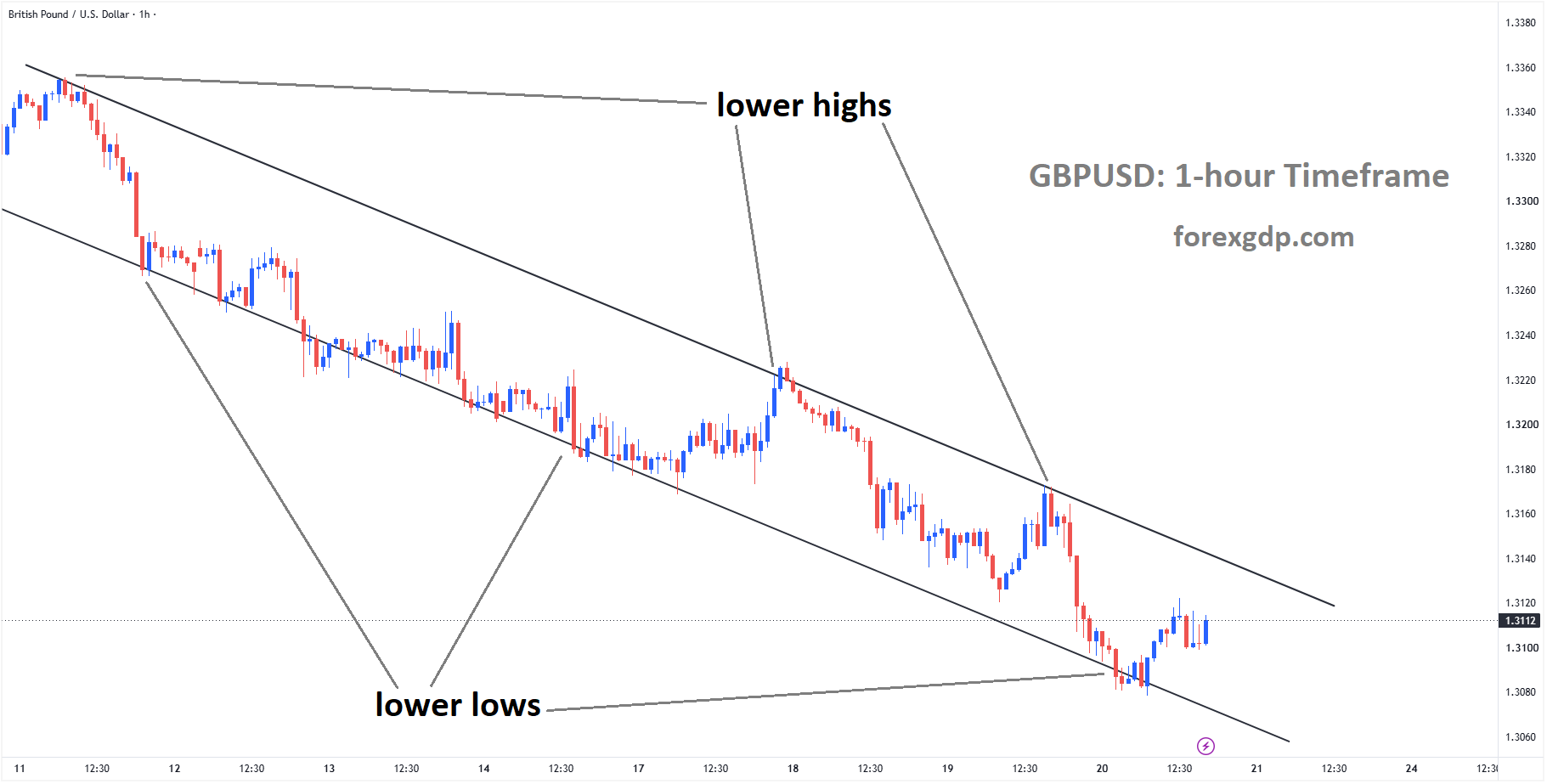
GBPUSD is rebounding from the lower low area of the descending channel
However, the Pound’s recovery remained limited as cautious market sentiment continued to influence currency movements. Concerns surrounding US technology stocks, particularly companies linked to artificial intelligence (AI), also contributed to changing investor confidence across global financial markets.
While the latest UK retail figures provided a positive signal for the British economy, investors are still closely watching the Bank of England’s (BoE) next monetary policy decision and broader economic developments.
UK Retail Sales Deliver a Positive Surprise in October
The UK economy received encouraging news after official figures showed that retail sales performed significantly better than economists had expected in October.
According to data released by the Office for National Statistics (ONS), retail sales increased by 0.7% during the month. Economists had predicted that consumer spending would remain unchanged, making the actual results a welcome surprise.
The improvement was particularly important because September had been a difficult month for British retailers. Retail sales declined by a revised 0.6% during that period, raising concerns about weakening household demand.
October’s recovery suggests that consumer activity improved after the previous month’s slowdown.
Stronger retail spending can indicate that households are becoming more comfortable with their financial situation. It may also suggest that employment conditions, household income, and consumer confidence are providing some support to the wider economy.
Nevertheless, one month of positive retail data does not necessarily mean that consumer spending will continue to improve. Economic uncertainty and household financial pressures could still influence shopping habits in the coming months.
Retail Sales Excluding Fuel Show Strong Consumer Demand
The positive retail performance was not limited to overall sales figures. Retail activity excluding automotive fuel also recorded a notable improvement, offering further evidence of stronger consumer demand.
Sales excluding fuel increased by 0.9% in October, reversing a 0.9% decline recorded in September. This result was considerably better than economists’ expectations of a 0.1% contraction.
Excluding fuel from retail figures helps provide a clearer understanding of spending on other goods, including clothing, household products, electronics, and everyday consumer items.
The stronger performance suggests that consumers increased their purchases across the broader retail sector.
Annual figures also highlighted the improvement in British retail activity.
Total retail sales increased by 2.5% compared with the same month a year earlier, while sales excluding fuel recorded annual growth of 2.9%.
These figures indicate that consumer spending remained relatively resilient despite economic challenges.
For businesses, stronger retail activity can support revenue, encourage investment, and improve confidence in future demand. Retailers may also benefit from increased customer activity as they prepare for important seasonal shopping periods.
However, the sustainability of this improvement will depend on several factors, including household purchasing power, inflation, and the general economic outlook.
Strong Consumer Spending Raises Questions About Bank of England Policy
The stronger-than-expected retail sales report has also increased attention on the Bank of England’s upcoming interest rate decision.
Consumer spending plays an important role in monetary policy because it influences economic growth and inflation.
When households spend more, businesses may experience stronger demand for their products and services. Although this can support economic activity, sustained demand may also contribute to inflationary pressure.
For the Bank of England, maintaining a balance between economic growth and stable inflation remains a major priority.
The latest retail figures could strengthen arguments for keeping monetary policy restrictive or considering further tightening if inflation remains a concern.
A potential interest rate increase at the next policy meeting has therefore become an important topic for investors assessing the outlook for the British Pound.
Higher interest rates can make a country’s currency more attractive to international investors because certain financial assets may offer improved returns.
However, the central bank will not make its decision based on retail sales alone.
Policymakers will also consider inflation trends, wage growth, employment conditions, business activity, and the overall strength of the British economy.
If economic conditions show signs of weakening elsewhere, the Bank of England may prefer a more cautious approach despite stronger consumer spending.
US Dollar Weakens as Investors Reassess AI-Related Stocks
While positive British economic data supported the Pound, developments in the United States also played a role in the currency’s recovery.
The US Dollar eased from its recent strength as investors reconsidered their exposure to technology companies associated with artificial intelligence.
AI-related businesses have attracted significant investor attention because of expectations that artificial intelligence will transform industries, improve productivity, and create new opportunities for economic growth.
However, concerns about company valuations, future earnings, and the sustainability of investment spending have made some investors more cautious.
When uncertainty increases, market participants often adjust their investment portfolios and reduce exposure to assets they consider vulnerable to sudden changes in sentiment.
The resulting movements across financial markets can also influence demand for major currencies.
In this case, the softer US Dollar provided some relief for the British Pound.
Nevertheless, uncertainty surrounding technology shares does not always weaken the American currency. During periods of significant global financial stress, investors may seek the US Dollar as a relatively safe and liquid asset.
This means the relationship between stock market sentiment and currency demand can change depending on the wider economic environment.
Cautious Global Market Sentiment Limits Pound Recovery
Despite the encouraging retail figures, the British Pound continued to face challenges from the broader market environment.
Investors remained cautious as concerns about global economic growth and financial market stability affected confidence.
During uncertain periods, market participants often become more selective about where they invest. This can reduce demand for currencies perceived as sensitive to economic conditions.
The British Pound is influenced by several domestic and international factors, including the outlook for UK economic growth, interest rate expectations, and global investment sentiment.
Even when British economic indicators improve, unfavorable developments elsewhere can limit the currency’s ability to maintain its recovery.
The US Dollar also remains an important part of this relationship because of its central role in international trade, investment, and financial transactions.
Changes in expectations surrounding the Federal Reserve’s monetary policy can influence the Dollar and, consequently, the Pound.
As a result, stronger UK retail spending may provide support for Sterling without completely removing the pressure created by global uncertainty.
What Stronger Retail Sales Mean for the UK Economy

The latest retail figures offer a useful insight into the condition of British households and businesses.
Consumer spending is a major contributor to economic activity, and improvements in retail demand can have positive effects across several industries.
When people increase their purchases, retailers may need additional goods, transport services, warehouse capacity, and employees. This can create opportunities for other businesses connected to the retail sector.
Stronger spending can also improve business confidence, particularly when companies have experienced weaker demand in previous months.
However, the economic benefits depend on whether the improvement continues.
Households may still face challenges from living expenses, borrowing costs, and uncertainty about future income.
If these pressures intensify, consumers could become more careful with discretionary purchases.
For this reason, economists will be watching upcoming retail reports to determine whether October’s improvement represents the beginning of a more sustained recovery or simply a temporary rebound.
Key Economic Developments Investors Will Watch Next
Looking ahead, several developments could influence confidence in the British Pound and the US Dollar.
The Bank of England’s next monetary policy announcement will be particularly important. Investors will be interested in how policymakers interpret the latest consumer spending figures alongside inflation and employment data.
Further UK economic reports will also help clarify whether household demand is improving consistently.
In the United States, Federal Reserve policy expectations and economic performance will remain important influences on the Dollar.
Meanwhile, investor sentiment toward artificial intelligence companies could continue to affect broader financial markets.
Together, these developments will help determine whether the Pound can build on its recent improvement or remains under pressure from international uncertainty.
Summary
The British Pound received a welcome boost from stronger UK retail sales and a modest retreat in the US Dollar.
October’s retail sales growth exceeded expectations, while spending excluding fuel also improved significantly. These results suggest that British consumer demand remained resilient following September’s decline.
The encouraging figures have brought renewed attention to the Bank of England’s upcoming interest rate decision, although policymakers will need to assess a wider range of economic indicators before deciding their next move.
At the same time, uncertainty surrounding AI-related stocks and cautious global investor sentiment continue to influence the US Dollar and broader currency markets.
Ultimately, the Pound’s outlook will depend on whether positive UK economic developments continue and how monetary policy expectations evolve on both sides of the Atlantic.
USDJPY Loses Momentum as Tokyo’s Monetary Policy Shift Gains Investor Confidence
The Japanese Yen gained strength against the US Dollar on Friday as fresh inflation data from Japan increased expectations that the Bank of Japan (BoJ) could raise interest rates at its December policy meeting. The latest figures showed that consumer inflation accelerated in October, giving policymakers another reason to consider tightening monetary policy.
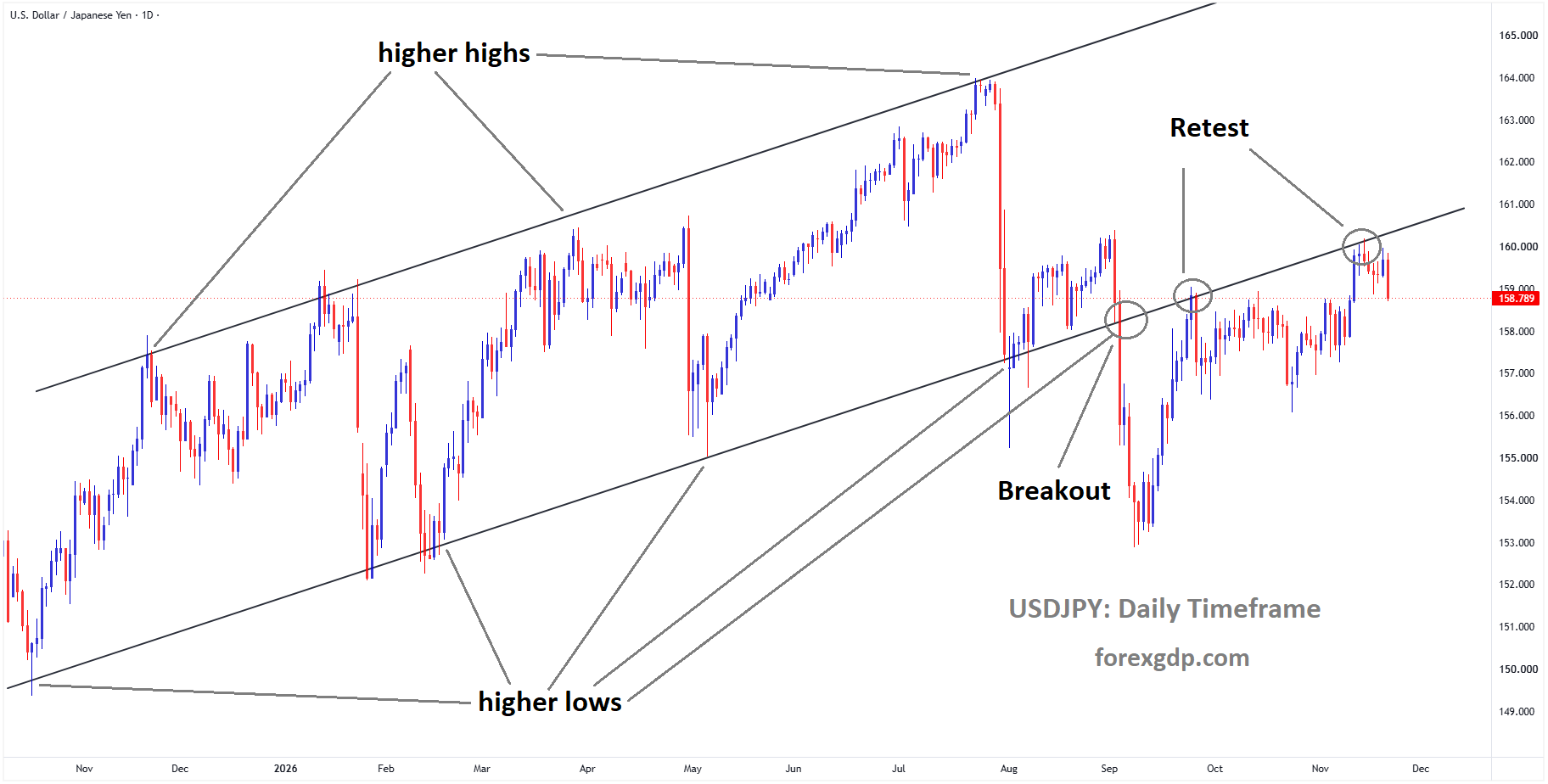
USDJPY has reached the retest area of the broken ascending channel
Japan’s inflation developments have become an important focus for investors as the country continues its gradual shift away from years of extremely low interest rates. Although economic growth remains a concern, persistent inflation suggests that the central bank may have enough confidence to continue adjusting its monetary policy.
The latest report also highlights the challenges facing Japanese policymakers as they try to control inflation without putting additional pressure on an already fragile economy.
Japanese Yen Strengthens Following October Inflation Report
The Japanese Yen received support during Friday’s early European trading session after Japan released its latest national consumer inflation figures. The report reinforced expectations that the Bank of Japan could take another step toward normalizing interest rates.
A stronger Yen reflects growing confidence that Japanese borrowing costs may rise in the coming months. Higher domestic interest rates can make the currency more attractive to investors, particularly when the gap between Japanese and overseas interest rates begins to narrow.
For several years, Japan maintained exceptionally loose monetary conditions to encourage spending, investment, and economic growth. However, the return of sustained inflation has changed the environment in which the central bank operates.
Investors are now paying closer attention to inflation reports, economic activity, and comments from Bank of Japan officials to understand how quickly the country might move toward a more balanced monetary policy.
The October inflation figures provided another important piece of information supporting expectations of a December policy adjustment.
Japan’s Consumer Inflation Accelerates in October
Official data released by the Japan Statistics Bureau showed that Japan’s National Consumer Price Index increased by 2.3% year over year in October, compared with 2.1% in September.
The rise indicates that consumer prices continued to increase across the Japanese economy. It also suggests that inflation remains an important issue for households, businesses, and policymakers.
The core Consumer Price Index, which excludes fresh food prices, increased by 2.2% annually in October. This was slightly higher than September’s 2.1% reading, although it remained below economists’ expectations of 2.3%.
Despite falling short of forecasts, the core inflation figure stayed above the Bank of Japan’s 2% inflation target for the second consecutive month.
This development is significant because the central bank has spent years trying to achieve stable and sustainable inflation. Continued readings above its target could strengthen the argument that Japan is moving toward a more lasting period of price growth.
However, policymakers must also determine whether inflation is being supported by healthy domestic demand or mainly by temporary increases in business and household expenses.
Underlying Inflation Remains Important for Bank of Japan Policy
Beyond the headline and core inflation figures, the Bank of Japan closely monitors a measure that excludes both fresh food and energy prices.
This measure helps policymakers understand broader inflation conditions by removing categories that can experience sudden changes because of weather, global supply conditions, and other external factors.
In October, this measure of underlying inflation increased by 2.2% compared with the previous year, slowing from 2.4% in September.
Although the decline suggests that some inflation pressures may be easing, the reading remains above the central bank’s target.
For the Bank of Japan, the key question is whether inflation can remain stable without depending heavily on temporary external influences.
Sustainable inflation is generally associated with stronger wages, steady consumer spending, and businesses having enough confidence to adjust salaries and investment plans.
If these conditions continue developing, the central bank may become more comfortable raising borrowing costs.
At the same time, the moderation in underlying inflation suggests that policymakers still have reasons to approach future decisions carefully.
December Bank of Japan Rate Hike Expectations Increase
The October inflation report strengthened expectations that the Bank of Japan could raise its policy interest rate at its December meeting.
According to data from LSEG cited in the report, investors assigned a 72% probability to a 25-basis-point interest rate increase.
This expectation reflects growing confidence that Japan’s central bank is prepared to continue moving away from its previous highly accommodative monetary policy.
A rate increase would represent another step in Japan’s effort to establish a more conventional interest rate environment.
However, market expectations do not guarantee that policymakers will act. The Bank of Japan will still need to assess incoming economic information before making its decision.
Inflation, wage growth, consumer demand, and overall economic conditions are likely to remain important considerations.
The central bank must also evaluate how higher borrowing costs could affect households and businesses that have become accustomed to relatively inexpensive financing.
A gradual approach would allow policymakers to observe how previous policy adjustments influence the economy before introducing additional changes.
Japan’s Economic Contraction Creates a Policy Challenge

One factor complicating the Bank of Japan’s decision is the unexpected contraction in Japan’s economy during the third quarter.
Weak economic growth can make interest rate increases more difficult because higher borrowing costs may discourage consumer spending and business investment.
For households, rising interest rates can increase certain loan repayment costs and reduce disposable income.
Businesses may also become more cautious about expanding operations or financing new projects when borrowing becomes more expensive.
These risks are particularly relevant for Japan, where policymakers have spent decades encouraging stronger economic activity.
Nevertheless, persistent inflation creates a different challenge. Keeping monetary policy too loose for too long could allow inflationary pressures to remain elevated.
The Bank of Japan therefore faces a delicate balancing act between maintaining price stability and supporting economic recovery.
The December decision may depend on whether officials believe inflation is sufficiently sustainable to justify another rate increase despite weaker growth.
Governor Kazuo Ueda Signals Further Monetary Policy Normalization
Bank of Japan Governor Kazuo Ueda added to expectations of further policy tightening through comments made on Thursday.
Ueda stated that underlying inflation was broadly consistent with the central bank’s price stability target.
He also indicated that the Bank of Japan intends to continue raising interest rates while monetary conditions remain accommodative.
His remarks suggest that policymakers still see room to adjust borrowing costs without immediately creating overly restrictive financial conditions.
The comments are important because they provide insight into how the central bank views Japan’s current inflation environment.
Rather than focusing exclusively on individual monthly inflation readings, officials appear to be considering whether the broader economy can support a gradual transition toward higher interest rates.
Ueda’s statements also reinforce the idea that monetary policy normalization is likely to be a continuing process rather than a single decision.
However, the pace of future adjustments will depend on economic developments and the central bank’s assessment of inflation sustainability.
What Japan’s Monetary Policy Outlook Means for the US Dollar and Japanese Yen
The direction of Japanese monetary policy has important implications for the relationship between the US Dollar and the Japanese Yen.
When investors expect Japanese interest rates to increase, the Yen can receive additional support because domestic financial assets may become relatively more attractive.
However, currency movements also depend on monetary policy expectations in the United States.
The difference between interest rates in Japan and the United States remains an important influence on international investment decisions.
If the Bank of Japan continues tightening monetary policy while the US Federal Reserve follows a different policy direction, the relative attractiveness of the two currencies could change.
Global economic uncertainty, investor confidence, and demand for safer assets may also influence the Yen.
For this reason, Japan’s inflation figures are only one part of the broader outlook. Investors will continue monitoring central bank communication and economic developments in both countries.
Summary
Japan’s October inflation report has strengthened expectations that the Bank of Japan could raise interest rates at its December policy meeting.
Headline consumer inflation accelerated to 2.3%, while core inflation increased to 2.2%, remaining above the central bank’s 2% target for a second consecutive month.
Although underlying inflation moderated and Japan’s economy contracted unexpectedly during the third quarter, persistent price pressures continue to support the case for gradual monetary policy tightening.
Governor Kazuo Ueda’s recent comments further suggest that the central bank remains committed to normalizing interest rates when economic conditions allow.
The Japanese Yen has benefited from these expectations, while investors remain focused on whether the Bank of Japan will follow through with another policy adjustment.
Ultimately, the December meeting will be an important test of how Japan balances the need for stable inflation with the challenge of supporting sustainable economic growth.
USDCHF Faces Pressure as Swiss Franc Defies Fed Signals
The USD/CHF currency pair remains in focus as investors assess the future direction of monetary policy in the United States and Switzerland. Although the US Dollar has recently experienced some weakness against the Swiss Franc, expectations of further interest rate increases by the Federal Reserve could help the American currency regain strength.
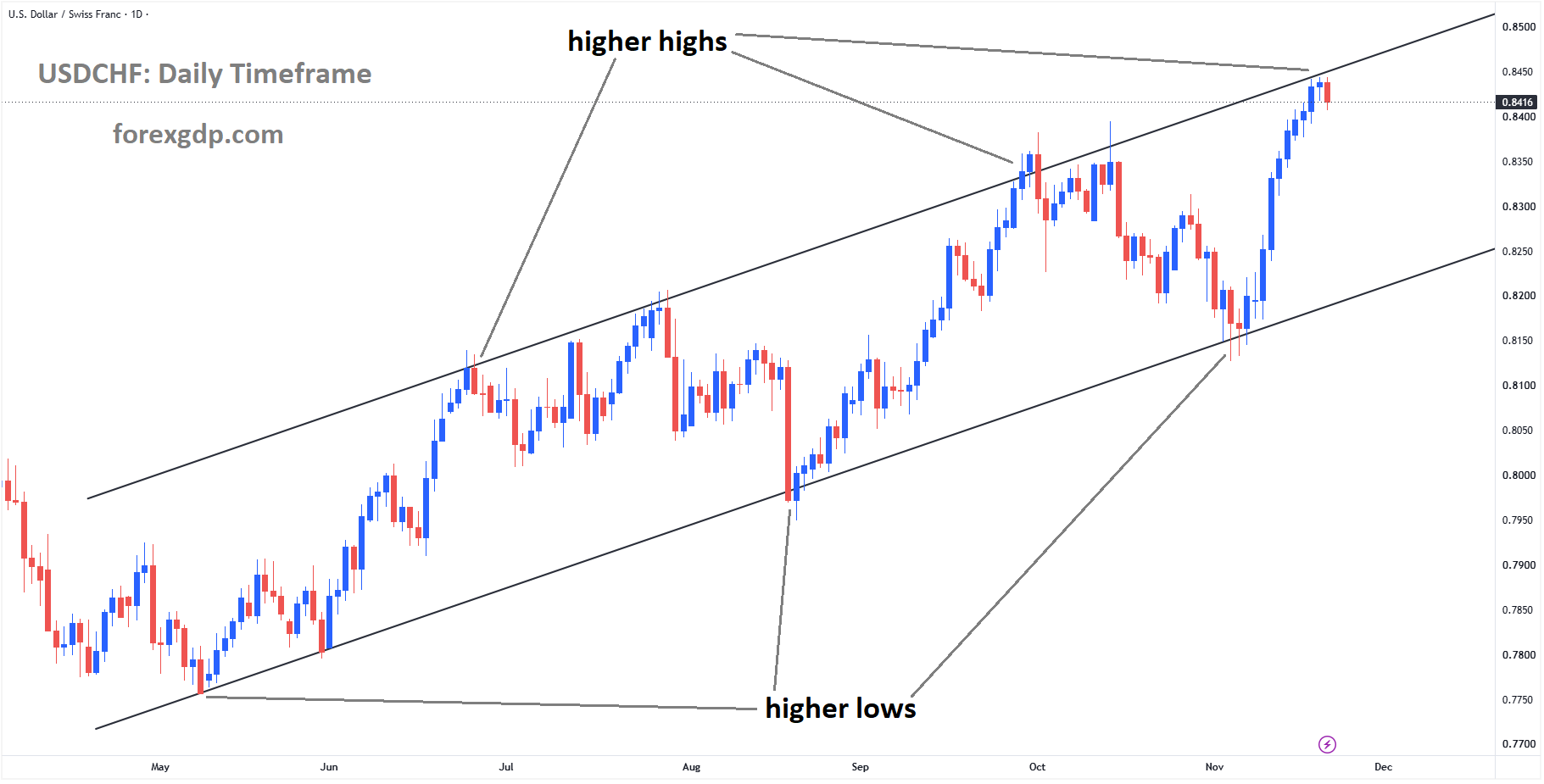
USDCHF has reached the higher high area of the ascending channel
The Federal Reserve’s commitment to controlling inflation continues to influence market sentiment. Recent policy discussions suggest that US central bank officials remain concerned about persistent inflation and may consider additional monetary tightening to bring consumer prices under control.
Meanwhile, the Swiss National Bank (SNB) appears to be following a more cautious approach toward future interest rate increases. This difference in monetary policy expectations could create favorable conditions for the US Dollar while placing pressure on the Swiss Franc.
As investors evaluate the outlook for both central banks, interest rate expectations, inflation developments, and economic conditions are likely to remain important factors influencing the USD/CHF exchange rate.
Federal Reserve Rate Hike Expectations Support the US Dollar
The Federal Reserve’s monetary policy outlook remains one of the most important factors affecting the relationship between the US Dollar and the Swiss Franc.
According to the CME FedWatch Tool figures cited in the market outlook, investors assigned a 97.3% probability to a 25-basis-point Federal Reserve interest rate increase at the December policy meeting. The same figures indicated a 2.7% probability of a larger 50-basis-point increase.
These expectations suggest that investors were preparing for another round of monetary tightening as the central bank continued its efforts to control inflation.
Higher interest rates can make a currency more attractive to international investors because certain financial assets denominated in that currency may offer better returns. As a result, expectations of tighter Federal Reserve policy can increase demand for the US Dollar.
However, the relationship between interest rates and currency strength is not always straightforward. Investors also consider economic growth, financial stability, and broader global conditions when making decisions.
Even so, a Federal Reserve that remains committed to restrictive monetary policy could provide meaningful support for the US Dollar, particularly if other major central banks adopt a more patient approach.
FOMC Meeting Minutes Highlight Growing Inflation Concerns
The minutes from the October Federal Open Market Committee (FOMC) meeting provided additional insight into the Federal Reserve’s concerns about inflation.
According to the meeting summary, nearly all participating officials anticipated that higher interest rates would be necessary to address growing inflation risks.
This position reflected the central bank’s determination to prevent inflation from becoming a lasting problem for American households and businesses.
Inflation affects nearly every part of the economy. When consumer prices rise too quickly, households may struggle with higher living expenses, while businesses face increasing operational costs.
The Federal Reserve uses interest rate policy to influence borrowing, spending, and investment throughout the economy. Raising interest rates generally makes borrowing more expensive, which can reduce demand and help ease inflationary pressure over time.
However, central bank officials must also consider the possible effects of tighter monetary policy on employment and economic activity.
An overly aggressive approach could weaken economic growth, while insufficient action might allow inflation to remain elevated for longer.
The October meeting minutes highlighted this difficult balance and reinforced the importance of incoming economic information in shaping future Federal Reserve decisions.
Christopher Waller’s Comments Reinforce a Hawkish Fed Outlook
Remarks from Federal Reserve Governor Christopher Waller added to expectations that US monetary policy could remain restrictive.
Waller indicated that the central bank might need to respond more aggressively if inflation continued to rise.
His comments reflected concerns that existing monetary policy measures might not be enough to bring inflation under control.
A hawkish monetary policy stance generally refers to a central bank’s willingness to maintain higher interest rates or introduce additional tightening to manage inflation.
For the US Dollar, such expectations can be supportive because they suggest that American interest rates could remain relatively attractive compared with those in other economies.
Nevertheless, statements from individual Federal Reserve officials do not guarantee a particular policy decision.
The central bank evaluates a wide range of economic information before determining its next steps. Inflation reports, employment conditions, consumer spending, and business activity can all influence its assessment.
If inflation remains persistent, policymakers may have stronger reasons to maintain restrictive financial conditions.
Alternatively, evidence of easing inflation could reduce the need for additional interest rate increases.
These uncertainties make Federal Reserve communications especially important for understanding the broader USD/CHF outlook.
Swiss National Bank Policy Expectations Could Weigh on the Franc

While the Federal Reserve has attracted attention for its potentially restrictive monetary policy, the Swiss National Bank has followed a different expected path.
Economists have adjusted their forecasts for future SNB interest rate increases, bringing forward expectations for two separate 25-basis-point hikes.
Under these forecasts, the first increase would take place in June 2027, followed by another toward the end of 2028.
However, not all financial institutions share the same outlook.
Goldman Sachs has maintained the expectation that Swiss interest rates will remain unchanged until 2028.
This difference in forecasts highlights uncertainty surrounding the timing of future Swiss monetary policy adjustments.
A delayed tightening cycle could limit the Swiss Franc’s appeal among investors who prioritize interest income.
If the Federal Reserve maintains higher interest rates while the SNB postpones increases, the difference between US and Swiss borrowing costs could remain significant.
That situation may encourage some investors to favor US Dollar-denominated assets over comparable Swiss investments.
However, the Swiss Franc has characteristics that extend beyond interest rate considerations. Switzerland’s reputation for financial stability and its strong institutional framework can attract international capital during periods of uncertainty.
Consequently, the Franc may continue to receive support from investors seeking stability, even when Swiss interest rates are comparatively low.
US-Swiss Interest Rate Differences Remain an Important Currency Driver
The interest rate differential between the United States and Switzerland is a central factor in the USD/CHF outlook.
An interest rate differential represents the difference between the interest rates available in two economies.
When US interest rates are higher than Swiss rates, some investors may find US Dollar assets more appealing because of their potential income advantages.
This can increase demand for the American currency while reducing demand for the Swiss Franc.
The effect becomes particularly relevant when investors expect the difference between the two countries’ interest rates to widen or remain elevated.
In the monetary policy scenario described, expectations of additional Federal Reserve tightening contrast with forecasts for delayed Swiss National Bank action.
Such a divergence could strengthen the relative appeal of the US Dollar.
Still, interest rate differences are only one part of the currency market.
Global economic uncertainty, international investment flows, geopolitical developments, and changing expectations about economic growth can also influence demand for both currencies.
The Swiss Franc’s traditional role as a safe-haven currency is particularly important during periods of financial stress.
Investors may favor the Franc when concerns about global stability increase, even if interest rate conditions appear more favorable in the United States.
Therefore, the direction of USD/CHF depends on how monetary policy expectations interact with broader investor confidence.
Economic Developments Could Shape the Future USD/CHF Outlook
Looking ahead, economic developments in both countries will play an important role in determining the relative strength of their currencies.
In the United States, inflation remains a major consideration for Federal Reserve policymakers.
Persistent inflation could strengthen the case for maintaining restrictive monetary policy, while a sustained improvement in inflation conditions might allow officials to adopt a less aggressive approach.
Employment trends and consumer activity will also influence expectations about the American economy’s ability to withstand higher borrowing costs.
In Switzerland, investors will monitor economic growth, inflation, and statements from Swiss National Bank officials for clues about the timing of future policy adjustments.
If Swiss policymakers continue to favor patience while the Federal Reserve maintains a restrictive stance, the US Dollar could benefit from the difference in policy expectations.
On the other hand, stronger demand for safe-haven assets could support the Swiss Franc and limit the Dollar’s relative strength.
Changes in either central bank’s outlook could also alter investor expectations.
For this reason, developments in monetary policy communication will remain important in assessing the longer-term relationship between the two currencies.
Summary
The USD/CHF outlook is closely connected to differences in Federal Reserve and Swiss National Bank monetary policy expectations.
The cited CME FedWatch probabilities, October FOMC meeting minutes, and comments from Federal Reserve Governor Christopher Waller collectively point to concerns about inflation and the possibility of further US monetary tightening.
At the same time, expectations of delayed interest rate increases in Switzerland could create a wider gap between US and Swiss interest rates, potentially favoring the US Dollar.
However, the Swiss Franc’s safe-haven reputation means that broader economic and financial uncertainty could continue to influence its appeal.
Ultimately, the future direction of USD/CHF will depend on how inflation develops, how both central banks respond, and how international investors balance interest rate opportunities against financial stability.
A continued divergence between US and Swiss monetary policy could support the Dollar, while changes in economic conditions or investor confidence may reshape the outlook.
AUDUSD Struggles to Recover as Aussie Faces Continued Selling Pressure
The Australian Dollar (AUD) continues to face pressure against the US Dollar (USD), with the currency heading toward its third consecutive weekly decline. Changing expectations surrounding interest rate decisions by the Reserve Bank of Australia (RBA) and the US Federal Reserve (Fed) have played a major role in shaping market sentiment.
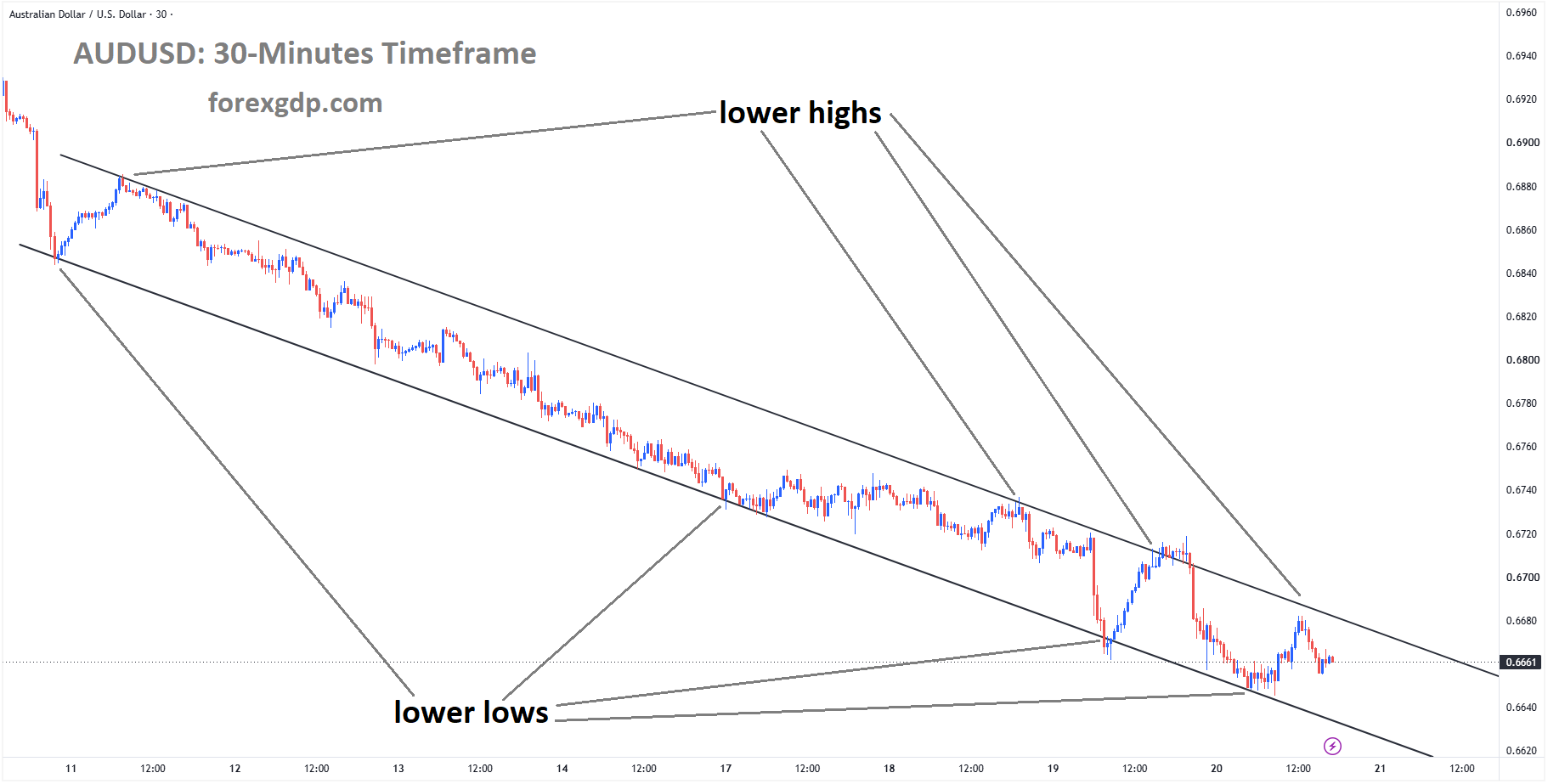
AUDUSD is moving in a descending channel, and the market has fallen from the lower high area of the channel
While the Australian Dollar has managed to recover slightly after a period of weakness, its overall performance remains under pressure. Investors are increasingly concerned that the RBA may be approaching the end of its monetary tightening cycle, while the Federal Reserve continues to signal a firm approach toward controlling inflation.
This difference in monetary policy expectations has strengthened the US Dollar and created additional challenges for the Australian currency.
Australian Dollar Struggles as Selling Pressure Continues
The Australian Dollar has experienced another difficult week against its American counterpart. Although the currency has shown signs of temporary stability, the broader market environment remains unfavorable.
One of the main reasons behind the weakness is the changing outlook for Australian interest rates. Earlier, investors expected the Reserve Bank of Australia to continue increasing borrowing costs to control inflation. However, recent developments have raised doubts about whether further increases will be necessary.
As expectations for additional rate hikes decline, the Australian Dollar becomes less attractive to some international investors.
Interest rates play an important role in currency movements because they influence investment returns. When a country offers relatively higher interest rates, foreign investors may be more willing to hold assets denominated in that country’s currency.
However, when expectations for future rate increases weaken, demand for the currency can also decrease.
The Australian Dollar has been affected by this shift in investor expectations, contributing to its continued underperformance against the US Dollar.
Despite occasional recovery attempts, uncertainty surrounding Australia’s monetary policy outlook continues to influence market confidence.
Reserve Bank of Australia May Be Near the End of Its Tightening Cycle
The Reserve Bank of Australia has taken several steps to address inflation by increasing interest rates. These measures were designed to reduce excessive spending, slow demand, and bring consumer price growth under control.
During the period covered by the reported developments, the central bank had already introduced multiple interest rate increases as part of its broader monetary tightening strategy.
However, investors have started questioning whether the RBA will continue raising borrowing costs.
Why RBA Policy Expectations Are Changing
Central banks must carefully balance inflation control with economic stability.
Higher interest rates can help reduce inflation, but they also make borrowing more expensive for households and businesses. Mortgage repayments may increase, consumer spending can slow, and companies may become more cautious about expanding their operations.
For Australia, these concerns are particularly important because household borrowing costs can have a significant influence on domestic economic activity.
If the RBA believes its previous policy decisions are already slowing inflation sufficiently, it may decide to maintain interest rates rather than introduce further increases.
Such a decision would suggest that the central bank is becoming more cautious about the potential economic consequences of additional tightening.
For currency investors, the possibility of an extended pause can reduce expectations of stronger returns from Australian financial assets.
This helps explain why the Australian Dollar has struggled as confidence in further RBA tightening has weakened.
Federal Reserve’s Hawkish Position Supports the US Dollar

While expectations surrounding the RBA have softened, the Federal Reserve has maintained a comparatively firm monetary policy outlook.
The Fed’s continued focus on controlling inflation has provided support for the US Dollar.
A hawkish central bank generally favors maintaining restrictive monetary conditions to prevent inflation from remaining too high. This approach may involve keeping interest rates elevated for longer or considering additional tightening if economic conditions require it.
When investors believe the Federal Reserve will maintain higher borrowing costs, US financial assets can become more attractive.
This can encourage international investors to increase their exposure to Dollar-denominated investments, strengthening demand for the American currency.
Why the Fed’s Approach Matters for AUD/USD
The Australian Dollar and US Dollar are influenced by the monetary policies of their respective central banks.
When both central banks are expected to follow similar interest rate paths, the difference in their policy outlooks may have a smaller influence on the currency pair.
However, when their approaches begin to move in different directions, investors often reassess which currency offers more attractive opportunities.
In this case, expectations that the RBA may stop raising rates while the Fed remains committed to restrictive policy have favored the US Dollar.
The difference in central bank outlooks has become an important factor behind the Australian Dollar’s recent weakness.
As long as this policy gap remains significant, the Australian currency may find it difficult to maintain a sustained recovery.
Australia’s Economic Outlook Adds to Currency Uncertainty
The future direction of the Australian Dollar also depends on the health of the domestic economy.
Australia faces the challenge of bringing inflation under control without causing unnecessary damage to economic growth.
Higher borrowing costs can reduce household purchasing power, particularly among consumers with mortgages and other variable-rate loans.
When households spend less, businesses may experience weaker demand for goods and services. This can eventually affect hiring decisions, investment plans, and overall economic confidence.
The RBA must consider these developments when deciding whether additional monetary tightening is appropriate.
If economic activity slows more sharply than expected, policymakers may become increasingly reluctant to raise interest rates further.
On the other hand, if inflation remains persistent, the central bank could face pressure to maintain restrictive monetary conditions.
This uncertainty makes it difficult for investors to form a clear view of Australia’s future interest rate direction.
Consequently, economic reports covering inflation, employment, household spending, and business activity remain important for understanding the Australian Dollar’s outlook.
Global Investor Sentiment Influences Australian Dollar Demand
Beyond domestic monetary policy, the Australian Dollar is also sensitive to changes in global economic confidence.
Australia has strong connections with international trade, particularly through exports of natural resources and agricultural products.
As a result, expectations surrounding global economic growth can influence demand for the Australian currency.
When investors are optimistic about international economic conditions, currencies associated with trade and economic expansion often benefit.
However, during periods of uncertainty, investors may prefer currencies that are traditionally viewed as relatively safe.
The US Dollar frequently benefits from this behavior because of its central role in international trade, financial markets, and global reserves.
If concerns about worldwide economic growth increase, the Australian Dollar may face additional pressure even without major changes in domestic economic conditions.
Developments in major trading partners, especially China, can also influence Australia’s economic prospects.
Changes in Chinese industrial activity, consumer demand, and import requirements may affect expectations for Australian exports.
These international connections make the Australian Dollar particularly responsive to shifts in global sentiment.
What Could Influence the Australian Dollar in the Coming Weeks?
The Australian Dollar’s future performance will depend on several economic and policy developments.
Investors will closely follow statements from RBA officials for indications of whether the central bank considers its tightening efforts sufficient.
Any change in the RBA’s assessment of inflation or economic growth could influence expectations about future interest rate decisions.
Federal Reserve communications will also remain important.
If US policymakers continue emphasizing the need for restrictive monetary conditions, the Dollar may retain an advantage.
Alternatively, signs that US inflation is cooling more quickly or that the Federal Reserve is becoming less hawkish could reduce some of the pressure on the Australian currency.
Economic data from both countries will help shape these expectations.
Australian employment figures, inflation reports, and consumer activity will provide insight into domestic economic conditions. Meanwhile, US inflation, labor market developments, and economic growth will influence expectations surrounding Federal Reserve policy.
The interaction between these factors will help determine whether the Australian Dollar can regain investor confidence.
Summary
The Australian Dollar remains under pressure against the US Dollar as investors reassess the monetary policy outlook in both countries.
The possibility that the Reserve Bank of Australia is nearing the end of its interest rate tightening cycle has weakened confidence in the Australian currency. At the same time, the Federal Reserve’s relatively hawkish position has strengthened demand for the US Dollar.
Domestic economic uncertainty and changing global investor sentiment have added to the challenges facing the Aussie.
Although temporary improvements in sentiment may support the Australian Dollar, a more lasting recovery could depend on clearer economic signals and a shift in central bank expectations.
For now, the contrasting monetary policy outlooks of the RBA and Federal Reserve remain central to the AUD/USD outlook, with upcoming economic developments likely to influence investor confidence and the currency’s broader direction.
BTCUSD Faces Heavy Selling as Institutional Investors Pull Back from Bitcoin Funds
Bitcoin is facing renewed selling pressure as investors respond to continued withdrawals from US spot Bitcoin exchange-traded funds (ETFs), a stronger US dollar, and growing uncertainty across global financial markets. The combination has created a challenging environment for the world’s largest cryptocurrency, raising concerns about institutional demand and the broader outlook for digital assets.
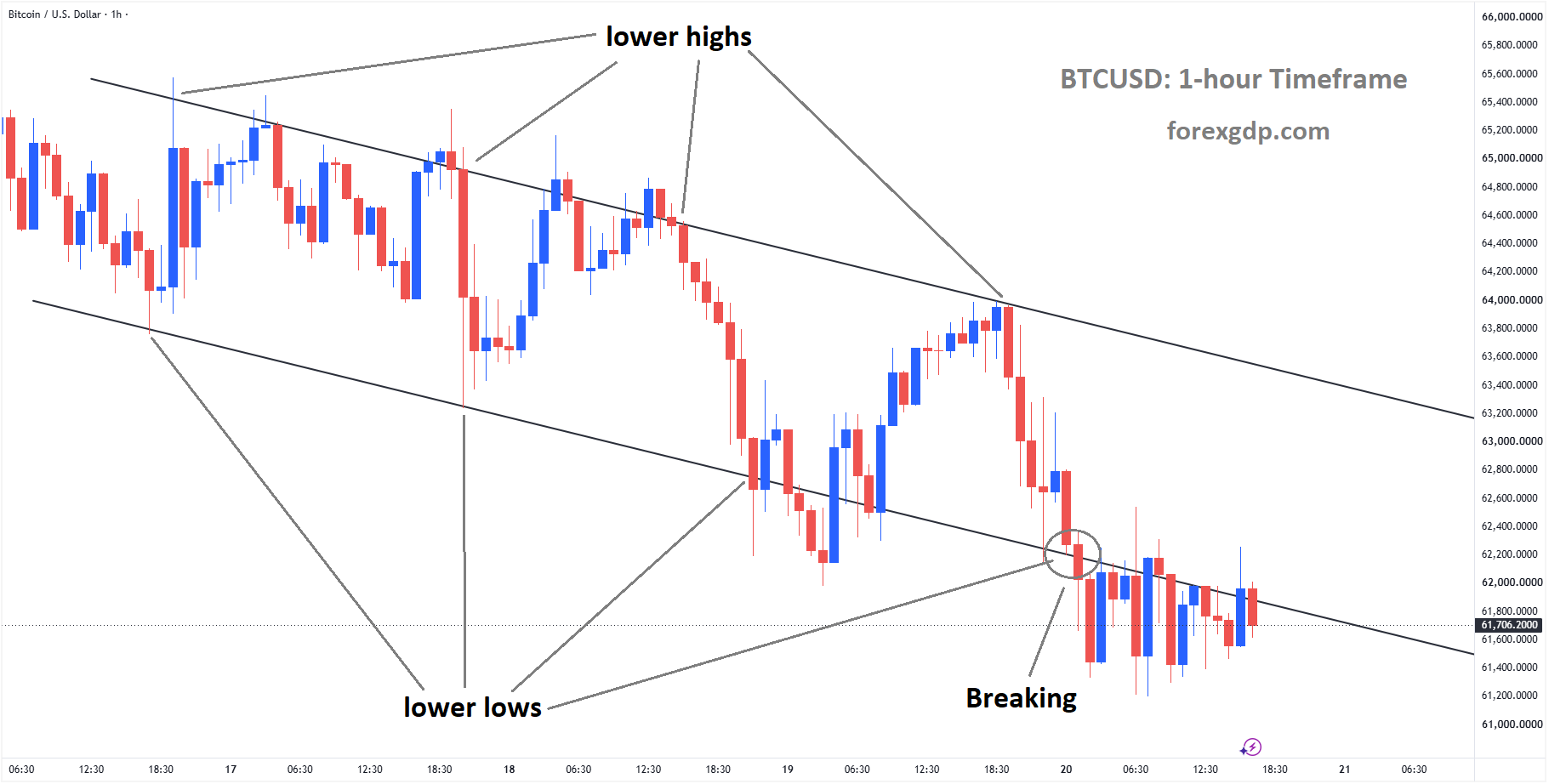
BTCUSD is breaking the lower low area of the descending channel
The latest weakness comes as investors become more cautious about taking risks. Many are reconsidering their exposure to cryptocurrencies as expectations surrounding US monetary policy shift and traditional financial assets become more attractive.
One of the biggest concerns is the recent wave of withdrawals from spot Bitcoin ETFs. These investment products have played an important role in bringing institutional money into the cryptocurrency market. However, the latest outflows suggest that some investors are reducing their Bitcoin exposure rather than increasing it.
At the same time, the strength of the US dollar is adding another challenge. Higher interest rate expectations and uncertainty surrounding the Federal Reserve have encouraged investors to favor assets that offer greater stability and predictable returns.
Together, these developments show how Bitcoin’s performance is increasingly connected to institutional investment decisions and global economic conditions.
Bitcoin ETF Outflows Raise Concerns About Institutional Demand
US spot Bitcoin ETFs have become an important part of the cryptocurrency investment landscape. Since their introduction, these funds have provided institutional investors and traditional market participants with a regulated way to gain exposure to Bitcoin without directly purchasing or storing the cryptocurrency.
Their growing popularity has helped connect Bitcoin with mainstream financial markets. Investment firms, asset managers, and other market participants can access Bitcoin through familiar investment structures, making cryptocurrency exposure more convenient for a wider group of investors.
However, ETF activity can influence market demand in both directions.
When investors put money into spot Bitcoin ETFs, fund operators generally need to acquire additional Bitcoin to support the investment products. This creates demand for the underlying cryptocurrency.
When investors withdraw money, the opposite process can occur. Fund operators may need to reduce their Bitcoin holdings, depending on how redemptions are handled.
Recent ETF withdrawal activity has therefore become an important concern for market participants.
Several consecutive sessions of net outflows suggest that investors are becoming less willing to maintain their existing cryptocurrency exposure. This change is especially significant because institutional participation has been one of the major developments supporting Bitcoin’s wider adoption.
Although ETF withdrawals do not necessarily indicate a permanent decline in institutional interest, sustained selling can weaken confidence and make it harder for the market to absorb additional selling pressure.
BlackRock Bitcoin ETF Withdrawals Highlight Changing Investor Sentiment
One of the most notable developments in the recent withdrawal activity has been the significant outflow from BlackRock’s iShares Bitcoin Trust, commonly known as IBIT.
BlackRock is one of the world’s largest asset management companies, and its Bitcoin ETF has become an important investment vehicle for institutions seeking cryptocurrency exposure.
Large withdrawals from such a prominent fund can attract considerable attention because they provide insight into how investors are managing their exposure to digital assets.
However, ETF withdrawals should not automatically be interpreted as a complete rejection of Bitcoin.
Institutional investors frequently adjust their portfolios in response to economic developments, changing risk preferences, and internal investment requirements. Some may reduce cryptocurrency exposure temporarily while waiting for greater clarity about monetary policy or broader financial conditions.
Others may shift capital toward assets that provide more predictable income during periods of uncertainty.
Nevertheless, the concentration of withdrawals in a major Bitcoin ETF highlights a broader change in investor behavior.
Instead of focusing primarily on potential growth opportunities, some market participants appear to be placing greater importance on capital preservation and portfolio stability.
This shift could continue to influence demand for Bitcoin if uncertainty across traditional financial markets remains elevated.
Stronger US Dollar Creates Additional Challenges for Bitcoin
The strength of the US dollar is another major factor influencing Bitcoin investor sentiment.
The dollar often benefits when investors expect US interest rates to remain elevated or when uncertainty encourages demand for relatively stable financial assets.
A stronger dollar can create difficulties for cryptocurrencies because Bitcoin does not generate regular interest payments or guaranteed income.
When interest-bearing investments become more attractive, investors may reconsider how much capital they want to allocate to assets such as Bitcoin.
This relationship does not mean that Bitcoin always moves in the opposite direction of the US dollar. Cryptocurrency markets are influenced by many factors, including adoption, regulation, liquidity, and investor expectations.
However, dollar strength can contribute to a less favorable environment for speculative investments, particularly when investors are already becoming more cautious.
The current situation is especially challenging because pressure from the currency market is occurring alongside withdrawals from Bitcoin investment funds.
As a result, Bitcoin is dealing with weaker demand from certain institutional investors while competing with traditional financial assets for investment capital.
Federal Reserve Policy Adds Uncertainty to Cryptocurrency Markets
Expectations surrounding the Federal Reserve are playing an important role in the changing investment environment.
The Federal Reserve uses monetary policy to manage inflation, support employment, and maintain economic stability. Its interest rate decisions can influence borrowing costs, financial market liquidity, and investor behavior around the world.
When inflation remains a concern, policymakers may favor keeping interest rates elevated or introducing additional restrictions to prevent prices from rising too quickly.
Such an environment can make investments that provide interest income more appealing.
For Bitcoin, the challenge is that its investment appeal depends largely on factors such as long-term adoption, scarcity, and expectations of future demand rather than regular income payments.
Investors comparing cryptocurrency exposure with traditional financial assets may therefore become more selective when monetary policy appears restrictive.
Comments from Federal Reserve officials can also influence market expectations even before an official policy decision is announced.
If investors believe that borrowing conditions could become more restrictive, they may reduce exposure to volatile assets in advance.
This helps explain why Bitcoin can react strongly to developments in inflation, employment, and central bank policy, even when those developments are not directly related to cryptocurrency technology.
Global Risk Aversion Is Affecting Cryptocurrency Investment Decisions

Bitcoin’s recent weakness is also connected to a broader decline in investors’ willingness to take financial risks.
Risk aversion occurs when market participants become more concerned about potential losses and begin favoring assets they consider relatively safer.
During these periods, investors may reduce exposure to cryptocurrencies, growth-oriented investments, and other assets whose valuations depend heavily on future expectations.
Bitcoin has sometimes been described as a possible alternative to traditional financial systems because of its decentralized structure and limited supply.
However, its behavior during periods of financial uncertainty has not always matched that of traditional safe-haven assets.
Institutional participation has also strengthened Bitcoin’s connection with the wider financial system.
As more investment firms include cryptocurrency products in diversified portfolios, decisions affecting traditional markets can increasingly influence digital asset allocations.
For example, a fund manager facing greater uncertainty may reduce exposure across several higher-risk investments, including Bitcoin, rather than making decisions based solely on cryptocurrency-specific developments.
This means that even positive developments within the digital asset industry may struggle to improve sentiment when broader financial conditions are unfavorable.
What Could Influence Bitcoin Investor Confidence Going Forward?
Several developments could shape Bitcoin investor confidence in the coming weeks.
One important factor will be whether institutional demand begins to recover. A return to sustained investment in spot Bitcoin ETFs could suggest that investors are becoming more comfortable maintaining cryptocurrency exposure.
Federal Reserve communication will also remain important. Greater clarity about the direction of monetary policy could help investors reassess the balance between traditional financial assets and cryptocurrencies.
The direction of the US dollar may influence investment decisions as well. Changes in currency strength can affect global liquidity conditions and the relative attractiveness of different asset classes.
Beyond these economic factors, Bitcoin’s long-term outlook will continue to depend on adoption, regulatory developments, infrastructure improvements, and confidence in the digital asset ecosystem.
Importantly, short-term institutional withdrawals do not necessarily determine Bitcoin’s long-term prospects.
The cryptocurrency market has experienced multiple periods of changing investor sentiment as financial conditions and adoption trends have evolved.
For now, however, investors are likely to pay close attention to whether the recent reduction in institutional exposure represents a temporary adjustment or a more sustained shift in investment preferences.
Summary
Bitcoin is facing a difficult investment environment as US spot Bitcoin ETF withdrawals, a stronger dollar, and uncertainty surrounding Federal Reserve policy weigh on market confidence.
The recent outflows highlight the growing influence of institutional investors on cryptocurrency demand. At the same time, restrictive monetary conditions are making traditional interest-bearing assets more competitive.
Broader risk aversion is adding to these challenges as investors become increasingly selective about where they allocate capital.
While Bitcoin’s long-term adoption story remains relevant, its near-term outlook is closely tied to changes in institutional demand and global economic conditions. A recovery in investor confidence will likely depend on greater stability in ETF activity, clearer monetary policy expectations, and an improvement in overall market sentiment.
Don’t trade all the time, trade forex only at the confirmed trade setups
Get more confirmed trade signals at premium or supreme – Click here to get more signals, 2200%, 800% growth in Real Live USD trading account of our users – click here to see , or If you want to get FREE Trial signals, You can Join FREE Signals Now!