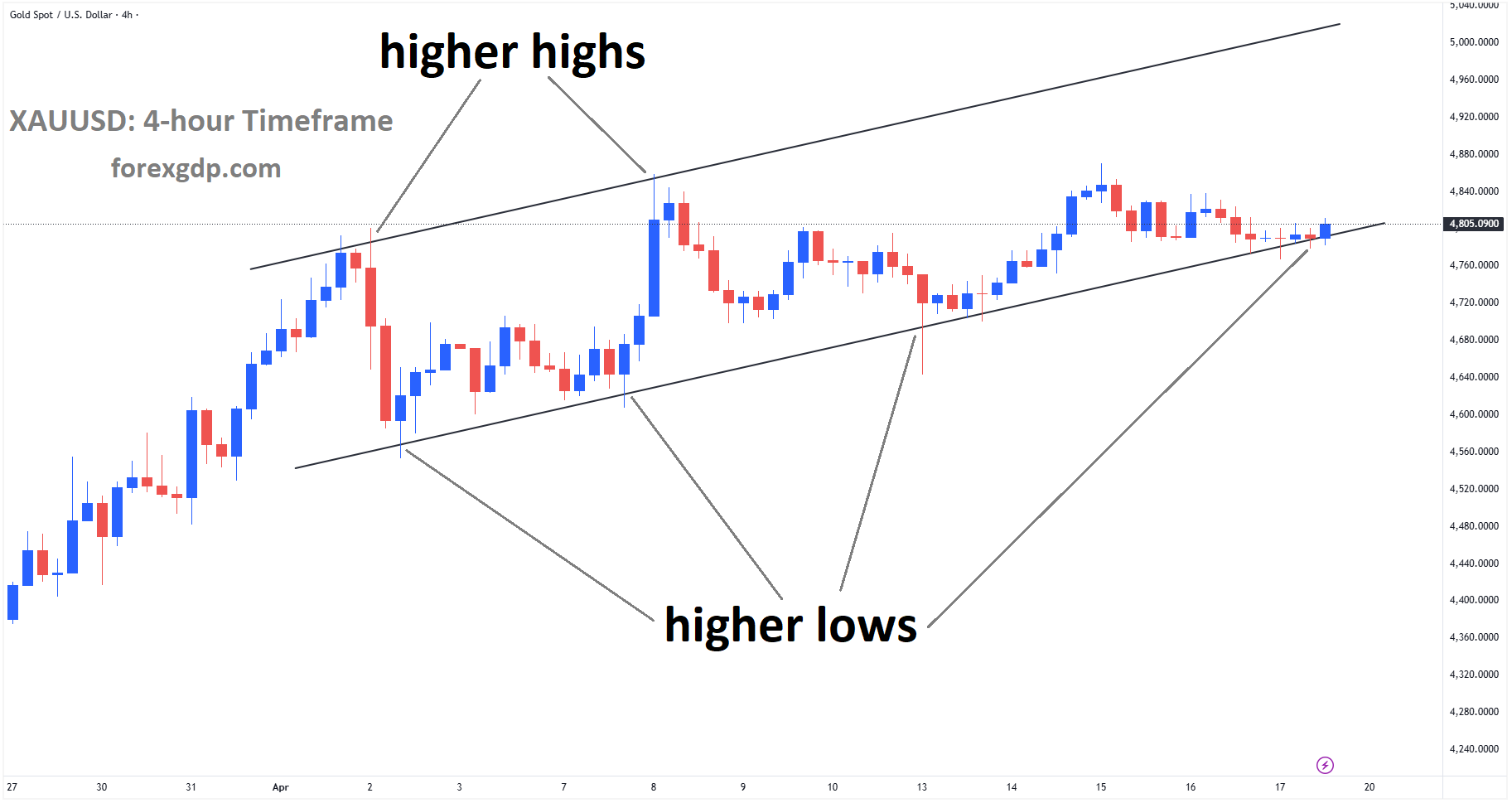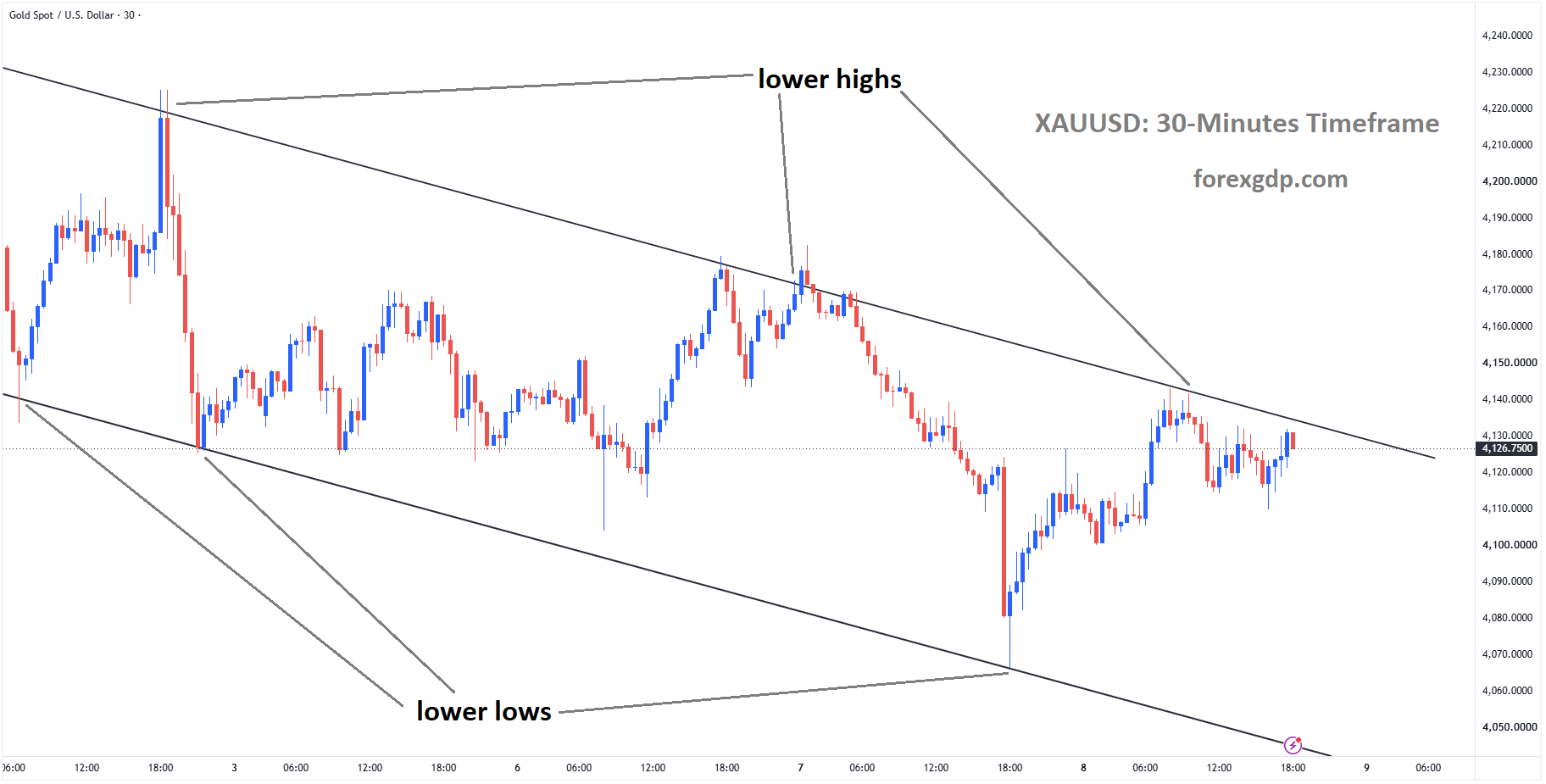
XAUUSD Faces Heavy Selling as Energy Costs Fuel Inflation Fears
Gold is facing a difficult mix of rising energy costs, stubborn inflation concerns, and expectations that US interest rates could remain elevated. Although conflict in the Middle East has increased uncertainty, demand for safety has not been enough to protect the precious metal from selling pressure.
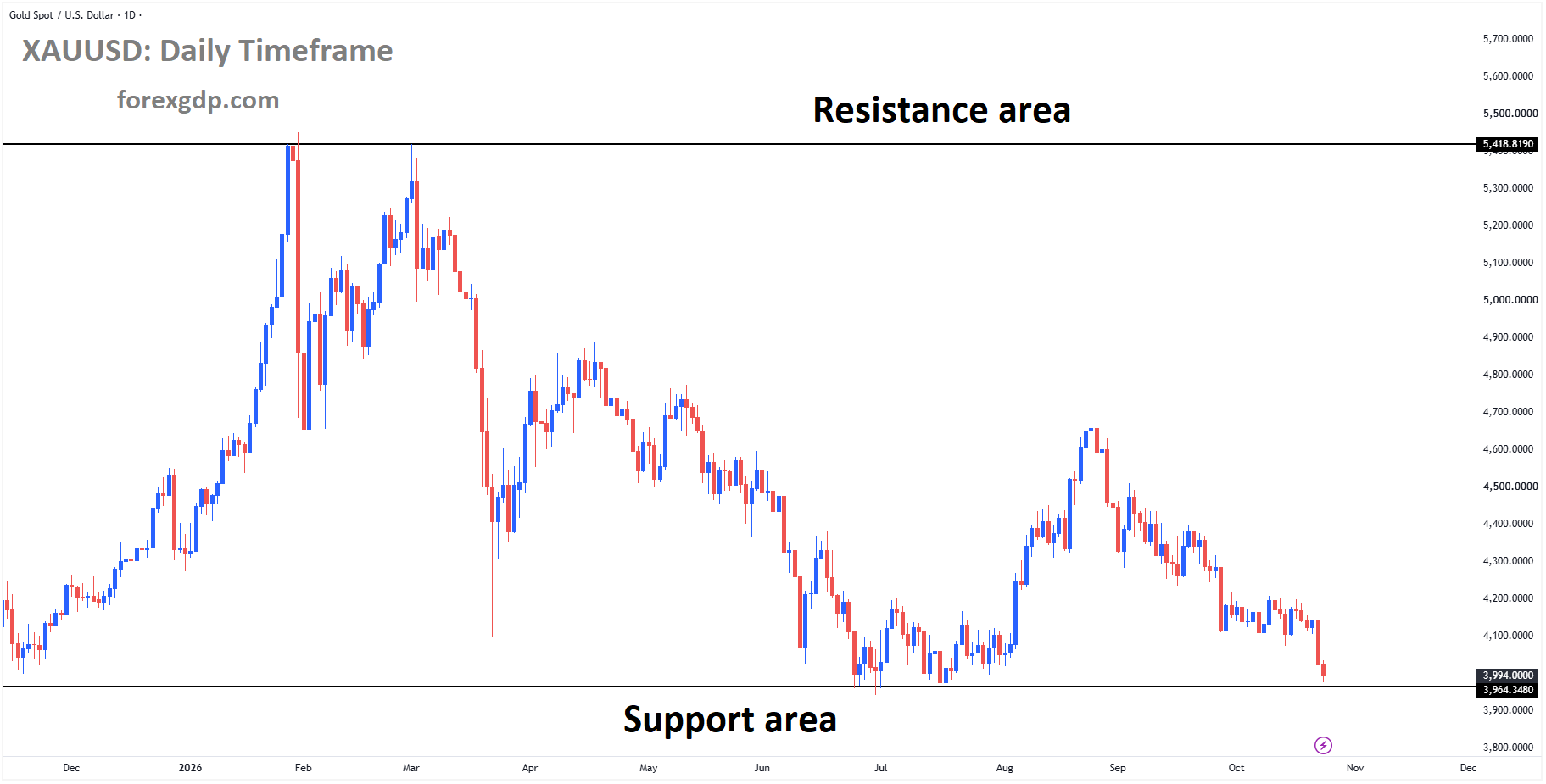
XAUUSD reached the support area of the box pattern
The main concern is how higher oil costs could affect the wider economy. More expensive energy can raise transport, manufacturing, and household expenses. If those increases keep inflation high, central banks may have less room to lower borrowing costs. They could even consider further tightening.
For gold, that creates a challenge. The metal offers no interest income, making it harder to compete with interest-paying assets when investors expect borrowing costs to stay high. This tension between geopolitical demand and monetary policy pressure is shaping the outlook for XAUUSD.
Why Higher Energy Costs Are Weighing on Gold
Gold often attracts buyers during periods of war or political uncertainty. Investors may turn to it when they worry about financial instability or the safety of other assets. However, geopolitical events can affect gold through several different channels.
In the current environment, the energy market is especially important. Escalating tensions in the Middle East have increased concerns about oil supplies and shipping disruptions. Those concerns have pushed crude oil higher, bringing inflation back into focus.
Oil affects much more than fuel bills. Businesses depend on energy to produce goods, move supplies, and deliver products. When those expenses rise, companies may pass part of the increase on to customers.
That creates a difficult situation for central banks. Inflation caused by supply disruptions cannot be solved simply by changing interest rates. Even so, policymakers may keep monetary policy restrictive to prevent broader price increases from becoming established.
Gold is therefore facing competing forces. Conflict can encourage safe-haven buying, while the inflation consequences of that same conflict can increase expectations for higher interest rates.
Middle East Tensions Keep Supply Risks in Focus
The supplied reports describe an increasingly unsettled situation across the Middle East, including concerns about further military escalation and threats to commercial shipping.
The Strait of Hormuz remains a major focus because of its importance to global energy trade. Any disruption affecting vessels moving through the region can raise concerns about delivery delays, shipping costs, and the availability of oil.
Reports of wider regional exchanges have added another layer of uncertainty. For businesses and investors, the concern is whether hostilities could spread or continue long enough to cause lasting economic damage.
The duration of any disruption matters. A brief interruption may create a temporary increase in energy costs. A prolonged problem could have a broader effect on inflation, business planning, and household spending.
For gold traders, this means geopolitical headlines need to be considered alongside their economic consequences. An event that increases demand for safety may also strengthen expectations for tighter monetary policy.
US Consumers Feel the Pressure

The latest figures described in the report show that US consumers remain uneasy about the economic outlook.
The University of Michigan Consumer Sentiment Index slipped in October, reaching its weakest reading in several months. Rising energy expenses and concerns about borrowing costs were among the pressures affecting confidence.
This matters because household spending is a major part of the US economy. When people become less confident, they may delay large purchases, reduce optional spending, or build savings to cover uncertain expenses.
Inflation expectations also remain a concern. The report shows that consumers continue to expect price growth above the Federal Reserve’s target over both shorter and longer periods.
Those expectations can influence real economic decisions. Workers may seek higher wages to protect their spending power, while businesses may adjust their pricing plans in anticipation of rising costs.
One sentiment report does not determine the Fed’s next move. However, persistent concern about inflation can make policymakers more cautious about easing policy.
Business Activity Presents a Mixed Picture
US business surveys offered a different perspective from the weaker consumer mood.
The preliminary S&P Global figures described in the report showed a small improvement in manufacturing activity. Services activity slowed, although it continued to expand.
Together, these results suggest that the economy is still growing, even as households face pressure. That resilience is important for the interest rate outlook.
If business activity remains healthy, the Fed may feel less urgency to reduce borrowing costs. A growing economy can give policymakers more time to assess whether inflation is easing sustainably.
At the same time, weaker consumer confidence raises questions about how long that resilience can last. Businesses may continue expanding for now, but a sustained slowdown in household demand could eventually affect orders, hiring, and investment.
For gold, the key issue is how these competing signals influence policy expectations. Strong activity can support the case for keeping rates elevated, while clearer evidence of weakening demand could change that assessment.
Federal Reserve Expectations Remain Central
Expectations surrounding the Federal Reserve are a major source of pressure on gold.
According to the market pricing cited in the supplied report, investors did not expect an immediate increase at the upcoming meeting. However, they assigned a much greater probability to a rate rise in December.
These probabilities reflect changing market expectations rather than a commitment from the Fed. They can shift quickly following economic releases, policy statements, or changes in energy costs.
The upcoming meeting will therefore matter for more than the rate decision itself. Investors will also examine how policymakers describe inflation, economic growth, and the risks created by higher energy expenses.
A firm message about controlling inflation could keep gold under pressure. A more cautious assessment of growth could lead investors to reconsider how much additional tightening is likely.
Why the PCE Inflation Report Matters
The next core Personal Consumption Expenditures report will provide another important test for the inflation outlook.
Core PCE excludes food and energy, helping policymakers assess underlying price pressures. Although energy is removed from that measure, higher fuel and transport costs can still affect other parts of the economy over time.
Investors will watch whether inflation remains broad or shows signs of easing. A stronger reading could reinforce expectations that restrictive policy will continue. A softer result could reduce some of that pressure, depending on the wider economic picture.
The combination of the Fed meeting and inflation data could therefore reshape expectations for gold over the coming weeks.
Final Summary
Gold is caught between demand for safety and concerns about the interest rate response to rising inflation. Middle East tensions are supporting energy costs, while resilient US business activity gives policymakers reasons to remain cautious.
Consumer confidence is weakening, but inflation expectations remain elevated. The next Federal Reserve statement and core PCE report will help investors judge which pressure matters most: the risk of slower growth or the need to keep inflation under control.
EURUSD Weakens as Eurozone Slowdown Fuels Dollar Demand
EURUSD remains under pressure as the economic gap between the Eurozone and the United States becomes harder to ignore. The Euro has weakened for a third consecutive session, with disappointing European business surveys weighing on sentiment. Meanwhile, the US Dollar is finding support from stronger business activity and expectations that the Federal Reserve could raise interest rates again.
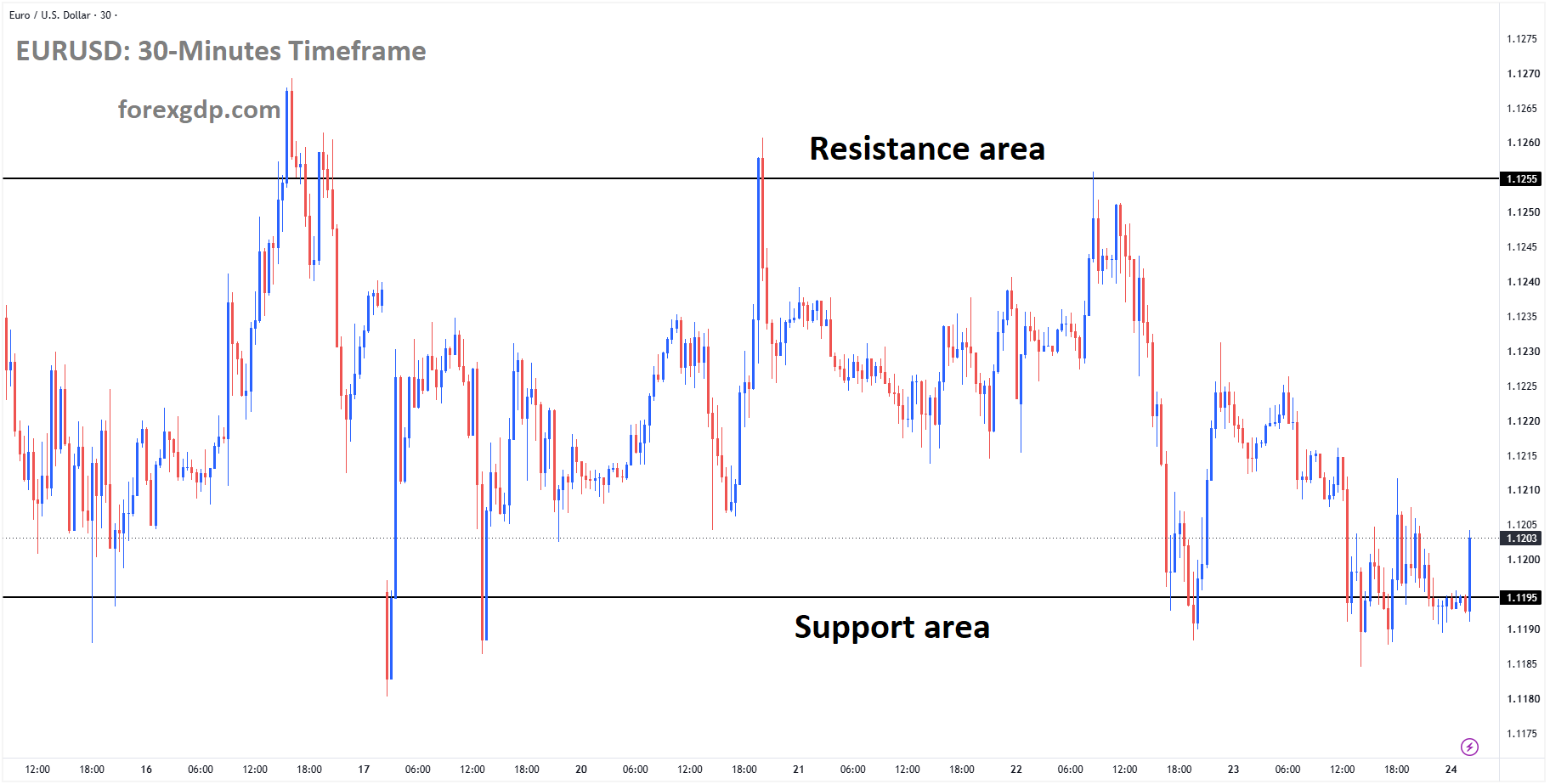
EURUSD is moving in a box pattern, and the market has rebounded from the support area of the pattern
The latest reports show two economies moving at different speeds. European companies are experiencing slower growth, while businesses in the United States continue to report a healthier pace of expansion. That difference is influencing how investors view both currencies.
Attention is now turning toward the Federal Reserve’s upcoming policy meeting. Investors want to understand how officials will balance resilient economic activity against inflation risks linked to higher Oil costs.
Eurozone Business Activity Loses Momentum
The latest preliminary business surveys suggest that the Eurozone economy continued to expand in October, but at a slower pace than in September.
The HCOB Composite Purchasing Managers Index fell to 51.9 from 53.1. A reading above 50 signals expansion, so the report does not suggest that the entire currency bloc has entered a downturn. However, the decline shows that growth has become less convincing.
This matters because a currency often benefits when investors see improving economic conditions. Stronger business activity can encourage investment, support employment, and improve confidence in future spending. When that activity slows, the economic outlook becomes less attractive.
For the Euro, the latest figures offer limited encouragement. They suggest that the recovery still faces obstacles and that businesses across the region are struggling to maintain the previous month’s momentum.
The concern is greater because the weakness involves Germany and France, the Eurozone’s two largest economies. Their performance has a major influence on the wider region.
Germany and France Add to European Concerns

Germany’s business activity lost momentum, raising questions about the strength of growth in the region’s largest economy.
A slower German economy can affect companies beyond its borders. Businesses across Europe have close links with German manufacturers, suppliers, and customers. When activity softens there, the effects can spread through trade and investment relationships.
France delivered another disappointment as its private sector unexpectedly slipped into contraction. This suggests that business activity weakened rather than simply growing at a slower rate.
Together, these developments make the regional outlook more uncertain. The Eurozone is still expanding overall, but its largest economies are providing less support than investors would like.
France also faces fiscal challenges and political uncertainty. These issues can make it harder for companies to plan spending, hiring, and investment. Investors may become more cautious when the direction of government policy or public finances appears unclear.
For now, the combination of softer business activity and domestic uncertainty is weighing on confidence in the Euro.
US Business Surveys Give the Dollar an Advantage
The US economy presents a stronger picture, even though some measures of activity have eased.
Preliminary S&P Global data showed that the Manufacturing PMI increased to 56 in October from 55.9 in September. The result exceeded expectations and marked the strongest reading in more than four years.
That improvement suggests that manufacturing activity remains a source of economic strength. It also gives investors another reason to believe that the US economy is handling current financial conditions relatively well.
The services sector continued to expand at a healthy pace. Its PMI eased to 57.9 from 58.8, matching expectations. Although growth slowed, the reading remained comfortably above the level that separates expansion from contraction.
The broader Composite PMI also edged lower, reaching 57.6 after September’s 58.4. Even with that decline, the report pointed to stronger business activity than the equivalent Eurozone survey.
The distinction is important. The Dollar does not necessarily need every US report to improve to attract demand. It can benefit when the overall American outlook appears stronger than the outlook elsewhere.
The Growth Gap Influences EURUSD Sentiment
Currency markets compare economies as well as assess them individually. A slowdown in Europe can become more significant for EURUSD when the United States continues to show resilience.
The latest surveys reinforce that contrast. Eurozone growth has moderated, France has slipped into contraction, and Germany has lost momentum. US businesses, meanwhile, continue to report broad expansion.
This difference can influence where investors choose to hold their money. A stronger economic outlook may increase interest in US assets, supporting demand for the Dollar.
It can also shape expectations about interest rates. When an economy remains resilient, its central bank may have more room to keep borrowing costs elevated if inflation remains a concern.
That connection between growth and monetary policy is adding to the pressure on EURUSD.
Fed Rate Expectations Support the Greenback
Expectations for another Federal Reserve rate increase are providing additional support to the US Dollar.
Some Fed officials have suggested that there is no immediate urgency to raise borrowing costs. However, the supplied market expectations indicate that investors still assign a substantial probability to a December increase.
Higher Oil costs are an important part of that debate. More expensive energy can raise transport and production expenses, potentially keeping pressure on consumer prices.
For policymakers, this creates a difficult balance. They need to assess whether energy costs could prolong inflation while also considering the effect of higher interest rates on businesses and households.
Resilient US activity gives the Fed more flexibility to maintain a firm policy stance. Still, a rate increase remains an expectation rather than a confirmed decision. Upcoming communication could strengthen or weaken that view.
The Upcoming Fed Meeting Takes Centre Stage
The Federal Reserve’s next policy meeting is now the main focus for investors following EURUSD.
With no updated economic projections expected, attention will fall on the policy statement and the press conference. Investors will look for clues about how officials interpret recent business surveys, inflation pressures, and changes in energy costs.
Comments from Fed Chair Kevin Warsh will be closely examined for any indication of the conditions that could lead to another rate increase.
A firm message on inflation could support existing expectations for higher borrowing costs. A more cautious assessment could prompt investors to reconsider how quickly the Fed might act.
Final Summary
EURUSD is facing pressure from weaker Eurozone business activity and a comparatively resilient US economy. Slower growth in Germany, contraction in France, and French political and fiscal uncertainty have reduced support for the Euro.
The Dollar is benefiting from stronger US business surveys and expectations that inflation concerns could lead to another Fed rate increase. The upcoming policy meeting will help investors judge whether that outlook remains justified, making the Fed’s language a key influence on currency sentiment.
GBPUSD Slips as Strong US Economic Growth Fuels Dollar Demand
The British Pound has come under pressure against the US Dollar as investors weigh stronger American manufacturing activity against signs of slowing consumer spending in the United Kingdom. Renewed demand for the Dollar has made it harder for Sterling to hold its recent gains.
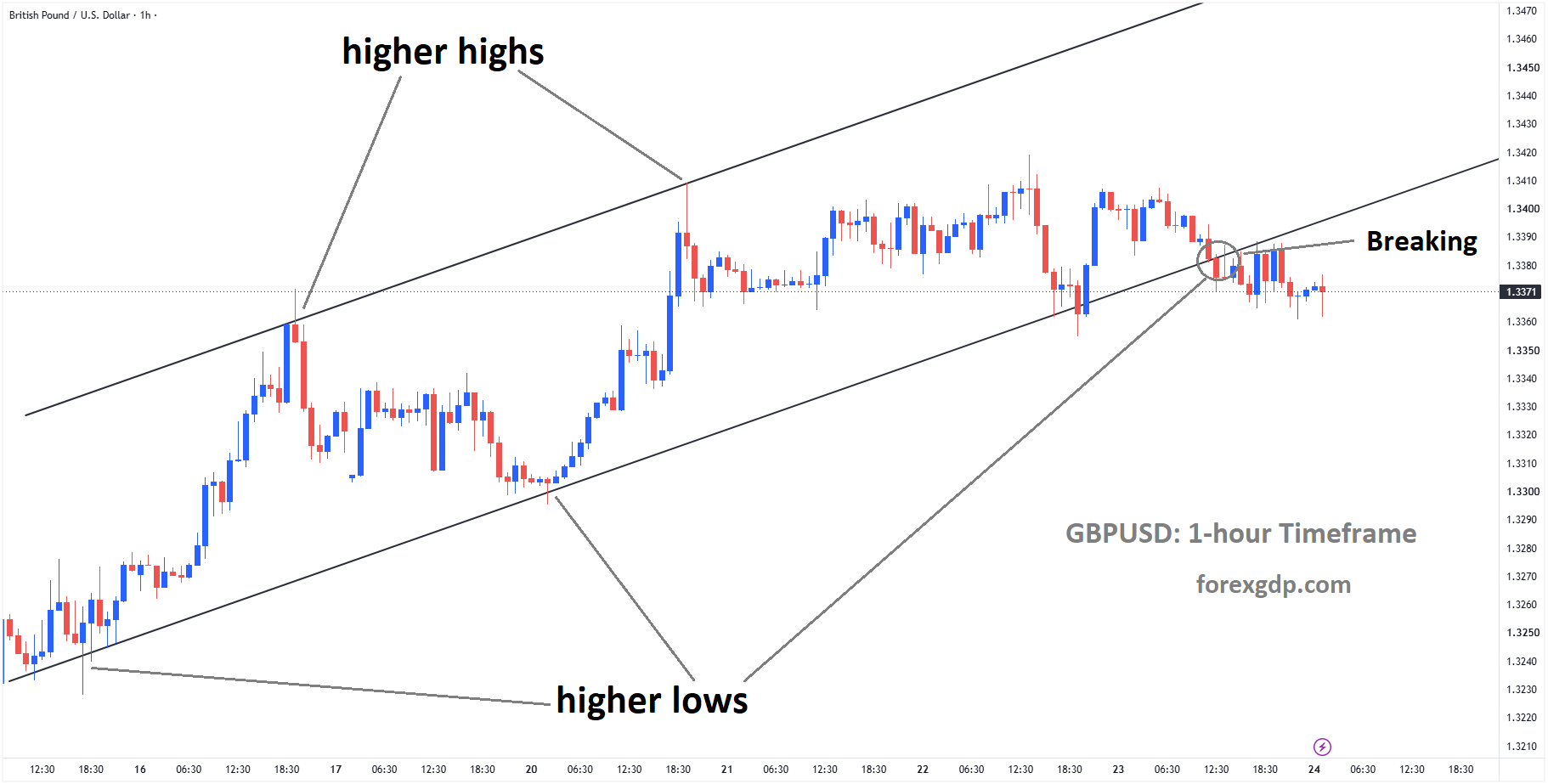
GBPUSD is breaking the higher low area of the ascending channel
The latest economic reports present a mixed picture on both sides of the Atlantic. US businesses continue to expand, although households remain concerned about high living costs. In the UK, improving business activity has offered some encouragement, but disappointing retail sales have raised questions about the strength of domestic demand.
Attention is now shifting toward the Federal Reserve’s upcoming interest rate decision, a key US inflation report, and the British government’s budget statement. Together, these events could influence expectations for borrowing costs, economic growth, and the outlook for GBPUSD.
US Manufacturing Provides Support for the Dollar
American manufacturing activity strengthened slightly in October, suggesting that this part of the economy remains resilient. The preliminary S&P Global Manufacturing Purchasing Managers’ Index increased to 56 from 55.9 in September.
A reading above 50 signals expansion. The latest result therefore suggests that manufacturers are continuing to report improving business conditions, even as uncertainty surrounds inflation and the wider economic outlook.
The services sector also remained in expansion, although its pace of growth eased. The Services PMI fell to 57.9 from 58.8, matching expectations.
Taken together, the reports point to an economy that is still growing, with manufacturing improving and services losing some momentum. That combination gives investors a reason to remain cautious about expecting a rapid reduction in US interest rates.
For the Dollar, continued business expansion matters because it reduces the immediate pressure on the Federal Reserve to support growth through lower borrowing costs. If activity remains healthy, policymakers may have more room to focus on bringing inflation under control.
Weak Consumer Confidence Complicates the US Outlook
The strength in business activity contrasts with a less encouraging picture among American households.
The University of Michigan Consumer Sentiment Index slipped to 48 in October from 48.1 a month earlier, reaching its lowest level in five months. Although the monthly decline was small, the weak overall reading suggests that consumers remain uneasy about their financial situation.
High prices continue to weigh on confidence. Even when inflation slows, households may still struggle with the lasting increase in everyday expenses. Food, housing, transport, and borrowing costs can leave families feeling under pressure despite broader economic growth.
Expectations for interest rates also appear to be affecting sentiment. When consumers believe borrowing will remain expensive, they may delay larger purchases or become more careful with their budgets.
Inflation expectations offered little sign of improvement. The one-year measure held at 4.7%, while the five-year reading stood at 3.5%.
These figures matter because expectations can influence spending decisions, wage demands, and business pricing. For the Federal Reserve, persistent concern about future inflation adds another complication to an already mixed economic picture.
UK Retail Sales Raise Questions About Household Demand

The UK’s latest retail sales figures disappointed, creating another challenge for the Pound.
Annual retail sales growth slowed to 0.8% from 2.7%, coming in below forecasts. The sharp loss of momentum suggests that consumers are becoming more selective about spending.
Household demand is an important part of the British economy. When retail growth weakens, it can affect business revenue, hiring plans, and investment decisions. A single report does not establish a lasting trend, but the slowdown gives investors a reason to question how firmly the recovery is taking hold.
There was some better news from the business surveys. The S&P Global Composite PMI rose to 53.1 from 52 in September, pointing to a faster expansion across the private sector.
That improvement suggests businesses are seeing healthier conditions overall. However, it does not remove the concern raised by weaker retail sales. Companies may report stronger activity while households remain cautious, particularly when essential expenses absorb a large share of income.
For Sterling, the issue is whether improving business confidence can eventually translate into stronger employment, better household finances, and more consistent spending.
The Federal Reserve Decision Takes Centre Stage
The Federal Reserve’s upcoming policy decision is becoming a major focus for GBPUSD.
Investors will examine both the interest rate announcement and the explanation that accompanies it. The central bank’s assessment of inflation, growth, and household demand could shape expectations well beyond the meeting itself.
The latest US figures leave policymakers with competing considerations. Expanding business activity points to economic resilience, while weak consumer confidence suggests that households are feeling the strain of high costs.
The release of the Core Personal Consumption Expenditures Price Index will also receive close attention. This measure excludes food and energy and helps assess underlying inflation pressures.
A firm reading could strengthen expectations that borrowing costs will remain elevated. A softer result could give policymakers more confidence that inflation is easing.
For GBPUSD, the important question is how these developments change the expected gap between US and UK interest rates. Currency demand often responds to shifts in that outlook, especially when economic reports challenge earlier assumptions.
Middle East Tensions Add Uncertainty
Alongside economic data, tensions in the Middle East remain a source of concern.
The supplied reports describe continued threats to shipping around the Strait of Hormuz and attacks affecting regional interests. Uncertainty around this route matters because disruptions can influence energy supplies, transport costs, and business confidence.
More expensive energy could place additional pressure on households and companies. It could also make the task of controlling inflation more difficult for central banks.
Periods of geopolitical stress can increase demand for the US Dollar as investors seek liquidity and reduce exposure to uncertainty. However, the effect on currencies depends on how events develop and whether disruptions spread.
For the Pound, this creates an external challenge at a time when investors are already assessing weaker retail spending.
Britain’s Budget Could Shape Business Expectations
The forthcoming UK budget statement adds another important event to the outlook.
Businesses will be looking for clarity on taxation, public spending, and measures intended to support investment. Government assurances about giving companies more room to grow may attract attention, but the details will determine how those promises are received.
A budget that improves confidence while presenting a credible funding plan could support the economic outlook. Measures that increase costs or leave businesses uncertain could have the opposite effect.
With retail spending slowing, investors will also consider how fiscal decisions may affect household purchasing power.
Final Summary
GBPUSD is facing pressure as renewed Dollar demand meets concerns about weaker UK consumer spending. Resilient US business activity has supported the American currency, although poor household confidence shows that the economy still faces challenges.
Britain’s improving business surveys provide some encouragement, but the retail sales slowdown leaves questions about domestic demand. The Federal Reserve decision, US inflation figures, and the UK budget will help shape the next assessment of both economies, while Middle East tensions remain an additional source of uncertainty.
USDJPY Regains Ground as Japan’s Inflation Fails to Lift Yen Demand
USDJPY recovered from an earlier decline as the Japanese Yen gave back some of its recent gains. Falling Japanese government bond yields weakened support for the currency, while steadier US Treasury yields helped the US Dollar regain its footing.
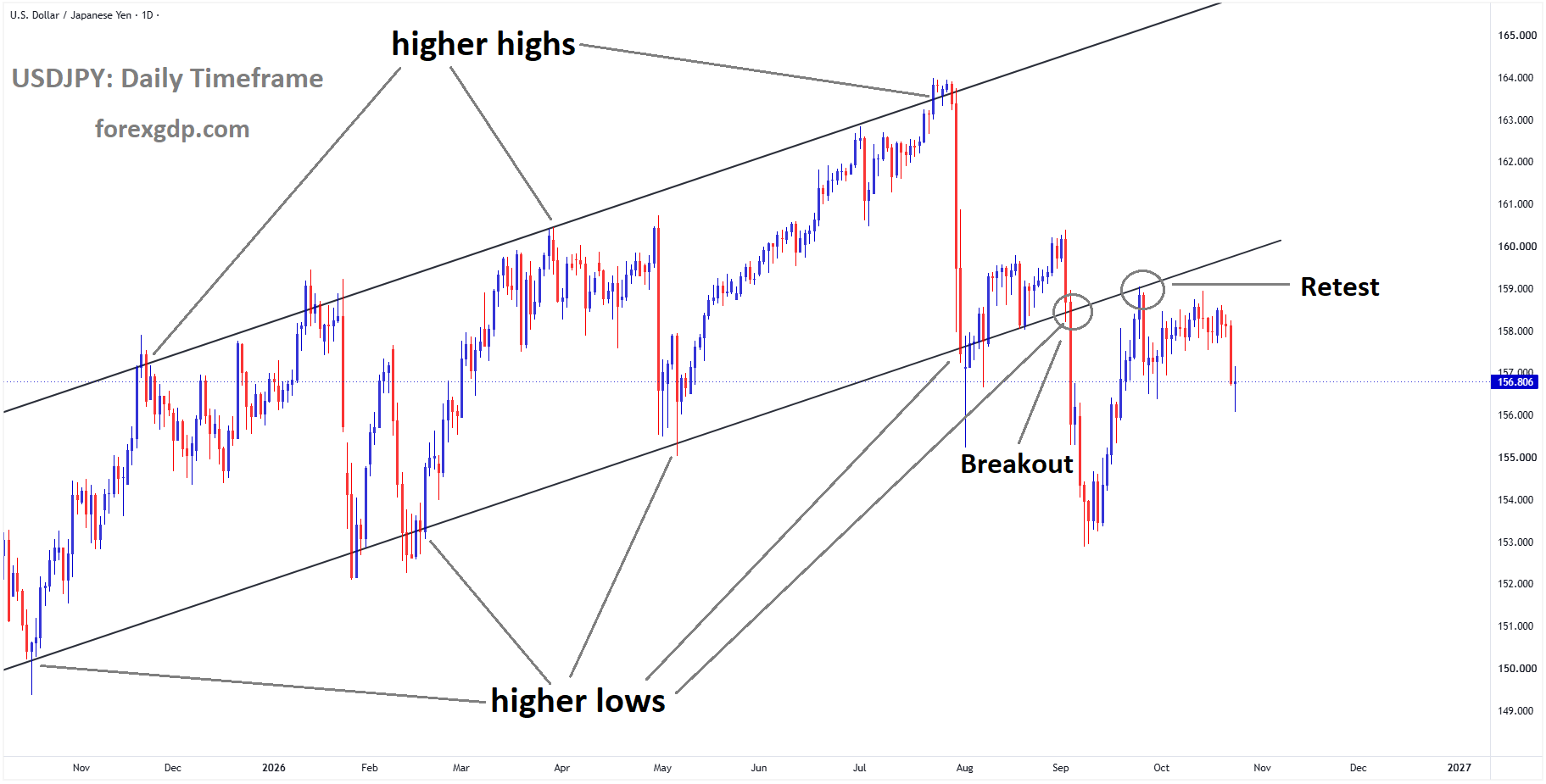
USDJPY is falling from the retest area of the broken ascending channel
The move came even after Japan reported stronger inflation. Although rising consumer prices kept expectations for another Bank of Japan interest rate increase alive, investors appeared more focused on the likely timing of that decision.
Attention is now turning to the upcoming Federal Reserve and Bank of Japan meetings. Both central banks are expected to leave interest rates unchanged, making their comments about future policy especially important. Investors will be looking for signs of whether December could bring another increase in borrowing costs.
Lower Japanese Bond Yields Reduce Support for the Yen
The Yen’s retreat highlights how strongly currency movements can depend on changes in government bond yields.
Japanese bond yields continued to fall, reducing the income available to investors holding those assets. At the same time, US Treasury yields stabilised after a sharp decline during the previous session. That shift helped improve the Dollar’s position against the Yen.
When Japanese yields fall while US yields hold steadier, the relative appeal of Dollar-denominated investments can increase. This can influence currency demand even when economic news from Japan appears supportive.
The latest recovery in USDJPY therefore reflected a change in the balance between the two currencies. Stronger Japanese inflation remained relevant, but it did not outweigh the immediate pressure from lower domestic bond yields.
Safe-Haven Demand Had Helped the Yen Strengthen
Before giving back ground, the Japanese Yen had benefited from a wave of caution across financial markets.
Concerns about investments linked to artificial intelligence encouraged investors to seek assets they considered safer. The Yen attracted demand alongside government bonds as traders reduced exposure to riskier investments.
However, buying government bonds also pushes their yields lower. This creates competing forces for the Japanese currency. Demand for safety can strengthen the Yen, while falling Japanese yields can reduce its appeal to investors seeking income.
That tension helps explain why the currency struggled to hold its earlier gains. The initial rush toward safety offered support, but changes in bond returns later became a stronger influence.
Further weakness in technology investments could renew demand for the Yen. For now, investors are weighing those concerns against interest rate expectations and the returns available in other markets.
Japan’s Stronger Inflation Keeps the BoJ in Focus
Japan’s latest consumer inflation report showed price pressures picking up across several measures.
Headline annual inflation rose to 2.1% in September from 1.9% in August. Inflation excluding fresh food also reached 2.1%, increasing from 1.8% and moving above the Bank of Japan’s 2% target.
A broader measure excluding food and energy accelerated to 2.4% from 2.0%. This suggested that the increase in inflation extended beyond changes in those often-volatile categories.
These figures strengthen the case for further discussion about higher interest rates. They also give policymakers more evidence to consider as they assess whether inflation can remain close to their target over time.
Still, a stronger monthly report does not automatically mean the central bank will act immediately. The BoJ must judge whether price pressures are lasting and whether the economy can manage another increase in borrowing costs.
That distinction between stronger inflation and immediate policy action helps explain the Yen’s limited response.
Investors Expect a Gradual Approach From the Bank of Japan

Strategists at Brown Brothers Harriman believe the Bank of Japan is unlikely to accelerate its tightening cycle based on the latest inflation figures.
Their assessment points to headline and core inflation remaining below the central bank’s projection for 2026. From that perspective, the recent increase in consumer prices may support a gradual policy adjustment without creating an urgent need to move at the next meeting.
Market expectations also suggest that investors see a much stronger possibility of a December rate increase than an immediate one.
For the Yen, the central question is therefore about timing. A message suggesting that policymakers are becoming more confident about a December move could help the currency. A cautious message could leave investors waiting for further evidence.
The upcoming meeting will give the BoJ an opportunity to explain how it views the latest inflation report and what conditions would support another policy change.
US Economic Reports Give the Dollar Some Support
Recent US data presented a mixed picture, but business conditions continued to show expansion.
The preliminary S&P Global Composite PMI eased in October, pointing to slower overall growth compared with September. Services also lost some momentum, although the result matched expectations.
Manufacturing provided a firmer reading. Activity improved slightly and exceeded forecasts, offering evidence that parts of the economy remained resilient.
Consumer sentiment also received an upward revision in the University of Michigan’s final survey. Meanwhile, short-term and longer-term inflation expectations were unchanged.
Together, these reports gave investors reasons to remain cautious about expecting weaker US growth to quickly reduce inflation pressure. The economy showed some cooling, but the figures did not suggest a broad or sudden downturn.
That helped the Dollar hold its ground as attention shifted toward the Federal Reserve’s policy message.
Fed Guidance and Energy Costs Could Shape Expectations
The Federal Reserve is expected to keep interest rates unchanged at its upcoming meeting following its September increase.
However, investors will closely examine its assessment of inflation, economic growth and the need for further tightening. With markets assigning a strong probability to a December increase, even small changes in the Fed’s language could affect expectations.
Higher energy costs linked to tensions in the Middle East remain a concern. More expensive energy can raise transport and production costs, potentially making it harder for inflation to ease.
The Fed must balance those risks against signs that some areas of the economy are slowing. Its guidance could therefore matter more for the Dollar than the expected decision to hold rates steady.
For USDJPY, the interaction between the Fed’s message and the BoJ’s outlook will be particularly important.
Final Summary
USDJPY recovered as falling Japanese government bond yields weakened the Yen’s earlier support and steadier US Treasury yields helped the Dollar.
Japan’s stronger inflation kept another BoJ rate increase in focus, but expectations still pointed toward a measured approach. Meanwhile, resilient parts of the US economy and concerns about energy-driven inflation kept the Fed’s next steps under close watch.
The upcoming central bank meetings could clarify how both institutions view a possible December increase. Their guidance, alongside bond yields and demand for safety, will help shape the next phase of USDJPY trading.
USDCAD Retreats as Loonie Strength Reflects Shifting Rate Expectations
The Canadian Dollar is gaining strength against the US Dollar as rising oil prices and changing interest rate expectations reshape the outlook for USDCAD. The pair is heading toward a second consecutive weekly decline, with investors increasingly focused on the upcoming decisions from the Bank of Canada and the Federal Reserve.
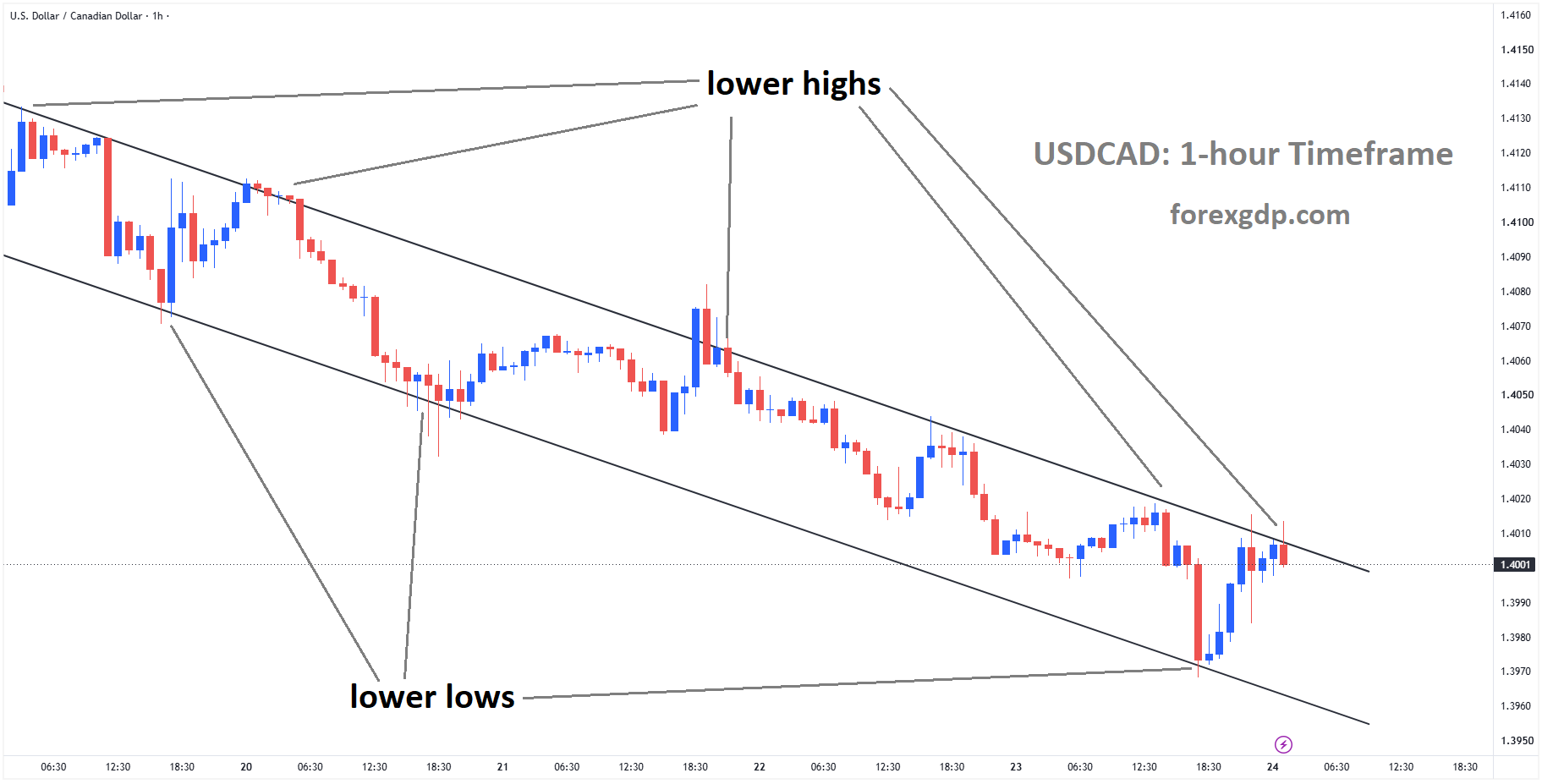
USDCAD reached the lower high area of the descending channel
Canada’s currency is receiving support from stronger energy markets, renewed inflation concerns, and an improvement in consumer spending. Together, these developments have raised questions about whether the Bank of Canada could increase borrowing costs sooner than previously expected.
The US Dollar, meanwhile, faces a more complicated backdrop. Investors are weighing inflation risks against concerns about economic growth, particularly as confidence in artificial intelligence investment comes under scrutiny. The different challenges facing the two central banks are becoming a key influence on the currency pair.
Higher Oil Prices Give the Canadian Dollar a Lift
Rising oil prices have been an important source of support for the Canadian Dollar. Canada is a major energy exporter, so stronger oil markets can improve export earnings and strengthen expectations for the country’s trade performance.
When Canadian energy producers receive more revenue from overseas sales, the wider economy can benefit through business income, investment, and government receipts. Currency traders often respond by showing greater interest in the Canadian Dollar.
Middle East tensions have added to concerns about energy supplies, helping push oil prices higher. For Canada, this creates a potential economic benefit, although the effects are not entirely positive.
More expensive energy also raises transportation and production costs. Businesses may pass some of those increases on to customers, while households face higher fuel bills. That makes oil a central issue for both the Canadian economy and the Bank of Canada’s inflation outlook.
Canadian Inflation Raises Questions About Interest Rates
Canada’s annual inflation rate increased to 3.1% in September, reaching its highest level in four months. The rise has increased attention on whether the Bank of Canada needs to respond with tighter monetary policy.
Investors are considering the possibility of an interest rate increase at the October 28 meeting. Higher borrowing costs could help contain inflation by slowing demand and limiting the ability of businesses to keep raising prices.
Expectations of higher interest rates can also support a currency. When investors anticipate better returns from a country’s interest-bearing assets, demand for that country’s currency may increase.
However, an immediate rate increase is far from certain. Policymakers must judge whether the latest inflation pressure will last or whether it mainly reflects an increase in energy costs that could fade.
The distinction matters because interest rates cannot directly resolve an oil supply disruption. A rapid response could weaken domestic spending without addressing the original cause of higher energy prices.
Retail Sales Show a Recovery in Consumer Spending
Recent retail sales figures have added another consideration to the Canadian interest rate debate.
Retail sales rose 1.2% in August after declining 0.8% in July. Although the increase was slightly below expectations, it still showed a recovery in household spending.
Sales excluding automobiles also increased 1.2%, exceeding forecasts. This suggests that the improvement extended beyond vehicle purchases and reflected demand across other parts of the retail economy.
For the Bank of Canada, resilient spending may make inflation harder to bring under control. If consumers continue buying even as costs increase, businesses may have more room to maintain higher prices.
Still, one month of stronger sales does not establish a lasting change in household behaviour. Policymakers will need to consider the figures alongside employment, income growth, and the broader direction of domestic demand.
For currency traders, the report provides another reason to pay close attention to the Bank’s assessment of economic conditions.
Bank of Canada Faces a Difficult Timing Decision
The debate is increasingly about when the Bank of Canada might raise rates, rather than whether inflation deserves attention.
TD Securities expects the central bank to hold rates steady in October before increasing them in December and again in January. Its view reflects concern that moving immediately could introduce unnecessary economic risk.
Waiting would give policymakers more time to assess incoming data and determine whether energy costs are creating broader inflation pressure. It would also allow the Bank to examine how households and businesses are responding to existing financial conditions.
However, recent communication from Governor Tiff Macklem has encouraged investors to consider a more forceful response. That has made the October meeting less predictable.
The Canadian Dollar’s reaction will therefore depend on more than the rate announcement itself. Even if borrowing costs remain unchanged, a clear indication that an increase is approaching could influence expectations for the months ahead.
Federal Reserve Balances Inflation Against Growth Concerns
The Federal Reserve faces a similar inflation challenge, but concerns about US growth are also drawing attention.
The Fed is widely expected to leave interest rates unchanged at its next meeting following September’s increase. Investors will focus on how officials explain that decision and what they suggest about future policy.
Higher energy costs could encourage the central bank to maintain a firm stance against inflation. At the same time, doubts about the sustainability of artificial intelligence spending have raised questions about business investment.
AI-related projects have become an important part of the growth discussion. If companies reduce spending or investors become less confident about future returns, the effects could spread across technology businesses and their suppliers.
Recent weakness in equities has also encouraged demand for government bonds, contributing to lower Treasury yields. That has reduced some of the support available to the US Dollar.
A cautious Fed message could place further pressure on the currency, while a stronger emphasis on inflation could help restore demand.
Summary
USDCAD remains under pressure as higher oil prices, rising Canadian inflation, and recovering retail sales strengthen the case for a firmer Bank of Canada policy stance.
The Federal Reserve, meanwhile, must weigh energy-driven inflation against questions about investment and economic growth. These competing concerns could lead the two central banks to communicate different levels of urgency.
The upcoming meetings will help clarify whether Canada is moving closer to higher borrowing costs and whether US policymakers prefer a more gradual approach. Those signals are likely to play an important role in shaping the next phase for the Canadian Dollar and USDCAD.
USDCHF Advances as Dollar Buyers Focus on Fed’s Next Move
USDCHF is finding renewed buying interest as the US Dollar recovers alongside US government bond yields. The rebound follows a period of weakness during which investors moved toward the Swiss Franc as concerns about global stock markets encouraged a more cautious approach.
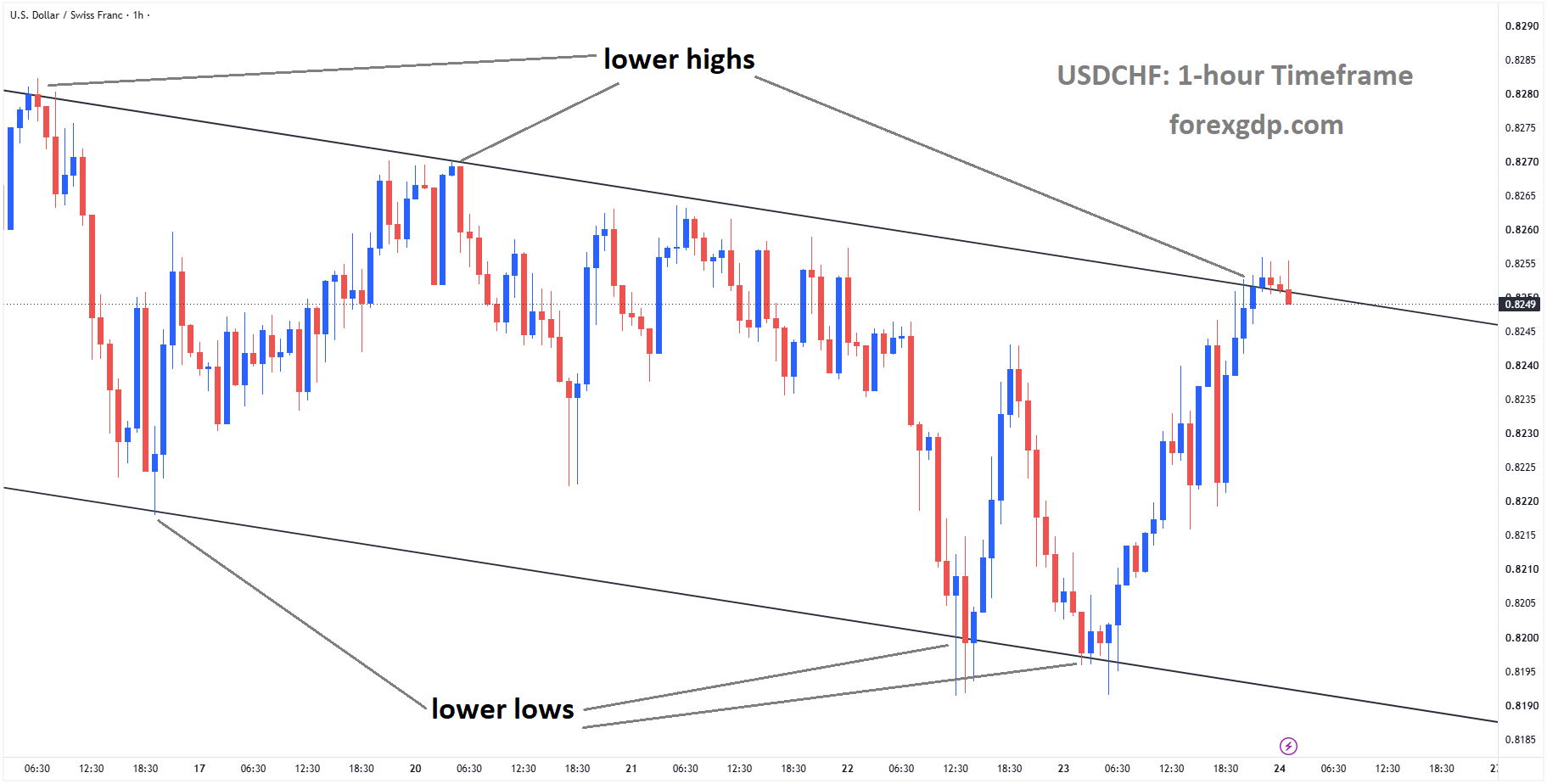
USDCHF reached the lower high area of the descending channel
The latest shift shows how quickly currency demand can change when investors reassess risk, interest rates, and economic conditions. The Franc benefited when traders sought safety, but that advantage weakened as demand for the Dollar returned.
A wide gap between US and Swiss interest rates remains an important influence on the pair. With the Federal Reserve keeping borrowing costs well above those in Switzerland, Dollar-denominated investments continue to offer an income advantage.
Attention is now turning to the next Federal Reserve policy meeting. Investors want a clearer view of how officials balance resilient economic activity against the risk of inflation remaining elevated.
Dollar Recovery Takes Some Pressure Off USDCHF
The recent improvement in USDCHF reflects a recovery in both the US Dollar and Treasury yields. Earlier demand for government bonds had pushed yields lower, reducing some of the appeal of holding the American currency.
When investors buy bonds, their prices generally rise and their yields fall. That relationship matters for currencies because changes in investment returns can influence where money flows.
As Treasury yields regained ground, the Dollar recovered part of its earlier losses. This helped USDCHF reverse its previous decline and reduced the Swiss Franc’s immediate advantage.
However, a recovery in the Dollar does not remove the uncertainty facing investors. Traders still need to assess whether the latest movement reflects a lasting change in expectations or a temporary adjustment before the Fed meeting.
For now, the relationship between bond returns and currency demand remains central to the pair’s direction.
Swiss Franc Demand Eases After a Rush Toward Safety
The Swiss Franc had gained support as investors questioned whether the large amounts being spent on artificial intelligence could deliver the returns companies and shareholders expect.
Those concerns weighed on stocks and encouraged investors to reduce their exposure to risk. Switzerland’s currency often attracts demand during such periods because of the country’s reputation for economic stability.
Government bonds also benefited from the cautious mood. That created two pressures on USDCHF at the same time: stronger demand for the Franc and lower Treasury yields weighing on the Dollar.
As the defensive move lost momentum, the Franc gave back some of its advantage. This highlights an important feature of the currency: its performance depends on more than Swiss economic conditions.
Changes in global confidence can strengthen the Franc even when domestic interest rates are low. When that demand fades, differences in investment returns can become more influential again.
US Economic Reports Present a Mixed Picture
Recent US economic figures have given investors several competing signals to consider.
The preliminary S&P Global business surveys showed that overall private-sector activity continued to expand, although growth slowed compared with the previous month. Manufacturing improved slightly and performed better than economists had expected, while services activity softened.
That combination suggests the economy is still growing, but the pace is uneven across industries. Manufacturers showed some resilience, while service businesses reported a moderation in momentum.
Consumer sentiment added another detail to the picture. The final University of Michigan reading was revised higher, suggesting households were somewhat less pessimistic than the earlier estimate indicated.
Inflation expectations, meanwhile, remained unchanged across the survey’s shorter and longer time horizons.
For the Federal Reserve, these reports do not provide an obvious reason to change course immediately. Continued expansion gives officials room to assess incoming information, while slower growth in parts of the economy offers a reason to proceed carefully.
For currency traders, the key question is whether future reports strengthen the case for keeping US rates elevated.
Fed Meeting Becomes the Main Focus

The upcoming Federal Reserve decision is now the main event for USDCHF traders. Expectations favour unchanged interest rates following the previous increase, but the message accompanying the decision could be just as important as the decision itself.
Investors will examine whether policymakers remain concerned enough about inflation to consider another increase before the end of the year.
Higher energy costs are a particular challenge. Tensions in the Middle East have raised concerns that expensive fuel could keep inflation elevated for longer.
Energy affects far more than household fuel bills. It influences transport, manufacturing, and distribution expenses, potentially encouraging businesses to pass higher costs on to customers.
At the same time, higher costs can weaken spending and reduce business confidence. The Fed therefore faces a difficult balance between containing inflation and avoiding unnecessary pressure on growth.
A firm message about inflation could support expectations for prolonged high US interest rates. A more cautious message about the economy could lead investors to reassess that outlook.
Fed and SNB Policy Differences Remain Important
The contrast between Federal Reserve policy and the Swiss National Bank’s approach continues to shape USDCHF.
Swiss interest rates remain substantially below US rates. This difference can make Dollar-denominated assets more attractive to investors seeking interest income, provided they are comfortable with currency risk.
The SNB’s latest meeting minutes indicated that policymakers considered existing monetary conditions suitable for maintaining price stability over the medium term.
Officials acknowledged that higher energy costs could lift inflation in the short term. However, their assessment showed little urgency to tighten policy.
The minutes also suggested that the current environment no longer required an increased willingness to intervene in foreign exchange markets.
Together, these messages point to a central bank that sees room to maintain its existing approach. That leaves the Franc dependent partly on demand for safety to offset its lower interest-rate appeal.
Summary
USDCHF has recovered as the US Dollar and Treasury yields regain ground, while the Swiss Franc’s recent support from cautious investors has eased.
Mixed US economic reports suggest continued growth with some moderation, leaving the Federal Reserve to weigh inflation risks against signs of slowing momentum. Higher energy costs add another complication to that decision.
The interest-rate gap between the Fed and the SNB remains a source of support for the Dollar. The next major influence will be the Fed’s guidance on future policy, alongside any change in global demand for the Swiss Franc as a defensive currency.
AUDUSD Keeps Its Balance as Rate Expectations Counter Economic Weakness
The Australian Dollar is holding its ground against the US Dollar as traders weigh two competing developments. Australia’s latest business survey points to weaker economic activity, while concerns about inflation are keeping expectations of another Reserve Bank of Australia interest rate increase alive.
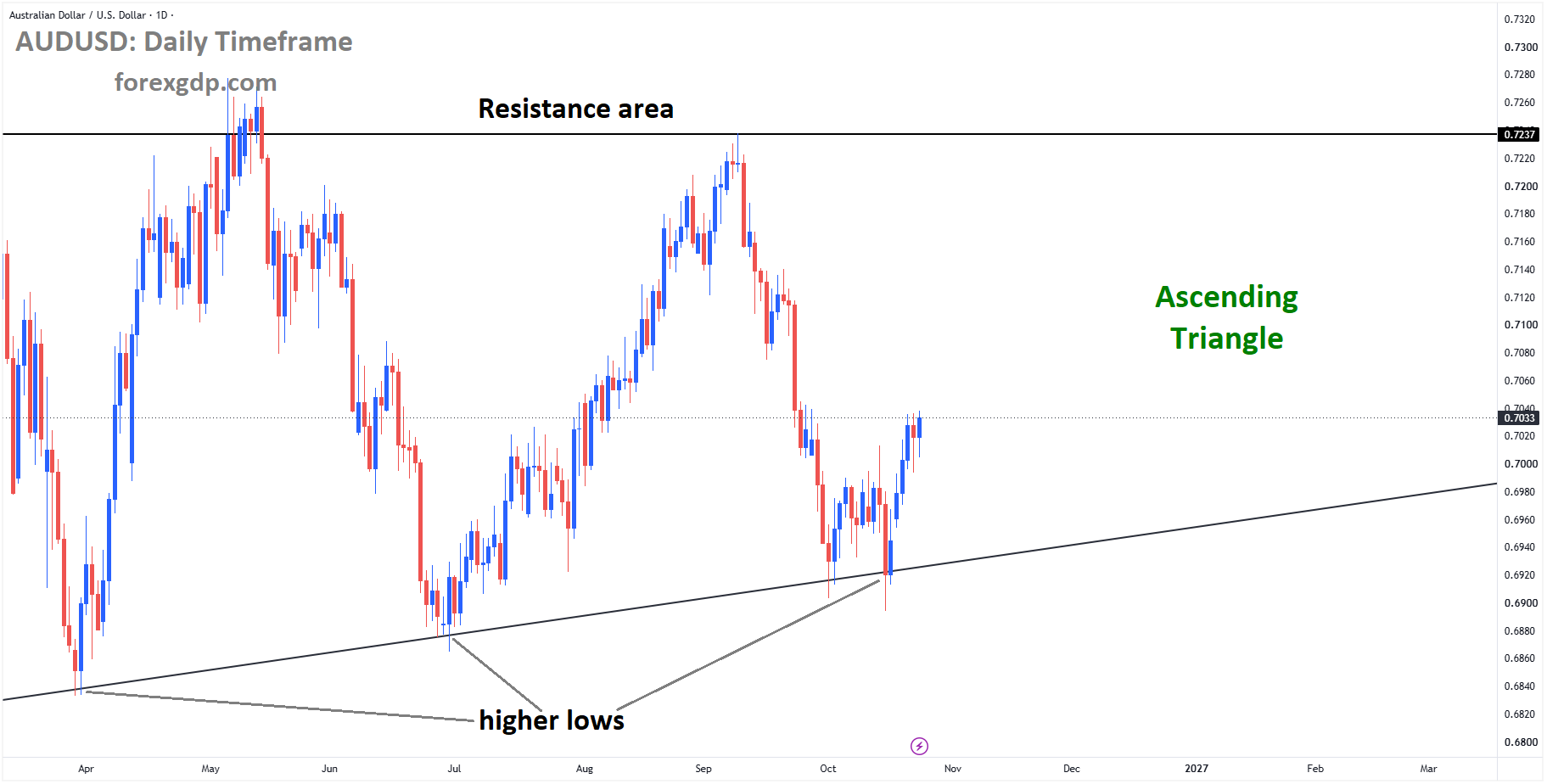
AUDUSD is moving in an ascending triangle pattern, and the market has rebounded from the higher low area of the pattern
Normally, a slowdown in business conditions would put pressure on the Australian currency. Softer demand can reduce the need for higher borrowing costs and encourage investors to expect a more cautious central bank. This time, however, warnings about the inflation outlook have complicated that view.
The US Dollar is also influencing AUDUSD. A recovery in US government bond yields has given the American currency some support, making it harder for the Australian Dollar to gain a clear advantage.
Australian Business Activity Moves Into Contraction
Australia’s preliminary October business surveys showed a noticeable loss of momentum across the private sector. The S&P Global Composite Purchasing Managers’ Index fell from 51.3 in September to 47.7 in October.
A reading below 50 signals that activity is contracting. The latest result marked the first decline in private-sector activity since May and the weakest reading since March.
The change suggests that businesses faced more difficult conditions at the start of the new quarter. It also raises questions about how much strength remains in the economy as companies and households manage borrowing costs and other financial pressures.
For the Australian Dollar, weaker business activity creates a challenge. A currency can lose support when investors expect slower growth to limit future interest rate increases. However, that relationship becomes less straightforward when inflation remains a concern.
The October figures therefore add to the debate over the RBA’s next decision without settling it.
Services Weakness Drives the Broader Slowdown
The services sector accounted for much of the deterioration in Australia’s business conditions. Its PMI dropped to 47.8 in October from 51.9 in September, moving from expansion into contraction.
This was the sector’s first contraction since May and its lowest reading since March. The decline matters because services represent a large part of Australia’s economy, covering a wide range of businesses that serve households and other companies.
There was still one encouraging detail in the report: new business continued to expand. Although growth in new orders slowed, demand had not stopped increasing altogether.
That distinction is useful when assessing the outlook. Falling activity alongside continued growth in new business presents a more mixed picture than a broad decline across both measures. It suggests that some demand remains, even as the sector’s overall performance weakens.
Manufacturing conditions were also subdued. The manufacturing PMI edged up to 49.7 from 49.6, but remained below the level that separates growth from contraction for a second consecutive month.
The small improvement offered limited reassurance. Taken together, the surveys showed that both major parts of the private sector were struggling to generate stronger activity.
Inflation Warnings Keep RBA Rate Expectations Elevated

While the business surveys pointed to slower growth, remarks from RBA monetary policy board member Andrew Hauser kept attention on inflation.
Hauser warned that the inflation outlook had become materially worse for the coming months. His comments encouraged traders to reassess the possibility of another interest rate increase at the November policy meeting.
According to the report cited by the Guardian, the estimated probability of a November increase rose from around 30% before his remarks to approximately 45% afterward.
These expectations help explain why the Australian Dollar remained relatively steady after the disappointing activity figures. If investors believe the RBA may raise borrowing costs again, Australian assets can retain some appeal even when growth slows.
However, market expectations are not a policy commitment. The probability of an increase can change as new information becomes available, and the RBA must assess the wider economy before making its decision.
The central bank faces a difficult balance. Further tightening could help contain inflation, but it could also place additional pressure on businesses and households at a time when activity is already weakening.
Recovering US Bond Yields Support the Dollar
Developments in the United States are providing another important influence on AUDUSD.
US Treasury yields recovered after falling during the previous session. That rebound offered support to the US Dollar and limited the Australian currency’s room to strengthen.
Government bond yields matter because they affect the returns available to investors. When US yields rise, dollar-denominated assets can become more attractive, encouraging demand for the currency.
For AUDUSD, this creates a contest between expectations on both sides. The Australian Dollar is receiving support from the possibility of tighter RBA policy, while the US Dollar is benefiting from recovering Treasury yields.
Neither currency is moving in isolation. Even if Australian rate expectations remain elevated, a stronger US Dollar can prevent those expectations from translating into sustained gains for the pair.
Technology Concerns Complicate the US Outlook
The earlier decline in US Treasury yields followed a deeper selloff in technology and artificial intelligence shares. Investors became more cautious about whether the large sums being committed to AI projects would produce the returns companies expect.
As that uncertainty grew, demand for government bonds increased. Bond prices and yields move in opposite directions, so stronger demand helped push Treasury yields lower.
The concerns also reached beyond the stock market. AI investment has been an important source of optimism about US economic growth. Doubts about its sustainability encouraged financial markets to reduce expectations for further Federal Reserve rate increases.
That shift can weigh on the US Dollar by lowering expectations for future interest returns. At the same time, periods of market uncertainty can create demand for the dollar itself.
These competing influences help explain why changes in investor confidence can produce an uneven currency response. The effect depends on whether attention is focused more heavily on interest rates, economic growth, or demand for safety.
Final Summary
AUDUSD remains caught between weaker Australian business activity and persistent inflation concerns. October’s surveys showed a private-sector contraction led by services, while manufacturing continued to struggle.
Even so, expectations of another RBA rate increase have offered the Australian Dollar support following Hauser’s warning about the inflation outlook.
The US side of the pair remains equally important. Recovering Treasury yields are helping the dollar, while uncertainty surrounding technology investment is influencing growth expectations and the Federal Reserve outlook.
The central issue is how both economies balance inflation pressures against signs of slowing momentum. Changes in that balance will continue to shape sentiment toward the Australian and US currencies.
NZDUSD Loses Steam as Rising Oil Costs Weigh on Sentiment
The New Zealand Dollar is holding firmer against the US Dollar as investors weigh different interest rate expectations in New Zealand and the United States. Growing speculation about a possible rate increase from the Reserve Bank of New Zealand has helped the Kiwi attract demand, while falling US Treasury yields have reduced support for the American currency.
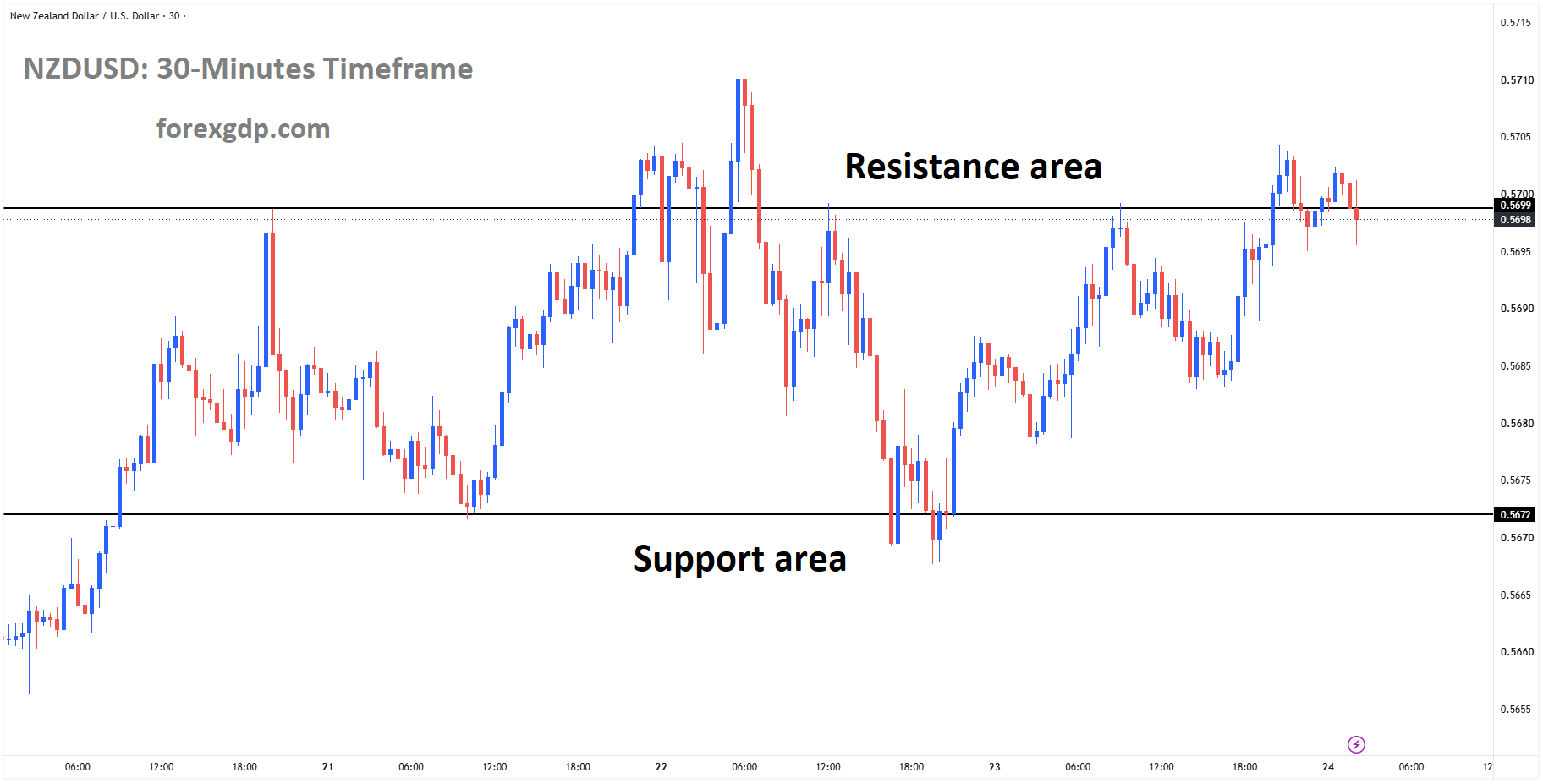
NZDUSD reached the resistance area of the box pattern
However, the New Zealand Dollar’s progress faces a challenge from rising oil costs and a more cautious mood across global markets. Tensions in the Middle East have increased concerns about energy supplies, inflation, and the financial pressure facing countries that rely on imported fuel.
These competing forces have left NZDUSD caught between support from domestic interest rate expectations and uncertainty about the wider economic outlook.
RBNZ Rate Hike Expectations Give the Kiwi a Lift
One of the main reasons behind the New Zealand Dollar’s recent strength is the growing belief that the Reserve Bank of New Zealand could raise interest rates at its upcoming policy meeting.
Investors are paying closer attention to inflation risks, particularly those linked to expensive energy and the earlier weakness in the exchange rate. Both can increase the cost of goods entering the country.
When the New Zealand Dollar weakens, businesses may need to spend more local currency to purchase products from overseas. That can affect the cost of fuel, machinery, household goods, and other imports. Companies may absorb some of these expenses, but others eventually pass them on to customers.
Higher interest rates could help limit that pressure by slowing borrowing and spending. They can also make investments denominated in New Zealand Dollars more attractive to investors seeking better returns.
For now, expectations of a possible rate increase have supported the Kiwi. Still, expectations alone do not guarantee a policy change. The central bank must weigh inflation concerns against the ability of households and businesses to cope with higher borrowing costs.
Rising Oil Costs Create a Difficult Balance for New Zealand
The increase in oil costs is central to New Zealand’s inflation challenge. As an economy that depends on imported crude and fuel, New Zealand is exposed when global energy becomes more expensive.
The effects reach well beyond petrol stations. Transport companies face larger fuel bills, businesses pay more to move goods, and producers may see their operating expenses rise. Over time, these costs can spread through the economy.
Households also feel the pressure. When more income goes toward fuel and essential purchases, less remains available for shopping, leisure, and other spending. That can weaken demand even while inflation remains uncomfortable.
This creates a difficult decision for the RBNZ. Raising interest rates may help prevent a temporary energy shock from turning into broader, lasting inflation. Yet tighter policy would add to the financial strain already created by higher living costs.
Interest rates cannot increase the global supply of oil. Their role is to influence domestic demand and borrowing conditions. The central bank therefore needs to judge how much of the inflation pressure requires a policy response and how much reflects forces outside its control.
Middle East Tensions Encourage Greater Caution
Growing tension in the Middle East has made investors more careful about taking risks. Concerns about energy production and shipping routes have increased uncertainty across financial markets.

The New Zealand Dollar often responds to changes in global confidence because New Zealand has a relatively small, trade-dependent economy. When investors become worried about international growth, they may reduce their exposure to currencies that are sensitive to trade and spending.
That helps explain why the Kiwi’s recent support has not translated into stronger gains. Expectations of higher domestic interest rates are encouraging demand, but concerns about energy costs and global stability are pulling in the opposite direction.
For businesses, uncertainty can also delay investment decisions. Companies may become reluctant to expand when they cannot confidently estimate transport costs, customer demand, or future financing expenses.
The longer energy uncertainty continues, the harder it becomes to separate immediate inflation concerns from the potential damage to economic growth.
Falling US Treasury Yields Limit Dollar Support
The US Dollar would normally be expected to benefit when investors seek safety. This time, however, a sharp decline in US Treasury yields has limited that advantage.
Government bond prices and yields move in opposite directions. When investors buy more US government bonds, their prices rise and their yields fall.
Concerns about the profitability of the artificial intelligence sector have encouraged some investors to move money toward government debt. That shift has lowered the returns available on those bonds and reduced one source of support for the Dollar.
Lower Treasury yields can make US assets less attractive relative to alternatives elsewhere. For currency markets, the difference between returns available in different countries matters, particularly when central bank expectations are also moving apart.
This has created an unusual mix: investors are becoming more cautious, but the Dollar is not receiving the full benefit of that caution. Demand for US government bonds is contributing to lower yields, which is working against the currency.
Different Policy Expectations Keep NZDUSD in Focus
The contrast between the RBNZ and the Federal Reserve remains an important influence on NZDUSD.
While investors have increased their expectations of a New Zealand rate hike, they have pulled back from expecting a similar move from the Fed at its next meeting. That difference has helped the Kiwi perform relatively well.
However, lower bond yields do not decide Federal Reserve policy on their own. Officials still need to assess inflation, employment, spending, and broader financial conditions before deciding whether interest rates need to change.
Upcoming US business surveys could provide another view of economic conditions. The preliminary S&P Global Purchasing Managers’ Index reports may show whether companies are experiencing stronger demand or losing momentum. Their information on costs and selling prices could also help investors assess inflation pressure.
Even so, a single report may have only a modest effect if it does little to change expectations for the Fed’s next decision.
Final Summary
NZDUSD is finding support from expectations that the RBNZ could raise interest rates while the Federal Reserve takes a more cautious approach. Falling US Treasury yields have also limited the Dollar’s appeal.
At the same time, rising oil costs present a challenge for New Zealand by lifting inflation and reducing household spending power. Middle East tensions add further uncertainty. The Kiwi’s next direction will depend on how central banks respond to these pressures and whether global confidence improves.
EURGBP Extends Decline as Upbeat UK Surveys Lift the Pound
The euro remains under pressure against the British pound as fresh business surveys reveal a widening gap between the UK and Eurozone economies. Stronger activity across British manufacturing and services has supported sterling, while slower growth in the Eurozone has reduced confidence in the single currency.
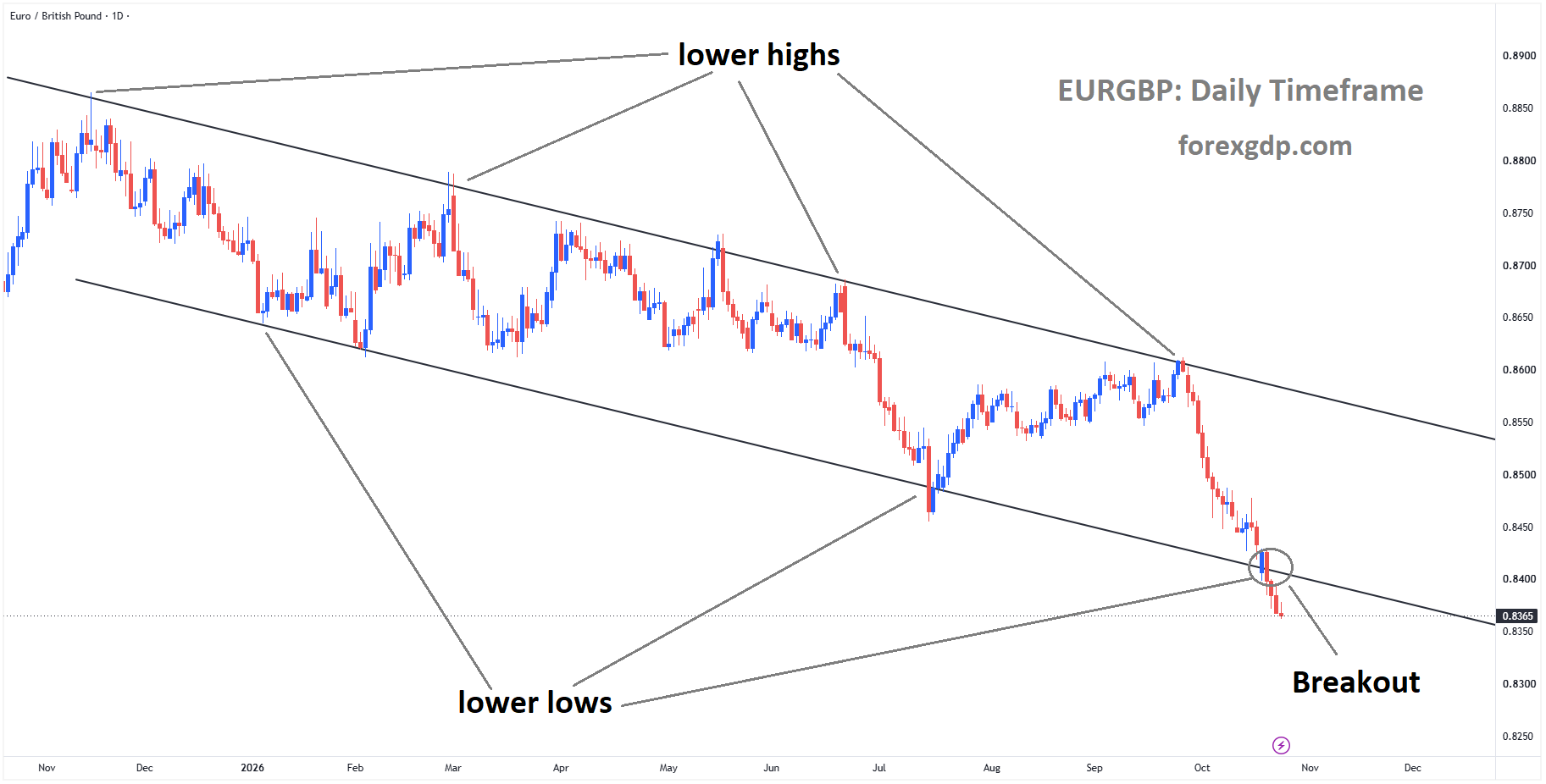
EURGBP has broken the descending channel to the downside
The latest figures add to evidence that the UK economy is holding up well. Businesses reported a stronger October than markets had expected, raising questions about whether the Bank of England could increase interest rates at its November meeting.
Across the Eurozone, the picture was less encouraging. Although the region continued to grow, its expansion lost momentum. Renewed weakness in France added to concerns, while mixed results from Germany offered limited reassurance.
Together, these developments have kept EURGBP under pressure for several weeks. The central issue is the difference in economic momentum and what that could mean for monetary policy on either side of the Channel.
UK Business Surveys Deliver an Encouraging Surprise
October’s preliminary Purchasing Managers’ Index surveys showed an improvement in both major parts of the British private sector.
The UK Manufacturing PMI increased to 52.8 from 51.9 in September. Economists had expected a small decline, making the stronger result a welcome surprise. The reading suggests that factory activity expanded at a faster pace, offering further evidence of resilience within the economy.
The services sector also performed better than expected. Its PMI rose to 53.1 from 52.1, rather than slowing as forecasts had suggested.
These surveys matter because they provide an early view of business conditions before many official economic reports become available. Readings above 50 generally indicate expansion, while figures below that mark suggest contraction.
For the UK, the improvement across both manufacturing and services gives the economic outlook a broader foundation. Growth was not limited to one part of the economy, which helps explain why the figures strengthened confidence in the pound.
Services are particularly important because they account for a large share of British economic output. A firmer reading in this sector carries weight when investors assess the country’s overall performance.
Stronger Growth Brings the Bank of England Into Focus
The upbeat UK figures have increased attention on the Bank of England’s November interest rate decision.
A resilient economy can give policymakers more room to maintain restrictive borrowing conditions or consider an increase if inflation pressures require it. When business activity remains firm, concerns about an immediate economic slowdown may become less pressing.
That does not mean a rate increase is certain. Business surveys are only one part of the information the BoE considers. Inflation, wage growth, employment and household spending also influence its decisions.
Even so, the October results have strengthened the argument that the economy can cope with tighter financial conditions more comfortably than weaker forecasts had implied.
Interest rate expectations can affect currency demand. If investors expect UK rates to become more attractive relative to those elsewhere, sterling may receive additional support. In the current EURGBP picture, stronger British data have reinforced that advantage.
UK Budget Decisions Remain an Important Uncertainty
The improved business outlook provides an encouraging starting point for the winter months, but government policy could still influence how the economy develops.
S&P Global’s assessment pointed to the potential for continued solid growth, provided businesses avoid unwelcome surprises from the government’s tax and spending review.
That qualification matters. Changes to taxes or public spending can affect company costs, customer demand and investment plans. Firms may feel more confident about expanding when future policy is clear, while unexpected changes can encourage caution.
For now, the surveys suggest that British businesses entered the period with improving momentum. Whether that confidence lasts will depend partly on the financial conditions companies face and the decisions made in the upcoming review.
Eurozone Growth Continues at a Slower Pace
The Eurozone’s October surveys presented a softer picture. Private sector activity continued to expand, but the pace weakened compared with September and fell short of market expectations.
The HCOB Manufacturing PMI slipped to 52.4 from 52.9. Although the reading remained in expansion territory, it showed that growth in factory activity had eased.
The services slowdown was more noticeable. The sector’s PMI fell to 51.7 from 53.0, pointing to a weaker expansion than economists had anticipated.
These figures do not suggest that the entire regional economy has moved into contraction. They show that growth has become less convincing, particularly when compared with the improvement reported in the UK.
For the euro, that relative difference matters. Currency movements often reflect how one economy performs against another. Continued Eurozone expansion may offer some reassurance, but slower growth provides less support when British activity is accelerating.
France’s Renewed Weakness Clouds the Regional Outlook
France was a major source of concern in the latest Eurozone figures.
Private sector activity contracted again in October after September had delivered the first expansion in ten months. The return to contraction suggests that the earlier improvement had not yet developed into a lasting recovery.
This creates uncertainty about how quickly French businesses can regain momentum. One positive month can lift confidence, but a recovery becomes more dependable when improvement continues across several reporting periods.
France’s size within the Eurozone also makes its performance important for the wider region. Continued weakness can hold back overall growth even when other member economies are expanding.
The contrast with the UK is clear. British surveys showed improvement across manufacturing and services, while France’s setback raised fresh questions about the strength of the Eurozone recovery.
Germany Offers a Mixed Economic Picture
Germany provided some encouragement, although its results were uneven.
The German Manufacturing PMI increased to 54.2 from 53.9, signalling a faster expansion in factory activity. That improvement helped offset some of the weakness elsewhere in the region.
However, German services lost momentum. The sector’s PMI declined to 51.7 from 53.0, showing that stronger manufacturing was not matched by a similar improvement in services.
Germany and the rest of the Eurozone continued growing overall, but at a slower pace. This uneven performance makes it harder to describe the region’s recovery as broad or firmly established.
For investors assessing the euro against sterling, Germany’s manufacturing improvement offers a positive detail. It does not fully remove the concerns created by weaker services and renewed contraction in France.
Final Summary
EURGBP remains under pressure as stronger UK business activity contrasts with a slower Eurozone expansion. British manufacturing and services both exceeded expectations, supporting confidence in the economy and bringing a possible November Bank of England rate increase into sharper focus.
The Eurozone continued to grow, but disappointing survey results, renewed weakness in France and mixed German data weakened its overall appeal.
Upcoming economic releases and UK tax and spending decisions will help determine whether this gap in momentum continues. For now, the relative strength of the British economy remains an important source of support for sterling.
Crude Oil Gains Momentum as Export Uncertainty Grows
Crude oil is drawing renewed attention as tensions across the Middle East raise concerns about the security of global energy supplies. West Texas Intermediate, commonly known as WTI, has strengthened as traders assess threats to shipping routes, attacks on Saudi infrastructure, and the possibility of further military action involving Iran.
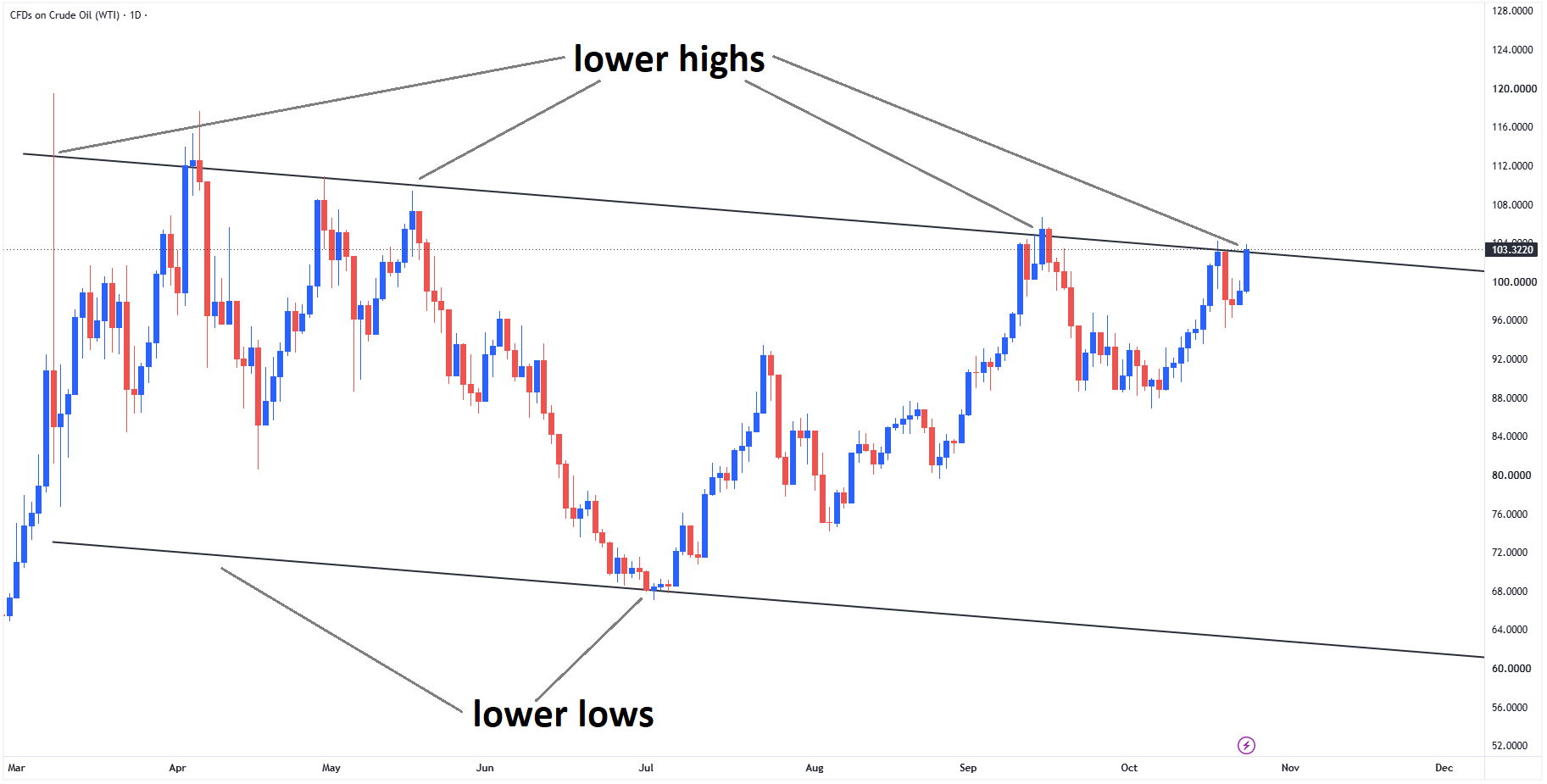
Crude Oil reached the lower high area of the descending channel
The main concern is whether oil can continue moving safely from major Gulf producers to international buyers. Incidents involving tankers in the Strait of Hormuz have added uncertainty, while reported Houthi attacks on Saudi targets have increased worries about the safety of energy facilities.
Together, these developments have made supply security a central issue for the oil market. Even without confirmed widespread production losses, the risk of disruption can influence buying decisions, transport arrangements, and expectations for future availability.
Strait of Hormuz Tensions Put Oil Shipments in Focus
The Strait of Hormuz is a vital passage for oil shipments leaving the Gulf. Its importance means that threats to vessels travelling through the waterway can quickly become a concern for energy markets around the world.
According to the supplied reports, Iran’s Islamic Revolutionary Guard Corps navy claimed that four additional tankers had been struck while carrying out what it described as illegal oil transfers. Separate reports said three other vessels encountered mines while attempting to pass through the corridor.
These claims have increased concern about the reliability of the shipping route. For oil buyers, the issue extends beyond whether a particular cargo arrives on time. Repeated incidents can make it harder to plan deliveries and maintain predictable supplies.
Shipping companies may also face more difficult operating decisions. Security threats can affect sailing schedules, insurance arrangements, and the willingness of crews and vessel owners to enter the area.
If shipments become less reliable, buyers may seek alternative suppliers. However, replacing established supply routes can take time, particularly when several importers are trying to secure additional cargoes at once.
Reported Attacks on Saudi Targets Add Another Layer of Risk
Concerns about maritime transport have been accompanied by reports of renewed Houthi attacks on Saudi Arabian targets.
The source material describes attacks involving Aramco’s Shaybah oilfield and Dammam airport, with four people reportedly killed and eight injured. The reported incidents have brought attention back to the vulnerability of infrastructure in a major oil-producing country.
For the energy market, the immediate question is whether attacks affect production, processing, storage, or export operations. The extent of any damage matters, as does the time needed to restore normal activity.
An attack does not automatically mean a prolonged loss of supply. Facilities may continue operating, and any interruption may be limited. However, repeated threats can still create uncertainty about future output and deliveries.
The combination of risks to facilities and shipping routes is particularly significant. Oil must be produced and transported safely before it can reach customers. Problems at either stage can complicate the supply chain.
Possible Further Military Action Keeps Traders Alert
Reports of potential additional attacks on Iran have added to the cautious mood.
According to the source material, a New York Times report citing US officials suggested that the United States and Israel could be considering another round of coordinated military action after the November midterm elections.
Possible military plans are different from confirmed operations. Nevertheless, reports of further action can influence the oil market because traders must consider how events might affect future supplies.
A broader campaign could raise questions about the safety of regional infrastructure and the response from Iran. It could also make shipping companies more cautious about operating near areas exposed to military activity.
The timing and scale of any action remain important uncertainties. Until those questions become clearer, expectations can shift quickly as new statements and reports emerge.
This helps explain why oil can strengthen before a major interruption is confirmed. Buyers and traders may adjust their positions when they believe the chance of disruption has increased.
Iran’s Warning Raises Concerns About a Wider Conflict
The source also describes a warning from the Islamic Revolutionary Guard Corps that further attacks on Iranian territory could prompt a more offensive response, including threats against neighbouring countries.
Such statements raise concerns about the conflict spreading beyond its existing boundaries. A wider confrontation could expose more infrastructure, ports, and transport routes to danger.
However, a warning does not establish that the threatened action will happen. Its significance lies in the uncertainty it creates and the potential consequences if tensions escalate.
Energy businesses must consider several possible outcomes. A contained confrontation would present a different supply outlook from a conflict involving additional countries or repeated attacks on export facilities.
Diplomatic developments therefore matter alongside military events. Steps that improve shipping security or reduce the likelihood of further attacks could ease supply concerns. Fresh incidents could have the opposite effect.
What Matters for the Oil Supply Outlook

The next stage of the oil market’s response will depend heavily on evidence of actual disruption.
Confirmed changes in production, export schedules, tanker movements, and delivery times would help establish whether security threats are translating into reduced availability. The duration of any interruption would also matter. A brief delay is different from a sustained loss of exports.
Buyers will also watch how producers and transport operators respond. Alternative cargoes, available inventories, and changes to shipping arrangements may help manage interruptions, although their effectiveness depends on the scale of the problem.
Beyond the oil industry, unreliable energy deliveries can create planning difficulties for airlines, freight companies, manufacturers, and other fuel-dependent businesses. That makes the security of Gulf supplies an issue with broader economic importance.
Final Summary
WTI oil has gained momentum as reported tanker incidents, attacks on Saudi targets, and the possibility of further military action increase concern about Middle East energy supplies.
The Strait of Hormuz remains central to the outlook because of its role in moving Gulf oil to international markets. Threats to production facilities add another source of uncertainty.
The key question is whether these risks lead to lasting interruptions. Verified damage, changes in exports, shipping conditions, and diplomatic progress will help determine how the supply situation develops.
BTCUSD Struggles as Defensive Trading Offsets ETF Support
Bitcoin remains under pressure as renewed interest in investment funds struggles to outweigh concerns about the wider economy. The cryptocurrency is heading toward a third consecutive weekly decline, showing how cautious investors remain even as demand improves in part of the market.
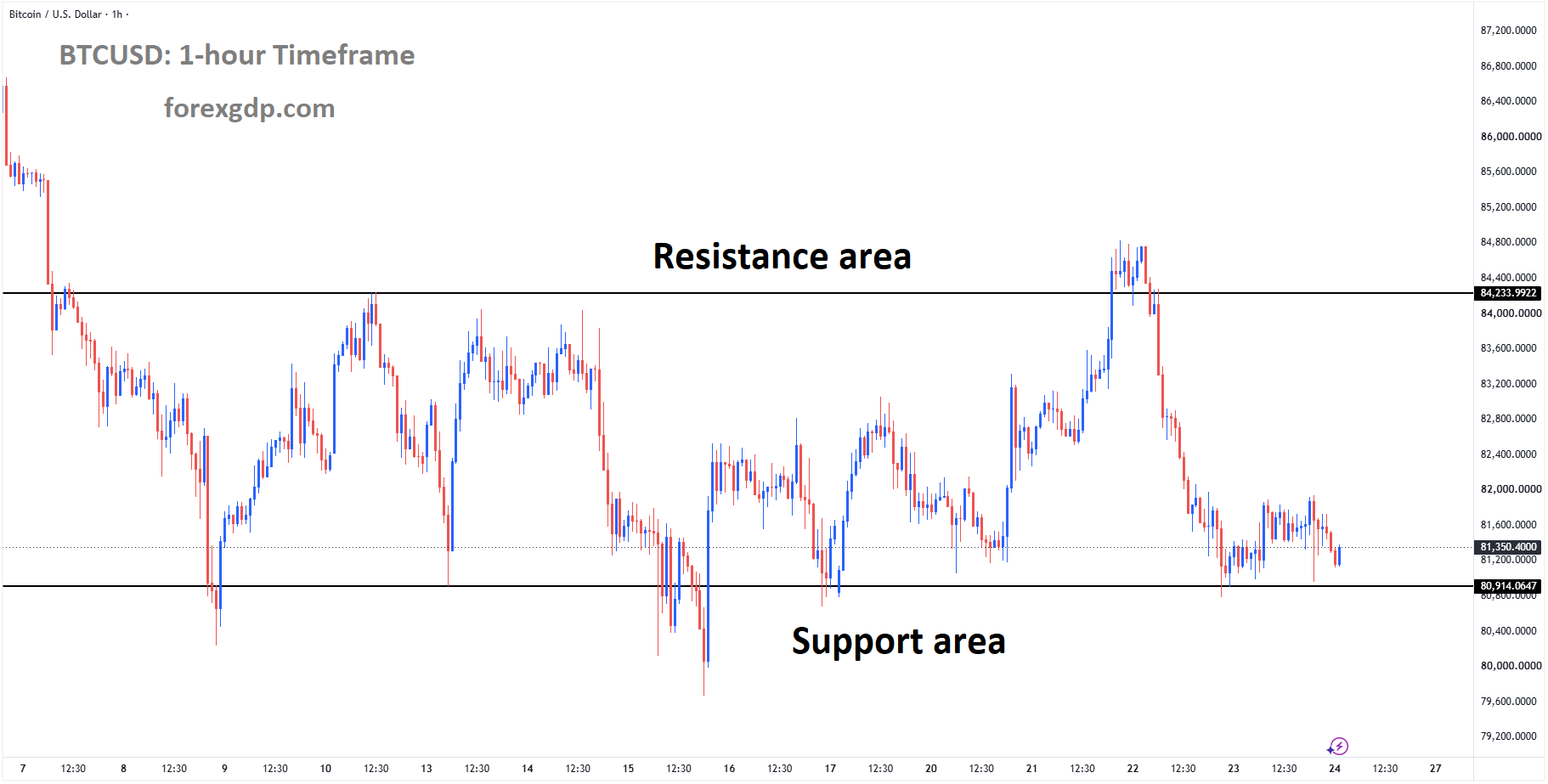
BTCUSD reached the support area of the box pattern
US-listed spot Bitcoin exchange-traded funds recorded $442.67 million in net inflows through Thursday, according to the supplied SoSoValue data. That puts the funds on course to end two weeks of withdrawals and suggests that some investors are willing to increase their exposure.
However, the return of ETF inflows comes at a difficult time. Escalating Middle East tensions, higher energy costs, and worries about inflation continue to discourage risk-taking. Questions about heavy artificial intelligence spending add another source of uncertainty.
Together, these forces explain why stronger fund demand has yet to produce a convincing improvement in Bitcoin sentiment.
Bitcoin ETF Inflows Offer Encouragement
Spot Bitcoin ETFs give investors exposure to Bitcoin through a product traded on a stock exchange. They offer a familiar route for people and institutions that prefer to use investment accounts rather than manage cryptocurrency wallets directly.
The reported inflows are encouraging because they follow two weeks in which more money left these funds than entered them. A return to net buying suggests that investor interest has not disappeared during Bitcoin’s recent weakness.
Still, the timing matters. The figures cover trading only through Thursday, so the full weekly result depends on the remaining session. Further inflows would strengthen the picture of recovering demand, while withdrawals could reduce the weekly total.
ETF activity also represents only one part of the Bitcoin market. Buying through these funds can happen alongside selling elsewhere. Some investors may be adding long-term exposure while others reduce their holdings because of immediate economic concerns.
For that reason, positive fund flows are useful evidence of demand, but they cannot explain every movement in Bitcoin or guarantee a recovery.
Swiss Fund Approval Could Expand Investor Access
Another development attracting attention is BIT Asset Management AG’s announcement that it received approval from the Swiss Financial Market Supervisory Authority for its Bitcoin Fund ETF, known as BBIT.
According to the announcement, the fund is expected to begin trading on the SIX Swiss Exchange in November. Its planned launch would give investors another exchange-traded route to direct Bitcoin exposure.
Access matters because different investors face different requirements. Institutions often need products that fit their custody arrangements, reporting systems, and internal investment rules. An approved fund can make it easier for them to assess and manage an allocation.
However, the availability of a new product does not automatically create strong demand. Investors still need to decide whether Bitcoin suits their goals, how much exposure they want, and whether current economic conditions justify taking additional risk.
The planned Swiss launch therefore carries more significance for Bitcoin’s developing investment infrastructure than for its immediate performance. It may broaden participation over time, while its actual impact will depend on investor uptake.
Middle East Tensions Keep Investors Cautious

Geopolitical uncertainty remains a major obstacle to stronger market confidence. The supplied report describes escalating fighting involving Saudi Arabia and Yemen’s Houthi movement, including attacks targeting airports and important energy infrastructure.
Threats to energy facilities raise concerns that production or transportation could be interrupted. Even before any lasting disruption occurs, uncertainty about future supply can influence business decisions and investor behaviour.
The report also points to warnings from Iran about possible retaliation if further US attacks take place. Such statements increase concern that the conflict could spread beyond its existing boundaries.
For investors, a wider conflict would make the economic outlook harder to judge. Businesses could face higher costs, shipping could become more difficult, and households could feel additional pressure from energy bills.
Bitcoin can attract attention during periods of political uncertainty, but it does not always benefit from them. When investors become more cautious, they may reduce cryptocurrency exposure along with other investments whose returns depend heavily on market confidence.
Higher Energy Costs Complicate the Inflation Outlook
The economic effect of rising oil costs extends well beyond fuel. Energy is involved in manufacturing, farming, transportation, and the delivery of goods. When those costs rise, businesses must decide whether to absorb them or pass them on to customers.
That creates a potential problem for inflation. If energy becomes more expensive for a sustained period, efforts to bring overall price pressures under control can become more difficult.
Central banks must then weigh competing concerns. Higher costs can weaken household spending and business activity, while persistent inflation can make policymakers reluctant to lower interest rates.
For Bitcoin, this uncertainty matters because interest-rate expectations influence investment decisions. When borrowing remains expensive and returns on interest-bearing assets stay attractive, some investors may become less willing to hold volatile assets.
The relationship is not automatic. Bitcoin responds to many influences, including adoption, regulation, and its own market demand. Nevertheless, an uncertain inflation outlook can limit enthusiasm even when cryptocurrency-specific developments appear encouraging.
AI Spending Questions Add to Broader Market Unease
Concerns about artificial intelligence spending are also affecting confidence. Investors are increasingly focused on whether large commitments to computing infrastructure and related projects will generate returns that justify their cost.
These questions mainly concern technology companies, but their influence can reach other markets. When investors reassess growth expectations, they may reduce exposure across several assets at once.
Bitcoin can feel that change in mood because many investors include it within portfolios that also hold technology shares and other growth-focused investments.
This does not mean Bitcoin’s future depends on AI investment. It means that shared investor positioning can connect markets that have very different underlying purposes.
With geopolitical tensions and inflation concerns already creating uncertainty, doubts about technology spending provide another reason for investors to remain selective.
Summary
Bitcoin is caught between improving ETF demand and a difficult global backdrop. Reported inflows into US-listed spot funds suggest renewed buying interest, while the planned Swiss ETF launch could expand access over time.
At the same time, Middle East tensions and higher energy costs are keeping inflation concerns alive. Questions about AI spending add pressure to an already cautious investment environment.
The key issue is whether returning demand can continue while these broader concerns remain unresolved. For now, positive developments in Bitcoin investment products are offering encouragement, but global uncertainty continues to weigh on confidence.
Don’t trade all the time, trade forex only at the confirmed trade setups
Get more confirmed trade signals at premium or supreme – Click here to get more signals, 2200%, 800% growth in Real Live USD trading account of our users – click here to see , or If you want to get FREE Trial signals, You can Join FREE Signals Now!