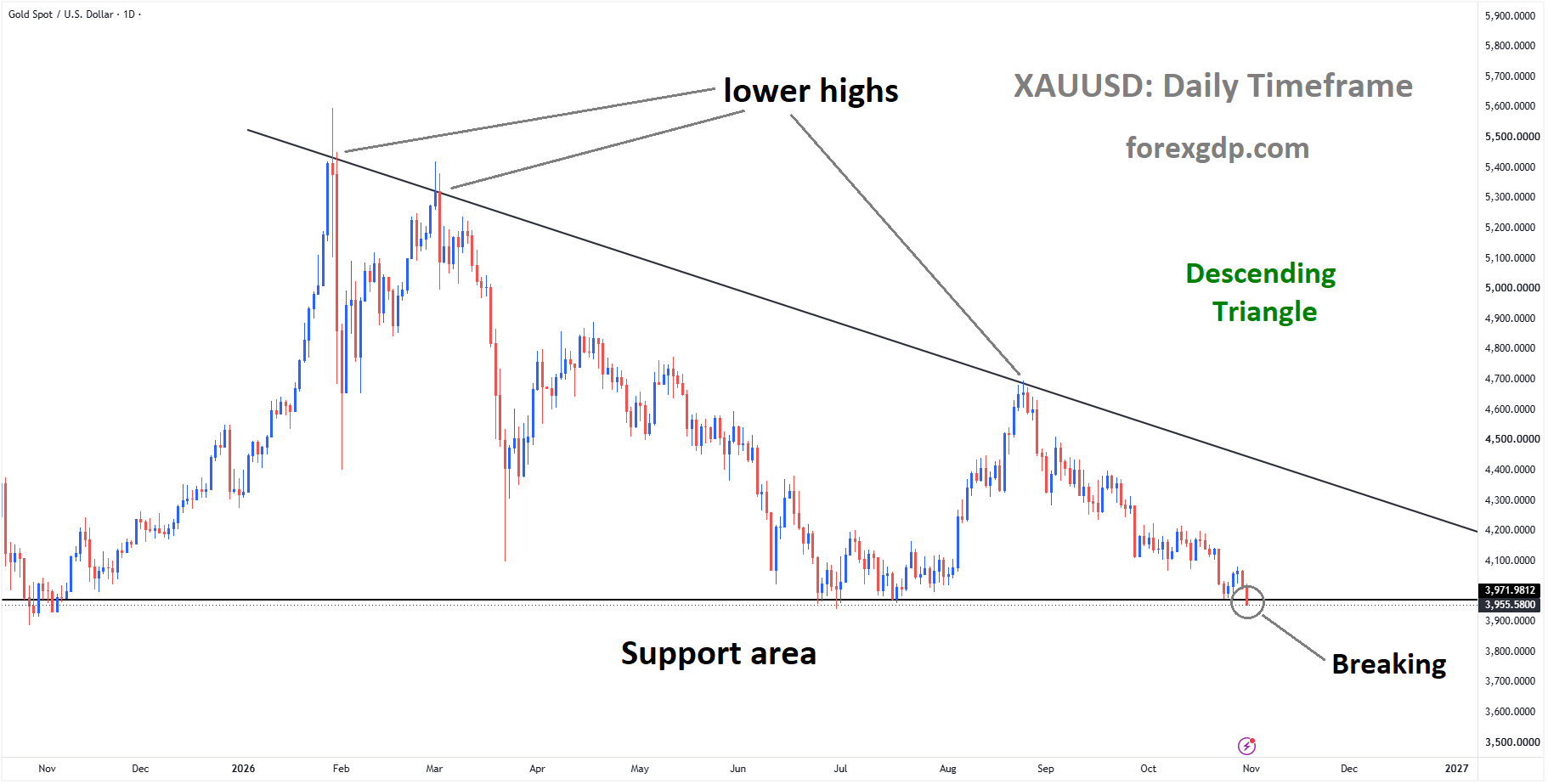
XAUUSD is breaking the support area of the descending triangle pattern
Gold remains under pressure as investors respond to changing expectations for US interest rates, persistent inflation concerns, and growing uncertainty across global financial markets. Although investors are becoming more cautious about risky assets, the precious metal has struggled to attract the strong demand normally associated with periods of economic uncertainty.
The main challenge for Gold comes from expectations that the Federal Reserve (Fed) could raise interest rates again. At the same time, concerns about artificial intelligence spending, rising energy costs, and geopolitical tensions are influencing investor confidence.
These developments have created an unusual environment in which government bonds are attracting greater interest while Gold struggles to benefit from broader market uncertainty.
Gold Struggles as Federal Reserve Maintains a Hawkish Outlook
Gold continues to face selling pressure as investors prepare for the possibility of another interest rate increase by the Federal Reserve.
The US central bank has maintained a cautious approach toward inflation, making it clear that controlling rising consumer costs remains an important priority. Although policymakers kept interest rates unchanged during their October meeting, expectations of additional tightening have continued to influence financial markets.
Recent expectations suggest that investors see a strong possibility of another rate increase in December. According to the CME FedWatch Tool, traders have assigned approximately a 75% probability to such a move.
This outlook creates challenges for Gold because the precious metal does not provide regular interest payments.
When interest rates rise, interest-bearing investments such as government bonds and savings products can become more attractive. Investors may therefore prefer assets that generate income rather than holding Gold.
Higher borrowing costs can also affect businesses and households by making loans more expensive. This can slow economic activity, influence spending decisions, and change how investors allocate their money.
For Gold, the Federal Reserve’s future policy decisions remain an important factor shaping investor sentiment.
Artificial Intelligence Spending Concerns Increase Market Caution
Growing concerns about artificial intelligence investments are adding another layer of uncertainty to global financial markets.
Technology companies have committed substantial resources to developing AI systems, expanding data centers, and improving computing infrastructure. While artificial intelligence offers significant long-term opportunities, investors are increasingly questioning how quickly these investments will produce meaningful financial returns.
Disappointing earnings reports from major technology companies have intensified these concerns.
Investors want clearer evidence that large spending commitments will eventually translate into stronger profits. When companies fail to meet expectations, confidence can weaken across the wider technology sector.
This uncertainty has encouraged some investors to reduce their exposure to riskier assets.
Government bonds have emerged as an attractive alternative because they are generally viewed as more stable investments, particularly when issued by financially strong governments.
As demand for US Treasury bonds increases, their yields tend to decline. This relationship has become an important part of the broader market reaction to technology-sector uncertainty.
The US Dollar has also experienced pressure as investors reassess economic conditions and expectations surrounding Federal Reserve policy.
However, despite these developments, Gold has not attracted the level of buying interest that might normally be expected during a period of increased market caution.
Why Gold Is Not Benefiting From Risk-Averse Sentiment
Gold has traditionally been considered a safe-haven asset because investors often turn to it during financial instability, geopolitical conflict, and economic uncertainty.
However, its reputation as a defensive investment does not guarantee that demand will increase whenever financial markets become unsettled.
Several competing factors are currently influencing investor behavior.
One major consideration is the possibility of higher US interest rates. Even when investors become concerned about economic conditions, expectations of tighter monetary policy can reduce Gold’s appeal.
Another factor is the need for liquidity.
During periods of financial stress, some investors sell assets they would otherwise prefer to hold. They may need additional cash to cover losses, meet financial obligations, or reduce their overall exposure to market uncertainty.
This behavior can temporarily weaken demand for traditional safe-haven investments.
The current environment demonstrates that Gold responds to several economic forces at the same time. Investor confidence, monetary policy expectations, inflation developments, and demand for alternative assets can all influence its attractiveness.
As a result, increased uncertainty does not always translate into stronger Gold demand.
Rising Oil Costs Create Fresh Inflation Concerns
Energy costs have become another major concern for investors and central bank policymakers.
Tensions in the Middle East have raised fears of possible disruptions to global oil supplies. Reports suggesting that the United States could resume military action against Iran following the upcoming midterm elections have added to geopolitical uncertainty.
Any escalation involving major energy-producing regions could create additional challenges for the global economy.
Oil plays an important role in transportation, manufacturing, agriculture, and many everyday business activities. When energy becomes more expensive, companies often face higher operating costs.
Some businesses respond by passing those expenses on to consumers, potentially increasing the cost of goods and services.
This creates difficulties for central banks attempting to bring inflation under control.
For the Federal Reserve, rising energy costs could make it harder to achieve its long-term inflation target of 2%.
If inflation remains elevated, policymakers may feel that maintaining restrictive monetary conditions is necessary.
Such an environment could prolong the pressure on Gold, particularly if investors continue to expect higher interest rates.
US Inflation Data Supports Expectations of Tighter Monetary Policy

Recent US inflation figures have strengthened concerns that consumer costs are not slowing quickly enough.
The Personal Consumption Expenditures (PCE) Price Index, an inflation measure closely monitored by the Federal Reserve, showed continued increases during September.
Headline PCE inflation rose by 0.5% from the previous month and 3.6% compared with the same period a year earlier.
Meanwhile, core PCE inflation, which excludes the more volatile food and energy categories, increased by 0.3% monthly and 3.1% annually.
These figures indicate that inflation remains above the Federal Reserve’s preferred target.
Core inflation is particularly important because it can help policymakers understand underlying changes in consumer costs without some of the short-term fluctuations associated with food and energy.
Persistent inflation can influence expectations about future interest rate decisions.
If consumer costs remain elevated, the Federal Reserve may be reluctant to adopt a more accommodative monetary policy.
For Gold investors, this means upcoming economic reports could play an important role in shaping expectations about the direction of US monetary policy.
Federal Reserve Officials Return to the Spotlight
Investors are also preparing for fresh comments from Federal Reserve policymakers following the end of the Federal Open Market Committee’s communication blackout period.
Officials including Thomas Barkin, Mary Daly, and Alberto Musalem are expected to provide additional perspectives on economic conditions and monetary policy.
Their remarks could help investors understand how the central bank views inflation, employment conditions, and the risks facing the US economy.
However, analysts at ING believe policymakers may have limited new information to offer.
With investors already expecting a possible December rate increase, and energy costs adding to inflation concerns, there appears to be little immediate reason for Federal Reserve officials to signal a softer policy approach.
ING also highlights the growing influence of artificial intelligence investment concerns and political uncertainty surrounding the US midterm elections.
These factors could weaken confidence in the US Dollar, although expectations of continued monetary tightening may limit the extent of that pressure.
The interaction between economic uncertainty and Federal Reserve policy remains central to understanding the broader financial environment.
Political Uncertainty and Global Risks Shape Investor Decisions
The upcoming US midterm elections are adding another source of uncertainty for financial markets.
Political developments can influence expectations surrounding government spending, economic policy, international relations, and future regulation.
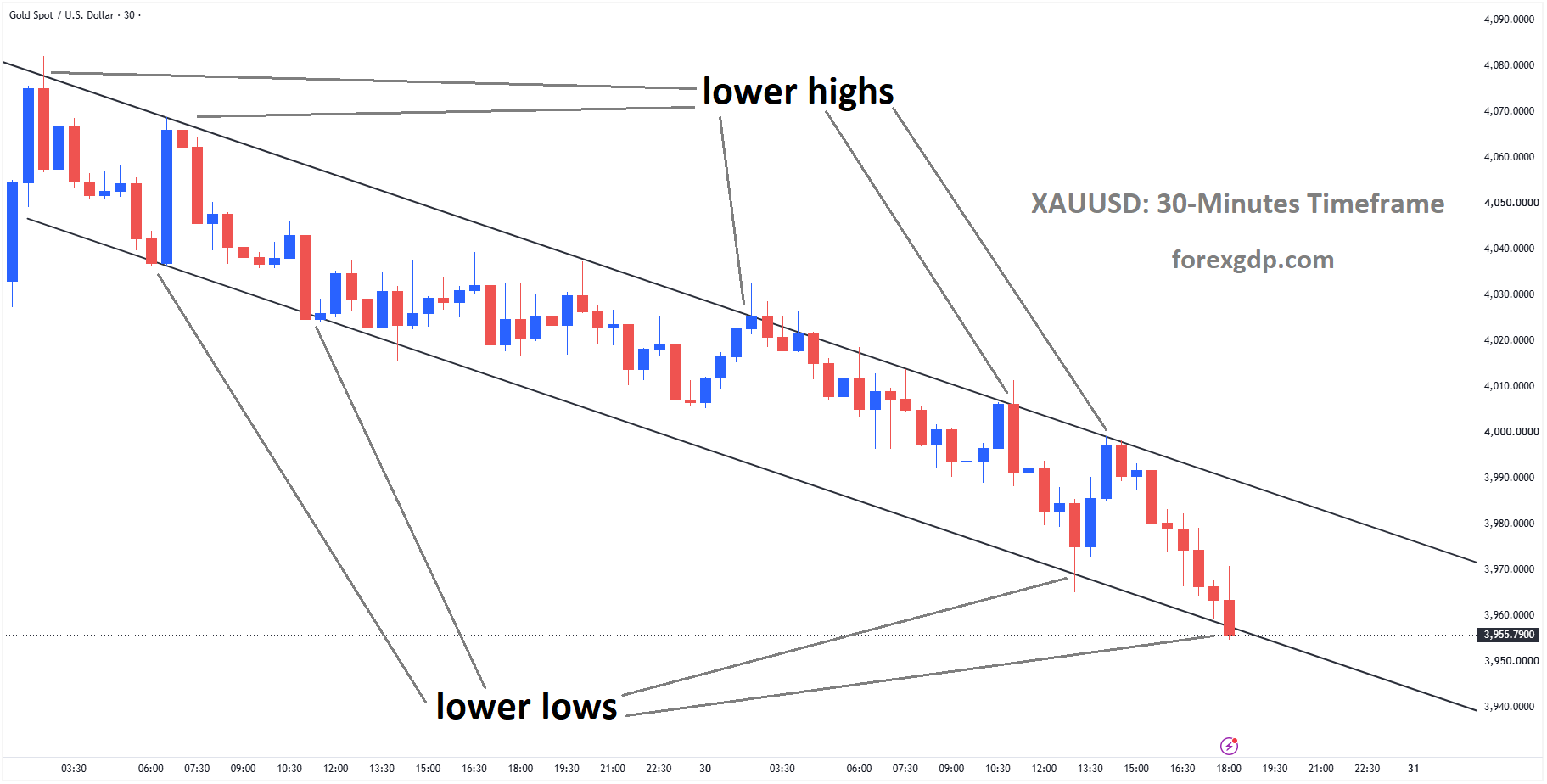
XAUUSD is moving in a descending channel, and the market has reached the lower low area of the channel
Investors often become more cautious when the potential direction of policy is unclear.
Meanwhile, reports of a significant security breach involving cryptocurrency exchange Binance have contributed to concerns across digital asset markets.
Security incidents involving major financial platforms can undermine confidence and encourage investors to reassess their exposure to speculative investments.
Combined with concerns about technology spending and geopolitical tensions, these developments have created a complicated environment for financial decision-making.
Investors are balancing the need to protect capital against the potential effects of inflation and changing interest rates.
For Gold, the outcome will depend partly on whether demand for defensive assets becomes strong enough to offset concerns about higher borrowing costs.
Summary
Gold continues to face a challenging environment as expectations of further Federal Reserve interest rate increases remain a major influence on investor sentiment.
Concerns about excessive artificial intelligence spending have encouraged greater interest in government bonds, while geopolitical tensions and rising energy costs have increased worries about persistent inflation.
Although uncertainty across financial markets would normally support demand for Gold, the possibility of tighter US monetary policy has limited its safe-haven appeal.
Upcoming comments from Federal Reserve officials, future inflation reports, and developments surrounding the US midterm elections could provide greater clarity about the economic outlook.
For now, the relationship between inflation, interest rates, and investor confidence remains the central issue for Gold. Whether the precious metal regains stronger demand will largely depend on how these competing economic forces develop in the months ahead.