
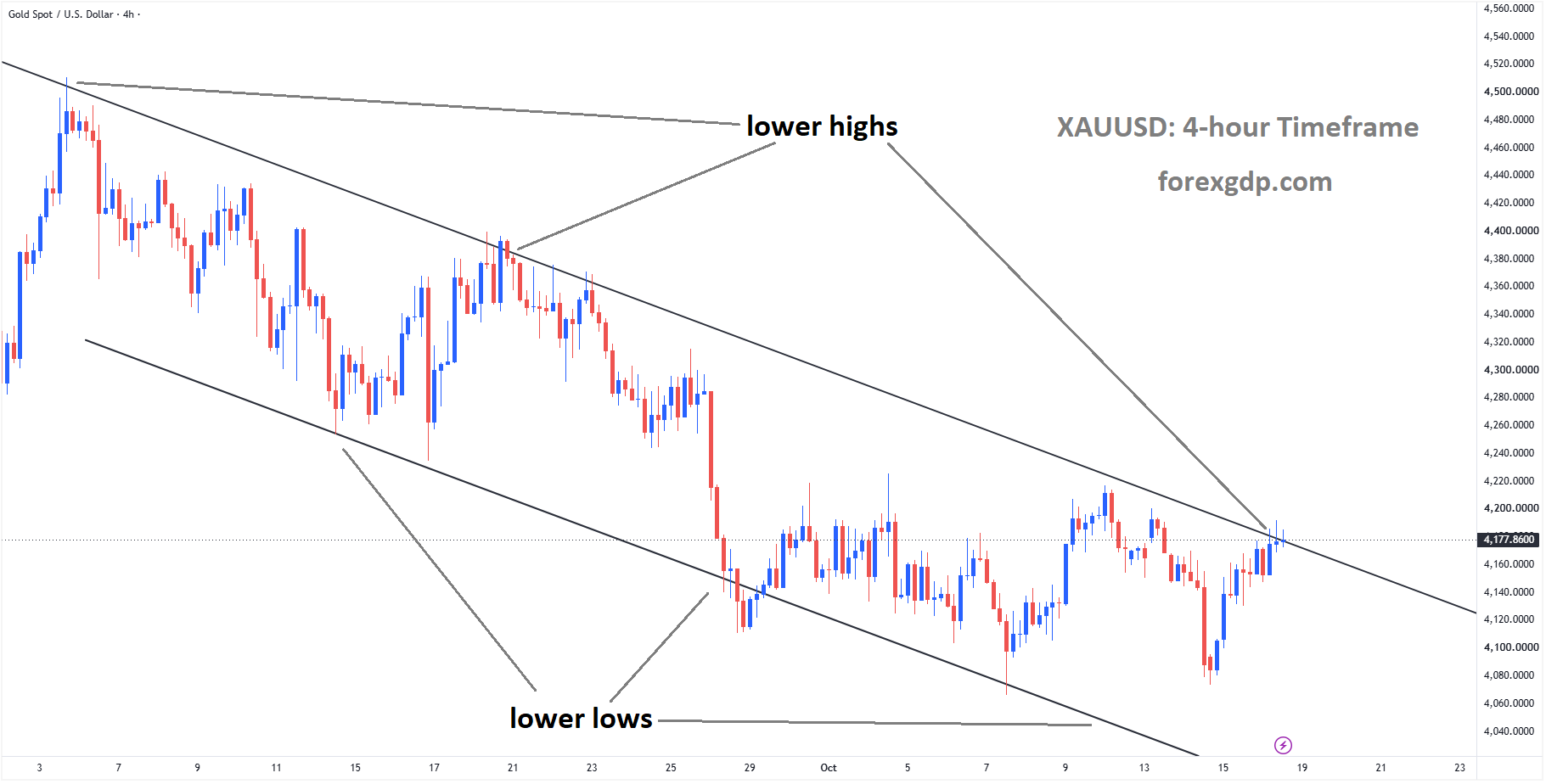
XAUUSD reached the lower high area of the descending channel
Gold is finding some support as the US Dollar weakens and Treasury yields move lower. These changes have given the precious metal room to recover, although investors remain cautious about how far that recovery can go.
The main challenge comes from expectations that the Federal Reserve may raise interest rates again. Persistent inflation has kept further tightening on the table, creating a difficult backdrop for an asset that pays no interest.
At the same time, concerns about debt-funded artificial intelligence investments and tensions in the Middle East are encouraging demand for safer assets. Gold is caught between these competing forces, with investors weighing the appeal of protection against the cost of holding a non-interest-paying investment.
A Weaker US Dollar Gives Gold Some Breathing Room
The US Dollar’s recent retreat has helped improve conditions for gold. After several weeks of strength, the currency is heading toward its first weekly decline in five weeks.
Because gold is priced internationally in dollars, a weaker US currency can make it more affordable for buyers using other currencies. That can encourage demand and help the metal regain some appeal.
However, the reason behind the dollar’s decline matters. A brief adjustment in investor positioning may provide only temporary support. A longer period of weakness would offer a more lasting improvement in gold’s trading environment.
For now, the softer dollar has removed some pressure without resolving the larger questions surrounding US monetary policy. Buyers still need to consider whether inflation will force the Fed to keep borrowing costs elevated or raise them further.
This explains why gold has responded positively without attracting a more aggressive wave of buying.
Lower Treasury Yields Improve Gold’s Appeal
Falling US Treasury yields have provided another source of support. Investors recently moved toward government bonds as concerns grew about financial risks linked to large, debt-funded AI investments.
When demand for bonds increases, their prices generally rise and their yields fall. Lower yields can make gold more attractive because investors give up less potential interest income by holding it.
Gold and government bonds can both benefit when investors become more cautious. Yet their performance does not always move together, and the recent demand for safety does not guarantee lasting strength for either asset.
The key issue is whether lower yields reflect a sustained change in expectations. If investors become more worried about economic growth or financial conditions, demand for defensive assets could continue.
If inflation concerns regain control, however, yields could rise again. That would reduce some of the support gold has recently received.
Inflation Keeps Federal Reserve Expectations Firm
Persistent inflation remains the biggest obstacle to a stronger gold recovery. The latest US inflation reports described in the market update suggest that price pressures remain difficult to contain.
Higher energy costs are a particular concern. Energy affects household spending directly through fuel and utility bills, while also increasing transport and production expenses for businesses.
Some companies may pass those costs on to customers, allowing inflation pressures to spread beyond the energy sector. This makes the Fed’s task more complicated, especially when supply disruptions are contributing to rising costs.
Higher interest rates cannot directly restore disrupted energy supplies. They can, however, slow demand across the economy and limit the ability of businesses to keep increasing prices.
For gold, expectations of further tightening create a competing influence. Inflation can encourage interest in the metal as a store of value, but higher interest rates increase the appeal of assets that provide income.
The balance between those forces helps explain why stronger inflation does not automatically produce a stronger gold market.
Fed Communication Leaves Investors Waiting
Federal Reserve communication has reinforced the importance of incoming economic data. Officials remain focused on bringing inflation under control, while avoiding a firm commitment about the timing of another rate increase.
That leaves investors with an important distinction to consider: the Fed may decide to wait at its next meeting while still keeping a later increase under consideration.
A decision to hold rates steady would therefore not necessarily signal that tightening has ended. Policymakers could use the additional time to assess inflation, employment and broader financial conditions.
For gold buyers, this uncertainty limits confidence. Lower Treasury yields are helpful, but their benefit can be offset if expectations for another rate hike remain strong.
Future economic reports will matter because they could change that balance. Evidence of easing inflation may reduce pressure for further tightening, while continued price strength could reinforce the case for higher borrowing costs.
Middle East Tensions Add Another Layer of Uncertainty
Developments in the Middle East are affecting gold through both investor sentiment and energy markets.
Unresolved US–Iran talks and tensions involving Saudi Arabia and Yemen’s Houthis have added to concerns about regional stability. When diplomatic progress remains limited, investors may become more willing to hold assets associated with protection during uncertain periods.
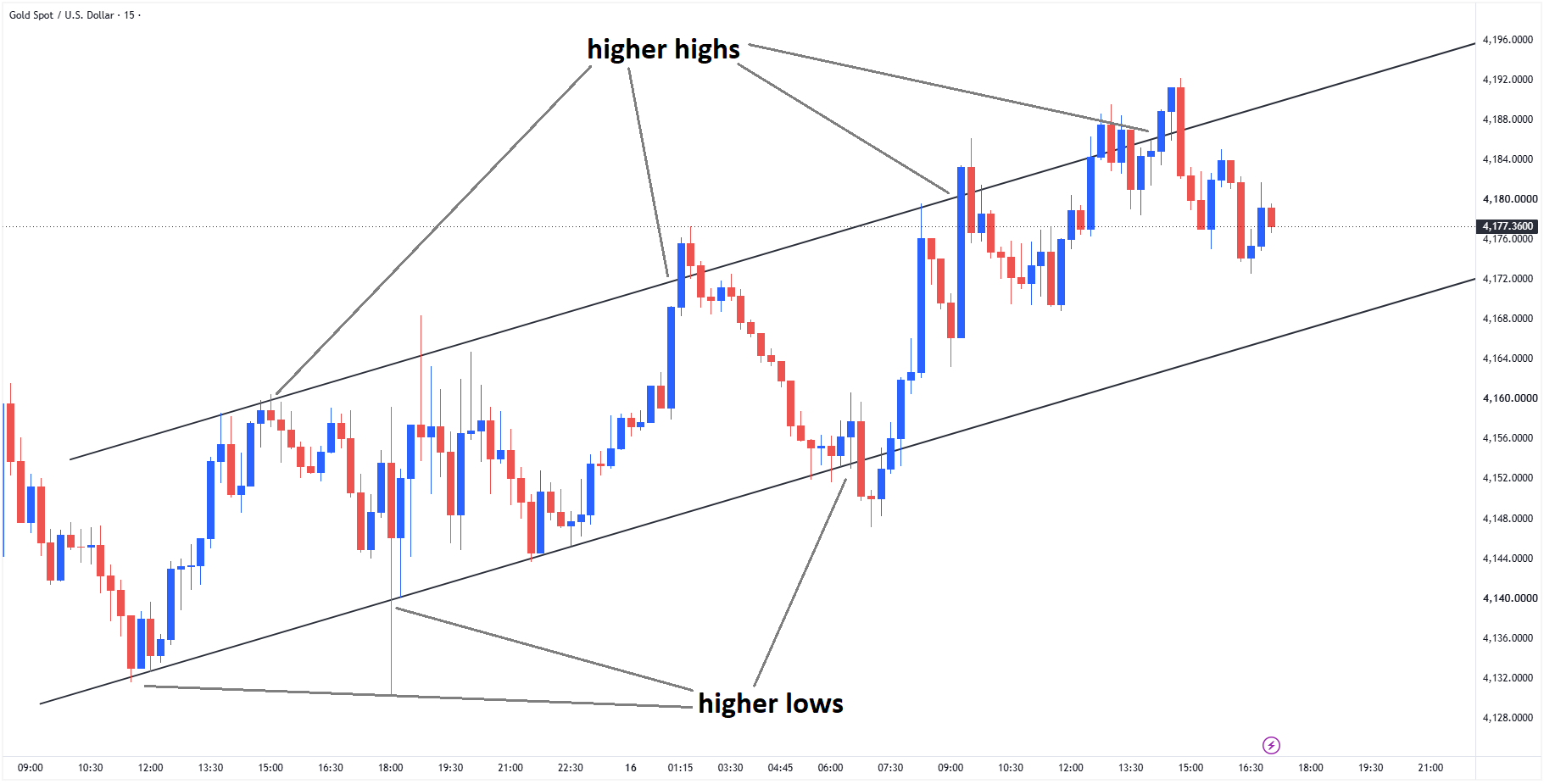
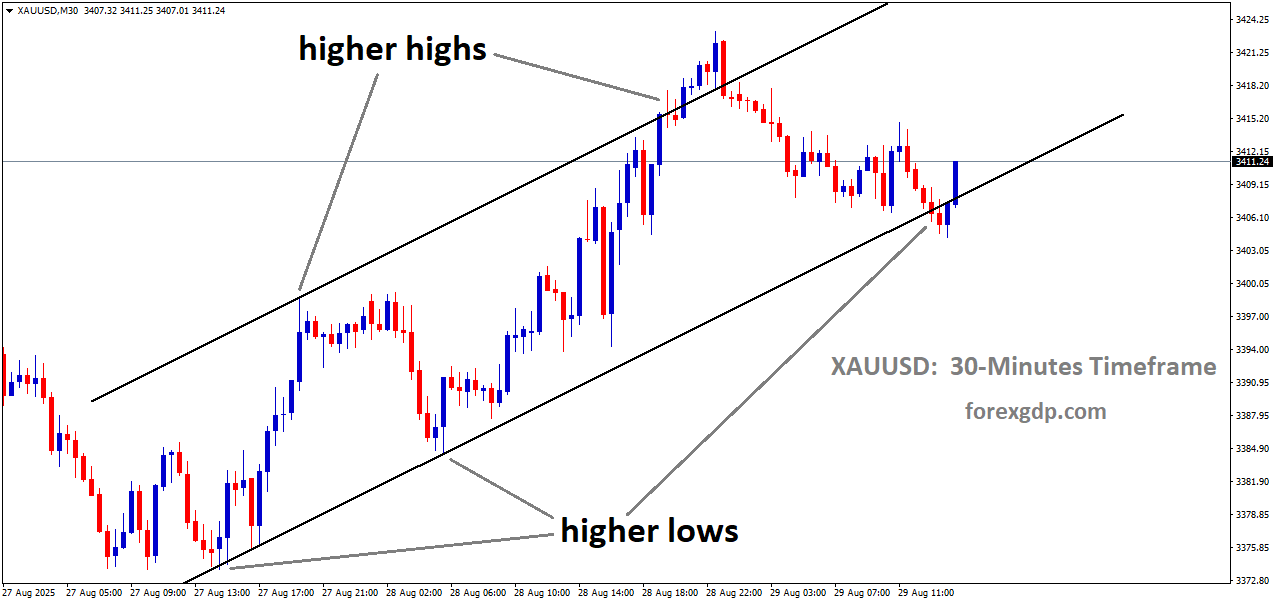
XAUUSD is moving in an ascending channel
Gold can benefit from that defensive demand. However, the effect becomes more complicated when geopolitical tensions also threaten energy supplies.
Higher energy costs can strengthen inflation concerns and encourage expectations of tighter monetary policy. Gold may therefore receive support from demand for safety while facing pressure from the interest rate response to the same events.
This creates a market environment in which headlines can have competing consequences. Investors need to assess how developments affect inflation and central bank expectations alongside their immediate impact on risk appetite.
Summary
Gold is benefiting from a softer US Dollar, lower Treasury yields and renewed demand for defensive assets. Together, these factors have eased some of the pressure on the precious metal.
However, persistent inflation and the possibility of another Federal Reserve rate increase continue to restrain buying interest. Middle East tensions add further uncertainty by supporting demand for safety while raising concerns about energy costs.
The broader outlook depends on whether the recent improvement in currency and bond market conditions lasts. Until inflation and Fed policy expectations become clearer, gold is likely to remain sensitive to economic data, central bank communication and geopolitical developments.