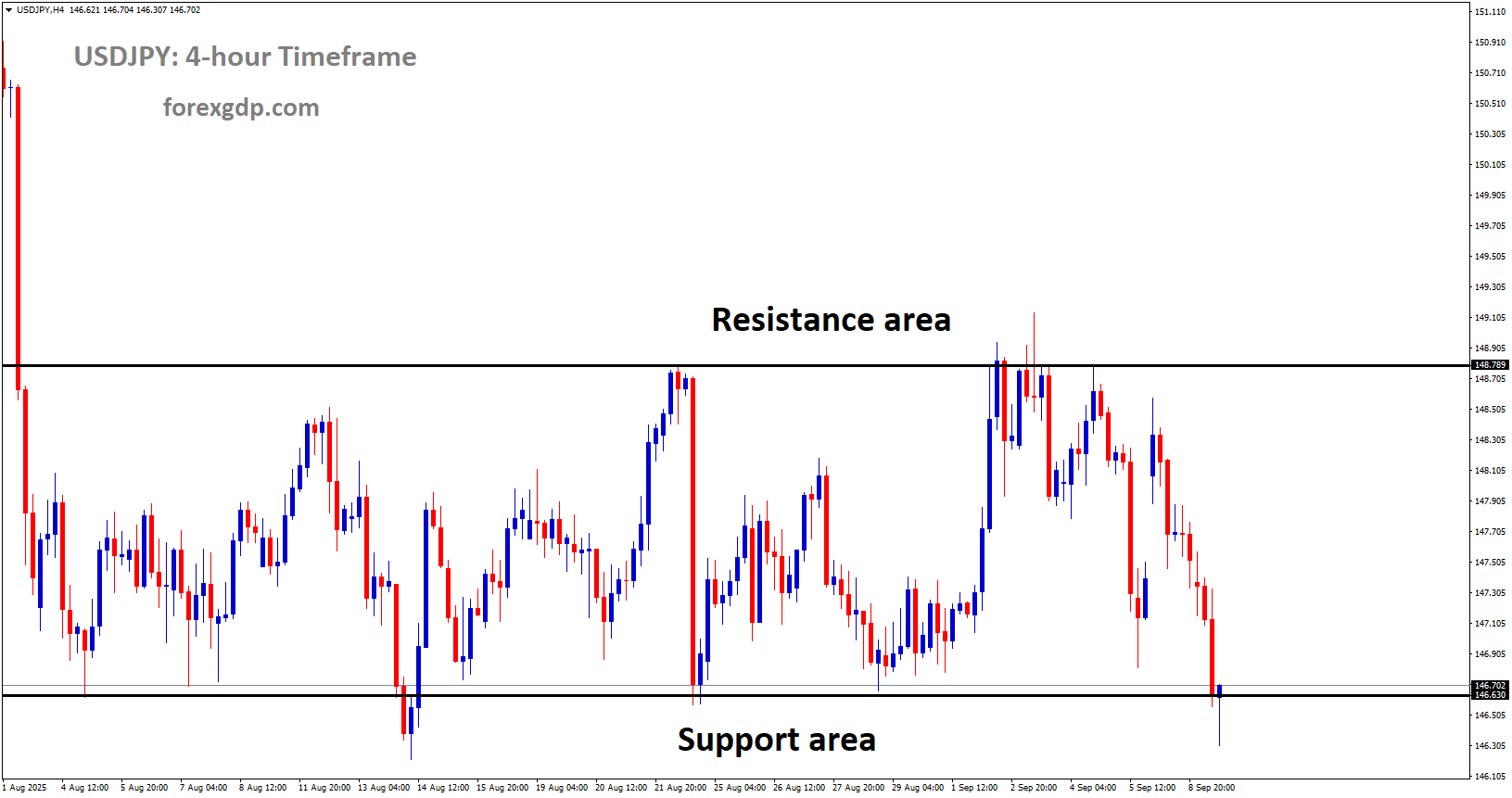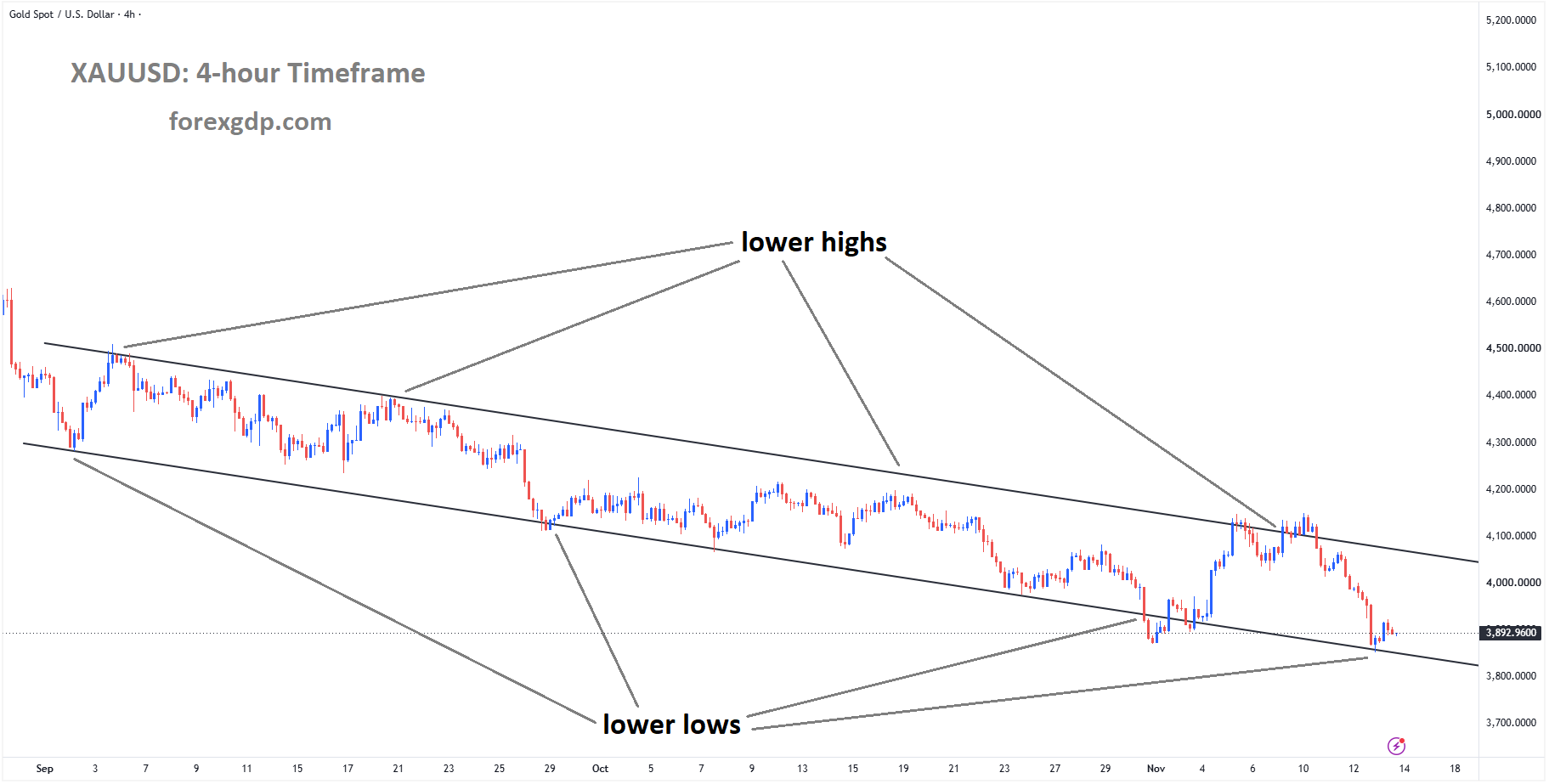
XAUUSD reached the lower low area of the descending channel
Gold is facing a difficult week as growing expectations of further interest rate increases by the Federal Reserve (Fed) put pressure on the precious metal. Investors are becoming increasingly concerned that stubborn inflation in the United States could force the central bank to maintain tighter monetary policy for longer than previously expected.
Although gold managed to recover slightly on Friday, the broader market sentiment remains cautious. A stronger US Dollar and rising Treasury yields have reduced demand for the non-yielding metal, while investors continue to assess the possibility of additional interest rate hikes.
Attention has now shifted toward the upcoming US Producer Price Index (PPI) report, which could provide fresh information about inflation pressures and help shape expectations for the Fed’s next policy decisions.
Gold Struggles as Federal Reserve Policy Expectations Shift
Gold has come under significant selling pressure as investors adjust their expectations for US monetary policy. Recent comments from Federal Reserve officials have strengthened the belief that additional interest rate increases may be necessary to control inflation.
This change in sentiment has created a challenging environment for precious metals. Gold is widely considered a safe-haven asset, particularly during periods of economic uncertainty. However, its appeal can weaken when borrowing costs rise and investors find more attractive returns in interest-bearing assets.
Unlike government bonds or savings products, gold does not generate regular interest income. When Treasury yields increase, investors may prefer assets that provide predictable returns rather than holding a metal that offers no direct income.
The US Dollar has also benefited from expectations of tighter monetary policy. Because gold is generally traded in dollars internationally, a stronger American currency makes the metal more expensive for buyers holding other currencies.
These combined pressures have limited gold’s ability to sustain a meaningful recovery, even as uncertainty surrounding global economic conditions continues.
Stronger US Dollar Adds Pressure to Gold Demand
The US Dollar has emerged as one of the main beneficiaries of changing Federal Reserve expectations.
Currency markets have responded strongly to signals that American interest rates could remain elevated or increase further. Investors generally view higher interest rates as supportive of the dollar because they can make US financial assets more attractive to international investors.
Analysts at ING have highlighted the significant shift in market expectations following comments from Federal Reserve Governor Christopher Waller.
Waller raised the possibility of a larger interest rate increase, encouraging investors to reconsider how aggressively the central bank might act in the coming months.
The resulting change in expectations has supported demand for the dollar and pushed US government bond yields higher.
For gold, this creates two important challenges.
First, a stronger dollar can reduce international demand because buyers outside the United States need more of their local currency to purchase the same amount of gold.
Second, higher bond yields increase the potential income investors give up when choosing to hold gold instead of interest-paying investments.
As long as these conditions remain in place, gold may struggle to attract consistent buying interest.
However, the relationship between gold and the dollar is not always straightforward. During periods of severe financial instability, both assets can attract safe-haven demand. Much depends on whether investors are more concerned about inflation, interest rates, economic growth, or geopolitical risks.
Federal Reserve Officials Remain Concerned About Inflation
Inflation continues to be the central issue influencing Federal Reserve policy.
Recent US Consumer Price Index (CPI) figures showed that consumer inflation remained stronger than economists had anticipated. Both overall inflation and underlying price pressures exceeded expectations, raising concerns that progress toward the central bank’s inflation target could take longer than expected.
Core inflation, which excludes volatile food and energy costs, is particularly important because it helps policymakers assess whether price pressures are becoming more persistent across the economy.
Several Federal Reserve officials have expressed concern about the inflation outlook.
Dallas Fed President Lorie Logan indicated that additional interest rate increases could be required to bring inflation under control.
Cleveland Fed President Beth Hammack also warned that inflation developments were moving in an unfavorable direction. Her comments suggested that monetary policy might need to become more restrictive to restore price stability.
Similarly, San Francisco Fed President Mary Daly expressed a preference for further tightening if inflation pressures fail to ease sufficiently.
These statements suggest that policymakers remain focused on returning inflation to the Fed’s 2% target, even if doing so creates additional challenges for economic growth.
For gold investors, the message is significant. Expectations of higher interest rates can reduce demand for precious metals, especially when the economy remains resilient enough to support tighter monetary conditions.
Nevertheless, the Fed’s future decisions will depend heavily on incoming economic information rather than official comments alone.
US Producer Price Index Data Becomes the Next Major Focus
Investors are closely watching the upcoming US Producer Price Index report for additional evidence about the direction of inflation.
The PPI measures changes in the prices domestic producers receive for their goods and services. It offers valuable insight into inflation pressures before some of those costs reach consumers.
When businesses face rising production expenses, they may pass part of those increases on to customers. This can contribute to broader inflation, although the relationship varies across industries.
Why the PPI Report Matters for Gold
A stronger-than-expected PPI reading could reinforce concerns that inflation remains persistent.
Such an outcome may encourage expectations of further Federal Reserve tightening, potentially supporting the dollar and Treasury yields while creating additional pressure on gold.
Conversely, weaker producer inflation could suggest that cost pressures are beginning to ease.
That would potentially reduce expectations for aggressive monetary tightening and improve sentiment toward precious metals.
However, one economic report is unlikely to determine the Fed’s entire policy direction.
Officials also consider employment conditions, consumer spending, wage growth, economic activity, and broader financial developments before making interest rate decisions.
For this reason, investors will likely evaluate the PPI figures alongside other inflation and economic reports.
Geopolitical Tensions and Energy Costs Complicate the Inflation Outlook
Beyond domestic economic developments, geopolitical uncertainty is adding another layer of complexity to the inflation outlook.
Tensions involving the United States and Iran have raised concerns about potential disruptions to global energy supplies.
Energy costs play an important role in inflation because they affect transportation, manufacturing, agriculture, and household expenses.
When fuel and electricity become more expensive, businesses often face higher operating costs. Some companies respond by increasing the prices of their products and services, potentially keeping inflation elevated.
This creates a difficult situation for the Federal Reserve.
Even if domestic demand begins to cool, external supply disruptions could prevent inflation from declining as quickly as policymakers would prefer.
Geopolitical uncertainty can also support gold because investors often seek assets perceived as reliable stores of value during international conflicts.
However, this potential safe-haven demand must compete with the negative effects of a stronger dollar and higher interest rates.
The overall impact on gold therefore depends on which concern dominates investor sentiment.
If fears about global instability intensify, demand for gold could improve. If markets remain primarily focused on inflation and further monetary tightening, the metal may continue to face pressure.
Gold Investors Await Clearer Signals on Monetary Policy
The outlook for gold remains closely connected to the Federal Reserve’s approach to inflation.
Investors are trying to determine whether policymakers will continue raising interest rates or eventually become confident enough in declining inflation to adopt a less restrictive position.
A prolonged period of tighter monetary policy could keep the dollar supported and make income-generating investments more appealing.
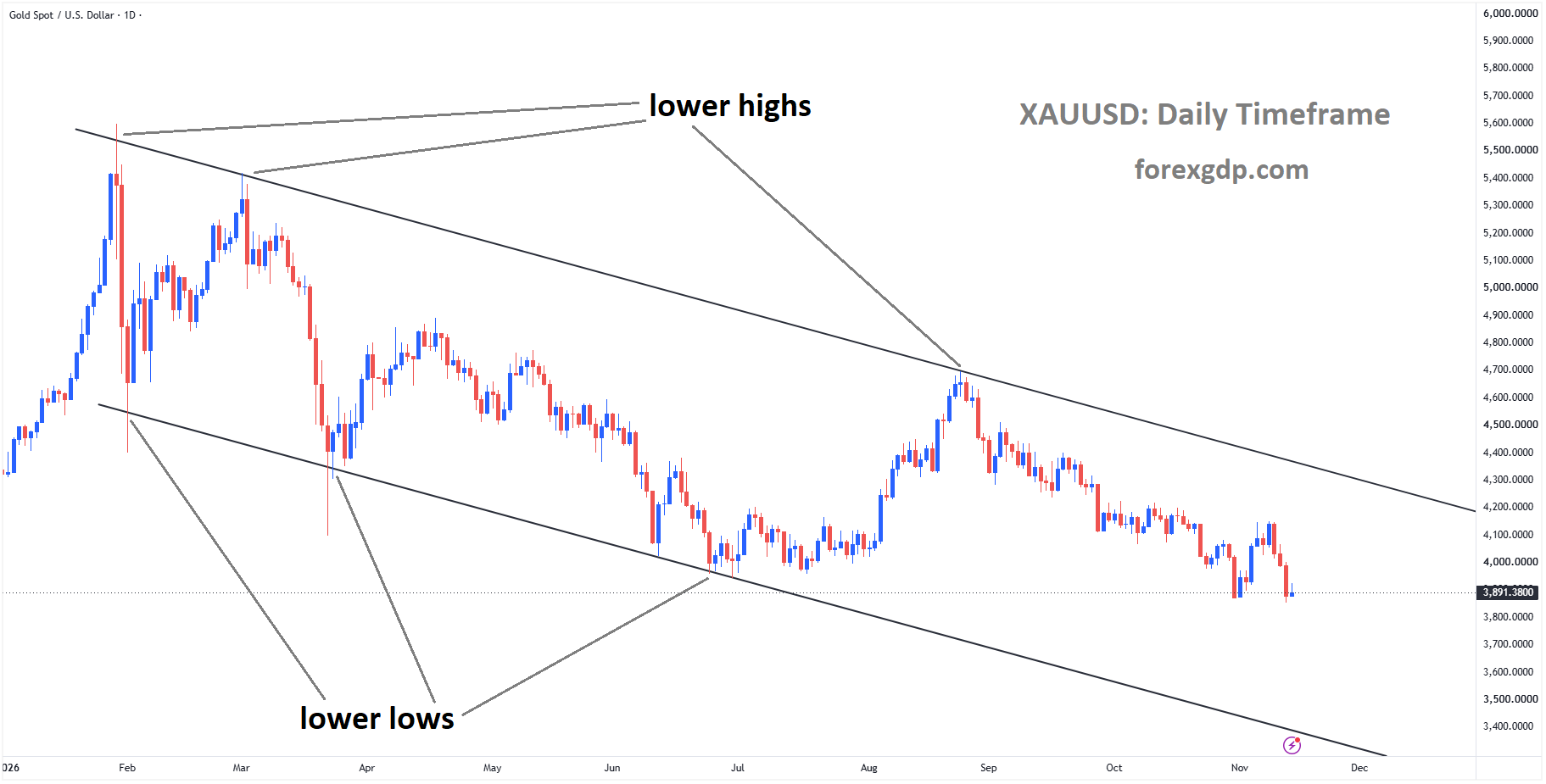
XAUUSD is moving in a descending channel, and the market has fallen from the lower high area of the channel
On the other hand, evidence of easing inflation or weakening economic activity could eventually change expectations and create a more favorable environment for gold.
Global political developments, central bank demand, and broader investor confidence may also influence the precious metal’s direction.
Until clearer signals emerge, uncertainty surrounding monetary policy is likely to remain an important factor shaping gold market sentiment.
Summary
Gold is facing sustained pressure as stronger expectations of additional Federal Reserve interest rate increases support the US Dollar and Treasury yields.
Recent inflation figures and cautious statements from Fed officials have reinforced concerns that bringing inflation back to the central bank’s target may require further monetary tightening.
The upcoming US Producer Price Index report will provide another important opportunity to assess whether inflation pressures are easing or remaining persistent.
Meanwhile, geopolitical tensions and higher energy costs could complicate the inflation outlook while potentially encouraging safe-haven interest in gold.
For now, the balance between inflation concerns, Federal Reserve policy expectations, dollar strength, and global uncertainty remains central to the outlook for the precious metal.