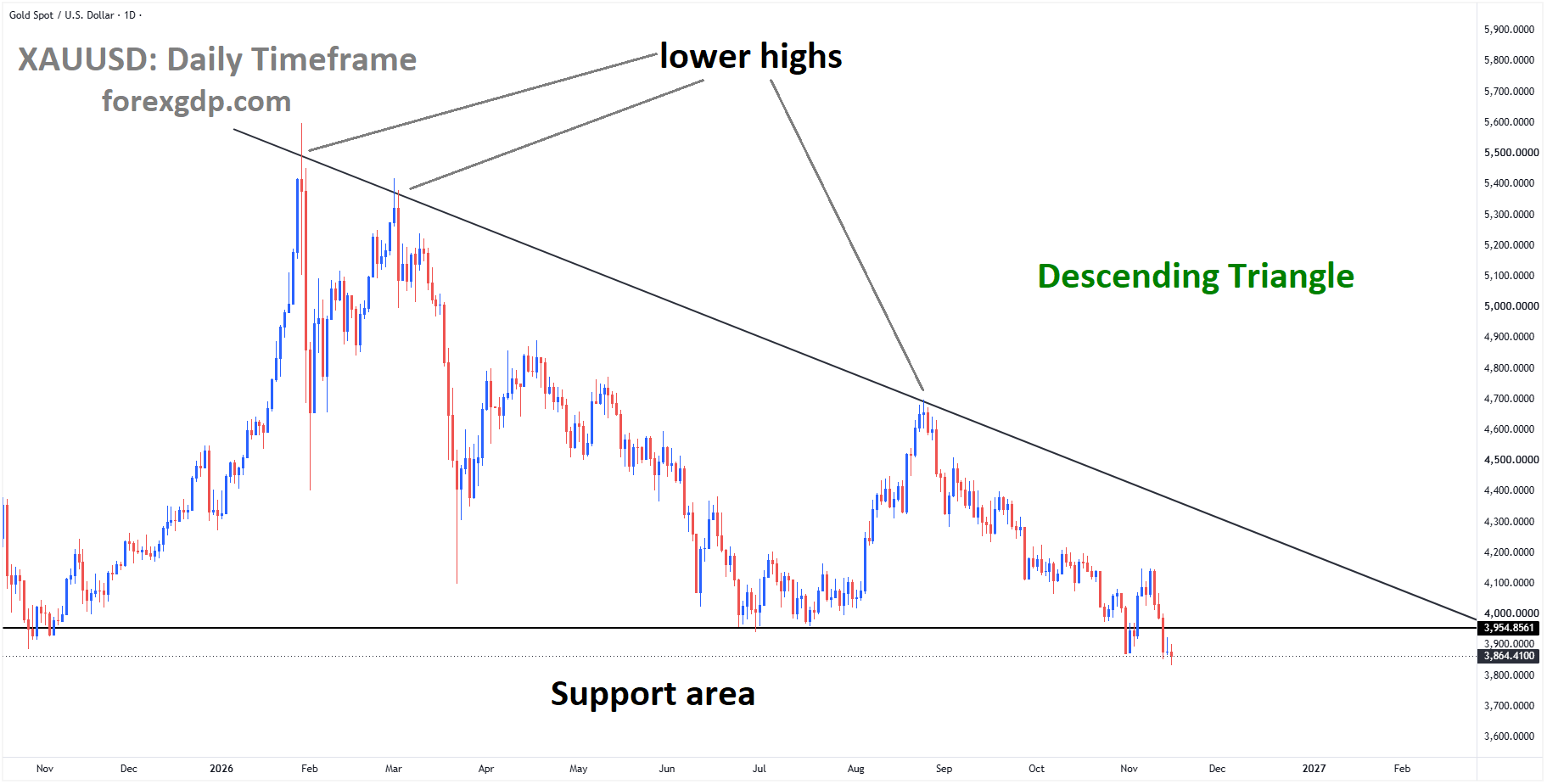
XAUUSD reached the support area of the descending triangle pattern
Gold (XAU/USD) continues to face strong selling pressure as investors reassess the outlook for US monetary policy. The precious metal found some support on Monday after falling to its lowest level in 13 months. However, its recovery remains limited as expectations of further interest rate hikes by the Federal Reserve (Fed) strengthen the US Dollar.
Persistent inflation, rising US Treasury yields, and hawkish comments from Federal Reserve officials have weakened investor demand for gold. Although ongoing geopolitical tensions in the Middle East are creating uncertainty across global financial markets, expectations of tighter monetary policy remain a major challenge for the precious metal.
Investors are now waiting for fresh economic reports and comments from senior Federal Reserve officials to better understand the direction of US interest rates in the coming months.
Stronger US Dollar Limits Gold Recovery
The US Dollar has extended its recent gains as investors prepare for the possibility of more aggressive monetary tightening by the Federal Reserve. Stronger-than-expected inflation figures and recent statements from policymakers have reduced hopes for a more flexible monetary policy.
A stronger US Dollar generally creates challenges for gold because the precious metal is priced in the American currency. When the Dollar strengthens, gold becomes more expensive for buyers using other currencies, potentially reducing international demand.
Analysts at MUFG believe the continued strength of the US Dollar reflects changing expectations surrounding the Federal Reserve’s monetary policy. Recent inflation reports have raised concerns that the central bank may need to take additional action to bring inflation under control.
Meanwhile, elevated US Treasury yields are making interest-bearing investments more attractive. Since gold does not provide regular interest payments, investors may prefer government bonds and other income-generating assets during periods of higher interest rates.
This combination of rising yields and a stronger Dollar continues to limit gold’s ability to stage a meaningful recovery.
Persistent US Inflation Raises Expectations of Further Rate Hikes
Inflation remains one of the biggest concerns for the Federal Reserve. Recent US economic data suggests that inflationary pressures are proving more difficult to control than previously expected.
The October core Consumer Price Index (CPI) delivered another stronger-than-expected reading, marking the third consecutive month in which core inflation exceeded expectations.
Core inflation measures changes in consumer costs while excluding volatile food and energy components. It is closely monitored by policymakers because it provides a clearer picture of underlying inflation trends.
The latest figures have encouraged investors to consider the possibility of consecutive interest rate increases in December, January, and March.
Kansas City Fed President Jeff Schmid recently expressed concern about the direction of inflation, highlighting that it remains above the central bank’s long-term target of 2%.
His comments reinforced expectations that the Federal Reserve could maintain a restrictive monetary policy for an extended period.
As long as inflation remains stubborn, policymakers may have limited room to adopt a more supportive approach. This could keep the US Dollar strong and create additional challenges for gold demand.
Federal Reserve Officials Consider More Aggressive Monetary Tightening
Financial markets are increasingly focused on whether the Federal Reserve could announce a larger interest rate increase at its December meeting.
Fed Governor Christopher Waller previously suggested that stronger monthly core inflation could justify a 50-basis-point interest rate hike.
With October’s core inflation reading meeting the level mentioned by Waller, investors are paying closer attention to the possibility of a more aggressive policy response.
However, the final decision will depend on broader economic conditions, incoming inflation data, and discussions among Federal Reserve policymakers.
Higher borrowing costs are designed to slow economic activity and reduce consumer demand, helping ease inflation over time. However, these measures can also increase financial pressure on households and businesses.
For gold investors, the possibility of additional monetary tightening creates uncertainty. Higher interest rates increase the opportunity cost of holding gold, making alternative investments more appealing.
Until the Federal Reserve shows greater confidence in its efforts to control inflation, gold could continue facing a difficult economic environment.
Middle East Tensions Increase Global Economic Uncertainty
Geopolitical tensions between the United States and Iran have added another layer of uncertainty to global financial markets.
Reports of security incidents involving oil tankers in the Strait of Hormuz have raised concerns about potential disruptions to global energy supplies.
The Strait of Hormuz is one of the world’s most important oil shipping routes. Any disruption in this region could affect energy availability, transportation expenses, and global economic conditions.

Additional reports of a suspected Iranian drone attack targeting a US military facility in Bahrain, along with the arrival of the USS Theodore Roosevelt in the region, have increased concerns about a possible escalation.
Gold traditionally benefits from geopolitical uncertainty because investors often view it as a safe-haven asset during periods of conflict and economic instability.
However, the current situation presents a more complicated outlook. Rising energy costs could contribute to persistent inflation, encouraging the Federal Reserve to maintain higher interest rates.
While geopolitical risks may support safe-haven demand for gold, stronger expectations of monetary tightening could offset some of those benefits.
Investors Await Federal Reserve Speeches and US Economic Data
With relatively few major US economic reports scheduled this week, investors are expected to focus heavily on comments from Federal Reserve officials.
New York Fed President John Williams and Federal Reserve Chair Kevin Warsh are scheduled to speak on Monday. Their remarks could provide additional information about the central bank’s inflation concerns and future monetary policy plans.
Investors will also closely examine the minutes from the Federal Reserve’s October policy meeting, scheduled for release on Wednesday.
The minutes could offer valuable insights into discussions among policymakers, including their views on inflation, economic growth, and the need for further interest rate increases.
Several important US economic releases are also scheduled throughout the week, including:
-
US Retail Sales on Tuesday.
-
Weekly Initial Jobless Claims on Thursday.
-
University of Michigan Consumer Sentiment on Friday.
-
Consumer inflation expectations on Friday.
These reports could influence expectations regarding the strength of the US economy and the Federal Reserve’s next policy decision.
Stronger economic figures could reinforce expectations of further monetary tightening, while signs of weakening consumer demand or employment conditions may encourage policymakers to take a more cautious approach.
Gold Outlook Remains Challenging Amid Economic Uncertainty
Gold’s near-term outlook remains closely connected to US monetary policy, inflation developments, and geopolitical events.
Although the precious metal continues to attract investors seeking protection against financial uncertainty, the current interest rate environment is reducing its appeal compared with interest-bearing assets.
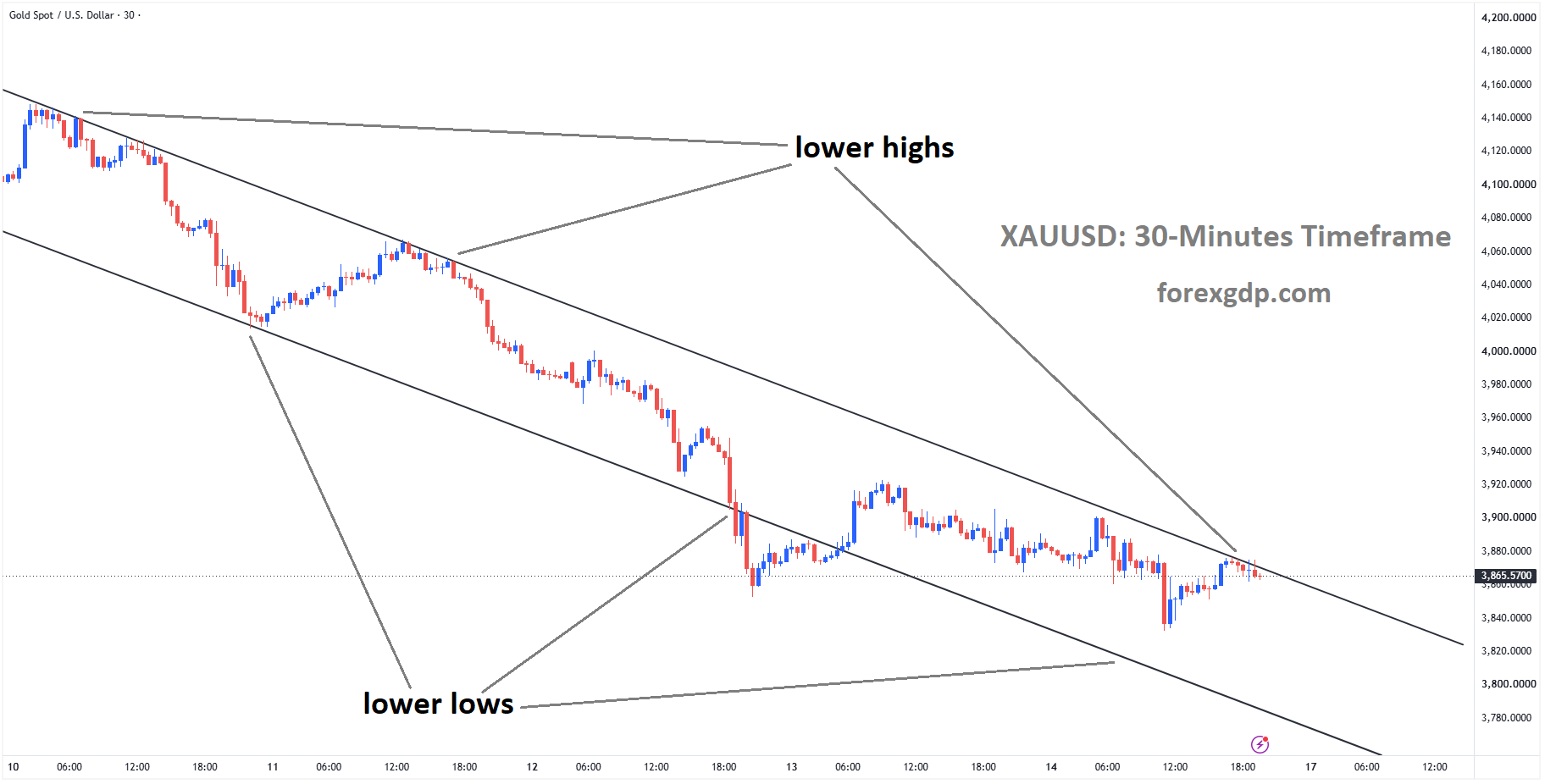
XAUUSD reached the lower high area of the descending channel
A sustained improvement in gold demand may require signs of easing inflation, softer US economic conditions, or a change in the Federal Reserve’s policy outlook.
Meanwhile, developments in the Middle East could influence investor confidence and global demand for safe-haven assets.
The balance between geopolitical uncertainty and restrictive monetary policy is likely to remain an important factor shaping gold’s performance.
Final Summary
Gold continues to struggle after reaching its lowest level in 13 months as a stronger US Dollar, elevated Treasury yields, and persistent inflation concerns weigh on investor demand.
Hawkish Federal Reserve comments have strengthened expectations of additional interest rate hikes, while ongoing tensions between the United States and Iran have increased uncertainty surrounding global energy supplies and inflation.
Investors are now turning their attention to upcoming Federal Reserve speeches, monetary policy meeting minutes, and key US economic reports.
Until inflation shows meaningful signs of improvement or the Federal Reserve adopts a less aggressive policy stance, gold may continue facing significant challenges despite its traditional appeal as a safe-haven investment.