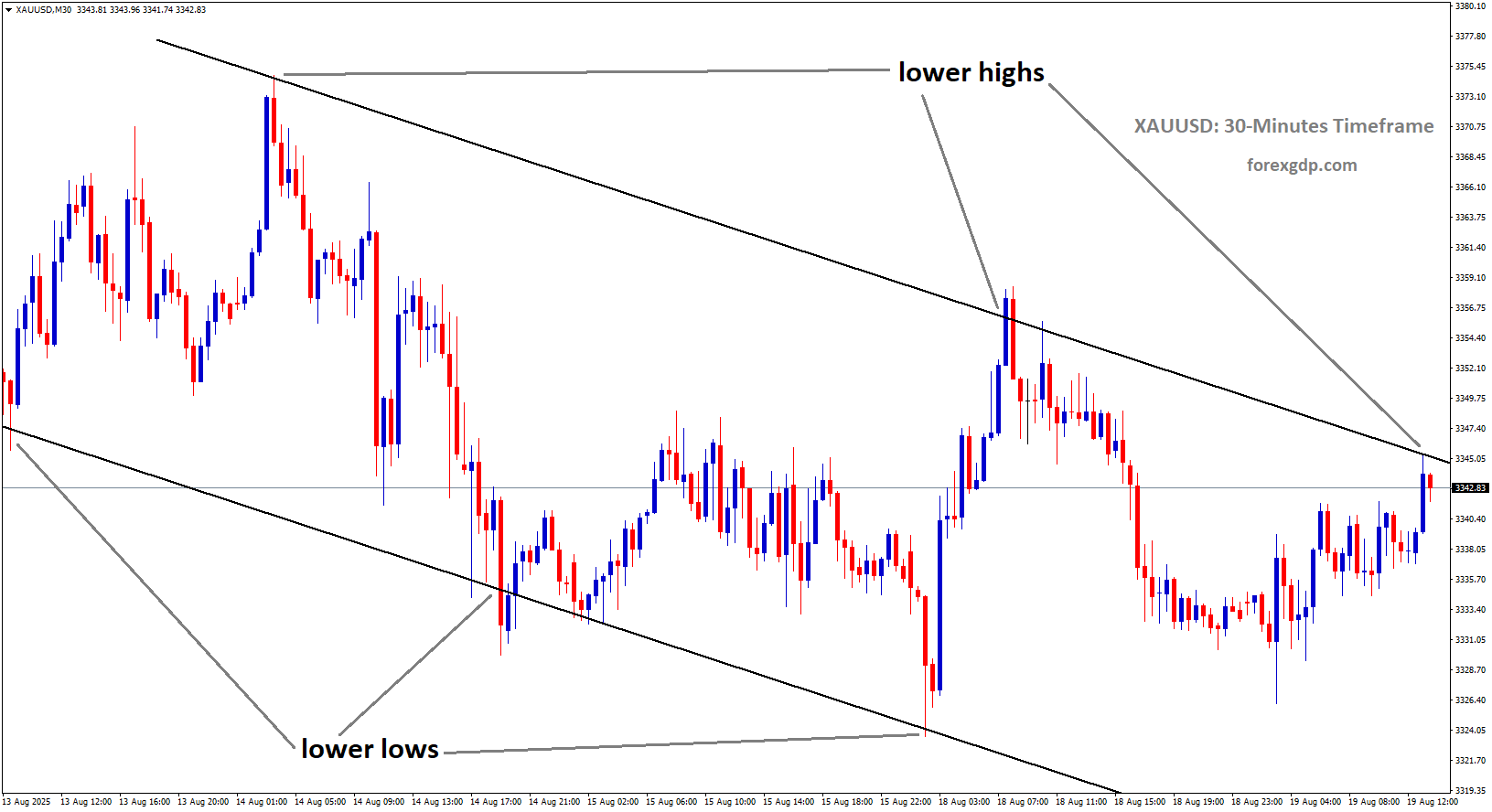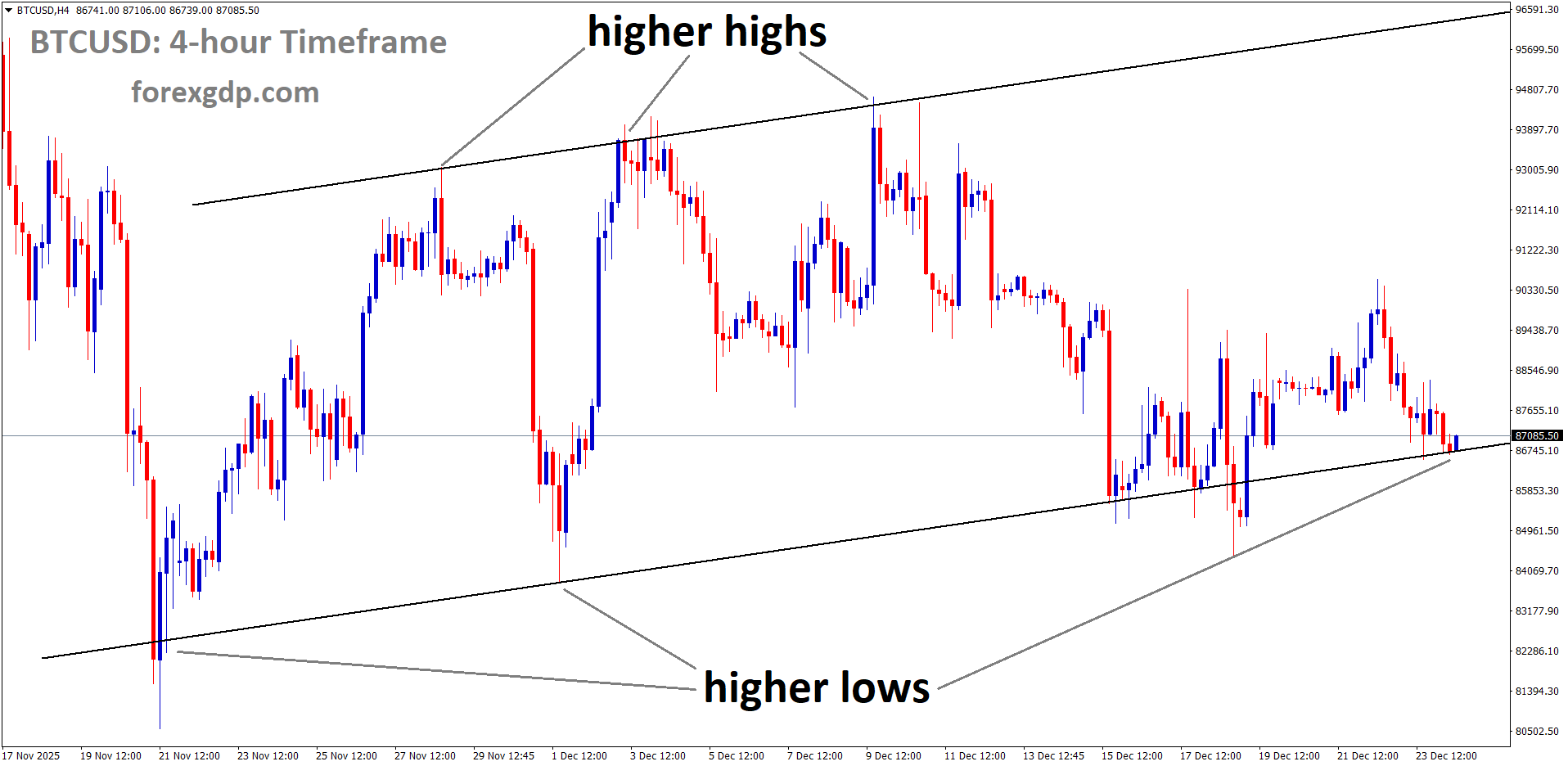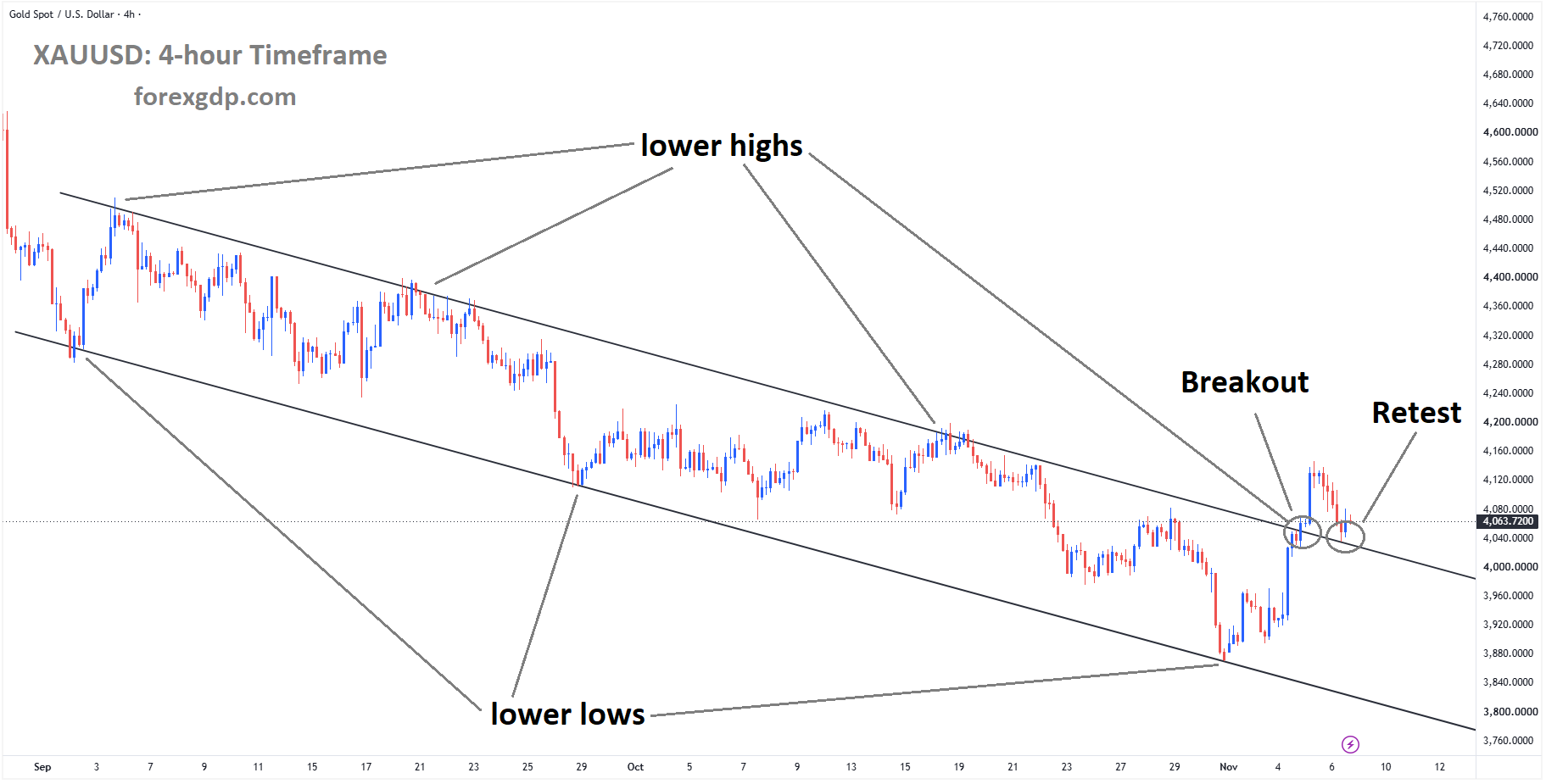
XAUUSD reached the retest area of the broken descending channel
Gold is facing renewed selling pressure on Friday as the US Dollar gains strength ahead of an important US employment report. Investors are closely watching developments in the American economy, particularly the outlook for interest rates and inflation, as these factors continue to influence demand for the precious metal.
Despite the latest weakness, Gold remains on course for its first weekly recovery after three consecutive weeks of losses. Falling Oil prices have provided some relief by easing concerns about inflation, although expectations of a tougher monetary policy stance from the Federal Reserve continue to create uncertainty.
Meanwhile, geopolitical tensions involving the United States and Iran, along with weakness in global stock markets, are adding another layer of complexity to the outlook for Gold.
Gold Comes Under Pressure as the US Dollar Recovers
The recovery in the US Dollar has become one of the main reasons behind Gold’s recent weakness. The two assets often move in opposite directions because Gold is traded internationally in US Dollars.
When the American currency strengthens, Gold becomes more expensive for investors holding other currencies. This can reduce international demand and make the precious metal less attractive to some buyers.
The latest Dollar recovery comes as investors prepare for the release of the US Nonfarm Payrolls report, one of the most closely followed economic announcements in financial markets.
The report provides valuable information about employment conditions in the United States and can significantly influence expectations surrounding future Federal Reserve decisions.
For Gold investors, the employment figures are particularly important because they can affect both the direction of the US Dollar and the outlook for borrowing costs.
A strong employment report could encourage investors to favor the Dollar, while disappointing figures may increase interest in Gold as an alternative asset.
This uncertainty has encouraged a cautious approach among market participants, with many waiting for clearer information before making major investment decisions.
US Nonfarm Payrolls Report Takes Center Stage
The upcoming US jobs report is expected to provide fresh insight into the strength of the American labor market.
Economists forecast that the US economy added approximately 65,000 jobs in October, compared with 29,000 jobs in September. The unemployment rate is expected to remain unchanged at 4.2%.
These expectations suggest that hiring activity may have improved, although the overall employment situation remains an important concern for policymakers.
Strong Employment Data Could Support the US Dollar
If the employment report shows stronger hiring than economists expect, it could suggest that the American economy remains resilient despite ongoing economic challenges.
A healthy labor market generally supports consumer spending, which is a major driver of economic activity in the United States.
However, stronger employment can also make inflation more difficult to control, especially if businesses continue increasing wages to attract and retain workers.
Under these circumstances, the Federal Reserve may feel less pressure to reduce borrowing costs and could maintain a restrictive monetary policy for longer.
Expectations of higher interest rates generally create challenges for Gold because the precious metal does not provide regular interest payments.
When investors can earn more from interest-bearing assets, holding Gold may become less appealing.
Weaker Jobs Figures May Improve Gold’s Outlook
On the other hand, disappointing employment figures could change expectations about the Federal Reserve’s next steps.
If hiring slows more than anticipated or unemployment rises unexpectedly, concerns about the health of the US economy may increase.
Such developments could encourage policymakers to adopt a more cautious approach toward additional interest rate increases.
Lower expectations for borrowing costs would potentially weaken the US Dollar and improve the appeal of Gold.
Nevertheless, the market response will depend on the overall employment report, including wage growth and other details that help explain the condition of the labor market.
Federal Reserve Interest Rate Expectations Remain a Major Challenge

The Federal Reserve continues to play a central role in shaping sentiment toward Gold.
Its responsibility to maintain stable prices while supporting employment means that policymakers must carefully balance inflation risks against signs of economic weakness.
Recent developments in energy markets have made that task more complicated.
Higher energy costs can increase transportation, manufacturing, and household expenses. Businesses may pass these additional costs to consumers, creating broader inflationary pressure.
When inflation remains elevated, the Federal Reserve may consider keeping interest rates higher or introducing further increases to prevent prices from rising too quickly.
This creates an unfavorable environment for Gold, which often benefits when borrowing costs are lower and monetary policy becomes more supportive.
Investors are therefore paying close attention to whether upcoming economic figures strengthen expectations of another interest rate increase in December.
The central bank’s future decisions will likely depend on a combination of employment conditions, consumer inflation, economic growth, and developments in global energy markets.
Falling Oil Prices Help Support Gold’s Weekly Recovery
Although the stronger US Dollar has created short-term pressure, declining Oil prices have offered some support to Gold during the week.
Energy costs have become especially important since the conflict involving the United States and Iran began in late February.
The war has raised concerns about global energy supplies, contributing to inflation fears and uncertainty about the direction of monetary policy.
However, the recent decline in crude Oil has helped ease some of those concerns.
Lower energy costs can reduce expenses for businesses and households, potentially slowing the pace of inflation.
If inflationary pressure begins to ease, central banks may have greater flexibility when making interest rate decisions.
This possibility is generally encouraging for Gold because a less restrictive monetary environment can improve demand for assets that do not generate interest income.
Political developments in the United States have also influenced expectations surrounding the conflict.
Following Democratic gains in the US midterm elections, investors have considered whether Congress could place additional restrictions on President Donald Trump’s military campaign against Iran.
Any meaningful reduction in military activity could help ease concerns about disruptions to energy supplies.
However, the situation remains uncertain, and expectations of a diplomatic breakthrough should be treated cautiously.
US-Iran Tensions Continue to Create Global Uncertainty
Despite diplomatic efforts, a negotiated settlement between the United States and Iran still appears difficult to achieve.
President Donald Trump’s recent comments have added to concerns about the possibility of further military action.
The risk of escalation remains an important factor for global financial markets because the conflict could affect energy supplies, international trade, and broader economic confidence.
Gold is traditionally viewed as a safe-haven asset during periods of geopolitical instability.
Investors often turn to the precious metal when they become concerned about war, financial uncertainty, or the stability of major currencies.
However, geopolitical tensions do not always lead to stronger Gold demand.
If a conflict causes energy prices to rise sharply, inflation expectations may increase and encourage central banks to maintain higher interest rates.
As a result, the potential benefit of safe-haven demand can be offset by concerns about tighter monetary policy.
This explains why Gold’s response to the US-Iran conflict has been complicated rather than consistently positive.
Global Stock Market Weakness Adds Another Risk for Gold
Another important development affecting Gold is the recent decline in global equities, particularly shares connected to artificial intelligence.
Although weakness in stock markets can sometimes encourage investors to seek safety in Gold, widespread selling can also create unexpected pressure on the precious metal.
During periods of significant financial stress, investors may need immediate access to cash.
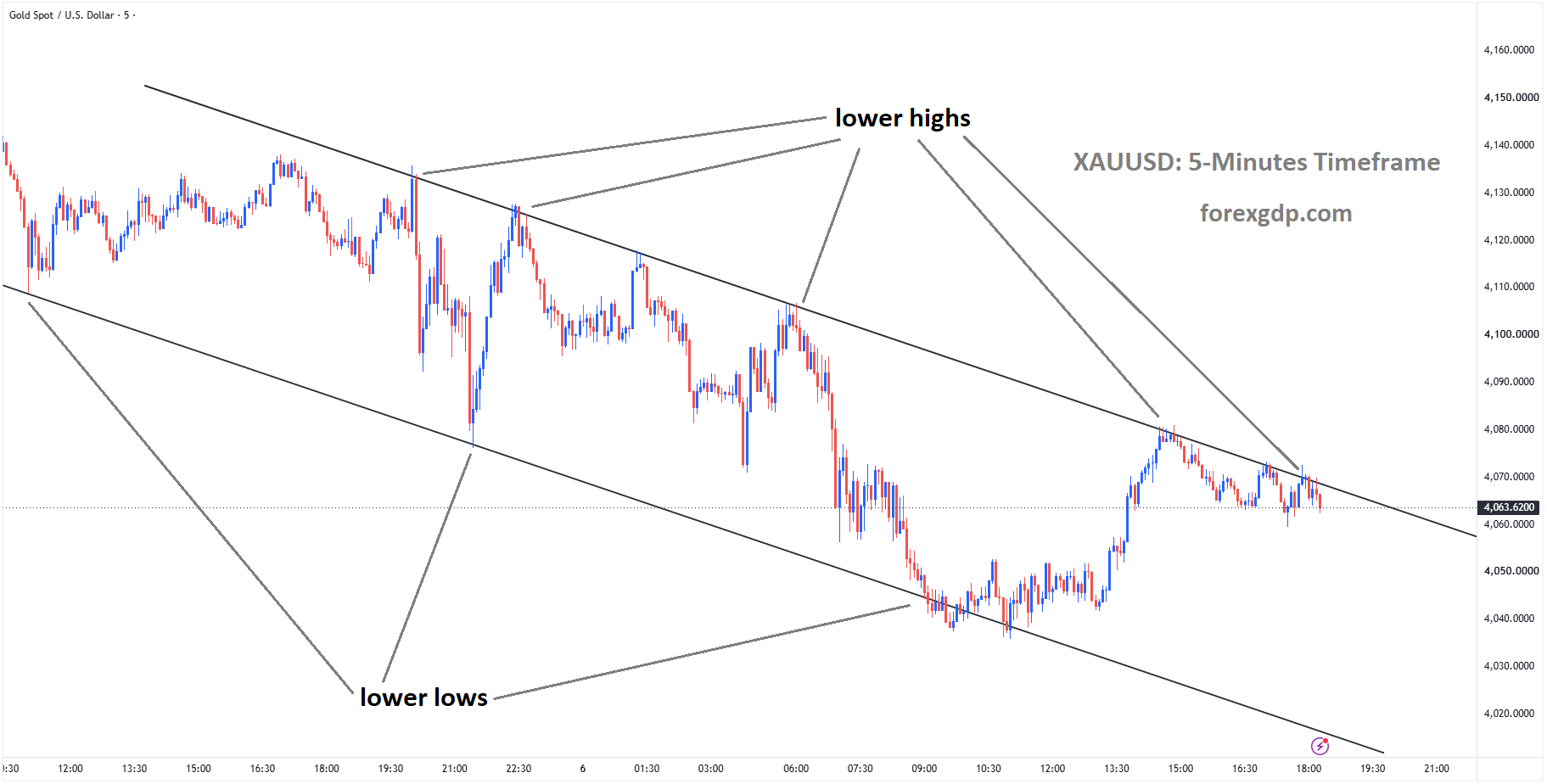
XAUUSD reached the lower high area of the descending channel
Some may sell Gold holdings to cover losses in other investments, meet margin requirements, or reduce their overall exposure to financial markets.
This behavior is commonly known as liquidity-driven selling.
It can temporarily weaken Gold even when economic uncertainty would normally support demand for safe-haven assets.
The relationship between Gold and equities therefore depends on the reasons behind market weakness and how urgently investors need cash.
If financial conditions stabilize, Gold may once again attract interest from investors seeking protection against uncertainty.
Summary
Gold remains caught between several competing economic and geopolitical forces as investors await the latest US employment figures.
A stronger US Dollar and expectations of restrictive Federal Reserve policy are creating challenges for the precious metal. At the same time, falling Oil prices have helped reduce inflation concerns and supported the possibility of a weekly recovery.
The ongoing US-Iran conflict remains another major source of uncertainty, with developments in energy markets continuing to influence expectations for interest rates.
Weakness in global equities has also complicated the situation by encouraging some investors to sell assets to raise cash.
Looking ahead, the US Nonfarm Payrolls report could play an important role in shaping investor sentiment. Strong employment figures may reinforce expectations of tighter monetary policy, while weaker results could encourage hopes for a more flexible Federal Reserve approach.
For now, Gold’s broader outlook remains closely connected to the strength of the US economy, inflation developments, central bank decisions, and geopolitical risks.