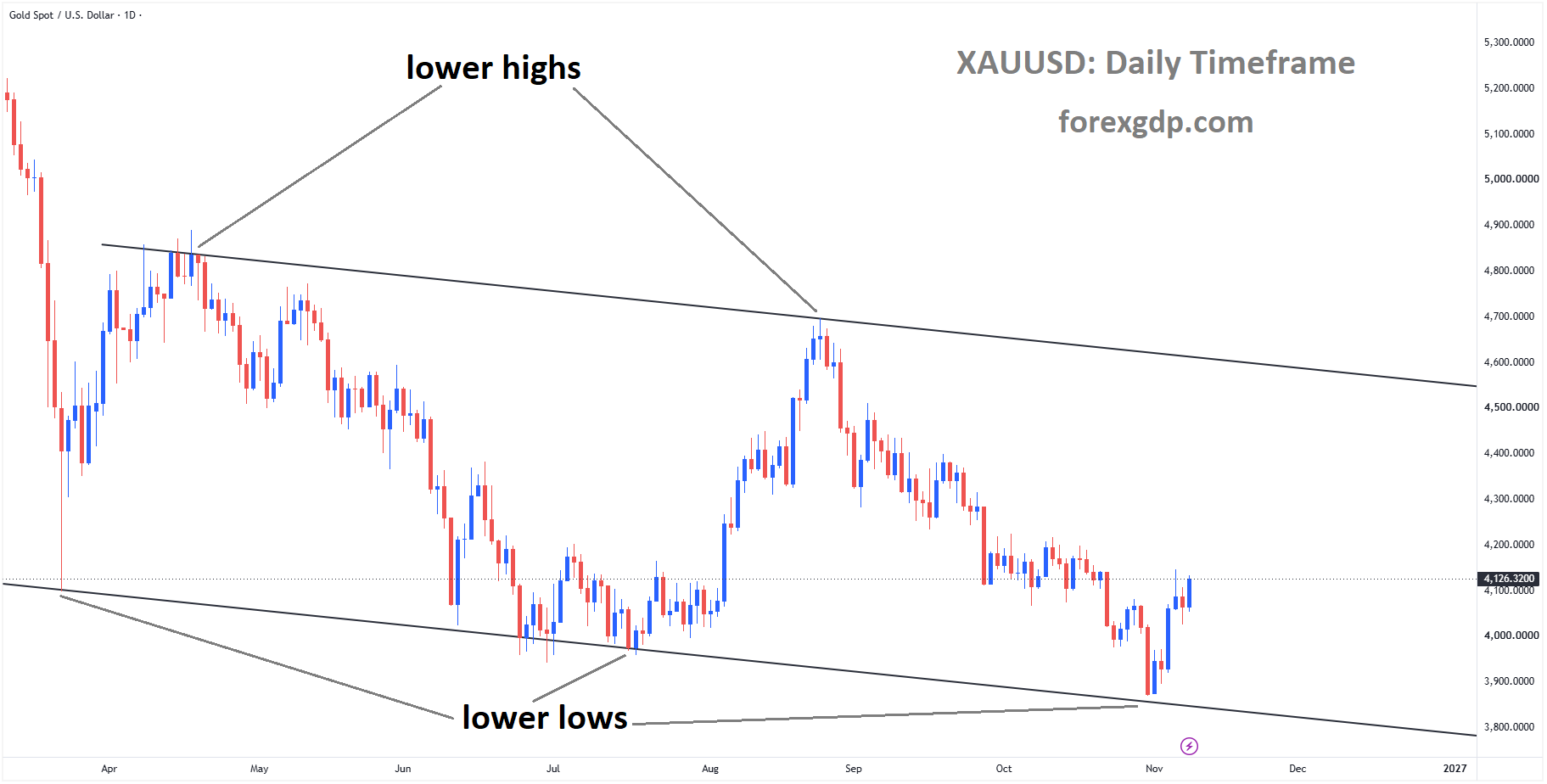
XAUUSD is moving in a descending channel, and the market has rebounded from the lower low area of the channel
Gold has started the new trading week on a positive note as the US Dollar loses some of the strength it gained following Friday’s encouraging US employment report. The precious metal is attracting renewed interest, although investors remain cautious ahead of important US inflation figures and speeches from Federal Reserve officials.
The latest developments highlight the delicate balance between economic strength, inflation concerns, and expectations for future US interest rate decisions. While a softer US Dollar is helping gold regain some appeal, the possibility of further monetary tightening continues to create uncertainty.
Market participants are now focusing on upcoming economic reports that could influence the Federal Reserve’s December policy meeting. At the same time, geopolitical developments in the Middle East remain an important factor shaping investor confidence and demand for safe-haven assets.
Gold Benefits From a Softer US Dollar
Gold began the week with improved investor interest as the US Dollar retreated from the gains recorded after the release of stronger-than-expected US employment figures.
The relationship between gold and the US Dollar plays an important role in global financial markets. Because gold is generally traded in US Dollars, a weaker American currency can make the precious metal more affordable for buyers using other currencies. This often encourages international demand.
However, currency movements are only one part of the broader picture. Investors also consider inflation expectations, economic growth, central bank policies, and geopolitical risks when deciding whether to increase their exposure to gold.
The recent improvement in gold sentiment suggests that investors are reassessing the outlook for the US economy and monetary policy. Although the employment report showed continued strength in the labour market, attention has quickly shifted toward inflation and the Federal Reserve’s next steps.
Gold remains particularly sensitive to changes in interest rate expectations because it does not provide regular income through interest payments. When borrowing costs rise, income-generating investments can become more attractive. When expectations for further tightening weaken, gold may receive additional support.
Strong US Employment Data Keeps the Federal Reserve in Focus
The latest US Nonfarm Payrolls report showed that the American labour market continues to demonstrate resilience despite economic uncertainty.
According to the October employment figures, the US economy added 165,000 jobs, significantly exceeding economists’ expectations of 65,000. The previous month’s employment growth was also revised higher, suggesting that hiring activity had been stronger than initially reported.
Meanwhile, the unemployment rate declined from 4.2% to 4.1%, providing another indication of relatively stable labour market conditions.
These developments are important because employment remains one of the main factors influencing Federal Reserve policy decisions.
A healthy labour market generally supports household spending and overall economic activity. However, sustained employment strength can also contribute to inflationary pressure, particularly when businesses face rising labour costs or consumer demand remains elevated.
For the Federal Reserve, this creates a difficult balancing act.
Policymakers want to bring inflation back toward their long-term target of 2% without causing unnecessary damage to economic growth or employment.
Stronger hiring figures may give officials greater confidence that the economy can withstand additional monetary tightening if inflation remains stubbornly high.
As a result, the latest jobs report has reinforced expectations that the central bank could maintain a restrictive policy approach.
US Inflation Reports Could Shape the December Interest Rate Decision
Investors are preparing for an important week of US economic data, with inflation reports expected to provide fresh information about underlying price pressures.
The Consumer Price Index, scheduled for Tuesday, will be one of the most closely watched releases.
This report measures changes in the prices consumers pay for everyday goods and services, including food, housing, transportation, and healthcare.
A stronger-than-expected inflation reading could increase concerns that price pressures remain persistent. Such an outcome may strengthen expectations for another Federal Reserve interest rate increase.
On the other hand, signs of easing inflation could encourage investors to reconsider how aggressively policymakers need to respond.
The Producer Price Index, due on Friday, will offer another perspective by measuring changes in prices received by domestic producers.
Producer inflation matters because higher business costs can eventually reach consumers, particularly when companies pass those expenses along through higher selling prices.
Together, these reports could provide a clearer picture of whether inflation is moving closer to the Federal Reserve’s target.
Federal Reserve Officials Continue to Favor Tight Monetary Policy
Recent assessments from Commerzbank Research suggest that Federal Reserve policymakers have already demonstrated a strong preference for further monetary tightening.
According to the bank’s analysis, 16 of the 18 officials who submitted interest rate projections in September expected at least one additional increase before the end of the year.
The research also indicated that subsequent economic developments, including resilient employment growth and persistent inflation, were unlikely to have significantly changed those expectations.
This suggests that the Federal Reserve may remain focused on controlling inflation even as financial markets respond to changing economic conditions.

For gold investors, the direction of monetary policy remains particularly important.
Higher interest rates can increase the appeal of assets that provide interest income, potentially reducing demand for non-yielding investments such as gold.
Nevertheless, gold can still attract buyers during periods of economic uncertainty, particularly when investors are concerned about geopolitical instability or the longer-term purchasing power of currencies.
Middle East Developments Add Uncertainty to the Inflation Outlook
Geopolitical tensions in the Middle East remain another important influence on financial markets and inflation expectations.
The conflict involving Iran has raised concerns about energy supplies and the possibility of higher transportation and production costs.
Energy prices can affect inflation across several industries. When fuel and electricity become more expensive, businesses often face higher operating expenses, while households experience additional pressure on their budgets.
However, diplomatic efforts have offered some encouragement that tensions could ease.
US President Donald Trump indicated during a CBS News interview aired on Sunday that he saw no reason to intensify the conflict.
Plans for discussions with Qatar’s prime minister at the White House also highlighted ongoing diplomatic engagement.
Meanwhile, the political implications of the Democrats’ midterm election victory have contributed to expectations that the administration could face additional pressure to pursue a diplomatic resolution.
Although these developments may help ease immediate concerns, uncertainty surrounding the conflict remains significant.
For gold, geopolitical instability can create competing influences. Safe-haven demand may strengthen when investors become concerned about international security, while energy-driven inflation could encourage central banks to maintain higher interest rates.
The overall effect depends on which concern carries greater weight among investors.
Federal Reserve Speeches May Provide Additional Policy Clues
Beyond the scheduled economic reports, investors will closely follow public remarks from Federal Reserve officials throughout the week.
Central bank speeches often provide valuable insight into how policymakers interpret economic developments and what they consider necessary to maintain price stability.
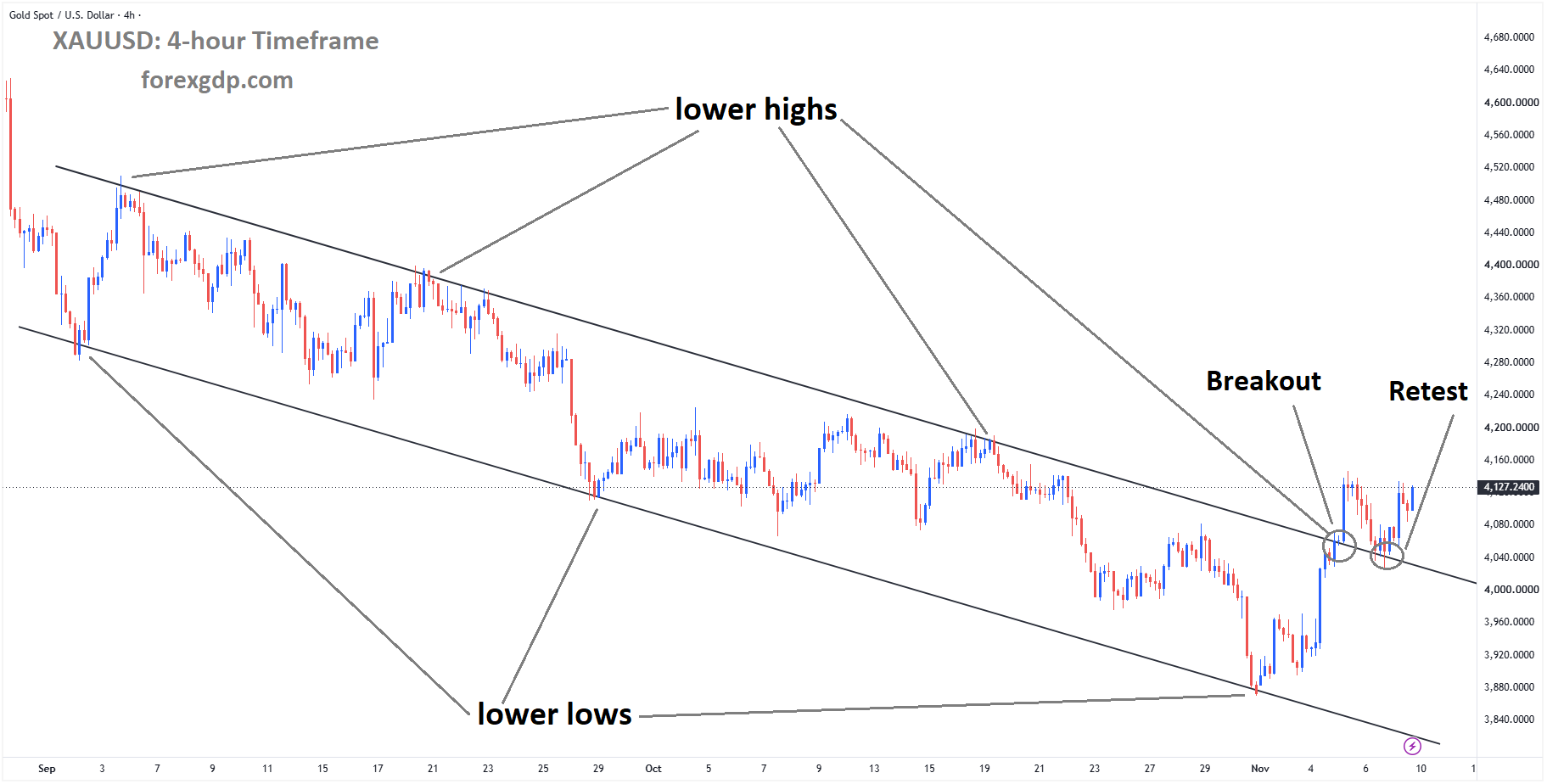
XAUUSD is rebounding from the retest area of the broken descending channel
Comments about employment conditions, inflation persistence, and the risks facing the economy could influence expectations for the December meeting.
Investors will be particularly interested in whether officials continue emphasizing the need for tighter monetary policy or acknowledge signs that inflation pressures are gradually easing.
Differences in opinion among policymakers may also become increasingly important as the final policy decision of the year approaches.
For gold, these statements could influence market sentiment by changing expectations for future borrowing costs and the direction of the US Dollar.
However, policymakers will likely avoid making firm commitments before reviewing the latest economic information.
Summary
Gold has entered the week with renewed interest as the US Dollar gives back part of its recent gains. Nevertheless, the broader outlook remains closely connected to US economic conditions and Federal Reserve policy expectations.
Strong October employment figures have reinforced confidence in the resilience of the American economy, potentially giving policymakers more room to address persistent inflation through additional interest rate increases.
Upcoming Consumer Price Index and Producer Price Index reports will be especially important in determining whether those expectations remain justified.
Meanwhile, Federal Reserve speeches and diplomatic developments in the Middle East could introduce further changes in investor sentiment.
Gold’s appeal as a safe-haven asset remains relevant during periods of uncertainty, but the prospect of higher interest rates continues to present challenges.
Ultimately, the interaction between inflation, monetary policy, US Dollar movements, and geopolitical developments will remain central to gold’s outlook as investors prepare for the Federal Reserve’s December decision.