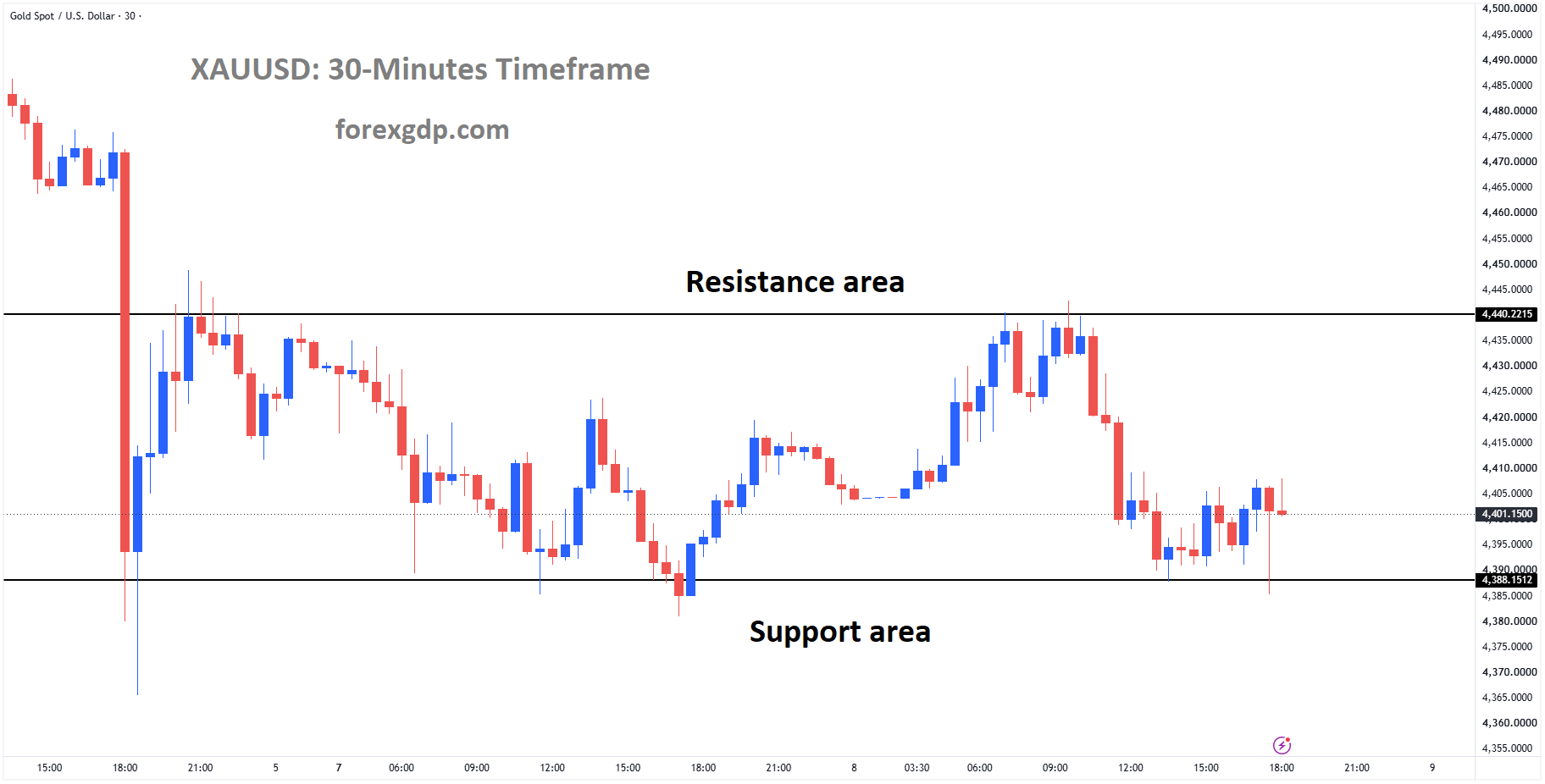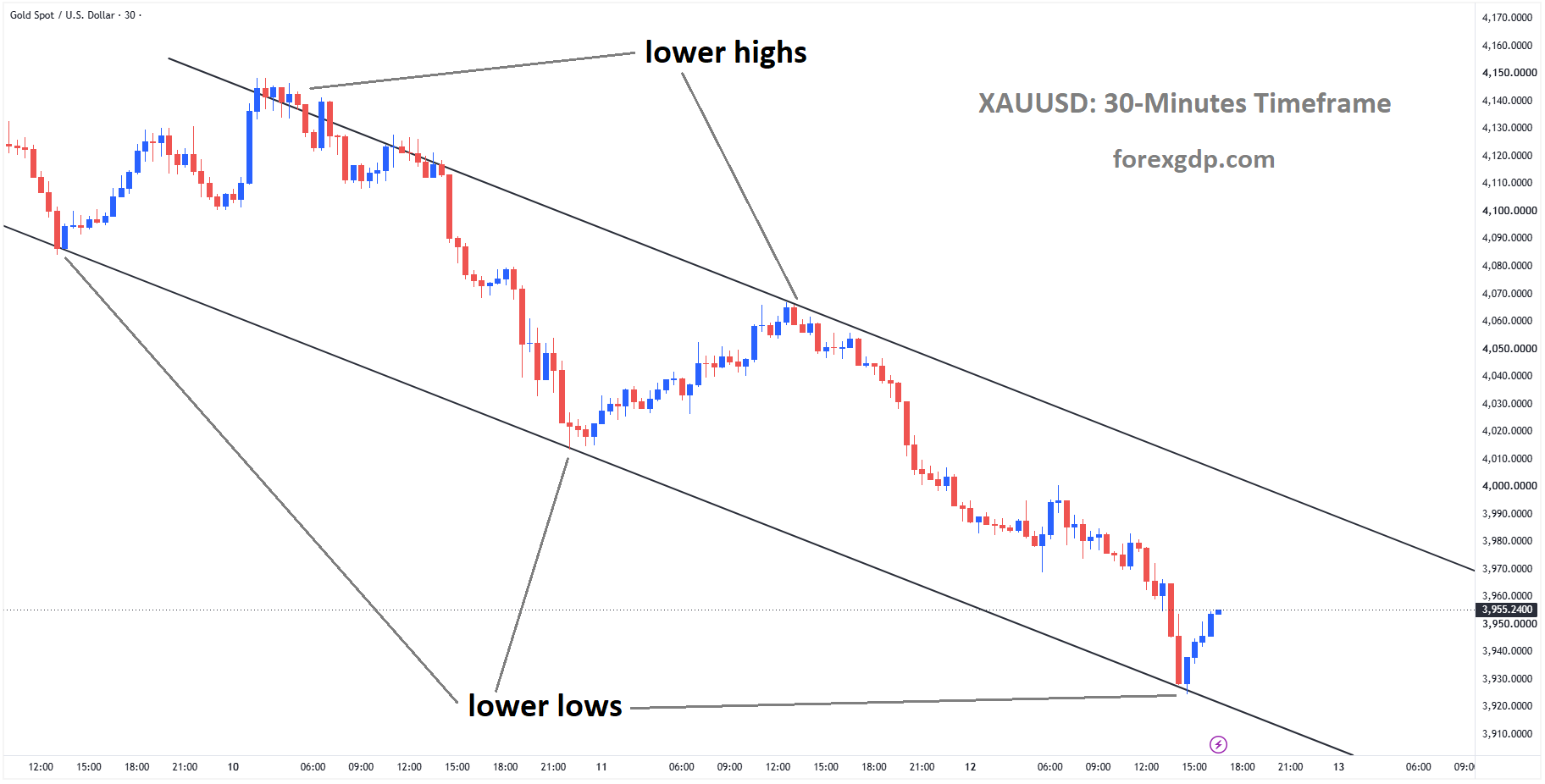
XAUUSD is rebounding from the lower low area of the descending channel
Gold continues to face a difficult environment as investors prepare for the possibility of further interest rate increases from the US Federal Reserve. Stronger-than-expected US inflation data and firm comments from Fed officials have strengthened expectations that the central bank will maintain a tough approach to controlling inflation.
The growing possibility of higher borrowing costs has supported the US Dollar while reducing demand for Gold. Although the precious metal remains an important safe-haven asset, investors are becoming more cautious as the outlook for US monetary policy changes.
Market attention is now shifting toward upcoming US economic reports, fresh statements from Federal Reserve officials, and geopolitical developments that could influence inflation expectations.
Gold Struggles as Federal Reserve Rate Hike Expectations Increase
Gold has come under renewed pressure as investors adjust their expectations for the Federal Reserve’s next monetary policy decision. The central bank’s continued focus on bringing inflation under control has created an uncertain environment for the precious metal.
Gold generally becomes less attractive when interest rates rise because it does not provide regular interest payments. In comparison, assets such as government bonds and interest-bearing deposits can offer better returns when borrowing costs increase.
This difference plays an important role in investment decisions, particularly when markets expect the Federal Reserve to keep monetary policy restrictive.
Recent economic developments have strengthened the belief that US interest rates could remain elevated for longer than previously expected. As a result, some investors have reduced their exposure to Gold while increasing their interest in assets that benefit from higher interest rates.
However, the outlook for Gold is not entirely negative. The precious metal continues to attract attention during periods of economic uncertainty, financial instability, and geopolitical tension.
Its ability to act as a store of value remains important, even when short-term monetary policy expectations create challenges.
Strong US Inflation Data Supports a Hawkish Federal Reserve Outlook
The latest US inflation report has played a major role in changing expectations surrounding the Federal Reserve’s upcoming policy decisions.
Consumer inflation increased more than economists had anticipated, suggesting that price pressures remain a concern for policymakers.
Core Consumer Price Index (CPI), which excludes volatile food and energy costs, increased by 0.3% during the month. Economists had expected a smaller increase of 0.2%.
Meanwhile, headline inflation rose by 0.4%, exceeding the forecast of 0.3%.
These figures suggest that inflation is proving more persistent than expected, making it harder for the Federal Reserve to consider a less restrictive monetary policy.
Fed Officials Signal the Possibility of Stronger Action
Federal Reserve Governor Christopher Waller had already raised the possibility of a larger interest rate increase before the inflation figures were released.
Waller indicated that a half-percentage-point increase in December could become necessary if core inflation reached approximately 0.3% or higher.
The latest inflation reading met that condition, increasing speculation that policymakers may consider a more aggressive response.
While a larger increase is not guaranteed, the combination of stronger inflation and firm central bank communication has encouraged investors to prepare for additional monetary tightening.
Financial markets have consequently moved toward fully expecting an interest rate increase in December.
The possibility of another increase early in the following year has also gained attention, suggesting that investors expect the Federal Reserve to continue its efforts to contain inflation.
US Dollar Gains Strength as Investors Adjust Their Expectations
The US Dollar has benefited from growing expectations that the Federal Reserve will maintain higher interest rates.
When US borrowing costs rise, Dollar-denominated investments can become more attractive to international investors seeking stronger returns.
This additional demand can support the American currency, particularly when other major central banks are expected to follow a less aggressive monetary policy.
A stronger Dollar often creates difficulties for Gold because the precious metal is internationally traded in the US currency.
When the Dollar strengthens, Gold becomes more expensive for buyers using other currencies. This can reduce international demand and create additional pressure on the precious metal.
Analysts at MUFG have highlighted that financial markets are preparing for further monetary tightening beyond the December Federal Reserve meeting.
Their assessment suggests that investors are considering not only the next interest rate decision but also the possibility of another increase shortly afterward.
This expectation has reinforced confidence in the Dollar and encouraged investors to remain cautious toward Gold.
ING Analysts Highlight the Role of Interest Rate Expectations
Strategists at ING have also emphasized the importance of Federal Reserve communication and stronger inflation figures in supporting the US Dollar.
According to their assessment, the currency’s strength is largely being driven by expectations surrounding interest rates rather than broader changes in economic confidence.
The difference between US interest rates and those available in other major economies remains an important factor influencing international capital flows.
As long as investors believe the Federal Reserve will maintain a relatively restrictive policy, the Dollar may continue to benefit from demand.
For Gold, this creates a challenging environment because stronger demand for interest-bearing assets can limit investors’ willingness to increase their precious metal holdings.
Nevertheless, changes in economic conditions or Federal Reserve communication could quickly influence these expectations.
Upcoming US Economic Reports Could Shape Gold’s Direction

Investors are now focusing on additional US economic data that could provide greater clarity about the Federal Reserve’s next steps.
Weekly unemployment claims are among the important reports being monitored.
These figures offer insight into the condition of the US labor market by showing how many people are applying for unemployment benefits.
A resilient labor market could give the Federal Reserve more confidence to maintain restrictive monetary policy.
However, signs of weakening employment conditions might encourage policymakers to reconsider how aggressively they need to raise interest rates.
Another important release is the Producer Price Index (PPI), which measures changes in prices received by domestic producers.
The report can provide early clues about inflation pressures before they reach consumers.
If producer inflation remains elevated, concerns about persistent price increases could strengthen expectations for additional Federal Reserve action.
On the other hand, softer inflation readings could reduce pressure on policymakers and potentially improve sentiment toward Gold.
Statements from Federal Reserve officials will also remain important. Investors will closely examine their comments for indications of whether policymakers favor larger interest rate increases or a more gradual approach.
US-Iran Diplomatic Developments Add Another Factor to Gold’s Outlook
Geopolitical developments involving the United States and Iran are also attracting attention because of their potential influence on global energy markets.
According to a report from The Wall Street Journal, US Vice President JD Vance has been considering direct discussions with senior Iranian security official Mohsen Rezaei.
The reported talks remain at an early stage, and no official meeting date has been confirmed.
Even so, the possibility of diplomatic progress could influence expectations surrounding global energy supplies.
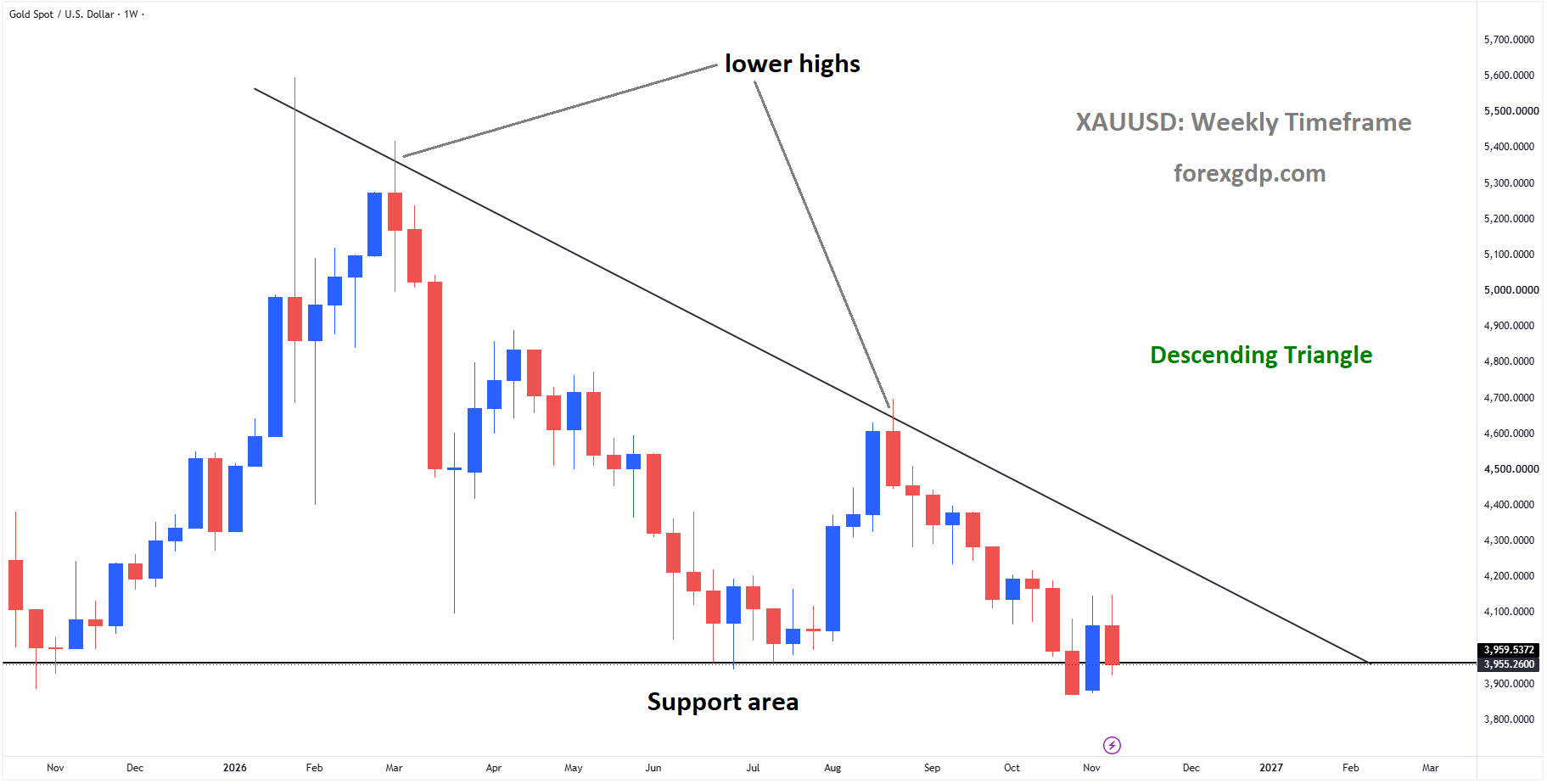
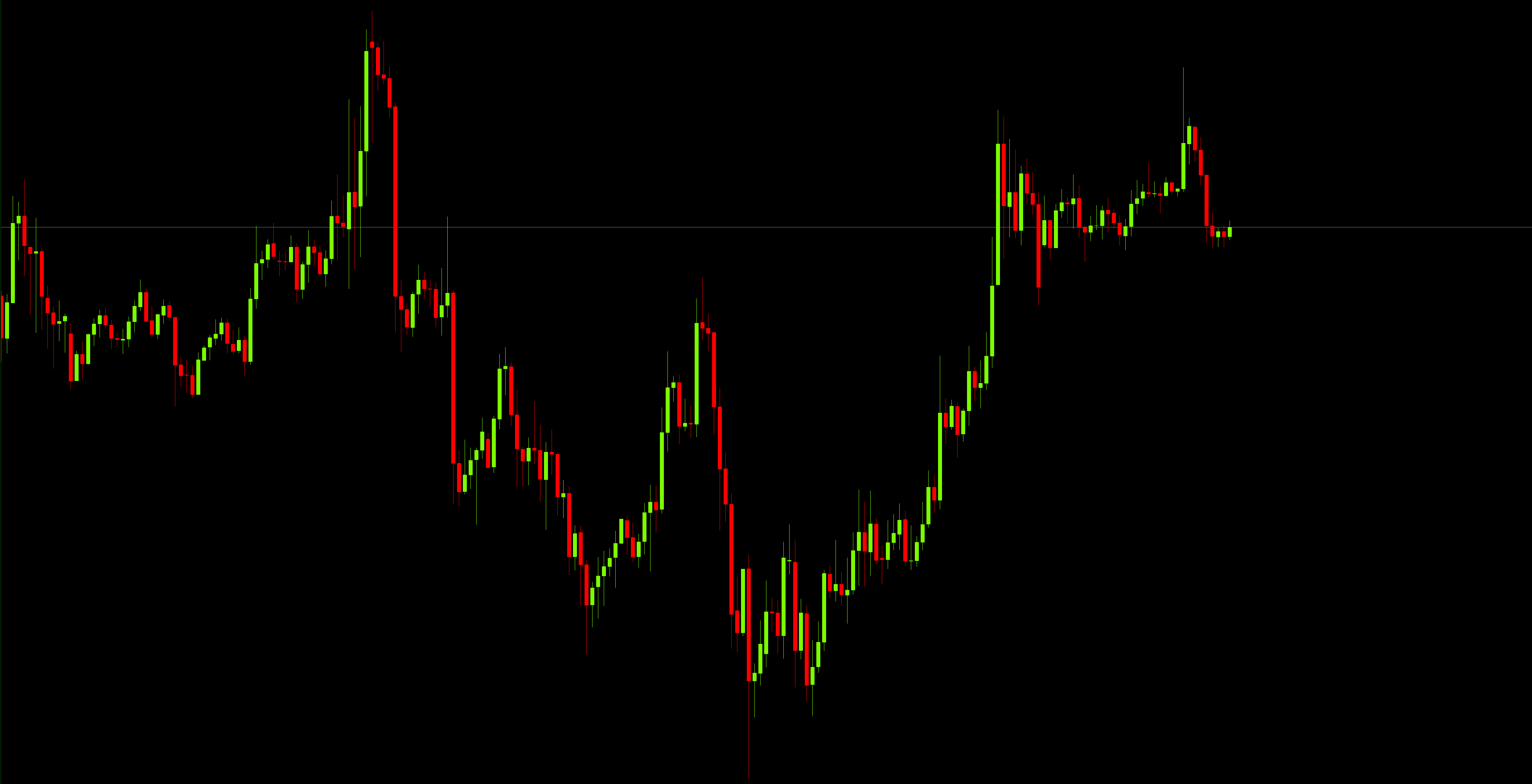
XAUUSD reached the support area of the descending triangle pattern
Improved relations between Washington and Tehran could ease some concerns about disruptions to oil production and international energy trade.
If diplomatic progress contributes to lower energy costs, it could help reduce inflationary pressure across the global economy.
Energy expenses affect transportation, manufacturing, agriculture, and many other industries. Lower costs can gradually reduce the financial burden on businesses and consumers.
This could also influence Federal Reserve policy expectations.
If inflation begins to ease because of declining energy costs, investors may become less concerned about aggressive interest rate increases.
Such a shift could improve the environment for Gold by reducing some of the pressure created by higher borrowing costs.
However, diplomatic discussions remain uncertain, and their potential economic effects will depend on whether meaningful agreements are eventually reached.
Final Summary
Gold remains under pressure as stronger US inflation figures and hawkish Federal Reserve expectations encourage investors to favor the US Dollar and interest-bearing assets.
The possibility of additional interest rate increases has become a central factor influencing sentiment toward the precious metal. Recent comments from Federal Reserve officials have reinforced concerns that monetary policy may remain restrictive.
Upcoming US employment and producer inflation reports could provide important clues about whether the central bank will maintain its aggressive approach.
At the same time, developments involving the United States and Iran may influence energy costs and broader inflation expectations.
For now, Gold’s outlook remains closely connected to Federal Reserve policy, the strength of the US Dollar, and changing economic conditions. While higher interest rates present challenges, easing inflation pressures or renewed global uncertainty could eventually help restore investor interest in the precious metal.