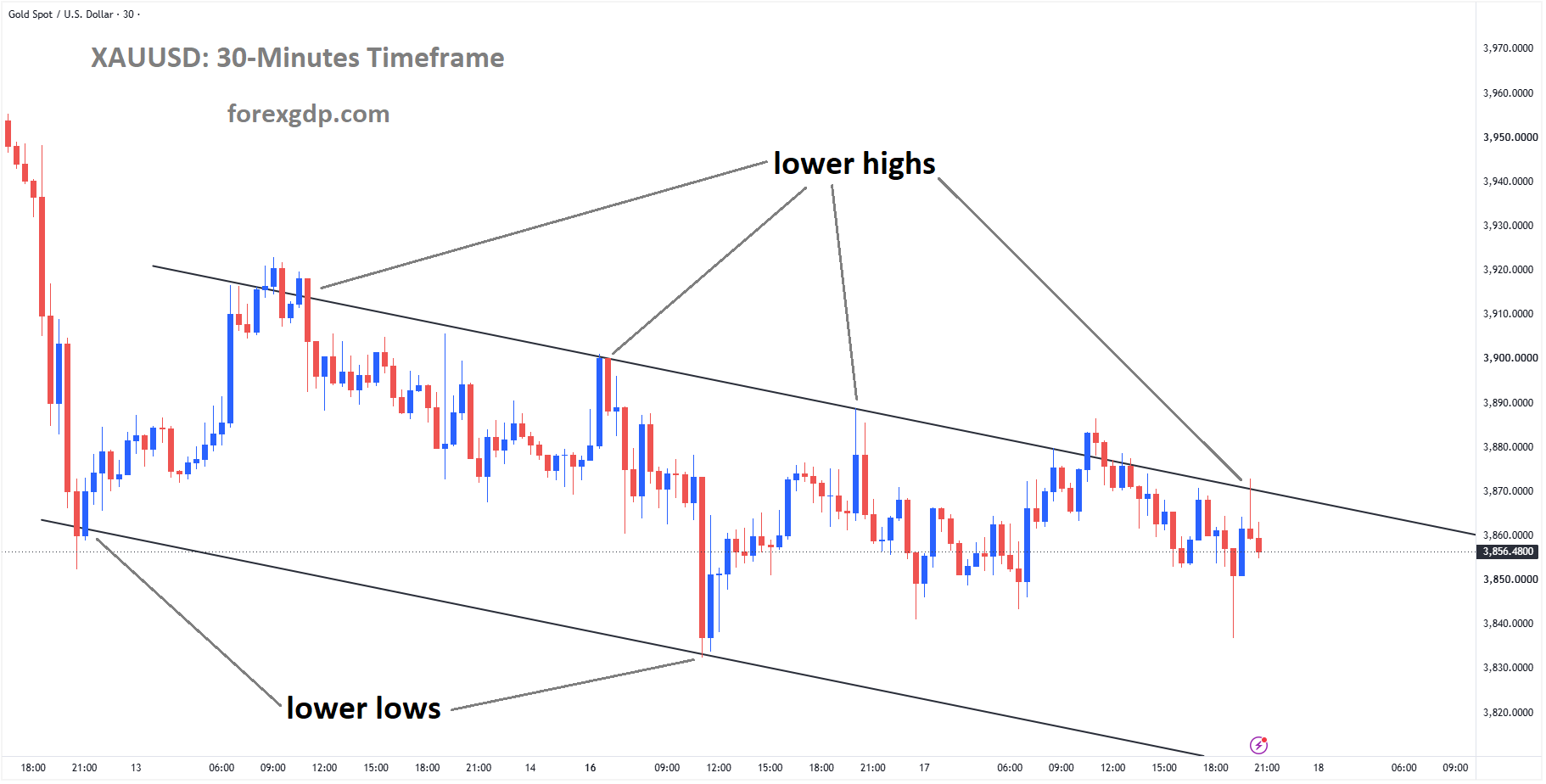
XAUUSD is falling from the lower high area of the descending channel
Gold continues to face a challenging environment as a strong US Dollar, elevated US Treasury yields, and expectations of further Federal Reserve interest rate increases weigh on investor confidence. Although the precious metal remains an important asset during periods of economic uncertainty, the current monetary policy outlook has made it difficult for gold to attract sustained buying interest.
Investors are closely following US economic reports, comments from Federal Reserve officials, and developments in global financial markets to understand where gold may head next. Strong consumer spending data and persistent inflation concerns have reinforced expectations that the Federal Reserve could maintain a restrictive monetary policy for longer.
Despite these short-term challenges, gold’s longer-term appeal remains supported by central bank demand, geopolitical uncertainty, and concerns about global economic stability.
Strong US Dollar and Treasury Yields Weigh on Gold
One of the biggest challenges facing gold is the continued strength of the US Dollar. Since gold is traded internationally in dollars, a stronger American currency makes the precious metal more expensive for investors holding other currencies.
This relationship often reduces international demand for gold, particularly when the dollar strengthens alongside rising US Treasury yields.
Treasury yields also play an important role in shaping gold investment decisions. Unlike government bonds and savings products, gold does not provide regular interest payments. When yields remain elevated, investors may prefer assets that offer income rather than holding a metal that generates no direct returns.
The combination of a firm dollar and attractive bond yields has therefore created a difficult environment for gold buyers.
Another important factor is the Federal Reserve’s commitment to controlling inflation. Policymakers have repeatedly emphasized the need to bring inflation closer to the central bank’s 2% target.
As long as inflation remains a concern, expectations of tighter monetary policy could continue to influence demand for precious metals.
US Retail Sales Data Strengthens Expectations of Further Fed Action
Recent US Retail Sales figures have added another important element to the gold market outlook.
According to the reported October data, overall retail sales increased by 0.2% from the previous month, matching economists’ expectations. However, spending excluding automobiles rose by 0.6%, exceeding the expected 0.4% increase.
The retail sales control group, which contributes to calculations of consumer spending in gross domestic product, also recorded a 0.6% increase. This followed a much smaller gain of 0.1% in the previous month.
These figures suggest that American consumers continued spending despite higher borrowing costs and broader economic uncertainty.
Consumer spending is particularly important because it represents a major part of US economic activity. When households continue purchasing goods and services, businesses may experience steady demand, helping support economic growth.
However, resilient consumer spending can also make inflation more difficult to control.
For the Federal Reserve, stronger economic activity may reduce the urgency to lower interest rates and strengthen the argument for keeping monetary policy restrictive.
This creates an additional challenge for gold, which generally benefits when investors expect borrowing costs to decline.
Federal Reserve Officials Maintain a Firm Position on Inflation
Comments from Federal Reserve officials have reinforced the possibility of further monetary tightening.
St. Louis Fed President Alberto Musalem warned that inflation could remain elevated without additional policy action. His remarks suggested that several interest rate increases might be necessary to bring inflation under control.
Other policymakers have also stressed that the central bank must remain focused on restoring price stability.
Such statements influence financial markets because investors adjust their expectations based on the likely direction of monetary policy.
When traders anticipate higher interest rates, demand for the US Dollar and interest-bearing investments can strengthen. Gold, meanwhile, may become less attractive to investors seeking regular income.
Nevertheless, future Federal Reserve decisions will depend heavily on incoming economic information, particularly inflation, employment, and consumer spending data.
Why Federal Reserve Interest Rate Decisions Matter for Gold
The relationship between gold and interest rates is an important part of understanding the precious metal’s performance.
Gold is widely regarded as a store of value and a potential safeguard against inflation. During periods of economic instability, investors often turn to the metal to protect their wealth.
However, gold does not always benefit from rising inflation.
If inflation encourages the Federal Reserve to raise interest rates, the resulting increase in borrowing costs can reduce demand for gold.
Higher interest rates may also strengthen the US Dollar, creating additional pressure on international gold demand.
On the other hand, expectations of lower interest rates can improve gold’s appeal. When returns on bonds and other income-generating assets become less attractive, investors may be more willing to hold precious metals.
This explains why Federal Reserve communication remains one of the most closely watched influences on gold.
Investors are not simply looking at current policy decisions. They are also assessing how long restrictive conditions could remain in place and whether economic developments might eventually encourage a change in direction.
Geopolitical Uncertainty Adds Another Layer to the Gold Outlook

Beyond US monetary policy, geopolitical developments continue to influence investor sentiment.
Uncertainty surrounding negotiations between the United States and Iran has raised concerns about stability in the Middle East.
In particular, attacks involving commercial tankers in the Strait of Hormuz have highlighted the risks facing international energy transportation.
The Strait of Hormuz is a major shipping route for global energy supplies. Any serious disruption to activity in this region could affect transportation costs, business confidence, and inflation expectations.
Although recovering Middle Eastern energy exports and expectations of sufficient global supply may help ease some concerns, geopolitical tensions remain an important source of uncertainty.
For gold, these developments can have mixed effects.
Heightened geopolitical risks may encourage investors to seek safe-haven assets, potentially supporting demand for the precious metal.
However, if energy-related disruptions increase inflation expectations, central banks may feel greater pressure to maintain higher interest rates.
As a result, geopolitical uncertainty does not automatically translate into stronger gold demand. The broader response of currencies, monetary policymakers, and investors also matters.
Central Bank Demand Supports Gold’s Long-Term Appeal
Despite the difficult short-term environment, several factors continue to support gold’s longer-term investment appeal.
Strategists at OCBC have expressed cautious optimism about the metal’s medium-term prospects, highlighting central bank diversification, investment demand, geopolitical risks, and fiscal concerns.
Central banks hold gold as part of their international reserves because it can help diversify assets and reduce dependence on individual currencies.
This diversification has become increasingly important as countries assess financial stability, international trade relationships, and long-term economic risks.
Gold also remains attractive to investors who want exposure to an asset that is not directly tied to the financial performance of a particular company or government.
Concerns about government debt, fiscal sustainability, and global economic uncertainty may further strengthen the case for holding gold over longer periods.
However, these supportive factors do not eliminate near-term challenges.
Persistently elevated inflation-adjusted yields and a resilient US Dollar may continue to limit investor enthusiasm, even when broader uncertainty encourages interest in safe-haven assets.
Upcoming US Economic Events Could Influence Gold Sentiment
Investors are paying close attention to several important developments that could shape expectations for gold.
One major event is the release of the Federal Reserve’s October meeting minutes. These records may provide additional insight into how policymakers assess inflation, economic growth, and the appropriate direction of interest rates.
Market participants will examine the minutes for signs of agreement or disagreement among officials regarding future policy decisions.
Corporate developments could also influence broader financial sentiment.
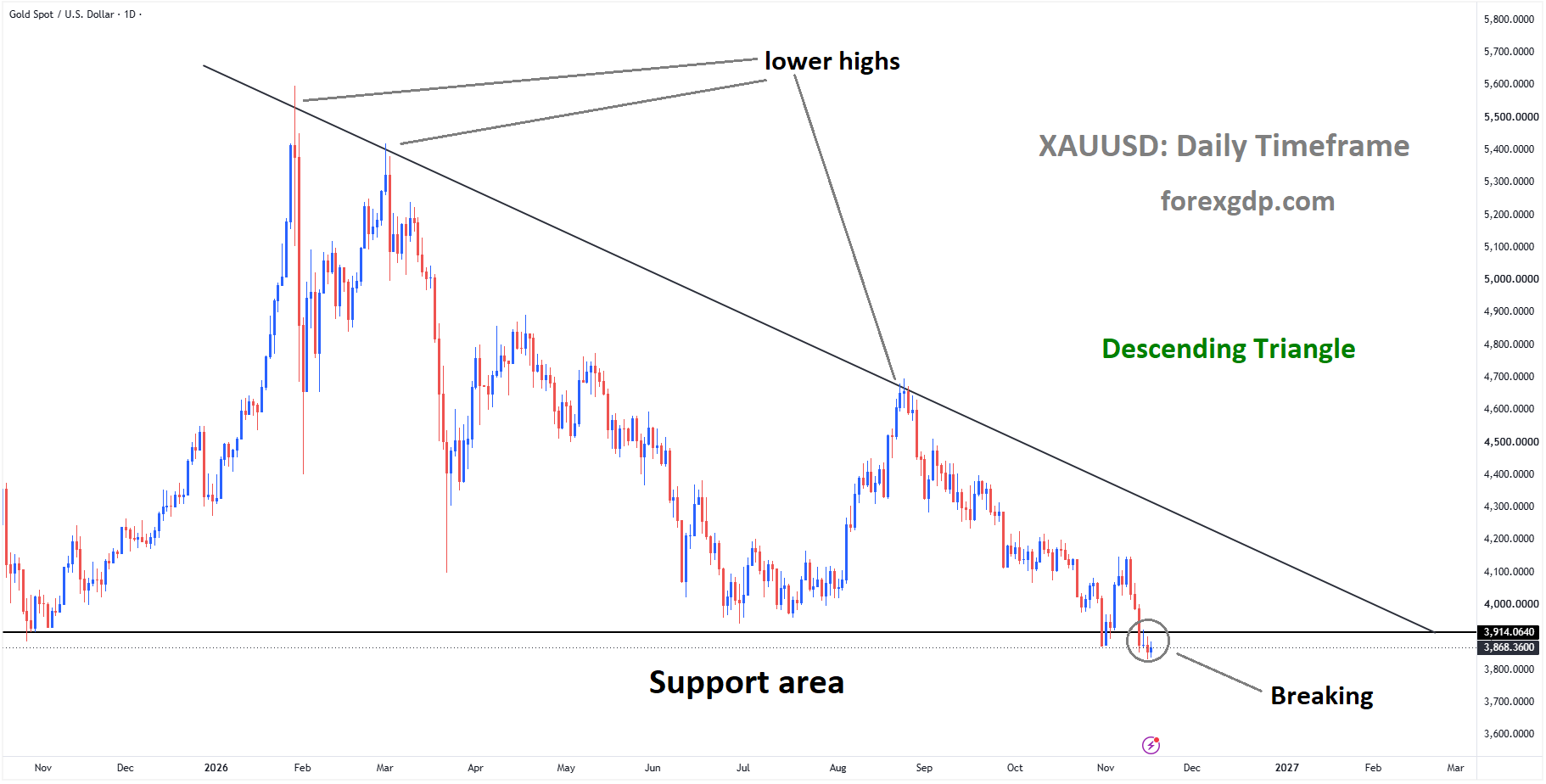
XAUUSD is breaking the support area of the descending triangle pattern
Nvidia’s earnings announcement is attracting attention because of the company’s importance to the technology sector and investor confidence in artificial intelligence-related businesses.
Strong corporate results could encourage greater interest in riskier assets, while disappointing developments may lead investors to reconsider their exposure to equities.
Changes in overall risk appetite can influence demand for the US Dollar and traditional safe-haven investments, including gold.
Investors will also continue monitoring inflation reports, employment figures, and statements from Federal Reserve officials.
Together, these developments could provide a clearer understanding of whether US monetary policy is likely to remain restrictive or gradually become more supportive of gold.
Final Summary
Gold faces continued pressure from a strong US Dollar, elevated Treasury yields, and expectations that the Federal Reserve will maintain a firm approach to inflation.
Resilient US consumer spending has strengthened the argument for restrictive monetary policy, making interest-bearing investments more attractive compared with non-yielding assets such as gold.
At the same time, geopolitical uncertainty, central bank diversification, and concerns about long-term fiscal stability continue to support the precious metal’s broader investment appeal.
The next direction for gold will depend largely on incoming US economic data, Federal Reserve communication, and changes in global investor sentiment.
While near-term conditions remain challenging, gold’s traditional role as a store of value and portfolio diversification asset continues to make it an important part of the global financial landscape.