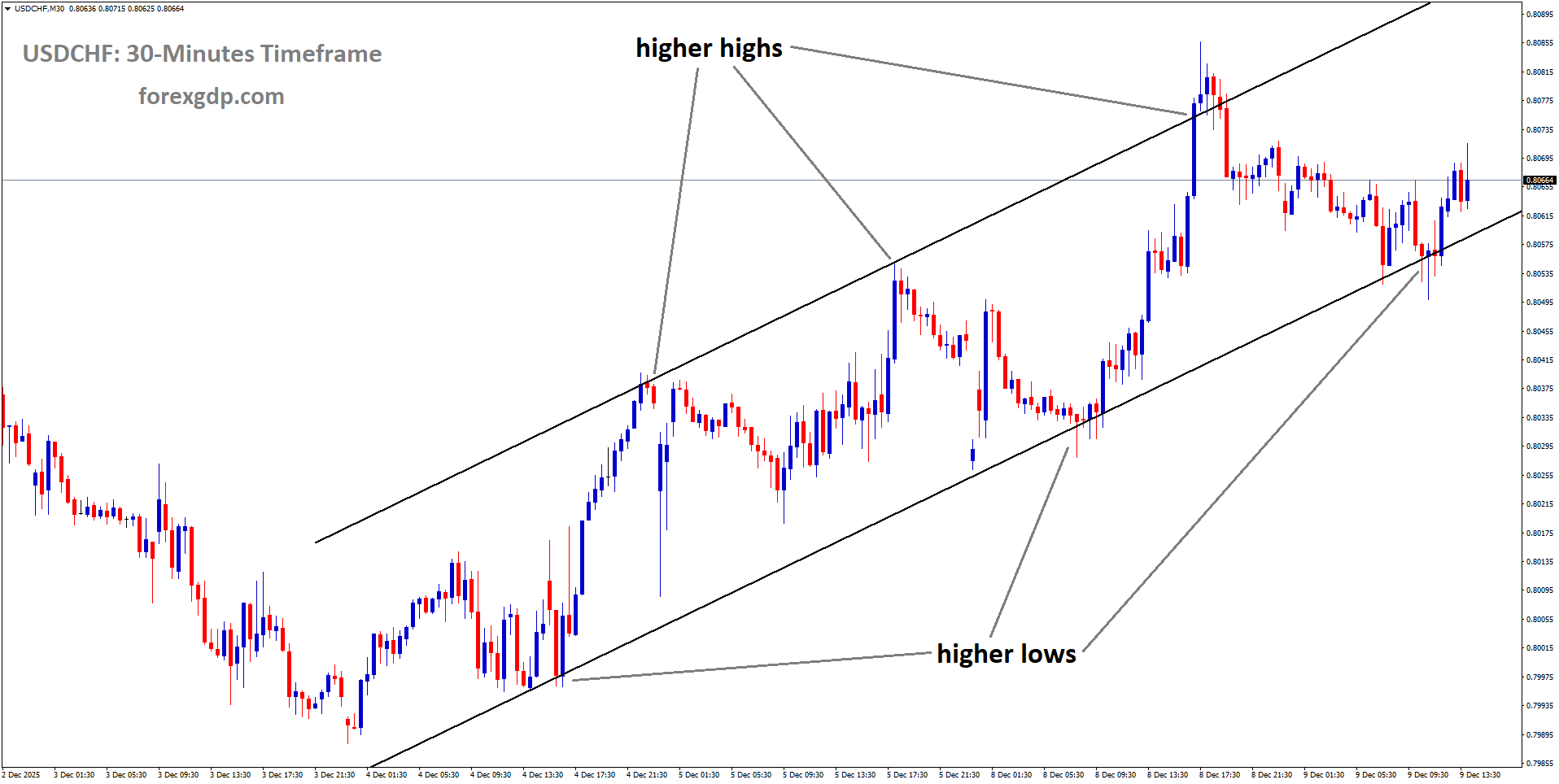
USDCHF is moving in an uptrend channel, and the market has rebounded from the higher low area of the channel
USDCHF Pushes Higher as Traders Gear Up for Fed and SNB Policy Moves
The US Dollar is starting the week on a stronger note against the Swiss Franc, pushing USD/CHF to its highest level in about a week. This move comes as traders and investors position themselves ahead of two major events: the Federal Reserve’s interest rate decision on Wednesday and the Swiss National Bank’s decision on Thursday.
In currency markets, weeks like this often bring extra movement. When two central banks are about to speak—especially ones as influential as the Fed and the SNB—many traders prefer to adjust their positions early rather than get caught off guard later.
At the moment, the Swiss Franc is losing some ground, even though many people still expect the Fed to cut rates. That might sound a little odd at first, but currencies don’t move on rate decisions alone. They also respond to expectations, timing, and what central bankers suggest about what comes next.
Why USD/CHF Is Moving Higher Right Now
USD/CHF has climbed to around the 0.8070 area, marking its strongest level since late November. At the same time, the US Dollar Index, which measures the Dollar against a basket of major currencies, has also bounced after weakening earlier in the day.
This matters because a stronger Dollar generally creates upward pressure on USD/CHF. When the Dollar is gaining broad support, the Franc often needs a specific reason—such as stronger Swiss data or a more hawkish SNB—to hold its ground. So far this week, that support hasn’t really shown up.
Another important piece of the puzzle is positioning. Before big central bank decisions, markets often shift simply because traders want to reduce risk, lock in gains, or prepare for a surprise. Those flows can push a currency pair higher or lower even if the main storyline—like an expected Fed cut—hasn’t changed.
The Fed: A Cut Is Expected, but the Message Matters More
Markets are strongly leaning toward a quarter-point rate cut from the Federal Reserve on Wednesday. Current pricing suggests a high probability that the Fed lowers its policy rate by 25 basis points.
But here’s the key detail: when a move is widely expected, the real market reaction often depends on what the Fed says about the future, not what it does in the moment. Investors will be listening closely to Fed Chair Jerome Powell’s press conference and the updated economic projections. Those updates can shape how people think about the path of interest rates into 2026.
If the Fed signals that it wants to move slowly after this cut, the Dollar could hold up better than many expect. On the other hand, if policymakers suggest multiple cuts ahead or show growing concern about economic slowing, the Dollar may weaken again.
Inflation data is sending a cautious signal

Recent inflation numbers point to a situation that isn’t moving in a perfectly smooth direction. The latest Personal Consumption Expenditures (PCE) data—one of the Fed’s preferred inflation measures—suggests that progress on inflation may be slowing.
Core PCE rose 0.2% month over month and eased only slightly on a yearly basis. Headline PCE also held firm. In plain market terms, that kind of inflation picture can make it harder for the Fed to commit to aggressive easing, even if it does deliver a cut this week.
For USD/CHF, this matters because a more cautious Fed can keep US yields relatively supported, and that tends to benefit the Dollar versus lower-yielding currencies.
The labor market looks mixed, not broken
US labor indicators have also been sending mixed messages. Some figures point to cooling, while others still suggest resilience.
Employment-related data recently showed a weaker result from private payroll estimates, while job cut announcements fell sharply. Weekly jobless claims also came in lower, which hints that layoffs are not accelerating in a dramatic way.
That combination—cooling in some areas but stability in others—supports the idea that the Fed may prefer a careful approach. If policymakers believe the job market is softening but not collapsing, they may choose to cut rates gradually rather than rush.
For the Dollar, gradual and cautious easing can be less negative than many traders assume when they hear the phrase “rate cut.”
The SNB: Rates Expected to Stay at Zero, and Negative Rates Still Look Unlikely
On Thursday, attention shifts to Switzerland. The Swiss National Bank is widely expected to keep its policy rate unchanged at 0.00%.
Swiss inflation has moved toward the lower end of the SNB’s target range, which runs from 0% to 2%. That softer inflation backdrop is one reason markets are discussing the possibility of easier Swiss policy down the road.
Still, the SNB has been fairly clear about one thing: going back to negative interest rates is not something it wants to do easily. Policymakers have suggested there is a high bar for a return to that era.
What Traders Will Watch From the SNB
Even if the SNB holds rates steady, the details around the decision may drive the Franc. Traders will pay close attention to how the SNB talks about inflation, growth, and risks in the coming quarters.
One point supporting the current stance is that the SNB expects inflation to tick slightly higher in the months ahead. If the central bank believes inflation will firm up on its own, it becomes easier to justify staying put rather than moving toward a cut.
Markets are also watching broader expectations. Some reports suggest economists do not see a return to negative rates in 2026. Derivatives markets also reflect uncertainty, with a less-than-even chance of a cut that would push rates below zero over the next year.
In other words, while traders are aware that Swiss policy could loosen if inflation stays too low, there is no strong consensus that negative rates are around the corner.
Why the Swiss Franc Can Weaken Even When the Fed Is Cutting
This is the part that often surprises people: a currency can weaken even when another country is expected to lower rates.
That happens when:
-
The rate cut is already priced in and no longer “new information.”
-
The central bank signals it may not cut much further.
-
The other country’s central bank is seen as even more likely to stay easy for longer.
-
Investors shift toward riskier assets, reducing demand for safe-haven currencies like the Swiss Franc.
The Franc is also heavily influenced by Switzerland’s low-rate environment. When Swiss rates are at or near zero, it doesn’t take much for the currency to come under pressure—especially if global investors feel comfortable taking on risk and prefer holding Dollars instead.
What Comes Next for USD/CHF This Week
With both the Fed and the SNB speaking within 24 hours of each other, USD/CHF could stay active throughout the week. The direction will likely depend on the tone of each central bank.
If the Fed cuts but signals patience and caution about additional easing, the Dollar could remain supported. If the SNB holds firm and pushes back strongly against the idea of negative rates returning, the Franc could find steadier footing. But if the SNB sounds more concerned about low inflation and leaves the door open to future cuts, that could keep the Franc on the defensive.
Final Summary
USD/CHF has climbed to a one-week high as traders adjust positions ahead of key decisions from the Federal Reserve and the Swiss National Bank. Markets strongly expect the Fed to cut rates by 25 basis points, but the bigger focus is on what officials signal about the path into 2026, especially with inflation progress looking less smooth and labor data sending mixed signals. In Switzerland, the SNB is expected to keep rates at 0.00%, and policymakers continue to indicate that a return to negative rates would require a very strong reason. With both central banks setting the tone within the same week, the pair is likely to stay sensitive to messaging, forecasts, and any hints about what comes next.
EURUSD Drifts Sideways as Traders Eye Fresh US Jobs Updates
The Euro is edging slightly higher against the US Dollar, but it still can’t break comfortably above the 1.1650 area. After dipping to around 1.1616 on Monday, EUR/USD found its footing and bounced back on Tuesday. Even with that small recovery, the bigger picture feels unsettled. Price action has been choppy, and traders are clearly hesitant to take strong positions ahead of one major event: the US Federal Reserve’s policy decision on Wednesday.
When the Fed is about to speak, markets usually get quieter and more cautious. That’s exactly what’s happening now. Many investors would rather watch and wait than make bold bets that could be overturned by one sentence in a policy statement or one comment from the Fed Chair. So for now, the Euro’s modest gains look more like a pause in the action than the start of a major move.
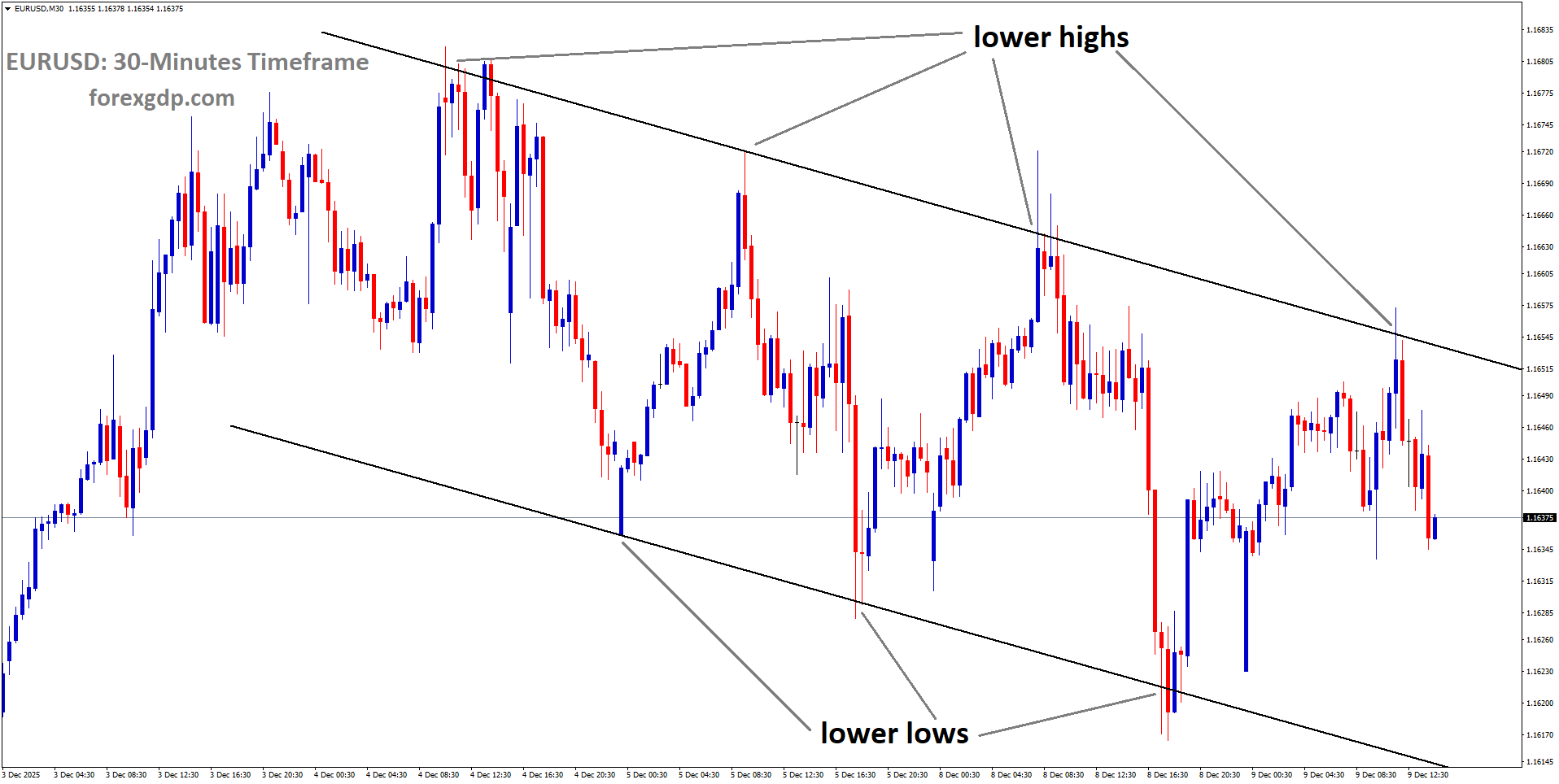
EURUSD is moving in a descending channel, and the market has fallen from the lower high area of the channel
Why the Dollar Still Has Support This Week
Even though the Dollar hasn’t surged dramatically, it’s holding onto the ground it gained earlier in the week. One reason is simple: US Treasury yields have been higher, and that tends to make the Dollar more attractive. When yields rise, investors can earn more from holding US assets, which can boost demand for the currency.
At the same time, there’s been a cautious mood in global markets. Risk-averse periods often support the Dollar because many investors still treat it as a safe place to park money when headlines turn unsettling. Early-week concerns, including the shock of a major earthquake in Japan, added to that cautious tone and helped keep the Dollar from slipping too far.
The result is a familiar situation: the Euro can climb a bit when the Dollar cools off, but the Dollar still has enough backing to prevent a clean breakout. That’s why EUR/USD is pushing up gently while still feeling “capped” near key levels.
The Fed Meeting Is the Main Event
This week’s biggest question is not just what the Fed will do, but what it will signal about what comes next.
Markets are strongly leaning toward a quarter-point rate cut. Futures pricing has suggested a very high probability of a 25-basis-point reduction. But traders know the rate decision alone is only one piece of the puzzle. The real market reaction often comes from the details surrounding the decision.
Here’s what investors will be listening for:
The policy statement
Even small wording changes can shift expectations. If the statement sounds cautious about inflation or firm about keeping policy tight, the Dollar may strengthen. If it sounds more open to continued easing, the Dollar may soften.
The “dot plot” (rate projections)
The Fed’s rate projections can reshape the market’s view of the path ahead. Traders will look closely to see whether policymakers expect more cuts soon, fewer cuts, or a long pause.
Jerome Powell’s press conference
This is where tone matters most. Powell’s answers to questions can either calm markets or ignite speculation. If he signals that the Fed might pause after a cut, the Dollar could gain. If he keeps the door open to more easing, that could weigh on the Dollar and help the Euro.
In short, it’s not just about a single decision. It’s about the story the Fed tells around that decision.
Key US Jobs Data Before the Fed

Before the Fed announcement, traders will also pay attention to US labor market signals. This matters because the jobs market is one of the biggest inputs into how the Fed thinks about the economy. A hot jobs market can keep inflation pressures alive. A cooling jobs market can support the case for cutting rates.
Two reports are in the spotlight:
ADP Employment Change
This private payrolls estimate can shape expectations, especially when markets are sensitive to any sign the economy is slowing.
JOLTS Job Openings
JOLTS gives a sense of how many job vacancies employers are trying to fill. If openings remain high, it suggests demand for workers is still strong. If openings fall more than expected, it can hint at a softer job market.
These releases are especially relevant right now because the official Nonfarm Payrolls report isn’t due until next week. So for this stretch of days, ADP and JOLTS may carry extra weight for traders trying to gauge the real direction of US employment trends.
Risk Headlines Also Shaped Market Mood
Markets don’t move on central banks alone. Big global events also shift sentiment, and that can impact currencies quickly.
A powerful earthquake struck northern Japan on Monday, prompting evacuations and triggering tsunami warnings that were later reduced to advisories. Early official reports mentioned injuries, and the full picture was still developing. Events like this can push traders into “risk-off” mode, even if only temporarily. During those moments, the Dollar often benefits because investors tend to reduce exposure to riskier assets and move into safer holdings.
This doesn’t mean EUR/USD will automatically fall whenever global news turns serious, but it does help explain why the Dollar managed to stay supported even without a major new economic shock from the US.
Eurozone Updates: More Talk Than Action
On the Euro side, the calendar is lighter. That doesn’t mean nothing matters—it just means the Euro currently has fewer fresh catalysts compared to the US Dollar, which is dealing with a major Fed decision and important labor data.
One event worth watching is a speech from Bundesbank President Joachim Nagel, who also sits on the European Central Bank’s Governing Council. Comments from senior ECB officials can influence expectations, but markets often react most when there’s a surprise. If the message is simply that policy is in a “good place” and likely to stay steady, the Euro’s reaction may be limited.
Meanwhile, a recent investor sentiment update in the Eurozone showed a modest improvement in confidence in December compared to November. The details pointed to slightly better views of the current situation and a stronger improvement in expectations. Still, the Euro’s response was small, which suggests traders are not ready to treat sentiment surveys as a game-changer right now.
There’s also ongoing discussion around the ECB’s next move. Some officials have sounded comfortable with the idea that the next adjustment could be a hike at some point, while others have pushed back on the idea of an imminent increase. Mixed messaging like this can leave the market unsure, which is one more reason the Euro has struggled to build strong momentum.
What This Means for EUR/USD Right Now
Put all of this together and the current mood makes sense:
-
The Euro is slightly stronger, helped by a bounce after Monday’s drop.
-
The Dollar is still supported, boosted by higher Treasury yields and a cautious market tone.
-
Traders don’t want to commit, because the Fed’s guidance could change the outlook in a matter of minutes.
-
Eurozone news is relatively quiet, so the Euro isn’t getting a powerful push from its own side of the story.
In situations like this, markets can feel like they’re stuck in a waiting room. Small moves happen, but big conviction usually shows up only after the main event delivers clarity.
Summary
EUR/USD is posting modest gains near 1.1650 after rebounding from Monday’s lows, but the broader tone remains uncertain. The US Dollar is holding firm thanks to higher Treasury yields and lingering risk caution, while the market focuses on the Federal Reserve decision and the guidance that follows. Before the Fed speaks, US labor updates like ADP jobs data and JOLTS openings are set to shape expectations. On the Eurozone side, investor sentiment has improved slightly and ECB officials continue to send mixed signals, leaving the Euro without a strong standalone catalyst as the week’s most important policy moment approaches.
GBPUSD Stays Rangebound With US Labour Market Data in Focus
The Pound Sterling has been a bit stuck in the middle lately. On Tuesday, it traded in a narrow range against the US Dollar, staying above the 1.3300 area during the European session. Instead of making any bold moves, traders are largely standing back and waiting for the next big catalyst: the US Federal Reserve’s policy decision on Wednesday.
That “wait and see” mood is not limited to the Pound. The US Dollar is also struggling to pick a direction. The US Dollar Index (DXY), which measures the Greenback against a basket of six major currencies, has been hovering around the 99.00 level and remains close to Monday’s range. When both currencies are hesitating at the same time, it’s usually a sign that the market believes the real story is about to arrive—just not today.
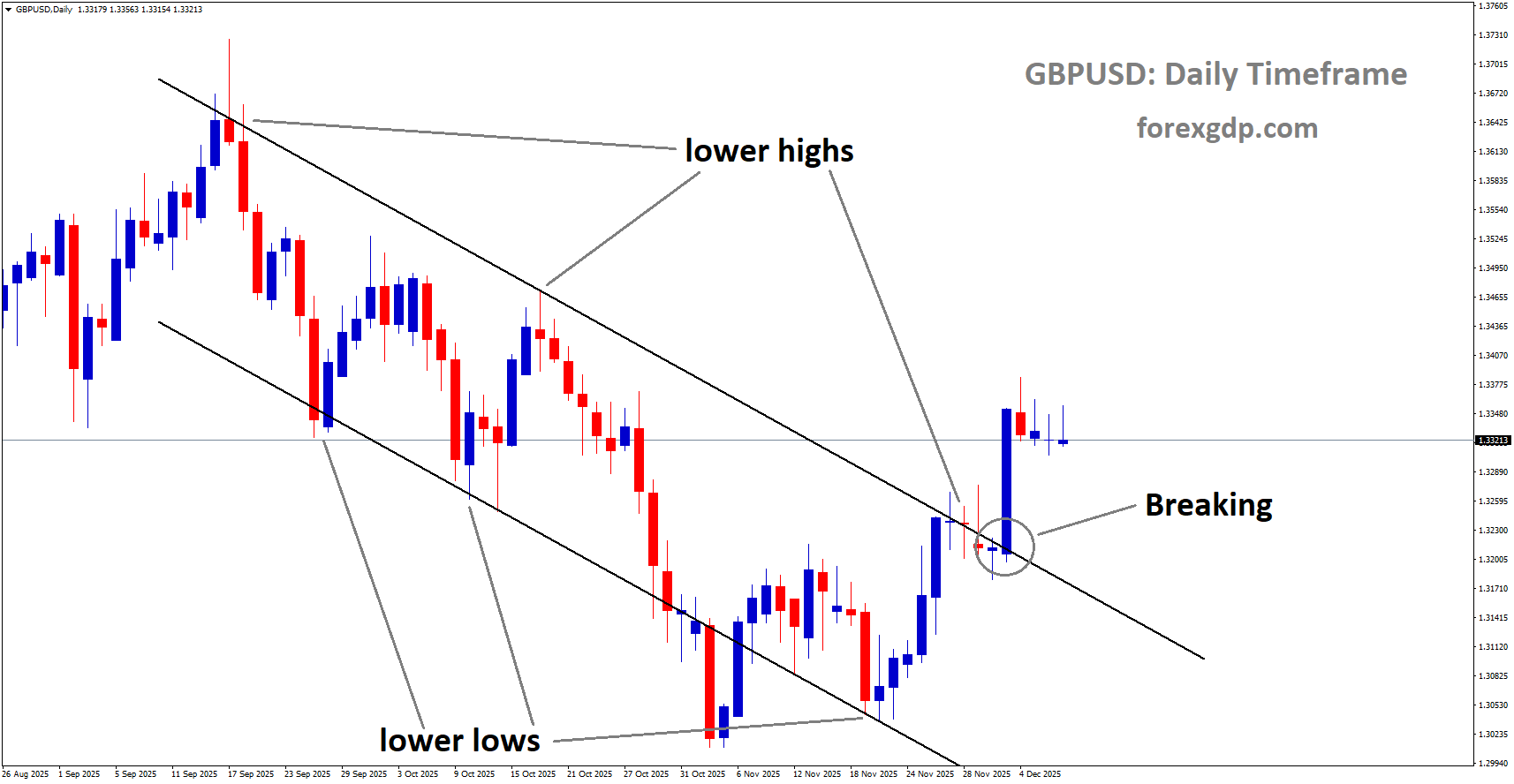
GBPUSD is breaking the lower high area of the downtrend channel
Why GBP/USD Is Moving Sideways Right Now
Whenever a major central bank meeting is around the corner, currency pairs often go quiet. Traders don’t want to make big bets until they know what policymakers are thinking, not just about rates right now, but about where rates could be heading next.
That’s exactly what is happening with GBP/USD. Investors widely expect the Federal Reserve to cut interest rates by 25 basis points at Wednesday’s meeting. The expectation is tied to signs that US labour demand is cooling. But the cut itself may not be the biggest driver for the Dollar. Instead, markets are likely to react more to the details that come with it.
Here’s what traders will be listening for:
-
The Fed’s policy statement, which can reveal how concerned officials are about growth, inflation, and the job market.
-
The dot plot, which shows where policymakers think interest rates may go over time.
-
Jerome Powell’s press conference, where his tone and wording can quickly shift market expectations.
In short, the market already has a strong view on the next step. What it doesn’t fully know is the Fed’s plan for the steps after that.
The Fed’s Balancing Act: Inflation vs. Slowing Jobs
The Federal Reserve is in a tricky position. Inflation has remained above the long-term 2% goal, but parts of the job market are clearly losing momentum. That creates a tightrope situation: loosen policy too fast and inflation could stay stubborn; move too slowly and the economy could weaken further.
Another interesting factor shaping the labour market is the growing adoption of Artificial Intelligence (AI) across industries. As businesses become more comfortable using AI tools, some hiring needs may change. That doesn’t necessarily mean jobs disappear overnight, but it can reshape demand—especially in certain office and administrative roles—while also boosting productivity in others.
Because of this complicated backdrop, investors aren’t just looking at what the Fed does. They’re trying to understand how the Fed explains what it’s doing.
What the Fed’s Projections Could Reveal
Alongside the decision, investors will focus on the Fed’s economic projections report, which includes updated forecasts for:

-
Inflation
-
Economic growth
-
Unemployment
-
The expected path of interest rates over the medium and longer term
These forecasts matter because they show how confident—or cautious—policymakers really are. Sometimes the rate move grabs headlines, but the projections are what shape expectations for months.
Pound Sterling Outlook: Caught Between Confidence and Caution
While the Fed is the big event this week, the Pound has its own issues. On Tuesday, Sterling traded mixed against other major currencies, and the mood around the UK remains uncertain. A major reason is growing confidence in the market that the Bank of England (BoE) may cut interest rates by 25 basis points to 3.75% at its meeting next week.
That’s a meaningful shift in expectations, and it has kept a lid on the Pound. When traders believe a central bank is turning more “dovish” (more open to rate cuts), it often reduces the currency’s appeal—especially if other central banks are not easing as quickly.
What’s Fueling BoE Rate Cut Expectations
Two themes are driving the market’s view that the BoE could soon lower rates: weaker UK labour market conditions and cooling inflation trends.
A recent survey from accountants KPMG and the Recruitment and Employment Confederation suggested that permanent job placements stayed soft last month. According to reporting referenced by Reuters, the timing matters: this weakness came in the run-up to Chancellor Rachel Reeves’ budget on November 26, a period when some employers may have been cautious due to concerns about potential tax increases.
When hiring slows and job placements weaken, it can signal softer demand in the economy. And when demand cools, inflation pressures can ease as well—giving central banks more room to cut.
BoE’s Alan Taylor: Inflation Could Return to 2% Soon
Adding to the dovish tone, Bank of England external member Alan Taylor said he expects inflation to return to the 2% target in the near term. He pointed to recent cooling in wage growth and services inflation, suggesting price pressures may be easing faster than feared.
That kind of message matters because it tells markets the BoE may feel more comfortable shifting away from a restrictive stance. Even if the BoE is not rushing into deep cuts, confidence that inflation is coming under control can make the first cut more likely.
UK Data and BoE Speeches: What Traders Are Watching Next
With both the Fed and BoE in focus, this week is packed with potential “tone changers”—events that can shift sentiment quickly even without dramatic new data.
One key moment for Sterling watchers is BoE Governor Andrew Bailey’s speech on Wednesday. Traders will be listening for any hints about how the BoE views the balance between inflation risks and growth risks. Sometimes a single phrase—like “more confidence” or “still concerned”—can reshape expectations.
On the data side, investors will also be watching the UK Gross Domestic Product (GDP) release for October, due on Friday. GDP numbers help shape the broader picture: if growth is slowing sharply, it can strengthen the case for rate cuts. If growth holds up better than expected, it can complicate that story.
US Jobs Data Still Matters: JOLTS in the Spotlight
Even though the Fed meeting is the main event, US economic releases are still part of the puzzle—especially anything related to jobs. In Tuesday’s session, traders are paying attention to the JOLTS Job Openings data for October, scheduled for 15:00 GMT.
The expectation is that US employers posted 7.2 million job openings in that period. JOLTS is closely watched because it gives a sense of demand for workers, which can influence wage pressures and, by extension, inflation trends.
If job openings fall more than expected, it could reinforce the idea that the labour market is cooling quickly—supporting the case for looser policy. If they come in stronger, markets may rethink how aggressive the Fed will be after this week.
What This Means for GBP/USD in the Near Term
Right now, GBP/USD is behaving like a market waiting for instructions. The Pound has pressure from rising BoE rate-cut expectations, but the Dollar isn’t racing ahead either because investors expect the Fed to ease as well. That creates a kind of tug-of-war where the next clear signal—especially from the Fed’s dot plot or Powell’s tone—could set the direction.
At the same time, the UK story matters more than usual because it’s not only about inflation anymore. Hiring trends, business confidence, and GDP performance are all feeding into the debate about whether the BoE should start cutting soon.
Final Summary
Sterling is trading in a tight range against the US Dollar as investors hold back ahead of the Federal Reserve’s policy announcement. While a 25-basis-point Fed cut is widely expected, the bigger market drivers will likely be the Fed’s statement, rate projections, and Jerome Powell’s messaging. Meanwhile, the Pound remains sensitive to growing expectations that the Bank of England could cut rates next week, supported by softer UK labour market signals and cooling inflation. Traders are also watching Governor Andrew Bailey’s remarks, UK GDP data later in the week, and US JOLTS job openings for fresh clues about where interest rates may head next.
USDJPY slides after Ueda signals Japan is still moving toward higher rates
The USD/JPY currency pair started Tuesday with a bit of a lift, climbing to an intraday high near 156.40 during the European trading hours. But that early strength didn’t fully stick. As the session moved along, the pair gave back a portion of those gains and hovered around 156.10, still modestly higher on the day.
This kind of back-and-forth action is common when traders are juggling big headlines from both sides of the Pacific. Right now, USD/JPY is being pulled in two directions: fresh signals from the Bank of Japan about the future path of policy, and growing anticipation around the Federal Reserve’s next rate decision. On top of that, a major earthquake in Japan has added another layer of uncertainty to an already busy week.
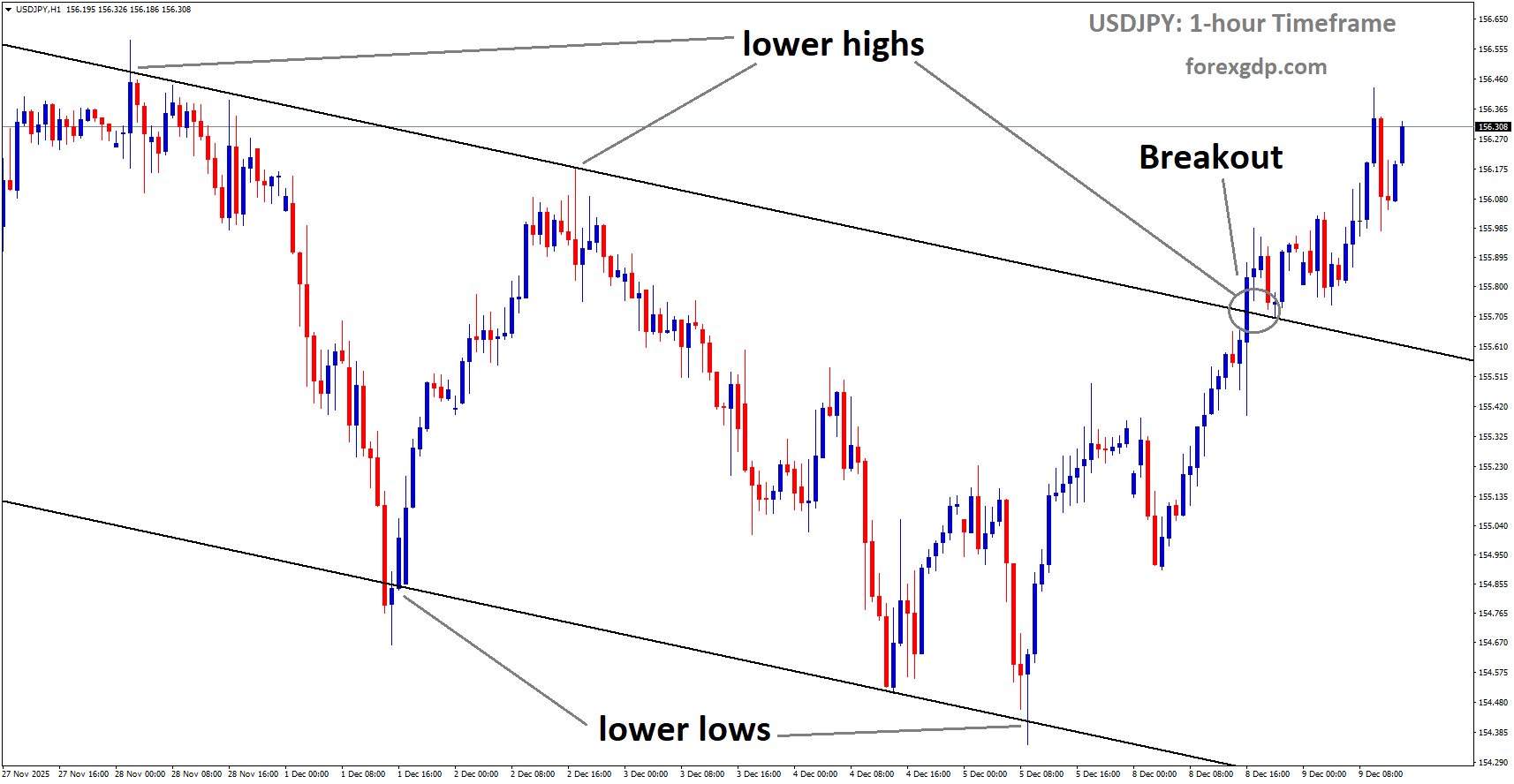
USDJPY has broken the descending channel on the upside
BoJ Governor Ueda Stays the Course on Policy Normalization
One reason the Japanese Yen managed to find some support is the message coming from Bank of Japan Governor Kazuo Ueda. His comments suggested the central bank is still committed to gradually moving toward policy normalization. In other words, the BoJ is not backing away from the idea that ultra-easy policy may continue to be adjusted over time.
Ueda pointed to inflation trends as a key factor. He suggested that underlying inflation is moving toward the BoJ’s target and that the central bank has been slowly reducing the degree of monetary easing as it sees progress. That kind of language can matter a lot in currency markets because the yen often reacts quickly to any hint that Japanese interest rates could move higher in the future.
For USD/JPY, a steadier or stronger yen typically means the pair faces more selling pressure. That’s exactly what happened after the early push higher—buyers stepped back as the yen attracted renewed interest.
Inflation Focus Keeps BoJ Expectations Alive
While Japan’s inflation story has had its ups and downs, the market pays close attention to whether price growth looks sustainable and broad-based. When BoJ leadership talks about inflation “converging” toward the target, it often signals that the central bank believes it is moving in the right direction—even if it is still taking small steps.
For traders, the key point is not whether policy changes happen overnight, but whether the direction is still forward. Ueda’s tone suggested the direction hasn’t changed.
Japan’s GDP Revision Adds a Note of Caution

Not long ago, investors had reason to be more cautious about how quickly the Bank of Japan might move. That came after revised figures showed Japan’s economy contracted more than first estimated in the third quarter. A weaker growth picture can complicate the case for tighter monetary policy because higher rates can add pressure to an economy that’s already losing momentum.
That revision also reignited discussion around fiscal support. When economic growth looks fragile, investors often expect governments to step in with spending measures, which can become part of the broader policy mix. In this environment, markets tend to weigh two competing ideas:
-
Slower growth may limit how fast the BoJ can tighten policy
-
Inflation pressure may still push the BoJ toward gradual normalization
This tension is one reason USD/JPY can move sharply in both directions even within a single day. The pair doesn’t need a major policy shift to react—sometimes it just needs traders to change how they rank the probabilities.
Fiscal Spending Talk Enters the Picture
When political leaders signal interest in larger spending plans, markets can interpret it in different ways depending on the timing and the economic backdrop. In some cases, fiscal support can help growth and ease recession concerns. In other cases, it can raise questions about debt, funding, and the longer-term balance between fiscal and monetary policy.
The main takeaway for USD/JPY is that weaker growth data can make the policy path less straightforward, even if the BoJ’s long-term direction remains unchanged.
Earthquake and Tsunami Warnings Add to Market Uncertainty
Beyond policy signals, Japan faced a major real-world shock: a powerful 7.6-magnitude earthquake in northeastern Japan. Events like this can influence markets in multiple ways. First, they create uncertainty about short-term economic disruption. Second, they can shift investor behavior toward caution, especially when there are evacuation orders and tsunami warnings involved.
In moments of heightened uncertainty, the yen can behave in different ways depending on what investors focus on. Sometimes the yen strengthens because it’s seen as a traditional safe-haven currency in global markets. Other times it weakens if traders anticipate domestic economic damage, higher reconstruction costs, or disruptions that could weigh on growth.
In this case, the quake initially added pressure to the yen, reflecting concern about the potential impact on Japan’s economy and regional stability. As the market digested the news alongside Ueda’s comments, the yen later managed to attract some bids, helping cool USD/JPY’s earlier rise.
Why Big Events Can Move a Currency Pair So Fast
Currency markets don’t react only to economics. They react to expectations. A major earthquake can change expectations around:
-
near-term consumer and business activity
-
government spending priorities
-
supply chains and regional output
-
overall investor risk appetite
Even without a clear long-term outcome, the uncertainty alone can cause traders to reduce risk, tighten positions, or shift toward currencies they view as safer.
All Eyes on the Fed as Rate Cut Expectations Build
On the US side, the focus is turning to the Federal Reserve’s policy decision on Wednesday. Investors broadly expect the Fed to cut interest rates by 25 basis points. That expectation matters because interest rate differences are one of the biggest drivers of USD/JPY.
When US rates are higher than Japan’s, the dollar often has an advantage because holding USD can offer higher yield. If the Fed begins cutting, that advantage can shrink—at least in theory—making it harder for USD/JPY to keep climbing.
But it’s not just about the rate move itself. It’s also about what the Fed signals for the months ahead.
The Economic Projections Report Could Steer the Market
One of the most watched parts of a major Fed meeting is the Economic Projections report. Traders look at it to see how policymakers view growth, inflation, and the future path of interest rates. Even if the Fed cuts rates as expected, the tone of the projections can change the market’s reaction.
If the Fed signals it may cut further or faster than expected, the dollar could lose support. If it signals a slower pace or emphasizes inflation risks, the dollar could hold up better than many anticipate.
A Delicate Balancing Act: Weak Labor Demand vs Sticky Inflation
The Fed is dealing with a tricky mix. On one side, labor demand is showing signs of weakness, which can support the argument for lower rates. On the other side, inflation has remained above the Fed’s long-term target for longer than many would like. That combination can make policy messaging especially important.
This is the kind of situation where investors listen carefully not only to the decision, but also to the wording. Markets want to know: is the Fed cutting because it feels confident inflation is under control, or because it’s worried about the economy slowing too much?
The answer can shape the next wave of dollar movement—and by extension, USD/JPY.
What This Means for USD/JPY in the Near Term
With major central bank signals arriving close together, USD/JPY is likely to stay sensitive to headlines. The yen’s direction will depend heavily on whether markets believe the BoJ can continue its normalization approach despite weaker growth data and unexpected disruptions. Meanwhile, the dollar’s direction will hinge on how the Fed communicates the trade-off between supporting the economy and keeping inflation on track.
In short, the pair is sitting at the intersection of two powerful forces: Japan’s evolving shift away from extreme easing, and America’s next step in adjusting borrowing costs.
Final Summary
USD/JPY eased off its early Tuesday highs as the Japanese yen found support following comments from BoJ Governor Kazuo Ueda, who signaled the central bank remains committed to gradual policy normalization as inflation trends develop. At the same time, traders are weighing weaker revised Japan GDP data and the uncertainty caused by a major earthquake and tsunami warnings in northeastern Japan. On the US side, attention is firmly on the Federal Reserve’s policy decision and its updated economic projections, with markets widely expecting a rate cut and looking for guidance on how the Fed plans to navigate softer labor demand while inflation remains above target.
AUDJPY Slips Under 103.50 After RBA Keeps Rates on Hold
AUD/JPY traded a little softer in early Asian hours on Tuesday, easing to around the 103.20 area as traders reacted to fresh central bank signals and breaking headlines from Japan. While moves in this currency pair can be quick, the story behind the latest dip is fairly easy to follow: Australia’s central bank kept rates steady, Japan’s central bank is in focus next, and an unexpected earthquake has added a new layer of uncertainty for the Japanese Yen.
The result is a market that feels cautious rather than confident. Traders are watching for clues, weighing risks, and trying to decide which side has the stronger momentum in the days ahead.
RBA Holds Rates Steady, Keeps a Watchful Tone
The Reserve Bank of Australia (RBA) wrapped up its December policy meeting by keeping its Official Cash Rate unchanged at 3.6%, a decision that was widely expected. Even so, the details of the statement mattered—because when a central bank holds rates, investors immediately look for the “why” and the “what next.”
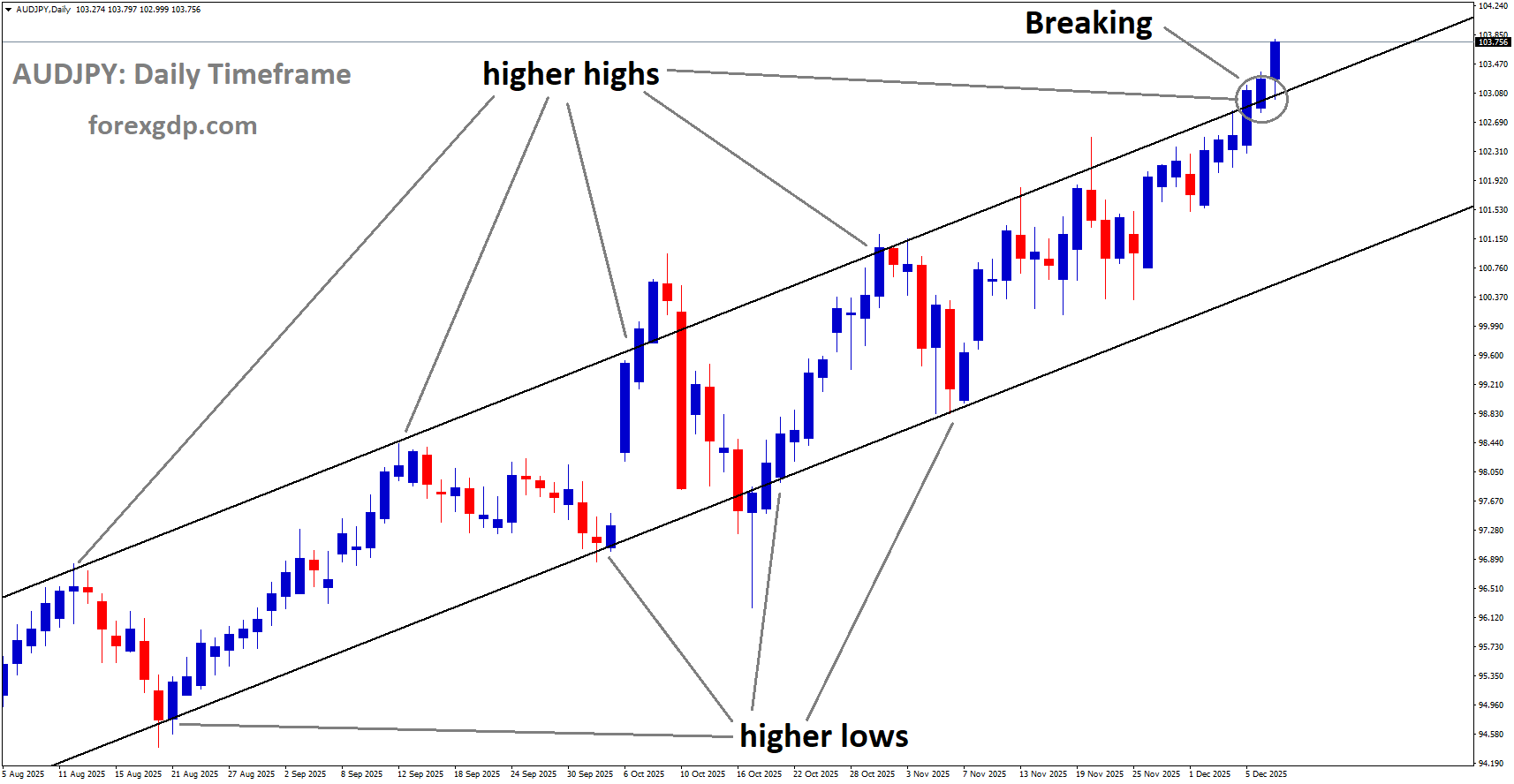
AUDJPY is breaking the higher high area of the uptrend channel
The RBA noted that some of the recent rise in underlying inflation could be linked to temporary factors. That might sound like a calming message at first. But it also pointed out something more important: the data suggests inflation pressures could be broadening, not just appearing in a few isolated areas. In other words, the central bank is not ready to declare victory on inflation.
That careful language signals that policymakers are staying cautious. They want to see how incoming data evolves before changing their stance. For AUD traders, this matters because the Australian Dollar often responds to shifts in rate expectations. When the market believes the RBA is done tightening, the AUD can lose some of its shine. When the market thinks more action is possible, the AUD can find support.
Right now, the tone coming from the RBA is best described as “alert, but not rushing.” It’s a reminder that inflation is still a key concern, and that future decisions will be guided by the data rather than a fixed plan.
Why “Steady Rates” Can Still Move the Australian Dollar
Even when a central bank does exactly what everyone expects, the currency can still move—because investors don’t trade the present, they trade the future.
If traders read the RBA statement and feel the bank is less likely to raise rates again, they may reduce AUD exposure. If they read the same statement and see heightened inflation concern, they may reassess and decide the RBA could stay restrictive for longer.
That push and pull helps explain why AUD/JPY can edge lower even on a “no surprise” decision day. The market is continuously adjusting expectations, even when the headline seems calm.
All Eyes Shift to Japan and Governor Ueda’s Remarks
After the RBA decision, attention quickly swung back to Japan. Traders are watching for signals from Bank of Japan (BoJ) Governor Kazuo Ueda, who is scheduled to speak later on Tuesday. In currency markets, speeches like this matter because they can change expectations in seconds—especially when the market is already debating what the BoJ will do next.
Japan’s central bank has been one of the most closely watched institutions globally because of its historically ultra-loose policy stance. Any hint of a shift—especially toward higher rates—can have an outsized effect on the Japanese Yen.
This is why AUD/JPY traders are tuned in. The pair is heavily influenced by relative policy expectations: what the RBA might do compared with what the BoJ might do. If Japan appears closer to tightening policy, the Yen can strengthen, potentially pulling AUD/JPY lower. If the BoJ looks more patient, the Yen may weaken, which can lift the pair.
The BoJ Meeting Is a Key Calendar Event

The BoJ’s upcoming monetary policy meeting, scheduled for December 18–19, is already acting like a magnet for market attention. Traders don’t want to be caught off-guard by sudden changes in guidance, especially when rate expectations are sensitive.
In recent days, analysts have suggested that the BoJ could delay an expected rate hike that some market participants had been eyeing. That idea alone can change positioning—because if the timing of a policy shift gets pushed back, the Yen can lose support.
Still, it’s important to remember that “could delay” is not the same as “will delay.” Markets may react to expectations, but the final direction often depends on what the BoJ actually says—and how clearly it communicates the next steps.
Japan Earthquake Adds Uncertainty to Yen Outlook
On top of normal central bank watch, traders are also assessing the potential impact of a strong earthquake in Japan. Natural disasters can influence currency markets in a few ways, mainly through uncertainty and shifting expectations about economic activity and policy decisions.
In situations like this, markets often focus on two immediate questions:
-
How severe is the damage, and what does it mean for the economy?
-
Could this affect what the central bank does next?
Analysts have noted that depending on how serious the impact is, the BoJ might choose to delay a potential rate hike. The logic is straightforward: if the economy faces added stress or disruption, the central bank may prefer to wait rather than tighten policy.
This matters for AUD/JPY because a delay in BoJ tightening could reduce demand for the Yen, potentially offering support to the currency pair. At the same time, headline-driven volatility can create short, sharp moves in either direction as traders respond to new information.
Markets React Not Just to Events, But to the Policy Ripple Effects
In FX trading, the biggest moves often come from second-order effects—what an event might cause policymakers to do, rather than the event alone.
So the earthquake isn’t just a news story; it’s also a “what changes now?” story. If investors believe it makes the BoJ more cautious, that can quickly affect Yen sentiment. If later updates suggest limited disruption, the market may shift back to focusing mainly on central bank messaging.
What Traders Are Watching Next
AUD/JPY is being pulled by a few competing forces at once, which is why momentum can fade quickly and price action can look choppy. Over the near term, traders will likely stay focused on three main drivers:
BoJ Communication and Rate Expectations
Governor Ueda’s tone—and any hints about the December 18–19 meeting—could shape expectations around whether Japan is ready to adjust policy soon or later.
Follow-Through From the RBA Message
Markets will continue interpreting the RBA’s cautious stance on inflation. If upcoming data reinforces the idea that inflation pressures are broadening, that can influence how traders think about Australia’s rate path.
Ongoing Updates on the Earthquake’s Impact
New details around damage, disruption, and government response can shift sentiment. Even if the long-term economic effects are unclear, the short-term market reaction can be meaningful.
Final Summary
AUD/JPY eased toward the 103.20 area in early Asian trade as investors weighed a steady-rate decision from the Reserve Bank of Australia and looked ahead to key messaging from the Bank of Japan. The RBA held its policy rate at 3.6% and highlighted that inflation trends need close monitoring, reinforcing a careful, data-driven approach. Meanwhile, focus is building around Governor Kazuo Ueda’s remarks and the BoJ’s December 18–19 policy meeting, especially as some analysts consider the possibility of a delayed rate hike. Adding to the uncertainty, markets are also tracking developments after a strong earthquake in Japan, which could influence economic expectations and central bank timing in the days ahead.
Don’t trade all the time, trade forex only at the confirmed trade setups
Get more confirmed trade signals at premium or supreme – Click here to get more signals, 2200%, 800% growth in Real Live USD trading account of our users – click here to see , or If you want to get FREE Trial signals, You can Join FREE Signals Now!