

Getting an income raise feels like finally coming up for air after a long swim. You check your payslip twice, smile a little longer than usual, and start imagining what life could look like with extra money flowing in. A nicer phone? Better clothes? More eating out? The temptation is real, and honestly, it’s human. But here’s the uncomfortable truth most people don’t want to hear: an income raise doesn’t automatically make you wealthier. In many cases, it quietly keeps you stuck in the same place.
The real power of an income raise isn’t in what you buy next. It’s in what you don’t buy. Wealth is built in the quiet gap between what you earn and what you spend. Grow that gap, and your future changes. Shrink it, and nothing really improves, no matter how big your salary looks on paper.
This article dives deep into the mindset, habits, and emotional traps around income raises. Not with stiff advice or finger-pointing lectures, but with honest conversation. Because money isn’t just math. It’s behavior, psychology, and a bit of self-control when it matters most.
Why an Income Raise Feels Bigger Than It Really Is
The emotional high of earning more
An income raise hits the brain like a small celebration. It feels like validation. Someone noticed your effort. Someone decided you’re worth more. That emotional high is powerful, and it often tricks us into thinking our lifestyle should instantly level up too. The problem is that emotions are loud, while long-term consequences whisper.
That excitement can cloud judgment. You don’t sit down with a calculator or a plan. You just feel richer. And feeling richer is often enough to start spending richer. The danger is subtle, not dramatic. You’re not blowing money recklessly. You’re just upgrading little things here and there until the raise disappears without a trace.
Over time, that emotional response becomes a habit. Every raise becomes permission to spend more, not a chance to build more. The money comes in, and it quietly flows right back out.
Why your lifestyle wants to expand immediately
Lifestyle inflation doesn’t knock on your door. It slips in through open windows. A slightly better apartment. More frequent takeout. A subscription you don’t really need but now feels “reasonable.” None of it feels irresponsible on its own. Together, they eat your raise alive.
The tricky part is that your brain loves comfort. Once you get used to a higher standard, it becomes your new normal. Going back feels like a loss, even if you were perfectly fine before. That’s how people earning more than ever still feel broke. The bar keeps moving, and satisfaction never catches up.
An income raise doesn’t change who you are financially unless you decide it will. Without intention, your lifestyle will happily spend every extra dollar for you.
The Hidden Trap: Spending to Match Your Income
How most people sabotage their own raise
Most people don’t consciously decide to sabotage their financial future. They just don’t pause long enough to protect it. When income goes up, spending quietly follows. It’s almost automatic, like breathing. You don’t question it because everyone else does the same thing.
The trap isn’t overspending. It’s matching. Spending rises just enough to cancel out progress. You earn more, but you save the same. You invest the same. You stress the same. Nothing really changes except the price tag of your habits.
This pattern repeats for years. Promotions come and go, but financial freedom stays out of reach. Not because income was too low, but because the gap between earning and spending never widened.
Why earning more doesn’t fix money stress

There’s a myth that money problems disappear once income crosses a certain number. In reality, stress follows behavior, not income. If your spending grows as fast as your paycheck, the pressure stays exactly where it was.
Bills just get bigger. Expectations rise. Commitments multiply. Suddenly, losing that job or missing that bonus feels even scarier than before. You’re making more, but you’re also risking more.
True financial peace comes from margin. From having space. From knowing you don’t need every dollar you earn just to survive. An income raise can create that margin, but only if you let it.
The Wealth Gap: Where Real Financial Power Lives
What the gap between earning and spending really means
Wealth isn’t flashy. It doesn’t always show up in cars or clothes. Real wealth lives in the gap between what you earn and what you spend. That gap is quiet, invisible, and incredibly powerful.
Think of it like oxygen for your financial life. The bigger the gap, the easier it is to breathe. Emergencies don’t suffocate you. Opportunities don’t scare you. Choices feel lighter. When the gap is small, everything feels tight and stressful, even with a high income.
Growing that gap isn’t about deprivation. It’s about control. It’s deciding where your money goes instead of wondering where it went.
Why saving more creates leverage, not restriction
Saving more after an income raise doesn’t shrink your life. It expands your options. Money saved today is flexibility tomorrow. It’s time bought back from future stress.
That saved money can become investments, emergency buffers, or freedom funds. It gives you leverage with employers, with life changes, and with unexpected challenges. You’re no longer forced into decisions out of panic.
Spending gives pleasure once. Saving gives power over and over again. That trade-off is where wealth quietly grows.
Changing the Way You Think About Raises
Seeing raises as opportunity, not reward
A raise feels like a reward, but treating it that way is where many people go wrong. A better mindset is seeing a raise as an opportunity. It’s a chance to change your financial trajectory without changing your lifestyle overnight.
Rewards are meant to be consumed. Opportunities are meant to be used. When you frame your raise as an opportunity, you ask different questions. Not “What can I buy now?” but “What can this money do for my future?”
That shift alone can completely change how you handle money for decades.
Separating self-worth from spending


One uncomfortable truth is that many people use spending as proof of success. Nicer things become symbols of value. The problem is that self-worth tied to spending is fragile and expensive.
An income raise doesn’t require visible proof. You don’t owe anyone upgrades. Your progress doesn’t need to be advertised. Quiet growth is still growth.
When you separate who you are from what you buy, saving becomes easier. You stop spending to impress and start saving to empower.
Why “Don’t Buy Anything Unusual” Is Powerful Advice
The danger of sudden upgrades
The advice to not buy anything unusual after a raise sounds boring, even restrictive. But it’s powerful because sudden upgrades lock in new expenses. One big purchase often triggers several smaller ones that stick around.
A new car brings higher insurance, maintenance, and expectations. A bigger apartment brings higher utilities and furnishings. The raise that felt generous suddenly feels just enough again.
Waiting protects you from turning temporary excitement into permanent obligations.
Letting time expose real priorities
Time is a filter. If you wait a few months after a raise, your true priorities become clearer. The things you still want after the excitement fades are usually the ones that actually matter.
Impulse spending thrives on urgency. Saving thrives on patience. Giving yourself time turns emotional decisions into intentional ones.
By not buying anything unusual, you give your future self a voice in today’s choices.
The Psychology Behind Lifestyle Inflation
Why comfort is addictive
Comfort is sneaky. Once you get used to something better, your brain labels it as necessary. What was once a luxury becomes a baseline. That’s how spending grows without feeling excessive.
This isn’t weakness. It’s human nature. But understanding it gives you power. Awareness creates space to pause and choose differently.
You don’t have to reject comfort. You just don’t have to chase more of it every time your income grows.
How comparison fuels unnecessary spending
Comparison is gasoline on the fire of lifestyle inflation. Seeing others upgrade makes standing still feel like falling behind. Social media makes this worse by turning spending into a highlight reel.
The truth is, you’re only seeing the surface. Not the debt, not the stress, not the lack of savings. Comparing your behind-the-scenes to someone else’s showcase is a losing game.
Your raise doesn’t need to keep up with anyone else’s choices. It only needs to serve your life.
Saving More Without Feeling Deprived


Keeping your baseline life the same
One of the simplest and most effective strategies after a raise is to keep your baseline life unchanged. Same rent. Same car. Same routines. Let the raise flow somewhere else quietly.
This doesn’t mean never enjoying money. It means not tying enjoyment to every increase. Stability becomes your anchor, not boredom.
Over time, this approach builds momentum. The money you don’t feel yourself saving starts doing heavy lifting in the background.
Enjoying money intentionally, not automatically
Intentional enjoyment feels better than automatic spending. When you choose a treat rather than defaulting to upgrades, it carries more meaning.
Instead of raising everything, pick one or two areas that genuinely improve your life. Let the rest of the raise work for you silently.
This balance keeps life enjoyable without sacrificing progress.
What Wealth Actually Looks Like Over Time
The quiet confidence of financial margin
Wealth doesn’t always announce itself. Often, it looks like calm. Like saying no without fear. Like handling surprises without panic.
That calm comes from margin. From savings. From knowing you’re not living paycheck to paycheck, even if your paycheck is large.
An income raise is a tool to build that margin. Used well, it changes how you experience life itself.
Why consistency beats dramatic changes
People love dramatic transformations, but wealth is built through consistency. Small decisions repeated over time beat big one-time moves.
Saving a raise year after year compounds quietly. It doesn’t feel exciting at first. Then suddenly, it does.
Consistency turns patience into progress.

Final Thoughts: Turning Raises Into Real Progress
An income raise is a rare moment of leverage. It’s one of the few times your financial future can change without pain or sacrifice. But only if you resist the urge to let spending catch up.
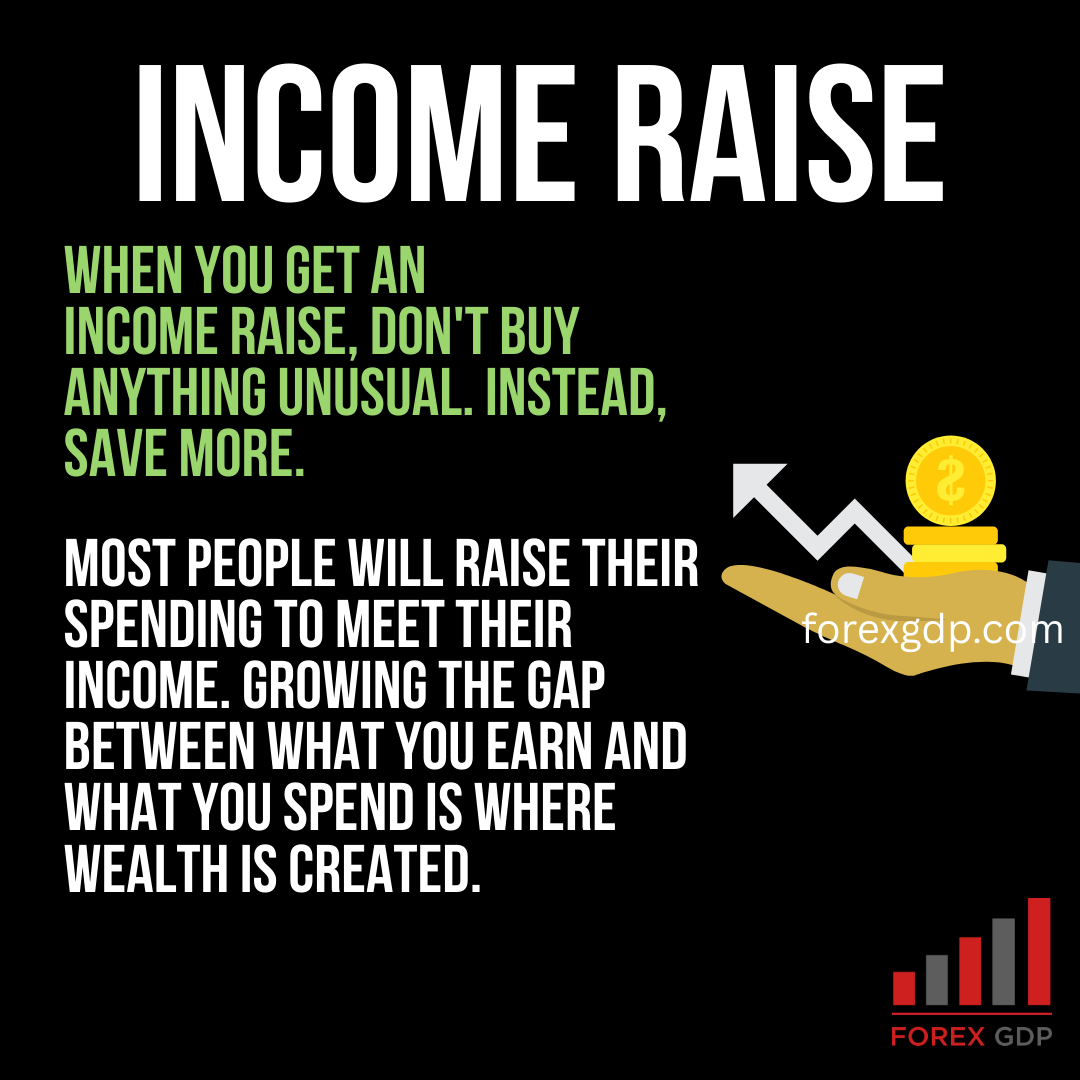
Most people will raise their spending to meet their income. That’s the easy path. The common path. The crowded path. Real wealth grows somewhere else, in the gap between what you earn and what you spend.
Saving more after a raise isn’t about fear or restriction. It’s about respect. Respect for your future self. Respect for the effort it took to earn more. Respect for the freedom money can create when used wisely.
If you do nothing unusual after your next raise, something extraordinary can happen quietly. Your wealth can finally start to grow.
Frequently Asked Questions
1.Why is saving after a raise more important than before?
Because a raise is new money your lifestyle isn’t dependent on yet. Saving it doesn’t feel like loss, but it creates long-term security and flexibility.
2.Is it wrong to enjoy money after getting a raise?
Not at all. The problem isn’t enjoyment, it’s automatic lifestyle inflation. Intentional enjoyment keeps balance without killing progress.
3.How long should I wait before increasing spending after a raise?
Waiting a few months helps emotions settle and priorities become clearer. Time turns impulse into intention.
4.What if my raise isn’t very big?
Small raises matter even more. Saving them builds habits and momentum that compound over time.
5.Can earning more actually make financial stress worse?
Yes. If spending rises with income, bills and expectations grow too. Without saving, stress often stays the same or increases.