

Money has a strange way of exposing who we really are. It magnifies habits, rewards patience, and punishes carelessness without mercy. Few people have observed this dance between human behavior and money as closely as Warren Buffett. His quotes don’t feel like lofty financial theory. They feel like advice from someone who has watched people win, lose, panic, and repeat the same mistakes again and again.
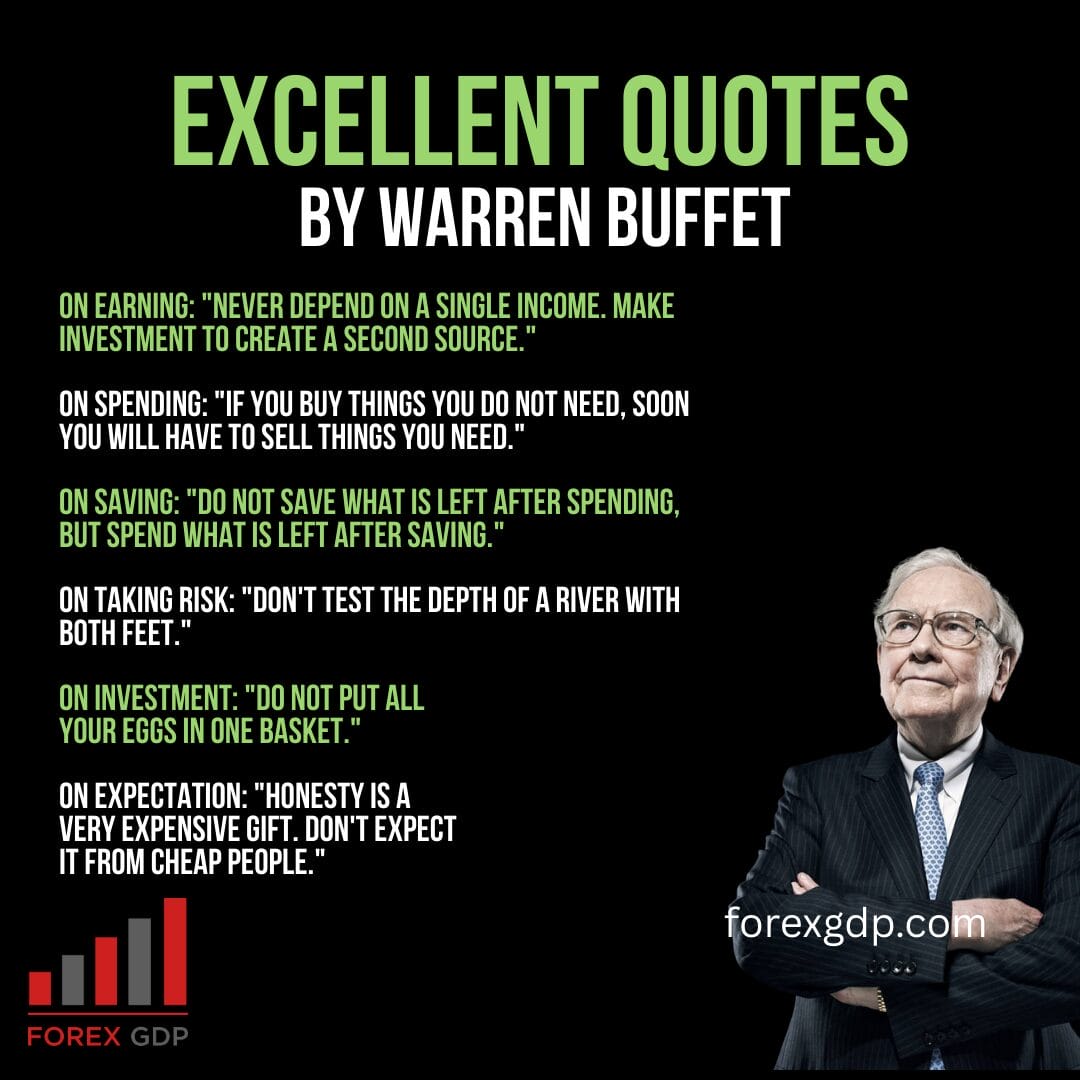
The words highlighted in the image aren’t flashy. They’re blunt. Sometimes they even sting a little. But that sting is exactly why they last. These ideas touch earning, spending, saving, risk, investing, and expectations, which together form the backbone of everyday financial life. Let’s slow down and unpack what they really mean when translated into real-world decisions, emotions, and consequences.
Why Warren Buffett’s Words Still Matter Today
A Voice That Cuts Through the Noise
We live in a world overflowing with financial advice. Everyone seems to have a hot tip, a secret strategy, or a shortcut to wealth. Buffett’s voice stands out because it refuses to shout. His wisdom whispers, yet somehow it carries further than the loudest promises of overnight success.
His quotes don’t try to impress. They try to protect you. That’s an important difference. When Buffett warns against depending on a single income or buying things you don’t need, he’s not being dramatic. He’s being realistic. Life is unpredictable, and money magnifies that unpredictability when handled carelessly.
Why Simplicity Beats Complexity
One reason Buffett’s words age so well is their simplicity. There’s no jargon hiding the truth. No fancy terms to soften the blow. Just clear, almost uncomfortable honesty. Simple ideas are harder to ignore, and that’s exactly why they stick.
Complex strategies can distract people from basic discipline. Buffett strips everything down to fundamentals because he knows that most financial disasters don’t come from lack of intelligence. They come from lack of restraint.
Earning Beyond a Single Paycheck
The Fragility of One Income Stream
“Never depend on a single income.” That sentence alone has saved more people from financial panic than any advanced investment book ever written. Depending on one source of money is like standing on one leg during a storm. It works until it doesn’t.
Jobs disappear. Businesses change direction. Entire industries fade faster than anyone expects. When income comes from only one place, your financial stability rests on a thin thread. Buffett isn’t saying everyone must become a mogul overnight. He’s saying safety comes from diversification, not blind confidence.
Building a Second Source Without Burning Out
Creating another income stream doesn’t have to mean endless hustle or sleepless nights. Sometimes it starts quietly. A small investment. A skill monetized slowly. A side project that grows at its own pace. The point isn’t speed. It’s resilience.
Buffett’s wisdom here is deeply human. He understands fear. Fear of instability, fear of loss, fear of starting something new. His advice gently nudges people to prepare before they’re forced to react.
Spending Habits That Quietly Destroy Wealth

The Trap of Buying What You Don’t Need
“If you buy things you do not need, soon you will have to sell things you need.” That line feels harsh because it’s painfully accurate. Unnecessary spending doesn’t usually hurt immediately. It feels good at first. New shoes, new gadgets, small indulgences that whisper comfort.
The damage appears later. Emergency expenses arrive uninvited. Opportunities knock when cash is tight. That’s when people start selling what matters. Time. Peace of mind. Long-term goals. Buffett’s warning isn’t about denying joy. It’s about recognizing delayed consequences.
Consumer Culture and Quiet Pressure
Modern life is designed to make overspending feel normal. Advertising convinces people they’re missing out. Social media turns consumption into performance. Buffett cuts through that illusion by reminding us that money spent thoughtlessly always demands repayment, one way or another.
Spending discipline isn’t about being cheap. It’s about choosing freedom over impulse. The less money controls your emotions, the more control you gain over your future.
Saving as a Lifestyle, Not a Leftover
Why Saving What’s Left Rarely Works
“Do not save what is left after spending.” This idea flips a common habit on its head. Many people save with good intentions, then spend freely, hoping something remains at the end. Most of the time, nothing does.
Buffett understands human nature. Spending expands to fill whatever space it’s given. Saving first creates boundaries. It forces spending decisions to become deliberate rather than automatic.
Turning Saving Into Self-Respect
Saving isn’t about hoarding money. It’s about respecting your future self. Every dollar saved is a small act of trust. Trust that tomorrow matters. Trust that emergencies happen. Trust that freedom is worth planning for.
When saving becomes non-negotiable, it stops feeling restrictive. It starts feeling empowering. That shift in mindset is where real financial stability begins.
Risk: The Silent Partner in Every Decision

Why Caution Isn’t Cowardice
“Don’t test the depth of a river with both feet.” Buffett’s metaphor is simple, vivid, and unforgettable. Risk taken blindly can drown even confident swimmers. Caution doesn’t mean fear. It means awareness.
Many people confuse boldness with intelligence. Buffett reminds us that survival comes before success. Testing slowly allows learning without catastrophic loss.
Calculated Moves Over Emotional Leaps
Risk is unavoidable. Every decision carries uncertainty. But Buffett encourages thoughtful exposure, not reckless leaps. He favors decisions where downside is limited and upside is meaningful.
This approach applies far beyond investing. Career moves, business ideas, and personal commitments all benefit from this mindset. Step carefully. Observe. Adjust. That’s how longevity is built.
Investment Wisdom That Goes Beyond Money
The Power of Not Putting All Eggs in One Basket
Diversification isn’t exciting. It doesn’t make headlines. Yet it quietly protects wealth when things go wrong. Buffett’s advice here isn’t about distrust. It’s about realism.
Even the best ideas can fail. Even strong companies can stumble. Spreading risk is an act of humility, acknowledging that certainty is an illusion.
Patience as an Investment Strategy
Buffett’s success didn’t come from constant action. It came from long stretches of waiting. Patience allows compounding to work its magic. Impatience interrupts growth.
In a world obsessed with instant results, patience feels outdated. Buffett proves it’s timeless. Wealth grows quietly, often unnoticed, until one day it speaks for itself.
Expectations, Honesty, and Human Nature
Why Honesty Feels Rare
“Honesty is a very expensive gift.” That line cuts deep. Honest people often pay a price. They miss shortcuts. They refuse manipulation. They walk away from easy gains that compromise values.
Buffett’s observation isn’t cynical. It’s realistic. Expecting honesty from everyone leads to disappointment. Recognizing its rarity leads to appreciation when it appears.
Protecting Yourself Without Losing Faith
Understanding human nature doesn’t mean becoming bitter. It means becoming prepared. Buffett’s advice encourages discernment rather than distrust. Choose carefully who you rely on. Value integrity when you see it.
In business and personal life alike, clear expectations prevent heartbreak. Honesty flourishes where accountability exists.
How These Quotes Shape a Financial Mindset
Discipline Over Drama
Buffett’s words consistently favor discipline. There’s no drama in his philosophy. No obsession with timing the market or chasing trends. Just steady behavior repeated over time.
This kind of discipline feels boring until it saves you. Then it feels brilliant. Most financial pain comes from emotional decisions, not bad math.
Freedom as the Ultimate Goal

Every quote points toward freedom. Freedom from panic. Freedom from debt-driven stress. Freedom from relying on others’ honesty or market moods.
Money isn’t the destination in Buffett’s world. It’s the tool. Used wisely, it buys options, peace, and time.
Lessons That Apply Beyond Finance
Personal Responsibility as a Core Theme
Buffett never blames systems or circumstances in his quotes. Responsibility always sits with the individual. That can feel uncomfortable, but it’s empowering.
Taking responsibility means taking control. It means decisions matter, habits compound, and change is possible.
Consistency Beats Intensity
Short bursts of effort rarely create lasting change. Buffett’s philosophy thrives on consistency. Small decisions, repeated daily, shape financial outcomes more than occasional grand gestures.
This lesson applies to health, relationships, and personal growth just as much as money.
Final Reflection: Living the Wisdom, Not Just Quoting It
Buffett’s quotes endure because they speak to behavior, not just balance sheets. They remind us that money amplifies character. It rewards patience and punishes denial. These aren’t rules meant to impress others. They’re principles meant to protect you.
Living this wisdom doesn’t require perfection. It requires awareness. Every thoughtful choice strengthens the foundation. Every impulsive one cracks it. Over time, those cracks either grow or disappear, depending on what you do next.
Summary: What These Quotes Really Teach Us
Warren Buffett’s words remind us that financial success isn’t mysterious. It’s disciplined. It’s patient. It’s honest. Earn from more than one source to stay resilient. Spend intentionally to avoid regret. Save before temptation speaks. Respect risk instead of flirting with it. Diversify to survive uncertainty. And never confuse honesty with entitlement.
These ideas don’t promise excitement. They promise stability. And in a chaotic financial world, stability is a form of wealth that never goes out of style.
FAQs
1.Why does Warren Buffett emphasize multiple income sources so strongly?
Because relying on one income leaves no room for error. Multiple sources provide flexibility and protection when circumstances change unexpectedly.
2.Is Buffett against spending money on enjoyment?
Not at all. His message focuses on mindful spending. Enjoyment without awareness often leads to regret, while intentional spending supports long-term freedom.
3.Why is saving before spending more effective?
Because it creates structure. When saving happens first, spending becomes a conscious choice rather than an emotional reaction.
4.Does diversification limit potential gains?
It can reduce extreme outcomes, both good and bad. Buffett values survival and consistency over risky bets that could wipe everything out.
5.What makes honesty an “expensive gift”?
Honesty often costs opportunities in the short term. But in the long run, it builds trust, reputation, and stability that shortcuts can’t replace.