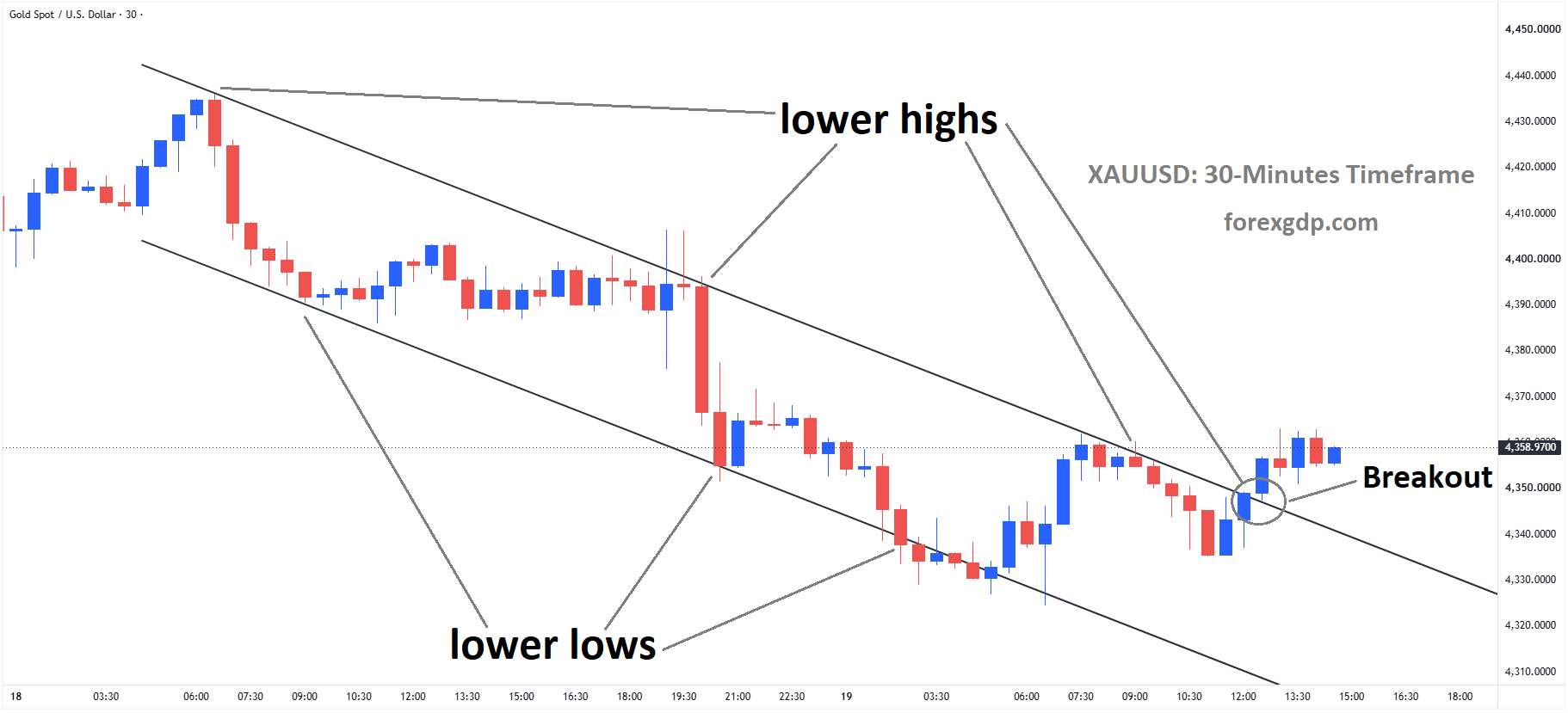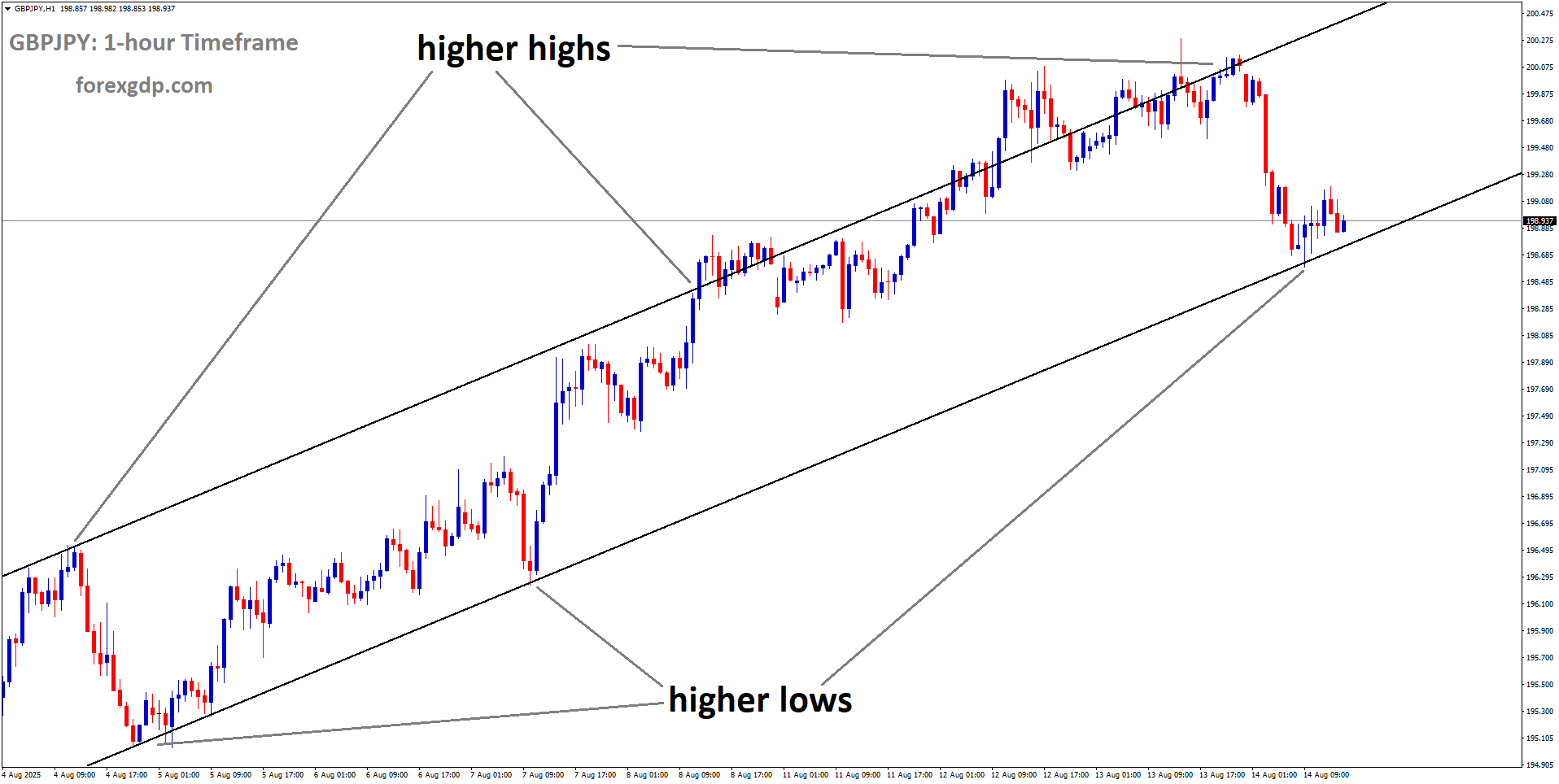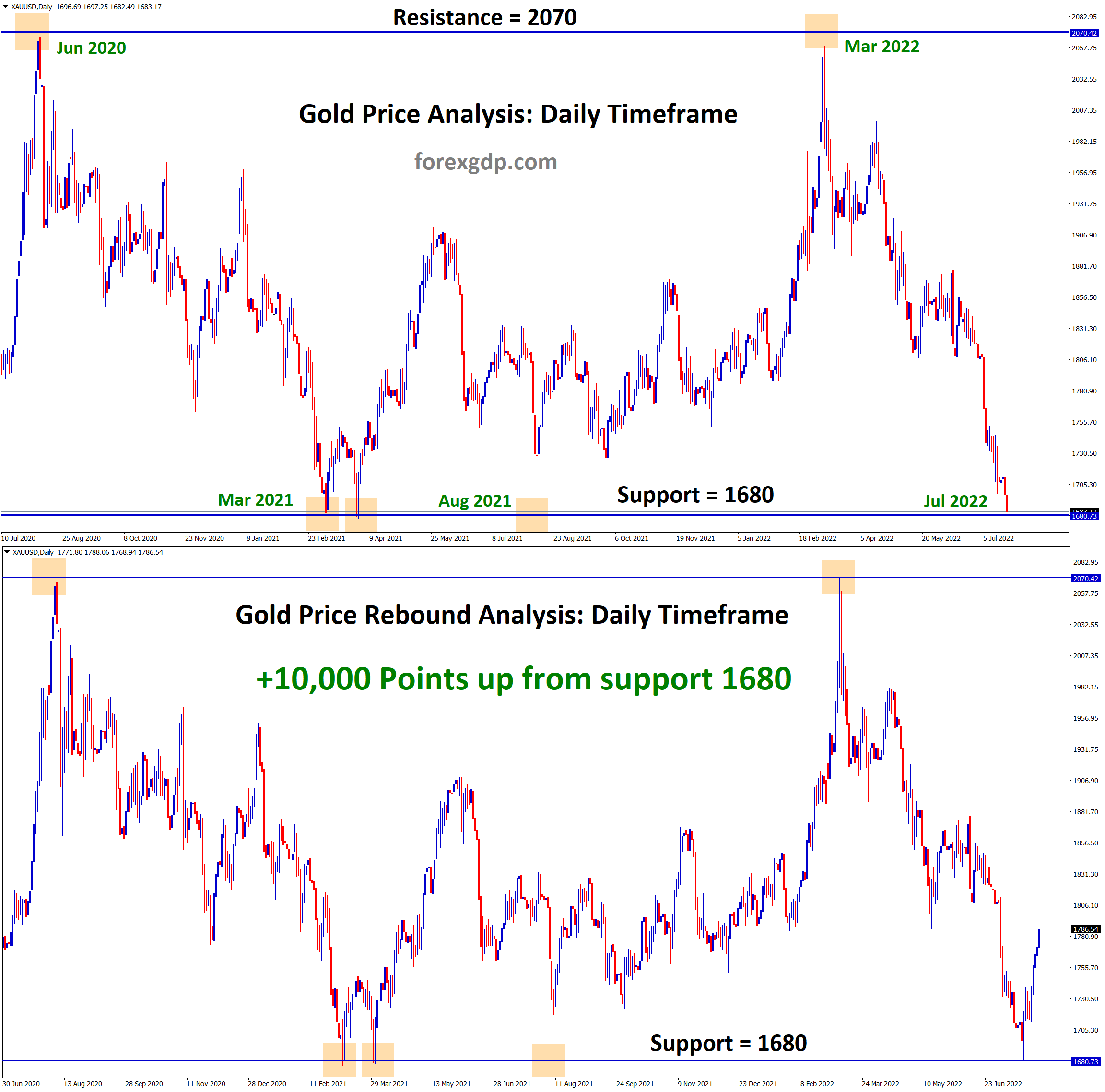

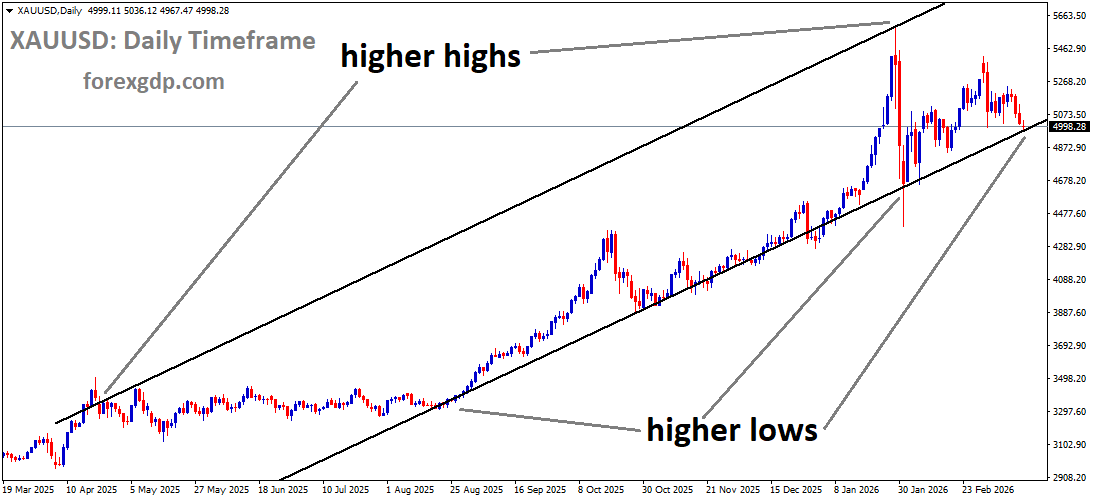
XAUUSD is moving in an uptrend channel, and the market has reached a higher low area of the channel
Gold has recently faced a challenging period as global events continue to influence investor sentiment. Rising energy costs, geopolitical tensions in the Middle East, and shifting expectations around monetary policy have all played a role in shaping the market environment. These factors have affected the demand for safe-haven assets, including gold, as investors reassess risk and economic outlooks.
Although gold is traditionally seen as a reliable store of value during uncertain times, current developments suggest that multiple forces are pulling the market in different directions. Understanding how energy prices, geopolitical conflict, and central bank expectations interact can provide a clearer picture of why gold has struggled recently.
Rising Energy Prices Add to Inflation Concerns
Energy markets have experienced notable volatility following escalating tensions in the Middle East. Recent developments have pushed oil prices higher, which in turn has raised concerns about inflation across the global economy.
When energy prices rise, they tend to increase transportation and production costs across many industries. This often leads to higher prices for goods and services, creating broader inflationary pressure. For policymakers and central banks, rising inflation presents a difficult challenge because it limits their flexibility in adjusting interest rates.
Expectations about interest rates are particularly important for gold. Since gold does not provide regular income like bonds or interest-bearing assets, it can become less attractive when interest rates remain high. Investors may prefer assets that generate returns rather than holding gold, which relies mainly on price appreciation.
Recent increases in energy costs have therefore reduced expectations that major central banks, including the US Federal Reserve, will move quickly to lower borrowing costs. This shift in expectations has weighed on gold, contributing to several consecutive sessions of declining prices.
Middle East Conflict Raises Global Supply Risks
Geopolitical tensions have intensified following a series of military actions involving the United States, Iran, and Israel. Over the weekend, the United States carried out an attack on Iran’s main oil export hub located on Kharg Island. This facility plays a critical role in Iran’s oil exports, making it a key point in global energy supply chains.

While US officials stated that oil infrastructure itself was not directly targeted, the operation significantly increased fears about potential disruptions in global oil supply. The situation quickly escalated when Iran responded with retaliatory strikes aimed at Israel and energy infrastructure in other parts of the region.
The ongoing conflict between the United States, Israel, and Iran has now entered its third week without a clear resolution. The uncertainty surrounding this confrontation has caused concern across global financial markets, as investors attempt to evaluate the potential impact on energy supplies and international stability.
Conflicts in the Middle East often carry significant implications for oil markets because the region is responsible for a large share of global production. Any threat to production facilities, shipping routes, or export hubs can quickly influence prices and market sentiment.
Strait of Hormuz Remains a Critical Flashpoint
One of the most important areas affected by the conflict is the Strait of Hormuz. This narrow waterway connects the Persian Gulf with the Arabian Sea and serves as one of the world’s most vital shipping routes for oil and natural gas.
A large portion of global energy shipments passes through the Strait of Hormuz every day. Any disruption to traffic in this region can immediately raise concerns about supply shortages and higher energy prices.
Reports have suggested that the United States may soon announce a coalition designed to escort commercial ships traveling through the strait. The purpose of this initiative would be to ensure safe passage for energy shipments and reduce the risk of attacks or blockades.
The plan involves cooperation with several allied nations. US leadership has called on countries including the United Kingdom, France, China, and Japan to participate in efforts to protect shipping lanes. Such a coalition could help stabilize the situation by providing greater security for vessels navigating the region.
Meanwhile, foreign ministers from the European Union have gathered in Brussels to discuss their own potential naval response to the situation. Their discussions focus on maintaining open trade routes and preventing further disruptions to global energy flows.
Safe-Haven Demand Weakens Despite Ongoing Tensions
Gold is often seen as a safe-haven asset that attracts investors during periods of political instability or economic uncertainty. However, the current situation has produced a somewhat unexpected reaction in the market.
Despite ongoing geopolitical tensions, demand for gold has softened. One reason for this shift is the possibility that international cooperation could reduce the risk of a full-scale disruption to shipping routes in the Strait of Hormuz. If global powers successfully coordinate security efforts, markets may view the situation as more manageable.
Another factor influencing sentiment is the expectation that the conflict may not continue indefinitely. US Energy Secretary Chris Wright recently expressed the belief that the confrontation between the United States, Israel, and Iran could come to an end within the next few weeks.
If tensions begin to ease and energy supplies stabilize, investors may become less concerned about severe economic disruptions. This can reduce the urgency to move money into safe-haven assets such as gold.
How Central Bank Expectations Shape Gold’s Outlook
Beyond geopolitical developments, monetary policy remains a key driver of gold’s performance. Investors closely watch signals from central banks because interest rate decisions influence currency values, borrowing costs, and overall financial conditions.
When markets expect interest rates to fall, gold often benefits. Lower borrowing costs reduce the opportunity cost of holding assets that do not generate interest. On the other hand, when inflation pressures suggest that rates may stay higher for longer, gold can face additional pressure.
The recent rise in energy prices has complicated the outlook for policymakers. Higher oil costs can feed into broader inflation trends, forcing central banks to remain cautious about reducing rates too quickly.
As a result, expectations for rapid policy easing have faded. This change in outlook has been one of the main reasons gold has struggled in recent trading sessions.
Global Markets Remain Highly Sensitive to Geopolitical News
Financial markets around the world are reacting quickly to each new development in the Middle East. Statements from political leaders, military actions, and diplomatic discussions can all shift investor sentiment within hours.

XAUUSD is moving in an uptrend channel, and the market has fallen from the higher high area of the channel
Energy markets are particularly sensitive because they depend heavily on stable supply chains and secure transportation routes. Any sign of disruption can lead to rapid changes in expectations about global supply.
At the same time, investors are carefully evaluating whether the conflict could expand or begin to calm down. Diplomatic efforts, security alliances, and international negotiations will likely play a major role in determining how the situation evolves.
Because gold often reacts to changes in global risk perception, its direction may continue to fluctuate as news from the region unfolds.
Summary
Gold has been under pressure as several global forces influence market sentiment at the same time. Rising energy prices have increased concerns about inflation, which has lowered expectations that major central banks will reduce interest rates soon. This environment has made non-yielding assets such as gold less attractive to investors.
Meanwhile, escalating tensions in the Middle East have created uncertainty around global oil supplies, particularly after the United States targeted Iran’s key export hub on Kharg Island. The conflict has also raised concerns about the safety of shipping routes through the Strait of Hormuz, a vital channel for energy transport.
However, reports of a potential international coalition to protect shipping in the region and expectations that the conflict may ease in the coming weeks have reduced some safe-haven demand for gold.
As geopolitical developments continue and central banks assess the impact of rising energy costs on inflation, the gold market will remain closely tied to global risk sentiment and economic policy expectations.