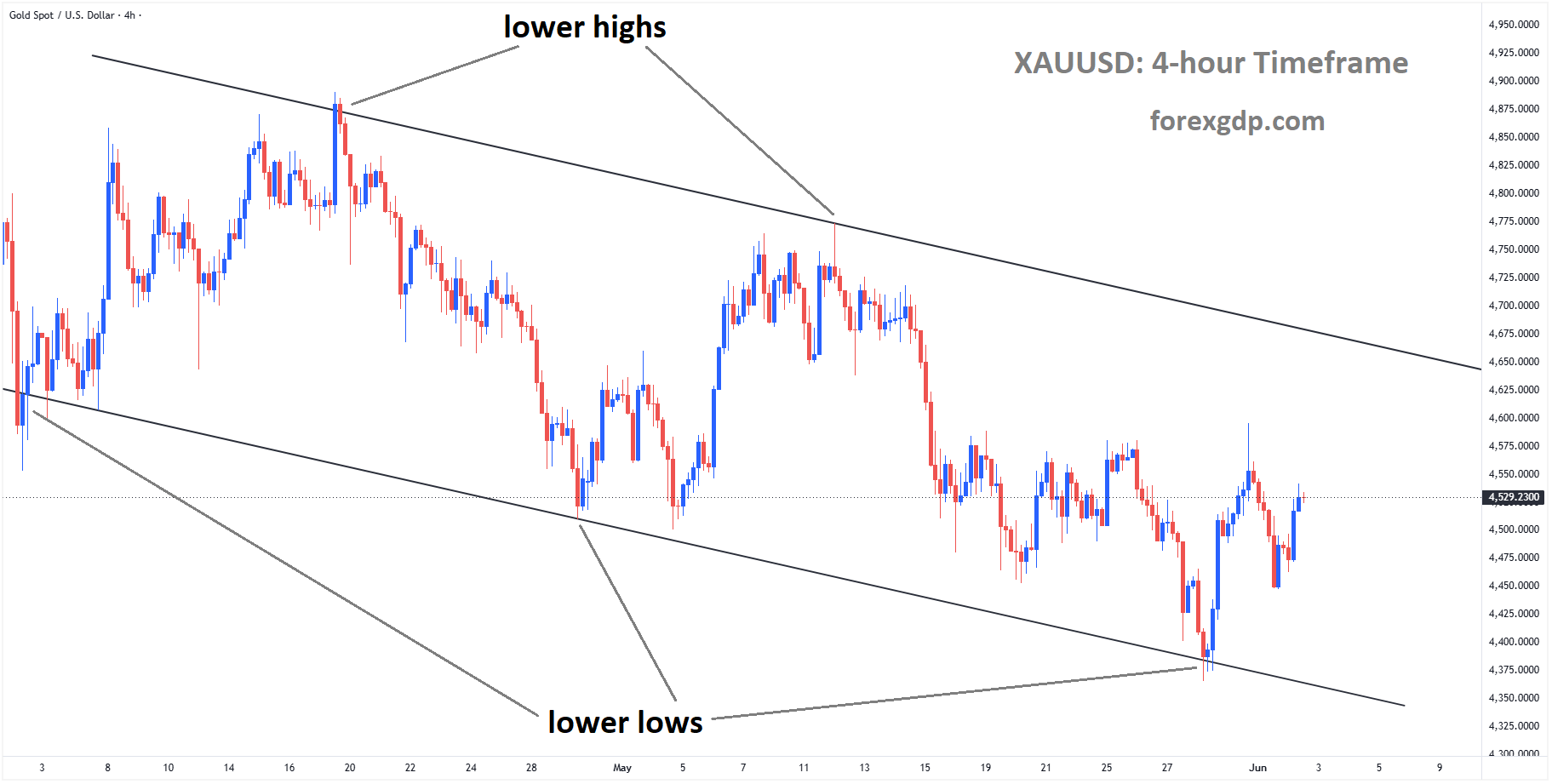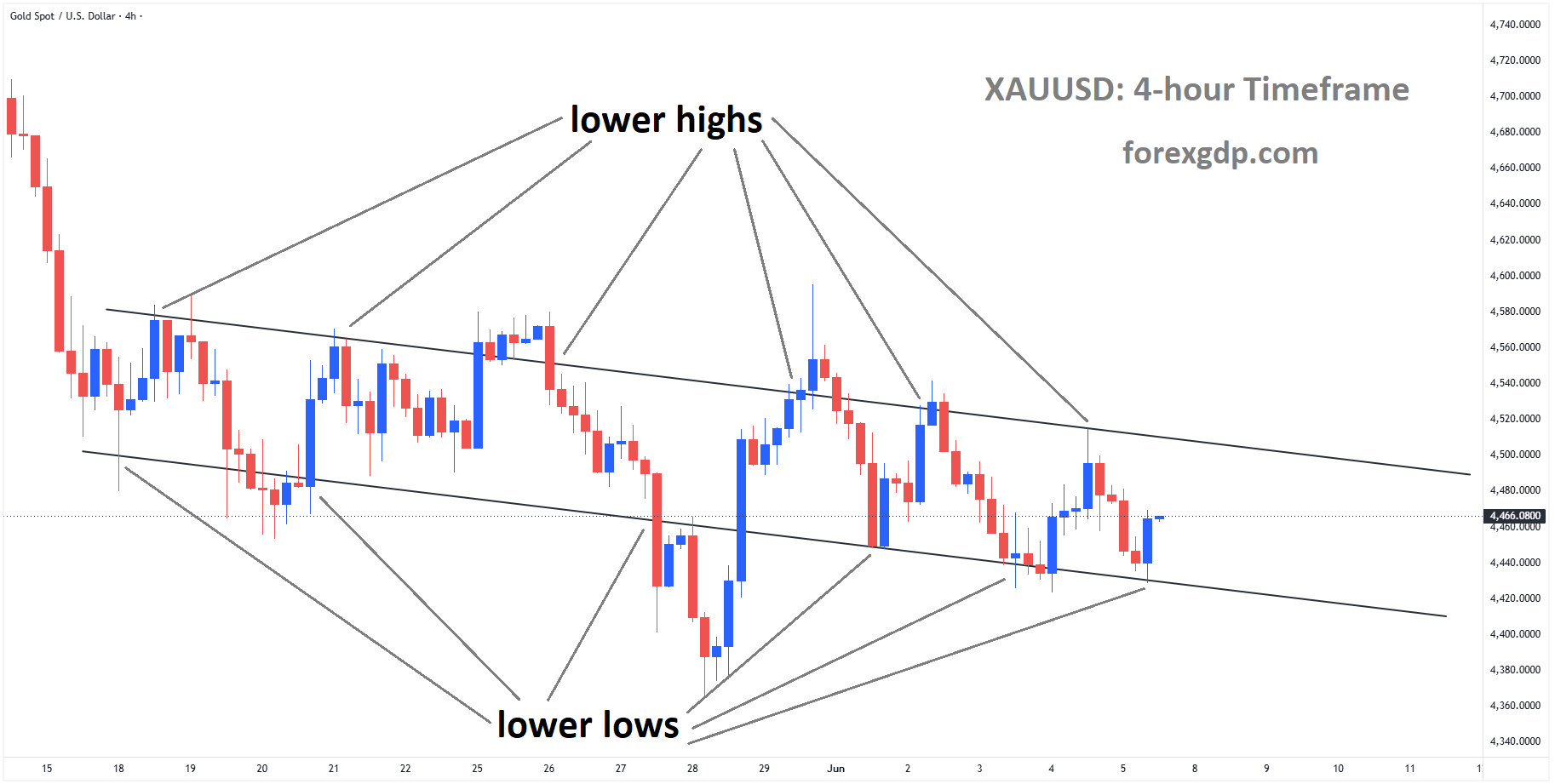
XAUUSD is rebounding from the lower low area of the descending channel
Gold regained some ground on Friday after falling earlier in the day, as investors adjusted their positions ahead of the closely watched US Nonfarm Payrolls (NFP) report for May. The precious metal had dropped to an intraday low before recovering, reflecting the cautious mood among traders who are waiting for fresh economic signals from the United States.
The upcoming jobs data is expected to play a major role in shaping market expectations for interest rates and the broader economic outlook. At the same time, ongoing tensions in the Middle East and rising oil prices continue to influence sentiment across global financial markets, including the gold market.
Investors Await Important US Employment Data
The US Nonfarm Payrolls report is one of the most significant economic releases each month because it provides insight into the strength of the labor market. Economists are forecasting slower job growth in May compared to the previous month, while the unemployment rate is expected to remain stable.
A weaker labor market could indicate that economic growth is slowing, while stronger hiring numbers would suggest that the economy remains resilient despite various challenges. Because of its importance, the report often triggers major market reactions across currencies, stocks, bonds, and precious metals.
Gold traders are particularly focused on the data because it could influence expectations for future Federal Reserve policy decisions. Any shift in interest rate expectations tends to have a direct impact on gold demand.
Federal Reserve Expectations Remain a Key Factor
Interest rates continue to be one of the biggest drivers of gold prices. Unlike bonds or savings accounts, gold does not generate interest income. As a result, higher interest rates can make other investments more attractive compared to holding gold.
Recent market expectations suggest that the Federal Reserve may keep borrowing costs elevated for a longer period. Policymakers are closely monitoring inflation trends, and concerns about rising energy costs have added another layer of uncertainty.
If the upcoming jobs report shows stronger-than-expected employment growth, it could reinforce the belief that the Federal Reserve has room to maintain its current policy stance. Some market participants may even consider the possibility of further rate increases if inflation risks continue to rise.
On the other hand, weaker employment data could reduce expectations of tighter monetary policy. Such a scenario may ease pressure on gold by making future interest rate increases less likely.
Oil Prices Add to Inflation Concerns

Another major influence on gold has been the sharp increase in oil prices. Energy costs have risen significantly amid ongoing geopolitical uncertainty in the Middle East.
Higher oil prices can contribute to broader inflationary pressures because energy is a critical component of transportation, manufacturing, and other sectors of the economy. When inflation remains elevated, central banks often face greater pressure to keep interest rates high.
This dynamic has created a challenging environment for gold. While the metal is traditionally viewed as a store of value during periods of uncertainty, persistent inflation concerns and higher interest rates can reduce its appeal.
As a result, investors are closely watching both energy markets and central bank signals to better understand the direction of gold prices in the months ahead.
Middle East Tensions Continue to Influence Sentiment
Geopolitical developments remain another important factor affecting gold’s performance. Since the outbreak of conflict involving the United States and Iran earlier this year, market behavior has shifted in unusual ways.
Traditionally, gold tends to benefit during periods of geopolitical instability as investors seek safe-haven assets. However, recent market trends have shown a more complex relationship. Gold has often weakened when tensions intensified and recovered when hopes for diplomatic progress increased.
This pattern has been linked partly to the impact of rising oil prices and the resulting inflation concerns. As energy costs climb, expectations for tighter monetary policy also increase, creating headwinds for gold despite ongoing geopolitical risks.
The precious metal remains significantly below the levels seen before the conflict began, highlighting how broader economic factors have outweighed traditional safe-haven demand.
Peace Negotiations Face New Challenges
Recent developments suggest that hopes for a near-term diplomatic breakthrough may be fading. Efforts aimed at reducing tensions in the region have encountered new obstacles, raising concerns about the possibility of prolonged instability.
One of the latest setbacks came after an Iran-backed group rejected a proposed ceasefire arrangement involving Israel and Lebanon. Following the rejection, exchanges of fire reportedly resumed between the parties involved.
Iran has repeatedly emphasized that any broader agreement with the United States would need to include a lasting ceasefire in Lebanon. These conditions have complicated negotiations and reduced optimism about a quick resolution.
As a result, investors continue to monitor every development closely, knowing that changes in the geopolitical landscape can rapidly influence energy markets, inflation expectations, and overall market sentiment.
What Traders Are Watching Next
The immediate focus remains on the US jobs report, which could provide fresh clues about the strength of the economy and the likely path of Federal Reserve policy.
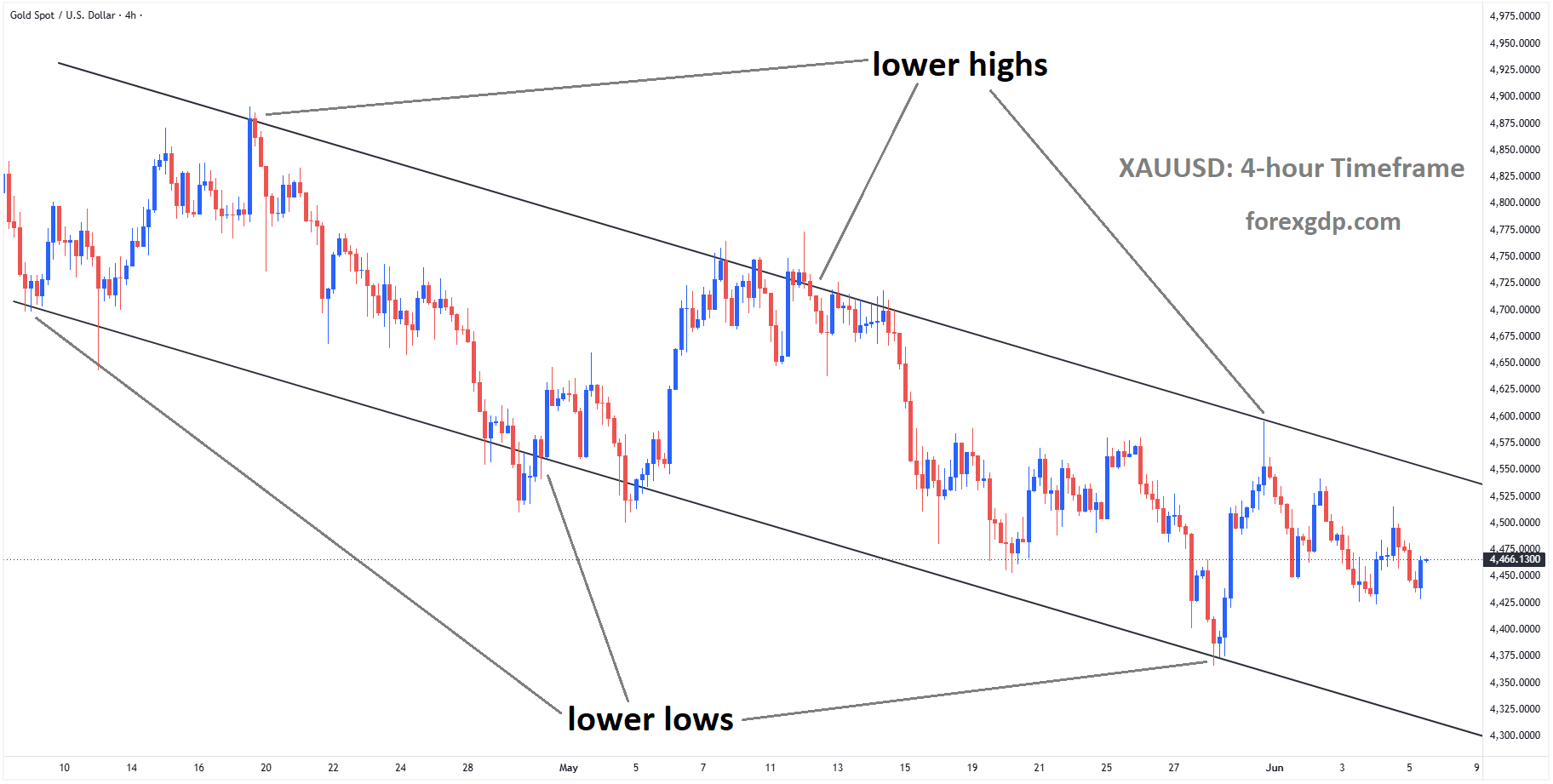
XAUUSD is moving in a descending channel
At the same time, oil prices and Middle East developments will remain central themes for global markets. Any escalation in tensions could impact energy supplies and inflation expectations, while progress toward diplomatic solutions may help stabilize market sentiment.
For gold investors, the interaction between economic data, central bank policy, inflation concerns, and geopolitical events will likely continue to drive market direction in the weeks ahead.
Summary
Gold has recovered from earlier losses as investors prepare for the release of the US Nonfarm Payrolls report, a key indicator that could influence future Federal Reserve decisions. Slower job growth expectations have increased market anticipation, with traders looking for clues about interest rate policy.
Meanwhile, rising oil prices and ongoing Middle East tensions continue to shape the broader outlook. Inflation concerns linked to higher energy costs have strengthened expectations that interest rates could remain elevated, creating challenges for gold. At the same time, uncertainty surrounding regional peace efforts remains a major source of market attention.
The combination of economic data, monetary policy expectations, energy prices, and geopolitical developments is expected to remain at the center of gold market movements in the near term.