
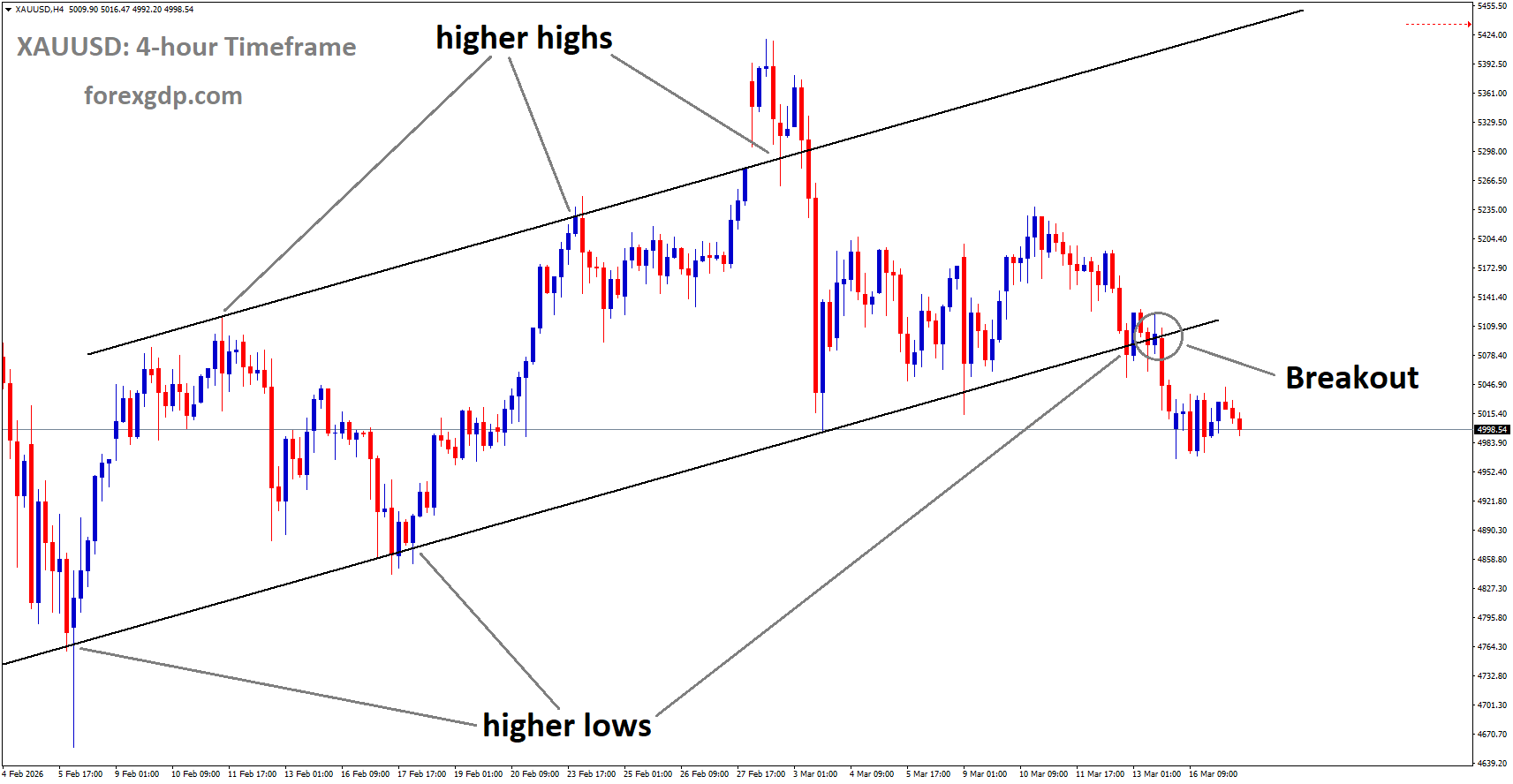
XAUUSD has broken the uptrend channel on the downside
Gold continues to draw attention as investors navigate a mix of geopolitical risks and economic uncertainty. While the precious metal is seeing some upward movement, it is not showing strong momentum. Several global factors, including ongoing conflicts and central bank decisions, are influencing how traders approach gold right now.
Rising Geopolitical Tensions Support Gold Demand

One of the main reasons gold is holding firm is the continued instability in the Middle East. Traditionally, gold is seen as a safe-haven asset, meaning investors often turn to it during times of uncertainty or conflict.
The situation in the region remains tense. Military activity has expanded in southern Lebanon, with increased involvement from Israeli forces in areas linked to Hezbollah. At the same time, there are no clear signs that the broader conflict involving Iran is nearing a resolution.
As the conflict stretches into another week, reports indicate that critical infrastructure across several Gulf countries has been targeted. These include airports, oil facilities, and shipping hubs. Such developments raise concerns not just about regional stability, but also about the global economy.
Impact on Global Energy Supply
One key area of concern is the Strait of Hormuz, a narrow waterway through which a significant portion of the world’s oil supply passes. Any disruption here can have wide-reaching effects.
With ongoing threats to shipping routes, oil supply risks remain high. This has kept energy markets on edge and contributed to rising oil prices. When oil prices increase, it often leads to broader inflation concerns, which in turn affects investor behavior across multiple markets—including gold.
Inflation Concerns Add Complexity
While geopolitical risks typically support gold, inflation worries are adding another layer of complexity. Higher oil prices can push up the cost of goods and services globally, leading to increased inflation.
This creates a challenge for central banks, especially the US Federal Reserve. When inflation remains high, central banks may choose to keep interest rates elevated for a longer period. In some cases, they may even consider increasing rates further.
Why Interest Rates Matter for Gold
Gold does not provide interest or yield. Because of this, it tends to become less attractive when interest rates are high. Investors may prefer assets that offer returns, such as bonds or savings instruments.
As expectations grow that interest rates could stay higher for longer, this puts pressure on gold’s upward movement. Even though safe-haven demand is present, it is being balanced out by these economic factors.
Strong US Dollar Limits Gold’s Upside
Another important factor influencing gold is the strength of the US Dollar. Recently, the dollar has shown resilience after briefly pulling back from its recent highs.
A stronger dollar makes gold more expensive for buyers using other currencies. This can reduce demand and limit how much gold prices can rise.
The ongoing geopolitical situation has also contributed to demand for the dollar, as it is another widely used safe-haven asset. This creates a situation where both gold and the dollar are supported by uncertainty, but the stronger dollar can still act as a headwind for gold.
Traders Remain Cautious Ahead of Key Central Bank Decisions
Despite the current market conditions, many traders are choosing to stay on the sidelines. The reason is simple: several major central banks are set to announce policy decisions this week.
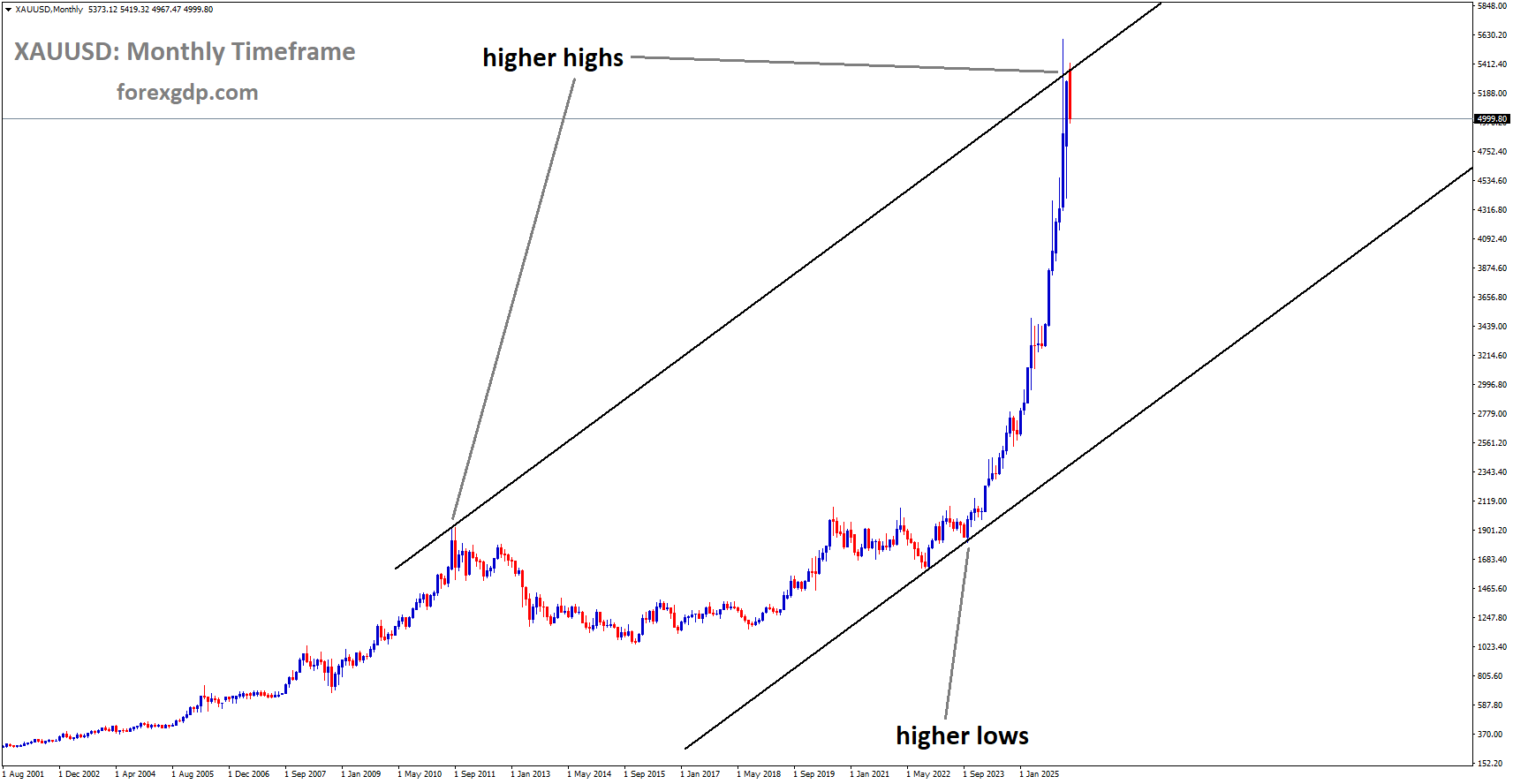
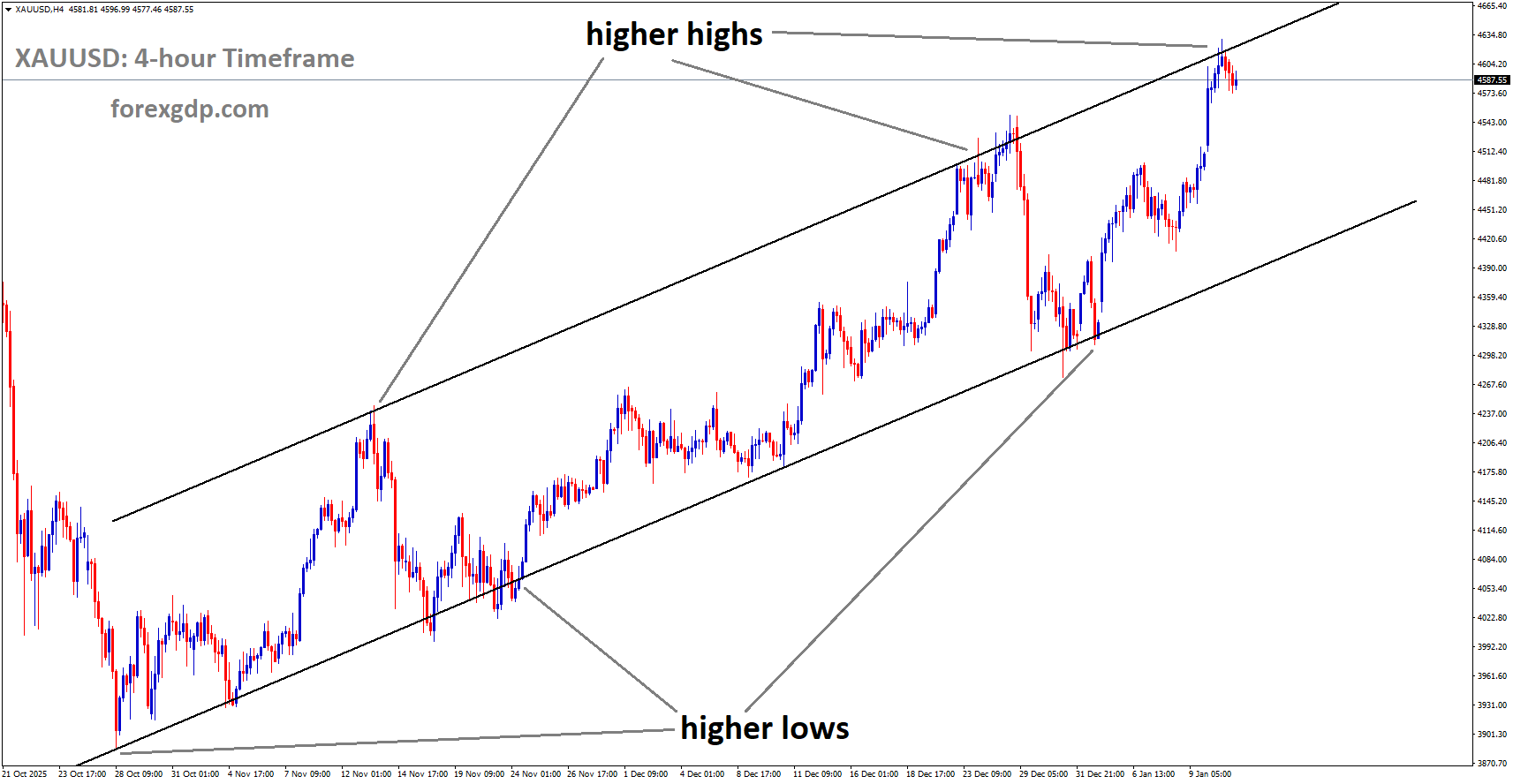
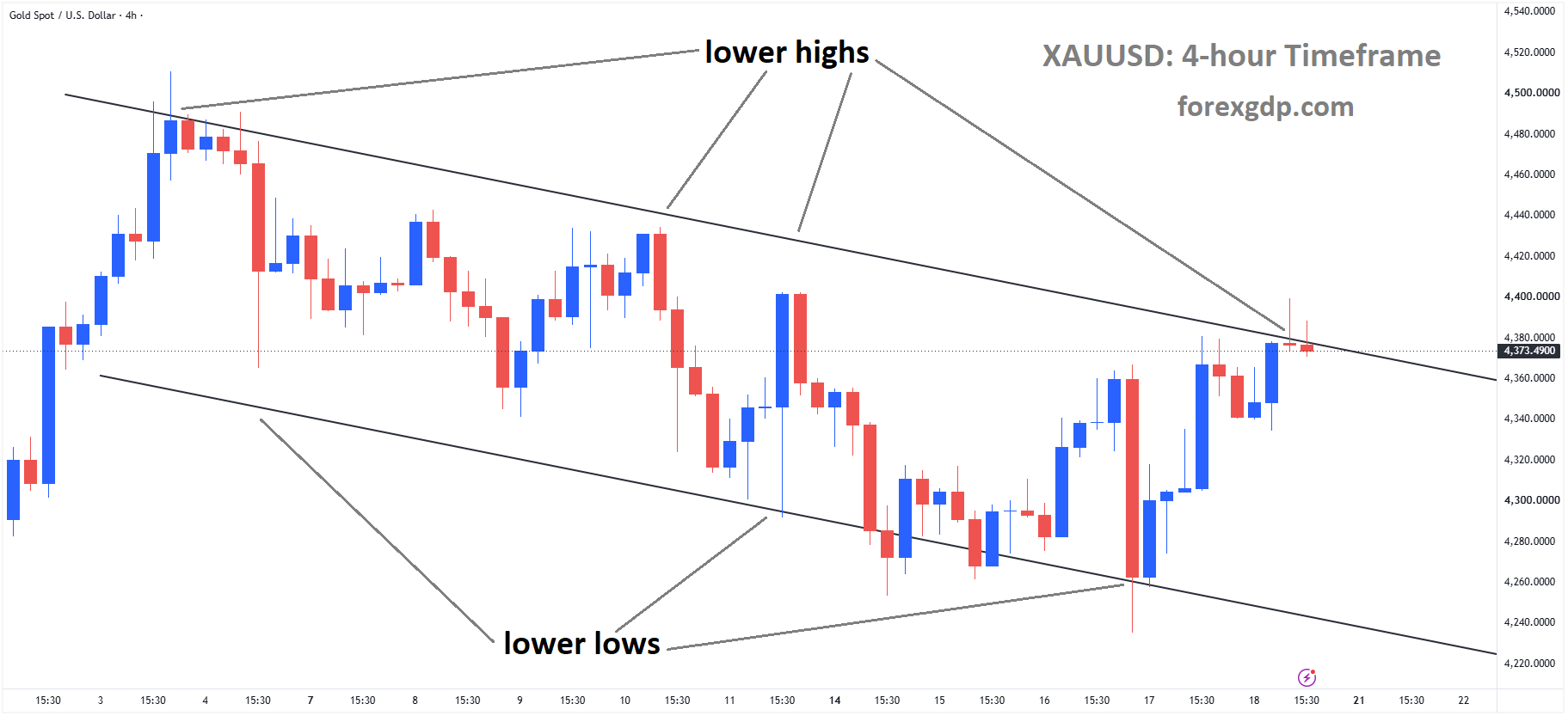
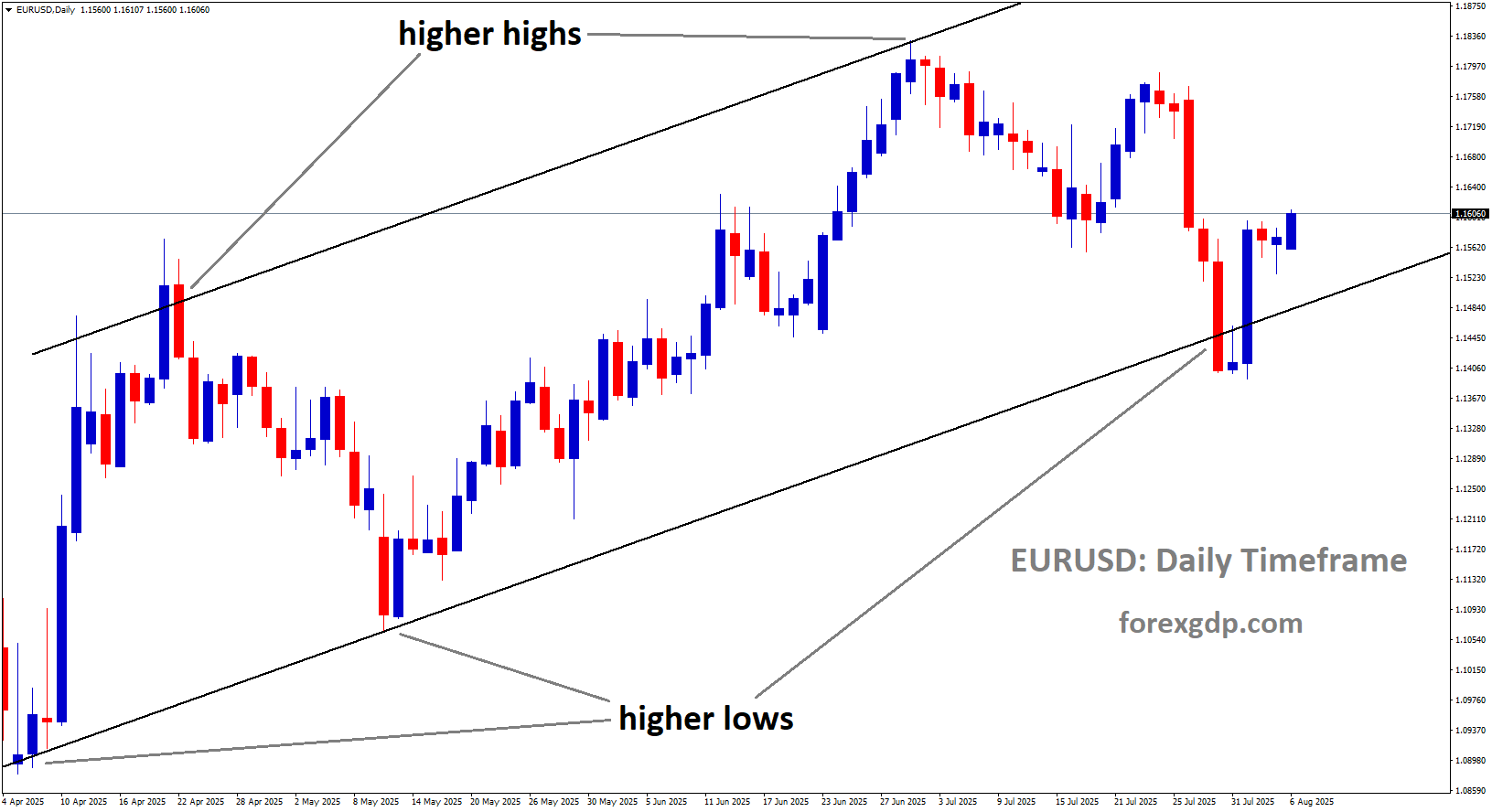
XAUUSD is moving in an uptrend channel, and the market has fallen from the higher high area of the channel
The US Federal Reserve is at the center of attention, with its upcoming meeting expected to provide guidance on interest rates and economic outlook. Investors are closely watching for any signals about future policy moves.
Other Central Banks in Focus
It is not just the Federal Reserve that matters. Other major institutions are also expected to make important announcements, including:
-
The European Central Bank (ECB)
-
The Bank of Japan (BoJ)
-
The Bank of England (BoE)
Each of these central banks plays a significant role in the global financial system. Their policies can influence currency values, investment flows, and overall market sentiment.
Because of this, traders are avoiding making strong bets on gold until there is more clarity. The outcome of these meetings could shape market direction for days or even weeks ahead.
A Market Caught Between Risk and Restraint
At the moment, gold is being pulled in two different directions. On one side, geopolitical risks and global uncertainty are providing support. On the other, inflation concerns and expectations of higher interest rates are limiting its potential.
This push-and-pull dynamic is keeping gold in a relatively stable range, without strong upward or downward movement.
Investors are carefully weighing these factors before making decisions. The lack of clear direction reflects the broader uncertainty in global markets.
Final Summary
Gold remains steady as investors balance safe-haven demand with economic realities. Ongoing tensions in the Middle East are keeping interest in gold alive, especially as risks to energy supply and global stability continue.
At the same time, rising inflation concerns and the possibility of prolonged high interest rates are preventing gold from gaining strong momentum. A resilient US Dollar is adding further pressure.
With several major central bank decisions approaching, traders are choosing caution over bold moves. The coming days are likely to play a key role in determining the next direction for gold and the wider financial markets.