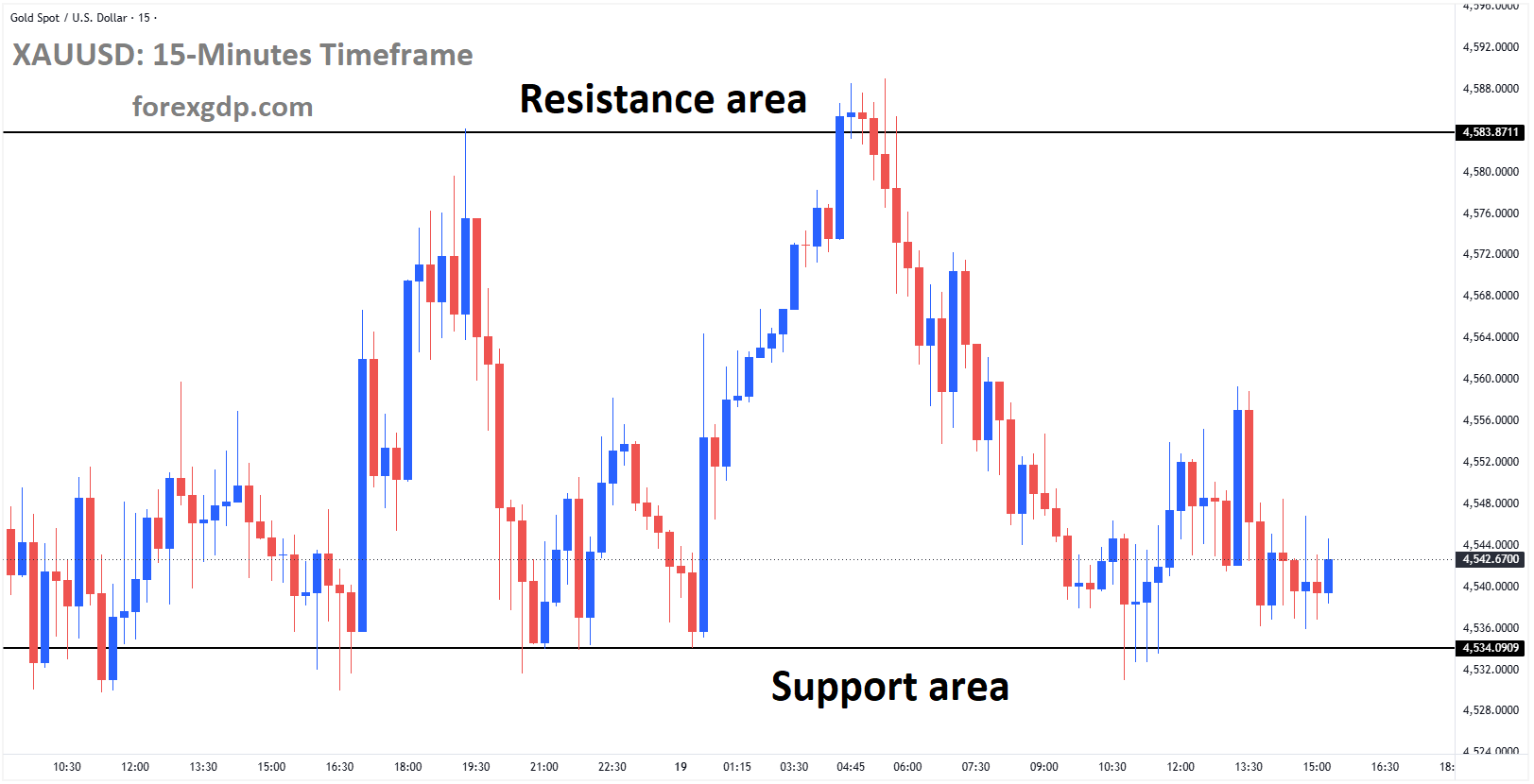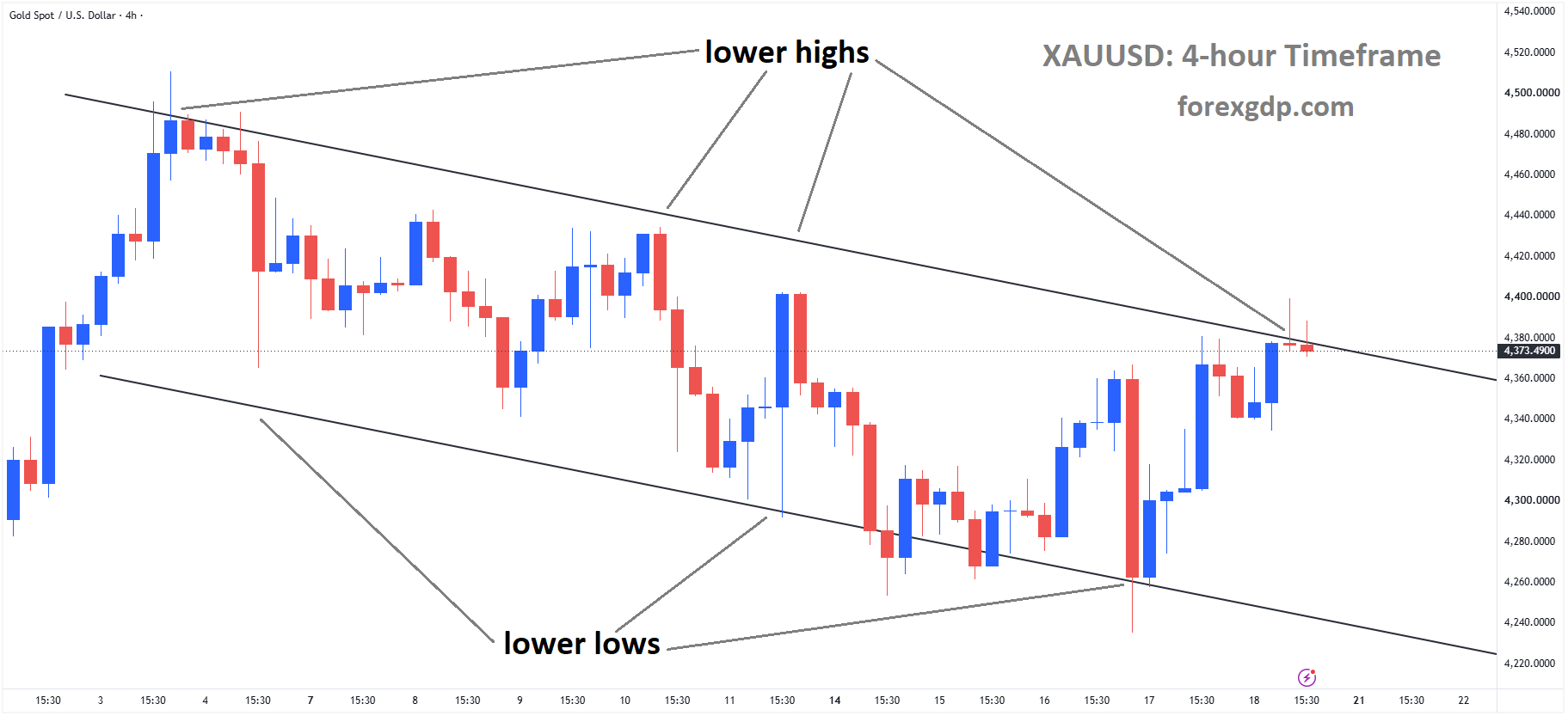
XAUUSD reached the lower high area of the descending channel
Gold is heading toward a weekly advance after recovering from its weakest level in more than a month. The precious metal faced heavy selling pressure following the latest Federal Reserve policy decision, but changing conditions in the energy and bond markets helped it regain some stability.
A strong US Dollar continues to limit Gold’s recovery. The Federal Reserve delivered an interest-rate increase and warned that further tightening may be necessary to control inflation. This message strengthened demand for the Dollar and made the environment more difficult for non-yielding assets such as Gold.
However, falling Oil prices offered some relief. New developments concerning Saudi Arabian supply reduced immediate concerns about energy availability. This encouraged a retreat in US Treasury yields from their recent peaks, giving Gold an opportunity to recover.
Gold Faces a Volatile Week
Gold experienced a difficult and unpredictable trading week. The metal came under sharp pressure after the Federal Reserve raised borrowing costs and presented a firm outlook on monetary policy.
The rate increase itself was important, but the Fed’s message attracted even more attention. Policymakers made it clear that controlling inflation remains their main priority. They also indicated that additional action could follow if inflation stays above the central bank’s target.
This outlook encouraged investors to buy the US Dollar. A stronger Dollar often creates pressure on Gold because the metal becomes more expensive for buyers using other currencies.
Rising Treasury yields added to the challenge. Government bonds become more attractive when they offer higher returns, while Gold does not provide regular interest. Some investors may therefore move part of their capital away from precious metals and into interest-paying assets.
Despite these difficulties, Gold managed to rebound from its monthly low. The recovery suggests that demand for the metal has not disappeared. Investors remain interested in Gold because of economic uncertainty, geopolitical tension and concerns about the long-term effects of restrictive monetary policy.
Saudi Supply News Pulls Oil Lower
Developments involving Saudi Arabian Oil supply played an important role in Gold’s recovery. Reports indicated that Saudi Arabia was redirecting some exports and working to repair its East-West pipeline after it was damaged in an attack.
The pipeline is strategically important because it allows Saudi Oil to reach the Red Sea without travelling through the Strait of Hormuz. Restoring this route could reduce the risk of severe supply disruptions and improve the movement of energy exports.
Oil prices moved lower as these developments reduced some of the fear surrounding global supply. This mattered for Gold because energy costs can strongly influence inflation expectations.
When Oil becomes more expensive, transportation, manufacturing and daily living costs can also rise. Central banks may then feel greater pressure to keep interest rates high. On the other hand, a meaningful fall in Oil prices can ease inflation worries and reduce the need for aggressive monetary tightening.
Lower energy prices helped Treasury yields retreat from their recent highs. That provided temporary support for Gold by reducing one of the main pressures facing the metal.
Still, the energy situation remains uncertain. Traffic through the Strait of Hormuz continues to face restrictions, and geopolitical risks across the Middle East have not disappeared. Any fresh disruption could quickly push energy concerns back into focus.
Federal Reserve Policy Remains a Major Challenge

The direction of US monetary policy will remain one of the most important influences on Gold. Federal Reserve officials have shown that they are willing to maintain restrictive conditions until inflation moves closer to their long-term goal.
Most policymakers appear to believe that another interest-rate increase may be necessary. They also seem reluctant to discuss early rate cuts. This suggests that borrowing costs could remain high for an extended period.
Such an environment is generally challenging for Gold. When savings accounts and government bonds offer stronger returns, holding a non-yielding asset becomes less appealing to some investors. High rates can also strengthen the Dollar, adding another layer of pressure.
However, the outlook can change quickly. If economic growth slows, employment conditions weaken or inflation begins to fall more rapidly, expectations for future rate increases may fade. A softer policy outlook would likely reduce pressure on Gold.
Traders will therefore follow upcoming comments from Federal Reserve officials carefully. Even small changes in their language could influence expectations about the central bank’s next move.
Can Gold Extend Its Recovery?
Gold’s ability to continue recovering may depend on several connected factors. A deeper decline in Oil prices could reduce inflation concerns and encourage Treasury yields to move lower. This would create a friendlier environment for the precious metal.
A weaker US Dollar could also attract more international buyers. However, the Dollar may remain firm while the Federal Reserve maintains its restrictive position.
Geopolitical uncertainty provides another source of support. Investors often turn to Gold when they become worried about war, financial instability or disruptions to global trade. Continued tension in the Middle East may therefore prevent a much deeper decline in demand.
Long-term buying trends also remain encouraging. Central banks have continued adding Gold to their reserves as they seek greater diversification. Strong investment interest and inflows into Gold-backed exchange-traded funds can provide additional support.
These forces do not guarantee an immediate rise, but they may help Gold remain resilient during periods of pressure from higher interest rates and a firm Dollar.
What Investors Need to Watch Next
The upcoming US economic calendar is relatively quiet, placing greater importance on speeches from Federal Reserve officials. Investors will listen for clues about inflation, future interest-rate decisions and the possibility of additional policy tightening.
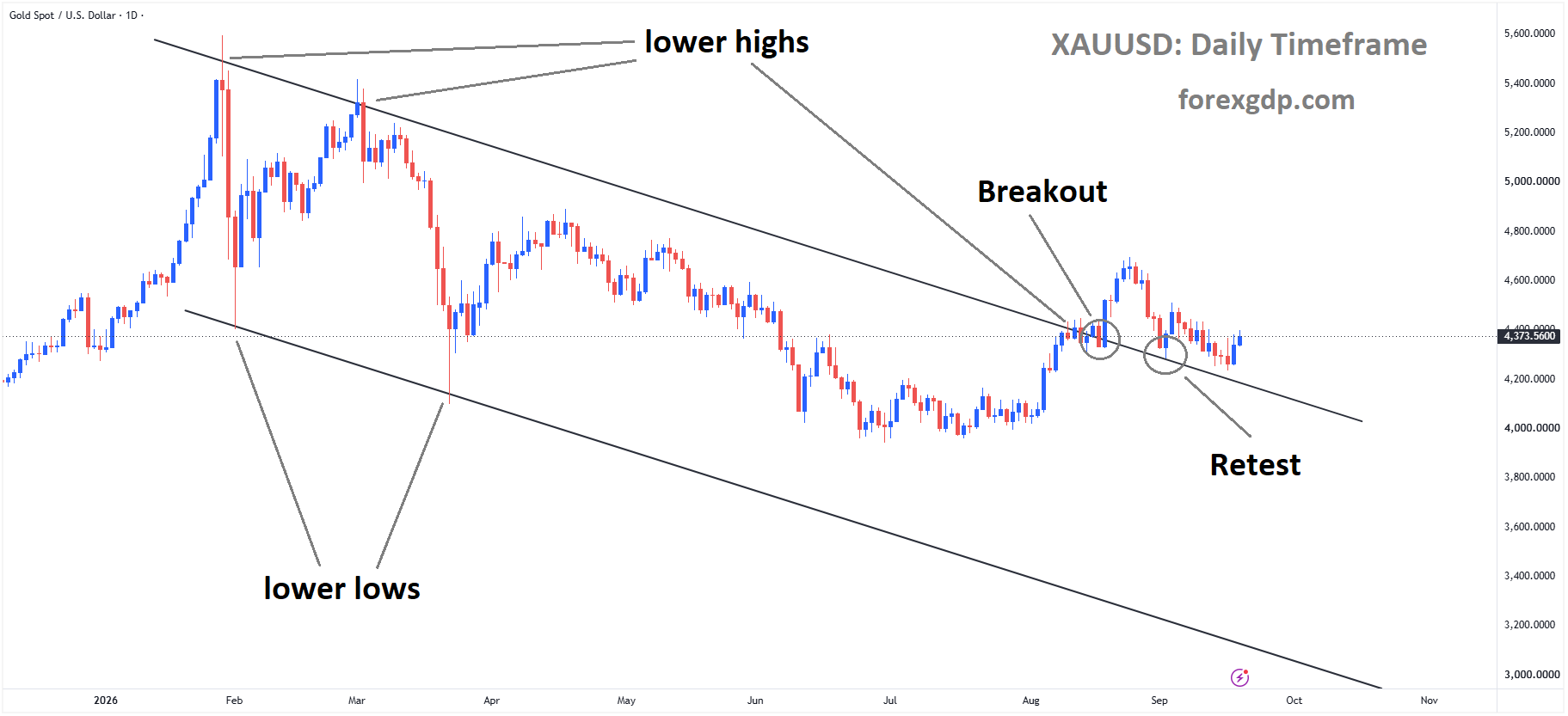
XAUUSD is rebounding from the retest area of the broken descending channel
Any disagreement between officials could create fresh uncertainty. Strong support for another increase may boost the Dollar and Treasury yields, placing renewed pressure on Gold. More cautious comments could have the opposite effect.
Developments in the Middle East will also demand attention. Diplomatic meetings involving the United States and Gulf Cooperation Council countries may offer new information about regional security, energy supplies and trade routes.
News involving Saudi infrastructure or the Strait of Hormuz could produce sudden changes in Oil prices. Because energy costs affect inflation expectations, those developments may also influence bond yields, the Dollar and Gold.
Final Summary
Gold is moving toward a weekly advance after recovering from its lowest point in more than a month. Falling Oil prices and a temporary retreat in Treasury yields helped the metal stabilize after the Federal Reserve’s firm policy message triggered heavy pressure.
The broader environment remains difficult because the US Dollar is strong and interest rates may stay high. Nevertheless, geopolitical uncertainty, central-bank purchases and continued investment demand offer meaningful long-term support.
Gold’s next direction will depend largely on Federal Reserve communication, movements in Oil and Treasury yields, and developments across the Middle East. Until those factors provide clearer guidance, the metal may continue to experience cautious and uneven movement.