

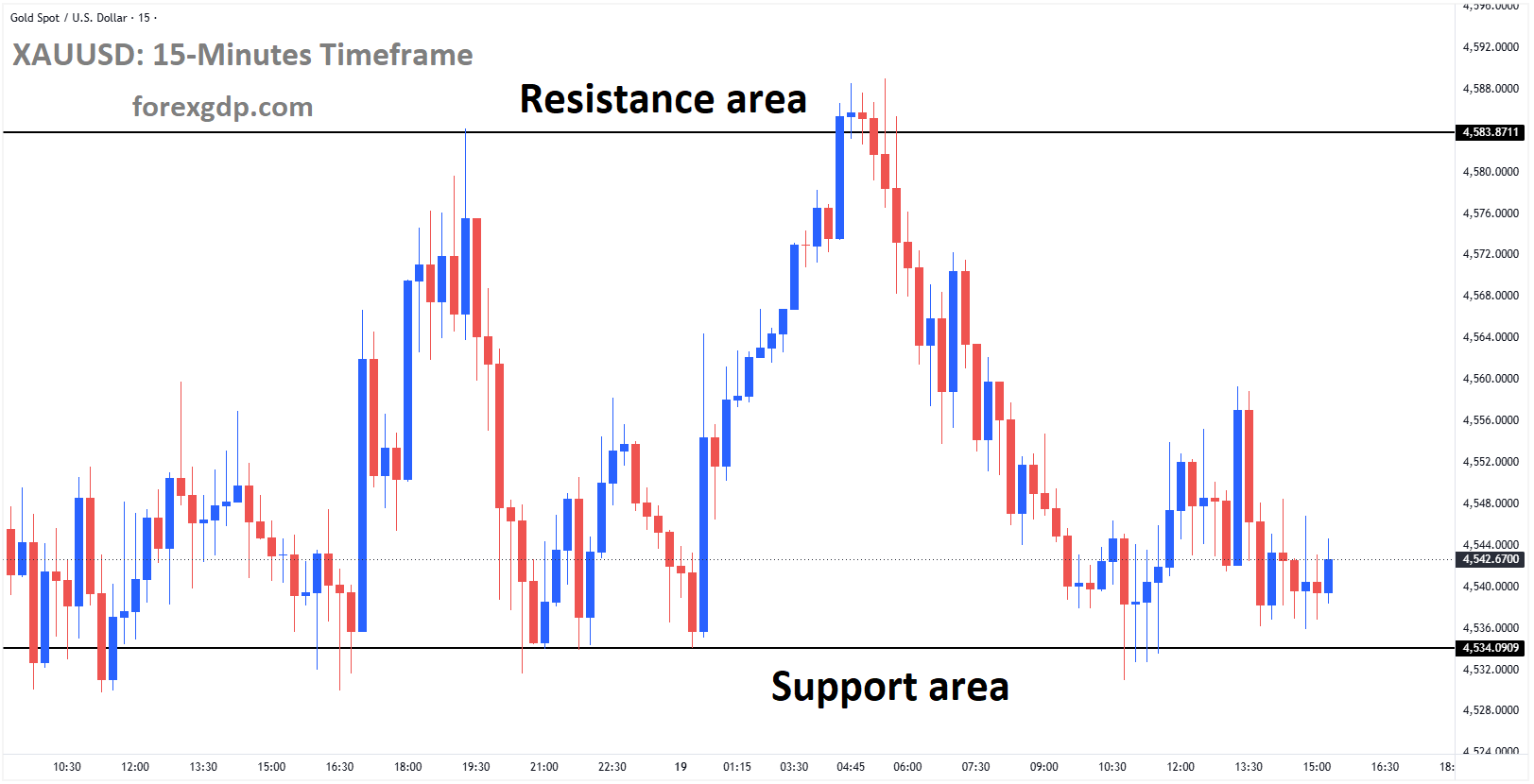
XAUUSD reached the support area of the box pattern
Gold prices continued to struggle on Tuesday as the precious metal failed to build momentum after bouncing from its lowest level since late March. Investors remain cautious as a stronger US Dollar and rising expectations of tighter monetary policy in the United States continue to weigh heavily on the market.
Although geopolitical tensions in the Middle East remain a key focus for global investors, gold has not managed to attract enough buying interest. Instead, the market appears more focused on the strength of the US economy, rising inflation concerns, and the possibility that the Federal Reserve may keep interest rates higher for longer.
Strong US Dollar Creates Challenges for Gold
One of the main reasons behind gold’s weakness is the renewed strength of the US Dollar. Since gold is priced in dollars, a stronger currency often makes the metal more expensive for international buyers, reducing demand.
The US Dollar gained support after markets reacted to ongoing uncertainty surrounding negotiations between the United States and Iran. While there have been fresh hopes of a possible peace agreement, investors remain unconvinced that a breakthrough is close.
Reports suggest that major disagreements still exist regarding Iran’s nuclear program and control of the Strait of Hormuz, one of the world’s most important oil shipping routes. These unresolved issues continue to create uncertainty across financial markets.
US President Donald Trump recently stated that he delayed a planned military strike on Iran following requests from Qatar, Saudi Arabia, and the United Arab Emirates. His comments initially sparked hopes that diplomatic efforts could reduce tensions in the region.
However, optimism quickly faded after conflicting messages emerged from both Washington and Tehran.
Iranian President Masoud Pezeshkian responded firmly to warnings from the United States, saying Iran would not surrender to outside pressure. He also stressed that negotiations must protect the country’s rights and dignity.
At the same time, Trump confirmed that the US military has been instructed to remain ready for possible military action if negotiations fail. These mixed signals have prevented markets from fully embracing a peaceful outcome.
As a result, investors have continued to favor the US Dollar because of its traditional role as a safe-haven currency during periods of uncertainty.
Federal Reserve Expectations Continue to Impact Gold
Another major factor putting pressure on gold prices is growing belief that the Federal Reserve could maintain a hawkish stance for longer than previously expected.
Markets have now largely abandoned expectations for interest rate cuts in 2026. Instead, traders are increasingly pricing in the possibility of another rate hike before the end of the year.
Concerns over rising inflation, particularly linked to energy prices and consumer costs, have strengthened expectations that the central bank may need to keep borrowing costs elevated.
According to market forecasts, there is now a significant chance that the Federal Reserve could raise interest rates again during its December policy meeting.
Higher interest rates are generally negative for gold because the metal does not offer interest or yield. When rates rise, investors often shift money toward assets that generate returns, such as bonds and savings instruments.
This shift reduces the attractiveness of holding non-yielding assets like gold.
Rising Bond Yields Add More Pressure
US government bond yields have also remained elevated, adding another obstacle for gold prices.
The yield on the 30-year US Treasury bond is currently hovering near its highest level since 2023. Rising bond yields tend to strengthen the US Dollar while simultaneously reducing demand for gold.
Investors often compare gold with government bonds when deciding where to place their money. If bond yields continue rising, many traders may prefer fixed-income investments over precious metals.
Fiscal concerns and inflation worries are also contributing to the rise in yields. Markets are becoming increasingly sensitive to signs that inflation may remain stubbornly high, which could force policymakers to maintain tighter financial conditions.
This environment has created a difficult backdrop for gold, especially as investors remain cautious ahead of upcoming economic data and Federal Reserve commentary.
Markets Waiting for Fed Minutes
Traders are now closely watching the upcoming release of the Federal Open Market Committee (FOMC) meeting minutes.
The document is expected to provide deeper insight into how Federal Reserve officials view inflation, economic growth, and future interest rate decisions.
Market participants are hoping the minutes will offer clues about whether policymakers are leaning toward additional tightening or simply keeping rates unchanged for a longer period.
Until then, many investors appear reluctant to place aggressive bets on gold prices.
This cautious approach has kept the precious metal trapped near recent lows despite ongoing geopolitical tensions.
Middle East Tensions Still Important
Although gold remains under pressure, geopolitical risks have not disappeared entirely.
The situation in the Middle East continues to be highly unpredictable, and any sudden escalation could quickly change market sentiment.
Historically, gold tends to benefit during times of global instability because investors view it as a store of value during uncertain periods.
If tensions between the United States and Iran worsen, demand for safe-haven assets like gold could return rapidly.
However, for now, the market appears more focused on the strength of the US Dollar and expectations surrounding Federal Reserve policy.
That combination continues to limit gold’s ability to stage a meaningful recovery.
Investors Remain Cautious About Gold’s Outlook
The broader outlook for gold currently remains weak as several powerful economic forces continue to work against the precious metal.
A stronger US Dollar, rising Treasury yields, and expectations of higher interest rates are all creating pressure on prices. At the same time, uncertainty over the Middle East has not been severe enough to trigger large-scale safe-haven buying.
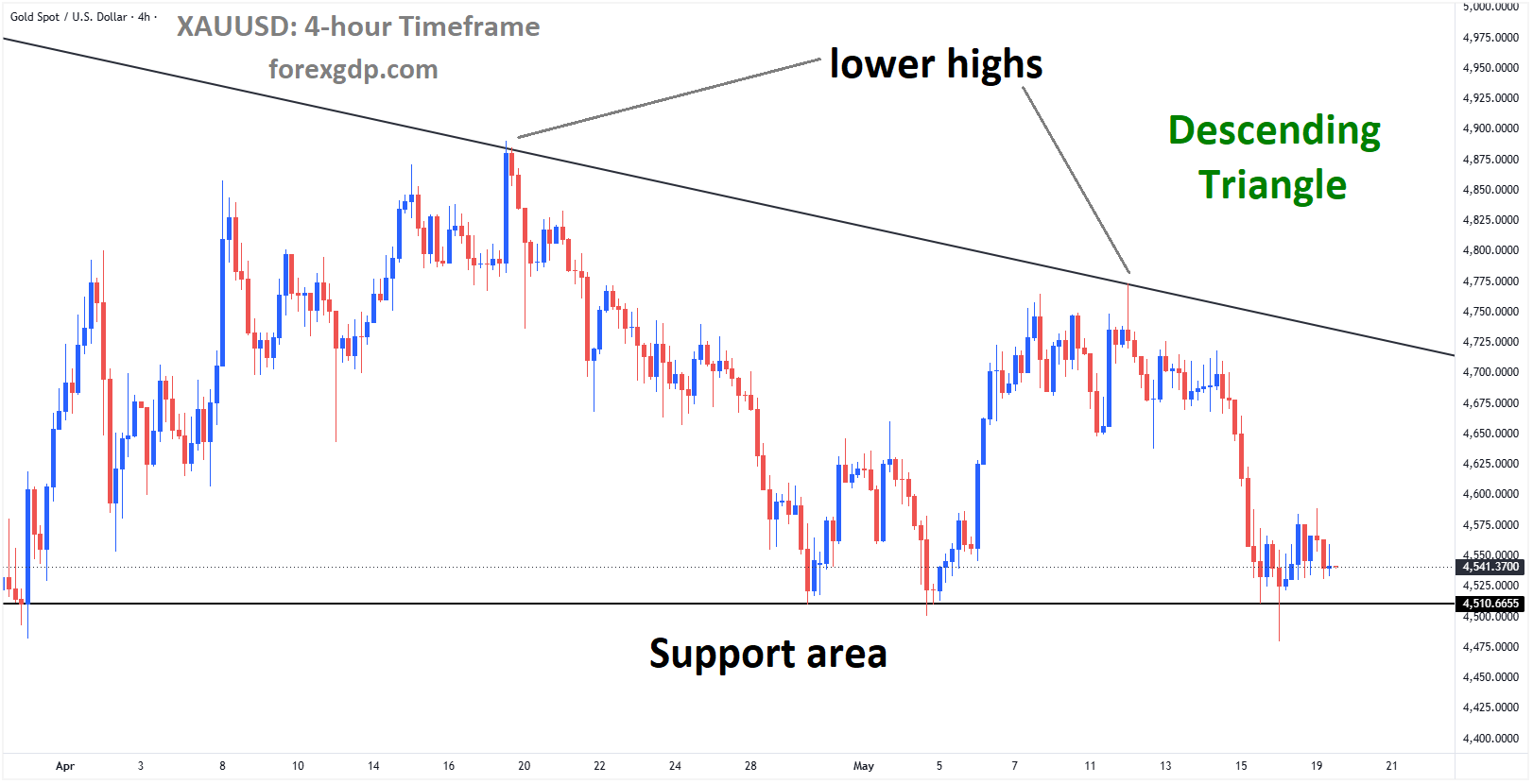
XAUUSD reached the support area of the descending triangle pattern
Investors are likely to remain cautious in the near term, especially ahead of important Federal Reserve updates and further developments involving Iran.
While geopolitical risks could still create temporary support for gold, the overall market environment currently favors bearish sentiment. Unless economic conditions shift significantly or the US Dollar weakens, gold may continue facing difficulty attracting sustained buying interest.
Summary
Gold prices remain under pressure as investors favor the US Dollar amid ongoing geopolitical uncertainty and expectations of tighter US monetary policy. Although tensions involving Iran continue to support safe-haven demand for the dollar, gold has struggled to recover meaningfully from recent lows.
Rising bond yields, inflation concerns, and growing expectations that the Federal Reserve may keep interest rates elevated have further reduced the appeal of the non-yielding precious metal. Markets are now waiting for additional guidance from upcoming Federal Reserve meeting minutes, which could shape the next major move for gold prices.