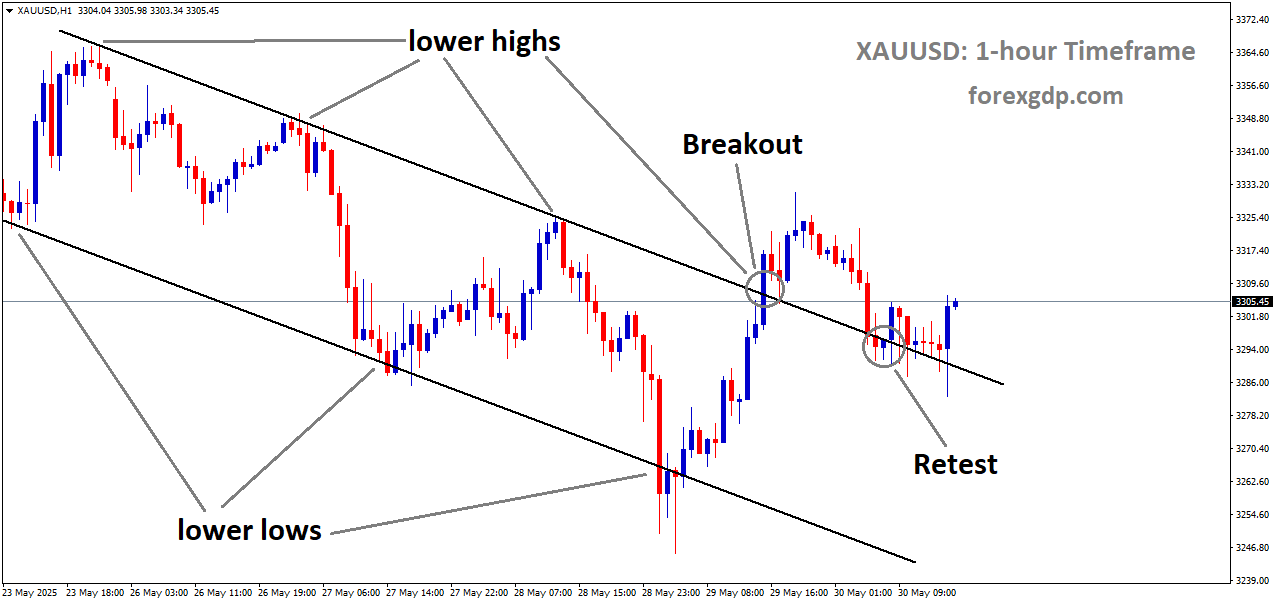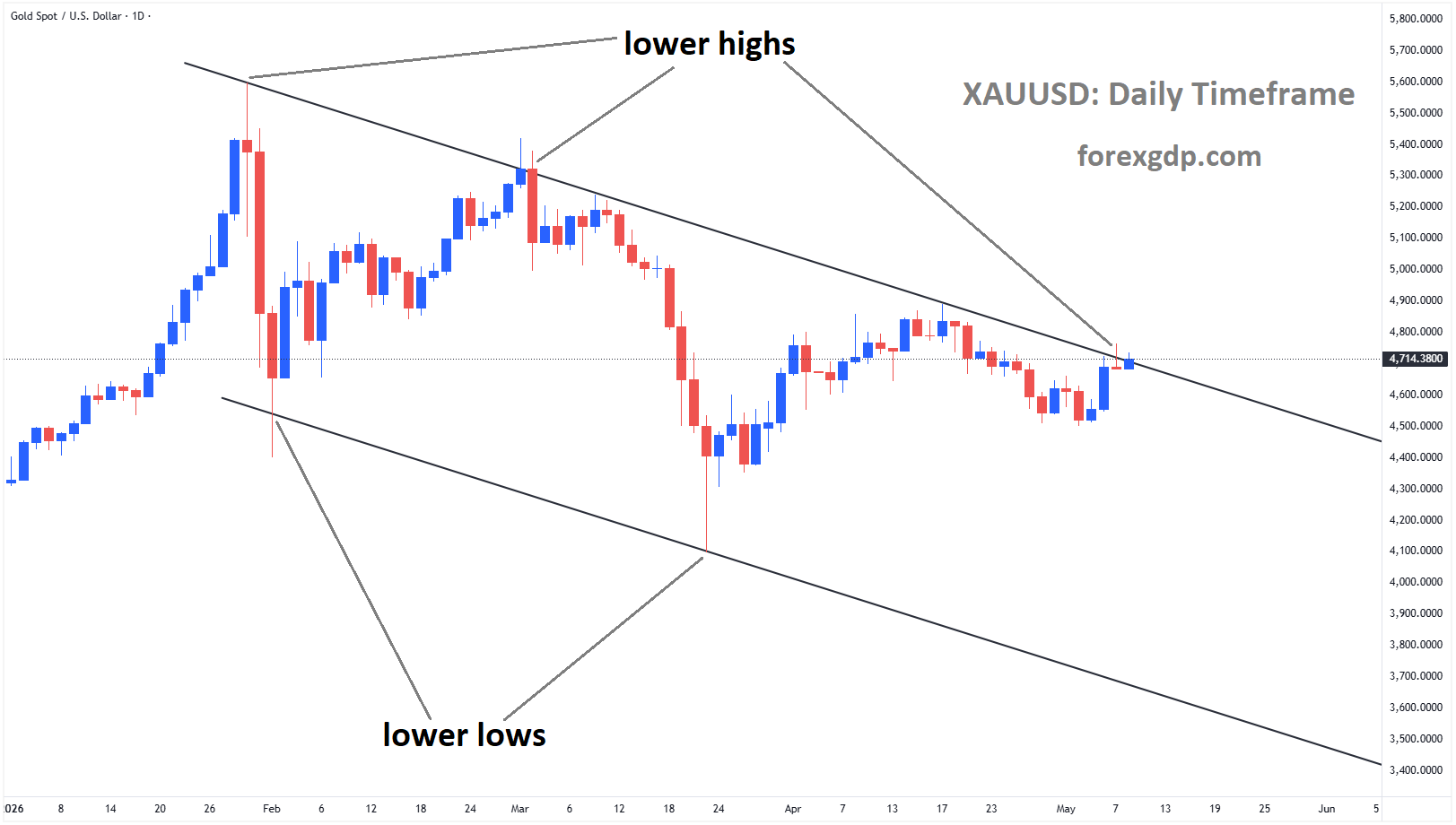
XAUUSD reached a lower high area of the descending channel
Gold prices moved higher again on Friday, staying close to the strongest level seen in more than two weeks. The precious metal continued to attract attention from investors as uncertainty around global politics and the US economy remained in focus.
Although gold struggled to build strong momentum during the European trading session, it still appeared set for its best weekly performance in nearly three weeks. Traders are now closely watching the upcoming US Nonfarm Payrolls (NFP) report, which could shape expectations for future Federal Reserve decisions and influence the direction of the US Dollar.
Gold Finds Support From a Softer US Dollar
One of the main reasons behind gold’s recent strength is the weaker performance of the US Dollar. Gold and the dollar often move in opposite directions. When the dollar loses strength, gold becomes more attractive to investors holding other currencies.
Recent developments in the Middle East have added another layer of uncertainty to the markets. However, hopes that the United States and Iran may eventually reach some form of peace agreement have helped calm investor fears slightly. This has reduced demand for the US Dollar as a safe-haven asset and supported gold prices instead.
At the same time, lower oil prices have eased concerns about inflation. Falling inflation worries usually reduce pressure on the Federal Reserve to keep interest rates high for a long period. Since gold does not pay interest, it tends to perform better when expectations for higher interest rates start to weaken.
Middle East Tensions Continue to Influence Markets
Despite optimism surrounding a possible US-Iran understanding, tensions in the region remain high. The Strait of Hormuz, one of the world’s most important oil shipping routes, has become a major focus again after military activity involving both countries.
The US Central Command confirmed that American forces targeted Iranian military facilities linked to attacks on ships moving through the region. Iran responded by accusing the United States of violating a ceasefire agreement through strikes near the strategic waterway.
Even with these developments, US President Donald Trump stated that the ceasefire with Iran remains active. He also suggested that it would be clear if the agreement had completely failed. Meanwhile, US military officials stressed that they are not seeking a wider conflict.
These mixed signals created uncertainty across global financial markets. Investors often turn to gold during periods of geopolitical instability because it is viewed as a safer store of value during uncertain times.
Oil Prices Remain Under Pressure
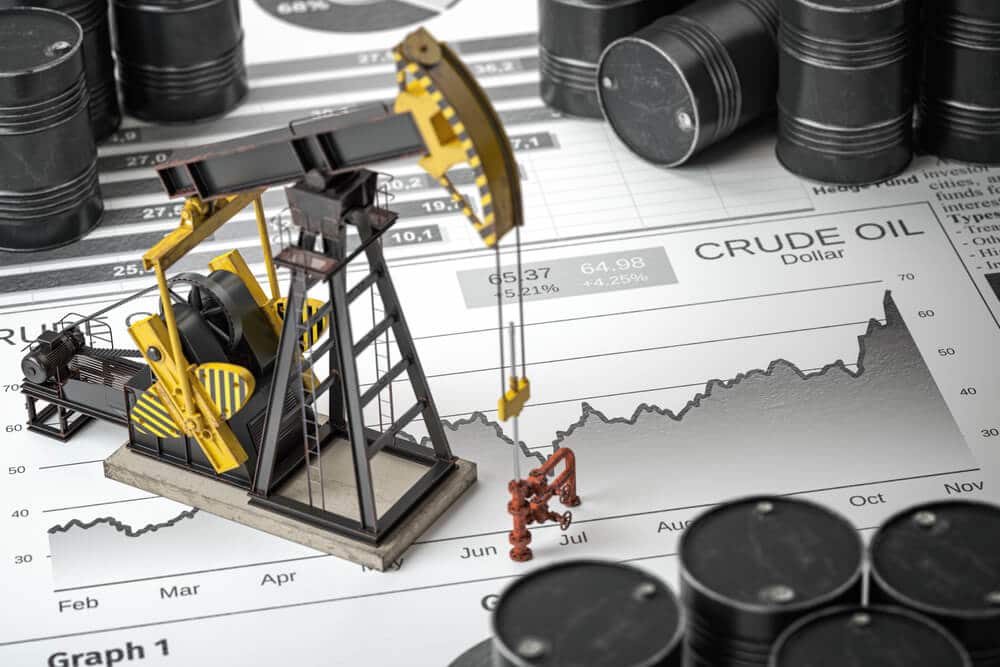
Interestingly, oil prices failed to gain strong momentum despite the military tensions. Normally, conflicts in the Middle East can push oil prices sharply higher due to fears of supply disruptions.
However, hopes for a diplomatic solution between the US and Iran kept crude oil prices under pressure. Lower oil prices helped reduce fears of rising inflation across major economies.
This is important because inflation expectations directly affect central bank policies. If inflation slows down, central banks may feel less pressure to increase interest rates aggressively. That scenario generally supports gold prices.
Still, investors remain cautious. President Trump warned that the US military could respond with stronger action if Iran refuses to agree to a deal in the near future. These comments continue to keep geopolitical risks alive in the market.
Federal Reserve Expectations Stay in Focus
Another major factor influencing gold is the outlook for US interest rates. Investors have recently adjusted their expectations regarding future Federal Reserve policy decisions.
Strong economic growth and concerns about inflation had previously led many traders to believe that interest rates would remain elevated for longer. Some investors even pushed back expectations for future rate cuts toward late 2027 or early 2028.
Higher interest rates generally strengthen the US Dollar and reduce the appeal of gold. However, the latest decline in oil prices and softer inflation concerns have slightly reduced expectations for a more aggressive Federal Reserve stance.
As a result, gold has managed to stay supported even though the broader economic picture in the United States remains relatively stable.
Why the US Jobs Report Matters
The upcoming US Nonfarm Payrolls report is now the biggest focus for financial markets. This monthly employment report is considered one of the most important indicators of the health of the US economy.
Economists expect the US economy to have added around 62,000 jobs in April. If confirmed, this would represent a major slowdown compared to the previous month’s increase of 178,000 jobs.
The unemployment rate is expected to remain steady at 4.3%, while average hourly earnings are projected to rise by 3.8% compared to the previous year.
These numbers are extremely important because they influence expectations surrounding Federal Reserve policy. A weaker labor market could increase hopes that the Fed may eventually lower interest rates sooner than expected. That would likely weaken the US Dollar further and support gold prices.
On the other hand, stronger-than-expected employment data could revive confidence in the US economy and strengthen the dollar, limiting further gains in gold.
Investors Remain Cautious Ahead of Key Data
Financial markets are currently balancing several major risks at once. Geopolitical tensions in the Middle East, changing expectations for US interest rates, and concerns about global economic growth are all affecting investor sentiment.
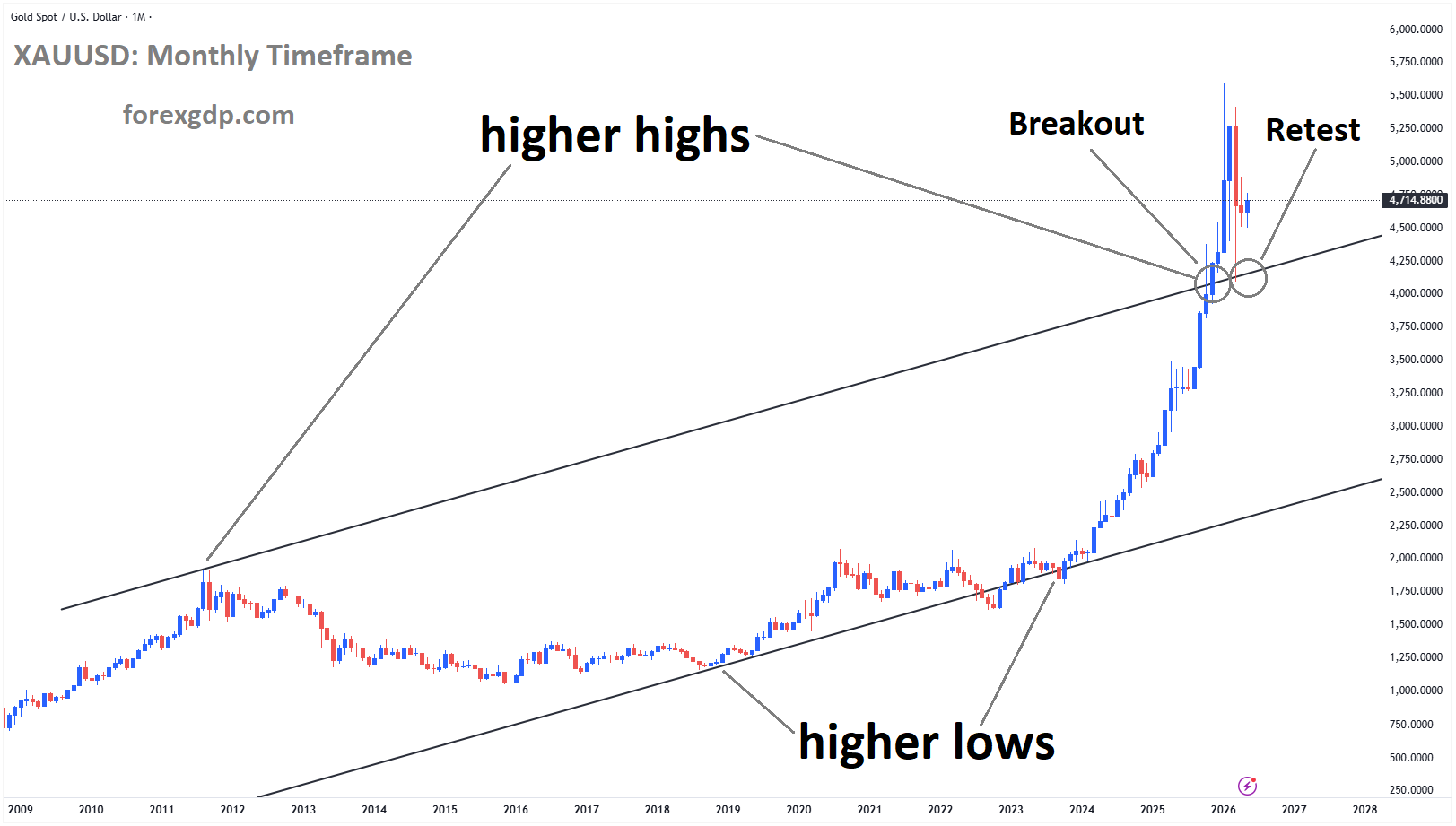
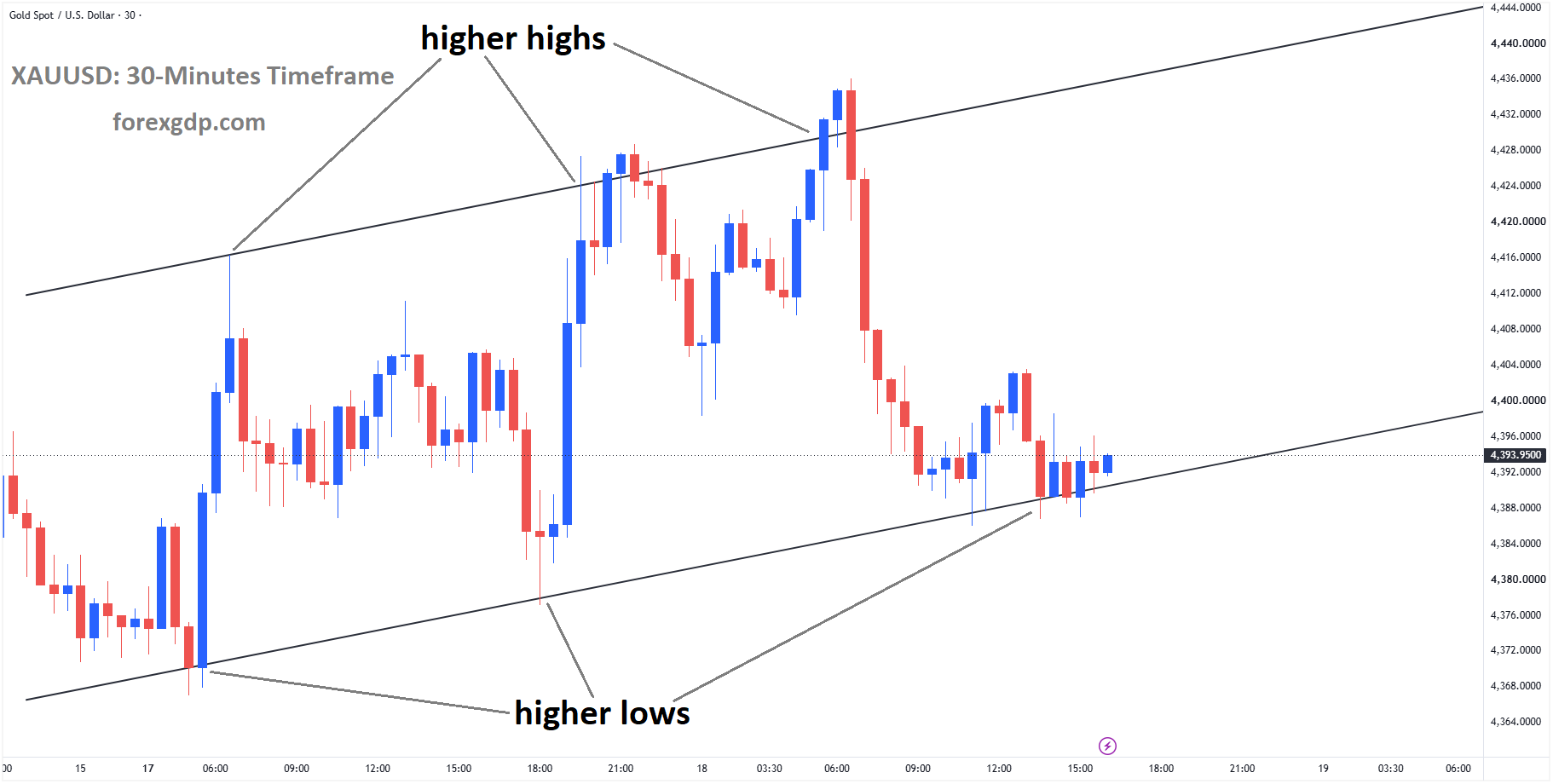
XAUUSD is rebounding from the retest area of the broken ascending channel
Gold continues to benefit from this uncertain environment. Even though the metal has not seen explosive gains, it has managed to remain resilient and close to recent highs.
At the same time, traders appear unwilling to make aggressive moves before the release of the US jobs report. Many investors prefer to wait for clearer signals about the direction of the economy and future Federal Reserve actions before taking larger positions.
Final Summary
Gold prices remain supported as investors react to a combination of geopolitical uncertainty and shifting expectations for US monetary policy. Hopes for a possible US-Iran agreement have weakened demand for the US Dollar while also easing inflation concerns through lower oil prices.
At the center of market attention now is the upcoming US Nonfarm Payrolls report. The data could significantly influence expectations for future Federal Reserve decisions and determine the next major move for both the dollar and gold prices.
With uncertainty still present across global markets, gold continues to hold its position as a preferred safe-haven asset for many investors.