

Trading has a strange way of pulling people in. One moment you are casually scrolling through market charts, and the next, you are glued to a screen at midnight convincing yourself that one more trade will somehow change your life. It feels exciting at first. The flashing numbers, the quick wins, the stories of overnight success—they create an illusion that trading is only about strategy. But the truth is far less glamorous.
Most traders fail long before they ever place a bad trade. They fail because they never define what they truly want. They jump into the market chasing profits without understanding the deeper reason behind their actions. It is like setting sail into a storm without a destination. You may move quickly, but you are still lost.
The idea of defining goals before defining trades sounds simple, almost too simple. Yet this small shift changes everything. Goals become the compass. Trades become the vehicle. Without that order, emotions take control, and emotions are terrible financial advisors.
Why Most Traders Start the Wrong Way
Many people enter trading with a hungry mindset. They want fast money, freedom from their jobs, or proof that they are smarter than the average person. There is nothing wrong with ambition, but ambition without direction becomes chaos. The market can smell desperation like sharks smell blood in water.
A beginner trader often focuses on the wrong questions. Which indicator works best? Which currency pair moves the most? Which setup creates instant profits? Those questions seem logical, yet they ignore the foundation of long-term success. The better question is much simpler: what are you actually trying to achieve?
The Trap of Chasing Quick Profits
The internet has made trading look like a shortcut to wealth. Social media is filled with screenshots of massive gains, luxury cars, and people pretending they cracked the financial code before turning twenty-five. It creates pressure. Suddenly, slow progress feels like failure.
The problem is that quick-profit thinking encourages reckless decisions. Traders risk too much because they want dramatic results. They enter trades without patience because they fear missing out. It becomes less about discipline and more about emotional gambling disguised as strategy.
Emotions Become the Real Enemy
Fear and greed quietly sit behind every impulsive trade. One winning streak creates overconfidence, while one losing streak creates panic. Traders who never defined their goals become vulnerable to these emotional swings because they have no bigger framework guiding them.
Imagine driving a car at night without headlights. That is what emotional trading feels like. You react to every bump in the road because you cannot see the bigger picture ahead. Goals act like headlights. They keep your vision clear even when conditions become uncomfortable.
Short-Term Thinking Creates Long-Term Damage
Many traders burn their accounts not because they lack intelligence, but because they lack patience. They want a year’s worth of progress in a single week. That mindset creates dangerous habits. Oversized positions, revenge trading, and constant strategy hopping slowly destroy consistency.
Trading rewards steady thinkers, not emotional sprinters. The market is less like a casino and more like farming. You plant seeds, protect them carefully, and wait. Anyone expecting instant harvest will eventually leave empty-handed.
The Illusion of Strategy Without Purpose
A strategy without purpose is like owning expensive gym equipment while never deciding why you want to get fit. You can have the best tools in the world and still fail because your motivation lacks clarity.
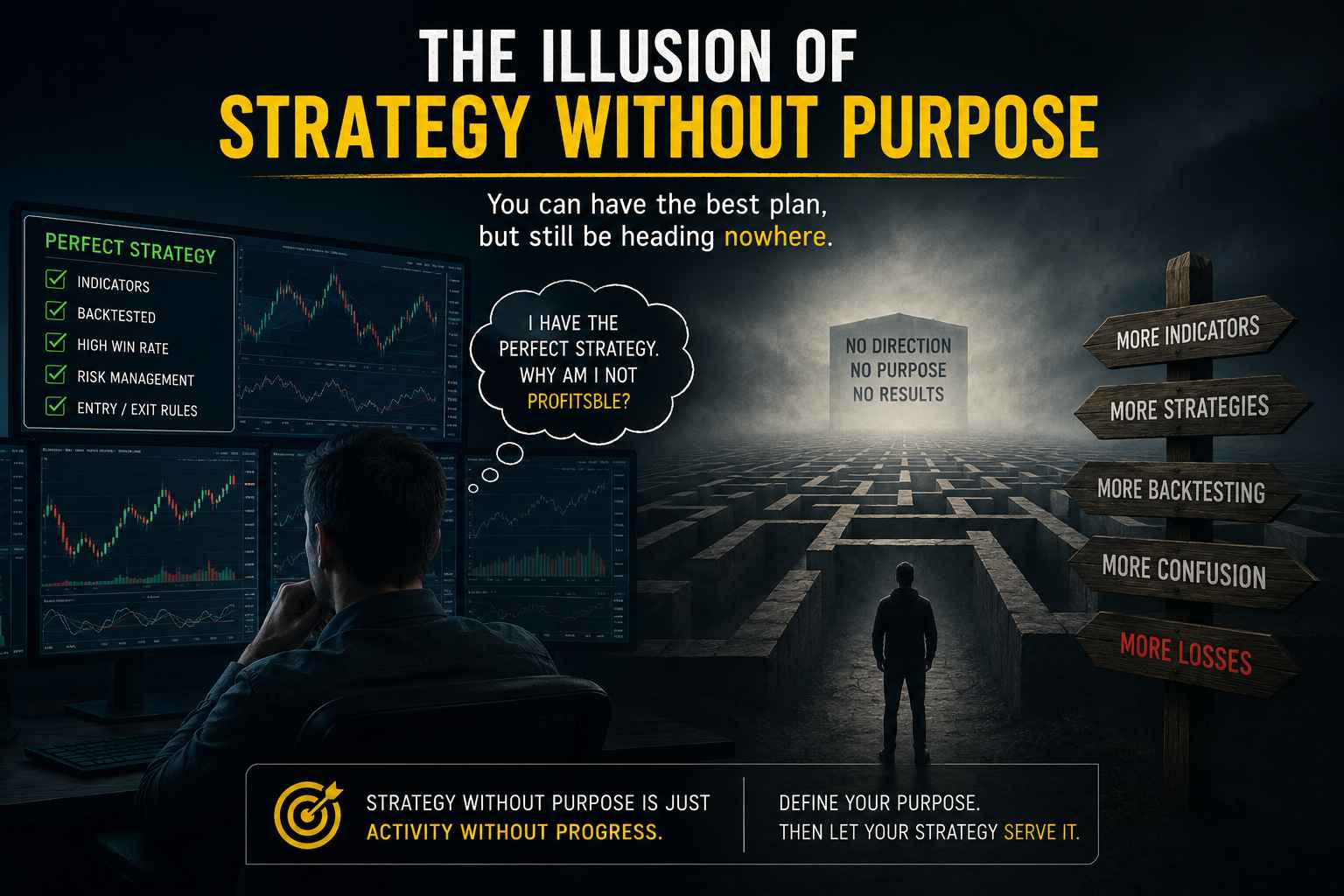
Some traders spend years collecting indicators and systems but never ask themselves what kind of lifestyle they actually want. Do they want supplemental income? Full-time freedom? Wealth preservation? Different goals require different approaches.
Every Trading Style Has a Cost
Scalping may provide excitement, but it demands intense focus and emotional endurance. Swing trading requires patience and comfort with uncertainty. Long-term investing tests discipline and emotional resilience. No style is universally superior because every style extracts a different psychological price.
Without clear goals, traders often choose methods that clash with their personalities. That mismatch creates frustration. It feels like wearing shoes two sizes too small. Technically, you can still walk, but every step becomes painful.
Success Looks Different for Everyone
One trader may feel successful earning consistent monthly income while working part-time. Another may aim for aggressive portfolio growth. Someone else may simply want financial security during retirement. None of these goals are wrong.
The mistake happens when traders compare themselves endlessly to others. Comparison creates unnecessary pressure. It turns trading into a race instead of a personal journey. Markets already create enough stress without adding ego battles into the mix.
The Power of Defining Clear Trading Goals
Goals create structure. They transform random activity into meaningful progress. When a trader understands their destination, decision-making becomes far easier. The noise of the market loses some of its power.
Clear goals also create emotional stability. Instead of obsessing over every single trade, traders begin evaluating their long-term direction. A single loss stops feeling like the end of the world.
Financial Goals Bring Focus
Money is usually the first motivation people mention when discussing trading. That makes sense. Nobody enters the market hoping to lose. Still, vague financial goals often create disappointment because they lack realism.
Saying “I want to get rich” is emotionally satisfying but practically useless. Clear financial goals need shape and context. A trader aiming for steady monthly growth behaves differently from someone trying to double an account overnight.
Realistic Expectations Reduce Pressure
Unrealistic expectations create emotional exhaustion. Traders start forcing trades because they believe every day must produce huge returns. The market rarely works that way. Some days are quiet. Some weeks feel frustratingly slow.
When expectations become realistic, patience improves naturally. Traders stop treating every market movement like an emergency. They understand that consistency matters far more than dramatic wins.
Steady Growth Beats Emotional Highs
Big wins feel exciting, but emotional highs often lead to careless decisions. A trader who suddenly earns massive profits may become overconfident and reckless. It is similar to someone speeding after surviving one dangerous turn on the highway.
Steady growth may seem boring compared to flashy profits, yet boring is often beautiful in trading. Consistency builds confidence. Confidence builds discipline. Discipline protects longevity.
Lifestyle Goals Matter More Than People Admit


Some people imagine trading will instantly create freedom. The reality is more complicated. Certain trading styles can become emotionally draining and time-consuming. Without lifestyle goals, traders may accidentally build routines they hate.
Trading should support your life, not consume it entirely. Otherwise, success starts feeling strangely empty.
Freedom Looks Different for Different People
For some traders, freedom means flexible work hours. For others, it means reducing financial anxiety. A parent may value time with family more than chasing massive profits. Someone else may simply want enough income to travel comfortably.
These personal definitions matter because they influence trading decisions. A trader seeking balance will likely manage risk differently than someone chasing aggressive expansion.
Burnout Is More Common Than People Think
Staring at charts for endless hours can quietly drain mental energy. Traders often underestimate how emotionally exhausting constant market exposure can become. The pressure builds slowly, almost invisibly.
Burnout creates poor judgment. Small losses feel personal. Patience disappears. Confidence collapses. Goals connected to lifestyle help prevent this spiral because they remind traders why balance matters.
Psychological Goals Shape Long-Term Success
Trading is deeply psychological. Most people assume the challenge is technical, but emotions often create the biggest obstacles. Fear whispers at the worst possible moments, while greed convinces traders to abandon discipline.
Psychological goals help traders build emotional strength instead of merely chasing profits.
Discipline Is More Valuable Than Intelligence
Many brilliant people fail at trading because intelligence alone cannot control emotions. Discipline matters more. A disciplined trader follows rules even during uncomfortable moments.
This is where clear goals become powerful. Goals create accountability. They provide reasons to stay consistent even when temptation appears.
Confidence Comes From Clarity
Unclear goals create uncertainty. Uncertainty creates hesitation. Hesitation leads to inconsistent decisions. It becomes a frustrating cycle.
Traders with clear goals usually carry calmer energy. They know what they are working toward, so temporary setbacks feel manageable. Confidence grows not from winning every trade, but from understanding the bigger journey.
How Goal-Driven Trading Changes Decision Making
Once goals become clear, trading decisions begin to feel less random. The market still moves unpredictably, but the trader no longer reacts emotionally to every fluctuation.
Goal-driven trading creates filters. Instead of chasing every opportunity, traders focus only on situations aligned with their long-term vision.
Risk Management Becomes Easier


Risk management sounds boring until disaster strikes. Most traders ignore it during winning periods because confidence blinds them. Then one bad trade wipes out weeks of progress.
Clear goals naturally improve risk management because traders start protecting their future instead of gambling for excitement.
Protecting Capital Becomes a Priority
A trader with long-term goals understands that survival matters. Losing an account creates setbacks that can take months or years to recover from. Preservation suddenly becomes more important than ego.
This mindset shift changes behavior dramatically. Trades become more calculated. Position sizes become more reasonable. Emotional desperation fades slightly.
Patience Starts Feeling Powerful
Impatient traders often treat inactivity like weakness. They believe constant action equals progress. In reality, unnecessary trades quietly drain accounts.
Patience becomes easier when goals exist because traders no longer need immediate validation. Waiting for quality setups starts feeling intelligent instead of frustrating.
Consistency Replaces Emotional Chaos
Trading without goals feels emotionally exhausting because every result feels personal. One win creates euphoria. One loss creates self-doubt. It becomes a psychological roller coaster.
Goals reduce this emotional turbulence by creating a broader perspective.
Losses Stop Feeling Catastrophic
Every trader loses. That reality never changes. The difference lies in emotional reaction. Traders without goals often interpret losses as personal failures. Goal-driven traders view them as part of the process.
This mental shift is incredibly important. Emotional stability protects decision-making during difficult periods.
Confidence Grows Through Routine
Consistency creates rhythm. Traders who follow structured routines develop stronger habits over time. Small daily actions eventually produce major long-term results.
It is similar to fitness. One workout changes very little, but years of disciplined training transform the body. Trading works the same way. Quiet consistency often beats dramatic intensity.
Decision Fatigue Starts Disappearing
The human brain becomes tired after making too many emotional decisions. Traders constantly reacting to market noise experience mental exhaustion without realizing it.
Goals simplify choices because they eliminate unnecessary distractions.
Clarity Reduces Overthinking
Overthinking is common in trading. Traders second-guess entries, exits, and strategies until confusion takes over. Clear goals reduce this problem because decisions become aligned with a larger framework.
Not every opportunity deserves attention. That realization alone saves traders from countless emotional mistakes.
Focus Creates Emotional Calm
A focused trader feels calmer because their attention stays narrow. They are not chasing every shiny setup or obsessing over every market rumor.
Focus acts like mental armor. It protects energy. It reduces stress. It creates stability during uncertain market conditions.
Building a Trading Mindset That Lasts


Most people treat trading like a sprint. They rush into the market full of excitement, only to burn out months later. Sustainable trading requires a completely different mentality.
Longevity matters more than intensity. Anyone can feel motivated temporarily. The challenge is remaining disciplined when motivation disappears.
Self-Awareness Changes Everything
Trading exposes personality flaws quickly. Impatience, arrogance, fear, and insecurity all appear under pressure. The market acts like a mirror reflecting emotional weaknesses back at the trader.
Ignoring these weaknesses creates repeated mistakes.
Your Personality Influences Your Trading
Some people thrive under fast-paced pressure, while others perform better with slower decision-making. Understanding personal tendencies helps traders choose strategies that fit naturally.
Forcing yourself into an unsuitable style creates unnecessary frustration. Trading already involves enough difficulty without fighting your own personality.
Honesty Creates Improvement
Many traders avoid honest self-reflection because it feels uncomfortable. It is easier to blame the market than admit emotional mistakes.
Yet growth begins with honesty. A trader willing to evaluate weaknesses calmly gains a massive long-term advantage.
Adaptability Matters More Than Perfection
Markets constantly evolve. Strategies that worked beautifully last year may suddenly struggle. Traders obsessed with perfection often panic during these transitions.
Adaptable traders survive because they remain flexible without abandoning discipline.
Mistakes Are Part of the Journey
Every experienced trader carries painful memories of bad decisions. Losses teach lessons that success sometimes cannot. The key is learning instead of repeating.
Mistakes only become truly dangerous when ego prevents reflection.
Resilience Builds Quiet Strength
Resilience rarely looks dramatic. It is not loud motivation or flashy confidence. It is the quiet ability to continue despite setbacks.
Trading tests resilience constantly. Bad weeks happen. Frustrating months happen. Clear goals help traders push forward during difficult periods because they remember the bigger picture.
Purpose Creates Endurance
Purpose gives trading emotional meaning beyond money. Without purpose, setbacks feel unbearable because there is no deeper reason to continue.
Purpose transforms discipline from forced effort into intentional action.
Motivation Comes and Goes


Motivation is unreliable. Some days you feel energized, while other days you question everything. Traders depending entirely on motivation eventually struggle during difficult periods.
Purpose creates stability because it remains deeper than temporary emotion.
Long-Term Thinking Changes Behavior
A trader focused on long-term growth behaves differently from someone chasing instant gratification. Decisions become calmer. Risks become smarter. Emotional reactions lose intensity.
Long-term thinking acts like an anchor during market storms. It keeps traders grounded when chaos appears.
Final Thoughts
Trading is not just about charts, indicators, or finding magical strategies. At its core, trading is deeply personal. It reflects your mindset, your habits, your fears, and your ambitions. That is why defining goals before defining trades matters so much.
Without goals, trading becomes emotional wandering. Every market movement feels overwhelming because there is no deeper direction guiding decisions. But when goals become clear, everything changes. Risk management improves. Patience grows stronger. Confidence becomes steadier.
The market will always remain unpredictable. Losses will still happen. Stress will still appear. Yet traders with purpose navigate uncertainty differently. They stop chasing every opportunity and start building sustainable habits instead.
In the end, successful trading is less about mastering the market and more about mastering yourself. Goals provide the roadmap. Trades are simply the steps along the journey.
FAQs
1.Why is goal setting important in trading?
Goal setting creates direction and emotional stability. Traders with clear goals make more disciplined decisions and avoid impulsive behavior driven by fear or greed.
2.Can trading without goals lead to losses?
Yes, because traders without goals often chase quick profits, overtrade, and take unnecessary risks. Lack of direction usually creates emotional decision-making.
3.How do realistic goals improve trading performance?
Realistic goals reduce pressure and encourage patience. Traders stop forcing trades and focus more on consistency rather than dramatic short-term gains.
4.What type of goals should traders focus on?
Traders should focus on financial goals, lifestyle goals, and psychological goals. A balanced approach creates healthier long-term habits.
5.Does psychology matter more than strategy in trading?
Strategy is important, but psychology often determines whether a trader can follow that strategy consistently. Emotional control and discipline play massive roles in long-term success.