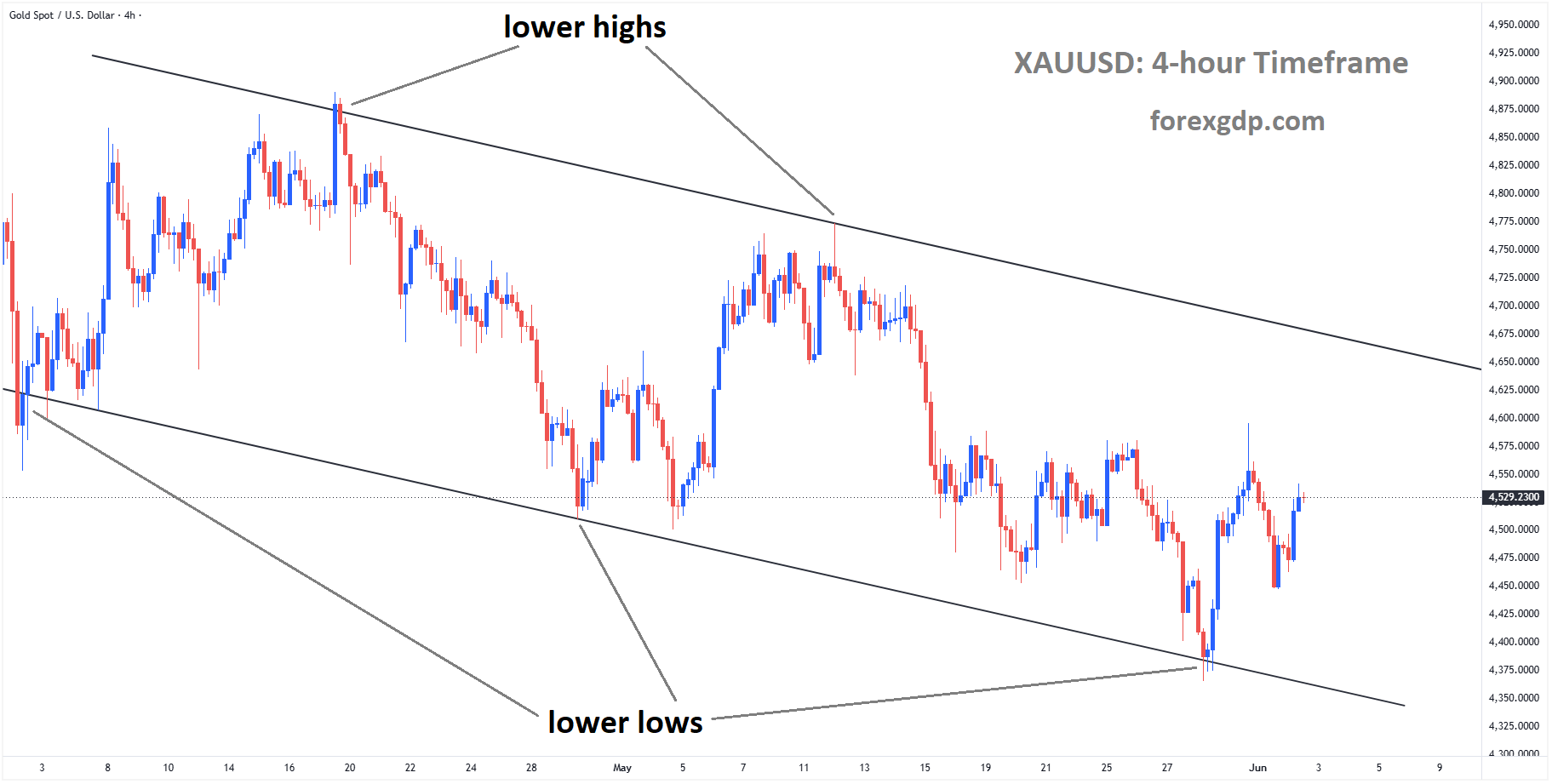
XAUUSD is moving in a descending channel, and the market has rebounded from the lower low area of the channel
Gold prices moved slightly higher on Tuesday, supported by a softer US Dollar after news of a partial ceasefire between Israel and Hezbollah helped ease some immediate geopolitical concerns. While the precious metal managed to recover some ground, gains remained limited as investors continued to weigh uncertainty surrounding US-Iran negotiations and expectations for future US monetary policy.
The market remains cautious, with traders avoiding aggressive positions ahead of important US economic data releases later this week, particularly the closely watched Nonfarm Payrolls (NFP) report.
Partial Israel-Hezbollah Ceasefire Supports Gold
One of the key developments influencing financial markets has been the announcement of a limited ceasefire between Israel and Hezbollah. The agreement has helped reduce fears that tensions in the Middle East could escalate into a broader regional conflict.
US President Donald Trump stated that Israel had agreed to withdraw forces that were reportedly preparing for operations near Beirut and surrounding Hezbollah-controlled areas. He also indicated that communication through intermediaries had secured assurances from Hezbollah that it would refrain from launching attacks on Israel.
The easing of immediate military tensions weakened demand for the US Dollar, which is often viewed as a safe-haven asset during times of uncertainty. As the Dollar lost some momentum, Gold benefited because a weaker Dollar generally makes the metal more attractive to buyers around the world.
However, the positive impact on Gold has been modest. Investors remain cautious because the ceasefire only represents a limited step toward de-escalation and does not fully remove geopolitical risks from the region.
US-Iran Negotiations Continue to Create Uncertainty
While the Israel-Hezbollah situation showed signs of improvement, uncertainty surrounding relations between the United States and Iran continued to influence market sentiment.
Iran recently warned that it could suspend negotiations with Washington following fresh military strikes and ongoing security concerns in the region. These comments raised doubts about the future of diplomatic efforts aimed at resolving tensions that have persisted for several months.
At the same time, President Trump maintained an optimistic tone, saying that discussions with Iran were still progressing. He expressed confidence that an agreement could be reached to extend the ceasefire and facilitate the reopening of the Strait of Hormuz, one of the world’s most important energy shipping routes.
The mixed messages from both sides have left investors uncertain about the direction of future negotiations. As a result, many market participants are choosing to remain on the sidelines until there is clearer evidence of progress.
This uncertainty has helped prevent significant declines in the US Dollar, which in turn has limited Gold’s ability to extend its gains.
Inflation Concerns and Interest Rate Expectations Limit Upside
Another factor influencing Gold prices is the outlook for inflation and monetary policy.
Recent concerns about elevated energy costs have increased fears that inflation could remain higher than expected. If inflation stays persistent, central banks may be less willing to adopt a more accommodative policy stance.
In the United States, investors are paying close attention to signals from the Federal Reserve. Many traders believe that policymakers may continue to maintain a firm approach toward inflation if price pressures remain elevated.
Gold is traditionally considered a hedge against inflation, but it also faces challenges when interest rates are expected to stay high. Since Gold does not generate interest or yield, it can become less attractive compared to income-producing assets during periods of tighter monetary policy.
As a result, expectations surrounding future Federal Reserve decisions are acting as a restraint on stronger gains in the precious metal.
Economic Data Takes Center Stage
Beyond geopolitical developments, traders are closely monitoring upcoming US economic reports for clues about the strength of the labor market and the broader economy.
Attention during Tuesday’s trading session is expected to focus on the Job Openings and Labor Turnover Survey (JOLTS), which provides insight into hiring demand across the United States. The report can influence expectations regarding economic growth and future Federal Reserve policy decisions.
However, the most significant event on the economic calendar remains Friday’s Nonfarm Payrolls report. The monthly employment data is widely regarded as one of the most influential indicators for financial markets.
A stronger-than-expected labor market could reinforce expectations that the Federal Reserve will maintain a cautious stance on interest rates, potentially supporting the US Dollar. Conversely, signs of weakness in employment growth could increase speculation about future policy adjustments and impact both the Dollar and Gold.
Because of the report’s importance, many investors are avoiding major commitments until the data is released.
Market Sentiment Remains Cautious
Despite Gold’s modest recovery, overall market sentiment remains balanced between competing forces.
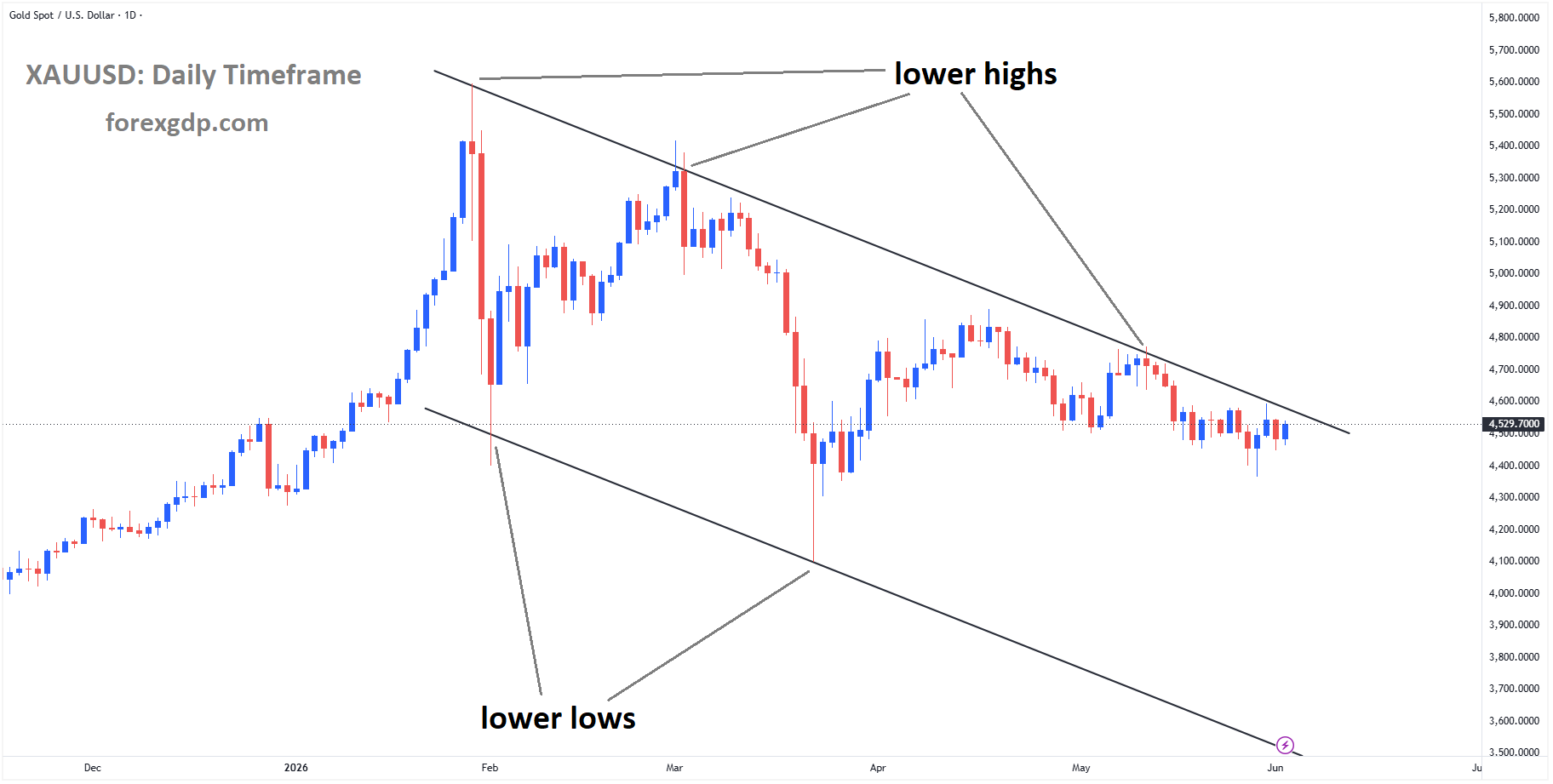
XAUUSD reached a lower high area of the descending channel
On one side, ongoing geopolitical uncertainty and a softer US Dollar provide support for the precious metal. On the other, uncertainty over US-Iran negotiations, inflation concerns, and expectations that central banks could maintain a firm policy stance continue to limit enthusiasm among buyers.
The combination of these factors has kept Gold trading within a relatively constrained range, with investors waiting for stronger catalysts before making larger directional moves.
Future developments in the Middle East will remain a major driver of sentiment. Any signs of further de-escalation could reduce demand for safe-haven assets, while renewed tensions could quickly boost interest in Gold.
Summary
Gold managed to post modest gains as a partial ceasefire between Israel and Hezbollah reduced immediate geopolitical fears and weighed on the US Dollar. However, ongoing uncertainty surrounding US-Iran negotiations, concerns about inflation, and expectations that the Federal Reserve could maintain a firm policy stance have prevented stronger advances.
Investors are now focused on key US economic data, particularly the upcoming Nonfarm Payrolls report, which could provide important clues about the health of the economy and the future direction of monetary policy. Until clearer signals emerge from both economic data and geopolitical developments, Gold is likely to remain influenced by a delicate balance between safe-haven demand and broader market expectations.