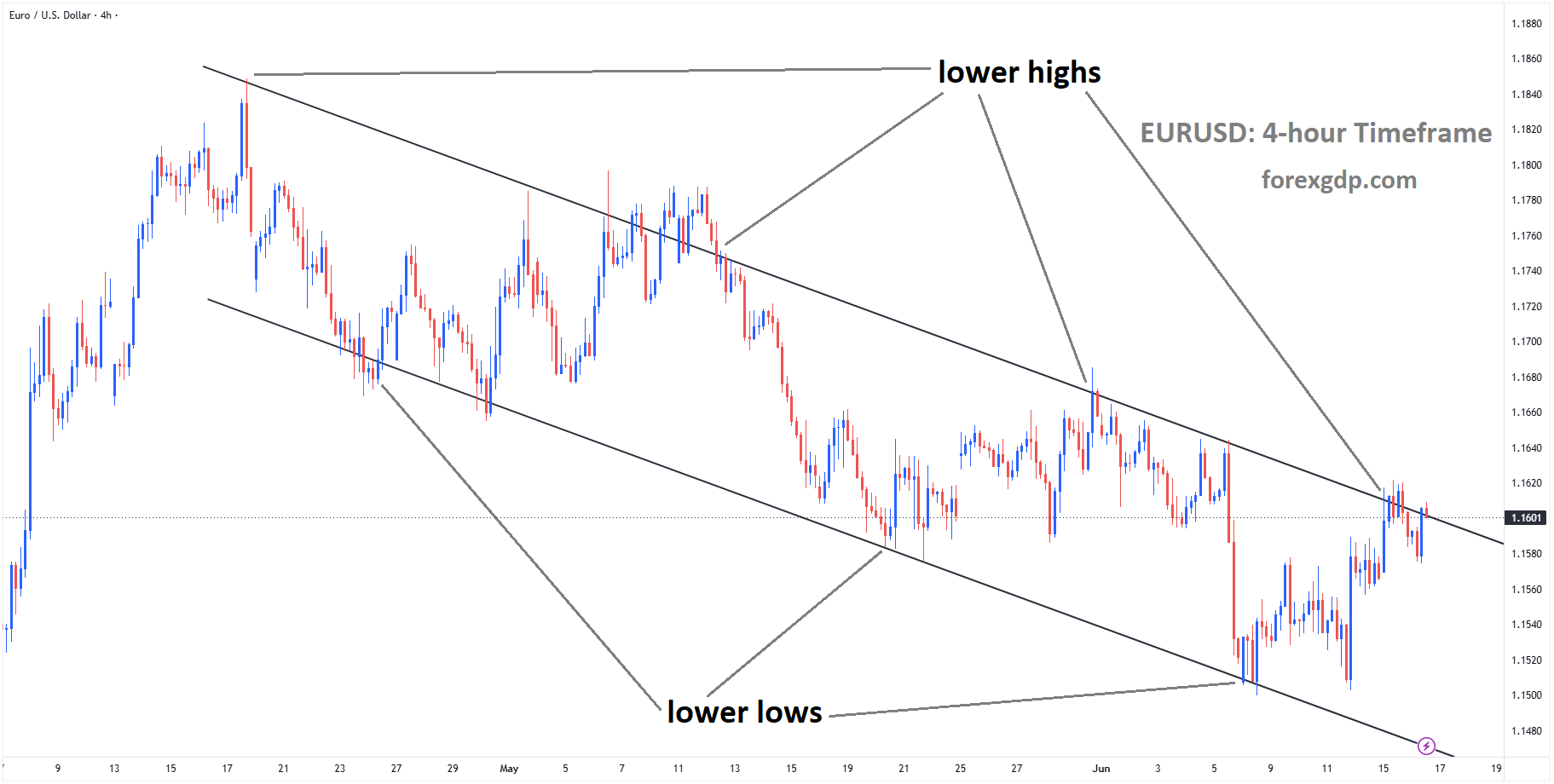
EURUSD reached a lower high area of the descending channel
EURUSD Climbs Past 1.1600 as German Investor Confidence Rebounds Strongly
The Euro strengthened against the US Dollar on Tuesday, moving back above the 1.1600 level after fresh economic sentiment data from Germany and the wider Eurozone delivered a stronger-than-expected performance. The latest figures helped boost confidence in the region’s economic outlook, although ongoing geopolitical concerns and anticipation surrounding the upcoming Federal Reserve meeting continued to limit stronger gains.
German Investor Confidence Returns to Positive Territory
A key driver behind the Euro’s advance was the latest survey from Germany’s ZEW Institute, which measures economic sentiment among institutional investors and analysts.
The June report showed a significant improvement in investor confidence. Germany’s Economic Sentiment Index rose sharply to 10.5 from May’s reading of -10.2. Economists had expected another negative result, making the positive reading a notable surprise.
This marks the first time the indicator has returned to positive territory since February, signaling that investors are becoming more optimistic about the country’s economic prospects. The improvement suggests that market participants believe conditions may be stabilizing after several months of uncertainty.
The stronger sentiment reading provided support for the Euro, as investors interpreted the data as a sign that Europe’s largest economy could be moving toward a more favorable growth environment.
Eurozone Outlook Also Shows Signs of Recovery
The positive trend was not limited to Germany. The broader Eurozone also recorded an improvement in economic sentiment during June.
The Eurozone ZEW Economic Sentiment Index climbed to 9.5 from -9.1 in May. Analysts had expected only a modest recovery, making the latest result another upside surprise.
The move into positive territory reflects growing confidence among investors across the currency bloc. Improved sentiment can often indicate expectations for stronger business activity, consumer demand, and overall economic performance in the months ahead.
For financial markets, the data offered reassurance that economic conditions in Europe may be improving despite persistent global uncertainties.
Current Economic Conditions Remain Challenging
While investor expectations improved considerably, not all parts of the report painted a positive picture.
The assessment of Germany’s current economic conditions continued to weaken. The indicator measuring perceptions of the present economic situation fell to -81 in June from -77.8 in May. Economists had expected a slight improvement instead.
This decline highlights an important distinction between expectations for the future and the reality of current economic conditions. Investors may be increasingly optimistic about the months ahead, but many still see significant challenges affecting Germany’s economy today.
Factors such as slower industrial activity, global trade uncertainties, and cautious consumer spending continue to weigh on current economic performance. As a result, the encouraging sentiment figures were partly offset by concerns about ongoing economic weakness.
Geopolitical Developments Keep Investors Cautious
Despite the stronger economic data, the Euro’s gains remained relatively modest.
Market participants continue to monitor developments surrounding the recently announced peace agreement involving the United States and Iran. Investors are waiting for more detailed information about the arrangement and its potential impact on global markets, energy supplies, and geopolitical stability.
Periods of geopolitical uncertainty often encourage a more cautious approach among traders and investors. Until greater clarity emerges, many market participants appear reluctant to make aggressive bets on major currencies.
This cautious mood helped prevent a stronger rally in the Euro despite the encouraging economic sentiment readings.
Focus Shifts to the Federal Reserve Meeting
Attention is now turning toward the upcoming Federal Reserve policy announcement, which is expected to be one of the most important market events of the week.
The US central bank is widely expected to leave interest rates unchanged. However, investors are paying close attention to the accompanying statements, economic forecasts, and press conference for clues about the future direction of monetary policy.
Particular interest surrounds the influence of new Federal Reserve Chairman Kevin Warsh and whether his leadership could shape a different policy approach in the months ahead.
Markets will also closely examine updated economic projections and interest-rate expectations from Federal Reserve officials. These forecasts often provide valuable insight into how policymakers view inflation, economic growth, and labor market conditions.
What Traders Are Watching Next
The combination of stronger European sentiment data and an important Federal Reserve decision creates a potentially significant moment for currency markets.
Investors are trying to determine whether improving confidence in Europe can translate into stronger economic growth over the coming months. At the same time, they are assessing how US monetary policy may evolve and what that could mean for the strength of the US Dollar.
If future data continue to show improving sentiment and economic activity across Europe, the Euro could receive additional support. However, ongoing geopolitical developments and central bank decisions remain major factors influencing market direction.
Summary
The Euro received a boost after economic sentiment surveys from Germany and the Eurozone exceeded expectations, with both indicators returning to positive territory for the first time in months. The data suggest growing optimism among investors regarding the region’s future economic prospects.
However, concerns remain about current economic conditions in Germany, which continue to show signs of weakness. In addition, uncertainty surrounding geopolitical developments and the upcoming Federal Reserve meeting has kept investor enthusiasm in check.
As markets await further details on international developments and signals from US policymakers, the balance between improving European confidence and broader global risks is likely to remain a key driver of currency market sentiment in the near term.
GBPUSD Slips as Traders Await Fresh Details on US-Iran Peace Agreement
The British Pound remained under slight pressure against the US Dollar on Tuesday as investors continued to assess developments surrounding the emerging agreement between the United States and Iran. While the currency pair showed modest strength in the previous session, renewed demand for the US Dollar and growing caution among traders limited further gains.
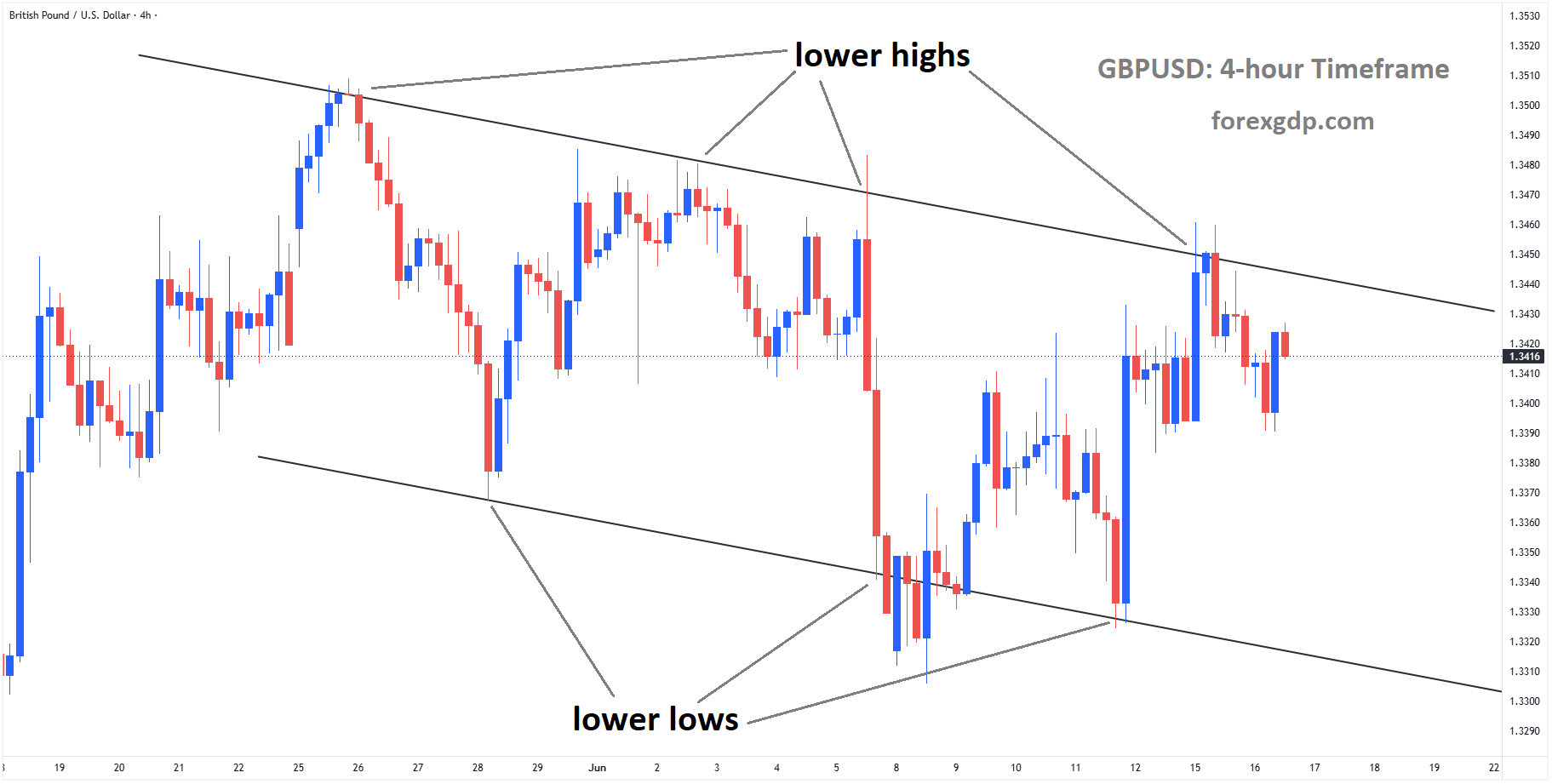
GBPUSD is moving in a descending channel, and the market has fallen from the lower high area of the channel
Financial markets are closely watching geopolitical developments in the Middle East, upcoming decisions from major central banks, and a busy week of economic data from the United Kingdom. Together, these factors are shaping sentiment across global markets and influencing currency movements.
US Dollar Finds Support Amid Geopolitical Uncertainty
The US Dollar gained some stability as investors adopted a more cautious stance while waiting for additional information about the reported understanding between Washington and Tehran.
Although US President Donald Trump announced that both sides had signed a memorandum of understanding aimed at ending tensions and restoring normal operations in the Strait of Hormuz, uncertainty remains high. Neither government has yet released the full text of the agreement, leaving markets with limited details about its implementation and long-term impact.
This lack of transparency has created hesitation among businesses and investors. Market participants want to see official confirmation and detailed terms before making major decisions based on the announcement.
As a result, the US Dollar has benefited from its traditional role as a safe-haven currency during periods of uncertainty.
Shipping Industry Waits for More Details
One of the most important questions surrounding the agreement involves the future of the Strait of Hormuz, one of the world’s most critical maritime routes.
The waterway plays a vital role in global trade and energy transportation, making any disruption a significant concern for international markets. While reports suggest that the draft agreement could lead to the reopening of the strait within the next month, shipping companies are not rushing to change their operations.
Major shipping firms are reportedly delaying plans to reroute vessels through the area until they receive clearer guidance and official confirmation from both governments.
The cautious approach highlights how businesses continue to weigh geopolitical risks despite signs of diplomatic progress. For now, uncertainty over the practical details of the agreement remains a key issue for global markets.
Federal Reserve Decision Takes Center Stage
Beyond geopolitical developments, investor attention is also firmly focused on the upcoming Federal Reserve policy meeting.
The US central bank is widely expected to leave interest rates unchanged this week. While markets largely anticipate no immediate policy adjustments, the meeting remains highly significant because investors are looking for clues about future monetary policy direction.
Particular attention will be paid to comments from Federal Reserve Chair Kevin Warsh. Market participants are eager to understand how he plans to guide the central bank in the coming months and what his views are on inflation, economic growth, and financial stability.
Why the Press Conference Matters
Even when interest rates remain unchanged, central bank communication can have a powerful impact on financial markets.
Investors will closely analyze every statement and response from Federal Reserve officials for indications of future policy shifts. Any signals regarding economic risks, inflation expectations, or the timing of future rate changes could influence the direction of the US Dollar and broader market sentiment.
As a result, many traders are avoiding aggressive positions ahead of the announcement, contributing to relatively cautious trading conditions.
Markets Respond Positively but Remain Careful
Despite ongoing uncertainty, global markets have generally responded positively to news of the temporary US-Iran understanding.
The prospect of reduced geopolitical tensions has improved investor confidence across several asset classes. However, optimism remains measured rather than enthusiastic because important questions still need answers.
Investors continue to balance hopes for greater regional stability against concerns that negotiations could face delays or complications. Until official documents are released and implementation begins, many market participants are likely to remain cautious.
This balanced approach has helped prevent dramatic market reactions while still supporting a generally positive risk environment.
Busy Week Ahead for the United Kingdom
While developments in the United States and the Middle East dominate global headlines, investors are also preparing for a significant week of economic events in the United Kingdom.
Several major economic reports are scheduled for release, providing important insights into the health of the British economy. Inflation figures, employment statistics, and retail sales data will all be closely monitored by investors and policymakers.
These reports could influence expectations regarding future monetary policy decisions and the overall economic outlook.
Bank of England Decision in Focus
Another major event on the calendar is the upcoming Bank of England policy announcement.
Market participants will closely examine the central bank’s assessment of economic conditions and any guidance regarding future policy actions. The decision comes at a time when policymakers are balancing concerns about economic growth with ongoing inflation challenges.
The outcome could play an important role in determining the direction of the British Pound in the near term.
Political Developments Add Another Layer of Interest
In addition to economic releases and central bank decisions, the United Kingdom is also preparing for the closely watched Makerfield by-election on Thursday.
Political events can sometimes influence market sentiment, particularly when they have implications for government policy or economic priorities. While the by-election may not have an immediate impact on financial markets, investors will still monitor the results for any broader political signals.
The combination of economic data, monetary policy decisions, and political developments makes this one of the most important weeks for UK-focused investors in recent months.
Summary
The British Pound remains under mild pressure against the US Dollar as investors navigate a complex mix of geopolitical developments and major economic events. Uncertainty surrounding the details of the reported US-Iran agreement has encouraged cautious trading, while the US Dollar continues to benefit from its safe-haven appeal.
At the same time, attention is turning toward the Federal Reserve’s upcoming policy meeting, where investors will seek guidance from Chair Kevin Warsh about the future direction of US monetary policy. Across the Atlantic, a packed schedule of UK economic data, a Bank of England decision, and a key by-election are expected to keep markets active.
With several major events unfolding simultaneously, traders are likely to remain cautious until greater clarity emerges on both the geopolitical and economic fronts.
USDJPY Weakens Ahead of Bank of Japan Meeting as Yen Attracts Buyers
The Japanese Yen strengthened against the US Dollar during early Asian trading on Tuesday, pushing the USD/JPY pair lower. The move came as investors reacted to signs of easing tensions in the Middle East and shifted their attention toward a highly anticipated policy announcement from the Bank of Japan (BoJ).
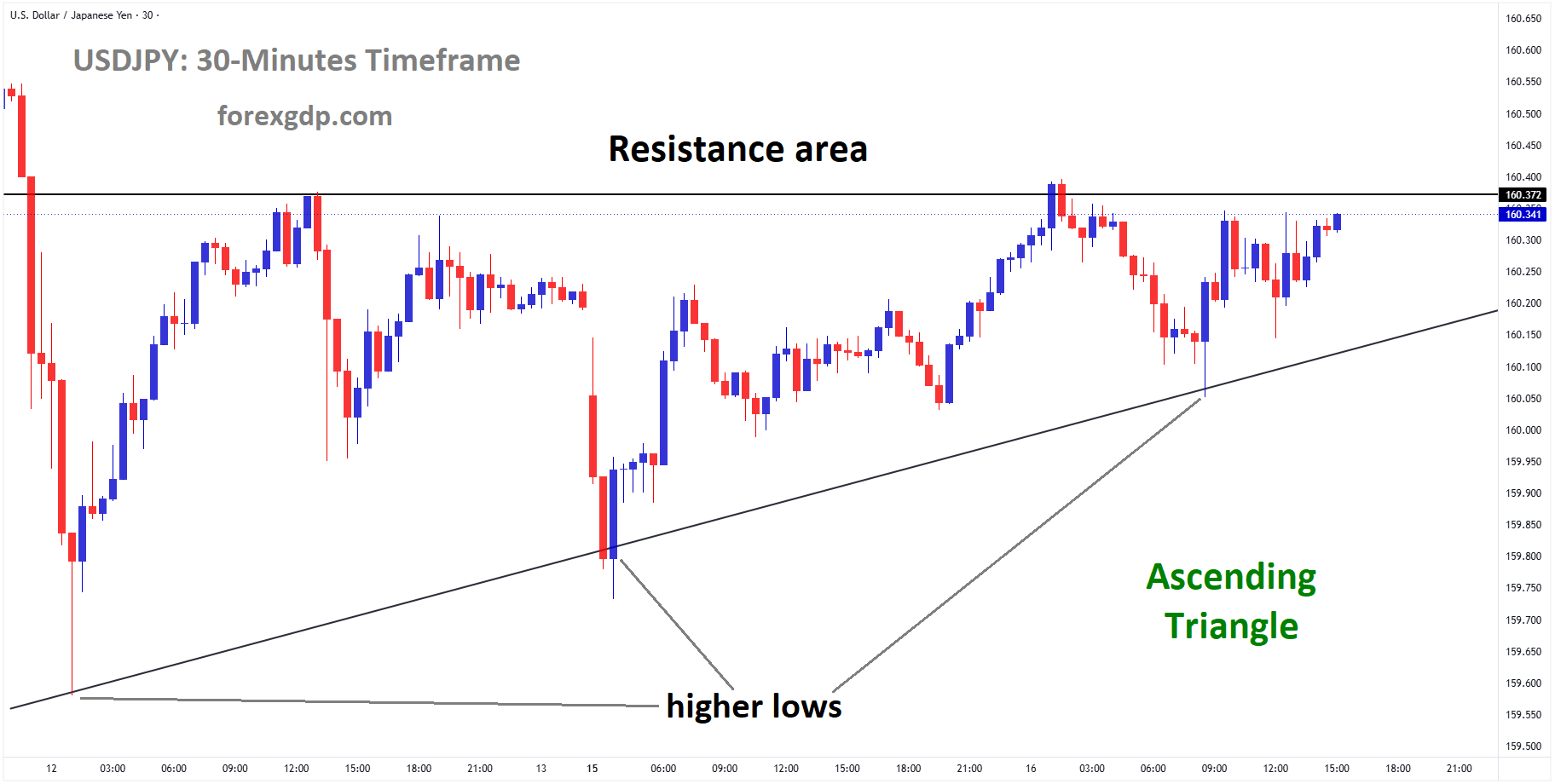
USDJPY is moving in an ascending triangle pattern
Market participants are closely watching the central bank, which is widely expected to deliver another interest rate increase as Japan continues its gradual move away from years of ultra-loose monetary policy.
Middle East Developments Boost Market Confidence
A major factor supporting the Japanese Yen was the announcement of a new agreement involving the United States and Iran. According to reports, US President Donald Trump stated that Iran had agreed not to pursue nuclear weapons.
The agreement reportedly includes several important measures aimed at reducing regional tensions. Among them are the reopening of the Strait of Hormuz, the removal of a US blockade on Iranian ports, and the launch of a 60-day period of nuclear negotiations.
The Strait of Hormuz is one of the world’s most important shipping routes, particularly for global energy supplies. Any disruption in the region can create uncertainty in financial markets and increase concerns about energy costs. News of a deal that could improve stability was welcomed by investors.
The agreement was reportedly signed virtually by Trump and Vice President JD Vance on behalf of the United States, while Iranian Parliament Speaker Mohammad Bagher Ghalibaf signed for Iran.
Improved Risk Sentiment Supports the Japanese Yen
The possibility of a diplomatic breakthrough between Washington and Tehran helped calm concerns about further escalation in the region.
When geopolitical tensions begin to ease, investors often reassess their positions across global markets. In this case, hopes for a more stable environment contributed to renewed demand for the Japanese Yen.
The currency has traditionally been viewed as a safe-haven asset during periods of uncertainty. While changing risk sentiment can sometimes reduce demand for safe-haven currencies, the broader impact of the agreement and expectations surrounding Japanese monetary policy helped support the Yen against the US Dollar.
As a result, the USD/JPY pair moved lower during the session, reflecting stronger demand for Japan’s currency.
Bank of Japan Expected to Deliver Another Rate Hike
The biggest event for currency traders remains the Bank of Japan’s policy decision.
Economists and market analysts largely expect the central bank to raise its short-term policy interest rate from 0.75% to 1.0%. If implemented, the move would mark another significant milestone in Japan’s ongoing effort to normalize monetary policy after decades of extremely low interest rates.
A rate increase would also bring borrowing costs in Japan to their highest level in more than three decades.
The BoJ has been gradually adjusting its policy stance as inflationary pressures remain a concern. Rising energy costs and broader economic impacts linked to international conflicts have contributed to higher prices, prompting policymakers to take a more active approach.
For years, Japan maintained one of the most accommodative monetary policies among major economies. Recent rate increases signal a shift toward a more conventional policy framework aimed at keeping inflation under control while supporting economic stability.
Leadership Changes Add Extra Attention to the Meeting
This week’s policy meeting is attracting additional interest because of unusual circumstances surrounding the central bank’s leadership.
BoJ Governor Kazuo Ueda is currently receiving medical treatment in hospital due to an infected liver cyst. As a result, he will not attend the policy meeting.
Deputy Governor Ryozo Himino will chair the session, making it the first time since 1998 that a Bank of Japan governor has missed a policy meeting.
Meanwhile, Deputy Governor Shinichi Uchida is expected to handle the post-meeting press conference, where investors will look for clues about the central bank’s future policy direction.
The leadership adjustment has added another layer of attention to an already important meeting. Traders will carefully examine any comments regarding inflation, economic growth, and the pace of future policy changes.
What Investors Are Watching Next

While the expected interest rate decision is important, market participants will be equally focused on the BoJ’s outlook for the economy.
Any indication that policymakers plan to continue raising rates in the coming months could strengthen the Yen further. On the other hand, signs of caution regarding future tightening could limit gains in Japan’s currency.
Investors will also continue monitoring developments surrounding the US-Iran agreement. Progress in negotiations and continued stability in the Strait of Hormuz could influence global market sentiment and energy markets in the weeks ahead.
With both geopolitical developments and central bank policy driving market attention, traders are preparing for potentially increased volatility in the USD/JPY pair.
Summary
The USD/JPY pair moved lower during Tuesday’s Asian session as the Japanese Yen gained support from easing Middle East tensions and growing expectations of a Bank of Japan rate hike. Reports of a new US-Iran agreement helped improve confidence in global markets, while attention shifted to the BoJ’s upcoming policy decision. Investors are also closely watching the central bank’s guidance and leadership changes, which could shape expectations for Japan’s monetary policy path in the months ahead.
USDCAD Remains Strong as Traders Weigh Global Uncertainty and Dollar Demand
The USD/CAD currency pair continued to show strength on Tuesday, extending its winning streak for a fourth straight session. Investor attention remains focused on geopolitical developments in the Middle East and the upcoming policy decision from the US Federal Reserve, both of which are influencing sentiment across currency markets.
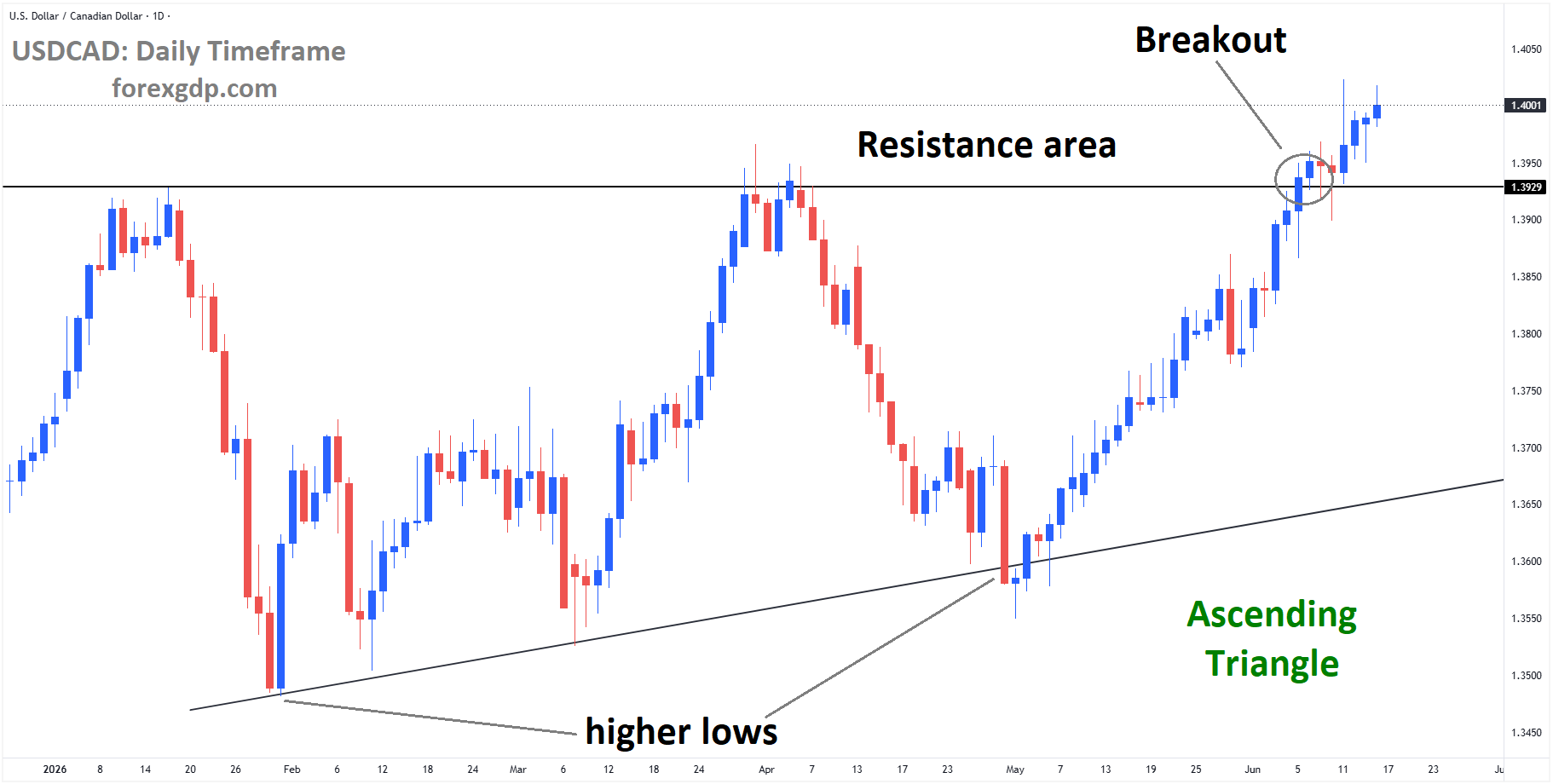
USDCAD has broken the Ascending Triangle to the upside
The US Dollar has found stability in recent sessions, helping support the USD/CAD pair. At the same time, the Canadian Dollar has faced pressure due to weakness in oil markets, creating additional support for the US currency against its Canadian counterpart.
US-Iran Peace Efforts Remain in Focus
One of the biggest factors affecting global financial markets is the ongoing effort to ease tensions between the United States and Iran. Although US President Donald Trump recently announced that both sides had signed a memorandum of understanding aimed at ending the conflict and reopening the Strait of Hormuz, investors remain cautious.
Market participants are still waiting for the official details of the agreement. Neither Washington nor Tehran has released the complete text, leaving several questions unanswered about how and when the proposed measures will be implemented.
This uncertainty has led many major shipping companies to delay important decisions regarding vessel routes through the region. The Strait of Hormuz is one of the world’s most critical energy shipping lanes, and any disruption or uncertainty surrounding its operations can have major consequences for global trade and energy markets.
According to reports from Iran’s semi-official Mehr news agency, the current proposal would allow the Strait of Hormuz to reopen within 30 days under arrangements managed by Iran. However, until more information becomes publicly available, investors are likely to remain cautious.
Falling Oil Prices Weigh on the Canadian Dollar
The Canadian Dollar is often heavily influenced by movements in oil prices because Canada is a major energy exporter. When crude oil prices decline, the country’s export revenues can face pressure, which may reduce support for the Canadian currency.
Recent declines in oil prices have therefore become an important factor behind the Canadian Dollar’s weakness. Traders have been reassessing the outlook for global energy demand and supply as geopolitical tensions show signs of easing.
The possibility of a reopening of the Strait of Hormuz has also contributed to lower concerns about potential supply disruptions. As fears of an energy shortage fade, oil prices have lost some of the support they previously received from geopolitical risks.
This shift has created challenges for the Canadian Dollar, allowing the US Dollar to maintain an advantage in the USD/CAD exchange rate.
Inflation Concerns Begin to Ease
Lower energy prices are having effects beyond currency markets. They are also helping reduce fears that rising fuel costs could trigger another wave of inflation around the world.
In recent months, investors have closely monitored energy markets because sharp increases in oil prices often lead to higher transportation and production costs. These costs can eventually spread throughout the economy, pushing inflation higher.
However, with oil prices moving lower, concerns about a new inflation surge have started to ease. This has reduced expectations that major central banks may need to adopt a more aggressive policy stance to control price pressures.
As inflation worries soften, government bond yields have also moved lower. This development has helped calm concerns about borrowing costs and broader economic conditions in several countries, including Canada.
Federal Reserve Decision Takes Center Stage

While geopolitical developments continue to attract attention, investors are increasingly turning their focus toward the Federal Reserve’s upcoming policy announcement.
The US central bank is widely expected to leave interest rates unchanged at its meeting on Wednesday. Financial markets have largely priced in a decision to maintain the current policy setting, meaning the actual rate announcement may not generate significant surprises.
Instead, attention is likely to shift toward the Federal Reserve’s communication and future guidance.
Market participants are particularly interested in hearing from Federal Reserve Chair Kevin Warsh. As he continues to shape the central bank’s direction, investors are looking for clues about how policymakers view inflation, economic growth, and future interest-rate decisions.
Any signals regarding the timing of future policy adjustments could influence the US Dollar and broader financial markets in the days ahead.
What Traders Are Watching Next
Several key factors could determine the next move for the USD/CAD pair.
First, investors will continue monitoring updates related to the US-Iran agreement. Greater transparency regarding the proposed reopening of the Strait of Hormuz could influence oil prices and global risk sentiment.
Second, developments in energy markets remain critical for the Canadian Dollar. Continued weakness in oil prices could keep pressure on Canada’s currency, while any unexpected rebound in crude markets may offer support.
Finally, the Federal Reserve’s policy statement and leadership commentary could become the most important short-term driver for the US Dollar. Traders will be carefully analyzing every detail for insights into the central bank’s future plans.
Summary
USD/CAD remains supported as the US Dollar stabilizes ahead of important geopolitical and monetary policy developments. Uncertainty surrounding the details of the US-Iran agreement continues to keep investors cautious, while lower oil prices are creating challenges for the commodity-linked Canadian Dollar.
At the same time, easing inflation concerns and expectations for a steady Federal Reserve policy stance are shaping market sentiment. With traders awaiting both further updates from the Middle East and guidance from the Federal Reserve, the USD/CAD pair is likely to remain closely tied to developments in global energy markets and central bank policy discussions.
USDCHF Moves Higher While Investor Caution Strengthens the Greenback
The USD/CHF currency pair moved higher during Tuesday’s Asian trading session, recovering from the slight losses recorded a day earlier. The move reflected continued strength in the US Dollar as investors maintained a cautious approach to global markets amid ongoing uncertainty surrounding diplomatic negotiations between the United States and Iran.
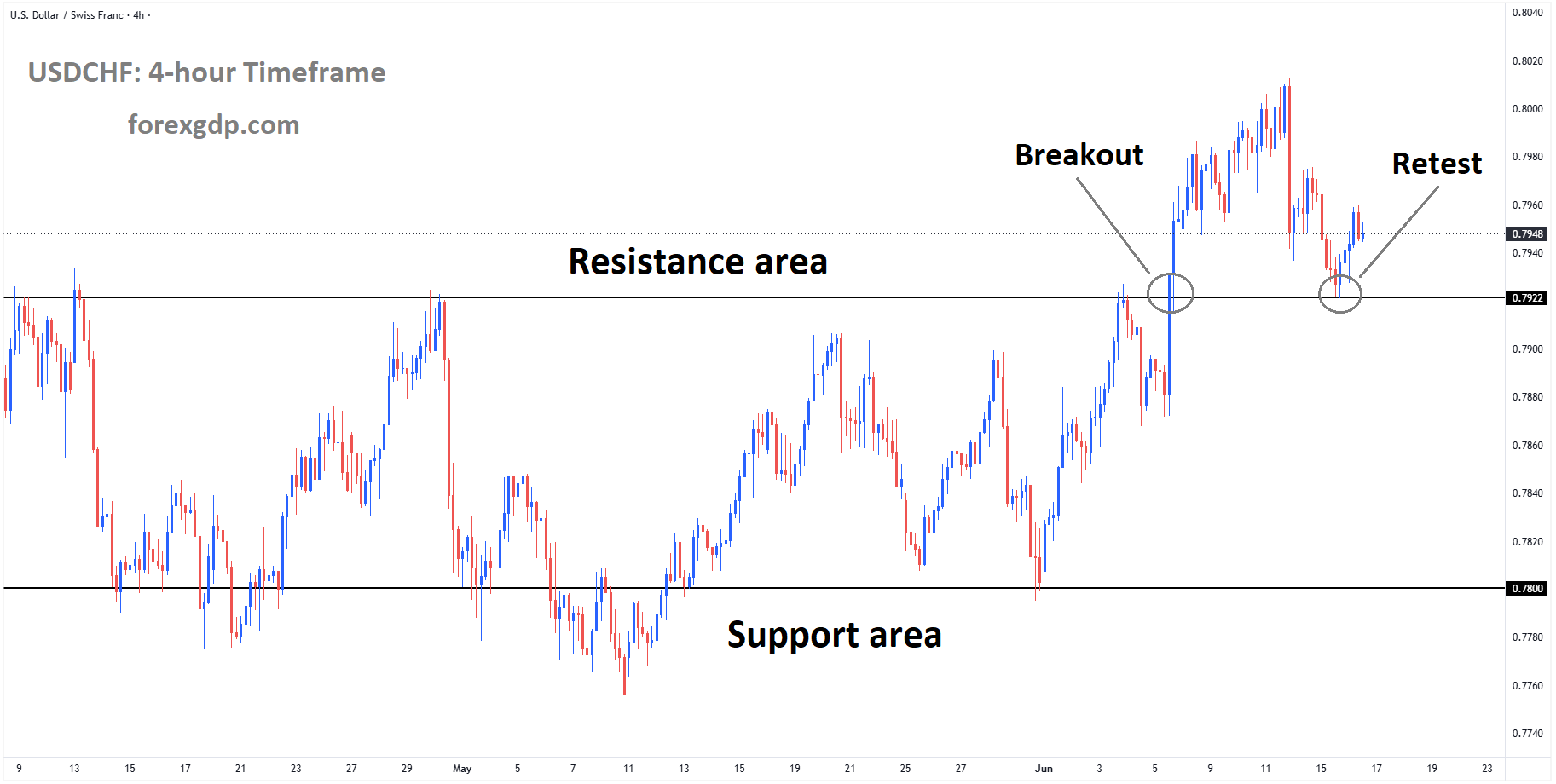
USDCHF is rebounding from the retest area of the broken box pattern
Market sentiment remains fragile as traders wait for additional details about efforts to resolve issues related to Iran’s nuclear program. While progress has been announced, the lack of complete transparency has prevented investors from fully embracing riskier assets, helping support demand for the US Dollar.
Geopolitical Uncertainty Keeps Investors on Edge
Financial markets continue to monitor developments in the Middle East closely. Although officials have signaled progress toward easing tensions, important questions remain unanswered.
US President Donald Trump recently stated that a memorandum of understanding had been signed with the aim of ending the conflict and reopening the Strait of Hormuz, one of the world’s most important shipping routes. However, neither the United States nor Iran has released the complete text of the agreement, leaving investors uncertain about the practical details and implementation timeline.
According to reports from Iran’s semi-official Mehr news agency, the current proposal would allow the Strait of Hormuz to reopen within 30 days under arrangements managed by Iran. Until more information becomes available, many market participants are choosing to remain cautious.
This uncertainty has also affected global shipping companies. Several major shipping operators are reportedly delaying decisions about rerouting vessels through the strategic waterway until there is greater clarity regarding security and operational conditions.
Stronger US Dollar Benefits USD/CHF
The cautious market environment has helped support the US Dollar, which is often viewed as a safe-haven asset during periods of geopolitical uncertainty.
When investors become concerned about global risks, they frequently move funds into assets perceived as more stable. This tendency has provided support for the greenback in recent sessions, allowing it to outperform several major currencies, including the Swiss Franc.
Although the Swiss Franc is also considered a traditional safe-haven currency, the current focus on US monetary policy and global geopolitical developments has helped the Dollar maintain its strength.
Federal Reserve Expected to Leave Rates Unchanged
Attention is also turning toward the upcoming Federal Reserve policy decision. Market participants broadly expect the US central bank to leave interest rates unchanged at its meeting on Wednesday.
Many investors believe policymakers will maintain current borrowing costs while assessing the broader economic impact of recent global developments. Elevated energy costs linked to Middle East tensions have raised concerns about inflation, making policymakers cautious about any immediate changes to monetary policy.
Beyond the rate decision itself, investors are expected to pay close attention to comments from Federal Reserve officials. The post-meeting press conference may offer valuable insight into the central bank’s outlook for inflation, economic growth, and future policy direction.
Particular focus will be placed on how Federal Reserve Chair Kevin Warsh plans to guide monetary policy in the coming months. Any signals regarding future interest rate adjustments could have a significant impact on currency markets.
Lower Oil Prices Ease Inflation Concerns

While geopolitical tensions previously fueled concerns about rising energy costs, recent declines in oil prices have helped reduce some of those worries.
Lower energy prices can ease inflationary pressures by reducing transportation and production costs across the economy. As a result, expectations for additional monetary tightening have weakened in several major economies.
This shift has influenced central bank expectations and has become an important factor in currency market movements. Investors are increasingly reassessing the likelihood of future policy changes, especially in countries where inflation remains subdued.
Swiss National Bank Seen Holding Rates Steady
In Switzerland, financial markets now expect the Swiss National Bank (SNB) to maintain its current interest rate policy through the remainder of the year.
The outlook reflects growing confidence that inflation pressures in Switzerland remain under control. With price growth staying relatively weak, there appears to be little urgency for policymakers to make further adjustments to borrowing costs.
As expectations for policy changes have diminished, investors increasingly believe the SNB will adopt a wait-and-see approach while monitoring economic conditions both domestically and internationally.
Swiss Inflation Data Supports Cautious SNB Approach
Recent economic data from Switzerland has reinforced expectations that the central bank will remain patient.
Swiss Producer and Import Prices declined by 1.8% compared with the same period last year in May. Although this represented the mildest pace of deflation in five months, prices continued to show overall weakness.
The previous month recorded a larger annual decline, meaning the latest figures indicated some improvement. However, inflationary pressure remains limited, suggesting that price growth is still far from becoming a concern for policymakers.
Monthly data also surprised analysts. Instead of rising as expected, the price index fell during May, reversing the increase seen in April. The unexpected decline highlighted ongoing softness in Switzerland’s pricing environment and further supported the view that the SNB can afford to keep policy unchanged for an extended period.
Market Focus Remains on Policy and Diplomacy
For now, investors are balancing two major themes: geopolitical developments in the Middle East and central bank policy expectations.
Progress toward resolving tensions involving Iran could improve market sentiment and reduce demand for safe-haven assets. At the same time, upcoming guidance from the Federal Reserve may shape expectations for US monetary policy over the coming months.
Meanwhile, Switzerland’s subdued inflation environment continues to support expectations that the Swiss National Bank will remain on hold, creating a contrast with the ongoing attention surrounding the Federal Reserve’s future policy path.
Summary
USD/CHF moved higher as investors favored the US Dollar amid continued uncertainty surrounding US-Iran negotiations and the future reopening of the Strait of Hormuz. The Federal Reserve is widely expected to leave interest rates unchanged, with markets focusing on policy guidance and economic outlook commentary. In Switzerland, weaker inflation data and easing price pressures have strengthened expectations that the Swiss National Bank will keep rates steady through the end of the year. As geopolitical developments and central bank decisions unfold, both factors are likely to remain key drivers for the USD/CHF exchange rate.
AUDUSD Pushes Higher as Hawkish RBA Remarks Offset Broader Market Headwinds
The Australian Dollar showed some resilience against the US Dollar on Tuesday, recovering modestly after an initial decline. Although the currency managed to regain some lost ground during the session, broader market sentiment remained cautious as investors assessed the Reserve Bank of Australia’s latest policy decision, inflation concerns, and growing economic risks linked to weather conditions.
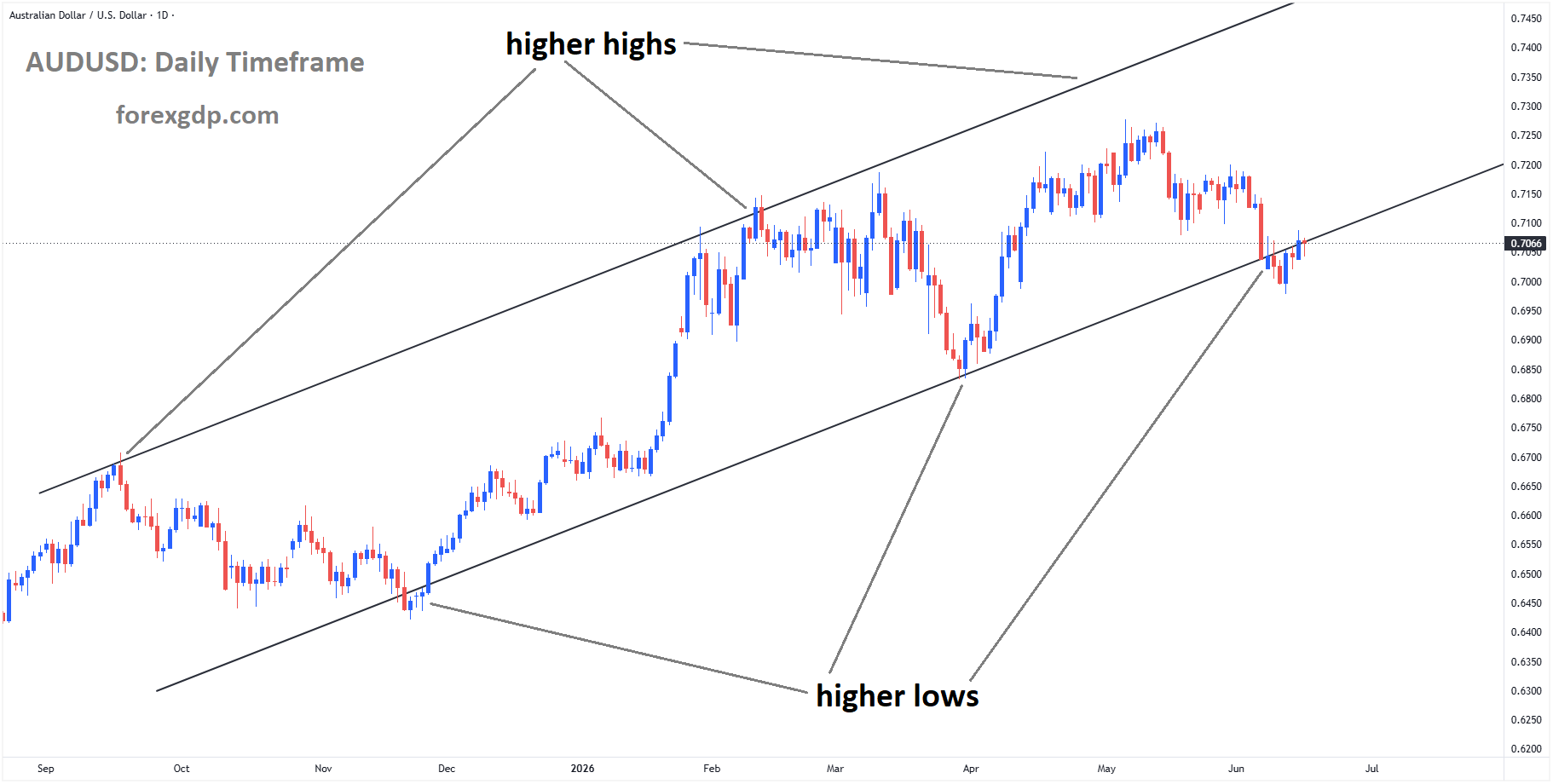
AUDUSD reached a higher low area of the ascending channel
The Australian Dollar’s recovery came after the Reserve Bank of Australia (RBA) decided to leave interest rates unchanged. While the move was widely expected by financial markets, comments from RBA Governor Michelle Bullock provided some support for the currency by signaling that future rate increases remain a possibility if inflation continues to be a concern.
RBA Keeps Rates Steady but Maintains Tightening Bias
The Reserve Bank of Australia chose to keep its benchmark interest rate unchanged after a series of rate increases earlier in the year. Policymakers opted to pause and assess the impact of previous tightening measures on the economy.
However, the decision was far from a signal that the fight against inflation is over. During the post-meeting press conference, Governor Michelle Bullock emphasized that inflation remains above the central bank’s target range and continues to pose challenges for the Australian economy.
Her comments suggested that the RBA remains prepared to take additional action if price pressures fail to ease as expected. This message helped limit losses for the Australian Dollar, as investors interpreted the remarks as a sign that the central bank is still focused on controlling inflation.
Inflation Remains a Key Concern
One of the main themes emerging from the RBA’s latest communication is that inflation remains stubbornly high. Governor Bullock noted that inflationary pressures existed even before recent geopolitical developments affected global markets.
While she welcomed progress toward stability in the Middle East, she cautioned that inflation may not respond as quickly as policymakers hope. According to Bullock, there is still uncertainty about how prices will behave in the coming months, leaving open the possibility that further policy tightening may be required.
This cautious approach reflects a broader challenge faced by central banks worldwide. Although inflation has moderated from previous peaks in many countries, it has not fully returned to desired levels. As a result, policymakers continue to balance economic growth risks against the need to keep prices under control.
El Niño Raises Fresh Risks for Australia
Beyond monetary policy, Australia is also facing growing concerns related to weather conditions. The Australian Bureau of Meteorology has officially confirmed that El Niño conditions are active and could become one of the strongest episodes on record.
El Niño is a climate pattern that typically brings hotter and drier weather to Australia. Reduced rainfall and higher temperatures can create significant challenges for agriculture, one of the country’s key economic sectors.
Farmers often face lower crop yields during El Niño periods, while water shortages can affect livestock and food production. These disruptions can ripple through the wider economy, influencing employment, exports, and consumer prices.
Economists are closely watching the situation because prolonged dry conditions could weaken economic growth while also creating additional inflation pressures through higher food and commodity costs.
Stronger US Dollar Adds Pressure

While the Australian Dollar found some support from the RBA’s hawkish tone, it continues to face pressure from a strengthening US Dollar.
Investor sentiment initially improved following reports of a peace agreement involving Iran, which reduced fears of further disruptions in global energy markets. However, that optimism gradually faded as market participants sought more details about the agreement and its long-term effectiveness.
Several important questions remain unanswered, particularly regarding the future security of key shipping routes and whether regional tensions could flare up again. This uncertainty has encouraged some investors to move back into the US Dollar, which is often viewed as a safe-haven asset during periods of global risk.
As demand for the US Dollar increased, currencies such as the Australian Dollar found it more difficult to maintain upward momentum.
Global Uncertainty Continues to Shape Currency Markets
Currency markets remain highly sensitive to a combination of economic policy decisions, inflation trends, geopolitical developments, and broader risk sentiment.
For Australia, the outlook depends on several important factors. The path of inflation will remain central to future RBA decisions, while the economic impact of El Niño could become increasingly significant in the months ahead. At the same time, developments in global politics and shifts in investor confidence continue to influence demand for both the Australian and US dollars.
Market participants are likely to monitor upcoming economic data closely for clues about whether inflation is easing and whether additional policy action may be necessary.
Summary
The Australian Dollar recovered modestly after the Reserve Bank of Australia left interest rates unchanged, but the currency remains under pressure from broader market factors. RBA Governor Michelle Bullock reinforced the central bank’s commitment to fighting inflation and indicated that further rate increases remain possible if needed. Meanwhile, concerns surrounding a potentially severe El Niño event and renewed strength in the US Dollar are creating additional challenges for the Australian currency. As investors navigate economic uncertainty and global developments, the outlook for the Australian Dollar will continue to depend on inflation trends, weather-related risks, and changing market sentiment.
NZDUSD Slides as Weak China Retail Data Dampens Demand Outlook for Kiwi
The New Zealand Dollar came under pressure during Tuesday’s Asian trading session, with the NZD/USD currency pair moving lower as investors reacted to a fresh batch of economic data from China. The decline followed weaker-than-expected retail spending figures from New Zealand’s largest trading partner, raising concerns about the pace of recovery in the Chinese economy.
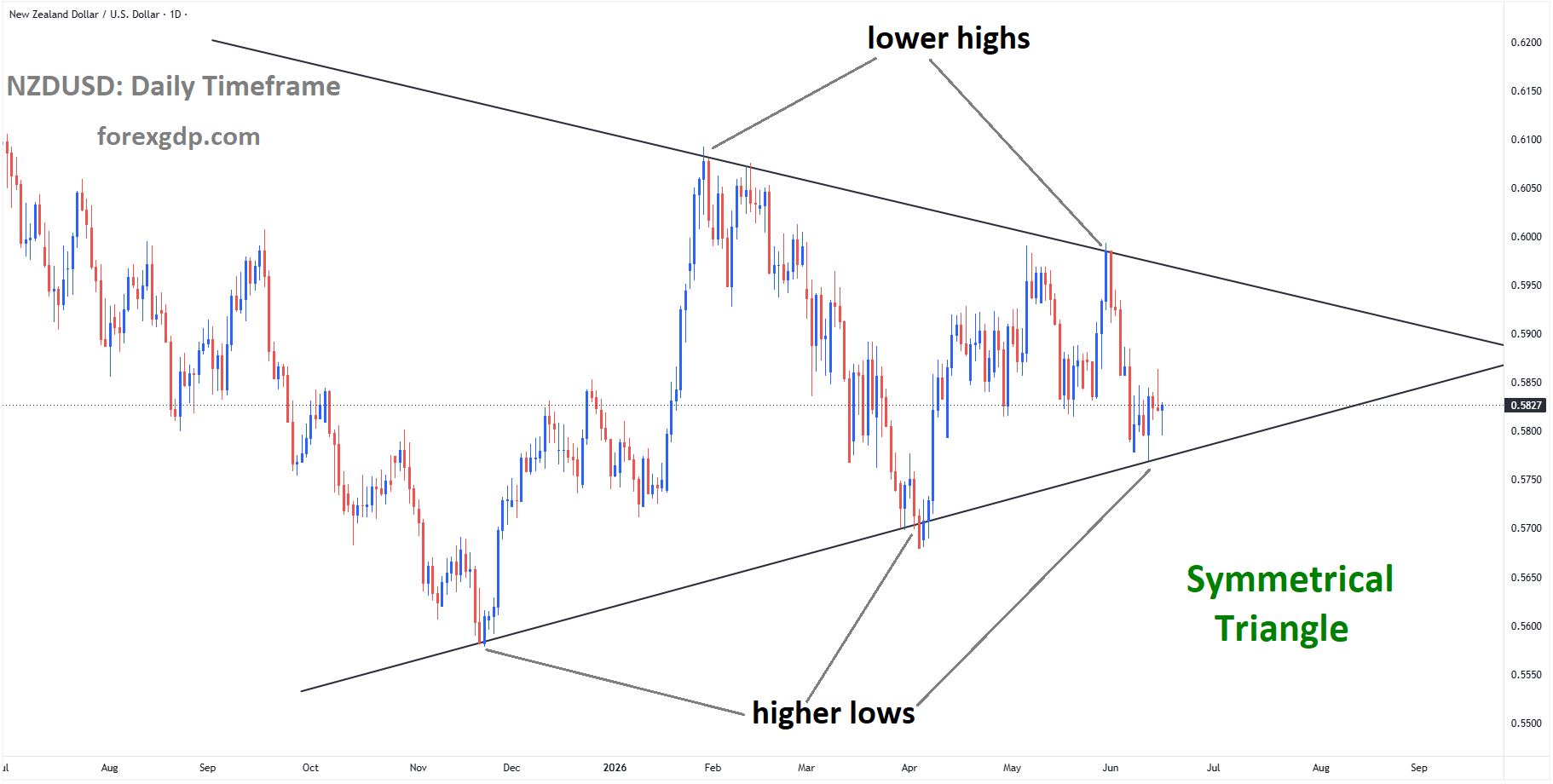
NZDUSD is moving in a symmetrical Triangle pattern, and the market has rebounded from the higher low area of the pattern
At the same time, market participants are turning their attention toward the upcoming policy announcement from the US Federal Reserve, which is expected to be one of the most closely watched events of the week.
Chinese Retail Spending Disappoints in May
New economic figures released by China’s National Bureau of Statistics showed that retail sales contracted by 0.6% compared with the same period last year in May. The result was weaker than economists had anticipated and marked a reversal from the modest growth recorded in April.
The decline suggests that consumer demand in China remains under pressure despite efforts to support economic activity. Consumer spending is often viewed as a key indicator of economic health, and weaker retail sales can signal that households remain cautious about spending.
For global markets, the data added to concerns that China’s economic recovery may not be progressing as smoothly as expected.
Industrial Output Provides a Brighter Spot
While retail spending disappointed, other parts of the Chinese economy showed greater resilience.
Industrial production increased at a faster pace in May compared with the previous month, surpassing market expectations. The improvement indicates that manufacturing activity and factory output remained relatively strong despite broader economic challenges.
However, the positive manufacturing data was not enough to offset concerns created by weak consumer spending and slowing investment trends.
Investors often assess multiple indicators together to determine the overall health of an economy, and the latest figures presented a mixed picture rather than a clear sign of strengthening growth.
Investment Activity Remains Under Pressure
Another area that attracted attention was China’s fixed asset investment data.
The report revealed that investment activity continued to weaken during the year, posting a larger decline than economists had predicted. Fixed asset investment includes spending on infrastructure, real estate projects, factories, and other long-term assets that contribute to economic growth.
A deeper-than-expected decline suggests that businesses and local governments may still be cautious about committing capital to major projects. This trend can create additional challenges for policymakers seeking to stimulate economic activity.
The combination of weaker retail sales and declining investment overshadowed the stronger industrial production figures, leading many traders to adopt a more cautious outlook.
Why Chinese Data Matters for New Zealand

China plays a crucial role in New Zealand’s economy and is its largest trading partner. As a result, economic developments in China often have a direct impact on the value of the New Zealand Dollar.
New Zealand exports a wide range of products to China, including dairy goods, agricultural products, and raw materials. When China’s economy shows signs of slowing, investors may worry that demand for New Zealand exports could weaken.
Because of this close economic relationship, the New Zealand Dollar is often viewed as a proxy for China’s economic performance. Any signs of weakness in Chinese growth can quickly influence sentiment toward the Kiwi currency.
The latest data reinforced these concerns, encouraging traders to reduce exposure to the New Zealand Dollar and contributing to the pair’s decline against the US Dollar.
Focus Shifts to the Federal Reserve
While Chinese data drove market sentiment during the Asian session, attention is now shifting toward the United States and the upcoming Federal Reserve policy meeting.
The US central bank is widely expected to leave interest rates unchanged at its June meeting. Policymakers have maintained a cautious approach in recent months as they continue evaluating economic data before making any major policy adjustments.
Investors are expected to scrutinize the Fed’s statement, economic projections, and comments from officials for clues about the future direction of monetary policy.
Even if rates remain unchanged, the tone of the central bank’s communication could influence market expectations regarding future decisions.
Spotlight on New Fed Leadership
Another important aspect of this week’s meeting is the growing focus on Federal Reserve leadership.
Market participants will be watching closely to see how Federal Reserve Chair Kevin Warsh guides the institution through its next phase. Investors are eager to understand his policy priorities and how he may approach future economic challenges.
Leadership transitions at major central banks often attract significant attention because they can shape expectations for monetary policy over the coming years. Any signals regarding inflation, employment, economic growth, or future policy direction could have a meaningful impact on currency markets.
As a result, traders are expected to remain cautious until more clarity emerges from the meeting.
Market Sentiment Remains Cautious
The combination of mixed Chinese economic indicators and anticipation surrounding the Federal Reserve has created a cautious mood across currency markets.
Weak retail sales and declining investment figures have raised questions about the strength of China’s economic recovery, placing pressure on currencies closely linked to Chinese demand. Meanwhile, uncertainty surrounding future US monetary policy continues to support investor demand for the US Dollar.
With two major economic themes influencing market sentiment simultaneously, traders are likely to remain focused on incoming data and central bank guidance in the days ahead.
Summary
The New Zealand Dollar weakened against the US Dollar after China released a mixed set of economic reports. Weak retail sales and softer investment activity raised concerns about the health of the Chinese economy, outweighing stronger industrial production figures. Because China is New Zealand’s largest trading partner, the data weighed heavily on the Kiwi currency.
Looking ahead, investor attention is firmly fixed on the Federal Reserve’s upcoming policy decision. While rates are expected to remain unchanged, markets will be closely watching for signals about the future direction of US monetary policy and insights from Fed Chair Kevin Warsh. Together, these developments are likely to remain key drivers of currency market sentiment in the near term.
Don’t trade all the time, trade forex only at the confirmed trade setups
Get more confirmed trade signals at premium or supreme – Click here to get more signals, 2200%, 800% growth in Real Live USD trading account of our users – click here to see , or If you want to get FREE Trial signals, You can Join FREE Signals Now!