

Trading has a strange way of exposing how badly we want to be right. We study the market, form an opinion, enter a position, and almost immediately become emotionally attached to the outcome. If the trade works, we feel clever. If it fails, it can feel strangely personal. Yet the market does not care about our confidence, research, or pride. It simply moves.
That is why the idea “You don’t need to be right, you need to manage risk” carries so much weight. Successful trading is not a competition to predict every market move correctly. It is a long game built around uncertainty, discipline, capital protection, and the ability to survive mistakes. You can be wrong surprisingly often and still remain a capable trader if your losses stay controlled and your decisions remain consistent.
Think of trading like sailing across an unpredictable ocean. A skilled sailor cannot command the wind or stop a storm from appearing. What can they control? The condition of the boat, the amount of sail exposed, the route, and the decision to turn away when conditions become dangerous. Trading works in much the same way. You cannot control what happens after entering the market, but you can control how much damage one bad decision is allowed to cause.
Why Being Right Is Overrated in Trading
Many new traders enter the market believing accuracy is everything. They imagine experienced traders possess some almost magical ability to know what will happen next. Reality is far less glamorous. Markets are uncertain environments where unexpected news, changing sentiment, economic developments, and human behavior can quickly invalidate even a sensible idea.
The obsession with being correct creates another problem: it makes losses difficult to accept. Instead of seeing a losing trade as a normal business expense, a trader may see it as evidence of failure. That emotional interpretation can lead to hesitation, revenge trading, oversized positions, or refusing to abandon a weak idea.
The Market Does Not Reward Your Ego
A market does not know who you are. It does not know whether you spent five minutes or five hours developing an idea. It certainly does not care how confident you felt before entering a trade. This sounds obvious, yet traders frequently behave as though the market owes them something because they worked hard on their analysis.
Ego becomes particularly dangerous when a trader starts defending a position instead of evaluating it. The thought quietly changes from “Is my original idea still valid?” to “How can I prove I was right?” That tiny shift can become expensive. Trading should be a process of responding to uncertainty, not arguing with it.
A Losing Trade Is Not Automatically a Bad Trade
Imagine making a thoughtful decision based on a reasonable trading plan, controlling your exposure, and accepting the possibility of failure before entering. The position eventually loses. Was the decision necessarily poor? Not at all. A sound process can occasionally produce an unfavorable result because probabilities never guarantee individual outcomes.
The reverse is equally important. A reckless decision can make money. That does not magically turn it into good trading. Someone can run across a busy road with their eyes closed and reach the other side safely, but nobody would call that a brilliant transportation strategy. Results matter, but the quality of the process matters more over time.
Accuracy Can Become a Psychological Trap
A trader who desperately wants a high winning percentage may begin taking profits too quickly simply to record another winner. Meanwhile, losing positions may receive far too much patience because closing them would mean admitting another mistake. The account can then become filled with tiny victories and occasional painful losses.
There is something seductive about being able to say, “Most of my trades are winners.” It sounds impressive. But trading performance cannot be understood through accuracy alone. The relationship between gains, losses, exposure, and consistency matters far more than a flattering win rate.
Thinking in Probabilities Changes Everything

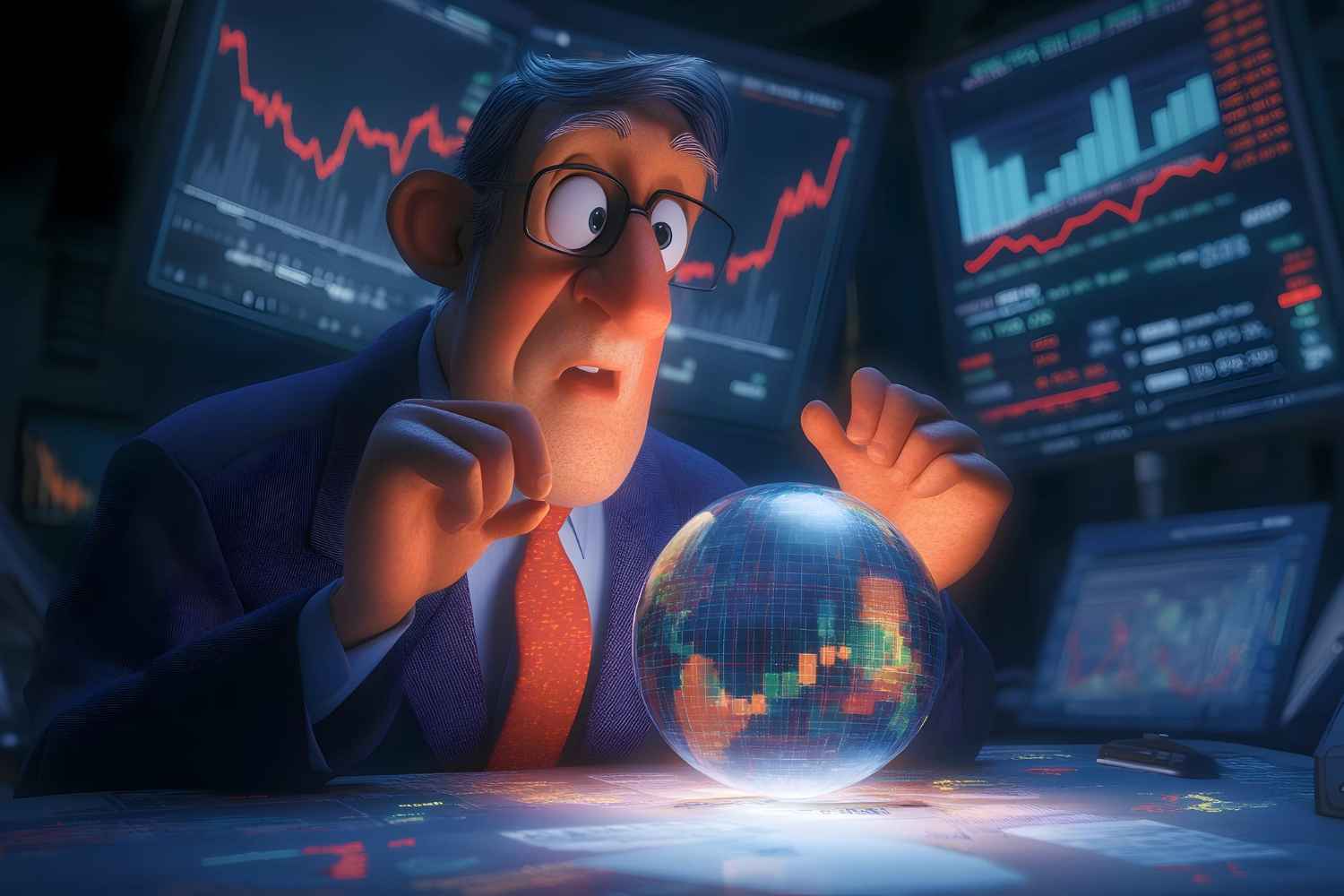
Professional thinking becomes easier when you stop demanding certainty. Instead of asking, “Will this trade win?” consider the more useful question: “Does this decision make sense given the uncertainty involved?” The difference may appear small, but psychologically it is enormous.
Probability-based thinking allows you to accept that two apparently similar situations can produce completely different outcomes. Markets contain too many moving parts for absolute certainty. Once you genuinely accept that fact, risk management stops feeling like pessimism and starts looking like common sense.
One Trade Should Never Define You
No single position deserves the power to determine your future as a trader. Yet oversized exposure can effectively give one market event that power. Suddenly, a normal adverse movement becomes emotionally overwhelming because too much depends on the result.
A healthier approach treats each trade as one event in a much longer sequence. Some will succeed. Others will fail. A few may surprise you in either direction. When no individual position carries excessive importance, it becomes much easier to think calmly and follow your process.
Uncertainty Is Part of the Business
People naturally dislike uncertainty. We prefer clean answers, predictable outcomes, and stories with obvious endings. Financial markets offer none of those comforts. Even when the broader reasoning behind a trade appears convincing, something unexpected can change the situation.
Trying to eliminate uncertainty is therefore a losing battle. Managing it is far more realistic. Traders who understand this do not need to pretend they know the future. They prepare for several possible outcomes and make sure an unfavorable one does not become catastrophic.
Risk Management Is What Keeps Traders in the Game
Risk management rarely receives the same excitement as finding the next trading opportunity. It sounds defensive and perhaps even boring. But boring can be beautiful when your capital is involved. A trader who protects capital gets another opportunity tomorrow. A trader who repeatedly takes uncontrolled risks may eventually run out of tomorrows.
This is where trading begins to resemble running a business rather than playing a guessing game. Businesses cannot eliminate uncertainty either. They manage expenses, prepare for difficult periods, maintain reserves, and avoid allowing one decision to threaten the entire operation. Traders need the same survival mindset.
Capital Protection Comes Before Profit
It is tempting to approach trading by asking how much money can be made. A more durable question is how much capital can reasonably be exposed while preserving the ability to continue. Profit matters, obviously, but profit becomes irrelevant if the pursuit of it destroys the account.
Capital is essentially your inventory. A shop without inventory cannot sell anything, and a trader without sufficient capital cannot meaningfully participate in future opportunities. Protecting trading capital therefore is not cowardice. It is what keeps the business alive.
Small Losses Can Be Healthy
Nobody enjoys losing money. Still, a controlled loss can be evidence that risk management is working exactly as intended. You recognized that uncertainty existed, defined acceptable exposure, and prevented a failed idea from becoming a major problem.
The trouble begins when traders treat every small loss as something that must immediately be recovered. That mindset can turn an ordinary setback into a chain reaction. A small fire is manageable; throwing fuel on it because you are angry that it started is obviously not.
Survival Creates Future Opportunity
Trading opportunities do not disappear forever because you missed one. Markets continue changing, new situations develop, and fresh opportunities emerge. The trader who preserves capital retains the freedom to participate when those opportunities appear.
This is why survival is underrated. People naturally celebrate spectacular returns rather than the quiet discipline required to remain consistent through difficult periods. Yet longevity gives experience time to compound. Every year spent trading responsibly teaches lessons that cannot be gained from theory alone.
Position Size Shapes Emotional Pressure

Risk is not merely a mathematical concept. It directly influences psychology. When exposure becomes too large, normal market uncertainty can suddenly feel unbearable. Every fluctuation seems important, and the trader begins watching the position with the intensity of someone waiting for medical test results.
Reasonable exposure creates emotional breathing room. You can evaluate what is happening without feeling that one outcome will ruin everything. The goal is not to become emotionless. That is unrealistic. The goal is to keep financial consequences small enough that emotions do not take control of your decisions.
Oversized Trades Distort Judgment
Imagine carrying a glass filled to the very edge while walking across a room. Every tiny movement suddenly matters. Your body becomes tense because even a slight mistake can create a mess. Excessive trading exposure produces a similar psychological effect.
Once too much is at stake, traders often abandon the behavior they intended to follow. They may exit prematurely from fear, hold too long because of hope, or make impulsive decisions simply to escape the emotional pressure. The market may not have changed dramatically; the trader’s relationship with risk has.
Consistency Is More Valuable Than Excitement
Trading can easily become entertainment when excitement starts driving decisions. Large positions create adrenaline, rapid outcomes feel stimulating, and dramatic wins make ordinary disciplined trading seem dull. Unfortunately, financial markets are expensive places to search for thrills.
Consistency is less exciting but considerably more useful. Repeating sensible behavior allows you to judge whether your overall approach is sustainable. Constantly changing exposure based on confidence, frustration, or boredom makes meaningful evaluation almost impossible.
The Psychology Behind Good Risk Management
Risk management begins with rules, but maintaining those rules is largely psychological. A trader may know perfectly well that excessive exposure is dangerous and still take it. Knowledge alone does not eliminate fear, greed, impatience, or ego.
That explains why two people can understand the same trading principles yet behave very differently under pressure. The challenge is not simply learning what responsible risk looks like. It is developing habits strong enough to survive emotionally uncomfortable moments.
Accepting Losses Without Losing Control
Losses sting because humans are naturally sensitive to them. Losing something we already possess often feels more painful than gaining something of similar importance feels pleasurable. In trading, this can create an unhealthy desire to avoid closing losing positions.
Acceptance does not mean enjoying losses. It means understanding that controlled losses are unavoidable when operating in an uncertain environment. Once that becomes emotionally normal, a losing position no longer needs to become a personal battle.
Revenge Trading Makes a Bad Day Worse

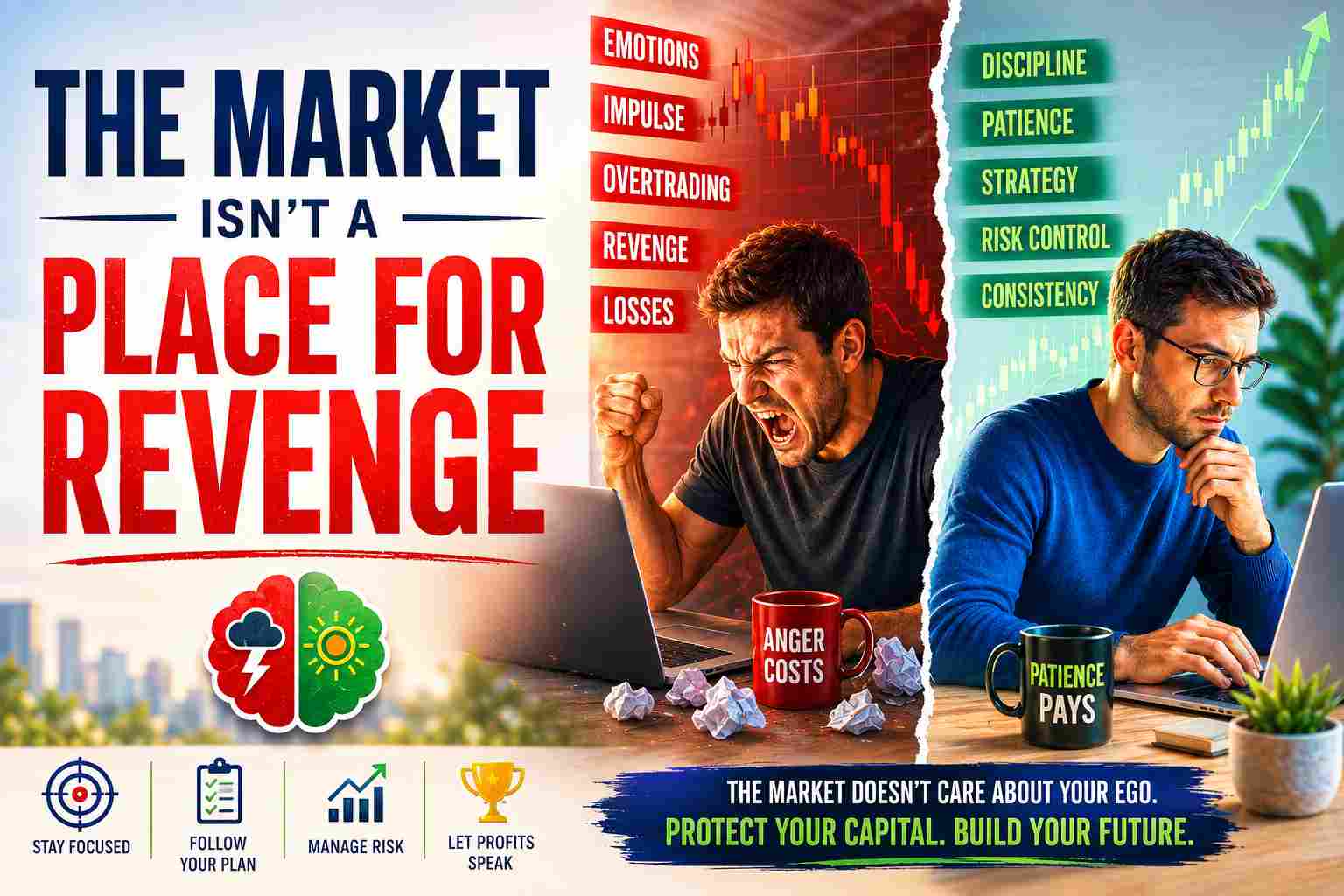
After a frustrating loss, the temptation to recover quickly can be intense. A trader may immediately search for another opportunity, not because it genuinely fits their approach, but because they want emotional relief. The next trade becomes an attempt to erase the previous one.
That is revenge trading in its simplest form. The market becomes an opponent that supposedly took something from you. But markets cannot be punished. Trying to “win it back” often leads to weaker judgment, larger exposure, and a second mistake layered on top of the first.
Hope Is Not a Risk Management Strategy
Hope is wonderful in ordinary life. We hope loved ones succeed, plans work out, and tomorrow brings something good. In trading, however, hope becomes dangerous when it replaces rational decision-making.
A trader who remains in an uncomfortable position solely because “it might come back” has stopped managing uncertainty and started negotiating with it. Markets offer no guarantees of rescue. A disciplined trader recognizes when hope has quietly taken the steering wheel and returns attention to the original plan.
Discipline Matters More Than Prediction
Prediction naturally receives attention because it feels intelligent. Discipline looks ordinary by comparison. Yet knowing what you intend to do is useless if you repeatedly abandon that intention once money is involved.
Trading discipline means maintaining sensible behavior during both winning and losing periods. Winning streaks can be just as dangerous as losing ones because success may create overconfidence. Suddenly, rules that once seemed essential begin to feel unnecessary.
Confidence Should Never Become Carelessness
Confidence is useful when it helps you act decisively. It becomes dangerous when it convinces you that ordinary risk no longer applies. A few successful trades can create the illusion that you have finally “figured out” the market.
That illusion can disappear painfully quickly. Markets change, conditions evolve, and strategies encounter periods when outcomes become less favorable. Healthy confidence says, “I trust my process.” Carelessness says, “I cannot be wrong.” Those are completely different attitudes.
Patience Protects You From Forced Decisions
Not trading can sometimes be one of the hardest decisions a trader makes. There is a constant temptation to participate, especially when markets appear active or other people seem to be finding opportunities everywhere.
Patience prevents you from forcing situations that do not deserve your capital. You do not need to swing at every pitch. Waiting may feel unproductive, but unnecessary exposure carries real costs. Sometimes protecting capital means simply refusing to manufacture a trade out of boredom.
Building a Sustainable Trading Mindset


Sustainable trading is less about finding a secret formula and more about developing a relationship with uncertainty that you can live with. If every trade produces extreme stress, something about the process deserves attention. Trading should demand focus, but it should not require emotional chaos.
The strongest mindset is built around repeatability. Decisions should come from a stable framework rather than whatever emotion happens to be loudest that day. You will still feel excitement, disappointment, doubt, and frustration. The difference is that those emotions no longer get the final vote.
Measure Yourself by Decisions, Not Individual Outcomes
A profitable trade can still contain poor decisions, while an unsuccessful trade can contain excellent ones. Separating decision quality from short-term outcome helps traders evaluate themselves more fairly.
Ask whether you respected your own boundaries, remained patient, controlled exposure, and responded rationally when circumstances changed. These questions reveal far more about long-term development than simply celebrating green days and criticizing red ones.
A Trading Journal Can Reveal Behavioral Patterns
Memory is surprisingly unreliable, especially when emotions are involved. We remember dramatic wins and painful mistakes while ordinary decisions fade into the background. Recording thoughts and behavior creates a more objective picture of how you actually trade.
Over time, patterns may become obvious. Perhaps impatience appears after several quiet sessions. Maybe confidence becomes excessive after a successful period. Perhaps losses become larger when you enter positions for emotional rather than strategic reasons. Recognizing such patterns is often more valuable than endlessly searching for new market theories.
Process Creates Emotional Stability
A repeatable process acts like a handrail on a dark staircase. It does not remove uncertainty, but it gives you something stable to hold onto. Instead of inventing a new response whenever the market becomes uncomfortable, you already know the principles guiding your decisions.
That stability reduces unnecessary mental noise. You stop treating every position as a unique crisis and begin seeing trading as a series of decisions made within an established framework. The market remains unpredictable, but your behavior becomes considerably more predictable.
Think Like a Risk Manager First
Many traders think of themselves primarily as opportunity hunters. They constantly search for the next promising situation. A healthier identity is to see yourself as a manager of capital who occasionally takes calculated market exposure.
That subtle change rearranges your priorities. Instead of asking, “How much can I make here?” you naturally begin considering, “What happens if this does not work?” That question is not negative thinking. It is responsible thinking.
Good Trading Can Feel Surprisingly Boring


People often imagine trading as flashing screens, dramatic decisions, and nonstop action. Sustainable trading can look disappointingly dull from the outside. There may be long stretches of waiting followed by a carefully considered decision and then more waiting.
Boredom is not necessarily a problem. In fact, it can indicate that emotional drama has been removed from the process. When trading starts feeling like a structured activity rather than a casino scene, that is often a healthier direction.
Risk Management Gives You Freedom
Rules can initially feel restrictive. Why limit yourself when an opportunity looks especially attractive? Why remain cautious when confidence is high? Because sensible boundaries create the freedom to survive being wrong.
That freedom is enormously valuable. You no longer need every decision to succeed. You do not need the market to validate your intelligence. You can accept uncertainty because failure has been considered before the trade ever becomes emotionally important.
Summary
The message “You don’t need to be right, you need to manage risk” captures one of the most important realities of trading. Markets are uncertain, and no amount of confidence can completely remove that uncertainty. Trying to predict every move correctly is therefore an exhausting and ultimately unrealistic goal.
A more sustainable trader focuses on what can actually be controlled: exposure, behavior, patience, discipline, emotional reactions, and capital preservation. Losses remain unpleasant, but they no longer have to become disasters. Being wrong becomes part of the business rather than an attack on your identity.
The real question is not whether you can avoid every losing trade. You cannot. The better question is whether you can remain disciplined when a trade fails, humble when one succeeds, and financially capable of participating another day. Trading longevity is rarely built on spectacular predictions. More often, it grows from thousands of ordinary decisions made with respect for risk.
Frequently Asked Questions
Why is risk management more important than always being right?
Markets involve uncertainty, so maintaining perfect accuracy is impossible. Risk management helps limit the financial effect of incorrect decisions and preserves capital for future opportunities.
A trader can experience numerous losing trades without destroying long-term progress when losses remain controlled. By contrast, someone who is frequently correct can still struggle if occasional mistakes become disproportionately large.
Can a trader be successful with losing trades?
Yes. Losing trades are an unavoidable part of participating in uncertain markets. The presence of losses does not automatically mean a trading approach is ineffective.
What matters is the broader relationship between wins, losses, consistency, and exposure. The aim is not to eliminate losses completely but to prevent ordinary failures from becoming financially destructive events.
Why do traders struggle to accept losses?
Money carries emotional meaning, and being wrong can feel like a judgment on intelligence or ability. As a result, some traders hold weak positions too long because closing them feels like admitting defeat.
Separating identity from individual outcomes makes losses easier to process. A trade is simply one decision within a much larger sequence. It does not determine your worth or prove whether you are a capable trader.
How does emotion affect trading risk?
Fear can encourage premature decisions, greed can encourage excessive exposure, and frustration can trigger revenge trading. Overconfidence creates its own problems because recent success may convince a trader that normal caution is no longer necessary.
Risk management provides boundaries when emotions become noisy. Instead of relying entirely on how confident or nervous you feel at a particular moment, a consistent framework keeps attention on capital preservation and decision quality.
What mindset supports long-term trading discipline?
A sustainable mindset accepts uncertainty rather than constantly fighting it. It focuses on process, patience, controlled exposure, and the understanding that no single trade deserves excessive importance.
Perhaps most importantly, disciplined traders give themselves permission to be wrong. That may sound negative, but it is actually liberating. Once you stop demanding perfect predictions, trading becomes less about proving yourself and more about managing uncertainty intelligently.