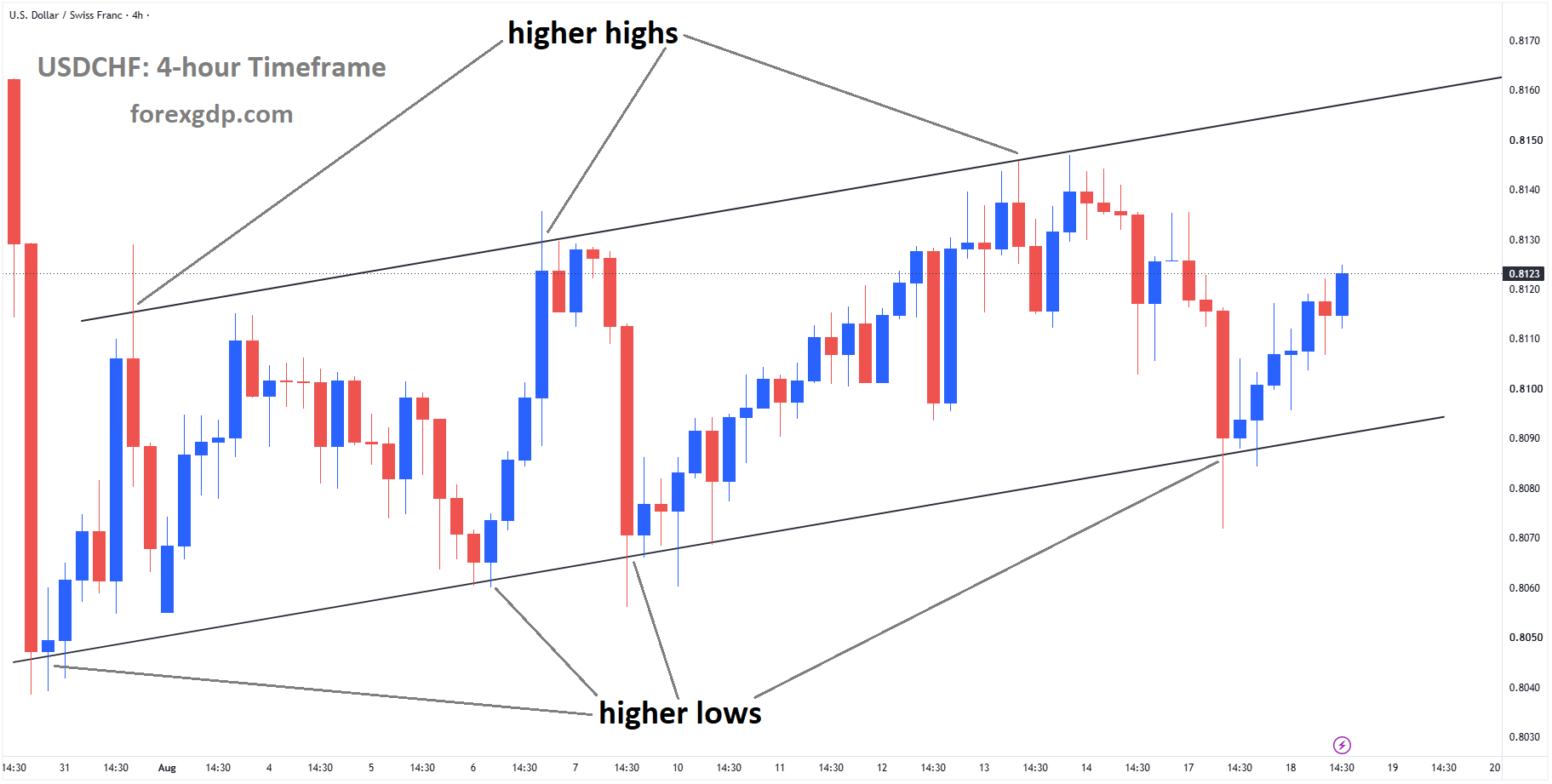

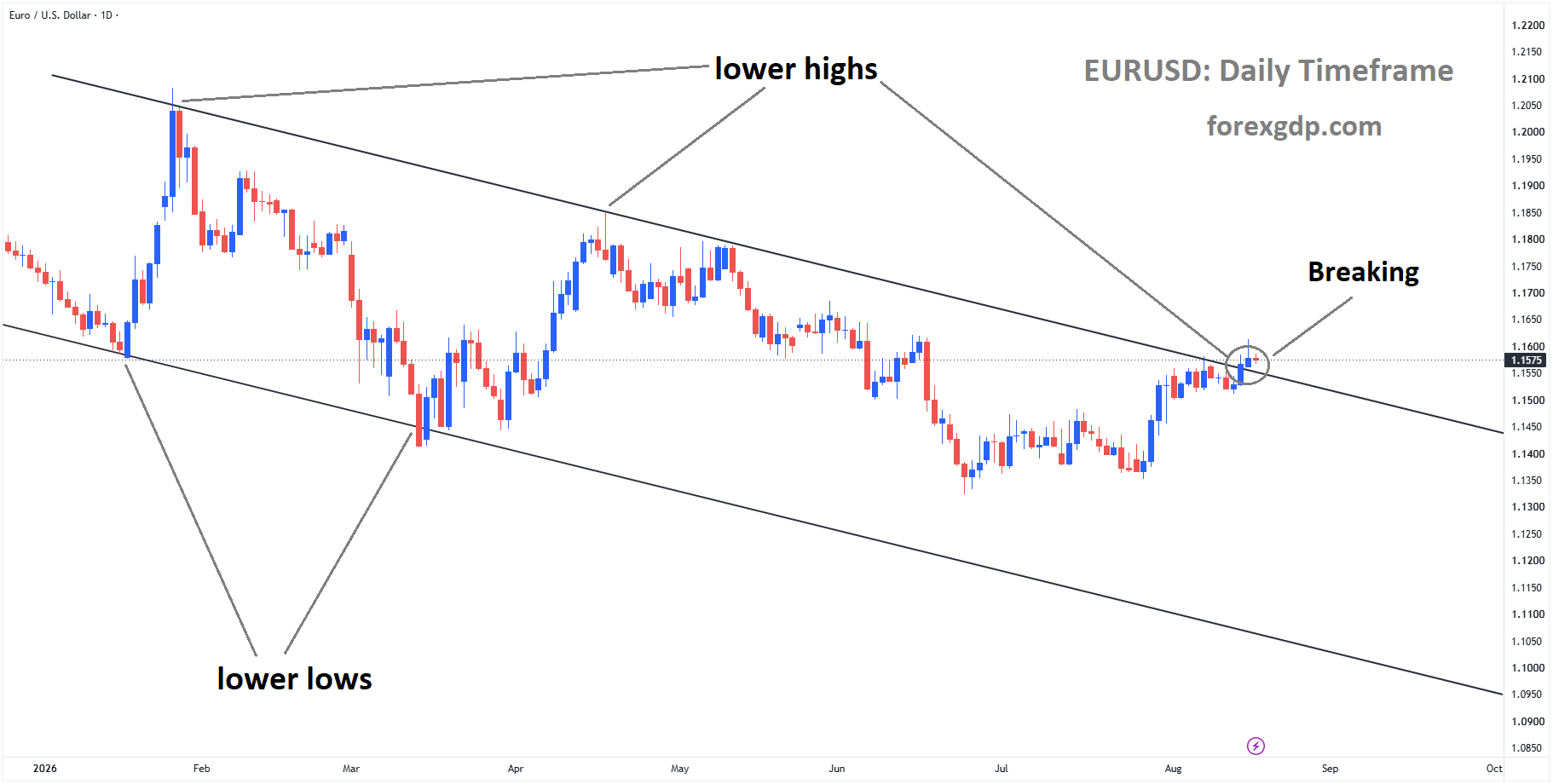
EURUSD is breaking the lower high area of the descending channel
EURUSD Faces Pressure Despite Improving German Economic Sentiment
The Euro lost momentum against the US Dollar on Tuesday, ending a three-day period of gains. The decline came even though new survey results from Germany and the wider Eurozone showed a noticeable improvement in economic confidence.
Germany’s latest ZEW Survey offered a more positive picture than economists had expected. The Current Situation component remained in negative territory during August, suggesting that businesses and investors still see difficult conditions in Europe’s largest economy. However, the reading improved significantly compared with the previous month and was also better than market forecasts.
The Economic Sentiment component delivered an even stronger result. Expectations improved in August, moving comfortably above both the estimated figure and July’s reading. This indicated that financial experts had become more hopeful about Germany’s economic outlook over the coming months.
Confidence also strengthened across the Eurozone. The region’s ZEW Economic Sentiment reading exceeded expectations and improved from its previous level. Together, the reports suggested that concerns about Europe’s economic future may be easing, even though current conditions remain challenging.
Despite these encouraging figures, the Euro was unable to build lasting strength. Investors appeared more focused on international security risks and the growing demand for assets traditionally seen as safer during uncertain periods.
Safe-Haven Demand Keeps the US Dollar Supported
The US Dollar remained firm as tensions between the United States and Iran continued to increase. When geopolitical uncertainty rises, investors often reduce their exposure to assets that may be more vulnerable to sudden changes in global risk sentiment. The Dollar commonly benefits from this behavior because of its central role in international trade, finance, and global reserve holdings.
The latest concerns followed comments from US President Donald Trump regarding the expiring agreement with Iran. Trump said he had no interest in renewing the deal and referred to the naval blockade of Iranian ports as a source of pressure.
He also repeated his intention to place the strategically important waterway under full American control. Such statements added to fears that the dispute could become more serious, especially because the region plays a major role in global energy transportation and maritime trade.
Even without an immediate military confrontation, prolonged tension can affect investor confidence. Concerns about shipping routes, energy supplies, trade disruptions, and possible retaliation can encourage market participants to take a more defensive position.
This cautious mood helped the Dollar remain supported and limited the Euro’s ability to benefit from the improved ZEW data. The movement showed how geopolitical developments can temporarily overshadow economic reports, even when those reports are better than anticipated.
Federal Reserve Rate Expectations Lose Strength

Although international tensions supported the US currency, the outlook for Federal Reserve policy became less favorable for the Dollar.
Recent US economic figures have weakened expectations that the central bank will tighten monetary policy at its next meeting. July’s Nonfarm Payrolls report showed an unexpected decline, raising fresh questions about the strength of the American labor market.
Employment data is closely watched because it provides important information about household income, consumer spending, and the broader health of the economy. A weaker labor market can discourage the Federal Reserve from raising interest rates, particularly if inflation is not creating enough pressure to justify further action.
Recent consumer inflation figures were also relatively modest. The combination of softer employment data and controlled inflation reduced the urgency for another rate increase.
According to the CME FedWatch Tool, the probability of a Federal Reserve rate hike at the next meeting dropped to 36.6%. One week earlier, the estimated chance had stood at 48.4%. This decline showed that investors had become more doubtful about an immediate policy move.
Lower expectations for tighter monetary policy may eventually place pressure on the Dollar. However, the effect was limited on Tuesday because geopolitical concerns remained the more powerful influence on market sentiment.
Bond Market Concerns Add Another Layer of Support
Developments in the US government bond market also attracted attention. Analysts at MUFG/BTMU said the Dollar had recovered modestly as investors focused on worsening sentiment in the bond market.
Long-term US Treasury yields had risen sharply following the Federal Reserve’s late-July meeting. The increase was especially clear in longer-dated government debt, reflecting growing uncertainty about inflation, fiscal policy, borrowing needs, and future economic conditions.
The analysts also highlighted the growing steepness of the US yield curve. A steepening curve generally means that long-term borrowing costs are increasing faster than short-term rates. Similar movements were also appearing in other major markets, suggesting that the change was part of a wider global shift rather than an isolated US development.
Several factors can push long-term yields higher. Investors may demand greater compensation for holding government debt over many years if they are worried about future inflation, large budget deficits, or heavy bond issuance. Changes in expectations surrounding economic growth and central bank policy can also influence the curve.
In this case, the rise in longer-term yields provided some additional support for the Dollar. Higher returns on US assets can make the currency more attractive to international investors, although the relationship is not always direct or permanent.
Competing Forces Shape the EUR/USD Outlook
The Euro and the US Dollar are currently being influenced by different and sometimes conflicting forces.
For the Euro, the improved ZEW results offered evidence that confidence is recovering in Germany and the broader Eurozone. However, the deeply negative assessment of current German conditions showed that the economy still faces meaningful obstacles.
Germany continues to deal with weak industrial activity, uncertain external demand, and wider concerns surrounding growth. Better expectations may signal that conditions could improve later, but survey optimism alone may not be enough to create a strong and immediate recovery.
The Dollar, meanwhile, is benefiting from demand linked to geopolitical uncertainty and developments in the bond market. At the same time, weaker US employment figures and moderate inflation have reduced expectations for a near-term Federal Reserve rate increase.
These opposing influences could keep the currency pair sensitive to new headlines. Further escalation between the United States and Iran may continue to favor defensive demand for the Dollar. In contrast, additional signs of weakness in the US economy could increase pressure on the Federal Reserve to maintain a cautious policy stance.
Summary
The Euro weakened against the US Dollar even after Germany and the Eurozone reported better-than-expected ZEW Survey results. While economic expectations improved, investors remained concerned about present conditions in Germany and gave greater attention to escalating tensions between the United States and Iran.
Safe-haven demand and changes in the US bond market helped the Dollar remain steady. However, softer employment data and modest inflation reduced expectations for a Federal Reserve rate hike, with the estimated probability falling to 36.6%.
The near-term direction of EUR/USD will likely depend on whether geopolitical risks continue to dominate sentiment or whether concerns about the US economy and Federal Reserve policy become the stronger influence.
GBPUSD Slips as Weak UK Jobs Report Weighs on Sterling
The British Pound came under renewed pressure against the US Dollar on Tuesday after fresh employment figures pointed to a softer UK labour market. The latest report showed that hiring conditions remain weak, while wage pressures appear relatively limited.
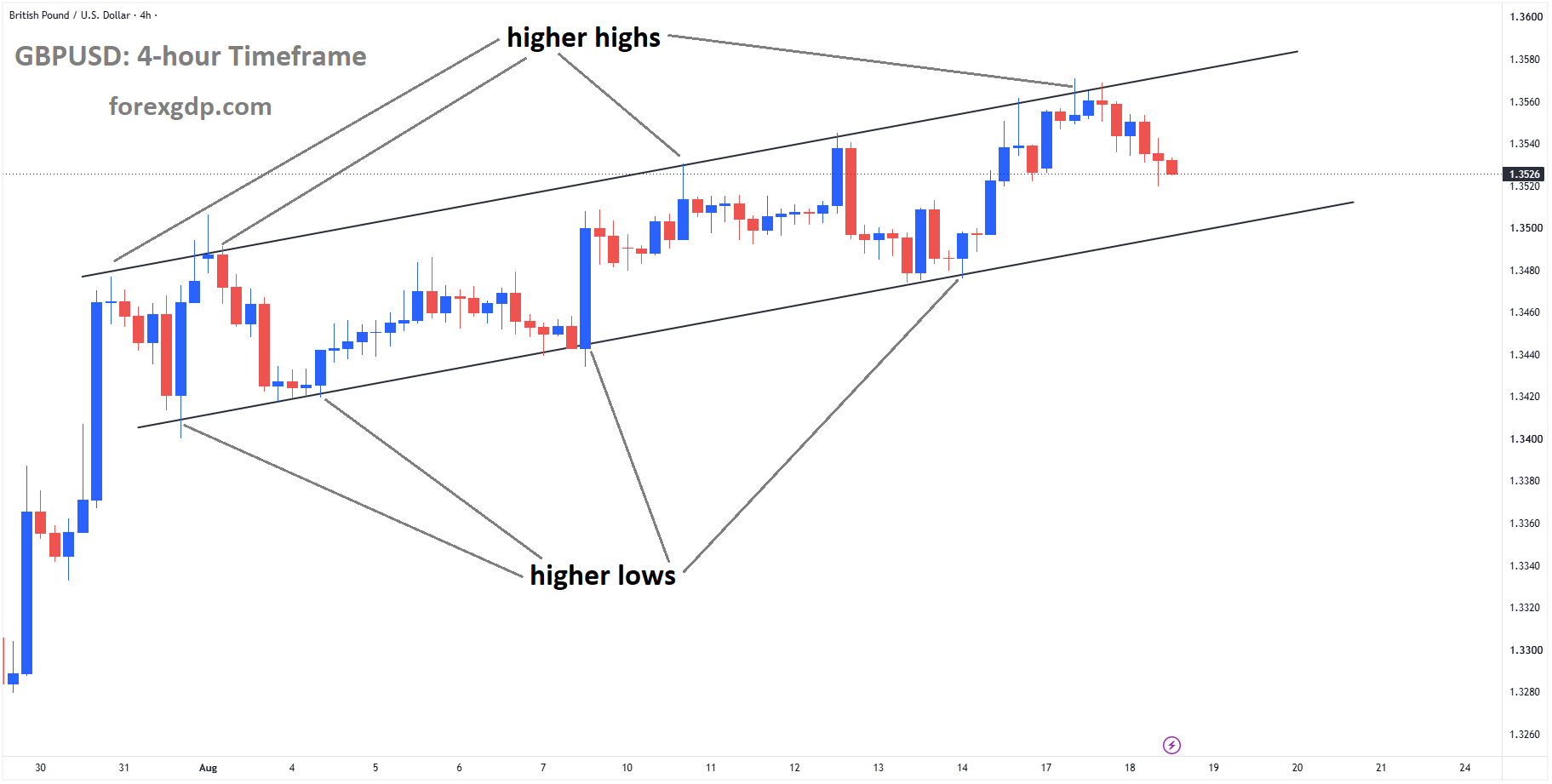
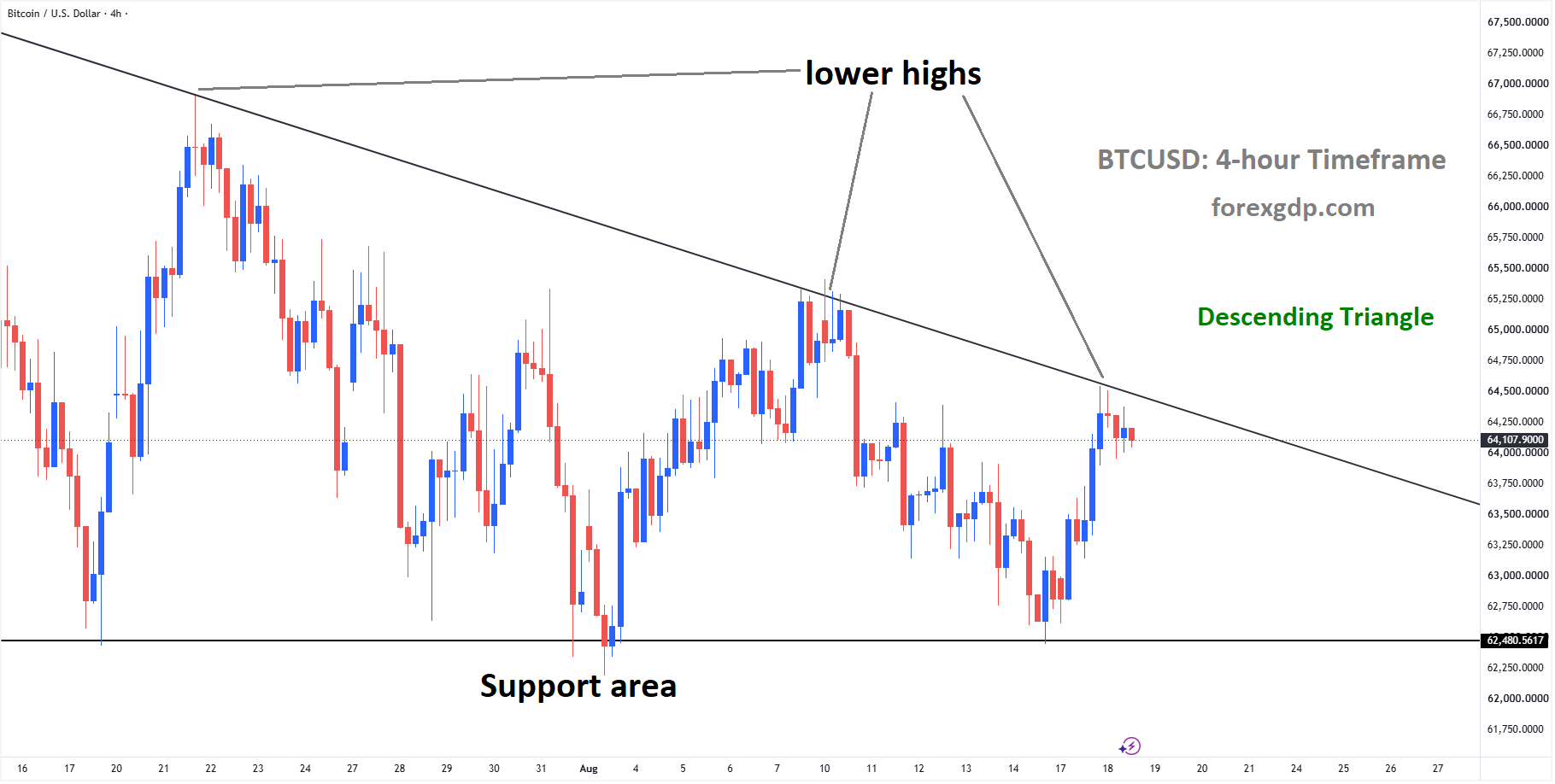
GBPUSD is falling from the higher high area of the ascending channel
Investors are now turning their attention to the United Kingdom’s July Consumer Price Index report. The inflation figures could influence expectations for the Bank of England’s next policy decisions. In the United States, traders are also waiting for the minutes from the Federal Reserve’s July meeting.
Together, these developments are shaping the near-term outlook for the Pound and the US Dollar. The key question is whether upcoming economic information will reinforce the view that both central banks have little reason to tighten monetary policy further.
UK Labour Market Continues to Lose Momentum
The UK employment report covering the three months to June offered further evidence that the labour market is cooling. Although the figures did not deliver a major surprise, they supported concerns about weak job creation and uneven employment conditions across the economy.
ING analysts described the report as broadly consistent with the recent trend. Payroll employment declined slightly, but the headline figure did not tell the full story. Employment conditions varied considerably between different parts of the economy.
Government organisations continued to recruit workers, providing some support to the overall employment picture. However, consumer-facing service businesses experienced another decline in staff numbers. The pace of job losses in this area also appeared to be getting worse.
This weakness matters because consumer services employ a significant part of the British workforce. When businesses in retail, hospitality, leisure and related industries reduce staffing, it can indicate that companies are dealing with weaker demand, higher costs or uncertainty about future growth.
The rest of the private sector showed little progress. Employment outside government and consumer services was largely stagnant, suggesting that many companies are reluctant to increase their workforce.
Unemployment Data Comes With Important Warnings
The UK unemployment rate also moved slightly higher, adding to the broader picture of a less active jobs market. However, this part of the report should be treated carefully.
The Office for National Statistics has acknowledged temporary sampling problems affecting the Labour Force Survey. These issues come on top of longer-running concerns about the reliability of the survey. Changes in response rates and data collection have made it more difficult to produce a completely accurate picture of employment conditions.
For that reason, analysts may avoid placing too much importance on a small movement in the unemployment rate. A single figure can be misleading when the underlying survey faces quality challenges.
Even with these limitations, several parts of the report appear to point in the same direction. Payroll numbers are soft, private-sector hiring is weak, and unemployment has edged upward. Taken together, the evidence suggests that demand for workers is no longer as strong as it was during the earlier stages of the economic recovery.
Wage Pressures Appear Relatively Contained
Wage growth remains one of the most important areas for the Bank of England. Strong salary increases can support household spending, but they can also keep inflation elevated if businesses pass higher labour costs on to customers.
The latest employment figures offered little evidence of a fresh increase in wage pressure. ING said the overall jobs market remained cool and that salary-related pressures were fairly modest.
This could reduce the need for the Bank of England to consider another interest-rate increase. Higher borrowing costs are generally used to slow demand and control inflation, but they can also place additional pressure on households and businesses.
If employment conditions are already weakening, policymakers may be cautious about making financial conditions more restrictive. Further tightening could reduce company investment, weaken hiring and increase repayment costs for borrowers.
The Bank will still need to examine a wide range of information before making its next decision. Employment figures are important, but inflation, consumer spending, business activity and economic growth will also influence the policy outlook.
July Inflation Report Becomes the Next Major Test
Attention will now shift to the UK Consumer Price Index figures for July. The report will give investors a clearer view of whether inflation is continuing to ease or proving more persistent than expected.
Headline inflation will be closely watched, but policymakers are also likely to focus on underlying pressures. Services inflation is especially important because it is often linked to domestic wages and business costs. It can also take longer to decline than inflation caused by temporary changes in energy or imported goods.
A softer inflation report would strengthen the argument that the Bank of England can remain patient. It would suggest that previous policy action is continuing to work while reducing the need for additional tightening.
On the other hand, stubborn inflation could make the outlook more complicated. Even with a cooling labour market, the Bank may be unwilling to signal a more relaxed approach if domestic price pressures remain strong.
The contrast between weaker employment and persistent inflation would leave policymakers facing a difficult balance. They must control price growth without creating unnecessary damage to jobs and the wider economy.
US Dollar Finds Support Ahead of Federal Reserve Minutes
The US Dollar showed signs of recovery as investors prepared for another important central-bank update. Market participants are waiting for the minutes of the Federal Open Market Committee’s July policy meeting.
These minutes can provide additional detail about the discussion among Federal Reserve officials. Investors will look for signs of disagreement, concerns about inflation and views on the strength of the US economy.
The document may also reveal how policymakers are thinking about future decisions. However, meeting minutes describe a discussion that has already taken place. Their message can become less relevant if newer economic reports have significantly changed the outlook.
Current expectations suggest that the Federal Reserve will keep interest rates unchanged at its September meeting. This view may limit the US Dollar’s ability to build a lasting recovery unless incoming American data supports a more restrictive policy stance.
If the minutes show that officials remain highly concerned about inflation, the Dollar could receive some support. A more cautious message focused on economic risks may instead reinforce expectations for no change in September.
Pound Outlook Depends on Inflation and Central-Bank Signals
The British Pound is being influenced by developments on both sides of the Atlantic. Weak UK employment information has raised questions about the strength of the domestic economy, while the upcoming inflation report could shape expectations for the Bank of England.
At the same time, Federal Reserve communication will help determine whether the US Dollar can maintain its recent improvement. With no US rate increase widely expected in September, investors will focus on the tone of the July meeting minutes and any clues about the months ahead.
The Pound may remain sensitive to economic releases because the Bank of England must respond to two competing risks: inflation that stays too high and an economy that becomes too weak. The next set of data should provide a clearer indication of which concern deserves greater attention.
Summary
The British Pound has weakened against the US Dollar after UK employment figures highlighted a cooling labour market. Payroll employment declined slightly, consumer-service jobs continued to fall, and much of the private sector showed little hiring momentum.
Although unemployment statistics face reliability concerns, the broader report suggests that wage pressures remain limited. This gives the Bank of England little immediate reason to consider another interest-rate increase.
Investors will now focus on the UK’s July inflation report and the Federal Reserve’s July meeting minutes. These releases could provide important guidance on the future policy direction of both central banks and influence the next stage of the Pound’s performance against the US Dollar.
USDJPY Strengthens as Geopolitical Worries Pressure the Yen
The US Dollar continued to strengthen against the Japanese Yen as investors reacted to growing geopolitical uncertainty and disappointing economic data from Japan. The currency pair advanced for a second straight day and reached its strongest position in around two weeks.
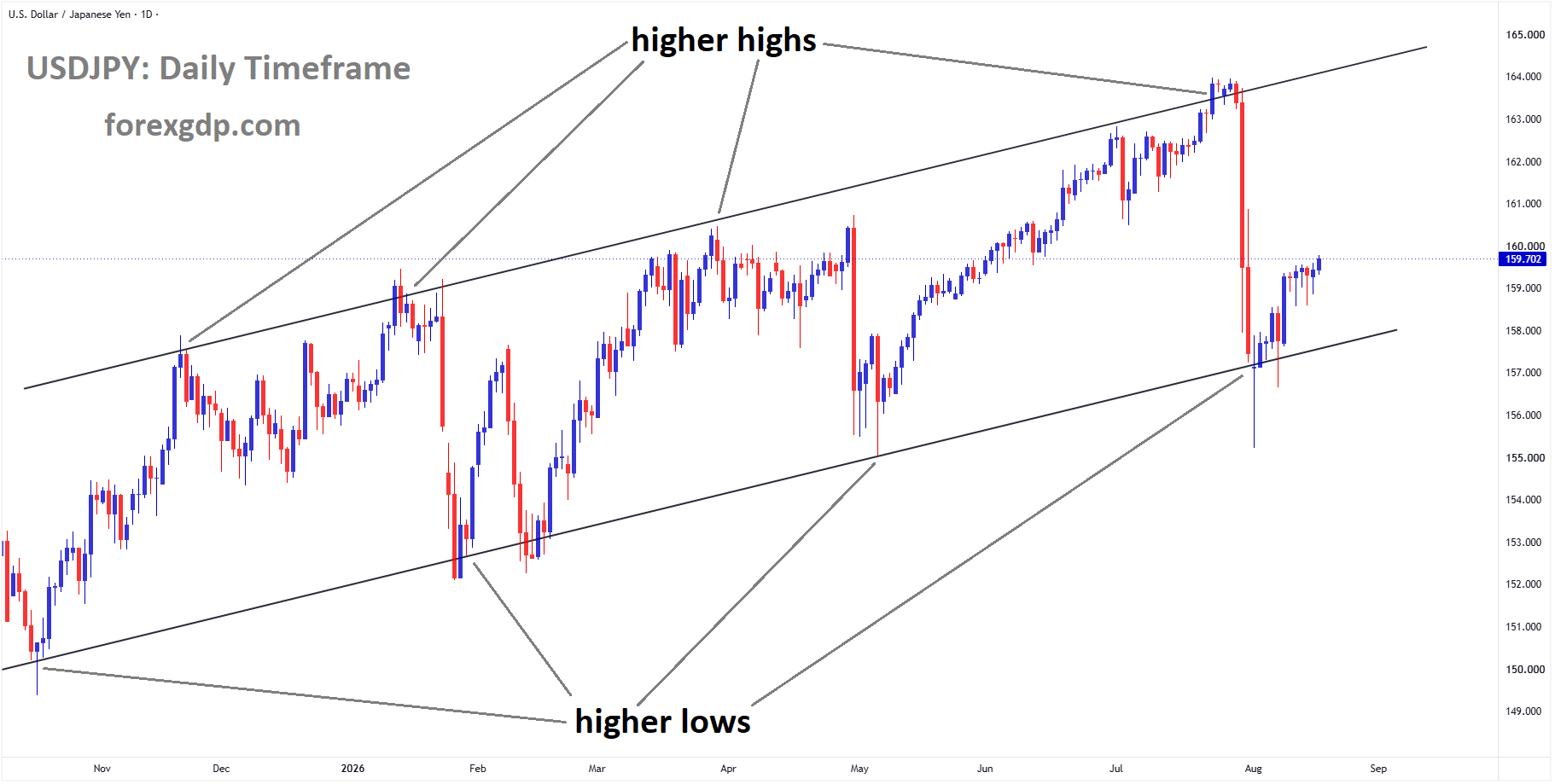
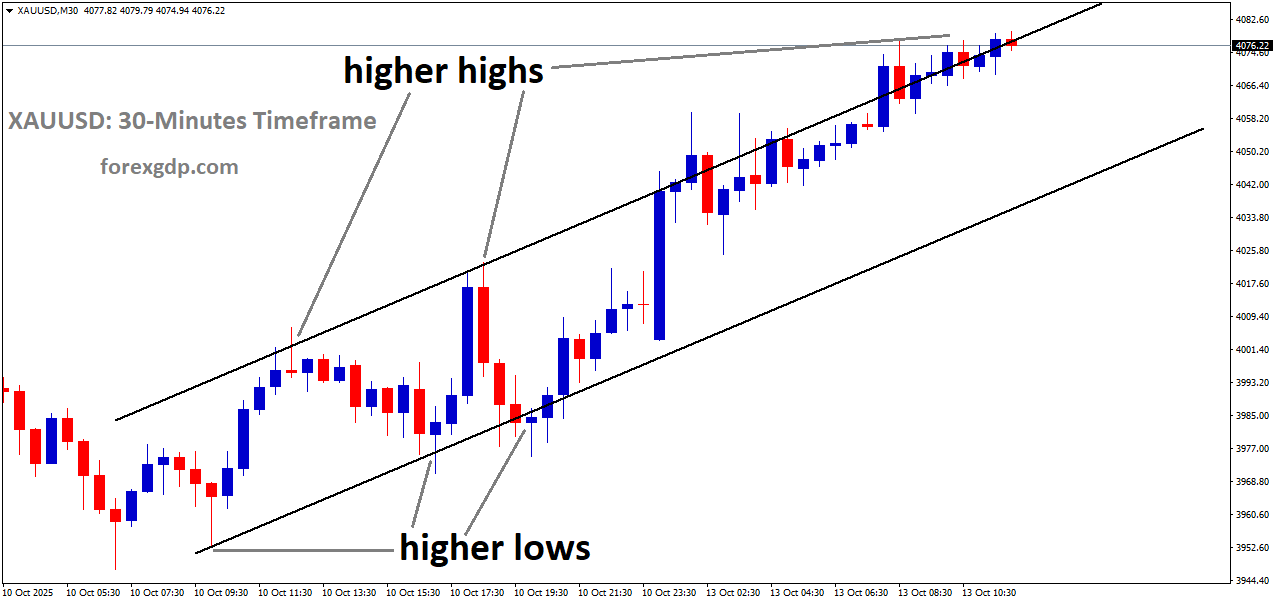
USDJPY is moving in an ascending channel, andthe market has rebounded from the higher low area of the channel
Two main forces are driving the move. First, rising tensions in the Middle East have encouraged investors to reduce their exposure to riskier assets. This cautious mood has supported demand for the US Dollar, which is often treated as a safe place to hold money during periods of political or economic uncertainty.
Second, Japan’s latest growth figures were weaker than expected. The data raised fresh questions about how quickly the Bank of Japan can continue moving away from its long-standing loose monetary policy. Any delay in further policy tightening could make it more difficult for the Yen to regain lasting strength.
Geopolitical Tensions Increase Demand for Safety
Financial markets turned more cautious as investors watched developments involving the United States and Iran. A Memorandum of Understanding signed by the two countries in June expired on Monday without producing a lasting peace agreement.
The end of the temporary arrangement added another layer of uncertainty to an already fragile situation. Although diplomatic contact had created some hope that tensions might ease, the two sides remained far apart on the terms of a durable settlement.
Investors are now concerned that the lack of progress could lead to a renewed escalation. When geopolitical risks increase, market participants often move money away from assets that are viewed as more vulnerable to sudden shocks. The US Dollar can benefit from this behaviour because of its central position in the global financial system.
The change in sentiment was not limited to the currency market. A broader risk-off mood emerged as traders considered the possibility of a more serious conflict and its potential effects on international trade, energy supplies and global economic confidence.
Threats From Washington and Tehran Worry Investors
The cautious market mood deepened after the United States and Iran increased their public threats.
US President Donald Trump warned that Oman could face military action if it interfered with efforts to reach an agreement with Iran. The comments attracted attention because Oman has traditionally played a useful diplomatic role in the region and has maintained working relationships with several competing powers.
Iranian officials responded with a stronger military message of their own. Authorities said the country would adopt a “fully offensive” military position. The announcement added pressure to a ceasefire that was already considered unstable.
These statements reduced hopes of a quick diplomatic breakthrough. They also made investors more aware of the risk that a political dispute could develop into a wider regional confrontation.
The Middle East remains important to global markets because of its role in energy production and international shipping. A serious disruption could affect transportation routes, business costs and economic activity far beyond the region. Even before any direct disruption takes place, the possibility of conflict can be enough to weaken investor confidence.
Why the US Dollar Is Receiving Support
The US Dollar is often described as a safe-haven currency because investors tend to seek it during times of stress. This does not mean the American economy is protected from every global shock. Instead, the Dollar benefits from the size of the US financial system, the deep market for government debt and its widespread use in international transactions.
When investors become nervous, access to liquidity becomes especially important. Many companies, governments and financial institutions use the Dollar for borrowing, trade and reserves. As a result, demand for the currency can rise when uncertainty spreads across global markets.
This week’s geopolitical concerns have strengthened that defensive demand. The shift has helped the Dollar advance against the Yen, even though the Japanese currency has also traditionally been seen as a shelter during periods of market stress.
The Yen’s safe-haven status has become less reliable in recent years because of the wide difference between monetary policy in Japan and other major economies. Japan has maintained relatively loose financial conditions for a long period, while higher returns elsewhere have often encouraged investors to favour other currencies.
Weak Japanese Growth Adds Pressure on the Yen
Domestic economic news has also worked against the Japanese currency. Gross Domestic Product data released on Monday showed that Japan’s economy expanded by 0.3% in the second quarter. That was slower than the 0.5% growth recorded in the previous three-month period and weaker than markets had expected.
The slowdown does not necessarily mean Japan is entering a major downturn. However, it shows that the economy may not be strong enough to absorb rapid changes in borrowing costs.
Japan continues to face several economic challenges, including weak household spending, uneven wage growth and pressure on businesses from changing global demand. Policymakers must consider all these factors when deciding whether tighter financial conditions are appropriate.
Slower growth may encourage the Bank of Japan to proceed carefully. If officials raise borrowing costs too quickly, they could weaken consumer demand and business investment. On the other hand, keeping policy loose for too long could create other problems, particularly if inflation remains difficult to manage.
Bank of Japan Faces a Difficult Policy Decision

The Bank of Japan has been gradually moving away from the extremely supportive policies that shaped the country’s financial system for many years. Investors have been watching closely for signs that the central bank is prepared to continue tightening monetary policy.
Weak GDP data have made the outlook less certain. The central bank now has to balance the need to control inflation with the risk of placing additional pressure on a slowing economy.
A slower tightening process would probably leave a large policy gap between Japan and the United States. That difference matters because investors often move funds toward markets offering better returns. When Japanese borrowing costs remain low compared with those in the United States, demand for the Yen can suffer.
The central bank must also consider the effect of currency weakness on households. A weaker Yen makes imported goods more expensive, including fuel and food. This can increase the cost of living even when domestic demand remains fragile.
Officials in Tokyo Remain Under the Spotlight
The Yen’s continued decline has increased attention on Japanese authorities. Market participants are watching for stronger public warnings or possible action aimed at limiting excessive currency movements.
Tokyo has previously shown that it is willing to respond when officials believe exchange-rate changes are too rapid or disconnected from economic conditions. However, direct action does not always create a lasting reversal. Broader forces such as monetary policy, international capital flows and global risk sentiment usually remain important.
For that reason, statements from the government and the Bank of Japan will be closely followed. Investors will want to know whether officials are more concerned about the economic slowdown or the inflationary effects of a weak currency.
Near-Term Outlook Remains Uncertain
Analysts at UOB Group believe the US Dollar continues to have a firm underlying tone against the Yen. Their view suggests that current conditions still favour the American currency, although they also expect movements to remain limited in the near term.
Much will depend on geopolitical developments and the next signals from central banks. Progress toward a diplomatic agreement between the United States and Iran could improve risk appetite and reduce defensive demand for the Dollar. A further escalation, however, may produce the opposite result.
Japanese economic releases will also remain important. Stronger wage growth, consumer spending or inflation data could revive expectations of tighter Bank of Japan policy. Additional signs of weakness would strengthen the case for caution.
Summary
The US Dollar has extended its advance against the Japanese Yen as geopolitical tensions and weak Japanese economic growth influence investor decisions. The expiry of a temporary understanding between the United States and Iran, combined with increasingly hostile statements from both sides, has encouraged a defensive mood across financial markets.
At the same time, Japan’s slower second-quarter growth has created uncertainty about the Bank of Japan’s ability to continue tightening policy. With global risks supporting the Dollar and domestic concerns weighing on the Yen, investors are likely to remain focused on diplomacy in the Middle East, Japanese economic data and signals from policymakers in Tokyo.
USDCAD Weakens as Resilient Oil Conditions Empower the Loonie
The USD/CAD currency pair remains under pressure as stronger crude oil conditions provide support for the Canadian Dollar. The pair has recorded losses for four consecutive trading sessions, reflecting improving demand for the commodity-linked Canadian currency.
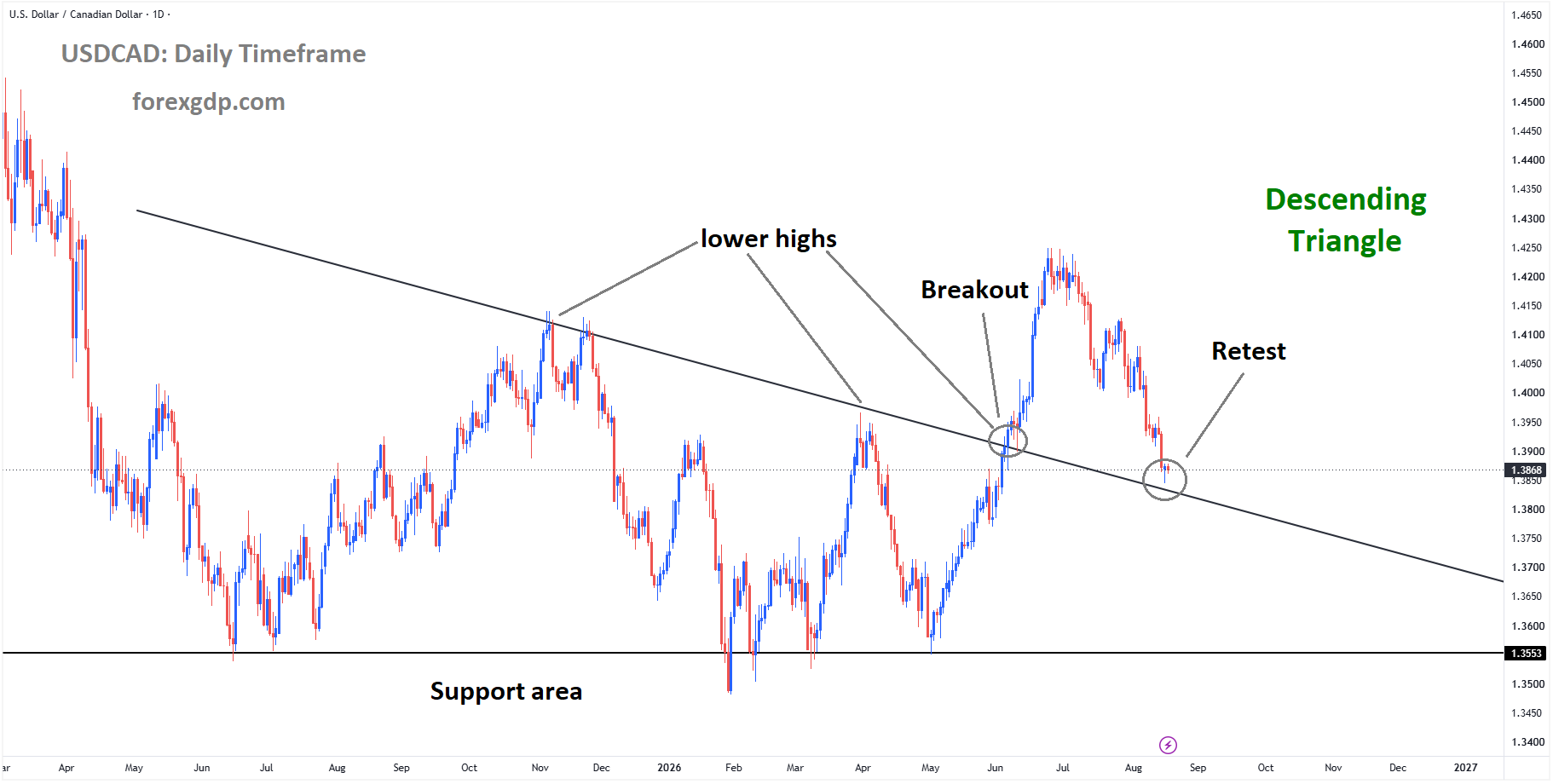
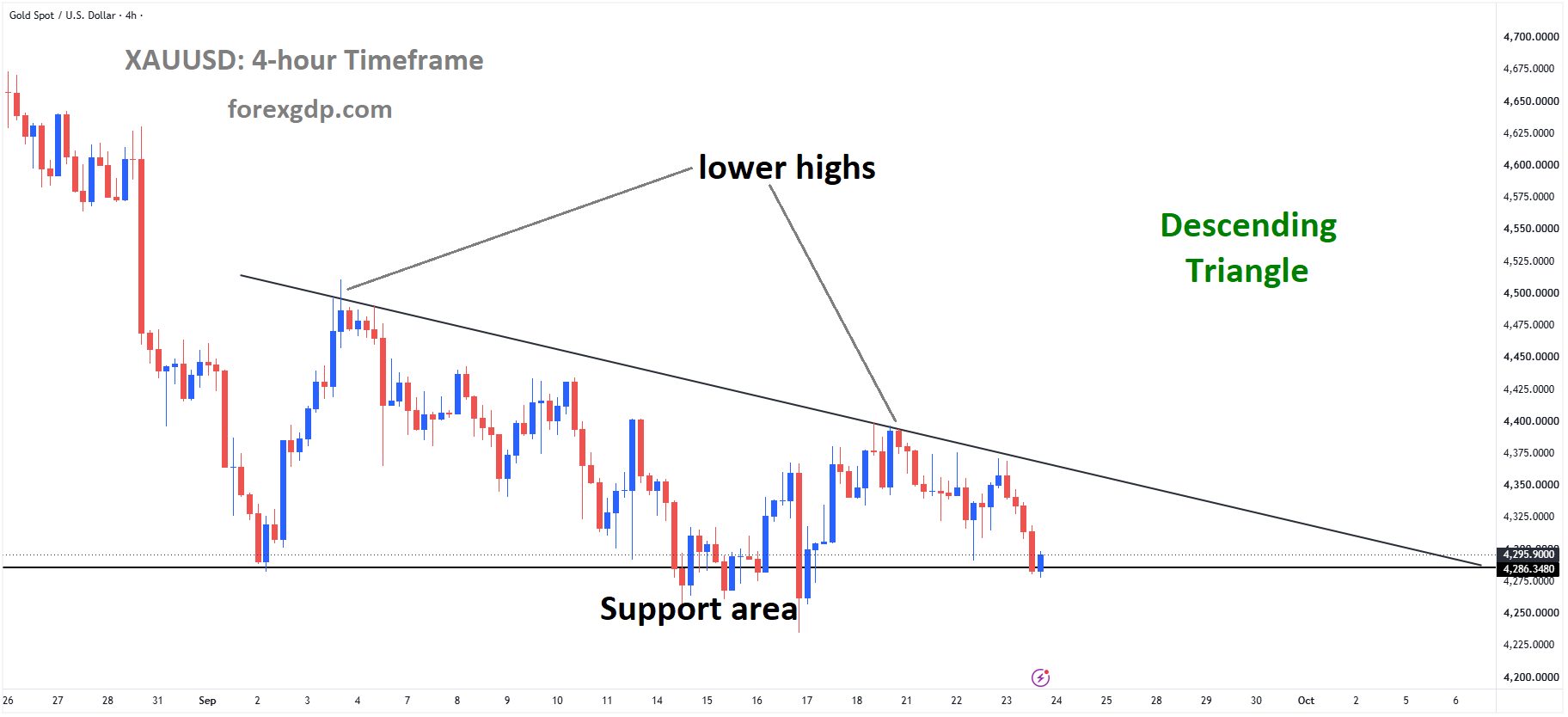
USDCAD reached the retest area of the broken descending triangle pattern
Canada is one of the world’s major oil-producing nations, which means changes in the energy market can have a meaningful effect on its currency. When crude oil becomes stronger, expectations for Canadian export earnings often improve. This can increase demand for the Canadian Dollar and create downward pressure on USD/CAD.
However, the pair’s decline may remain limited. Growing uncertainty surrounding relations between the United States and Iran is encouraging some investors to seek the relative safety of the US Dollar. At the same time, fading expectations for another Federal Reserve interest-rate increase are preventing the Greenback from gaining stronger momentum.
These competing forces have created a mixed environment. Oil is helping the Canadian Dollar, while geopolitical concerns are supporting demand for the US currency.
Stronger Crude Oil Provides Support for the Canadian Dollar
Crude oil has remained firm after advancing during the previous two sessions. This has helped strengthen sentiment around the Canadian Dollar because energy exports are an important part of Canada’s economy.
A stronger oil market can benefit Canada in several ways. It may raise export revenue, improve the country’s trade position, and support activity in energy-producing regions. These factors often make the Canadian Dollar more attractive to international investors.
The relationship between oil and the Canadian currency is not always perfectly consistent. Domestic economic data, global risk sentiment, and central bank expectations can sometimes have a greater influence. Still, when energy prices rise because of concerns about global supply, the Canadian Dollar frequently receives additional support.
The latest strength in crude comes as the possibility of a lasting agreement between Washington and Tehran appears to be weakening. The end of an interim peace arrangement has increased uncertainty about what may happen next, especially in areas that are important to global energy transportation.
US-Iran Dispute Keeps Energy Supply Concerns in Focus

The temporary understanding between the United States and Iran was signed in June and created a 60-day period for longer-term peace talks. That window has now expired without a broader settlement.
President Donald Trump has said he is not interested in extending the interim arrangement. His position has reduced hopes that both sides will quickly return to negotiations or agree to a renewed pause.
The lack of progress has returned attention to the Strait of Hormuz, one of the most important shipping routes for the global oil industry. Any interruption in this region could affect the movement of crude supplies and increase transportation risks. Even without an actual disruption, the possibility of one can keep energy markets nervous.
Analysts at Brown Brothers Harriman have pointed to the prolonged standoff as a major influence on crude oil. They believe energy-market movements are helping shape the broader story surrounding the conflict. Stronger oil may add pressure for escalation, while softer conditions could create more room for restraint and diplomacy.
This relationship makes oil an important signal for both political and financial developments. Traders are closely watching official statements, military activity, shipping conditions, and any indication that negotiations could restart.
Safe-Haven Demand Helps Limit US Dollar Weakness
Although stronger oil is supporting the Canadian Dollar, geopolitical uncertainty is also creating demand for the US Dollar. The Greenback is widely treated as a safe-haven currency during periods of international tension.
Investors often move toward highly liquid and widely accepted assets when the global outlook becomes less predictable. The US Dollar can benefit from this behaviour even when parts of the American economic picture are weakening.
As a result, tensions between the United States and Iran are having two different effects on USD/CAD. Supply concerns are strengthening crude oil and helping the Canadian Dollar. At the same time, fears of a wider confrontation are encouraging defensive demand for the US currency.
This explains why the pair’s losses may be contained rather than becoming much deeper. The Canadian Dollar has a clear advantage from firmer energy conditions, but the US Dollar continues to receive support from investors seeking protection against geopolitical risk.
The direction of the pair may therefore depend on which theme becomes more powerful. A further increase in supply concerns could provide additional support to the Canadian currency. A sharp rise in global anxiety, however, may strengthen demand for the Greenback.
Federal Reserve Rate Increase Expectations Continue to Fade
The US Dollar also faces pressure from changing expectations surrounding Federal Reserve policy. Investors have become less confident that the central bank will raise interest rates at its upcoming meeting.
Recent economic figures have weakened the argument for tighter monetary policy. July employment growth was unexpectedly soft, raising questions about the strength of the American labour market. Consumer inflation was also relatively mild, reducing the urgency for the Federal Reserve to take further action.
Central banks generally raise interest rates when inflation is too strong or when economic demand needs to be cooled. If hiring slows and inflation remains contained, officials have less reason to increase borrowing costs.
Market expectations have shifted noticeably in response to these developments. Data from the CME FedWatch Tool shows that the perceived likelihood of an increase at the next meeting has fallen compared with the previous week.
Lower expectations for a rate increase can weaken a currency because higher interest rates often make assets denominated in that currency more appealing. With investors becoming less certain about further tightening, the US Dollar is losing one of its potential sources of support.
Economic Data and Political Risk Pull USD/CAD in Opposite Directions
The current USD/CAD environment is shaped by several forces that do not all point in the same direction.
Canada’s currency is benefiting from stronger crude oil and concerns about possible supply disruptions. The US Dollar, meanwhile, is gaining some defensive support from the same geopolitical tensions. This creates an unusual situation in which one event can help both currencies through different channels.
Monetary policy adds another layer of uncertainty. Softer US employment and inflation figures have reduced expectations for Federal Reserve action, placing pressure on the Greenback. Future economic reports will be important in determining whether that shift continues.
Investors will also watch for any renewed diplomatic contact between the United States and Iran. Progress toward a longer-lasting agreement could ease concerns about oil supplies and reduce safe-haven demand. On the other hand, further deterioration in relations may keep both energy markets and the US Dollar supported.
Summary
USD/CAD remains subdued as stronger crude oil conditions improve demand for the Canadian Dollar. Canada’s position as a major energy exporter means that concerns about global oil supplies can provide meaningful support to its currency.
The expiration of the temporary US-Iran peace arrangement and the lack of interest in extending it have added to uncertainty around an important oil-producing region. These tensions may keep crude firm, but they are also encouraging safe-haven demand for the US Dollar, limiting the pair’s decline.
At the same time, weaker US employment growth and mild inflation have reduced expectations for another Federal Reserve rate increase. The pair’s next direction will likely depend on developments in US-Iran relations, energy supply conditions, and upcoming American economic data.