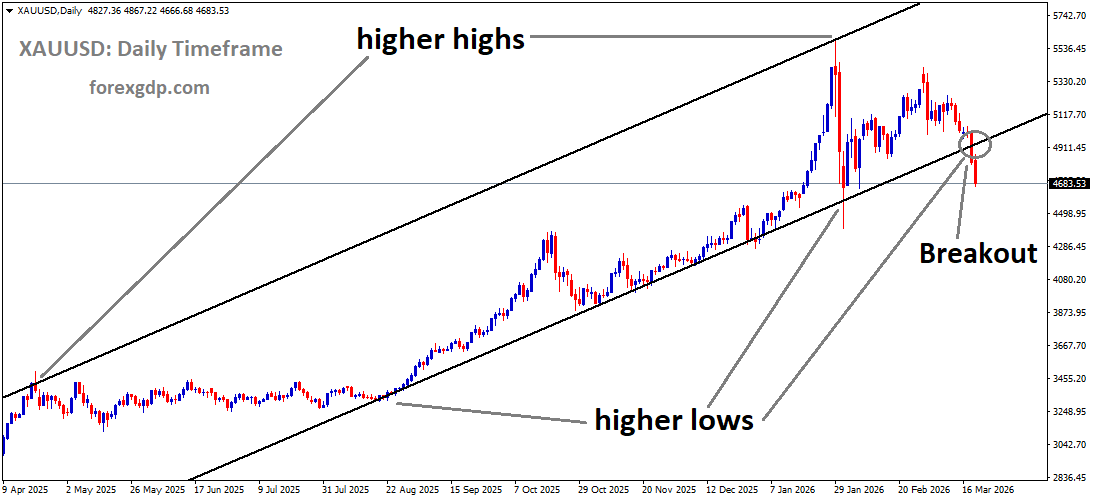

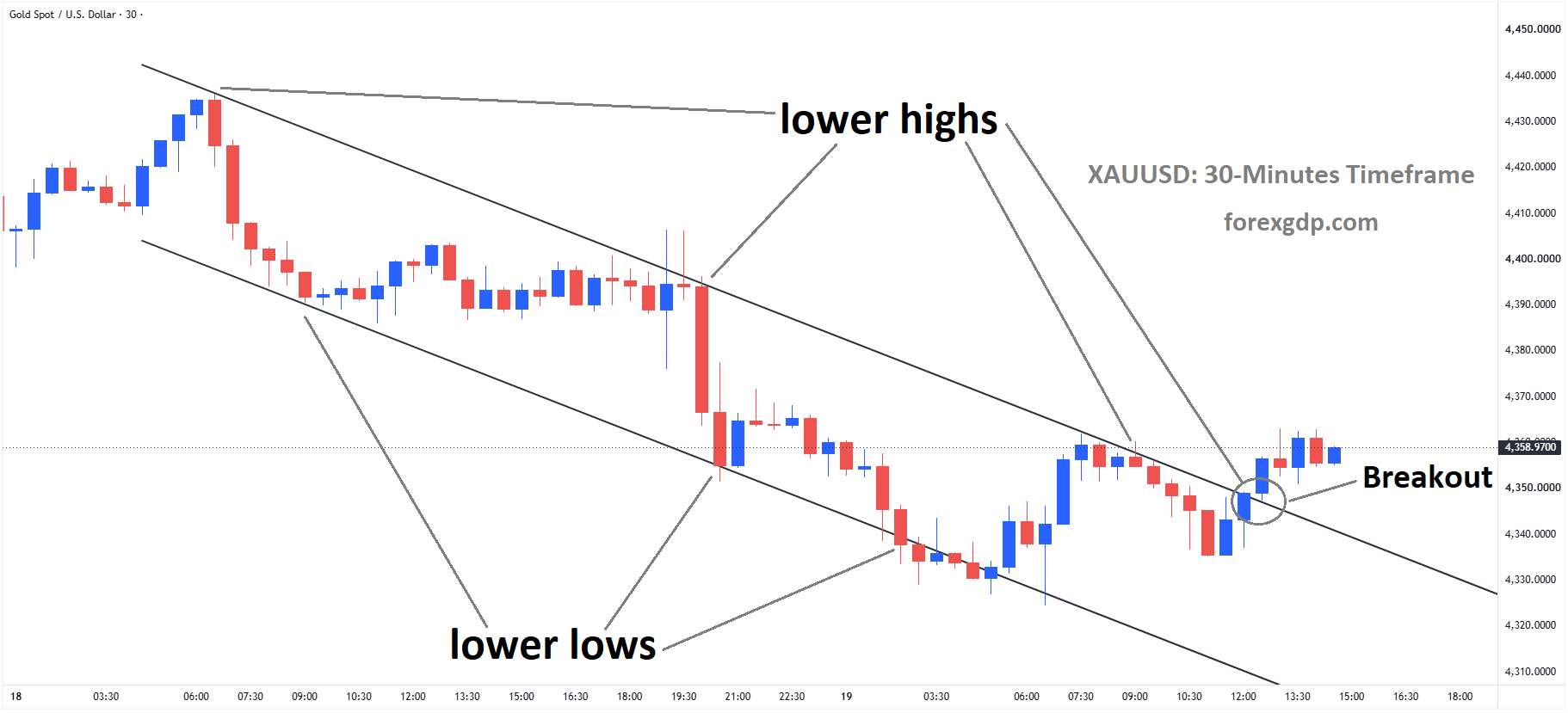
XAUUSD has broken the descending channel to the upside
Gold regained some ground during European trading after falling sharply in the previous session. The recovery came as the US Dollar lost part of its recent strength, giving the precious metal an opportunity to attract fresh demand.
However, the outlook remains uncertain. Investors are closely watching developments in the Middle East, rising energy costs, elevated US government bond yields, and the Federal Reserve’s next policy moves. These factors could shape demand for both gold and the US Dollar in the coming days.
Although a softer Dollar generally supports gold, traders appear unwilling to make large commitments before the Federal Open Market Committee releases the minutes from its latest meeting. The document may provide valuable clues about how officials view inflation and whether further interest-rate increases are possible.
Weaker US Dollar Gives Gold Some Support
Gold often benefits when the US Dollar declines because the metal becomes more accessible to buyers using other currencies. That relationship helped gold recover after it reached a fresh weekly low.
The Dollar had recently bounced back from a two-month low, but that recovery lost momentum as some traders began selling the currency. This change allowed gold to reverse a portion of its previous losses.
Even so, the Dollar may still have several sources of support. High energy costs are raising concerns that inflation could remain difficult to control. If inflation stays elevated, the Federal Reserve may need to maintain restrictive monetary policy or consider another rate increase.
That possibility matters for gold because the metal does not pay interest. When US bond yields remain high, income-producing assets can appear more attractive than holding bullion. As a result, elevated yields could limit the strength of any gold recovery, even if the Dollar weakens temporarily.
Federal Reserve Minutes Take Center Stage
The release of the FOMC minutes is expected to be the main event for gold and currency traders. Investors will examine the document for signs of disagreement among policymakers and any discussion about future interest-rate decisions.
Particular attention will be paid to how officials assess inflation risks. Energy costs have returned to the spotlight because of rising tensions involving the United States and Iran. A prolonged increase in oil and gas costs could affect transportation, manufacturing, food production, and consumer spending.
The Federal Reserve typically focuses on broader and longer-lasting inflation rather than reacting to every short-term move in energy markets. However, an extended energy shock could influence inflation expectations and increase pressure on businesses and households.
Markets continue to see a meaningful chance that the Federal Reserve could raise interest rates before the end of the year. The central bank’s meeting minutes may either strengthen that belief or reduce it. A more hawkish message would likely support the Dollar and bond yields, creating additional pressure for gold. A more cautious tone could have the opposite effect.
Until the document is released, many investors may prefer to remain patient rather than take a strong position in either direction.
Middle East Tensions Push Energy Risks Higher

The dispute between the United States and Iran remains a major source of uncertainty. Crude oil climbed to a multiweek high as concerns grew about shipping routes, Iranian ports, and the future of the Strait of Hormuz.
US President Donald Trump said Washington was not holding talks with Iran and maintained that a naval blockade of Iranian ports remained active. He also shared a map on Truth Social that portrayed the Strait of Hormuz as US territory, adding another provocative element to an already tense situation.
Iranian Parliament Speaker Mohammad Bagher Ghalibaf responded by saying that the strategic waterway would remain closed until the United States met conditions connected to an earlier memorandum of understanding.
The Strait of Hormuz is one of the world’s most important energy shipping routes. Any disruption can create concerns about global oil and gas supplies. Even the threat of prolonged restrictions may increase transportation costs and encourage buyers to seek alternative supply arrangements.
The situation remains unpredictable because it involves military pressure, economic interests, and diplomatic demands. Any sign of escalation could keep energy costs elevated. On the other hand, renewed negotiations or an agreement over shipping access could reduce some of the pressure.
Higher Energy Costs Complicate the Inflation Outlook
Rising oil and gas costs are not only an energy-market issue. They can spread across the wider economy and make inflation harder to contain.
Businesses often face higher expenses when fuel becomes more costly. Airlines, shipping companies, manufacturers, farmers, and retailers may eventually pass some of those expenses on to customers. Households can also feel the impact through transportation and utility bills.
These concerns have contributed to higher yields on longer-term US government debt. Investors may demand greater returns when they believe inflation could remain elevated for an extended period.
Analysts at ING have argued that higher energy costs and rising long-term Treasury yields are helping the Dollar remain resilient. The bank believes the currency may not yet be ready for a lasting decline, even though it recently came under selling pressure.
ING also noted that higher energy costs can be positive for the Dollar because the United States has considerable domestic energy production. At the same time, persistent energy inflation could encourage the Federal Reserve to maintain a firm policy stance.
This combination creates a difficult environment for gold. Geopolitical tension can strengthen safe-haven demand for the metal, but the resulting increase in energy costs may also lift bond yields and support the Dollar.
Safe-Haven Demand Offers a Counterbalance
Gold and the US Dollar can both benefit during periods of political or military uncertainty. Investors frequently turn to these assets when they are worried about global trade, energy supplies, financial stability, or armed conflict.
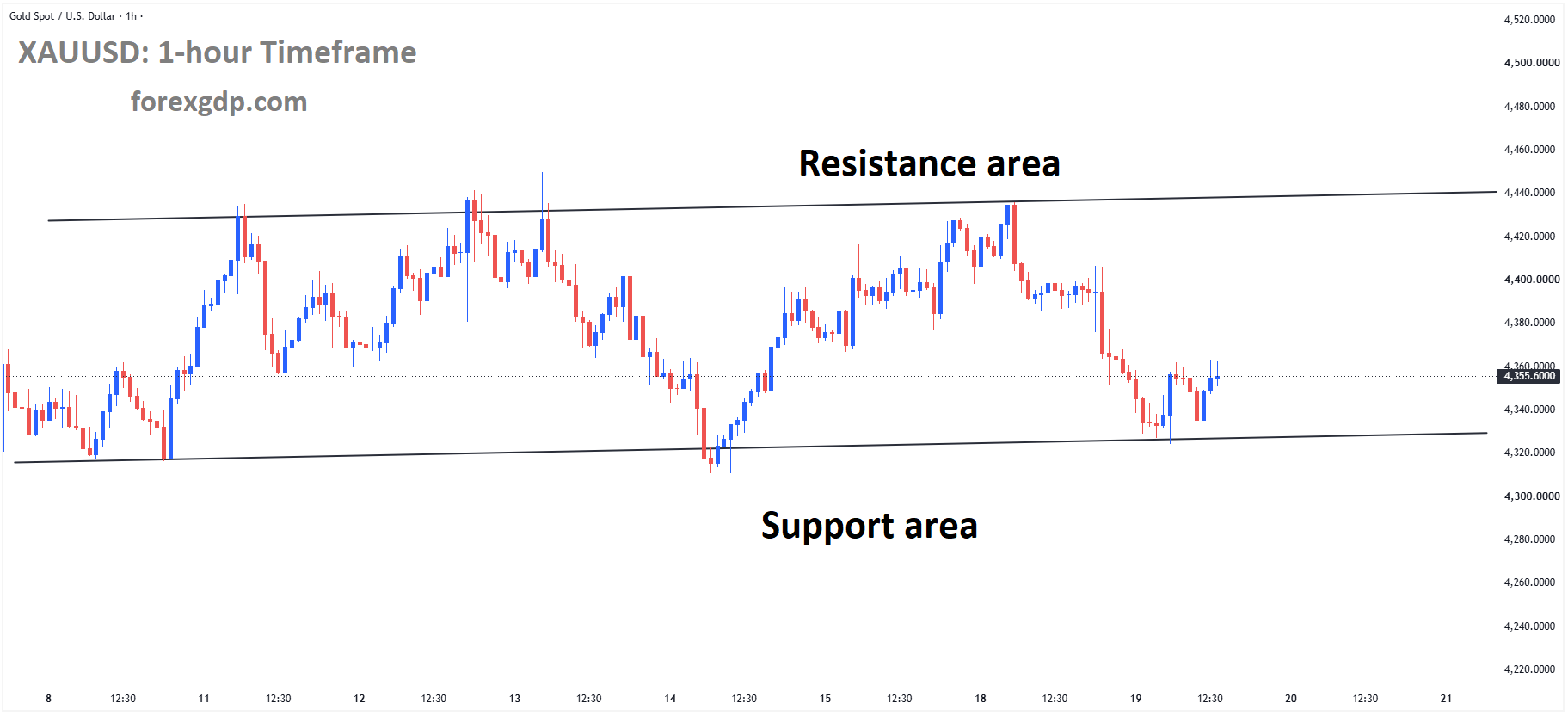
XAUUSD is moving in a box pattern, andthe market has rebounded from the support area of the pattern
That shared safe-haven status means the relationship between gold and the Dollar is not always straightforward. A stronger Dollar can create pressure for bullion, but intense geopolitical uncertainty may still encourage investors to hold gold as a defensive asset.
The Middle East crisis could therefore prevent traders from becoming too negative about either one. Those expecting a major gold decline must consider the possibility of renewed safe-haven buying. At the same time, those expecting a powerful gold recovery must account for high bond yields and the risk of tighter Federal Reserve policy.
Much will depend on whether the US-Iran dispute escalates, remains contained, or moves back toward diplomacy. Energy markets are likely to remain an important link between geopolitical developments, inflation expectations, Federal Reserve policy, and demand for precious metals.
Summary
Gold recovered part of its recent decline as selling pressure on the US Dollar provided support. However, the rebound remains vulnerable because rising energy costs are fueling inflation concerns and keeping US bond yields elevated.
The conflict involving the United States and Iran has increased uncertainty around the Strait of Hormuz and global energy supplies. These risks may support gold through safe-haven demand, while also strengthening the Dollar by raising expectations that the Federal Reserve will maintain a restrictive policy stance.
Investors are now focused on the FOMC minutes for clearer guidance about inflation and future interest rates. Until the Federal Reserve’s position becomes clearer, gold may remain caught between geopolitical demand and pressure from elevated yields.