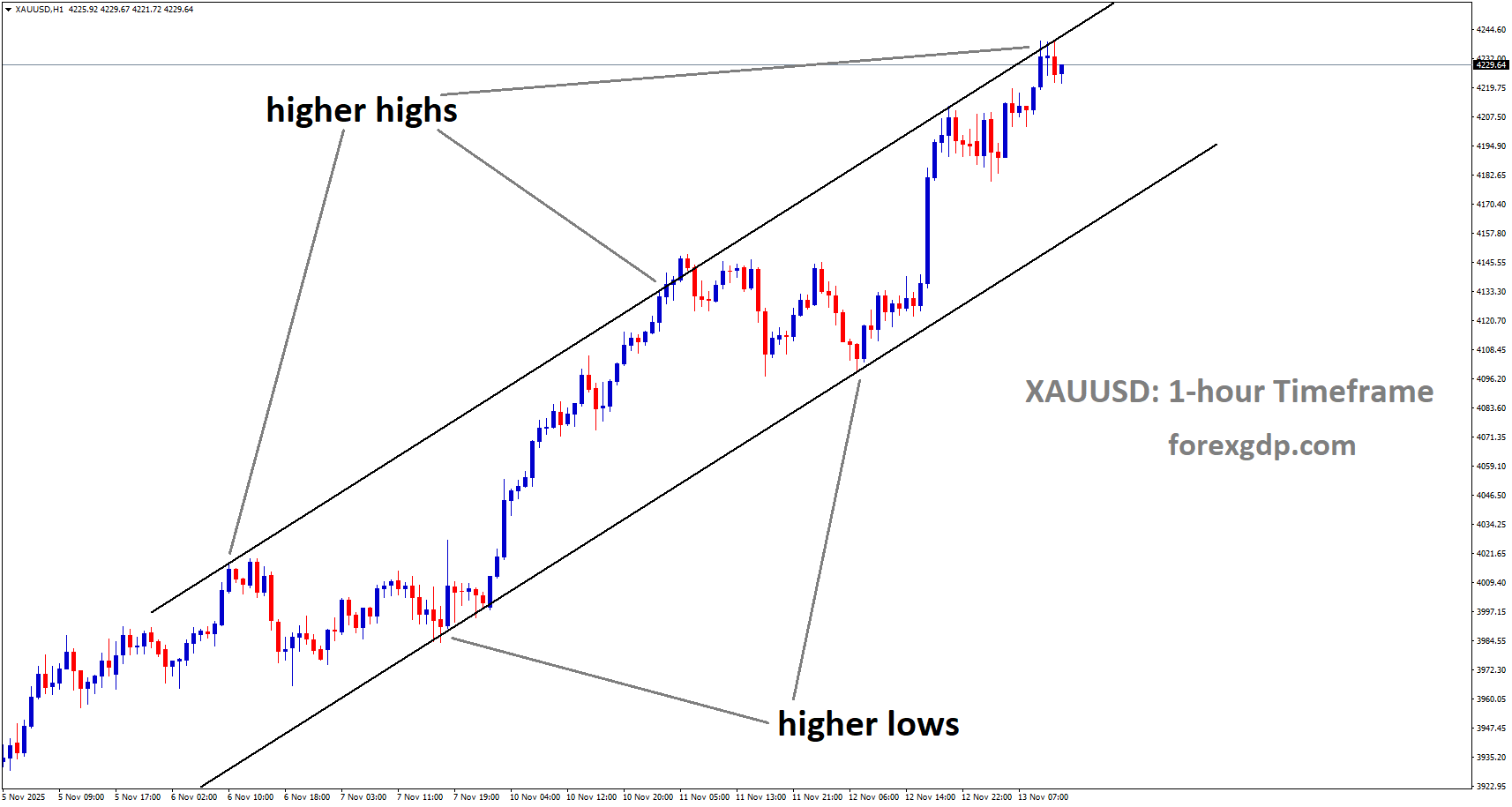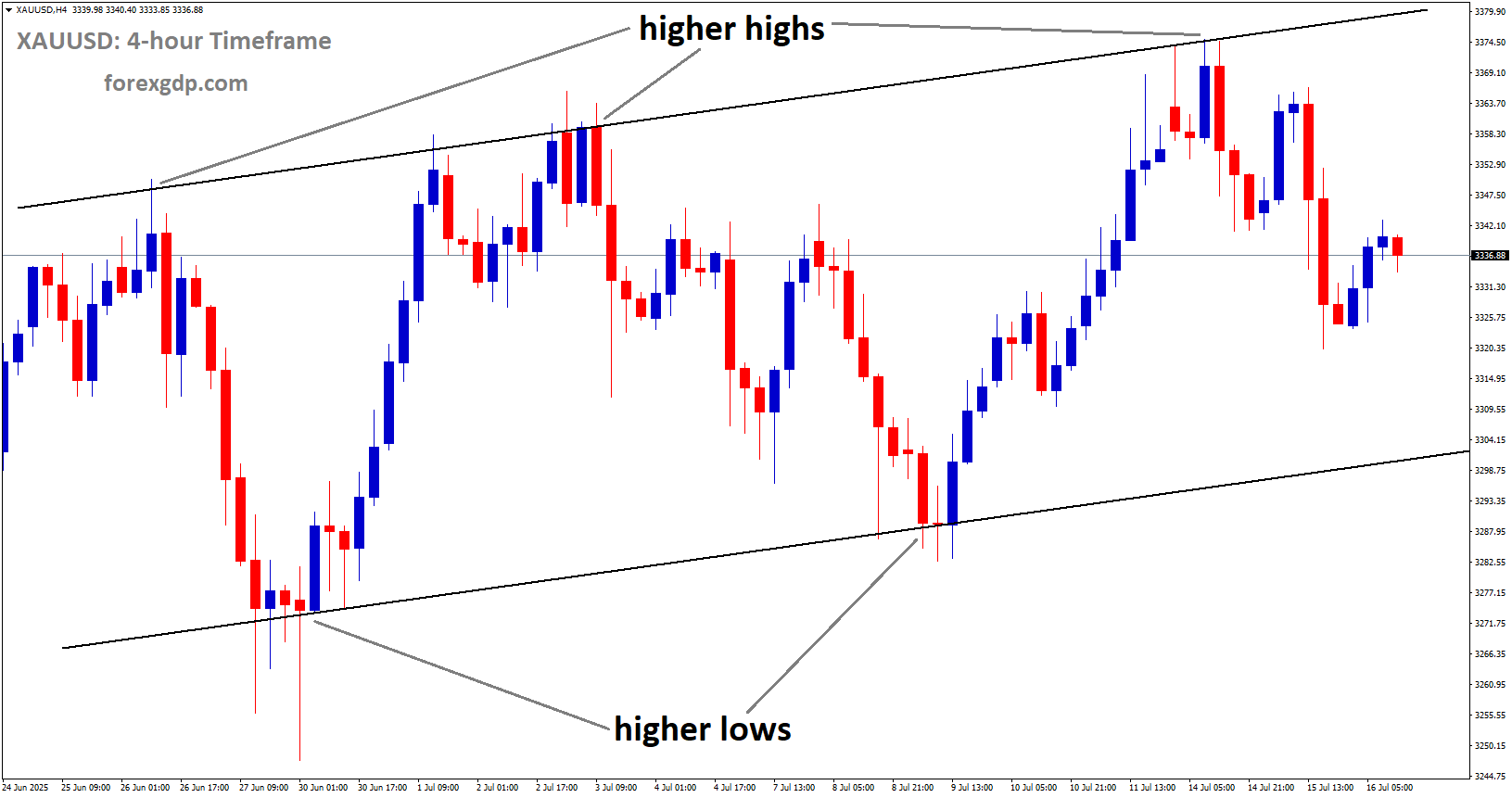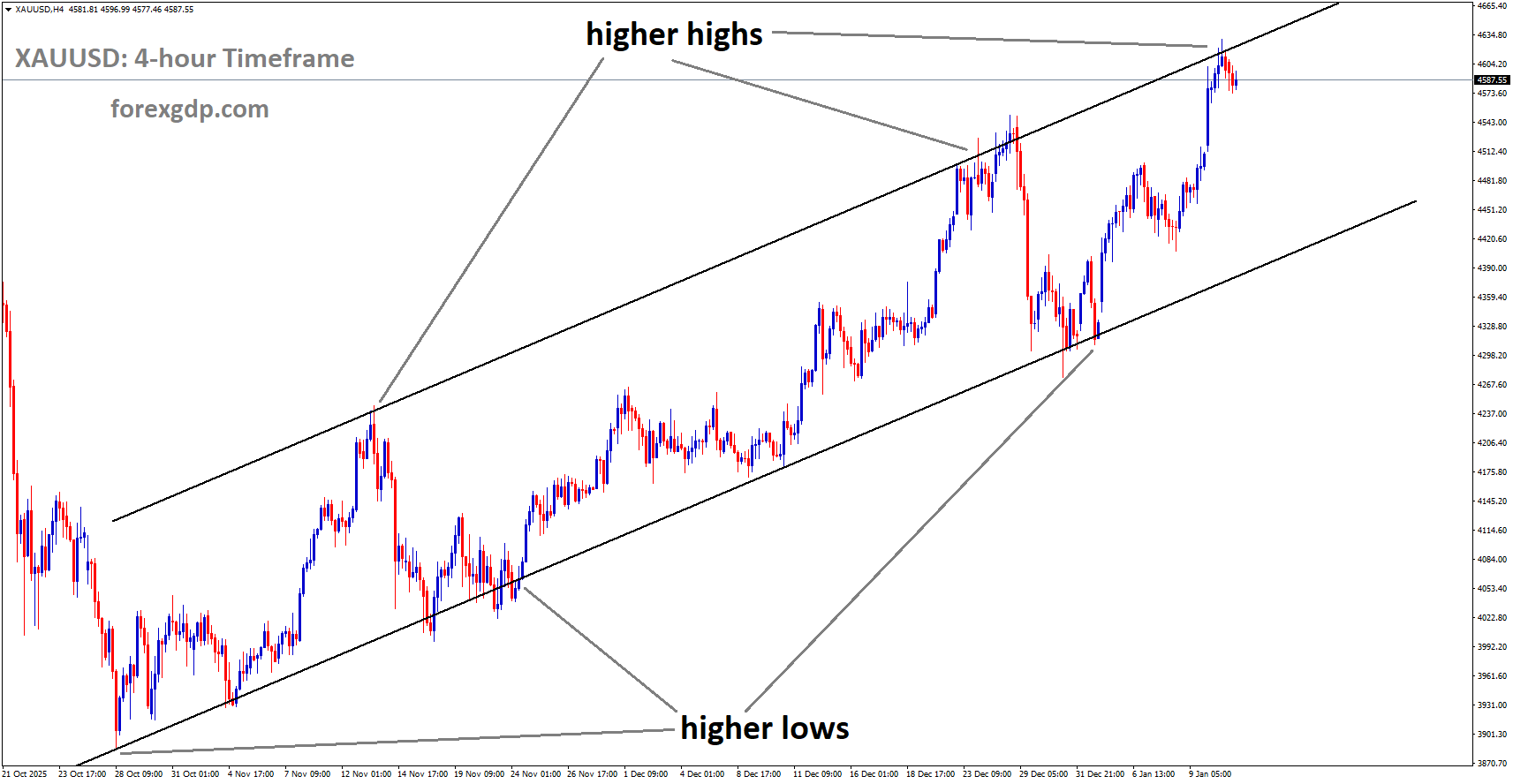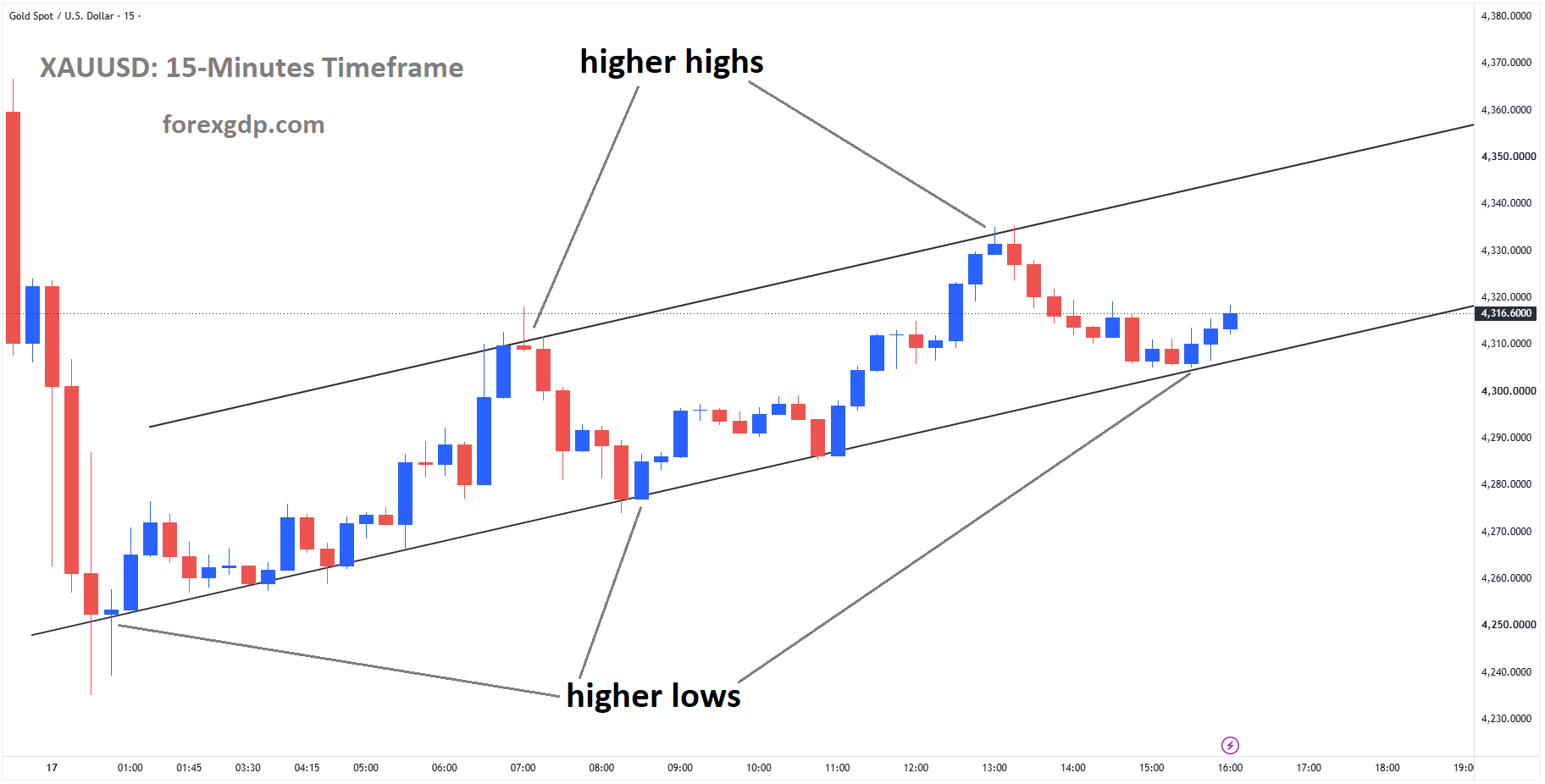
XAUUSD is moving in an ascending channel, and the market has rebounded from the higher low area of the channel
Gold regained strength after the US Dollar pulled back from its recent advance. A modest decline in US Treasury yields also helped the precious metal recover following a sharp reaction to the Federal Reserve’s latest interest rate decision.
However, the recovery may face limits. The Federal Reserve delivered a hawkish message and indicated that further policy tightening could be necessary. Strong labour market data and ongoing inflation concerns may also prevent the US Dollar from weakening significantly.
At the same time, uncertainty in the Middle East continues to influence market sentiment. Hopes for a possible diplomatic solution offer some relief, but continued military activity means investors cannot ignore geopolitical risks.
Gold Finds Support After the Fed-Driven Decline
Gold came under heavy selling pressure immediately after the Federal Reserve announced an interest rate increase. The initial market reaction favoured the US Dollar, while Treasury yields moved higher. These developments made the precious metal less attractive and encouraged traders to reduce their Gold positions.
The weakness did not continue for long. The US Dollar later gave back part of its gains, allowing Gold to attract fresh buying interest. Treasury yields also moved away from their recent peaks, reducing some of the pressure on non-yielding assets.
Gold does not provide interest income. Therefore, it often struggles when government bond yields rise because investors can earn better returns from interest-bearing assets. When yields decline, the disadvantage of holding Gold becomes less severe.
A slowdown in the Oil rally also helped calm the bond market. Energy prices can influence inflation expectations, and a sharp rise in Oil may increase concerns about persistent price pressures. When the Oil rally cooled, some of those concerns eased, giving Gold additional breathing room.
Federal Reserve Delivers a Hawkish Rate Increase
The Federal Reserve raised its main interest rate for the first time since 2023. Policymakers approved the decision unanimously, showing broad agreement within the central bank about the need for tighter monetary conditions.
In its policy statement, the Fed described the US economy as solid. Domestic spending remained resilient, while unemployment showed little change. These conditions gave policymakers enough confidence to raise borrowing costs without expressing serious concern about an immediate economic slowdown.
Inflation, however, remains the central problem. The Fed made it clear that price growth is still too high and that stronger action may be required to bring inflation back towards its long-term target.
This message was important because investors had been hoping that the central bank might take a more cautious position. Instead, officials suggested that the fight against inflation is far from finished. That reduced expectations for easier monetary policy and strengthened the case for keeping interest rates elevated.
Future Rate Increases Remain Possible
The Fed’s updated policy projections showed that most officials expect at least one more interest rate increase before the end of the year. This creates a difficult environment for Gold because the metal usually performs better when borrowing costs are falling or when markets expect monetary support.
Fed Chairman Kevin Warsh reinforced the hawkish outlook. He argued that inflation remains uncomfortably high and explained that the latest move removed part of the support previously provided to the economy.
Warsh also noted that financial conditions had not become sufficiently restrictive. His remarks suggested that the central bank believes the economy can absorb tighter policy without suffering major damage.
More importantly, he indicated that this opinion is widely shared among committee members. That reduces the possibility that the rate increase was a one-time decision and raises the chance of further action in the coming months.
A Resilient Labour Market Supports the US Dollar
Recent US employment figures added another layer of difficulty for Gold. Initial Jobless Claims came in below expectations, showing that fewer people applied for unemployment benefits than economists had predicted.
A strong labor market can support consumer spending and keep the economy moving. While this may sound positive, it can also make inflation harder to control. Businesses may continue paying higher wages, and consumers may remain willing to spend despite elevated borrowing costs.
For the Federal Reserve, labour market resilience provides room to maintain a restrictive policy. Officials face less pressure to cut rates when employment conditions remain stable and economic activity continues to expand.
This situation may limit sustained weakness in the US Dollar. Even if the currency experiences short-term declines, expectations of additional rate increases could continue attracting buyers. A firm US Dollar normally creates a challenging backdrop for Gold because the metal becomes more expensive for investors using other currencies.
Gold’s Recovery May Face Strong Policy Pressure
Gold’s rebound shows that investors are still interested in the metal, especially after a sudden decline. Nevertheless, the wider monetary policy environment remains difficult.
The Federal Reserve is not signalling an early end to its inflation campaign. Instead, policymakers appear prepared to continue tightening if economic data stays strong and price pressures remain elevated.
Gold could receive temporary support whenever Treasury yields decline or the US Dollar loses momentum. However, these moves may not develop into a lasting recovery while investors expect further interest rate increases.
Market sentiment may also change quickly as traders assess upcoming inflation, employment and consumer spending reports. Strong data could reinforce the Fed’s hawkish position, while weaker figures might raise doubts about how much more tightening the economy can handle.
Middle East Tensions Keep Safe-Haven Demand Alive
Geopolitical developments remain another important influence on Gold. US President Donald Trump expressed hope that the conflict involving Iran may be approaching an end and suggested that Tehran wants to reach an agreement.
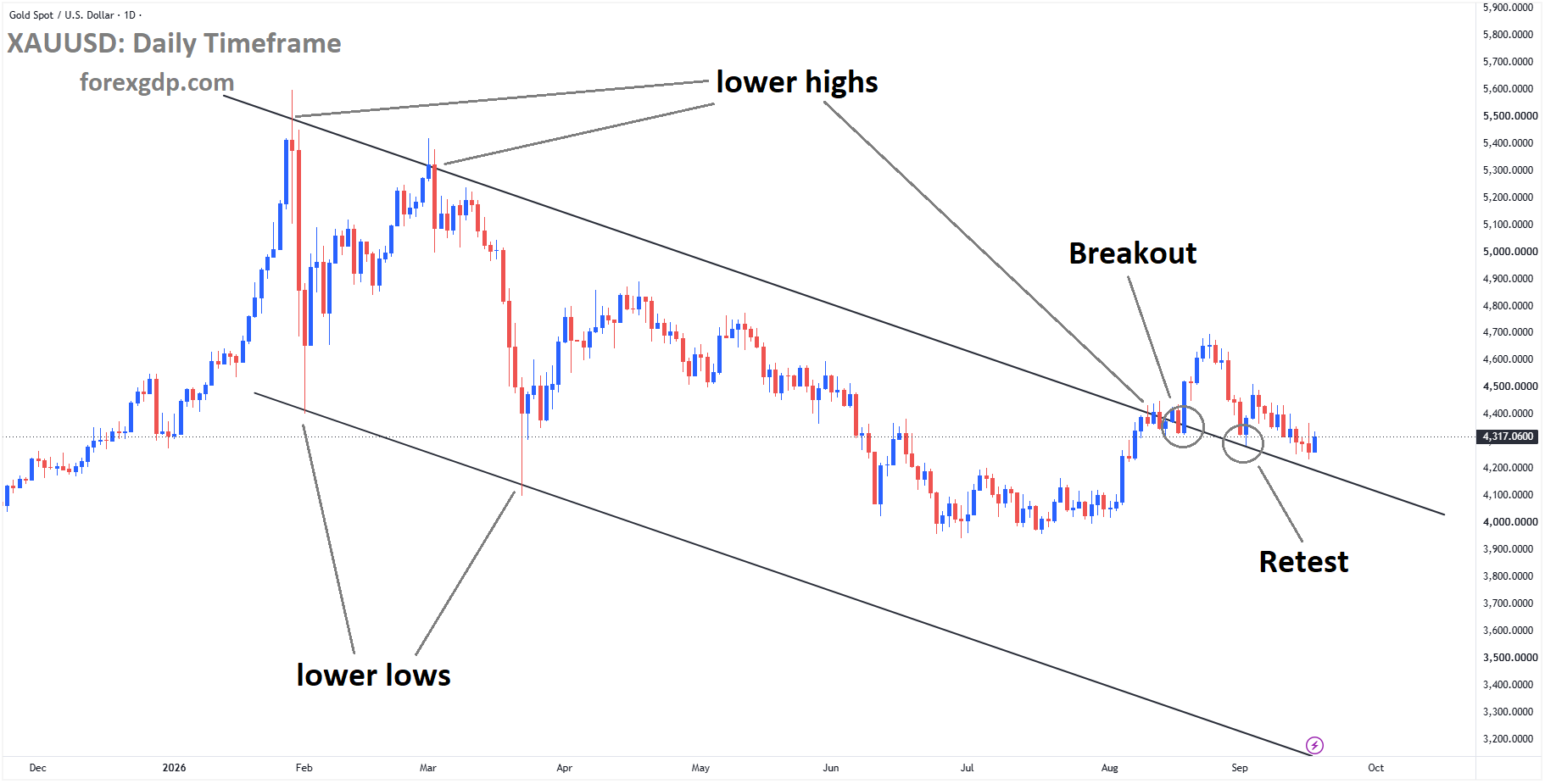
XAUUSD reached the retest area of the broken descending channel
These remarks created cautious optimism, but the situation remains uncertain. Military tensions across the region have not disappeared, with Saudi Arabia and the Iran-backed Houthis continuing to exchange strikes.
Gold often attracts demand during periods of geopolitical fear because investors view it as a store of value. If the conflict becomes more intense or spreads further across the region, safe-haven buying could strengthen.
On the other hand, meaningful diplomatic progress could reduce that demand. A credible peace agreement may encourage investors to move towards riskier assets, especially if financial markets become more confident about global stability.
Oil remains closely connected to these developments. A fresh rise in energy prices could increase inflation concerns, push Treasury yields higher and complicate Gold’s response. Therefore, geopolitical tension can support Gold through safe-haven demand while also hurting it indirectly through stronger inflation expectations.
Final Summary
Gold recovered as the US Dollar and Treasury yields moved away from their recent highs. Cooling Oil prices also reduced some of the immediate inflation pressure and helped the precious metal regain demand.
Still, the Federal Reserve’s hawkish message creates a serious obstacle. Policymakers expect further tightening, inflation remains elevated and the US labour market continues to show resilience. These conditions may support the US Dollar and prevent Gold from enjoying an easy or uninterrupted recovery.
Middle East uncertainty offers some safe-haven support, but diplomatic hopes and continued military action are sending mixed signals. Gold may therefore remain caught between geopolitical demand and the pressure created by higher interest rates.