XAUUSD Stumbles as Soft Jobs Report Fails to Spark Buying
Gold gave up its earlier gains as rising US Treasury yields outweighed the impact of a disappointing employment report. Slower hiring would normally offer support to the precious metal by encouraging expectations of a more cautious Federal Reserve. This time, however, the appeal of interest-paying assets kept gold under pressure.
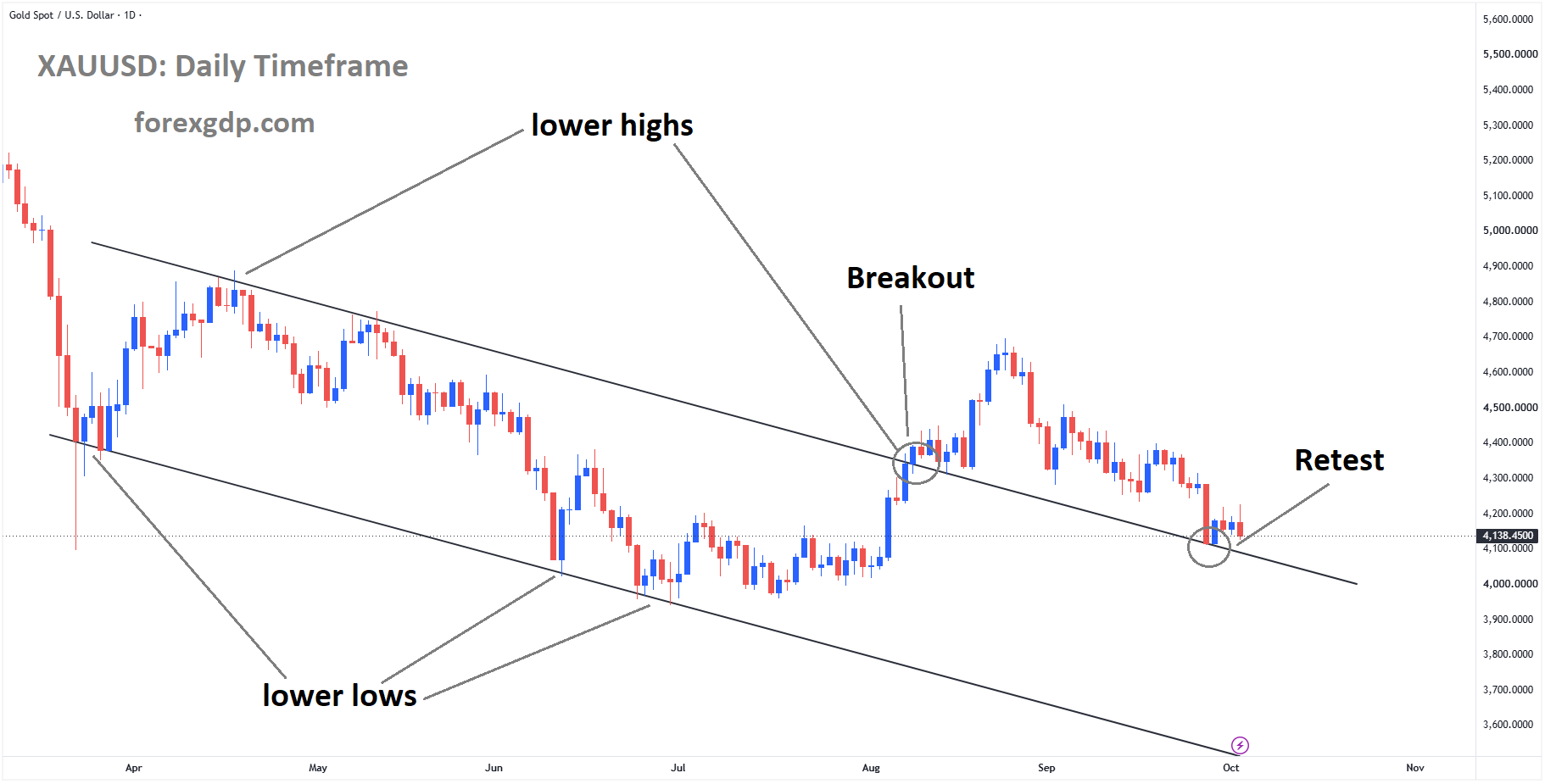
XAUUSD reached the retest area of the broken descending channel
The retreat highlighted a difficult balance for investors. The US labour market showed signs of cooling, but that did not remove concerns about interest rates staying elevated. Traders appeared increasingly willing to expect a pause at the Fed’s October meeting while still leaving room for further tightening later.
For gold, that distinction matters. A temporary pause in rate increases does not necessarily bring the same benefits as a clear shift toward lower borrowing costs.
Weak US Hiring Fails to Keep Gold Moving Higher
The September US employment report showed a sharp slowdown in job creation. Nonfarm Payrolls increased by just 29,000, falling well short of the expected 90,000. The previous month’s total was also revised lower, adding to signs that hiring momentum had weakened.
Such a report usually attracts attention from gold investors because employment plays an important role in Federal Reserve decisions. When businesses add fewer workers, policymakers may become more concerned about the economy’s ability to handle high borrowing costs.
Yet gold could not hold onto its initial gains. Investors weighed the weak payroll figure against other developments, particularly the rise in Treasury yields.
The reaction showed why a single economic release rarely tells the whole story. Slower hiring can support gold, but that support may fade when investors still see attractive returns elsewhere or believe the Fed could tighten policy again.
The central issue was therefore broader than the disappointing jobs number. Markets wanted to understand whether the slowdown would meaningfully change the direction of US monetary policy.
Higher Unemployment Comes With a More Complicated Message
The US unemployment rate increased from 4.1% to 4.2%, adding another sign of softness to the employment report. On its own, a higher unemployment rate can suggest that finding work has become more difficult.
However, the increase was also linked to greater participation in the labour market. More people were working or actively looking for jobs, which helped explain the change.
This distinction is important. Unemployment can rise because employers are cutting jobs, but it can also increase when more people start searching for work before securing a position. Those situations have different implications for the economy.
The report still pointed to slower hiring, but the participation figures made it harder to treat the rise in unemployment as clear evidence of a sudden downturn.
For investors, the mixed details encouraged caution. The labour market appeared to be cooling, although the report did not settle the debate over how quickly the Fed might change its approach.
An October Fed Pause Does Not Remove Later Rate Risks
Comments from New York Fed President John Williams and Fed Vice Chair Philip Jefferson reinforced expectations that policymakers could take more time before raising interest rates again.
Their cautious tone, combined with the weaker employment figures, strengthened the case for leaving rates unchanged at the October meeting. Investors increasingly considered a pause the more likely near-term outcome.
However, expectations for December told a different story. Markets continued to consider the possibility of another rate increase later in the year.
That combination created an uncomfortable setting for gold. Waiting at one meeting would give the Fed more time to assess economic conditions, but it would not necessarily signal that its tightening work was finished.
A pause can be part of an ongoing effort to control inflation. Policymakers may choose to watch incoming figures before deciding whether further action is needed.
Gold investors therefore had little reason to assume that weaker hiring would immediately lead to easier monetary policy. The possibility of another increase continued to limit enthusiasm for the metal.
Treasury Yields Keep Pressure on Non-Yielding Gold

Rising US Treasury yields were a major reason gold struggled despite the soft employment report.
Gold does not pay interest. Government bonds, by comparison, provide income. When bond yields rise, investors have a stronger incentive to consider those interest-paying assets.
This creates an opportunity cost for holding bullion. Investors choosing gold give up the income they could earn from other investments, and that trade-off becomes more noticeable when yields remain elevated.
The employment figures did not prevent Treasury yields from moving higher. As a result, the bond market worked against the support gold might otherwise have received from slower hiring.
The session illustrated the importance of watching how financial markets respond to economic news. A weak report may seem favourable for gold, but its practical effect depends partly on what happens to yields and rate expectations afterward.
A Softer Dollar Offers Only Limited Relief
The US dollar also weakened, providing a potentially helpful backdrop for gold. Because the metal is priced in dollars, a softer currency can make it more affordable for buyers using other currencies.
However, this advantage was not enough to offset the pressure from higher Treasury yields.
The competing forces explain why gold can sometimes fall even when the dollar declines. Currency movements influence demand, but they operate alongside interest rates, investor confidence and expectations about the economy.
Meanwhile, quieter news from the Middle East and reports of possible European fuel reserve releases weighed on energy markets. These developments gave investors another factor to consider when assessing inflation pressures.
They did not, however, provide a clear answer about the Fed’s next steps.
Upcoming US Reports Could Shape the Next Debate
Attention now turns to the next round of US economic releases. The ISM Services PMI will offer insight into business activity across the services sector, while additional employment figures may help clarify whether hiring weakness is becoming more widespread.
The latest FOMC meeting minutes could reveal how policymakers view the balance between inflation risks and economic growth. Comments from Fed Governor Bowman may also add detail to that discussion.
University of Michigan consumer sentiment figures will provide another perspective by showing how households feel about economic conditions.
Together, these releases could help investors judge whether an October pause is likely to remain a temporary delay or develop into a broader change in policy.
Final Summary
Gold lost ground because higher Treasury yields outweighed the support from weak US hiring and a softer dollar. Rising unemployment encouraged expectations of an October Fed pause, but the possibility of later tightening kept investors cautious.
The next direction for gold will depend partly on whether incoming reports change that balance. Slower economic activity may offer support, while elevated yields and expectations of further rate increases could continue to weigh on demand.
EURUSD Finds Fresh Momentum as US Job Growth Slows
EURUSD recovered as weaker US employment figures put pressure on the US Dollar. After losing ground earlier in the session, the currency pair attracted fresh buying interest as traders reconsidered the chances of another Federal Reserve interest rate increase.
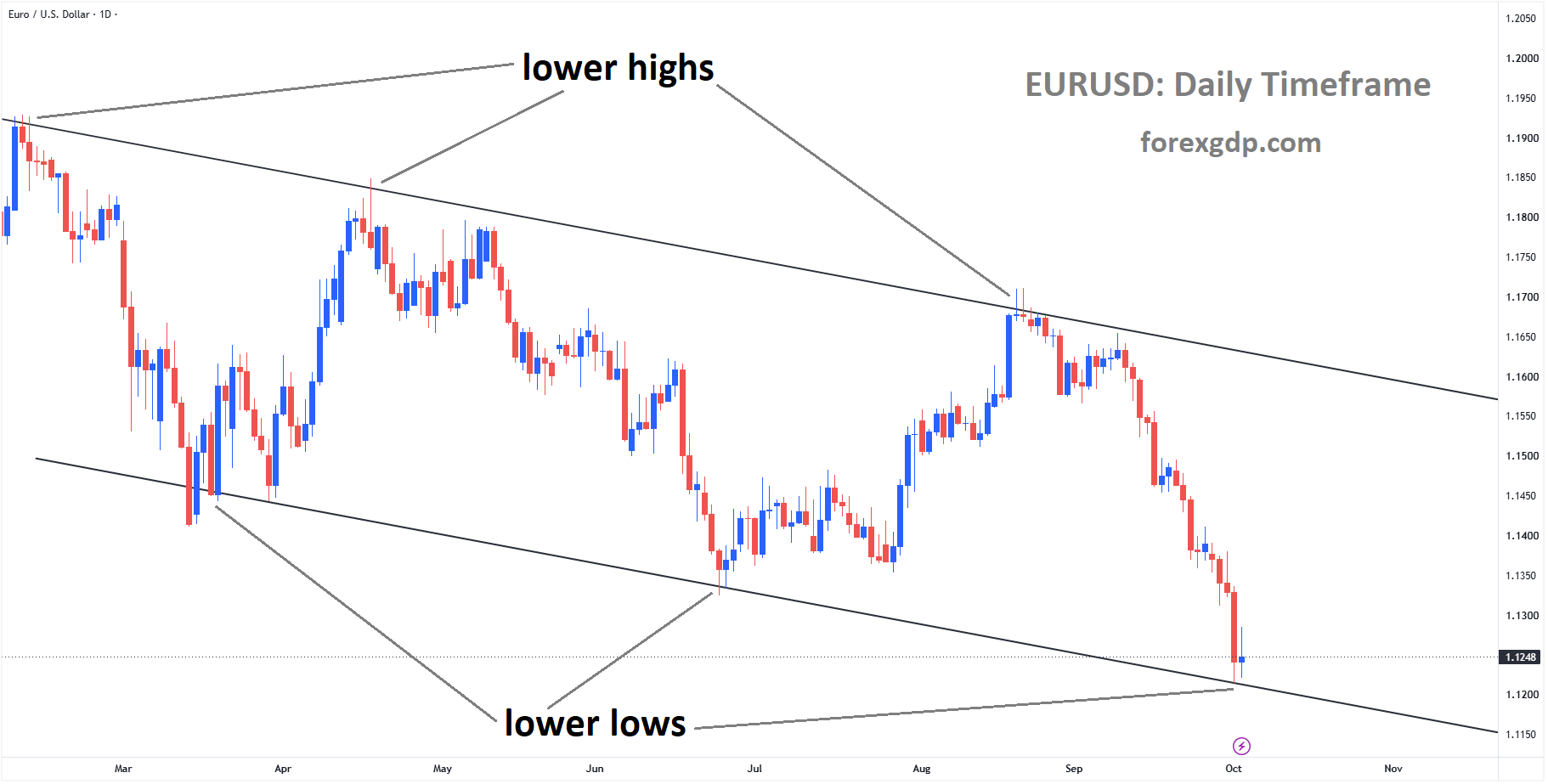
EURUSD reached the lower low area of the descending channel
The latest jobs report showed a slowdown in hiring, while revisions to earlier figures suggested that employment growth had been weaker than first reported. Wage growth also came in below expectations, adding to signs that pressure within the US economy may be easing.
For the Euro, the recovery offered some relief after a difficult week. However, higher Eurozone inflation, concerns about France’s public finances, and elevated oil costs continued to cloud the broader picture.
Slower US Hiring Puts the Dollar Under Pressure
US employers added 29,000 jobs in September, according to the employment report from the Bureau of Labor Statistics. That was well below the 90,000 increase markets had expected.
The gap between the forecast and the reported result mattered because employment plays a central role in the Federal Reserve’s policy decisions. Steady hiring can support household spending and give policymakers more room to keep borrowing costs high. A sharp slowdown raises questions about how much pressure the economy can absorb.
September’s figures encouraged traders to reconsider whether another rate increase was necessary in the near term. As expectations for an October hike declined, the US Dollar lost some of its appeal, helping EURUSD recover its earlier losses.
The reaction reflected a change in views about US monetary policy. The report did not remove every concern about inflation, but it made the case for immediate tightening less convincing.
Earlier Employment Revisions Add to Growth Concerns
The September hiring figure was only one part of the report. Changes to the previous two months also pointed to a softer employment picture.
August’s job gain was revised down to 133,000 from the previously reported 162,000. July’s figures saw a more notable adjustment, changing from an increase of 21,000 jobs to a loss of 10,000.
Together, those revisions reduced employment growth across the two months by 60,000 jobs.
These changes matter because a single monthly report can give an incomplete view of the economy. When a weak new figure arrives alongside downward revisions, it suggests that the slowdown may have started earlier than initially understood.
For businesses, slower hiring can reflect caution about future demand, financing costs, or plans to expand. The report does not identify one explanation for every employer, but it gives policymakers more reason to examine whether economic activity is losing momentum.
That broader picture added to pressure on the Dollar as traders adjusted their expectations.
Wage Growth Eases as More People Enter the Workforce
Other parts of the employment report also influenced the market reaction.
The unemployment rate edged higher to 4.2%, while the labor force participation rate increased to 61.8% from 61.6%. This meant that a larger share of people were working or actively looking for work.
A rise in participation can help expand the pool of available workers. It can also contribute to higher unemployment when people enter the workforce before finding a job. For that reason, the unemployment increase needs to be considered alongside the participation figures.
Average hourly earnings rose 3% from a year earlier, below expectations of 3.2%.
Slower wage growth may ease one source of inflation pressure. When employers face smaller increases in labor costs, they may have less need to pass those costs on to customers.
Wages are only one influence on inflation, but the softer earnings figure added to the reasons for the Fed to approach its next decision carefully.
October Rate Hike Expectations Fall Further
The jobs report followed weaker-than-expected Personal Consumption Expenditures inflation data. Together, the releases reduced expectations that the Federal Reserve would raise interest rates in October.
According to the CME FedWatch figures cited after the employment release, the estimated probability of an October hike fell to around 17%. That compared with roughly 24% before the jobs report and 64% a week earlier.
The scale of that change showed how quickly investors had reassessed the policy outlook.
Softer inflation gave the Fed less urgency to tighten policy, while slower hiring raised concerns about the possible cost of doing so. Another rate increase could place additional pressure on businesses and households already facing expensive borrowing.
Still, expectations for December remained firmer, with markets assigning around a 62% probability to a rate hike.
That difference suggested investors were reconsidering the timing of further tightening rather than ruling it out entirely. Upcoming economic reports could still change the picture, especially if inflation remained persistent or employment regained strength.
Higher Eurozone Inflation Complicates the ECB’s Choices

While weaker US data helped EURUSD, developments within the Eurozone presented a separate challenge.
Preliminary inflation figures showed annual consumer price growth accelerating to 3.8% in September from 3.2% in August. The result exceeded expectations of 3.6%.
Core inflation, which excludes volatile components such as food and energy, edged up to 2.5% from 2.4%, matching forecasts.
Higher inflation can increase pressure on the European Central Bank to maintain restrictive monetary policy. Keeping borrowing costs elevated may help contain demand and slow price growth.
However, that approach also carries a cost. Expensive credit can discourage business investment, reduce household spending, and make financing more difficult.
The ECB therefore faces a difficult balance: controlling inflation while avoiding unnecessary damage to economic activity. For the Euro, expectations of firm policy can offer support, but concerns about growth can limit that benefit.
France’s Fiscal Concerns and Oil Costs Weigh on the Euro
The Euro also remained exposed to concerns about France’s fiscal position. Questions about government finances can make investors more cautious about the region’s economic stability and future policy choices.
Elevated oil prices created another source of uncertainty. Higher energy costs can increase expenses for businesses and households, leaving less money available for other spending.
They can also keep inflation elevated even when demand is slowing. That combination makes the ECB’s task harder because tighter policy cannot directly resolve rising energy costs.
These pressures helped explain why EURUSD’s recovery did not erase its broader weekly weakness.
Final Summary
EURUSD rebounded as slower US hiring, downward employment revisions, and softer wage growth weakened the Dollar. Alongside easing inflation data, the report reduced expectations for an October Fed rate hike.
The Euro’s own challenges remained significant. Higher inflation complicated the ECB’s policy choices, while France’s fiscal concerns and elevated oil costs weighed on confidence. The recovery reflected a shift in US rate expectations, with the broader direction still dependent on economic developments on both sides of the Atlantic.
GBPUSD Climbs Higher as US Hiring Slowdown Weighs on Dollar
The Pound Sterling has regained ground against the US Dollar as weaker American employment figures reshape expectations for Federal Reserve policy. A sharp slowdown in hiring, together with a rise in unemployment, has given investors fresh reasons to question whether the Fed can raise interest rates again in the near term.
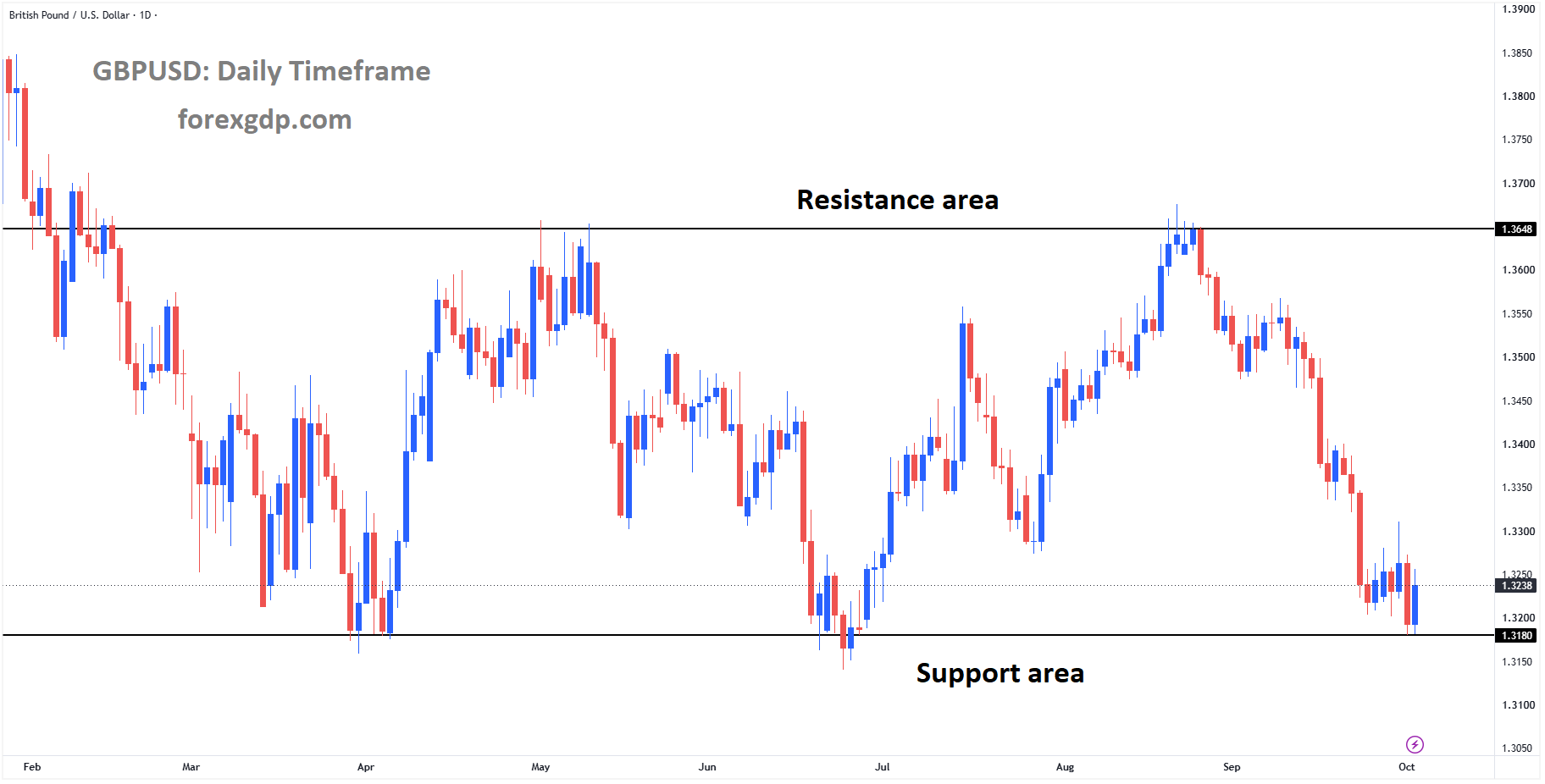
GBPUSD reached the support area of the box pattern
For GBPUSD, the shift has created a more supportive environment. The Dollar has lost some appeal as markets move away from expectations of another US rate increase. Meanwhile, the Pound continues to draw support from expectations that the Bank of England may tighten monetary policy further.
The latest recovery reflects developments on both sides of the Atlantic. US labour market weakness is putting pressure on the Dollar, while the prospect of higher UK interest rates is helping Sterling hold investors’ attention. Upcoming economic releases and central bank speeches will help determine whether these expectations remain in place.
US Employment Figures Reveal a Slower Pace of Hiring
The September US employment report showed that the economy added only 29,000 jobs, falling well short of the 90,000 increase markets had expected. The gap between forecasts and the actual result raised concerns about the strength of demand for workers.
The unemployment rate also rose from 4.1% to 4.2%. Although the increase was small, it added weight to the weaker hiring figure. Together, the numbers suggested that the labour market was losing some momentum.
A downward revision to the previous month’s data reinforced that impression. August’s job gain was reduced from 162,000 to 133,000, showing that hiring had already been less robust than initially reported.
These revisions matter because investors look beyond a single headline number. One weak month can reflect temporary factors, but a softer current reading alongside a lower estimate for the previous month gives markets more reason to reassess the broader picture.
The figures do not establish that the US economy is entering a severe downturn. They do, however, make the case for further monetary tightening more difficult. When employers add fewer workers, policymakers have to consider whether higher borrowing costs could place additional pressure on economic activity.
Federal Reserve Hold Expectations Gain Strength
Following the employment report, markets increased their expectations that the Federal Reserve would leave interest rates unchanged at its October meeting. The supplied market pricing put the probability of a hold at around 79%, with expectations for another increase fading.
That change is important for the US Dollar. Higher interest rates can make a currency more attractive by increasing the return available on assets denominated in it. When investors reduce their expectations for future rate increases, some of that support can weaken.
Earlier in the week, the Core Personal Consumption Expenditures inflation report had already prompted traders to reconsider the Fed’s next move. The employment figures added another piece to the policy debate, shifting attention toward the risks facing growth and hiring.
The Fed must balance those risks against its responsibility to control inflation. A slower labour market may encourage patience, but it does not automatically mean that interest rate cuts are approaching.
For now, the clearest change is that markets see less reason for an immediate increase. That distinction helps explain the pressure on the Dollar without assuming that the central bank is ready to reverse its policy direction.
Treasury Yields Show Investors Remain Cautious
The bond market offered a more measured reaction to the employment release. Longer-term US Treasury yields remained broadly steady, while the benchmark ten-year yield edged higher.
This suggests that investors were not treating weaker hiring as a clear signal of rapid policy easing. Employment is only one part of the economic picture, and questions about inflation remain relevant.
Bond yields reflect expectations about several factors, including future interest rates, inflation and economic growth. Those forces do not always move in the same direction after a data release.
For GBPUSD, the mixed reaction adds nuance to the recovery. The Pound benefited as expectations for another Fed increase weakened, but steady Treasury yields showed that the Dollar had not lost every source of support.
Future US data will therefore matter. Further signs of slower activity could strengthen the argument for a prolonged pause, while persistent inflation could keep the Fed cautious about easing.
Bank of England Expectations Help Support Sterling

On the UK side, the economic calendar offered little fresh information. Nevertheless, expectations for Bank of England policy continued to provide support for the Pound.
Markets were anticipating roughly 30 basis points of additional tightening by year-end and around 90 basis points by 2027. These expectations suggest that investors still see the possibility of higher UK interest rates.
The contrast with US policy expectations has become more relevant. If markets increasingly expect the Fed to pause while the BoE continues tightening, Sterling may benefit from that difference.
However, market pricing is an expectation rather than a commitment from policymakers. The BoE’s decisions will depend on incoming evidence about inflation, wages, spending and the wider economy.
Upcoming speeches from Catherine Mann and Clare Lombardelli will attract attention for that reason. Investors will listen for clues about how officials view inflation risks and whether further tightening remains necessary.
UK Political Discussion Adds Another Talking Point
Comments from Andy Burnham about the possibility of the UK rejoining the European Union also attracted attention during a quiet domestic data session.
The discussion touches on issues that matter to businesses, including trade relationships and the longer-term direction of UK economic policy. However, political comments alone do not establish that a policy change is imminent.
For Sterling, interest rate expectations remain the more immediate influence. The EU debate adds background to the UK story, but any lasting economic effect would depend on concrete proposals and decisions.
Upcoming Releases Could Reshape Expectations
The next round of US releases includes the ISM Services PMI, Federal Reserve meeting minutes, weekly jobless claims and the University of Michigan consumer sentiment survey.
Each will offer a different perspective. Services activity will help investors assess business conditions, while jobless claims may provide further evidence about employment trends. Consumer sentiment will shed light on household confidence.
The Fed minutes could also clarify how officials weighed inflation against growth risks at their previous meeting. Alongside the BoE speeches, these releases may either reinforce the current policy expectations or prompt another reassessment.
Final Summary
GBPUSD has recovered as slower US hiring and higher unemployment reduce expectations for another Federal Reserve rate increase. Downward revisions to earlier employment figures have strengthened the case for caution, weighing on the Dollar.
Sterling, meanwhile, continues to benefit from expectations of further Bank of England tightening. The next stage will depend on whether upcoming economic reports and policymakers’ comments support that difference in outlook.
USDJPY Shakes Off Weak US Jobs Data as Yen Slips
USDJPY recovered from an initial decline after the latest US employment report, even though the figures offered little encouragement for the US Dollar. Slower hiring, weaker wage growth, and downward revisions to earlier job numbers raised fresh questions about the strength of the American economy.
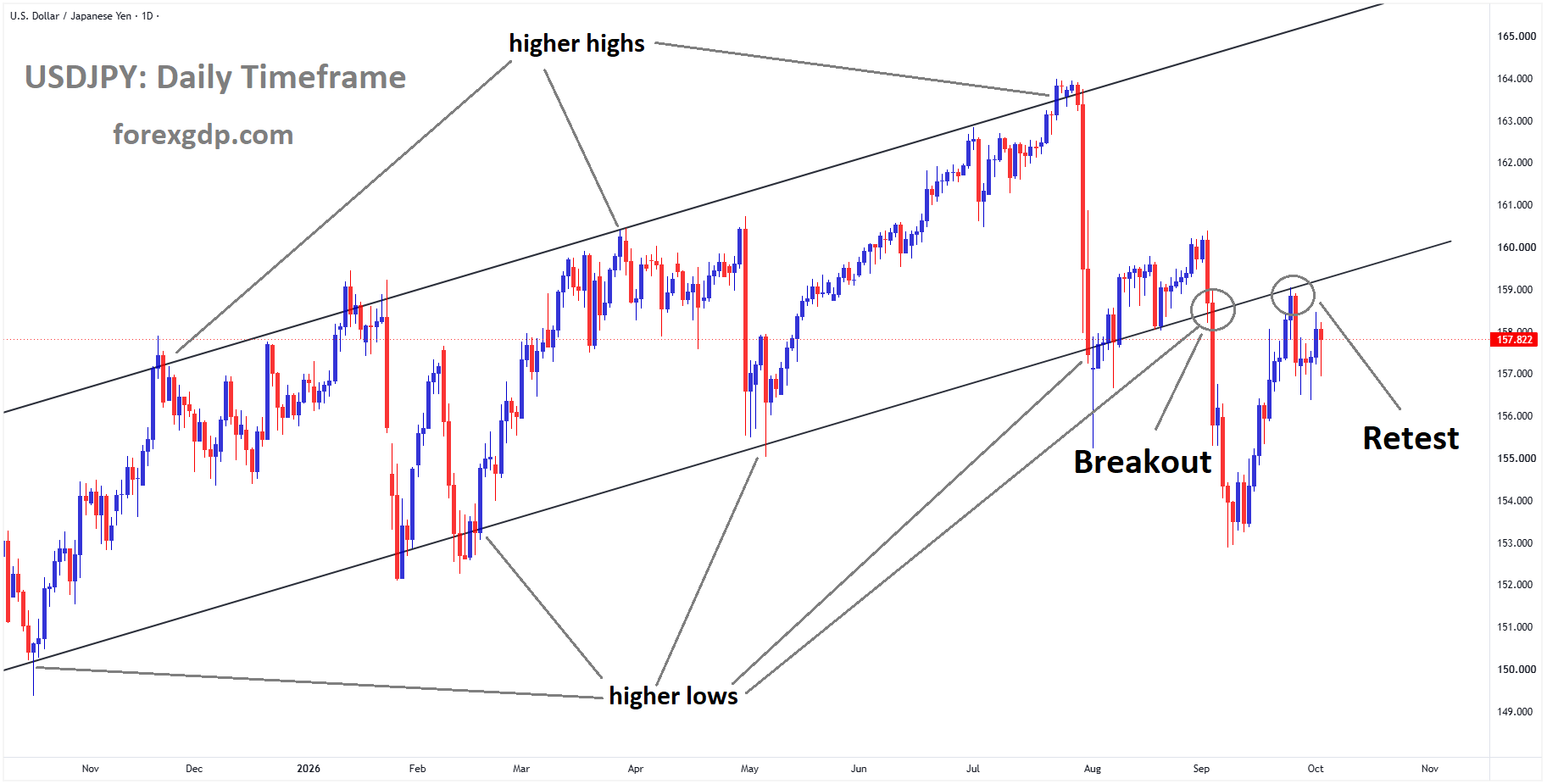
USDJPY reached the retest area of the broken ascending channel
Normally, this combination would put pressure on the Dollar and help the Japanese Yen gain ground. This time, however, the Yen struggled to maintain its advantage. Renewed selling of the Japanese currency allowed USDJPY to recover while the Dollar remained weak against several other major currencies.
The move highlights the competing forces shaping the pair. Investors are reconsidering the Federal Reserve’s next policy decision while also assessing whether stronger Japanese inflation will lead to further interest rate increases from the Bank of Japan.
Weak US Job Growth Changes the Mood
The US employment report showed a clear slowdown in hiring. Nonfarm Payrolls increased by just 29,000 in September, falling well short of expectations for 90,000 new jobs.
The weakness extended beyond the latest month. August’s employment gain was revised down to 133,000 from the earlier estimate of 162,000. July’s figures changed even more sharply, with a previously reported increase of 21,000 becoming a decline of 10,000.
These revisions matter because they suggest the slowdown has been developing for longer than the latest headline alone would indicate. Employers appear to be adding workers more cautiously, reducing confidence in the strength of the labor market.
For the Federal Reserve, this creates a more difficult decision. Higher interest rates can help control inflation, but they also increase borrowing costs for businesses and households. When hiring loses momentum, another rate increase could place additional pressure on economic activity.
The report therefore gave investors a reason to question whether the Fed would move ahead with further tightening at its next meeting.
Wage Growth Offers Less Inflation Pressure
Other parts of the employment report added to the picture of a cooling labor market.
The unemployment rate rose to 4.2%, while the labor force participation rate increased to 61.8% from 61.6%. Higher participation means more people are working or actively seeking employment. That can be a positive development, although an increase in unemployment suggests that finding work may be becoming more difficult for some job seekers.
Average hourly earnings grew by 3% compared with a year earlier, below the expected 3.2%.
Slower wage growth can ease concerns about inflation. When labor costs rise rapidly, businesses may pass some of those expenses on to customers. A more moderate increase in earnings can reduce that pressure.
However, softer wage growth also adds another reason to watch household spending carefully. If employment opportunities become less plentiful and pay increases slow, consumers may become more cautious about purchases.
Taken together, the figures suggest that the Fed has less urgency to raise interest rates immediately, while still needing to monitor inflation closely.
October Fed Hike Expectations Fade
The employment report prompted another adjustment in expectations for US monetary policy.
According to the CME FedWatch figures cited in the report, the probability of an October interest rate increase fell to around 18%. That compared with roughly 24% before the jobs release and 64% a week earlier.
The scale of that change shows how quickly incoming economic data can alter investor expectations.
The shift had already begun after softer-than-expected Personal Consumption Expenditures inflation figures. That report reduced concerns about the need for immediate tightening. The weaker employment numbers then added evidence that economic momentum was slowing.
Still, investors had not ruled out another increase later in the year. The cited probability of a December hike remained around 69%.
This distinction is important. Markets were becoming less convinced about an October move, but they were still considering the possibility that the Fed could raise rates later if inflation remained persistent. Expectations were moving toward a delay rather than a complete rejection of further tightening.
Stronger Japanese Inflation Fails to Sustain Yen Gains

Japan’s economic releases appeared more supportive of its currency.
Tokyo’s Consumer Price Index excluding fresh food rose by 2.7% from a year earlier in September, accelerating from 1.8% in August and exceeding expectations of 2.4%.
Inflation excluding food and energy also increased, reaching 3% compared with 2% previously.
These figures suggest that price pressures were strengthening beyond the more volatile parts of household spending. That gives the Bank of Japan more reason to consider additional interest rate increases.
Higher Japanese rates could improve the appeal of Yen-denominated assets. They could also begin to narrow the interest rate gap between Japan and other major economies.
Yet the Yen failed to hold its gains against the Dollar. The market reaction suggests that stronger inflation alone was not enough to convince investors that Japanese monetary policy would change quickly.
Bank of Japan Signals Meet Calls for Caution
The Bank of Japan’s Summary of Opinions showed that several policymakers supported further interest rate increases.
One member argued that the central bank could continue raising rates as economic conditions, inflation, and financial developments allowed. Such comments point toward a willingness to continue adjusting policy if the evidence supports it.
However, the discussion also included a more cautious message. Cabinet Office representatives urged the central bank to assess the combined effects of its previous rate increases carefully.
That leaves investors weighing two considerations. Stronger inflation supports further tightening, while concern about the effect of earlier increases may encourage a slower approach.
For the Yen, the timing of the next policy move matters as much as the possibility of one. Supportive inflation data and comments from policymakers may have a limited effect when markets remain uncertain about when action will follow.
Summary
USDJPY’s recovery reflected renewed Yen weakness despite a US employment report that weighed on the Dollar. Slower hiring, downward revisions, and softer wage growth reduced expectations for an October Fed rate increase.
Japan’s stronger inflation and support for further tightening within the Bank of Japan offered reasons for Yen strength. However, calls for caution and uncertainty about the pace of policy changes limited that support.
The pair’s direction remains closely tied to how these two policy paths develop. US labor conditions and inflation will influence the Fed’s decisions, while Japanese price pressures and the effects of earlier rate increases will help shape the Bank of Japan’s next steps.
USDCAD Finds Fresh Momentum as Crude Weakness Hits the Loonie
USDCAD is recovering as the Canadian Dollar faces pressure from falling crude oil prices, while inflation concerns continue to support the US Dollar. The move follows a decline in the previous session, showing how quickly attention can shift between energy markets and expectations for US interest rates.
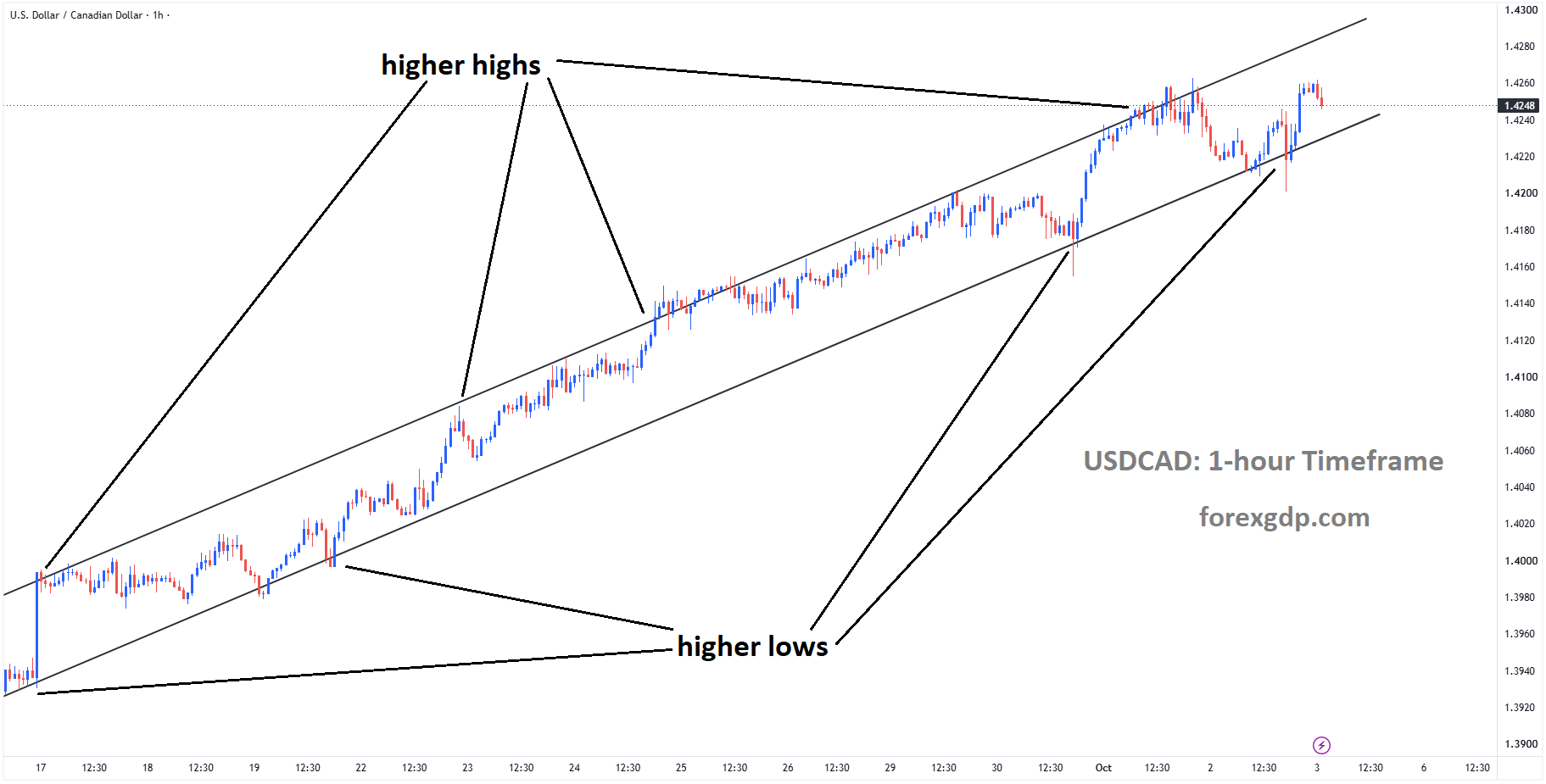
USDCAD is rebounding from the higher low area of the ascending channel
For Canada, weaker oil creates a challenge because energy exports play an important role in the economy. In the United States, concerns about inflation are keeping investors focused on whether the Federal Reserve may need to raise borrowing costs.
The upcoming September US employment report adds another layer of uncertainty. Traders are waiting to see whether hiring remains strong enough to support a tougher approach from the Fed or whether slower job growth could encourage greater caution.
Falling Oil Adds Pressure to the Canadian Dollar
The Canadian Dollar often reacts to changes in the oil market because Canada is a major energy exporter. When crude oil falls, investors may become less optimistic about export earnings and the wider economic benefits linked to the energy sector.
That connection is helping explain the latest weakness in the currency. Oil has pulled back as supply flows from the Middle East have largely recovered toward levels seen before the conflict. With more crude moving through the region, immediate concerns about shortages have eased.
For energy buyers, improving supply offers some relief. For the Canadian Dollar, however, the same development can reduce an important source of support.
The effect goes beyond oil producers. Energy activity contributes to business investment, employment, and government revenue in Canada. A prolonged decline in crude could therefore influence expectations for the broader economy.
Still, the duration of the supply recovery matters. A brief improvement in shipments carries different implications from a lasting return to normal operations.
US Inflation Concerns Keep the Dollar Supported

While Canada’s currency is dealing with softer oil, the US Dollar is drawing support from expectations surrounding inflation and interest rates.
Elevated energy costs have remained a concern for the US inflation outlook. Even when oil retreats, earlier increases can continue to affect transport, production, and business expenses. Companies may pass some of those costs on to customers, making inflation harder to bring under control.
This helps explain why a recent decline in crude does not immediately remove pressure on the Federal Reserve. Policymakers need evidence that inflation is easing across the economy and that the improvement can last.
If investors expect higher US interest rates, the Dollar can benefit because returns on Dollar-denominated assets may become more attractive. Those expectations are contributing to the currency’s strength ahead of the employment report.
The key issue is whether incoming data supports that view. Persistent inflation would strengthen the case for maintaining a firm policy stance, while signs of economic weakness could complicate the decision.
September Jobs Data Could Shape Fed Expectations
The September Nonfarm Payrolls report is the next major focus for traders. Employment data helps investors assess how much momentum the US economy retains and how much room the Fed has to adjust interest rates.
Economists expect the report to show an increase of 90,000 jobs, compared with 162,000 in the previous month. The unemployment rate is expected to remain at 4.1%.
Those forecasts suggest slower hiring without a sharp deterioration in the labor market. If the results match expectations, investors will need to weigh the cooling pace of job creation against continuing inflation concerns.
A stronger employment report could reinforce expectations that the economy can withstand higher borrowing costs. That may provide further support for the US Dollar.
A weaker result could encourage investors to reconsider the likelihood of additional rate increases. Slower hiring may suggest that businesses are becoming more cautious and that existing financial pressures are affecting economic activity.
The report’s details will also matter. Wage growth can offer clues about household spending and inflation, while revisions to earlier employment figures may change the picture of recent labor market strength.
Middle East Supply Recovery Remains Uncertain
Although improving oil flows have eased immediate supply worries, the situation in the Middle East remains unsettled.
Market participants question whether shipments can continue recovering without a formal agreement to end the conflict. Reported attacks on at least three tankers in the Strait of Hormuz have added to those concerns. Repeated strikes on regional refineries, attributed to Iran and its Houthi allies, have also raised questions about the safety of energy infrastructure.
These risks matter because reliable supply depends on more than available crude. Tankers need secure routes, refineries need to operate, and exporters need confidence that deliveries can reach buyers.
Further disruption could quickly change expectations in the oil market. A renewed rise in crude might offer some support to the Canadian Dollar through Canada’s energy exports, although broader uncertainty could also increase demand for the US Dollar.
This makes the relationship between oil and USDCAD more complicated during periods of conflict. Energy developments and investor demand for safety can influence both currencies at once.
Military Developments Could Bring Fresh Energy Risks
Reports of possible additional US military deployments are another source of uncertainty.
The US is reportedly considering sending another aircraft carrier to the Middle East. The Pentagon is also said to be evaluating the deployment of 10,000 sailors and Marines to the Persian Gulf, potentially giving President Donald Trump more options if military action expands.
These reported considerations do not confirm that a wider conflict will occur. However, they can affect expectations about future disruptions to shipping and energy production.
The timing and scale of any action remain important unknowns. Investors will be watching whether diplomatic efforts improve the situation or whether further military developments place renewed pressure on regional supply.
For USDCAD, this creates two connected areas of attention: the effect of energy uncertainty on Canada and the effect of inflation and economic data on US monetary policy.
Summary
USDCAD is gaining ground as softer crude oil weighs on the Canadian Dollar and expectations for higher US interest rates support the US Dollar. The September employment report could influence those expectations by showing whether hiring is slowing gradually or losing momentum more sharply.
At the same time, the recovery in Middle East oil flows remains vulnerable to renewed attacks and possible military escalation. Employment data, inflation concerns, and the reliability of energy supplies will all help shape the next shift in sentiment toward the two currencies.
USDCHF Slips as Global Debt Rout Fuels Demand for the Franc
The Swiss Franc is attracting renewed interest as investors become more concerned about government borrowing across major economies. While the US Dollar remains firm overall, the Franc has managed to recover against it, putting pressure on USDCHF.
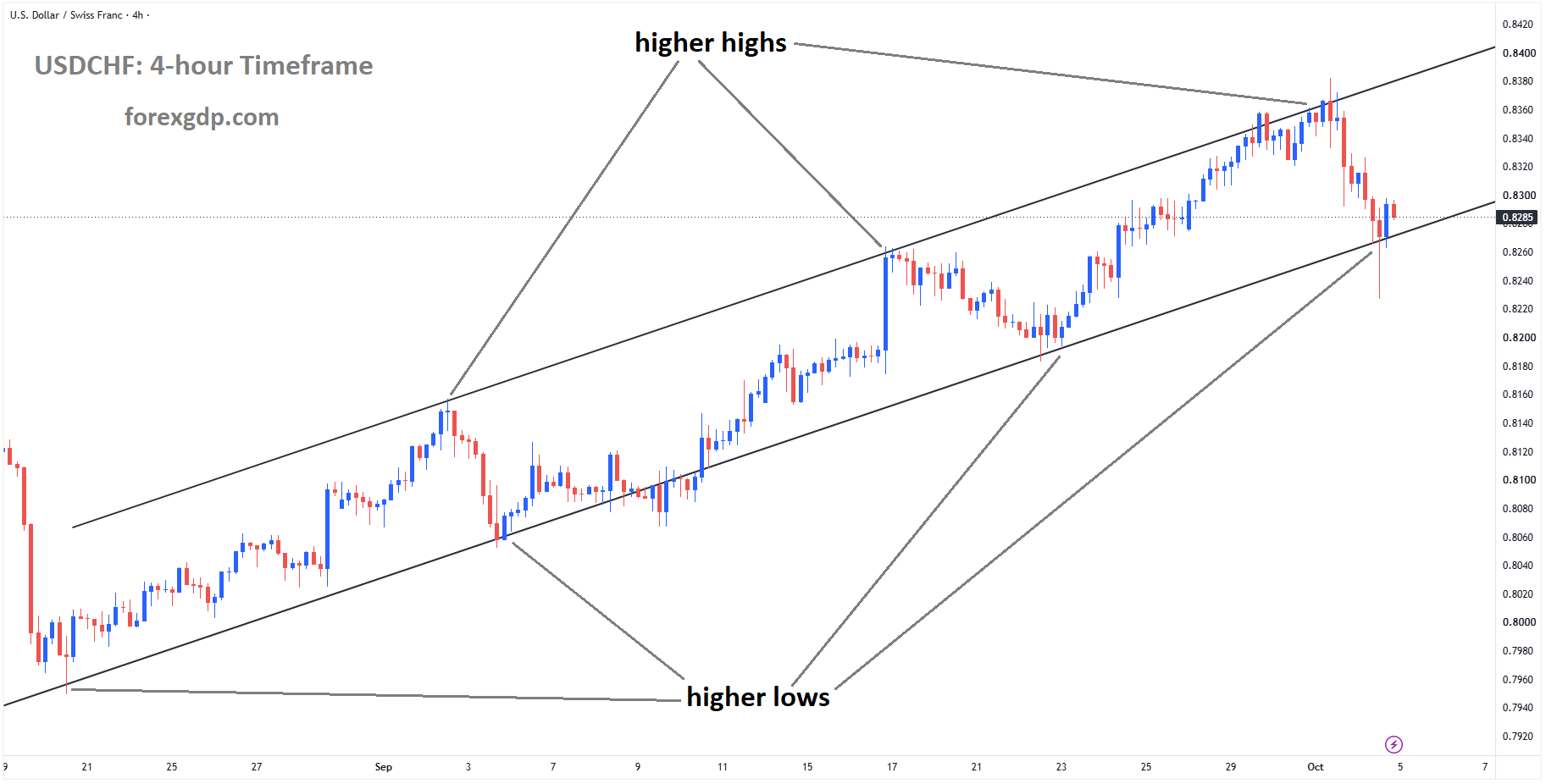
USDCHF reached the higher low area of the ascending channel
Switzerland’s relatively low government debt is helping its currency stand out. At a time when rising budget deficits are drawing greater attention, investors are looking more closely at the financial health of the countries behind the currencies they hold.
That shift has given the Swiss Franc a fresh source of support. Its appeal goes beyond its familiar role as a safe haven during periods of uncertainty. Switzerland’s sound public finances are becoming part of the reason investors want to hold the currency.
Why the Swiss Franc Is Attracting Fresh Interest
The Swiss Franc has long been associated with stability. When confidence weakens across financial markets, investors often become more interested in currencies linked to dependable institutions and carefully managed economies.
The latest recovery reflects that preference, but with a particular focus on government debt. Investors are questioning how much major economies are borrowing and how comfortably they can manage the cost of that borrowing.
Switzerland appears comparatively well placed in this environment. Its lower debt burden gives investors a reason to view it differently from countries facing larger budget pressures.
This does not make the Franc immune to changes in global sentiment. However, it helps explain why the currency can gain ground even when the US Dollar remains supported elsewhere. Investors are making distinctions between economies instead of treating every safe-haven currency in the same way.
Government Bond Selling Raises Bigger Questions
The sell-off in government bonds is an important part of the story. When investors sell bonds, bond prices fall and yields rise. Higher yields mean investors are demanding a greater return for lending money to governments.
That demand can reflect several concerns. Inflation may reduce the future value of bond payments, while heavier borrowing can increase the amount of debt that markets need to absorb. Uncertainty about public spending can also make investors more cautious.
For governments, rising yields create an additional challenge. As they issue new debt or replace borrowing that is reaching maturity, they may face higher interest costs. This can leave less room in their budgets for other priorities.
Currency investors are paying attention because public finances influence confidence in an economy. A country with a manageable debt burden may appear better prepared to handle financial pressure than one already dealing with substantial borrowing needs.
The Swiss Franc is benefiting from this closer examination of government balance sheets.
Switzerland’s Public Finances Support Confidence
Switzerland’s relatively low government debt offers reassurance when concerns about budget deficits are spreading. It suggests that the country has more flexibility to respond to difficult economic conditions without facing the same borrowing pressures as more heavily indebted economies.
The distinction matters because investors are considering more than interest-rate returns. They are also weighing the stability of the economy behind an investment and the ability of its government to manage unexpected costs.
A higher return may look appealing, but it can lose some of its attraction when it comes with greater uncertainty. During unsettled periods, investors may place more value on financial resilience.
Switzerland’s fiscal position therefore gives the Franc a clear advantage in the current discussion about debt. The currency’s recovery reflects growing interest in that relative strength, rather than a broad loss of confidence in the US Dollar.
A Firm US Dollar Still Faces Competition

The US Dollar remains an important destination for investors seeking safety. Its global role and the depth of US financial markets continue to support its appeal during uncertain conditions.
Even so, Dollar strength does not prevent another currency from performing better against it. USDCHF reflects the balance between demand for the Dollar and demand for the Swiss Franc. If interest in the Franc increases more quickly, the pair can retreat while the Dollar remains firm against other currencies.
That is what makes the recent move noteworthy. The Franc’s recovery suggests that investors are responding to Switzerland’s own strengths, rather than simply selling the Dollar across the board.
It also shows why broad descriptions of market sentiment can miss important differences. Two currencies may both attract defensive demand, yet one can gain an advantage because investors prefer its country’s fiscal position.
Energy Costs Complicate the Policy Picture
High energy costs are adding another layer of pressure. More expensive energy can raise costs for households and businesses, making it harder for inflation to ease.
Central banks facing persistent inflation may need to maintain tighter monetary conditions. However, higher borrowing costs can also weigh on economic activity and increase financial pressure.
Governments face a difficult balance in this setting. Measures designed to support households or businesses can require additional spending, while higher debt-servicing costs already place demands on public budgets.
These competing pressures help explain the cautious mood in financial markets. Investors are assessing how inflation, monetary policy and government borrowing interact, rather than focusing on any one factor alone.
Countries with stronger public finances may look more resilient as those pressures build.
What Commerzbank’s View Means for the Franc
Commerzbank analysts have suggested that the Swiss Franc may already have moved past its weakest phase. Their assessment points to the possibility that the factors weighing on the currency are losing influence as attention turns toward Switzerland’s financial stability.
This remains an assessment rather than a guarantee of continued gains. The Franc’s performance will still depend on investor confidence, changes in monetary policy expectations and developments in global bond markets.
Nevertheless, the view fits the broader shift in sentiment. Switzerland’s low debt burden is receiving more attention at a time when borrowing concerns elsewhere are becoming harder to ignore.
Final Summary
USDCHF has retreated as the Swiss Franc attracts renewed demand amid government bond selling and growing concern about budget deficits. Switzerland’s relatively low public debt is strengthening the currency’s safe-haven appeal, even with the US Dollar remaining firm overall.
Rising yields and high energy costs are making the economic picture more difficult for governments and central banks. Against that backdrop, investors are placing greater value on fiscal stability. The Franc’s recovery highlights how strongly those differences can influence currency demand.
AUDUSD Finds Fresh Support Before America’s Jobs Report
The Australian Dollar is gaining against the US Dollar as investors turn their attention to the next major update on the American job market. Although expectations for further interest rate increases in Australia have eased, the Aussie is finding support from a quieter US Dollar.
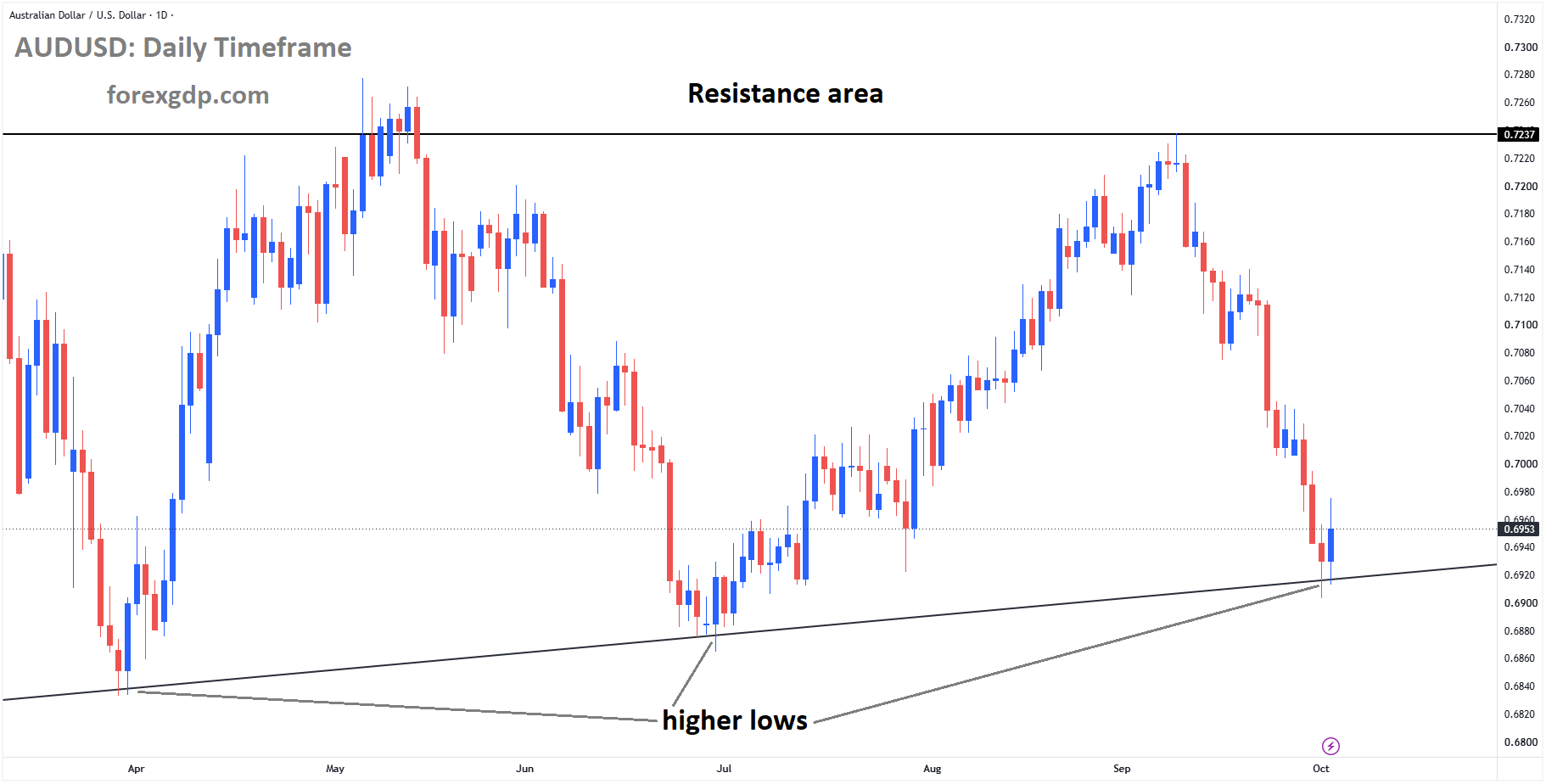
AUDUSD reached the higher low area of the ascending triangle pattern
The move reflects a shift in what traders are watching most closely. The Reserve Bank of Australia has already raised borrowing costs again, but its latest comments suggest that another increase may not be urgent. Meanwhile, expectations for US hiring have weakened, leaving investors cautious about buying the Dollar ahead of the September Nonfarm Payrolls report.
For AUDUSD, the immediate focus is whether the employment figures confirm a slowdown in US hiring. That could influence expectations for Federal Reserve policy and change demand for the two currencies.
Australian Dollar Advances Despite Doubts About Another RBA Hike
The Australian Dollar’s gains come at a time when investors are questioning how much more tightening the Reserve Bank of Australia might deliver.
The RBA raised its policy rate by 25 basis points at its latest meeting, matching expectations. Governor Michele Bullock also left open the possibility of further action if inflation remains difficult to control.
However, keeping that option available does not necessarily mean another increase is close. Investors paid particular attention to signs that the central bank may want more time to assess the effects of the increases already delivered.
Interest rate changes take time to work through an economy. Higher borrowing costs gradually affect mortgage payments, household spending, business investment, and demand for credit. The RBA therefore faces a careful decision: whether additional tightening is necessary or whether existing policy will do enough.
That uncertainty has reduced the enthusiasm around further Australian rate increases. Even so, it has not prevented the currency from advancing against a subdued US Dollar.
Bullock’s Comments Suggest a More Patient Approach
Strategists at Brown Brothers Harriman highlighted a less urgent tone in Bullock’s remarks following the rate decision.
Their assessment focused on two details. Bullock expressed hope that the four increases delivered during the year would be sufficient, and the board considered leaving rates unchanged at the meeting.
Together, those points suggest that the decision was more balanced than the rate increase alone might imply. The central bank remains concerned about inflation, but it is also weighing the pressure that higher borrowing costs place on the economy.
For currency markets, this distinction matters. Investors respond to both the decision made today and the likely direction of policy in the months ahead. A rate increase accompanied by cautious language can produce a different reaction from one followed by a clear push for more tightening.
The RBA’s message leaves future decisions dependent on incoming information. Inflation, consumer demand, and employment conditions will help determine whether the bank needs to act again.
For now, the latest comments have given investors reason to expect a more measured approach.
US Dollar Holds Back Ahead of September Payrolls
While investors digest the Australian policy decision, the US Dollar is trading quietly ahead of the September Nonfarm Payrolls release, scheduled for 12:30 GMT.
The employment report is a major event because it offers a broad view of hiring across the US economy. It helps investors assess whether businesses are still expanding their workforces or becoming more cautious.
The figures also feed into expectations for Federal Reserve policy. Steady hiring can support household incomes and spending, while a slowdown may raise questions about the strength of economic growth.
Ahead of an important release, investors often avoid making large commitments. That caution can leave a currency without a clear source of buying interest, particularly when expectations for the data have already softened.
This subdued backdrop is helping AUDUSD advance. The Australian Dollar does not need a fresh signal of aggressive RBA tightening to gain when demand for its US counterpart is limited.
Hiring Forecasts Point to a Slower Month
Expectations for September employment growth have fallen noticeably compared with the previous month.
The consensus forecast calls for approximately 90,000 additional jobs, down from August’s reported increase of 162,000. That would represent a clear moderation in the pace of hiring.
Brown Brothers Harriman also noted that some informal estimates were lower than the main forecast. Bloomberg’s market whisper estimate stood at around 84,000 jobs, while alternative employment measures suggested growth closer to 67,000.
Those estimates add to the cautious mood surrounding the report. However, they remain forecasts rather than confirmed results. Private employment surveys and other labor market measures provide useful clues, but they do not always match the official payroll figures.
The range of expectations also makes the market reaction harder to predict. A result below the main consensus could still look relatively firm compared with the lowest estimates. Equally, a figure that misses several forecasts could deepen concerns about slowing employment growth.
Investors will therefore judge the release against both the published consensus and the more cautious expectations circulating in the market.
The Wider Employment Picture Will Matter
The headline jobs figure will attract attention, but it will not provide the full picture on its own.

Investors will also examine unemployment, wage growth, and any revisions to earlier payroll reports. These details can strengthen or weaken the message from the headline number.
For example, slower hiring alongside stable unemployment may suggest that the labor market is cooling gradually. Softer job creation combined with rising unemployment could point to broader weakness.
Wages matter because they affect household spending and inflation pressures. If pay growth remains firm, investors may be cautious about assuming that weaker hiring will quickly change the Federal Reserve’s approach.
Revisions can also reshape the assessment. Changes to previous months may reveal that employment conditions were stronger or weaker than initially reported.
For AUDUSD, the most meaningful reaction will depend on how these pieces fit together and what they imply for the relative policy paths of the Federal Reserve and the RBA.
Summary
AUDUSD is gaining as the US Dollar remains subdued ahead of the September employment report. The Australian Dollar’s advance comes despite growing doubts about another near-term RBA rate increase.
Bullock’s comments suggest that the central bank is willing to assess the impact of its existing tightening before deciding on further action. In the US, lower hiring forecasts have increased uncertainty around the payroll release.
The report’s combination of job creation, unemployment, wages, and revisions will help shape the next shift in currency sentiment. Until then, cautious demand for the US Dollar is giving the Aussie room to strengthen.
NZDUSD Finds Fresh Momentum as US Hiring Slows
The New Zealand Dollar gains against the US Dollar as weaker American employment data changes expectations for the Federal Reserve’s next move. A sharp slowdown in hiring, downward revisions to earlier reports, and softer wage growth all weigh on demand for the US currency.
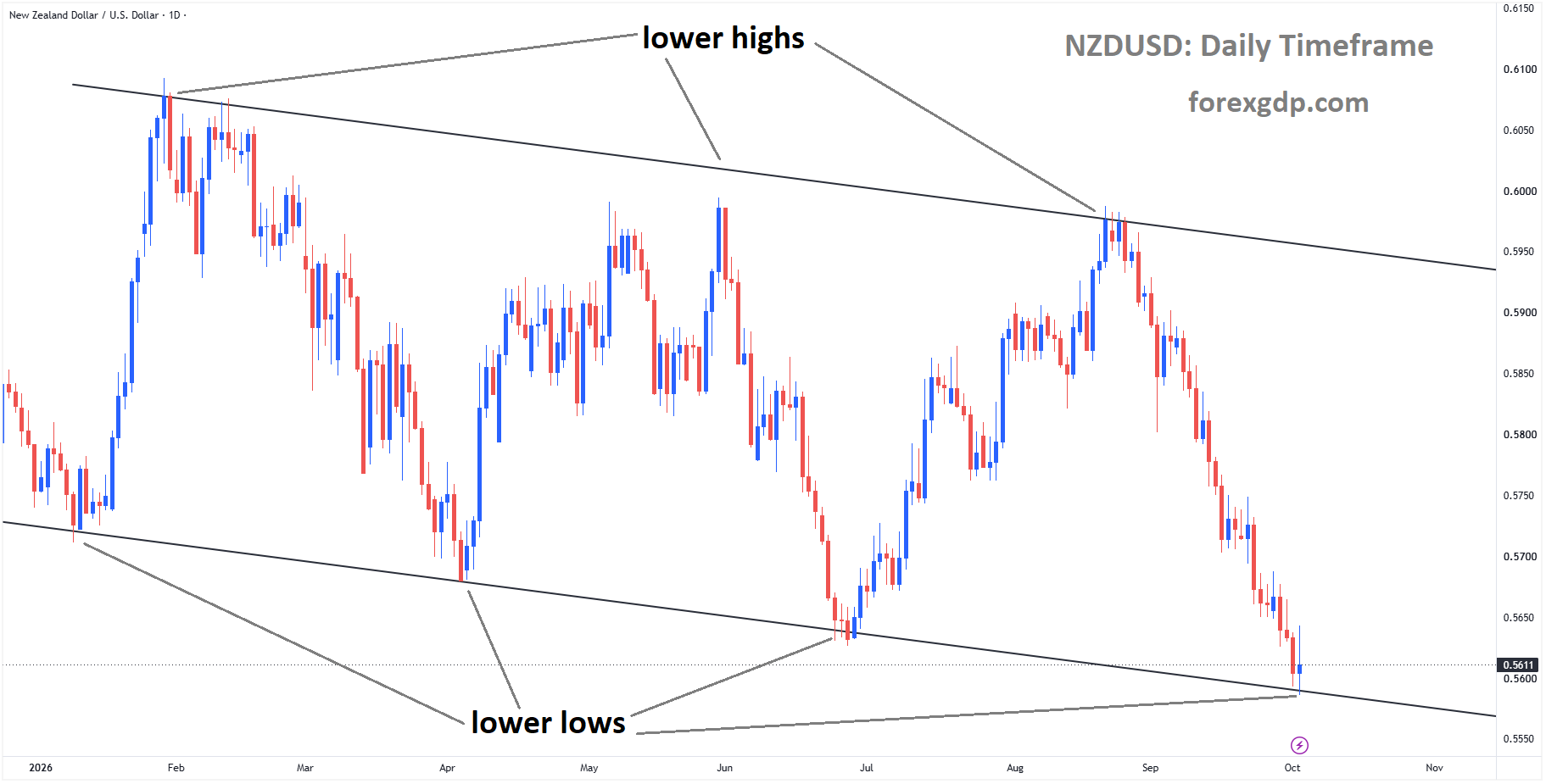
NZDUSD reached the lower low area of the descending channel
For NZDUSD, that creates room to recover. However, the Kiwi’s gains face a separate challenge at home. A close election race in New Zealand raises questions about future economic policy and the role of the Reserve Bank of New Zealand.
These two forces leave the currency pair pulled between improving conditions overseas and growing uncertainty domestically. The US Dollar’s weakness provides support, while New Zealand’s political backdrop keeps investors cautious.
Slower US Hiring Weighs on the Dollar
The latest US employment report gives investors fresh reasons to question the strength of the American economy. According to the Bureau of Labor Statistics, September Nonfarm Payrolls increased by just 29,000, far below expectations for 90,000 new jobs.
That gap matters because employment plays a major role in household spending. When businesses hire more slowly, fewer people gain a new source of income. It can also suggest that companies are becoming more careful about expansion as they assess demand and operating costs.
The report does not establish that a broad economic downturn is underway. Still, it weakens the argument that the labor market remains strong enough to comfortably absorb further increases in borrowing costs.
The US Dollar loses ground as investors reconsider that balance. The New Zealand Dollar benefits from the shift, even though the employment release offers no direct evidence of stronger conditions in New Zealand.
Earlier Job Figures Add to the Unease
September’s hiring slowdown is only part of the story. Revisions to the previous two months show that employment was weaker than initially reported.
August job creation was revised down to 133,000 from 162,000. July’s figures changed more sharply, moving from an estimated gain of 21,000 jobs to a loss of 10,000. Together, those revisions removed 60,000 jobs from the earlier totals.
This changes how investors interpret the latest result. A single weak month can reflect temporary disruption or normal variation. When earlier months also look softer, it becomes harder to treat the newest slowdown as an isolated event.
For Federal Reserve officials, the revisions add another consideration to the policy debate. Decisions about interest rates depend on the broader direction of the economy, and updated figures can change that picture considerably.
For currency markets, the result is less confidence in the employment strength that had previously supported expectations for tighter US monetary policy.
Wage Growth Eases as Unemployment Edges Higher
Other details in the employment report reinforce the cautious mood. The unemployment rate rises to 4.2%, while labor force participation increases to 61.8% from 61.6%.
Higher participation means a larger share of people are working or actively looking for work. That can affect the unemployment rate because new job seekers may enter the labor market before finding employment. The increase therefore needs to be considered alongside hiring figures rather than viewed on its own.
Wage growth also comes in below expectations. Average Hourly Earnings rise by 3% from a year earlier, compared with the anticipated 3.2%.
Slower wage growth may help ease inflation pressure. Businesses facing smaller increases in labor costs could have less need to raise prices, although wages are only one part of the inflation picture.
Taken together, softer hiring and cooling pay growth make the case for an immediate interest rate increase less convincing. They also give investors more reason to reduce their expectations for aggressive Fed action.
Fed Expectations Shift After Softer Economic Data

The employment report follows weaker-than-expected Personal Consumption Expenditures inflation figures. That earlier release had already encouraged investors to reconsider the likelihood of further monetary tightening in October.
The jobs data adds weight to that reassessment. According to the CME FedWatch figures cited following the report, the estimated probability of an October rate increase falls to around 22%, down from roughly 64% a week earlier.
Interest rate expectations matter for currencies because they influence the potential returns available on assets denominated in those currencies. When investors anticipate higher US rates, the Dollar can attract additional demand. When those expectations fade, some of that support can weaken.
However, investors have not completely dismissed the possibility of another increase. The cited December probability remains around 67%, suggesting that markets see room for later action if economic conditions justify it.
The distinction is important: the latest data reduces confidence in an immediate hike, while leaving the longer-term policy debate open.
New Zealand’s Election Keeps Investors Cautious
Despite the more favorable US backdrop, the New Zealand Dollar faces uncertainty surrounding the approaching election. Opinion polls indicate a close contest and raise the possibility that Prime Minister Christopher Luxon’s coalition could lose power.
A tight race makes it harder for businesses and investors to judge which policies will shape the economy after the vote. Questions may arise around public spending, taxation, regulation, and the priorities of a future government.
Political uncertainty does not automatically lead to currency weakness. Its effect depends on the policies under discussion and how investors assess their economic impact. Even so, an unclear outcome can discourage strong commitments until the direction of government becomes more certain.
That helps explain why the Kiwi’s gains remain limited. Investors welcome the reduction in US Dollar support but still have domestic questions to consider.
The RBNZ Mandate Becomes Part of the Debate
One important election issue concerns the Reserve Bank of New Zealand’s responsibilities.
Luxon’s government refocused the central bank’s mandate on price stability. The Labour Party has indicated that it would restore a dual mandate, bringing employment back alongside inflation as a formal policy objective.
A dual mandate requires the central bank to consider both price stability and employment when making decisions. Those goals can sometimes point toward different policy choices, especially when inflation remains elevated while hiring weakens.
Restoring the mandate would not automatically determine the next interest rate decision. However, it could change the framework used to explain and assess future decisions.
For investors, that possibility adds uncertainty about New Zealand’s monetary policy direction, making the election relevant to the currency as well as the wider economy.
Final Summary
NZDUSD gains support from weaker US hiring, downward employment revisions, and slower wage growth. Together with softer inflation data, these developments reduce expectations for an immediate Federal Reserve rate increase and weigh on the US Dollar.
New Zealand’s close election race limits the Kiwi’s progress. Potential changes in government policy, particularly the RBNZ’s mandate, leave investors weighing domestic uncertainty against the benefits of a softer US currency.
EURGBP Loses Ground as Europe’s Price Pressures Mount
The Euro is losing ground against the British Pound as investors grow increasingly uneasy about the challenges facing the Eurozone. An early recovery faded, leaving EURGBP near its weakest point in more than two months and heading toward a clear weekly decline.
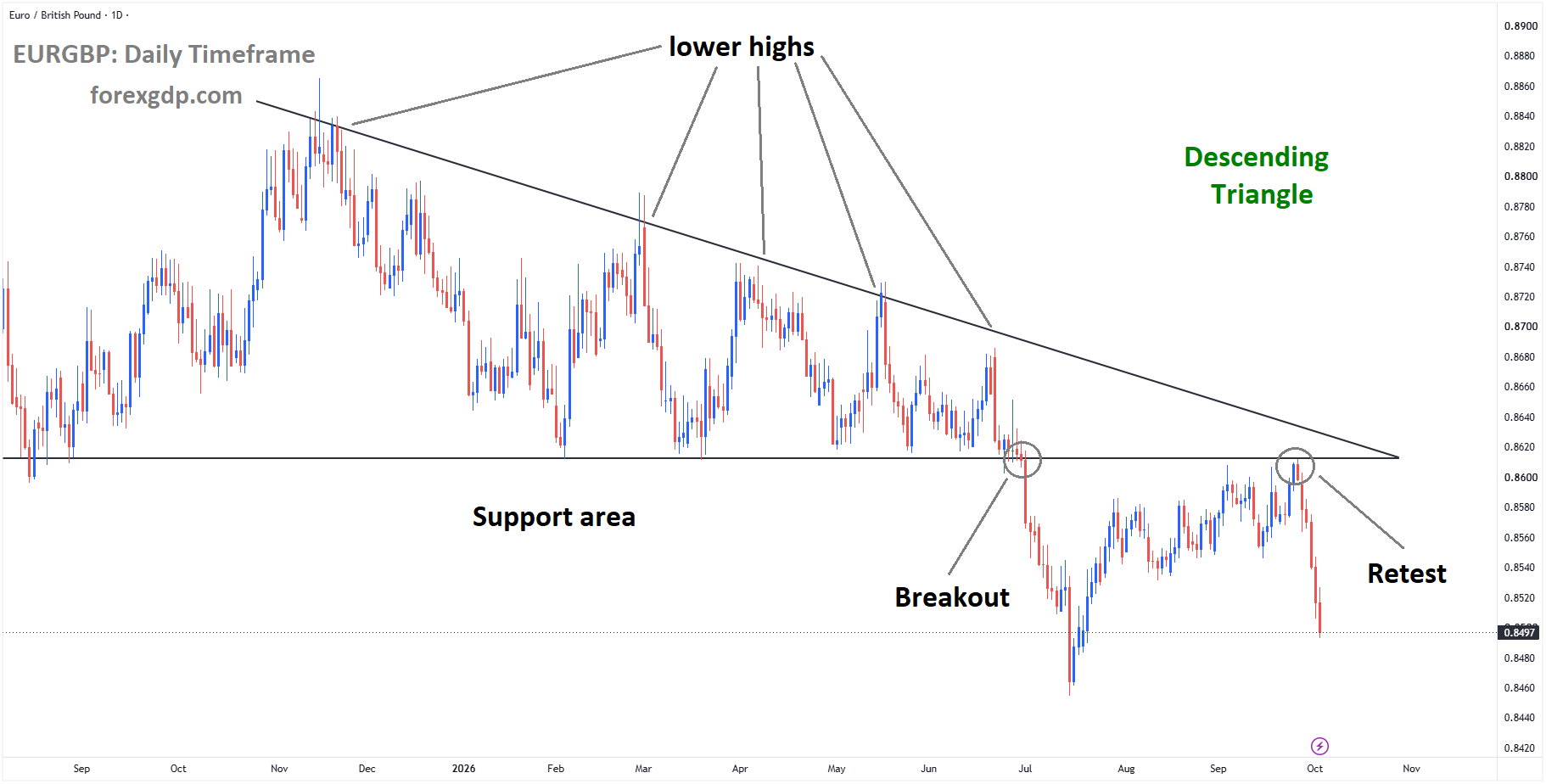
EURGBP is falling from the retest area of the broken descending triangle pattern
Several concerns are weighing on confidence at the same time. Inflation has accelerated, energy costs remain elevated, and France faces growing pressure over its public finances. Together, these developments raise difficult questions about the region’s ability to control rising costs while keeping economic growth on track.
The latest inflation figures have added to that uncertainty. Meanwhile, doubts about France’s budget plans are drawing attention to political divisions within one of the Eurozone’s largest economies. Even a recent easing in crude oil has offered limited relief because energy remains expensive compared with earlier in the summer.
Rising Inflation Creates a Difficult Balance
Fresh figures from Eurostat showed that Eurozone inflation accelerated in September, reaching its highest annual rate in three years. The increase was larger than investors had expected, with energy costs playing a major role.
The headline Harmonised Index of Consumer Prices rose to an annual rate of 3.8%, compared with 3.2% in August. Markets had expected a smaller increase to 3.6%. This stronger reading suggests that pressure on household budgets has intensified again.
Core inflation, which excludes food and energy, increased more modestly. It rose to 2.5% from 2.4%, matching expectations. The difference between the headline and core figures matters because it shows how heavily energy is influencing the overall rise in living costs.
Higher inflation can sometimes help a currency by increasing expectations for tighter monetary policy. But that relationship becomes less straightforward when rising costs also threaten economic activity.
In this case, investors are concerned about the burden that expensive energy places on consumers and businesses. A larger share of household income goes toward essential bills, leaving less money for other purchases. Companies face higher operating expenses, which can reduce profits or force them to charge more.
That combination makes the inflation report uncomfortable for the Euro. It points to renewed cost pressures without necessarily suggesting stronger underlying demand.
Energy Costs Put Pressure on Eurozone Growth
The Middle East war has pushed energy concerns back into focus. For the Eurozone, which relies heavily on imported energy, prolonged disruption can have consequences well beyond fuel bills.
Manufacturers, transport companies and other energy-intensive businesses are particularly exposed. When energy becomes more expensive, these firms must decide whether to absorb the extra costs, pass them on to customers or reduce activity.
Each choice carries a trade-off. Absorbing costs can weaken profitability. Raising prices can discourage demand. Cutting production or delaying investment can slow economic growth.
Households face similar pressures. Higher spending on heating, transport and other essentials can lead families to reduce purchases elsewhere. This can affect retailers, restaurants and service providers even when they have no direct connection to the energy sector.
Recent reports suggested that supplies from Gulf countries moved closer to their pre-war levels in September. That helped crude oil ease during the latest session and offered some encouragement about availability.
However, a short-term decline does not erase the broader increase in energy costs. Oil remains substantially more expensive than it was earlier in the summer, keeping pressure on the region’s economic prospects.
For investors assessing the Euro, the key issue is whether any improvement in supply can lead to lasting relief for businesses and consumers.
French Public Finances Add to Investor Unease
France’s borrowing costs have become another major concern. Investors are demanding a much larger return to hold French government debt compared with German debt.
The widening gap reflects growing unease about France’s fiscal position and its ability to deliver a credible plan to reduce the deficit. It also shows that investors are placing greater weight on political uncertainty.
Higher borrowing costs can make an already difficult budget situation harder to manage. As debt financing becomes more expensive, interest payments take up more public funds. That leaves less room for other spending and increases pressure on the government to make difficult choices.
France’s importance within the Eurozone means these concerns can influence confidence in the wider region. Investors watching the Euro are therefore paying close attention to developments in French public finances.
The issue is not simply the size of the debt burden. Markets also want evidence that the government can agree on practical measures and carry them through.
A Divided Parliament Complicates the Budget Plan
The French government presented its proposed 2027 budget with measures intended to reduce the fiscal deficit. Passing those measures, however, could prove difficult in a divided parliament.
Opposition parties are positioning themselves ahead of the coming presidential election, adding another layer of uncertainty to budget negotiations. Political competition can make compromise harder, particularly when proposals involve spending restraint or changes that could prove unpopular.
For investors, presenting a budget is only the first step. The more important question is whether the proposals can secure enough support to become policy.
If negotiations stall or key measures are weakened, doubts about France’s deficit reduction plans could persist. That uncertainty helps explain why the budget announcement has not been enough to restore confidence.
Why EURGBP Remains Under Pressure

EURGBP reflects the balance between confidence in the Euro and confidence in the British Pound. The Pound does not need a major positive development of its own to gain ground when concerns about the Eurozone intensify.
The Euro’s early recovery faded as attention returned to inflation, energy costs and French debt. Investors appear reluctant to increase exposure while these issues remain unresolved.
These pressures also reinforce one another. Expensive energy can lift inflation and weaken growth, while slower activity can make fiscal improvement more difficult. Political divisions then add uncertainty about how effectively governments can respond.
Final Summary
EURGBP remains under pressure as the Eurozone faces rising inflation, costly energy and growing concern about France’s public finances. The latest inflation figures have highlighted the strain on households and businesses, while higher French borrowing costs have increased scrutiny of the government’s budget plans.
Improving oil supply offers some encouragement, but lasting relief depends on whether energy costs ease further. Progress on France’s budget and clearer signs that inflation is moderating would also help address the concerns currently weighing on the Euro.
EURCAD Pushes Higher Before Europe’s Key Inflation Release
EURCAD is moving higher as the Euro finds support from easing global bond yields and the Canadian Dollar faces pressure from weaker crude oil prices. After a modest decline in the previous session, the currency pair has regained momentum as investors weigh changes in market confidence, energy supply, and European economic conditions.
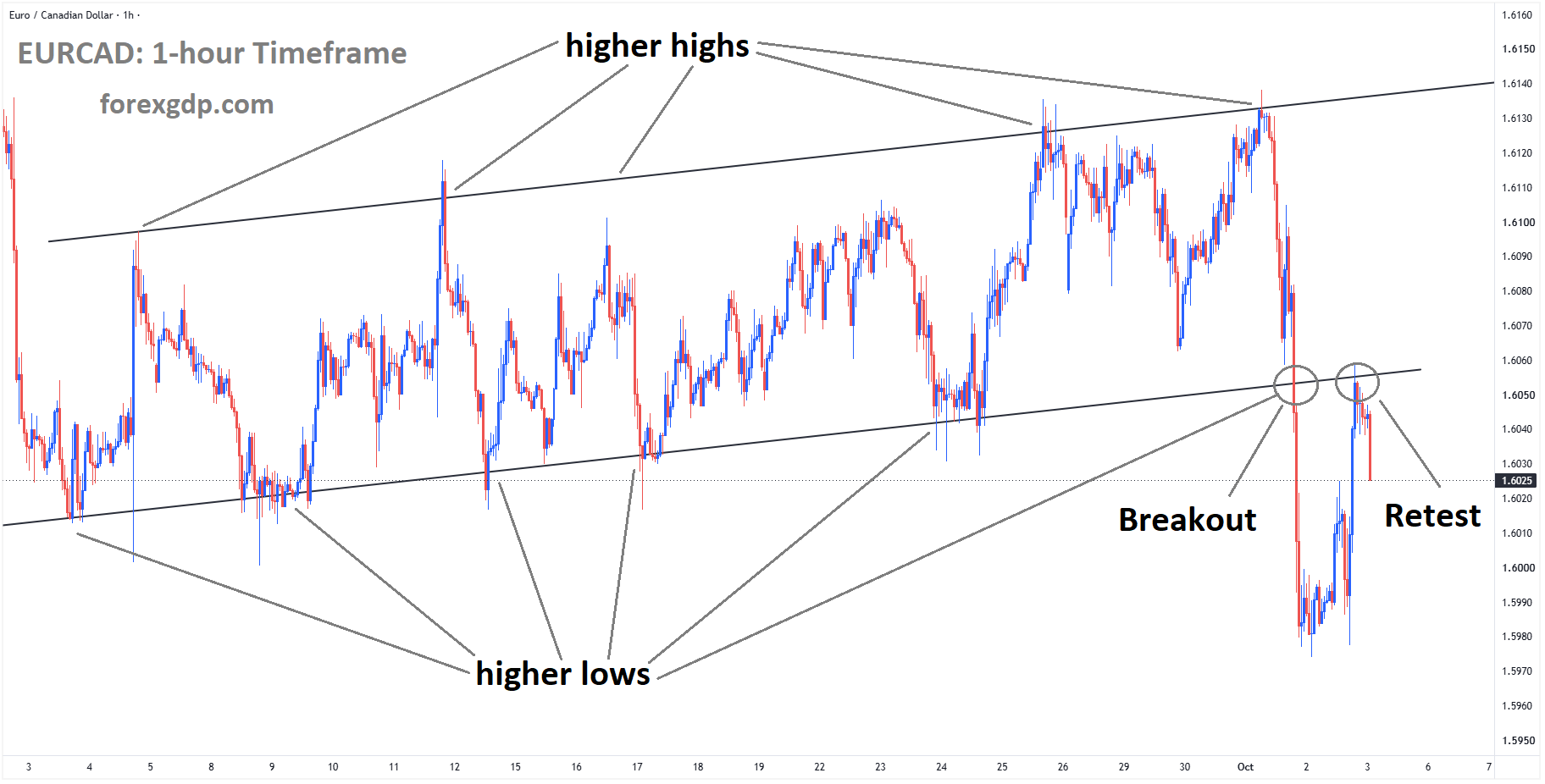
EURCAD is falling from the retest area of the broken ascending channel
The move reflects two different forces. A calmer global bond market is helping sentiment toward the Euro, while falling oil prices are reducing support for Canada’s currency. However, concerns about France’s public finances are limiting enthusiasm for the shared currency.
Attention is also turning to the preliminary September Eurozone inflation report. The figures could influence expectations for the European Central Bank’s next policy decisions, giving investors another reason to remain cautious.
Easing Bond Yields Improve Market Confidence
A retreat in global bond yields has helped ease some of the tension across financial markets. When government borrowing costs rise sharply, investors can become more concerned about debt burdens, business financing, and economic growth. A decline in yields can reduce those immediate worries.
For the Euro, this improvement in confidence offers some breathing room. Investors have become more willing to look beyond recent uncertainty, providing support for the currency against the Canadian Dollar.
However, lower yields do not automatically strengthen a currency. Their effect depends on why they are falling. A decline linked to calmer market conditions can improve confidence, while one caused by growing fears of an economic slowdown may have a different impact.
In this case, the broader easing in bond markets is helping the Euro. Even so, investors still need to assess whether that relief can last while fiscal concerns remain unresolved within the Eurozone.
France’s Debt Burden Keeps Investors Cautious
France’s public finances remain a significant concern for the Euro. The country’s rising debt burden has increased scrutiny of government borrowing and raised questions about how policymakers will bring spending and revenue into better balance.
The pressure matters beyond France itself. As one of the Eurozone’s largest economies, France plays an important role in regional confidence. Doubts about its ability to manage public finances can influence how investors view the shared currency.
Higher borrowing costs add to the challenge. When a government must spend more on interest payments, it has less room to fund public services, support investment, or respond to unexpected economic problems. That can make an already difficult budget adjustment harder.
French policymakers have pledged to restore fiscal discipline and gradually reduce the budget deficit. Their challenge is to present a plan that reassures investors while maintaining enough political support to put it into practice.
Promises alone may offer limited relief. Markets will also look for clear measures, realistic assumptions, and evidence that the government can deliver lasting improvements.
France’s Budget Plan Faces a Difficult Political Path
The next French budget proposal is likely to attract close attention because it will show how the government intends to address its financial pressures.
Tax increases and spending cuts are among the options under discussion. Both can help narrow a deficit, but each brings difficult choices. Higher taxes may place additional pressure on households or businesses, while spending reductions can affect public services and economic activity.
The government therefore faces a balancing act. It needs to demonstrate control over public finances without weakening an economy that also depends on consumer spending and business investment.
Political agreement will be just as important as the contents of the plan. Previous budget disputes have shown how difficult it can be to secure support for fiscal changes. Investors will be watching whether lawmakers can reach a workable agreement.
A credible budget with a clear route to approval could help ease uncertainty. Continued disagreement, however, could keep French debt concerns in focus and restrict the Euro’s progress.
Eurozone Inflation Could Shape ECB Expectations

Alongside France’s budget challenges, traders are awaiting the preliminary September Harmonized Index of Consumer Prices report for the Eurozone.
The HICP measures changes in consumer prices across the currency bloc. It is an important part of the information the European Central Bank uses when assessing inflation and deciding monetary policy.
If inflation remains persistent, investors may expect the ECB to take a cautious approach toward easing policy. Policymakers would need confidence that price pressures are moving sustainably toward their target before changing course.
A softer report could encourage expectations of a more supportive policy stance. That may help the economic growth outlook, although lower expected interest rates can also reduce a currency’s appeal.
The details will matter alongside the headline figure. Investors will look at whether price pressures are broad or concentrated in areas such as energy and services. A single report may change expectations, but it will sit within a wider picture of growth, employment, and household demand.
Weaker Crude Oil Reduces Support for the Canadian Dollar
The Canadian Dollar is facing pressure as crude oil prices soften. Canada is a major energy exporter, making oil an important influence on export income and currency sentiment.
When crude prices weaken, investors may become less optimistic about earnings across Canada’s energy sector. This can reduce support for the Canadian Dollar, particularly when another currency is benefiting from improving market confidence.
The recent pressure on oil is linked to the gradual recovery of Middle Eastern supply flows toward levels seen before the conflict. Greater availability can ease concerns about shortages and reduce the extra cost associated with disruption fears.
For EURCAD, that creates support from the Canadian side of the pair. The Euro does not need uniformly positive news to advance when the Canadian Dollar is also facing a weaker backdrop.
Middle East Supply Risks Remain Unresolved
The recovery in oil supply has offered some reassurance, but questions remain about its durability.
Without a formal peace agreement, energy flows could still face disruption. Attacks on tankers in the Strait of Hormuz and strikes on regional refineries highlight the risks surrounding transport routes and production facilities.
These developments leave oil markets sensitive to new headlines. Continued improvements in supply could maintain pressure on crude, while renewed disruption could reverse that effect and provide some support for the Canadian Dollar.
Investors are therefore assessing both current supply conditions and the likelihood of further interruptions.
Summary
EURCAD is benefiting from improved sentiment around global bond markets and weakness in the Canadian Dollar as crude oil softens. France’s debt burden and the difficult political path for its budget plan are keeping the Euro’s gains in check.
The next important developments are the Eurozone inflation report, progress on French fiscal measures, and the stability of Middle Eastern energy supplies. Together, these factors will help shape expectations for both currencies.
GBPJPY Finds Balance as Rising Inflation Supports the Yen
GBPJPY remains steady as both the British Pound and the Japanese Yen find reasons to stay firm. Stronger inflation figures from Tokyo have increased attention on the Bank of Japan’s next policy decisions. Meanwhile, criticism from Bank of England policymaker Catherine Mann has brought renewed focus to Britain’s handling of inflation linked to the Iran war.
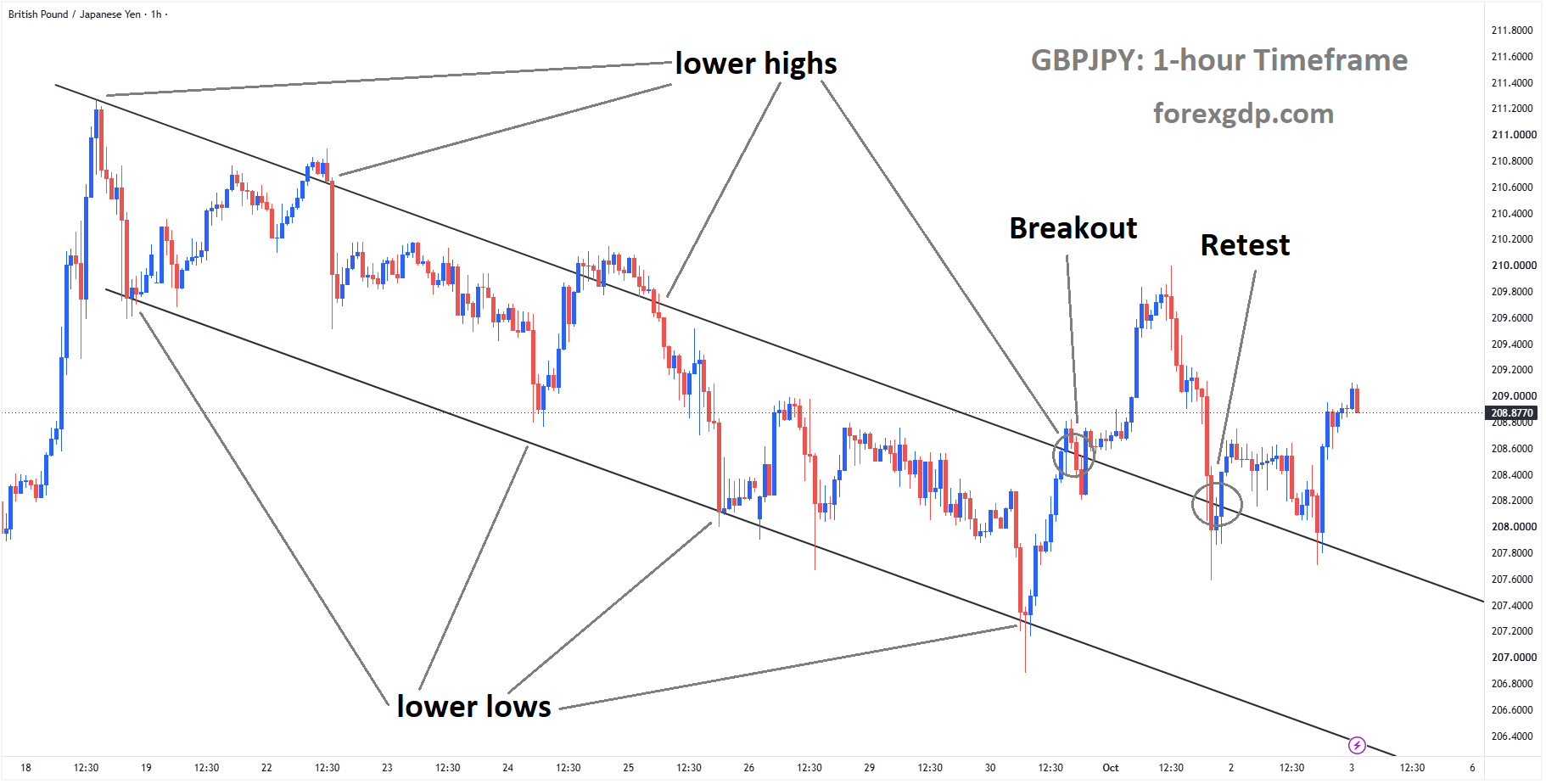
GBPJPY is rebounding from the retest area of the broken descending channel
The Yen is performing well against several other currencies, but the Pound has held its ground. This leaves GBPJPY caught between two separate interest rate debates. In Japan, the question is how quickly borrowing costs might rise. In Britain, the discussion centres on whether policymakers acted quickly enough when new inflation risks emerged.
For investors, the balance depends on more than a single economic report. Central bank communication, concerns about growth, and the lasting effects of earlier policy decisions all matter.
Tokyo Inflation Strengthens the Case for Higher Japanese Rates
Tokyo’s latest Consumer Price Index report showed a sharper rise in inflation than expected. The measure excluding fresh food increased by 2.7% from a year earlier in September, compared with expectations of 2.4%.
That also marked a clear acceleration from the 1.8% recorded in August. The change has drawn attention because it suggests that price pressures strengthened rather than continued to ease.
Tokyo inflation figures offer an early view of developments in Japan’s capital ahead of the broader national picture. A stronger reading can therefore influence expectations about how the Bank of Japan will respond to inflation across the economy.
For the Yen, the report provides a reason for investors to consider the possibility of further interest rate increases. Higher Japanese borrowing costs could make Yen-denominated assets more attractive, depending on how rates elsewhere develop.
Still, a stronger inflation report does not settle the timing of the next policy move. Officials must consider whether the increase will last and how additional tightening could affect households and businesses.
Bank of Japan Officials Favour Further Tightening
The Bank of Japan’s Summary of Opinions from its September policy meeting added to the debate over future rate increases.
The document showed that a majority of officials argued for a faster pace of monetary tightening. This suggests that concern about inflation is extending beyond the latest Tokyo figures.
When policymakers favour tightening, they are signalling that current financial conditions may need to become less supportive of spending and borrowing. Raising interest rates is one way to reduce demand and help contain price pressures.
That discussion has encouraged expectations that Japan’s gradual move toward higher rates will continue. It also helps explain why the Yen has attracted interest against other major currencies.
However, the direction of policy and the speed of change are separate questions. Officials can agree that rates need to rise while remaining divided over how soon another increase is appropriate.
This distinction is central to the current debate. Investors are looking for evidence that support for tighter policy will translate into quicker action.
Calls for Caution Complicate Japan’s Policy Path
Despite support for further tightening, representatives from Japan’s Cabinet Office urged caution about the pace of rate increases.
Their comments focused on the need to examine the combined effects of previous hikes. Interest rate changes take time to work through an economy, so the full impact of earlier decisions may not yet be visible.
Higher borrowing costs can affect business investment, household budgets, and demand for credit. If policymakers move too quickly, they risk adding pressure before they fully understand how earlier increases have changed economic conditions.
Brown Brothers Harriman analyst Elias Haddad interpreted the meeting summary as favouring tighter policy while remaining careful about the pace. His assessment highlights the gap between a willingness to raise rates and a willingness to accelerate the process.
The Cabinet Office’s position adds another reason to expect measured decisions. It does not remove the possibility of further increases, but it complicates the argument for a rapid series of hikes.
For the Yen, this creates a mixed backdrop. Stronger inflation supports expectations of higher rates, while caution about the economic impact may limit how far those expectations develop in the near term.
Catherine Mann Challenges the Bank of England’s Approach
In Britain, attention has shifted toward Catherine Mann’s criticism of the Bank of England’s response to inflation risks.
Mann, who is known for favouring a firm approach to inflation, questioned the central bank’s communication about interest rates. According to the supplied Reuters report, she argued that this communication had increased UK borrowing costs in ways that offered little reassurance to policymakers.
Her comments raise an important issue: financial conditions can change even before a central bank adjusts its policy rate.
Banks, businesses, and investors respond to what they believe officials will do next. If messages create uncertainty, borrowing costs can rise as lenders and markets reassess the risks ahead.
Clear communication therefore matters alongside the policy decision itself. It helps households and companies understand the likely direction of borrowing costs and make financial plans with greater confidence.
Mann’s criticism suggests that she sees room for improvement in how the Bank of England explains its response to inflation.
Iran War Inflation Adds Pressure to UK Decisions

Mann also argued that the Bank of England needed to take an appropriate policy decision soon after the outbreak of the Iran war.
Her remarks place the timing of the response at the centre of the discussion. Inflation caused by conflict can create difficult choices because it may raise costs while also weighing on economic activity.
A central bank must assess whether an initial price increase will fade or spread more widely. If businesses pass higher costs to customers and workers seek higher wages, the inflation impact can become harder to contain.
At the same time, tighter monetary policy increases financial pressure on borrowers. Officials must weigh that cost against the risk of allowing inflation to remain elevated.
For the Pound, Mann’s comments keep attention on how firmly the Bank of England may respond to these pressures. They also show that there is active debate within the institution about the effectiveness and timing of its approach.
Final Summary
GBPJPY is holding steady as Japan and Britain face different versions of the same challenge: deciding how to respond to inflation without placing unnecessary strain on their economies.
Tokyo’s stronger inflation reading has strengthened the case for further Bank of Japan rate increases. However, calls to review the effects of earlier hikes suggest that the pace may remain gradual.
In the UK, Catherine Mann’s criticism has put Bank of England communication and its response to Iran war-related inflation under scrutiny. The next shift in GBPJPY sentiment will depend partly on how these policy debates develop and whether officials turn their concerns into action.
AUDJPY Pauses as Tokyo Price Pressures Mount
AUDJPY steadied during the European trading session after the Australian Dollar recovered from earlier losses against the Japanese Yen. The move reflected a market weighing competing signals from Japan’s inflation figures, central bank discussions, and Australia’s interest rate outlook.
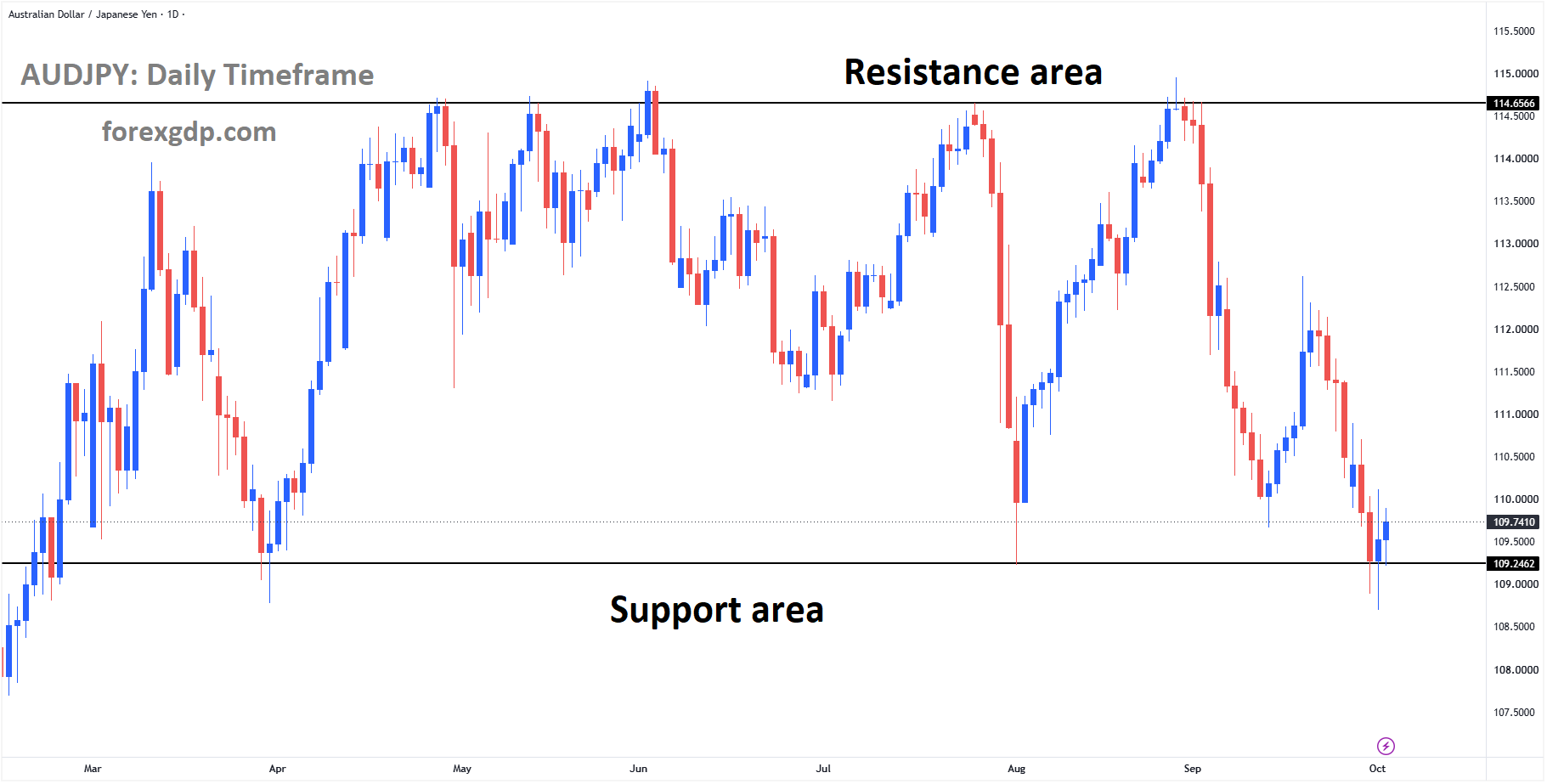
AUDJPY reached the support area of the box pattern
The Yen initially gained attention after Tokyo inflation came in above expectations. Stronger inflation usually increases pressure on a central bank to consider higher interest rates, which can make its currency more attractive. However, the Japanese currency struggled to maintain its early gains.
That left the Australian Dollar and Japanese Yen in a more balanced position. Investors had reasons to consider further monetary tightening in both countries, but neither policy path appeared straightforward.
For Japan, the question was how quickly the Bank of Japan could raise borrowing costs without placing too much pressure on the economy. For Australia, attention remained on whether the Reserve Bank of Australia would deliver additional increases to bring inflation under control.
Tokyo Inflation Adds Pressure on the Bank of Japan
Tokyo’s latest consumer inflation figures gave investors another reason to closely follow the Bank of Japan’s next steps.
According to the supplied report from Japan’s Statistics Bureau, Tokyo CPI excluding fresh food rose to 2.7% year over year in September, up from 1.8% in August. The result also exceeded expectations of 2.4%.
A separate measure excluding food and energy accelerated to 3%, compared with the previous reading of 2%. That increase attracted attention because it suggested price pressures extended beyond the more volatile food and energy categories.
Tokyo inflation provides an early view of price developments in Japan’s capital. Although it does not tell the full story of inflation across the country, it gives investors useful information ahead of broader national figures.
The stronger readings could encourage expectations of further Bank of Japan interest rate increases. If inflation remains persistent, policymakers may face greater pressure to act.
Still, one report alone cannot settle the debate. The central bank must also consider household spending, business conditions, and whether the economy can absorb higher borrowing costs.
BoJ Discussions Reveal Support for Further Rate Increases
The Bank of Japan’s Summary of Opinions from its September meeting showed that several policymakers supported additional interest rate increases.
One member argued that rates could continue rising in line with developments in the economy, prices, and financial conditions. That position suggested support for further tightening, while keeping the pace tied to incoming evidence.
Other views pointed toward a more urgent approach. Some officials expressed concern about inflation pressures and the need for the central bank to demonstrate its commitment to price stability.
These discussions matter because investors look beyond the latest policy decision. They also study how officials describe the risks ahead. A growing willingness to raise rates can influence expectations even before the central bank takes another step.
However, support for further increases does not necessarily mean agreement on timing. Policymakers can share the same goal of controlling inflation while holding different views about how quickly to move.
For the Yen, that distinction is important. Expectations of higher rates may offer encouragement, but uncertainty about when those increases will arrive can limit the currency’s momentum.
Government Comments Bring Economic Caution Into Focus
Comments from a Cabinet Office representative added another layer to the policy discussion.
The representative urged the Bank of Japan to carefully assess the combined effects of its previous interest rate increases. The remarks also highlighted the government’s expectation that the central bank explain its decisions clearly and remain accountable.
This introduced a practical concern: earlier policy changes may still be working their way through the economy.
Higher borrowing costs can affect mortgage payments, business investment, and consumer spending. Those effects do not always appear immediately. A central bank therefore needs to judge both current inflation and the delayed impact of decisions already made.
The government’s comments did not establish that further rate increases were ruled out. Instead, they emphasized the need to examine the consequences of the tightening already delivered.
For investors, this helped explain why stronger inflation data did not translate into lasting Yen gains. The case for higher rates had strengthened, but the discussion about their economic impact remained active.
Australian Dollar Investors Await Clearer RBA Guidance

On the Australian side, investors were looking for fresh guidance about the Reserve Bank of Australia’s next policy move.
The supplied update described four earlier increases of 25 basis points, taking the official cash rate to 4.6%. After that tightening, the key question was whether more increases would follow before the end of the year.
RBA Governor Michele Bullock kept that possibility open. At the monetary policy press conference, she indicated that the central bank would raise rates again if necessary to bring inflation down.
Her comments made inflation the central condition for further action. They did not promise another increase, but they showed that policymakers remained prepared to respond if price pressures required it.
That leaves Australian Dollar investors watching for evidence about whether existing policy settings are doing enough. Persistent inflation could strengthen expectations of another increase, while clearer signs of easing price pressures could reduce the need for additional tightening.
The uncertainty means the Australian Dollar’s direction depends partly on how new economic information changes those expectations.
Summary
AUDJPY recovered its early losses and settled into a steadier position as investors weighed the interest rate debate in both countries.
Tokyo’s stronger inflation figures increased attention on possible Bank of Japan tightening, while the bank’s meeting discussions showed support for further increases. However, government calls to assess the cumulative impact of earlier moves added caution to the outlook.
Meanwhile, the RBA kept additional tightening on the table if inflation required it. With both central banks balancing price stability against economic conditions, fresh data and clearer policy guidance remain central to the AUDJPY story.
Crude Oil Faces Pressure as Middle East Supplies Recover
Crude oil has come under pressure as reports of rising exports from Gulf countries ease fears about a major supply shortage. More oil moving out of the region gives buyers some reassurance that deliveries can continue despite the ongoing uncertainty surrounding the United States and Iran.
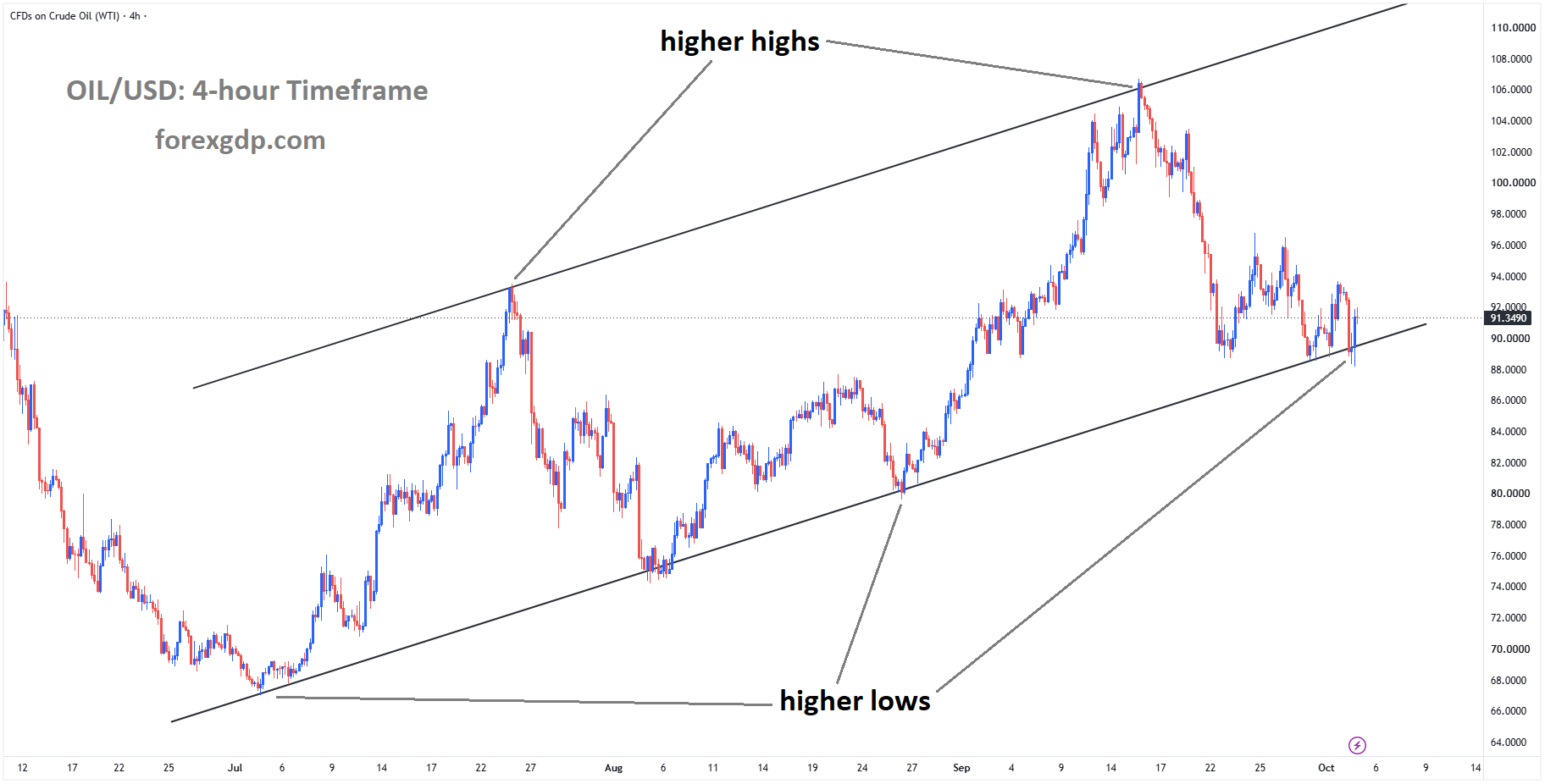
Crude Oil reached the higher low of the ascending channel
However, the mood remains cautious. Reports of additional US military deployments to the Middle East and another incident involving a tanker in the Strait of Hormuz show that risks to supply have not disappeared.
For West Texas Intermediate, widely known as WTI crude oil, these developments create competing pressures. Improving exports reduce the urgency to secure supplies, while military tensions keep traders alert to the possibility of fresh disruption. The recent pullback reflects that balance between better supply conditions and an uncertain security situation.
Rising Gulf Exports Ease Supply Concerns
One of the main reasons behind the decline in crude oil is the reported recovery in exports from Middle Eastern producers. When conflict threatens a major energy region, buyers worry about whether shipments will reach their destinations. Evidence that oil continues to flow can ease some of those concerns.
According to the cited JP Morgan report, oil flows from Middle Eastern countries during September were close to their pre-war levels. That suggests the region’s crude export operations have held up better than some market participants feared.
This matters because expectations can influence oil trading well before a shortage develops. If buyers believe supplies could become difficult to obtain, they may rush to secure deliveries. When export figures show that shipments remain relatively strong, that urgency can fade.
The recovery does not mean every part of the energy supply chain has returned to normal. Still, it gives the market a reason to reassess how much immediate disruption it needs to account for.
Fuel Supplies Remain Slower to Recover
The report also pointed to an uneven recovery between crude oil and refined fuels. While crude flows were reportedly approaching their earlier levels, fuel exports remained considerably further behind.
That difference matters. Crude oil must pass through refineries before it becomes products such as diesel, petrol and aviation fuel. A steady flow of crude therefore does not automatically guarantee that enough finished fuel is available where it is needed.
Refining activity, storage capacity and transport arrangements all affect how quickly fuel reaches customers. Problems at any of these stages can leave some markets facing tight supplies even when crude exports improve.
For businesses that depend on diesel, including transport operators and industrial companies, the availability of refined products remains an important concern. The broader energy picture is therefore more complicated than a simple return to normal oil shipments.
Diesel Stock Releases Add Another Supply Factor
The supplied reports also described pressure from US President Donald Trump on France and Germany to release diesel stocks immediately, alongside a warning about possible restrictions on US exports.
The prospect of additional diesel entering the market can help ease concerns about fuel availability. Stocks held in reserve offer a way to address short-term shortages while regular deliveries recover.
However, a call to release stocks is different from a confirmed release. The effect depends on whether governments act, how much fuel becomes available and how quickly it reaches the areas facing the greatest pressure.
Reserve supplies also provide temporary relief rather than a lasting answer. They can help bridge a gap, but stable fuel availability ultimately depends on reliable production, refining and transport. For now, the possibility of stock releases adds to the reasons traders are feeling less anxious about immediate supply needs.
US-Iran Tensions Limit the Oil Pullback
Despite the improvement in exports, uncertainty surrounding US-Iran relations continues to support caution in the oil market. Stalled peace negotiations leave open the possibility of renewed conflict, making it difficult for traders to assume that recent supply progress will continue uninterrupted.

The Wall Street Journal report cited in the update said the Pentagon was sending a third aircraft carrier and additional troops to the region. Such a deployment raises concerns about the direction of the conflict, although it does not establish that hostilities will resume.
For energy markets, the significance lies in what an escalation could mean for production facilities, ports and shipping routes. Even without an immediate interruption, the possibility of disruption can influence buying decisions.
This helps explain why crude oil’s retreat has remained limited. Stronger exports offer reassurance about current supply, but they provide less certainty about what might happen if the security situation deteriorates.
Strait of Hormuz Incident Keeps Shipping Risks in Focus
A reported tanker incident in the Strait of Hormuz has added another reason for caution. According to the UK Maritime Trade Operations account cited in the update, a tanker was struck by an unidentified projectile while passing through the waterway.
The available description leaves important questions unanswered, including who was responsible and whether the incident points to a wider threat. Even so, it underlines the uncertainty facing vessels travelling through the area.
The Strait of Hormuz is a major route for energy shipments from the Gulf. Security concerns there can affect more than the physical movement of oil. Shipping companies may review voyages, insurers may reassess risks and buyers may reconsider delivery arrangements.
These decisions can make transport more costly or less predictable. As a result, healthy export figures and concerns about shipping safety can exist at the same time. Oil may be leaving the region in substantial volumes while the journey remains exposed to disruption.
Summary
Crude oil’s recent pullback reflects growing confidence in Gulf supply as reported exports recover. The possibility of diesel stock releases has also helped ease concerns about near-term fuel availability.
Yet the recovery remains uneven, with refined fuel exports lagging behind crude flows. At the same time, stalled US-Iran negotiations, additional military deployments and the reported tanker incident keep security risks firmly in view.
The market is weighing reassuring evidence about current deliveries against uncertainty over their continued safety. That tension explains why improving supply has put pressure on WTI crude oil while Middle East developments continue to limit the decline.
BTCUSD Eyes October Gains as Crypto Optimism Grows
Bitcoin enters October with renewed confidence after a positive September. The improvement has encouraged investors who view October as a potentially strong month for the cryptocurrency. Across the crypto community, that seasonal optimism has a familiar name: “Uptober.”
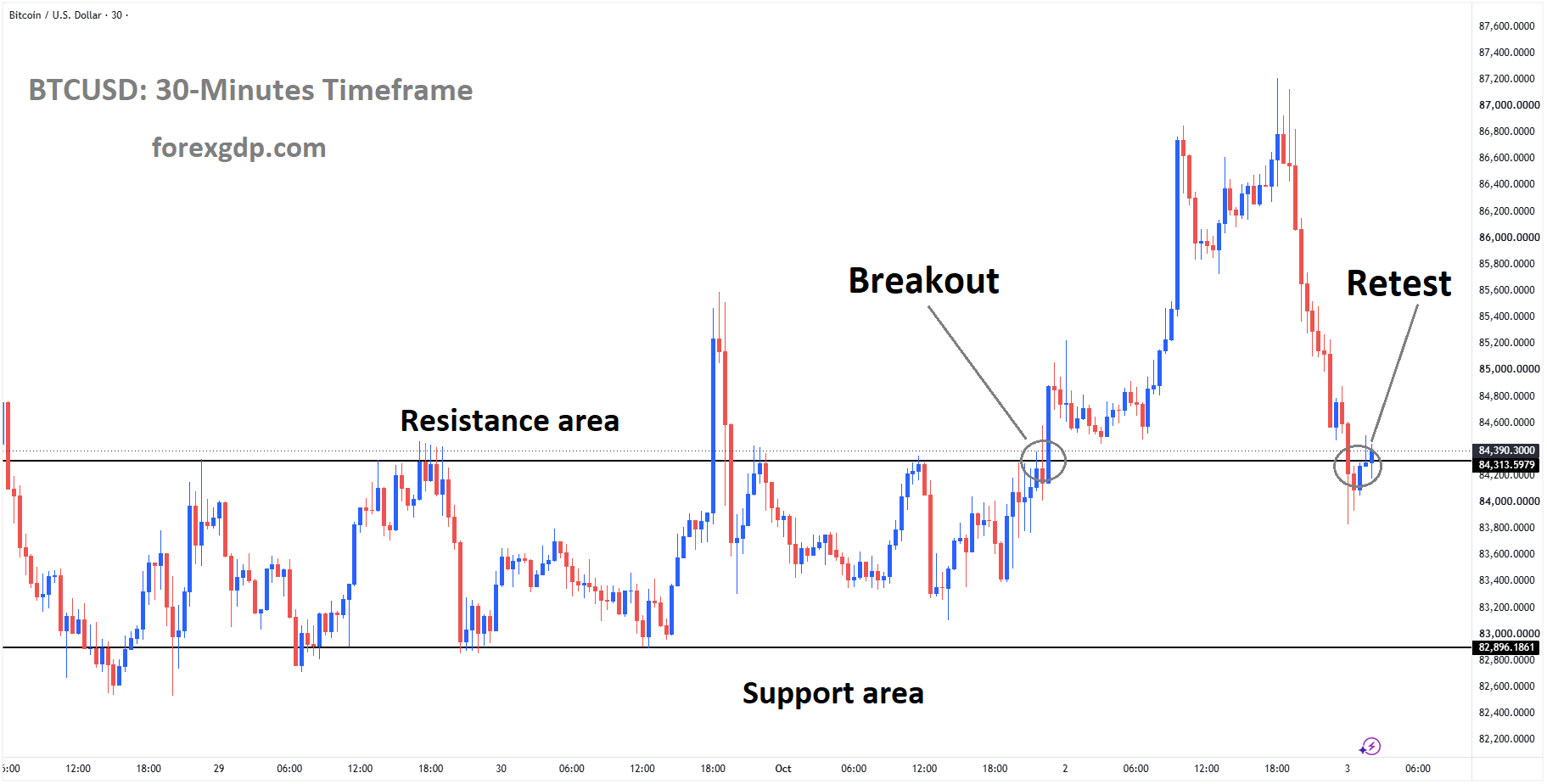
BTCUSD reached the retest area of the broken box pattern
But an encouraging start does not settle what comes next. Bitcoin faces several competing forces, including cautious institutional investment, corporate buying, rising government bond yields, and changes in the US Dollar.
The central question is whether fresh demand can keep confidence alive while investors assess the wider economy. October’s historical reputation adds interest, but the strength of actual buying will matter more than the calendar alone.
Why October Has Bitcoin Investors Paying Attention
October has often been a positive month for Bitcoin. That history explains why the arrival of the month tends to attract attention from investors, market commentators, and the wider cryptocurrency community.
The optimism feels stronger when Bitcoin enters October after a successful September. September has frequently been a difficult period for the cryptocurrency, so a positive finish can improve sentiment heading into the final quarter.
This time, Bitcoin’s September gains followed a strong third quarter. Together, those developments have given investors more reason to watch whether confidence continues through the remaining months of the year.
Still, seasonal history has limits. Bitcoin operates in a changing financial environment, and each year brings different conditions. Interest rates, inflation, investment flows, and global uncertainty can all outweigh expectations based on previous October results.
The Uptober narrative can encourage interest, but it cannot guarantee another successful month. Sustained progress needs support from investors willing to commit capital.
Bitcoin ETF Inflows Show Interest With Some Caution
Institutional demand remains an important part of Bitcoin’s October story. Spot Bitcoin exchange-traded funds, commonly called ETFs, offer investors a way to gain exposure through traditional investment accounts without holding the cryptocurrency directly.
The reported inflows suggest that these products continue to attract money. However, the modest pace of investment also points to caution. Investors appear interested, while remaining careful ahead of important economic announcements.
That distinction matters. Positive flows mean new money is entering Bitcoin funds, but a small inflow does not necessarily signal widespread enthusiasm. Some investors may be waiting for clearer information about inflation, employment, and Federal Reserve policy before increasing their exposure.
A continued run of positive weekly flows would provide evidence that demand is becoming more consistent. Larger inflows could strengthen that message further.
For now, ETF activity offers measured encouragement. It shows that institutional interest remains present, although investors have yet to demonstrate a stronger willingness to increase their commitments.
Corporate Buying Adds a Longer-Term Source of Demand
Corporate purchases provide another source of interest in Bitcoin. Strategy, led by Michael Saylor, announced an additional acquisition following a purchase the previous week.
The buying reflects the company’s established approach of accumulating Bitcoin as part of its corporate treasury strategy. It also suggests renewed emphasis on expanding its holdings after a period focused on strengthening liquidity.
Corporate demand differs from shorter-term trading activity. A business purchasing Bitcoin for its reserves may be making a decision based on a much longer investment horizon.
Such purchases can influence sentiment by showing that some large holders remain committed despite uncertainty in the wider financial market. They can also draw attention to Bitcoin’s role as a treasury asset.
However, one company’s decisions do not represent the views of every institution. Other businesses and investment managers may have different cash needs, risk limits, or priorities. Corporate accumulation adds to demand, but broader participation remains important.
Rising Bond Yields Create Competition for Investment

Bitcoin’s positive sentiment is developing alongside a more challenging bond market. Rising US Treasury yields give investors another place to put their money and earn income.
When government bonds offer more attractive returns, some investors may prefer them to assets with larger fluctuations. This can make it harder for Bitcoin to attract capital, particularly when investors are feeling cautious.
A softer inflation reading can ease concerns about further Federal Reserve tightening. Yet bond yields do not respond to inflation alone. Investors also consider future growth, government borrowing, energy costs, and the likely path of interest rates.
That helps explain why a favourable inflation report may fail to produce an immediate improvement in financial conditions. Investors may welcome the data while still questioning whether inflation will continue to slow.
For Bitcoin, a steadier interest rate environment could make investment decisions easier. Persistent increases in bond yields, however, may keep some money directed toward income-producing assets.
The US Dollar and Energy Costs Complicate the Picture
The US Dollar is another factor shaping investor confidence. A firmer Dollar can tighten global financial conditions and reduce enthusiasm for taking additional investment risk.
For Bitcoin, this creates a challenge even when developments within the cryptocurrency market appear encouraging. Corporate purchases and positive ETF flows may help demand, while a stronger Dollar places pressure on the wider investment environment.
Energy costs add another layer of uncertainty. Disruptions affecting oil supplies through the Strait of Hormuz can raise concerns about renewed inflation pressure.
If higher energy expenses feed into transport, production, and household costs, central banks may remain cautious about easing monetary policy. Investors therefore need more than one softer inflation report to feel confident that borrowing conditions will improve.
The interaction between energy, inflation, and interest rates helps explain why Bitcoin sentiment can remain mixed despite encouraging recent performance.
Economic Releases Could Shape October’s Confidence
US employment and inflation reports will be important for investors assessing Bitcoin this month. These releases help shape expectations about the Federal Reserve’s next policy decisions.
Strong employment figures could suggest that the economy remains resilient, potentially reducing the urgency for lower interest rates. Weaker figures might increase expectations of easing, although a sharp slowdown could also make investors more cautious.
Inflation data carry a similar balance. Further cooling would offer reassurance, while persistent price pressures could keep attention focused on restrictive monetary policy.
The Federal Reserve’s guidance will help investors interpret those developments. Its assessment of growth and inflation may influence how much capital investors are willing to allocate to Bitcoin and other assets.
Final Summary
Bitcoin begins October with optimism following a positive September and a strong third quarter. Its seasonal history, ongoing ETF inflows, and corporate accumulation give investors reasons to remain interested.
However, cautious institutional demand, rising Treasury yields, a firmer US Dollar, and energy-related inflation concerns leave the outlook uncertain. The coming economic reports will help determine whether confidence gains broader support.
Uptober provides a familiar theme, but October’s results will depend on investment demand and the financial conditions surrounding Bitcoin.
Don’t trade all the time, trade forex only at the confirmed trade setups
Get more confirmed trade signals at premium or supreme – Click here to get more signals, 2200%, 800% growth in Real Live USD trading account of our users – click here to see , or If you want to get FREE Trial signals, You can Join FREE Signals Now!