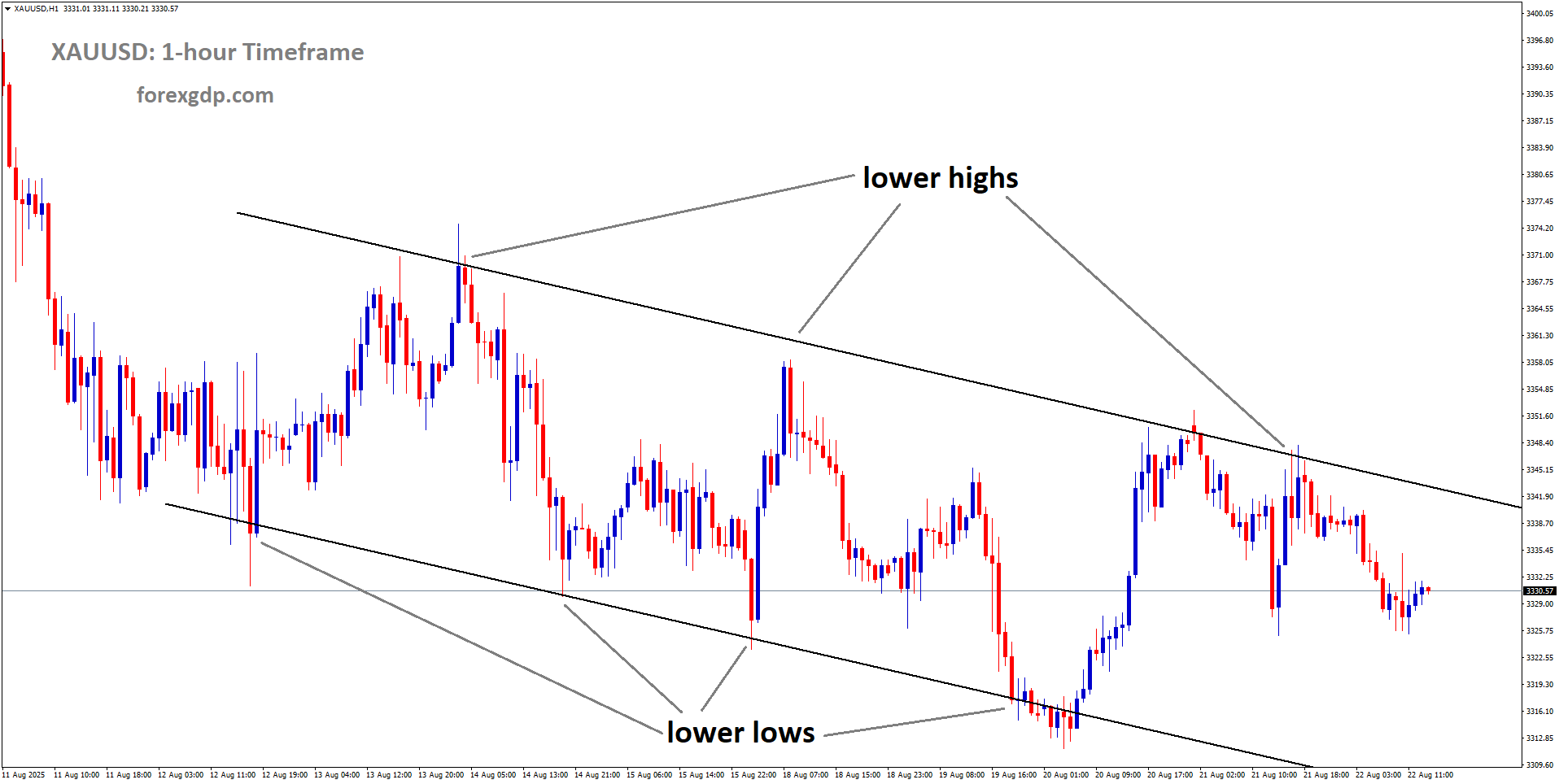


XAUUSD is moving in Symmetrical Triangle pattern and market has reached lower high area of the pattern
Gold prices picked up a bit of strength on Friday, pushing slightly higher during the European trading hours. Even with that lift, gold has not broken out in any big way. It’s still moving within the same general range it has traded in for most of the week, showing that buyers are interested—but not committed enough to drive a stronger rally.
A big reason gold is staying supported is the softer tone in the US Dollar. Investors continue to lean toward the idea that the US Federal Reserve may be ready to lower interest rates soon. When rate-cut expectations grow, the dollar often loses some of its shine, and gold tends to benefit. Still, many traders are choosing patience over bold bets because an important inflation report is on the calendar: the US Personal Consumption Expenditures (PCE) Price Index.
This mix—gold getting support from a weaker dollar and safe-haven demand, but facing hesitation ahead of major data—helps explain why prices are edging up without showing much conviction.
Why the US Dollar Matters So Much for Gold
Gold and the US Dollar often move in opposite directions. When the dollar weakens, gold can become more attractive for buyers using other currencies because it effectively becomes cheaper for them. That can increase demand and help push prices higher.
Right now, the dollar is struggling to build on a recent bounce. Even though it climbed modestly the previous day from its lowest level since late October, renewed selling pressure returned as rate-cut expectations remained strong. Many investors believe the Fed is moving toward a more “dovish” path—meaning it may be more willing to reduce rates rather than keep them high.
That matters because gold does not pay interest. When interest rates are high, some investors prefer yield-paying assets, which can reduce gold’s appeal. When markets believe rates may fall, that disadvantage can fade, allowing gold to compete better for investor attention.
Strong Jobs Data, but Rate-Cut Expectations Still Lead
Normally, positive labor market news could help the dollar by supporting the idea of a stronger economy. But recent US labor updates didn’t shift market expectations much.

One report from Challenger, Gray & Christmas showed that planned job cuts fell sharply in November, dropping to 71,321 from 153,074 the month before. Another update from the US Labor Department showed initial jobless claims falling to 191,000 in the latest week, the lowest level in more than three years. On the surface, those are encouraging signals about the job market.
Yet traders continue to price in a strong chance—over 85%—that the Fed will cut interest rates by 25 basis points at its next policy meeting. That tells you something important: markets are still focused on inflation trends and the broader interest-rate outlook, even if some economic data looks healthy.
For gold, this keeps the overall backdrop supportive because it limits the dollar’s ability to rise with confidence.
Safe-Haven Demand Returns as Geopolitical Risks Remain
Gold isn’t only about inflation and interest rates. It’s also one of the world’s most well-known “safe-haven” assets—something investors often turn to when uncertainty rises.
That’s where geopolitics comes in. Ongoing concerns linked to the Russia-Ukraine war continue to hover over markets. Comments from Russian President Vladimir Putin added to the sense that a peace deal may not be close. He suggested that parts of a US plan aimed at ending the conflict are unacceptable and warned again about the Donbas region, keeping tensions in the spotlight.
When headlines like these hit, markets can become more cautious. Even if there isn’t an immediate escalation, uncertainty alone can encourage some investors to keep at least a portion of their portfolio in perceived safer assets, including gold.
This cautious mood has been another reason gold has managed to hold its ground this week, even without a strong rally.
A “Wait and See” Market Can Still Support Gold
It’s worth noting that markets don’t need to be in full panic mode for gold to find support. Sometimes, it’s enough for investors to feel uncertain about what comes next—whether that’s war-related risks, economic surprises, or central bank decisions.
This week has had some of that “wait and see” energy. And in that kind of environment, gold can quietly attract steady interest, even if buyers are not pushing prices sharply higher.
All Eyes on the US PCE Price Index
The next major piece of the puzzle is the US PCE Price Index, which many traders treat as a key moment for markets. The PCE inflation report matters because it plays a major role in how the Fed evaluates inflation trends.
Markets are expecting the headline PCE figure to show inflation rising slightly on a yearly basis, ticking up to 2.8% from 2.7% the month before. Meanwhile, the core PCE measure—often viewed as the Fed’s preferred gauge because it strips out more volatile items—is expected to remain steady at 2.9% year over year.
What happens next depends not only on the numbers themselves, but also on how investors interpret them.
Why This Report Could Move Gold
Traders will examine the PCE data for clues about where interest rates may go from here. If the report suggests inflation is cooling more smoothly than expected, it could reinforce expectations for near-term rate cuts. That would likely pressure the dollar and could give gold more room to climb.
On the other hand, if inflation comes in hotter than expected, markets may rethink how soon and how aggressively the Fed can cut rates. That could lift the dollar and reduce some of gold’s support.
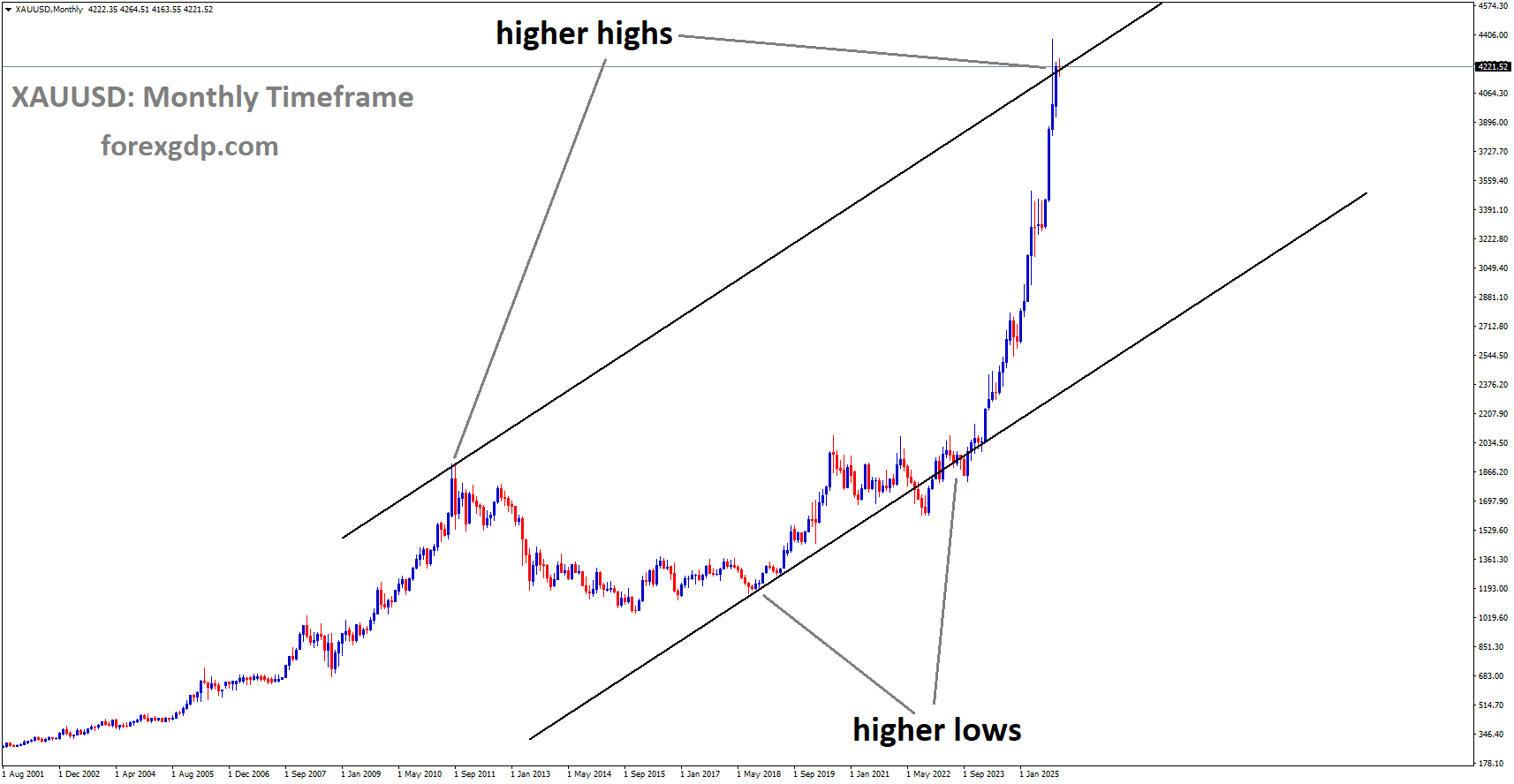
XAUUSD is moving in uptrend channel and market has reached higher high area of the channel
This is why many gold buyers seem hesitant to make aggressive moves before the report hits. In the short term, inflation expectations can shift quickly, and gold is sensitive to those shifts—mainly because they influence the dollar and the rate outlook.
Why Gold Is Still Stuck in a Range
Even with supportive factors in play, gold remains contained in its weekly range because the market is balancing two competing forces:
-
Support from a softer dollar, safe-haven demand, and rate-cut expectations
-
Caution ahead of a high-impact inflation report that could quickly change sentiment
That tug-of-war often leads to choppy, limited movement—exactly what we’re seeing now.
Final Summary
Gold is edging higher on Friday, supported by a weaker US Dollar, steady expectations that the Federal Reserve may cut interest rates soon, and ongoing geopolitical uncertainty tied to the Russia-Ukraine war. Even so, buyers are not showing full confidence, and prices remain trapped within the week’s trading range. The next big test is the US PCE Price Index, an inflation report that could reshape expectations for interest rates and drive the dollar’s next move—setting the tone for where gold goes next.