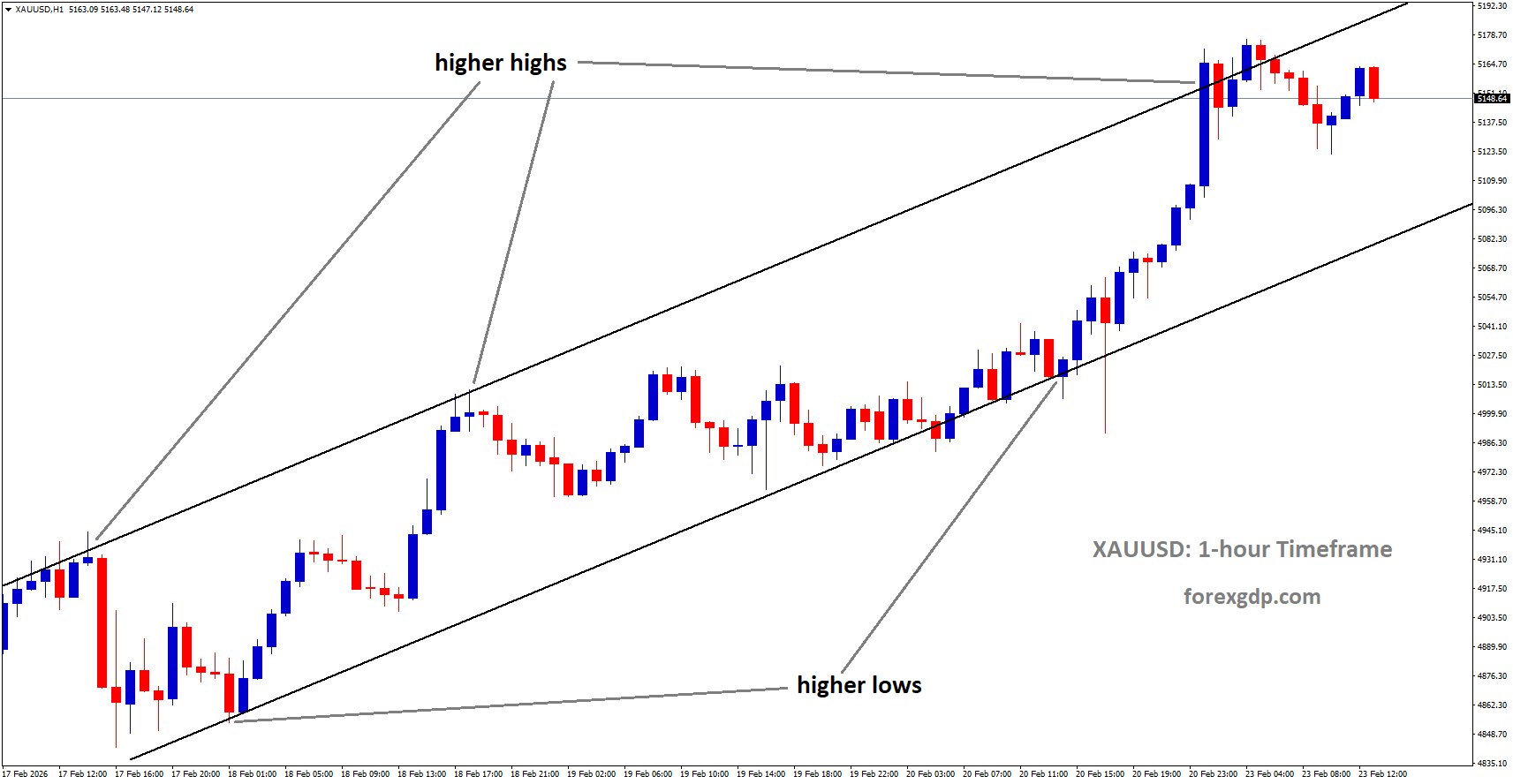


XAUUSD is moving in an uptrend channel, and the market has reached a higher high area of the channel
Gold has found strong support again as investors turn cautious about the global outlook. A new wave of political and economic uncertainty has pushed many people to look for safer places to park their money, and gold is once again benefiting from that shift in mood.
The precious metal climbed to the $4,700 area, reaching a fresh all-time high before giving back a small part of its gains during the day. Even with that slight pullback, gold remains well-supported, and there are few signs of a major drop right now. The reason is simple: the overall backdrop is still favoring safe-haven assets, and gold remains one of the most trusted options during uncertain times.
At the center of this move is a mix of new tariff threats, rising geopolitical tensions, and a softer US Dollar, all of which are shaping market sentiment in a big way.
Why Gold Is Climbing: Safe-Haven Demand Is Back
Gold tends to perform best when investors feel nervous about what comes next. When confidence in global trade, politics, or major economies starts to weaken, demand for safer assets usually rises. That’s exactly what seems to be happening now.

One major trigger came from US President Donald Trump, who recently threatened to impose new tariffs on several European countries. The situation quickly became more serious because the tariff warning was linked to a highly sensitive political issue: Greenland.
Trump suggested that the United States should be allowed to buy Greenland, and he reportedly threatened trade penalties against countries that opposed the plan. This kind of headline is the type that can shake confidence quickly, especially because it raises the risk of a broader trade dispute between the US and Europe.
Once investors sense the possibility of a growing trade conflict, they often reduce exposure to riskier assets and move toward traditional safe havens. That shift has helped lift gold higher and keep it well-supported.
Tariffs and Trade Disputes Can Shake Global Confidence
Tariffs are more than just taxes on goods. They can change how companies plan for the future, how countries cooperate, and how stable global trade feels overall.
In this case, Trump reportedly vowed to add a 10% tariff on goods from eight European nations starting February 1, with the possibility of the rate rising to 25% in June if no agreement is reached. Even if these measures do not happen exactly as stated, the threat alone is enough to create uncertainty.
European officials strongly criticized the idea, and some major European Union members described the move as economic pressure or blackmail. France reportedly floated the idea of responding with new economic countermeasures, including options that have not been widely used before.
All of this creates a sense that the situation could escalate, and when escalation becomes a real possibility, gold often becomes more attractive.
Geopolitical Risks Are Adding Fuel to Gold’s Rally
Trade tensions are only one part of the story. Gold is also being supported by rising geopolitical concerns, especially involving the Middle East and Eastern Europe.
In recent developments, Iran issued a warning that any attack on its Supreme Leader, Ayatollah Ali Khamenei, could trigger an all-out war. That kind of statement immediately raises anxiety across global markets, because it signals that tensions could rise quickly and unpredictably.
At the same time, the Russia-Ukraine conflict continues to intensify, keeping investors on edge. Ukraine’s foreign minister, Andrii Sybiha, reportedly said there was evidence that Russia may be considering attacks on key sites linked to nuclear power stations. President Volodymyr Zelensky also suggested that Russia’s continued strikes show little interest in diplomacy or ending the war.
These developments matter because they create uncertainty not only for the countries involved, but also for energy markets, global supply chains, and broader international stability. When the world feels less predictable, gold often becomes more appealing.
Why Investors Still Trust Gold During Uncertainty
Gold has long been viewed as a store of value during times of fear. Unlike many other assets, it is not directly tied to one government’s policies or the financial performance of a single company.
That doesn’t mean gold moves in a straight line, but it does explain why it often holds up well when markets become uncomfortable with risk.
In the current environment, the combination of trade conflict worries and geopolitical threats is creating exactly the kind of conditions that typically boost safe-haven demand.
The US Dollar Is Pulling Back, and That’s Helping Gold
Another major factor supporting gold is weakness in the US Dollar.
Trade war fears have created what some investors see as a crisis of confidence in US assets. As a result, the US Dollar has retreated from its recent highs after touching its strongest level since early December.
This matters because gold is priced in US Dollars. When the Dollar falls, gold often becomes cheaper for buyers using other currencies, which can increase demand and push prices higher.
In simple terms, a weaker Dollar can act like a tailwind for gold, and that’s exactly what’s happening now.
Still, the Dollar’s pullback is not turning into a full collapse. There’s a reason for that, and it connects directly to interest rate expectations in the United States.
Rate Cut Expectations Can Shape Both Gold and the Dollar
Gold is often described as a “non-yielding” asset because it does not pay interest. That means gold can face pressure when interest rates stay high or when investors believe rates will not fall as much as expected.
Right now, investors have been reducing their bets on two additional Federal Reserve rate cuts in 2026. This shift has helped prevent the US Dollar from weakening too aggressively and has also created a mild headwind for gold.
In other words, gold has strong support from fear-driven demand, but it’s also facing some resistance from changing expectations about where US interest rates might go next.
What Investors Are Watching Next: Key US Economic Data
With gold near record levels, many traders are becoming more cautious about making big moves without fresh information. That’s why attention is turning toward important US economic reports scheduled for Thursday.
Two releases are especially important:
-
US Personal Consumption Expenditure (PCE) Price Index
-
Final US Q3 Gross Domestic Product (GDP)
The PCE inflation report is closely watched because it is one of the Federal Reserve’s preferred measures of inflation. If inflation looks sticky or higher than expected, markets may assume the Fed will keep rates higher for longer. That could strengthen the Dollar and potentially slow gold’s momentum.
On the other hand, if inflation appears to be cooling and economic growth looks softer, it could revive expectations for easier policy in the future, which may help gold stay supported.
Why These Reports Matter Even When Headlines Are Driving the Market
Even though politics and global tensions are clearly moving markets right now, economic data still plays a key role in shaping long-term expectations.
Gold can surge on fear, but for a rally to last, investors often want confirmation from broader trends like:
-
Inflation direction
-
Economic growth strength
-
Central bank policy outlook
-
Currency stability
That’s why these upcoming US reports may help decide whether gold continues climbing or pauses to catch its breath.
Gold’s Outlook: Strong Support, But Not Without Challenges
Gold’s overall setup still looks positive, especially because the global mood has shifted toward caution. Trade tensions involving the US and Europe have returned to the spotlight, geopolitical risks remain high, and the US Dollar is no longer at its strongest levels.
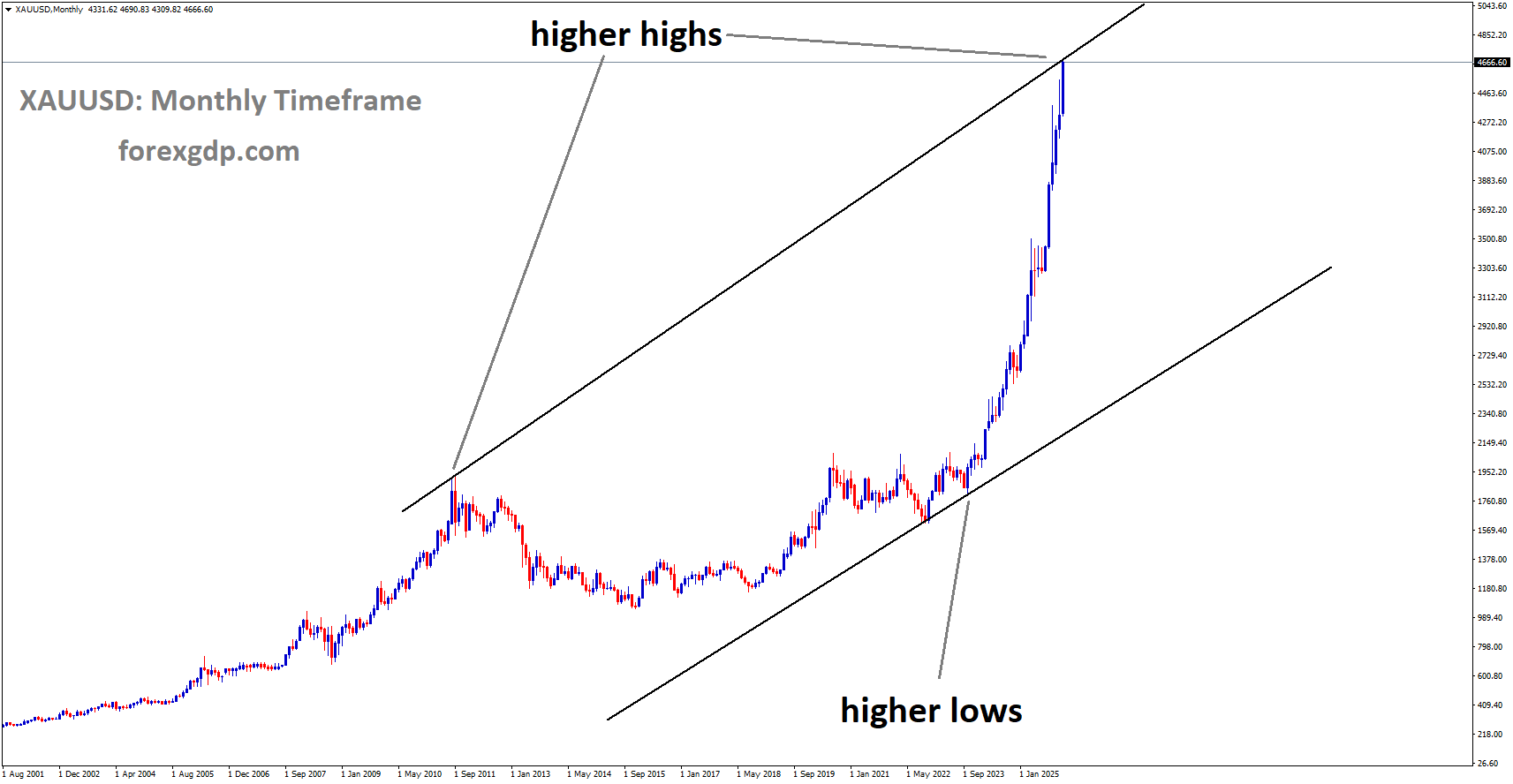
XAUUSD is moving in uptrend channel and market has reached higher low area of the channel
At the same time, gold is not moving in a vacuum. Shifting expectations around Federal Reserve policy could still limit how fast and how far prices can rise in the short term.
What stands out most is that investors seem willing to keep buying gold on dips, mainly because the risks in the global picture feel real and ongoing. Unless tensions cool down quickly or the Dollar regains strong momentum, gold may continue to attract steady interest.
Summary
Gold has surged to fresh record highs near the $4,700 level, supported by growing demand for safe-haven assets. New tariff threats from President Trump aimed at several European countries have raised fears of a wider trade dispute, pushing investors toward gold. At the same time, geopolitical tensions involving Iran and the Russia-Ukraine conflict are adding more uncertainty to global markets. A pullback in the US Dollar has also helped gold, although reduced expectations for future Fed rate cuts may limit gains. Investors are now closely watching key US reports like the PCE inflation index and final Q3 GDP for the next major direction in the market.