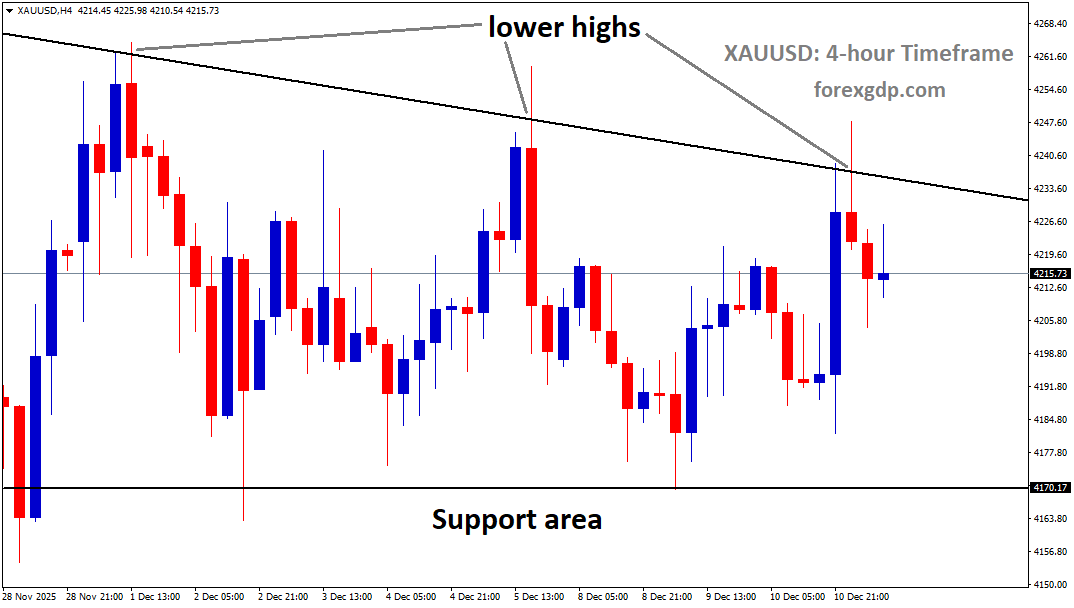
XAUUSD is moving in a descending triangle pattern
Gold has been trying to move higher, but the move has not been very convincing. After climbing to a fresh high for the week, the metal struggled to hold on to those gains. During the first half of the European session, buying interest faded, and gold slipped back, showing that traders are still cautious.
A key reason is the behavior of the US Dollar (USD). After dropping sharply following the latest Federal Reserve decision, the dollar has started to recover some ground. When the dollar bounces, gold often feels the pressure, because gold is priced in dollars and becomes relatively more expensive for buyers using other currencies.
Even so, the downside for gold does not seem wide open. Investors are not rushing to sell aggressively, and the metal continues to find support from expectations that US interest rates will keep moving lower over time. These expectations limit how far the dollar can strengthen and help gold retain some appeal in global markets.
Federal Reserve Policy: A Dovish Tone with Some Uncertainty
The latest Federal Reserve meeting remains at the center of the story for both the dollar and gold.
A Rate Cut and Hints of More Easing
The Fed lowered borrowing costs again, a move that markets had widely anticipated. Alongside the decision, the central bank also updated its projections, signaling that it sees only a limited number of additional cuts ahead over the coming years.
Investors, however, are more optimistic about easing than the Fed’s official forecast suggests. Many in the market still expect more rate cuts than policymakers have outlined. This gap between what the Fed is signaling and what traders are pricing in has become an important driver for both the dollar and gold.

The tone of Fed Chair Jerome Powell’s press conference reinforced the sense that the central bank is leaning toward a softer stance. He highlighted that the US labor market faces downside risks and made it clear that the Fed does not want its policies to weigh too heavily on job creation. That message was taken as dovish, meaning more supportive of lower interest rates over time.
The immediate reaction was straightforward: the dollar weakened, and gold rose, reaching a new high for the week as investors sought assets that tend to benefit from easier monetary policy.
Limited Guidance and Hawkish Voices
However, the Fed did not provide a clear roadmap for when the next move might come. Powell declined to put any timeline on the next cut, stressing that future decisions would depend on incoming data.
Adding to the uncertainty, two members of the Fed dissented against the latest reduction, arguing against even this step. These more hawkish voices—those who prefer higher rates for longer—remind markets that not everyone at the central bank is eager to push aggressively toward easier policy.
This mix of a generally dovish tone but unclear timing and visible dissent creates a more complicated backdrop for gold. On one hand, the prospect of lower rates supports the metal. On the other hand, doubts about how fast and how far policy will actually move can limit strong follow-through buying.
Why the Dollar Still Matters for Gold
For gold traders, the dollar remains one of the most important pieces of the puzzle:
-
When the dollar weakens, gold often becomes more attractive globally.
-
When the dollar recovers, it can cap gold’s gains or even push prices lower.
Right now, investors see the dollar’s upside as limited by the expectation of further easing. But the modest recovery we’re seeing shows that currency traders are not fully convinced of an aggressive cutting cycle, and that tension is keeping gold from breaking out into a strong, sustained uptrend.
Risk Sentiment and Geopolitics: A Mixed Environment for Safe Havens
Gold is not only influenced by central banks and currencies; it is also closely tied to how nervous or calm the market feels.
Positive Risk Tone Weighs on Safe-Haven Demand
Recently, the overall tone in financial markets has been relatively positive. When stock markets are firm and investors feel more confident about growth, they tend to move money into riskier assets and away from traditional safe havens like gold.
This “risk-on” mood has been another factor holding back strong demand for the precious metal. Even with support from Fed expectations, gold has had to compete with other assets that may look more attractive when sentiment is upbeat.
Geopolitical Tensions Still Support the Metal
At the same time, ongoing geopolitical risks keep a floor under gold. The prolonged conflict between Russia and Ukraine continues to create uncertainty, especially as it spills over into the energy and shipping space.
Recent drone attacks on tankers involved in Russian oil trade in the Black Sea have highlighted how fragile the situation remains. These strikes on vessels tied to Russia’s so-called “shadow fleet” remind markets that disruptions can happen unexpectedly and may have wider economic ripple effects.
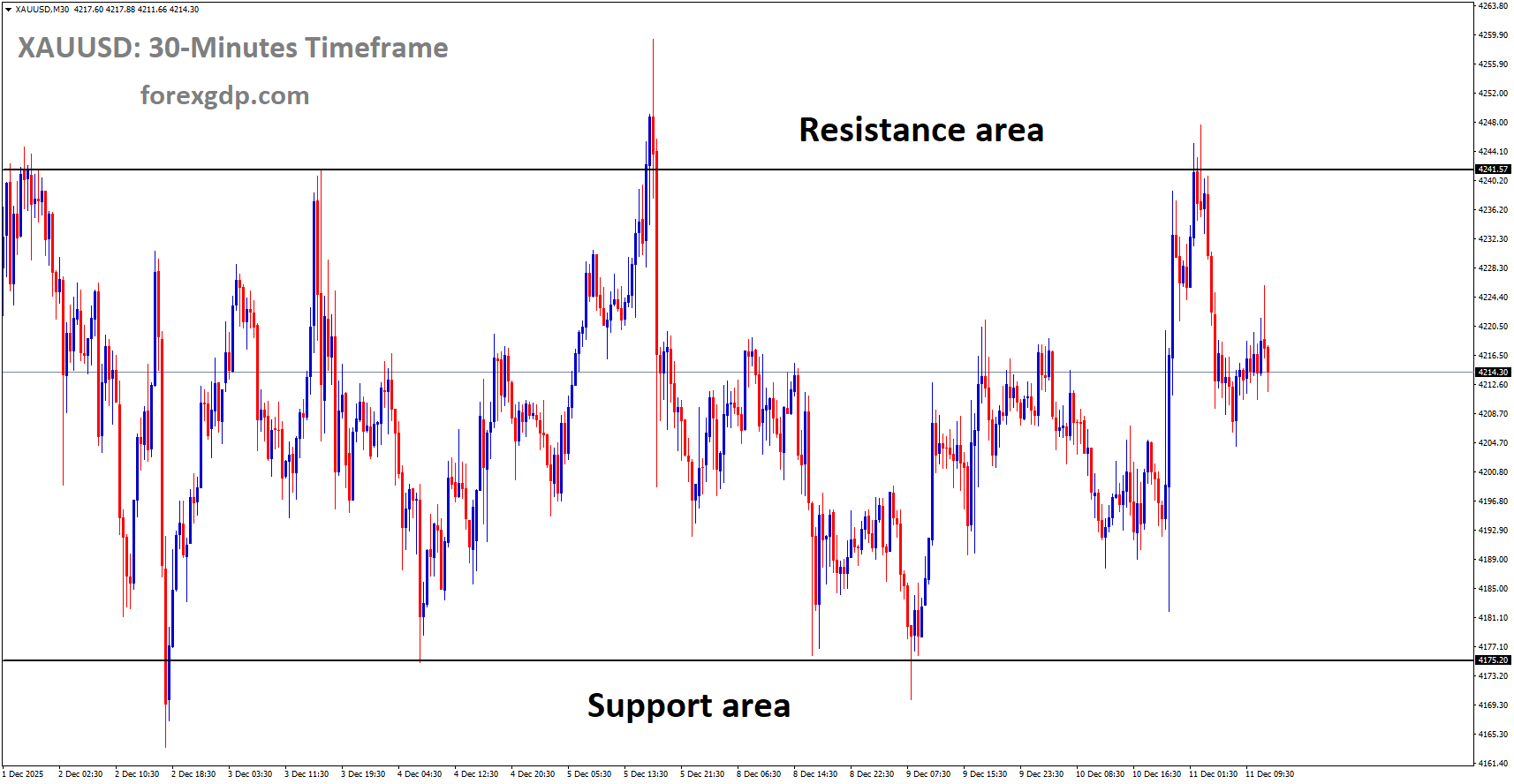
XAUUSD is moving in a box pattern, and the market has fallen from the resistance area of the pattern
Furthermore, strong rhetoric from Russian leadership about taking control of Ukraine’s Donbas region—by military or other means—adds another layer of tension. These developments encourage some investors to keep a portion of their portfolios in assets considered safer during periods of geopolitical stress, and gold is a classic choice in that category.
Because of this combination—positive risk sentiment but persistent geopolitical risk—market positioning in gold has been cautious. Traders are reluctant to build large bearish positions, even when prices soften, because unexpected headlines could quickly revive safe-haven demand.
What Traders Are Watching Next
Given this mixed backdrop, gold traders are closely watching fresh economic data and currency moves to guide their next decisions.
In the near term, attention is on upcoming US economic figures, including weekly jobless claims and trade balance numbers. While these releases are not always dramatic market-movers on their own, they help shape the broader narrative about the health of the US economy.
If labor market data show clear signs of slowing, markets may become more confident that the Fed will feel comfortable cutting rates further, which could support gold and weigh on the dollar. On the other hand, if the data remain resilient, traders might pare back expectations for aggressive easing, potentially giving the dollar more support and making life harder for gold bulls.
At the same time, any surprise in global risk sentiment—such as sharp moves in equities or sudden geopolitical developments—can quickly change the tone. That is why many participants are avoiding overly strong convictions right now and are instead reacting to the flow of news.
Final Summary
Gold is caught between two opposing forces. On one side, expectations of lower US interest rates and ongoing geopolitical tensions are offering support. On the other side, a modest recovery in the US Dollar and a generally positive tone in broader markets are weighing on demand for the metal as a safe haven.
The Federal Reserve’s latest cut, together with Powell’s caution about labor market risks, has encouraged investors who believe more easing is coming. Yet the lack of clear guidance on timing and the presence of hawkish dissenters inside the Fed have kept that optimism in check.
Meanwhile, risk assets have been performing reasonably well, pulling some capital away from gold. But unresolved geopolitical issues, particularly around the Russia-Ukraine conflict and energy shipping routes, prevent traders from turning strongly negative on the metal.
In this environment, gold is likely to respond quickly to shifts in the dollar, new economic data, and changes in global risk sentiment. Until there is a clearer signal from either the Fed or geopolitics, the market may remain choppy, with traders preferring flexibility over strong, one-directional bets.