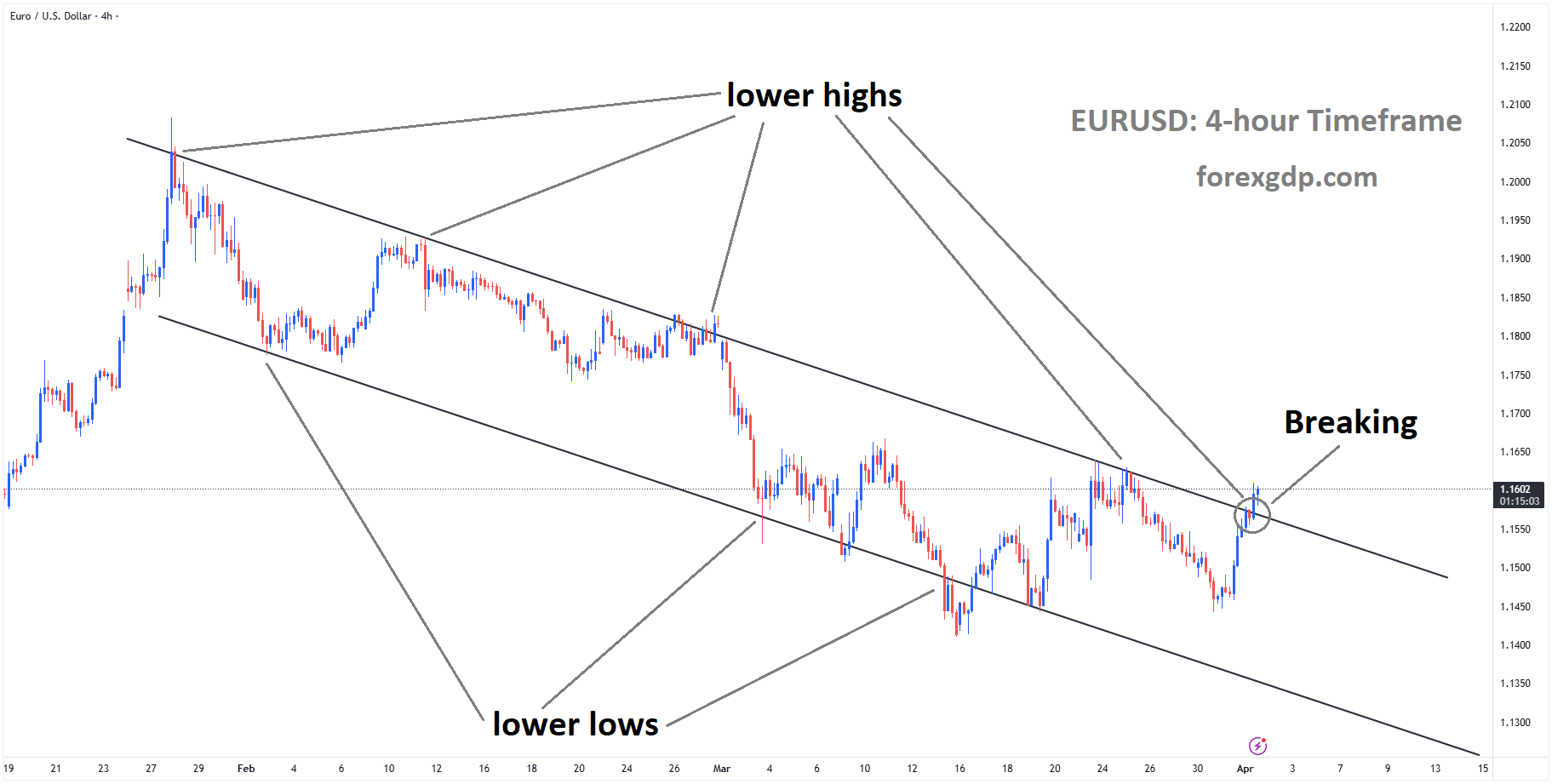
EURUSD is breaking the lower high area of the downtrend channel
EURUSD Gains Momentum Close to 1.1600 on Easing Geopolitical Concerns
The EUR/USD currency pair has been gaining strength, moving closer to the 1.1600 level as global conditions begin to stabilize. A key driver behind this upward movement is the easing of tensions in the Middle East, which has reduced the demand for traditionally safe investments like the US Dollar.
As geopolitical fears begin to calm, traders are adjusting their positions, leading to noticeable changes in currency markets. The Euro is benefiting from this shift, while the US Dollar is facing some pressure.
Reduced Safe-Haven Demand Weakens the US Dollar
The US Dollar is often seen as a safe place for investors during times of uncertainty. When global risks rise, money tends to flow into the Dollar. However, the situation is now changing.
Recent developments suggest that tensions in the Middle East may not escalate further. As a result, investors are becoming more willing to move their funds into other assets, including the Euro. This shift has pushed the EUR/USD pair higher.
The US Dollar Index, which measures the Dollar’s strength against several major currencies, has slipped slightly. This decline reflects reduced demand for safety and a growing appetite for risk among traders.
Signs of Peace in the Middle East Boost Market Confidence
One of the biggest reasons behind the improved market mood is a shift in tone from Iran. The country has indicated that it is open to ending its conflict, provided there are clear assurances that further aggression will not occur.
This statement is significant because it marks a change from previous messages that focused more on confrontation. The new approach suggests a willingness to pursue peace, which has helped calm global markets.
The conversation between Iran’s leadership and European officials has further strengthened hopes that a ceasefire could be achieved. Even the possibility of reduced conflict is enough to influence investor behavior.
When uncertainty fades, markets tend to stabilize. This is exactly what is being seen now, with currencies like the Euro gaining ground as confidence slowly returns.
Falling Oil Prices Support the Euro
Another important factor supporting the Euro is the decline in oil prices. The easing of tensions in the Middle East has reduced fears of supply disruptions, leading to lower energy costs.
This development is particularly beneficial for the Eurozone. European countries rely heavily on imported oil to meet their energy needs. When oil prices fall, it reduces costs for businesses and consumers across the region.
Lower energy prices can also improve economic conditions by easing inflation pressures. This makes the Euro more attractive to investors, as it reflects a more stable and manageable economic environment.
In contrast, rising oil prices typically create challenges for the Eurozone. The current decline, therefore, acts as a supportive force for the Euro’s strength against the Dollar.
Changing Expectations Around ECB Policy
The shift in global conditions is also affecting expectations around monetary policy in Europe. Earlier, when tensions were rising and oil prices were climbing, many traders believed that the European Central Bank (ECB) might need to keep interest rates higher for longer.
Now, with oil prices falling and geopolitical risks easing, those expectations are being reconsidered.
Investors are beginning to scale back their bets on further interest rate increases by the ECB this year. This change reflects a broader view that inflation pressures may not be as strong as previously feared.
While this adjustment might seem negative for the Euro at first glance, it actually aligns with improved economic stability. Markets often prefer steady and predictable conditions over aggressive policy changes.
A Shift in Market Mood Drives Currency Movement
Currency markets are heavily influenced by sentiment, and the current environment shows how quickly that sentiment can change.
Just days ago, concerns about escalating conflict were driving investors toward safer assets. Now, with signs of de-escalation, the mood has shifted toward optimism.
This change is not only benefiting the Euro but also encouraging broader market activity. Investors are becoming more comfortable taking on risk, which supports currencies linked to economic growth and trade.
The EUR/USD pair’s recent movement is a clear reflection of this evolving sentiment. As confidence builds, the pair continues to recover from earlier losses.
What This Means for Traders and Investors

For traders, the current situation highlights the importance of staying alert to global developments. Geopolitical events can quickly influence market direction, often in unexpected ways.
The easing of tensions in the Middle East is a reminder that even small shifts in communication or policy can have a large impact on financial markets.
Investors are now watching closely for further updates. Any confirmation of a ceasefire or continued diplomatic progress could provide additional support for the Euro.
At the same time, unexpected setbacks could quickly reverse the current trend. This makes it essential to remain cautious and adaptable.
Summary
The recent rise in the EUR/USD pair reflects a broader change in global market conditions. As tensions in the Middle East begin to ease, the demand for safe-haven assets like the US Dollar has declined.
Support for the Euro has come from multiple factors, including improved investor confidence, falling oil prices, and shifting expectations around European monetary policy. Together, these elements have created a more favorable environment for the Euro.
While the situation remains fluid, the current trend shows how closely currency markets are tied to global events. Continued progress toward peace and stability could further strengthen the Euro, while any renewed uncertainty may bring volatility back into focus.
GBPUSD gains momentum as geopolitical risks in Middle East begin to fade
The Pound Sterling has shown a modest rise against major global currencies, supported by improving investor confidence and signs of easing geopolitical tensions. A recent shift in the Middle East situation has played a key role in boosting market sentiment, encouraging traders to move away from safe-haven assets and return to riskier investments. At the same time, attention is turning toward important economic data from the United States, which could shape market direction in the coming days.
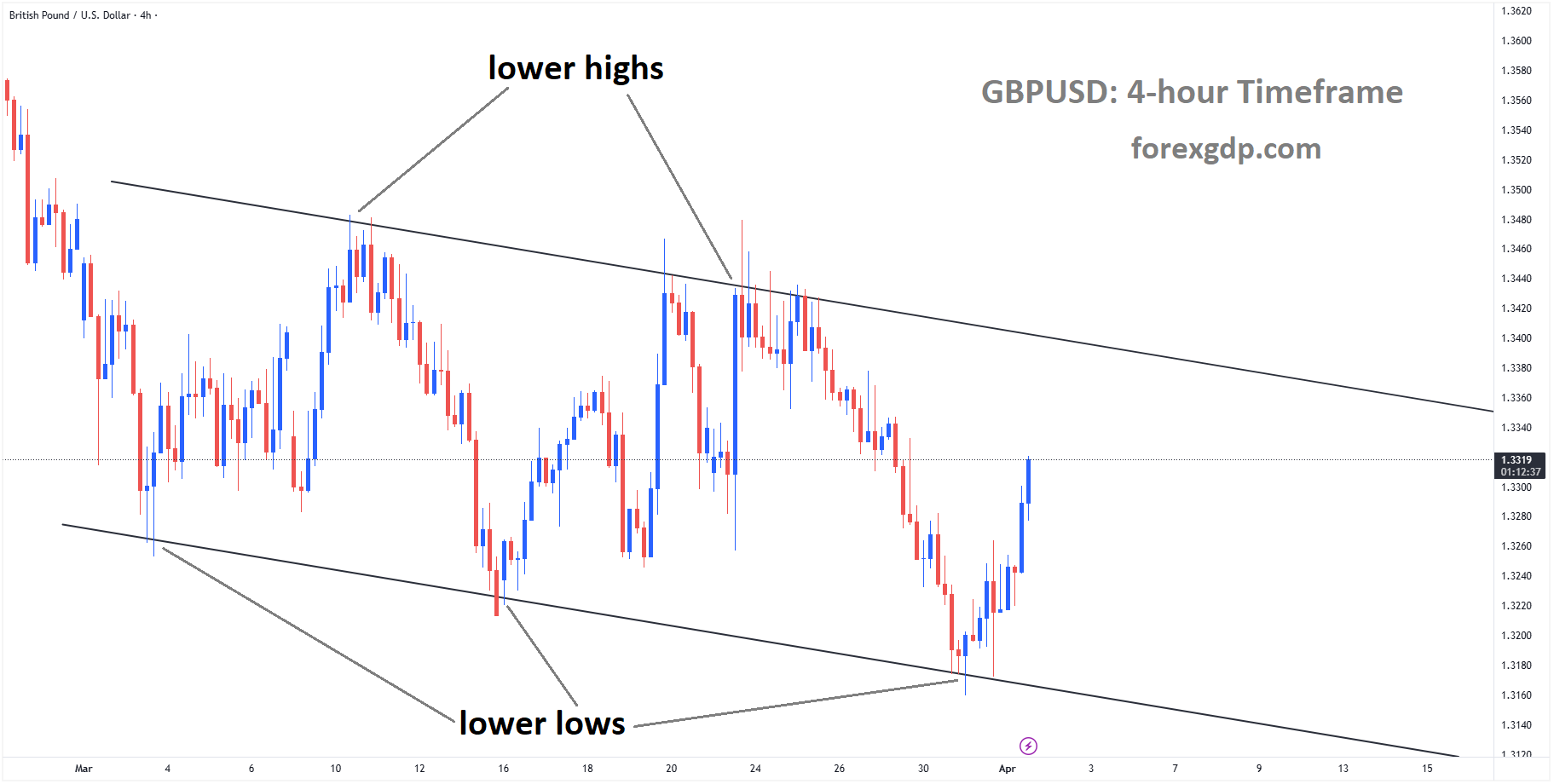
GBPUSD is moving in a descending channel, and the market has rebounded from the lower low area of the channel
Improving Global Sentiment Supports the Pound
The British Pound edged higher during the Asian trading session, reflecting a broader improvement in market mood. When global risks decrease, investors tend to feel more confident about putting their money into assets that offer higher returns. This often benefits currencies like the Pound, which are seen as more sensitive to economic growth and global stability.
Recent developments in the Middle East have contributed to this positive shift. News that both the United States and Iran are open to ending their month-long conflict has eased fears of further escalation. This has helped calm financial markets, which had been on edge due to concerns about the potential impact of the conflict on global energy supplies and economic stability.
As tensions cool, demand for safer assets such as the US Dollar typically declines. Investors begin to seek opportunities in currencies and markets that may offer better returns, and this has provided support for the Pound.
Signs of Peace in the Middle East
A major factor behind the improved sentiment is the willingness shown by Iran to move toward peace. Iran’s President, Masoud Pezeshkian, has indicated that his country is prepared to end the conflict with the United States, provided certain conditions are met. These conditions mainly focus on ensuring that similar conflicts do not happen again in the future.
This statement followed a call for a truce from US President Donald Trump, signaling that both sides may be ready to step back from the situation. The possibility of a peaceful resolution has reduced fears about disruptions in the Gulf region, which is a critical area for global energy production.
However, while the outlook has improved, uncertainties remain. Energy infrastructure in the region has already faced strain, and it may take time to fully restore normal operations. This means that concerns about supply constraints have not completely disappeared.
Oil Market Dynamics and Their Impact
Even though tensions are easing, oil prices have not seen a major decline. This is because the effects of the conflict are still being felt, especially in terms of infrastructure damage and supply limitations. Until these issues are fully resolved, energy markets are likely to remain somewhat tight.
Stable or elevated oil prices can have a broader impact on global economies. For central banks, including the US Federal Reserve, higher energy costs can contribute to inflation. When inflation risks remain present, policymakers may be less willing to reduce interest rates or ease monetary conditions.
This dynamic is important for currency markets. While the US Dollar has weakened slightly due to reduced demand for safe-haven assets, its downside may be limited by the ongoing influence of oil prices on inflation and monetary policy expectations.
US Dollar Faces Mixed Pressures
The US Dollar often strengthens during times of uncertainty, as investors look for stability. With the recent easing of geopolitical tensions, some of that demand has faded. This has allowed other currencies, including the Pound, to gain ground.
However, the situation is not entirely one-sided. The possibility that the Federal Reserve will maintain a cautious approach to monetary policy continues to provide support for the Dollar. If inflation remains a concern due to higher energy costs, the Fed may avoid making aggressive changes to interest rates.
This creates a balanced environment where the Dollar is not experiencing sharp declines, even as global sentiment improves. For traders, this means that currency movements may remain moderate rather than dramatic in the short term.
Focus Shifts to Key US Economic Data
While geopolitical developments have played a major role in recent market movements, attention is now turning to upcoming economic data from the United States. Two key reports are expected to provide insights into the health of the US economy: the ADP Employment Change and the ISM Manufacturing PMI.
ADP Employment Change
The ADP Employment Change report offers an early look at job growth in the private sector. It is often seen as a preview of the official employment figures released later in the week. Strong job growth can signal a healthy economy, while weaker numbers may raise concerns about slowing momentum.
For currency markets, employment data is especially important because it can influence expectations about interest rates. A strong labor market may support the US Dollar, while weaker data could put pressure on it.
ISM Manufacturing PMI

The ISM Manufacturing PMI provides a snapshot of activity in the manufacturing sector. It measures factors such as production, new orders, and employment within the industry. A higher reading suggests expansion, while a lower reading indicates contraction.
Manufacturing data is closely watched because it reflects broader economic trends. Changes in this sector can signal shifts in demand, business confidence, and overall economic health.
What This Means for the Pound Sterling
The recent rise in the Pound is closely linked to the improving global environment. As fears of conflict ease and investors regain confidence, currencies like the Pound tend to benefit. However, this support may depend on how the situation continues to develop.
If peace efforts in the Middle East progress smoothly, the positive sentiment could continue. On the other hand, any setbacks or renewed tensions could quickly change the market mood and bring back demand for safer assets.
At the same time, the upcoming US economic data will play a crucial role in shaping short-term trends. Strong data could strengthen the Dollar and limit the Pound’s gains, while weaker figures may allow the Pound to move higher.
Balancing Global Events and Economic Signals
Financial markets are currently being influenced by a mix of geopolitical developments and economic indicators. On one side, the easing of tensions in the Middle East has created a more favorable environment for riskier assets. On the other side, ongoing concerns about inflation and monetary policy continue to shape expectations.
For traders and investors, this means staying alert to both types of information. News related to global events can quickly shift sentiment, while economic data provides a more structured view of underlying trends.
Understanding how these factors interact is key to making sense of currency movements. The Pound’s recent gains highlight how quickly markets can respond to changes in the global landscape.
Summary
The Pound Sterling has moved slightly higher as global tensions show signs of easing, particularly in the Middle East. Iran’s willingness to end its conflict with the United States has improved investor confidence and reduced demand for safe-haven assets like the US Dollar.
Despite this positive shift, oil prices remain steady due to ongoing supply concerns, which could influence inflation and central bank decisions. This has limited the downside for the US Dollar, creating a balanced environment in currency markets.
Looking ahead, attention is focused on important US economic data, including employment and manufacturing reports. These figures will provide further clues about the strength of the US economy and could impact currency movements.
Overall, the market is navigating a mix of improving geopolitical conditions and ongoing economic uncertainties. The direction of the Pound will likely depend on how these factors continue to evolve in the coming days.
USDJPY weakens with improving global mood ahead of important US economic reports
The Japanese Yen continues to hold firm against the US Dollar, hovering close to its strongest level in about a week. Recent developments in global politics and economic signals have shaped market sentiment, leading to a softer US Dollar and giving the Yen an edge. As investors look ahead to important economic data from the United States, the currency pair remains under close watch.
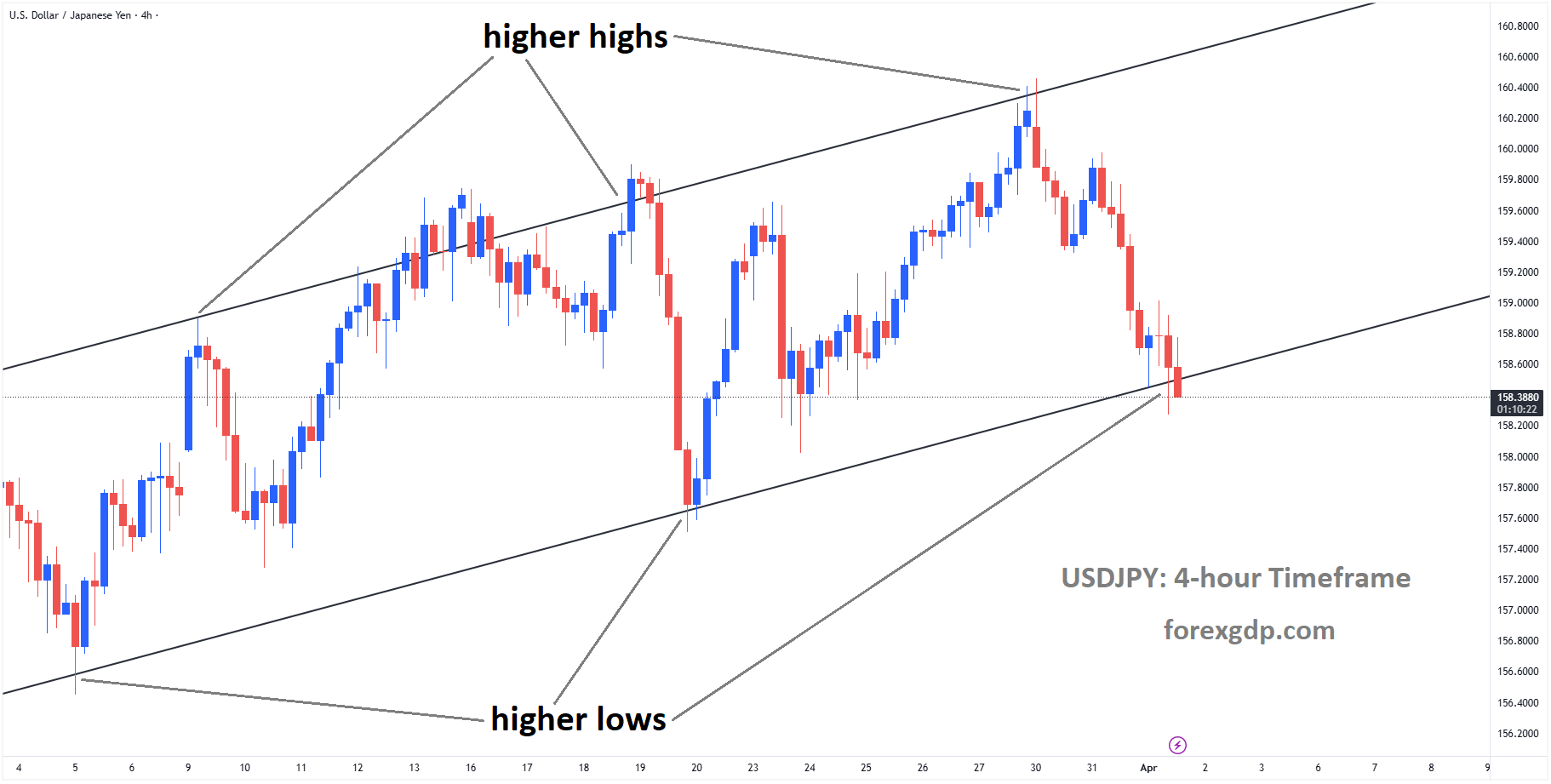
USDJPY is moving in an ascending channel, and the market has reached the higher low area of the channel
Improved Global Sentiment Weighs on the US Dollar
One of the main drivers behind the Yen’s recent strength is the shift in global risk sentiment. Markets have responded positively to signs that tensions between the United States and Iran may ease in the coming weeks. This change in tone has reduced uncertainty and encouraged investors to move away from safe-haven assets like the US Dollar.
When global tensions rise, the US Dollar often benefits because investors seek safety. However, when the outlook becomes calmer and more stable, demand for the Dollar tends to decline. This is exactly what is happening now, as hopes for a diplomatic resolution have lifted overall confidence in the markets.
Comments from US leadership suggesting that hostilities could be scaled down within a short timeframe have played a key role in this shift. As a result, the US Dollar has struggled to gain momentum, allowing the Japanese Yen to maintain its position near recent highs.
USD/JPY Remains Under Pressure Below Key Levels
The USD/JPY pair has been trading slightly lower, staying below the 159.00 level. During the day, it even touched a low point not seen in over a week before stabilizing. This movement reflects the broader trend of a weakening US Dollar combined with steady demand for the Yen.
Even though the decline is modest, it shows that sellers remain active in the market. Any attempts by the Dollar to recover have been limited so far, suggesting that the current trend may continue unless new factors emerge to shift momentum.
Strong Japanese Data Supports the Yen
Another important factor supporting the Japanese Yen is recent economic data from Japan. The Bank of Japan’s Tankan survey, which measures business confidence among large manufacturers, showed an improvement in sentiment during the first quarter.
This marks the fourth consecutive quarter of rising confidence, with the index reaching its highest level in more than two years. Such consistent improvement signals that Japan’s industrial sector is gaining strength, which can positively influence the country’s overall economic outlook.
What the Tankan Survey Means for Policy
The better-than-expected results have strengthened expectations that the Bank of Japan may slowly move toward adjusting its long-standing monetary policy. For years, Japan has maintained very loose monetary conditions to support growth. However, improving economic conditions could open the door for gradual changes.
A shift toward tighter policy, even if slow, tends to support the national currency. This is because higher interest rates or reduced stimulus can attract more investment into the country, increasing demand for the Yen.
Risks Still Exist for the Japanese Economy

Despite the positive data, there are still concerns about Japan’s economic stability. Some officials have pointed out that the Tankan survey may not fully capture the impact of ongoing global issues, particularly the situation in the Middle East.
Japan relies heavily on energy imports, much of which comes from that region. If tensions were to rise again or continue for an extended period, it could increase costs and put pressure on the Japanese economy. This could limit how much the Yen strengthens in the future.
In other words, while the current outlook appears supportive, external risks remain an important factor to watch.
Japanese Authorities Keep a Close Eye on Currency Movements
Another element influencing the market is the stance of Japanese authorities. Officials in Tokyo have recently expressed concern about excessive movements in the Yen. They have made it clear that they are prepared to take action if volatility becomes too extreme.
Why Intervention Matters
Currency intervention is when a government steps into the market to influence the value of its currency. Even the possibility of such action can impact trader behavior. In this case, warnings from officials have made traders more cautious about pushing the Yen too far in either direction.
This has helped stabilize the market to some extent, preventing sharp swings and keeping the USD/JPY pair within a relatively controlled range.
Focus Shifts to Key US Economic Reports
While global sentiment and Japanese data have driven recent movements, attention is now turning to upcoming economic reports from the United States. Two key releases are expected to play an important role in shaping market direction.
The first is the ADP private employment report, which provides insight into job growth in the private sector. The second is the ISM Manufacturing Purchasing Managers Index (PMI), a widely followed indicator of business activity in the manufacturing sector.
These reports are important because they offer clues about the health of the US economy. Strong data could support the US Dollar by reinforcing confidence in economic growth. On the other hand, weaker results could add further pressure on the currency.
Setting the Stage for the Jobs Report
The upcoming data releases are also significant because they come just before the official US employment report, often referred to as the Nonfarm Payrolls (NFP). This report is one of the most closely watched indicators in global markets.
Investors use it to assess labor market conditions and to form expectations about future policy decisions by the Federal Reserve. As a result, the ADP and ISM data are seen as early signals that can influence market sentiment ahead of the main event.
Summary
The Japanese Yen is holding steady near its recent highs as a combination of global and domestic factors shapes the currency market. Easing geopolitical tensions have reduced demand for the US Dollar, while improving business confidence in Japan has supported the Yen.
At the same time, risks linked to energy dependence and global uncertainty continue to limit how far the Yen can rise. Warnings from Japanese authorities about currency volatility have also played a role in keeping market movements in check.
With key US economic reports on the horizon, the next phase of market direction will likely depend on how these data points influence expectations for the US economy. Until then, the balance between a softer Dollar and a resilient Yen remains the central theme in the USD/JPY pair.
USDCHF tumbles below key level as Dollar struggles to hold strength
The USD/CHF currency pair has taken a noticeable turn, moving lower after recently touching higher levels. What started as a climb above 0.8040 has now shifted into a downward move, with the pair slipping below 0.7930. This change reflects a broader shift in market sentiment, where investors are showing a stronger preference for riskier assets and stepping away from the US Dollar.
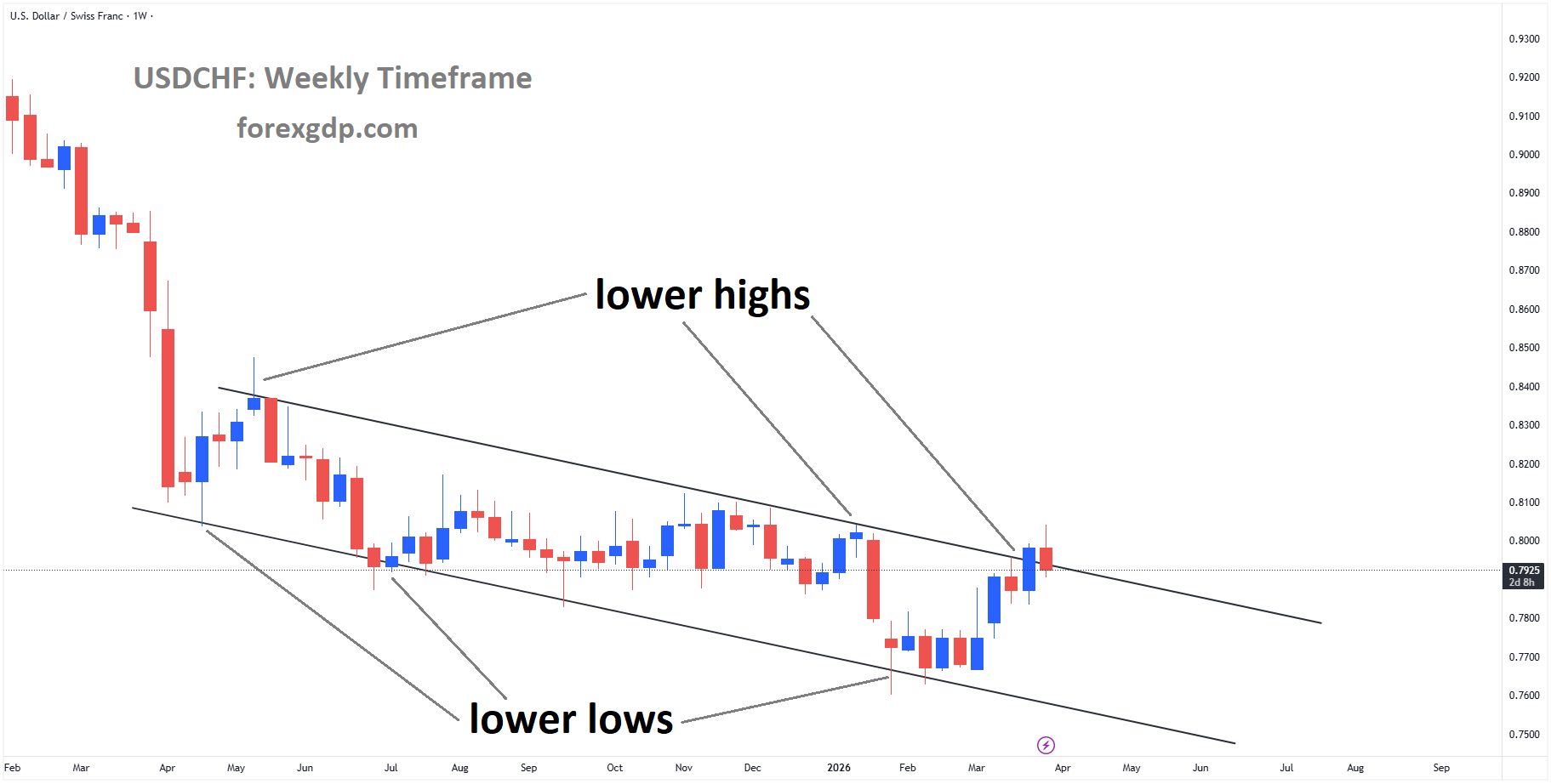
USDCHF is moving in a descending channel, and the market has reached the lower high area of the channel
At the same time, the Swiss Franc, often seen as a safe-haven currency, is gaining strength in this changing environment. As global developments unfold, especially in relation to geopolitical tensions, currency markets are reacting quickly.
Changing Market Mood Pressures the US Dollar
A key driver behind the recent decline in the US Dollar is the growing sense of optimism among investors. When traders feel more confident about global stability, they tend to move their money into assets that offer higher returns. This shift is commonly referred to as a “risk-on” environment.
In such conditions, the US Dollar often loses appeal. It is traditionally viewed as a safe-haven currency, meaning investors turn to it during times of uncertainty. However, when fears begin to fade, demand for the Dollar weakens.
Recent comments from US President Donald Trump have played a major role in shaping this sentiment. His remarks suggested that the ongoing conflict involving Iran could come to an end sooner than expected. This has reduced anxiety in the markets and encouraged investors to take on more risk.
Impact of Geopolitical Developments on Currency Markets
Geopolitical tensions have always been a powerful force in financial markets. The situation involving Iran has been closely watched by traders around the world. Any sign of escalation tends to push investors toward safer assets, while signs of de-escalation have the opposite effect.
In this case, the suggestion that the conflict could wrap up within a few weeks has created a wave of optimism. President Trump indicated that the situation might resolve regardless of whether a formal agreement is reached with Tehran. He also mentioned that the Strait of Hormuz, a critical route for global oil shipments, would reopen automatically.
This statement is important because disruptions in that region can have a wide impact on global trade and energy supply. The idea of stability returning to such a key area has helped calm markets and boost confidence.
USD/CHF Movement Reflects Shifting Sentiment
The USD/CHF pair is a clear example of how quickly currency markets respond to changes in sentiment. Just a day earlier, the pair had climbed above 0.8040, reflecting stronger demand for the Dollar. However, as optimism spread, the trend reversed sharply.
By Wednesday, the pair had fallen to around 0.7925, marking a significant drop in a short period. This move highlights how sensitive exchange rates are to news and expectations.
The Swiss Franc, while also a safe-haven currency, can sometimes behave differently depending on the situation. In this case, its strength suggests that investors are not simply abandoning safety altogether, but rather adjusting their positions based on shifting global dynamics.
Role of Investor Expectations
Markets are driven not only by current events but also by expectations about the future. The belief that the Iran conflict could end soon has influenced how investors are positioning themselves.
When traders anticipate reduced geopolitical risk, they often adjust their portfolios ahead of time. This can lead to rapid movements in currencies, as seen with the USD/CHF pair.
Additionally, the anticipation of further updates from US leadership is keeping markets alert. President Trump is expected to address the nation with more details, which could either reinforce the current optimism or introduce new uncertainty.
Technical Levels and Market Attention
As the USD/CHF pair continues to move lower, attention is turning to key areas that may influence its next steps. The pair is approaching a trendline support level near 0.7910. While many traders watch such levels closely, the broader direction will likely depend on ongoing developments in global sentiment.
If optimism continues to grow, the Dollar may remain under pressure. On the other hand, any unexpected news that raises concerns could quickly reverse the trend.
The Bigger Picture for the US Dollar

The recent decline in the US Dollar is not happening in isolation. It reflects a wider pattern seen across multiple currency pairs. When global confidence improves, the Dollar often weakens as investors seek higher returns elsewhere.
However, this does not mean the Dollar is losing its importance. It remains one of the most widely used and trusted currencies in the world. Its role as a safe haven ensures that it will continue to attract demand during times of uncertainty.
What we are seeing now is a temporary shift driven by changing expectations rather than a long-term change in the Dollar’s status.
Why the Swiss Franc Remains Strong
The Swiss Franc has long been considered a stable and reliable currency. Switzerland’s strong economy, political neutrality, and solid financial system make it attractive during uncertain times.
Even in a risk-on environment, the Franc can hold its value well. This is partly because it is backed by a reputation for stability and careful economic management.
In the current scenario, the Franc’s strength suggests that while investors are more optimistic, they are still cautious. Instead of fully abandoning safe assets, they are balancing their exposure.
What to Watch Going Forward
The next major focus for markets will be the upcoming address from US leadership. Any new information about the situation with Iran could have a significant impact on currency movements.
If the message reinforces the idea of a quick resolution, risk appetite could increase further, putting additional pressure on the Dollar. However, if new uncertainties arise, the Dollar could regain strength as investors seek safety.
Traders will also be watching how global markets react in the coming days. Currency movements are often influenced by a combination of factors, including economic data, geopolitical events, and overall market sentiment.
Final Summary
The USD/CHF pair has shifted lower as optimism spreads across global markets. The US Dollar is weakening due to a rise in risk appetite, driven largely by expectations of a quicker resolution to tensions involving Iran. At the same time, the Swiss Franc is gaining strength, reflecting its continued appeal as a stable currency.
Investor sentiment is playing a central role in this movement. As confidence grows, demand for the Dollar declines, leading to noticeable changes in exchange rates. The upcoming updates from US leadership will be crucial in determining whether this trend continues or reverses.
For now, the market remains focused on geopolitical developments and how they shape expectations. The balance between optimism and caution will continue to guide currency movements in the days ahead.
AUDJPY pushes higher near 110 on improving global risk sentiment
The AUD/JPY currency pair has been gaining attention as it continues to move upward for the second straight session. This rise reflects changing global sentiment, especially as investors respond to easing geopolitical tensions and shifting economic signals from major economies like Australia, China, and Japan.
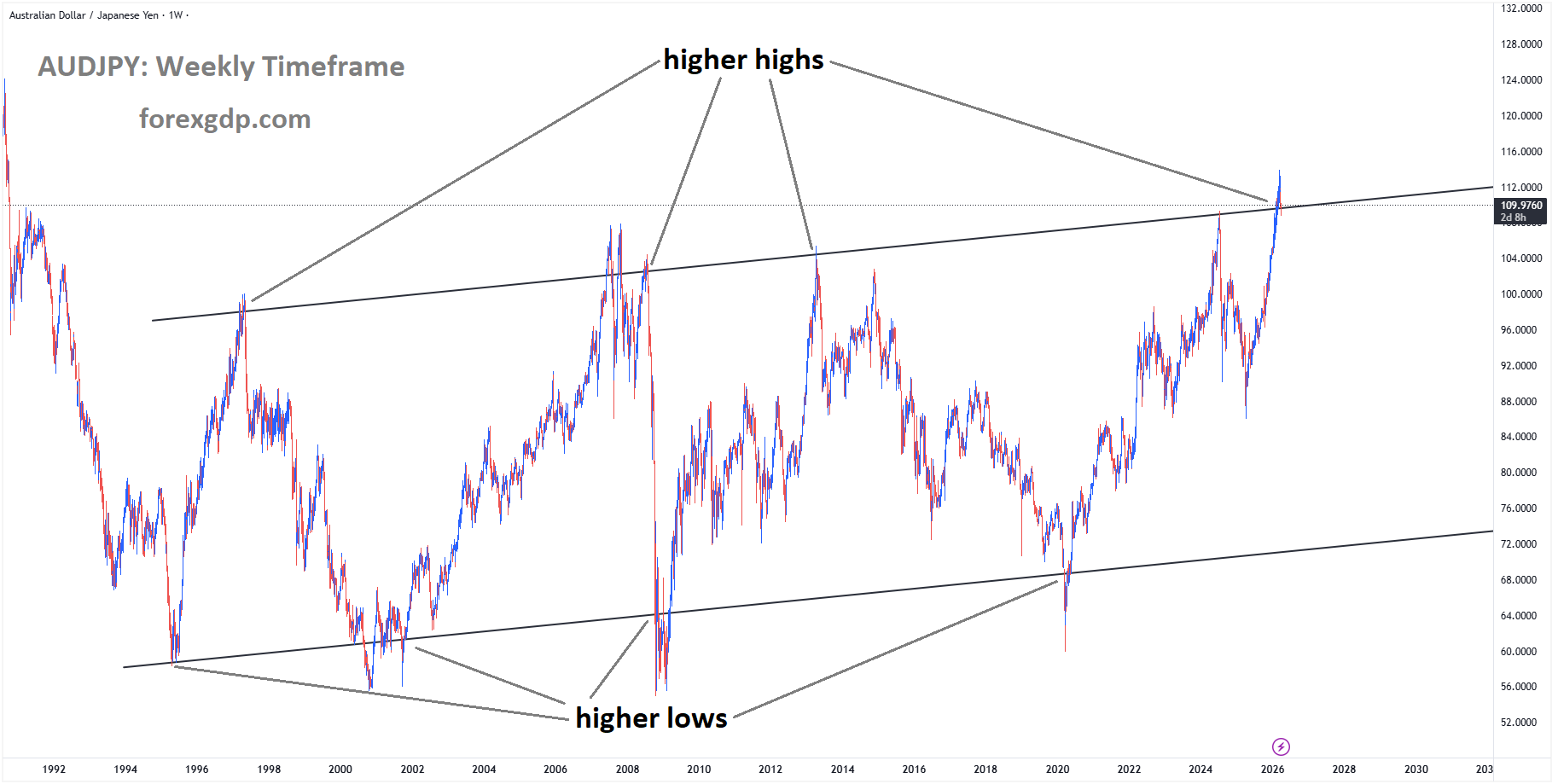
AUDJPY is moving in an ascending channel, and the market has reached a higher high area of the channel
The Australian Dollar, often seen as a risk-sensitive currency, is benefiting from improved global confidence. At the same time, developments in Japan’s economy and central bank outlook are adding another layer of influence to this currency pair.
Improved Global Sentiment Supports the Australian Dollar
One of the key drivers behind the recent strength in AUD/JPY is the reduction in safe-haven demand. When global uncertainty is high, investors typically move toward safer assets like the Japanese Yen. However, when tensions ease, they tend to shift back into riskier assets such as the Australian Dollar.
Recent developments in the Middle East have played a major role in this shift. There are growing signs that tensions in the region may begin to calm. Reports suggest that the United States could withdraw from its involvement in the Iran conflict within a few weeks. This move signals a potential step toward reducing conflict in the region.
At the same time, Iran’s leadership has shown openness to lowering tensions, provided certain conditions are met. This combination of signals has raised hopes for a possible peace agreement or at least a reduction in hostilities. As a result, investor confidence has improved, supporting currencies like the AUD.
Energy Prices Continue to Influence Australia’s Outlook
Despite the positive sentiment, there are still challenges for Australia’s economy. One of the biggest concerns is the impact of higher energy prices, which are closely linked to global conflicts, especially in the Middle East.
Rising energy costs can lead to higher inflation, which makes it more difficult for central banks to manage economic stability. In Australia, this has created uncertainty around the Reserve Bank of Australia’s (RBA) future decisions.
There is growing expectation that the RBA may continue raising interest rates to control inflation. Market participants are already factoring in a strong possibility of another rate hike in the near future. Higher interest rates generally support a currency because they offer better returns for investors.
China’s Economic Data Adds a Mixed Signal
China plays a crucial role in Australia’s economy, as it is one of its largest trading partners. Any changes in China’s economic activity can directly impact demand for Australian exports.
Recent data from China shows a slight slowdown in manufacturing activity. The Purchasing Managers’ Index (PMI), which measures factory performance, declined compared to the previous month and came in below expectations. This suggests that rising energy costs may be affecting production and business confidence in China.
A slowdown in China can limit demand for Australian goods, which may put some pressure on the Australian Dollar. However, the impact appears to be balanced by other positive factors, such as rising commodity prices.
Strong Commodity Prices Boost Australia’s Position
Australia is a major exporter of commodities like iron ore and coal. When commodity prices rise, the country’s economy generally benefits.
Recent data shows a sharp increase in Australia’s commodity index, marking one of the strongest yearly gains in recent times. This surge provides support to the Australian Dollar, helping it stay resilient even when other economic indicators show mixed signals.
Higher commodity prices also contribute to inflation, which ties back to expectations of further interest rate increases by the RBA. This combination of strong exports and potential rate hikes creates a supportive environment for the AUD.
Japan’s Economic Strength Shapes Yen Movement
On the other side of the AUD/JPY pair, Japan’s economic data has also been noteworthy. The country’s Tankan Manufacturing Index, a key measure of business confidence among large manufacturers, has continued to improve.
The index has now risen for four consecutive quarters, indicating steady growth in Japan’s manufacturing sector. This positive trend suggests that businesses are becoming more confident about future economic conditions.
Bank of Japan Maintains Gradual Policy Shift
The improving economic outlook in Japan supports the Bank of Japan’s approach to gradually adjusting its monetary policy. For many years, Japan maintained very low interest rates to stimulate growth. However, with stronger economic data, the central bank is slowly moving toward tightening its policy.
A gradual increase in interest rates can strengthen the Japanese Yen over time. This creates a balancing effect in the AUD/JPY pair, as both currencies receive support from their respective economic conditions.
Balancing Forces Drive AUD/JPY Movement
The current movement in AUD/JPY reflects a balance between multiple global factors. On one side, improved risk sentiment and strong commodity prices are supporting the Australian Dollar. On the other, positive economic data and a shifting policy stance are supporting the Japanese Yen.
This balance makes the currency pair sensitive to changes in global developments. Any new updates related to geopolitical tensions, energy prices, or economic data could quickly influence its direction.
What Investors Are Watching Next

Several key factors will likely shape the future movement of AUD/JPY:
Geopolitical Developments
Any confirmation of reduced tensions in the Middle East could further boost risk appetite and support the Australian Dollar.
Central Bank Decisions
Investors will closely watch upcoming decisions from both the Reserve Bank of Australia and the Bank of Japan. Changes in interest rates or policy signals can have a direct impact on currency values.
China’s Economic Performance
Since China is a major trading partner for Australia, its economic health remains a crucial factor. Stronger data could support the AUD, while weaker data may limit gains.
Energy and Commodity Prices
Fluctuations in global energy markets will continue to influence inflation and economic expectations, especially in Australia.
Final Thoughts
The recent rise in AUD/JPY highlights how interconnected global markets are. A mix of easing geopolitical tensions, strong commodity performance, and improving economic data has created a supportive environment for both currencies.
While the Australian Dollar is benefiting from increased risk appetite and rising export values, the Japanese Yen is gaining strength from steady economic improvement and gradual policy changes.
Going forward, the direction of this currency pair will depend on how these factors evolve. Investors will need to stay alert to global developments, as even small changes in sentiment or data can lead to noticeable shifts in the market.
Don’t trade all the time, trade forex only at the confirmed trade setups
Get more confirmed trade signals at premium or supreme – Click here to get more signals, 2200%, 800% growth in Real Live USD trading account of our users – click here to see , or If you want to get FREE Trial signals, You can Join FREE Signals Now!