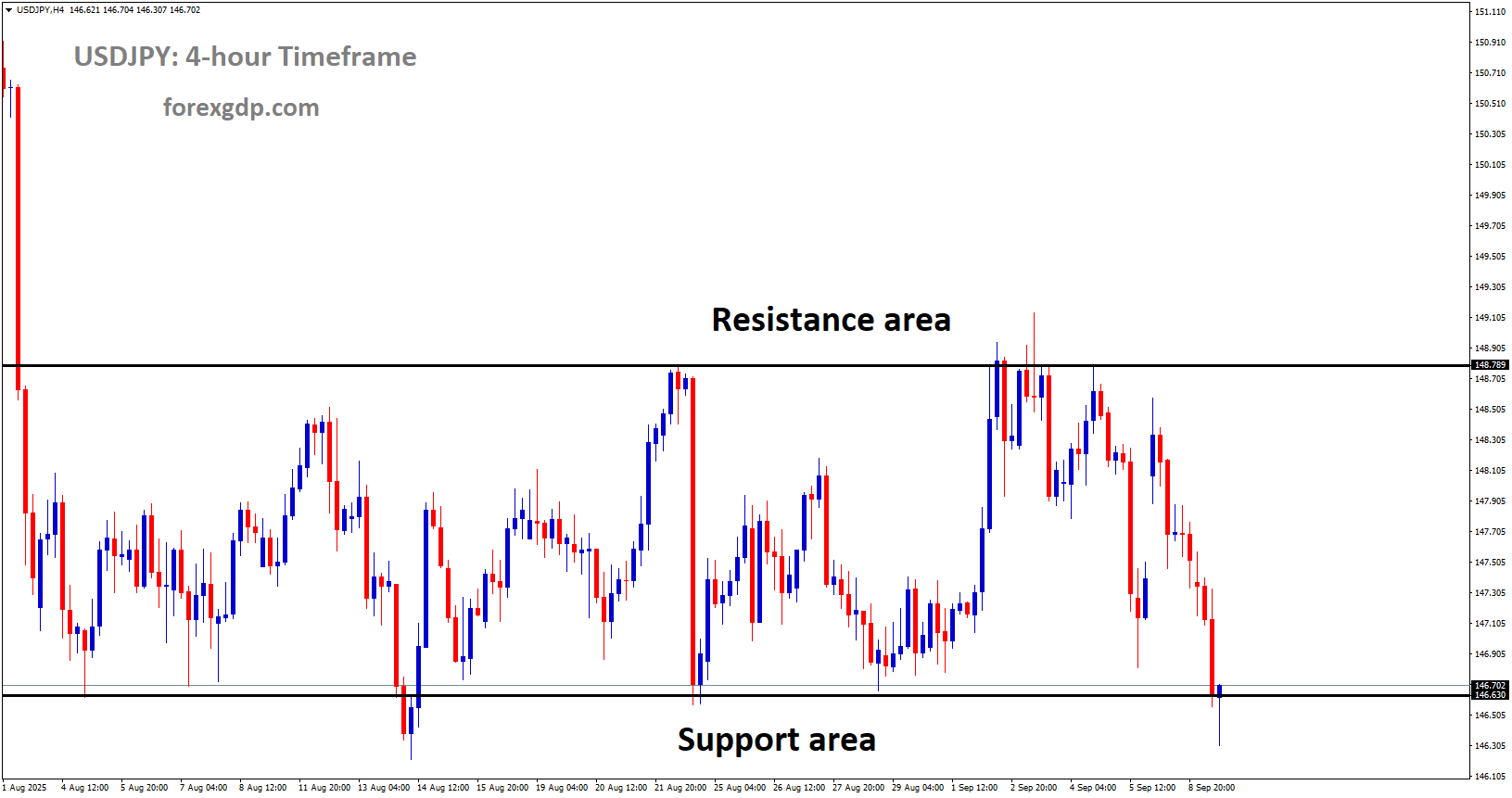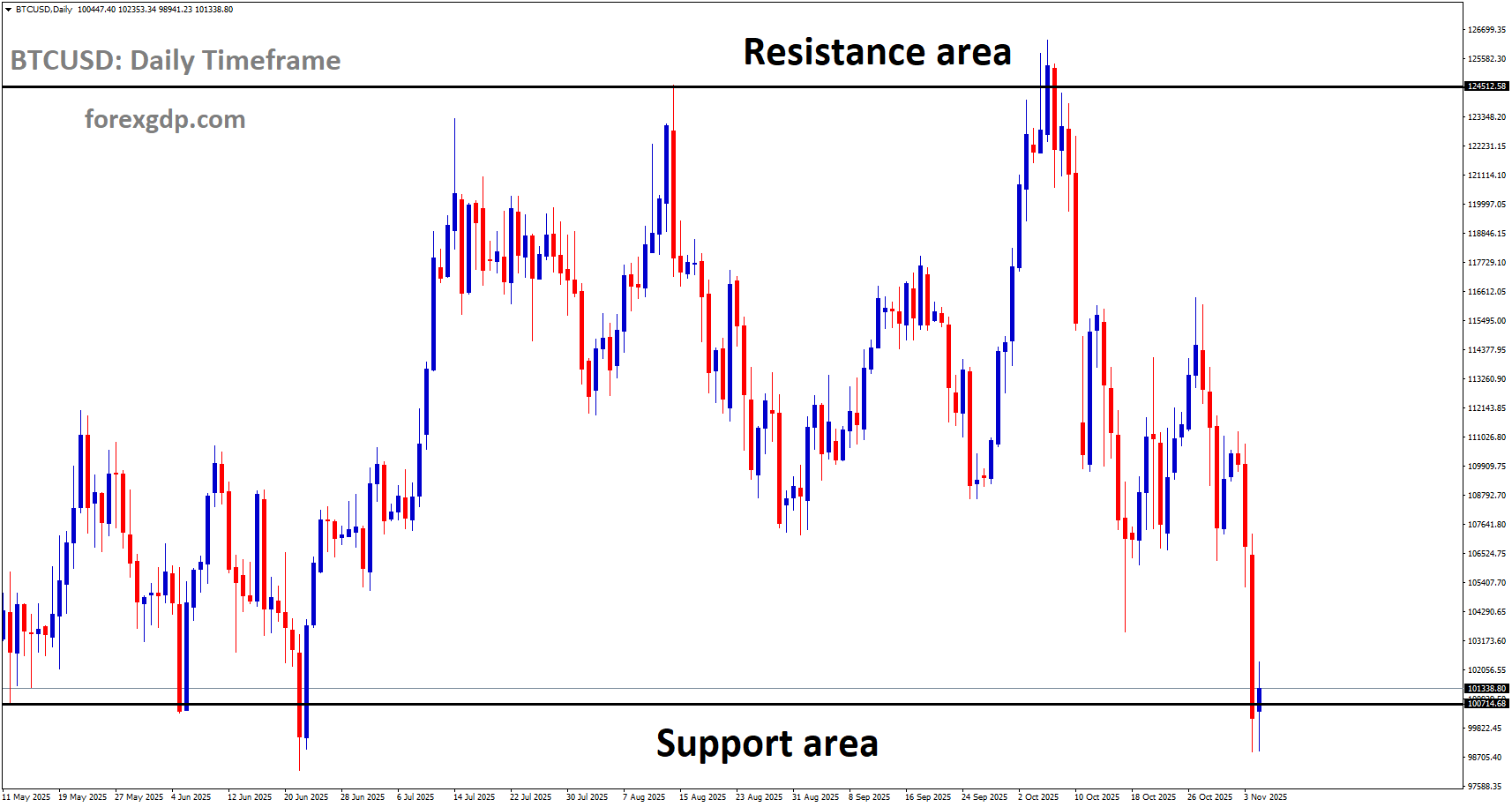
BTCUSD is moving in a box pattern, and the market has reached the support area of the pattern
BTCUSD Analysis: Are Historical Cycles About to Shape the Next Big Move?
The crypto world is known for its wild ups and downs, but this time, things feel different. The recent 2.4% decline in the total market value over just 24 hours has sent shockwaves across the entire crypto community. With the total capitalization now around $3.3 trillion — the lowest since early July — many investors are wondering whether this is a temporary dip or the beginning of something more serious.
While some remain optimistic that this is just another market correction, others see signs of a broader, more sustained bear phase. Let’s dive deep into what’s happening, why confidence is fading, and what factors are driving this sharp downturn.
The Market’s Sudden Shift: What’s Really Going On
For months, the crypto market appeared to be in solid shape. Prices were relatively stable, new investors were joining in, and institutional interest was at a healthy level. But in recent weeks, momentum has completely flipped.
When the overall market falls more than 20% from its recent highs, that’s often considered the start of a bear market — and that’s exactly where we are now. Historically, cryptocurrencies move in cycles that tend to repeat every few years. Even though some experts claimed those cycles had ended, current trends show they still play a big role.
The sharp selling pressure that began in October isn’t just a coincidence. It fits right into these repeating cycles — the market hits a peak, investors take profits, and confidence starts to fade. The result? Widespread panic selling and declining prices across nearly all major coins.
Bitcoin Takes Center Stage — But Not in a Good Way
Whenever crypto prices move sharply, Bitcoin is always at the heart of the story. Over the past few weeks, Bitcoin has struggled to hold its ground. It’s dipped into the five-digit range multiple times, testing investor patience and market confidence.
Bitcoin has historically served as a key indicator for the broader market. When it weakens, other digital currencies tend to follow. Recently, the world’s largest cryptocurrency has faced strong downward pressure, suggesting that the market is entering a serious testing phase.
While there’s still a slim chance of a short-term rebound — especially if market sentiment shifts — the overall picture looks increasingly challenging. The coming weeks could determine whether Bitcoin stabilizes or continues to slide further.
Behind the Drop: The Real Forces Driving the Decline
1. Long-Term Holders Are Selling
One of the biggest warning signs comes from the behavior of early investors — the so-called “whales” who have been holding Bitcoin for years. According to data from WeRate, long-term holders have sold around 400,000 BTC in the past month, which accounts for roughly 2% of Bitcoin’s total supply.
This kind of sell-off is significant. When seasoned investors start liquidating their holdings, it often signals a lack of confidence in the near-term market outlook. It also puts additional downward pressure on prices since it floods the market with supply.
2. ETF Outflows Add More Weight
Another major contributor is the steady outflow of funds from spot Bitcoin ETFs. These investment vehicles were once seen as a bridge for traditional investors to enter the crypto market safely. But as prices fell, investors started pulling out their money.

This decline in ETF inflows indicates that institutional interest — which once fueled Bitcoin’s massive growth — is weakening. Without strong institutional backing, prices are more vulnerable to sharp declines triggered by retail selling.
3. U.S. Economic Uncertainty and Government Issues
Adding to the uncertainty is the ongoing U.S. government shutdown, which has now dragged on for more than a month. This has created anxiety in both traditional and digital markets. Investors typically prefer stable economic environments, and when government operations are stalled, confidence in riskier assets like cryptocurrencies tends to drop.
Additionally, the Coinbase premium — a key metric showing the price difference between Coinbase and other exchanges — remains in negative territory. This means U.S.-based traders are selling more aggressively than buyers are stepping in. In short, selling pressure from American investors continues to weigh heavily on Bitcoin.
4. Stablecoin Outflows Reflect Risk Aversion
Perhaps the most telling sign of all is the record outflow of stablecoins from exchanges. Normally, investors hold stablecoins on trading platforms when they plan to reinvest in crypto soon. When these funds move off exchanges, it means traders are pulling their capital back into traditional or safer assets, such as dollars or bonds.
This shift shows that many investors are actively moving away from high-risk positions and seeking more predictable, stable investments.
5. Institutional Demand Is Slowing Down
According to Capriole, demand from institutional investors has declined for the first time in seven months. Net purchases have dropped below Bitcoin’s daily issuance rate, meaning fewer large investors are accumulating compared to the new supply entering circulation.
This slowdown is concerning because institutional players are often viewed as the stabilizing force of the crypto market. When they step back, volatility tends to rise, and prices can fall much faster.
The Changing Face of Crypto Confidence
Even industry veterans are expressing doubt about Bitcoin’s growth potential. Peter Thiel, the billionaire and former CEO of PayPal, recently commented that Bitcoin has lost much of its early promise due to increasing control by large financial institutions and government oversight.
This shift in sentiment reflects a broader reality: the more mainstream crypto becomes, the less freedom and volatility it offers — both of which were originally part of its appeal. Many early adopters saw crypto as a decentralized alternative to traditional finance, but now, that vision seems to be fading as regulation and big money take over.
New Moves in the Market: A Ray of Hope?
Amid all this negativity, not everything is bleak. Some companies are still taking bold steps to strengthen their position in the digital asset space. For instance, Strategy, a European-based firm, has announced plans to launch an initial public offering (IPO) on the European stock market.
The company plans to issue 3.5 million preferred shares, with the goal of using the funds to buy Bitcoin and increase its working capital. Moves like this suggest that while short-term sentiment may be weak, there are still long-term believers investing in the potential of digital currencies.
A Broader Look at the Crypto Landscape
The current downturn is a stark reminder of how quickly sentiment can shift in the crypto market. A few months ago, optimism was high and prices seemed unstoppable. Now, fear and uncertainty dominate headlines.
But history has shown time and again that crypto markets are cyclical. Every major drop has been followed — eventually — by a recovery. Whether this decline marks the start of another extended bear phase or just a temporary correction remains to be seen. What’s clear is that investors are becoming more cautious and selective with their strategies.
Final Summary
The crypto market’s recent decline reflects a combination of psychological, institutional, and macroeconomic factors. Long-term holders are cashing out, institutional interest is cooling, and global economic pressures are pushing investors toward safer assets.
Bitcoin, the face of the market, continues to struggle as selling pressure mounts and confidence weakens. Yet, opportunities still exist for those who understand that every dip in the crypto world has historically paved the way for new growth phases.
While fear dominates for now, the long-term story of cryptocurrency is far from over. The market may be facing one of its toughest tests yet — but as seasoned investors know, true innovation rarely follows a straight line.
EURUSD Flatlines as Eurozone Services Expansion Fails to Lift Market Sentiment
The Euro has been struggling to regain strength against the US Dollar, with investors keeping a cautious eye on global markets. While some recent economic data from Europe looked promising, the overall market mood remains gloomy. Let’s break down what’s driving this tension between the Euro and the Dollar, and what factors are shaping investor sentiment across both sides of the Atlantic.
Global Uncertainty Keeps the Euro Under Pressure
The Euro has been trading weak, unable to find support amid widespread concerns about global growth and economic stability. As investors move their funds toward safer assets, the US Dollar continues to benefit from its safe-haven status.
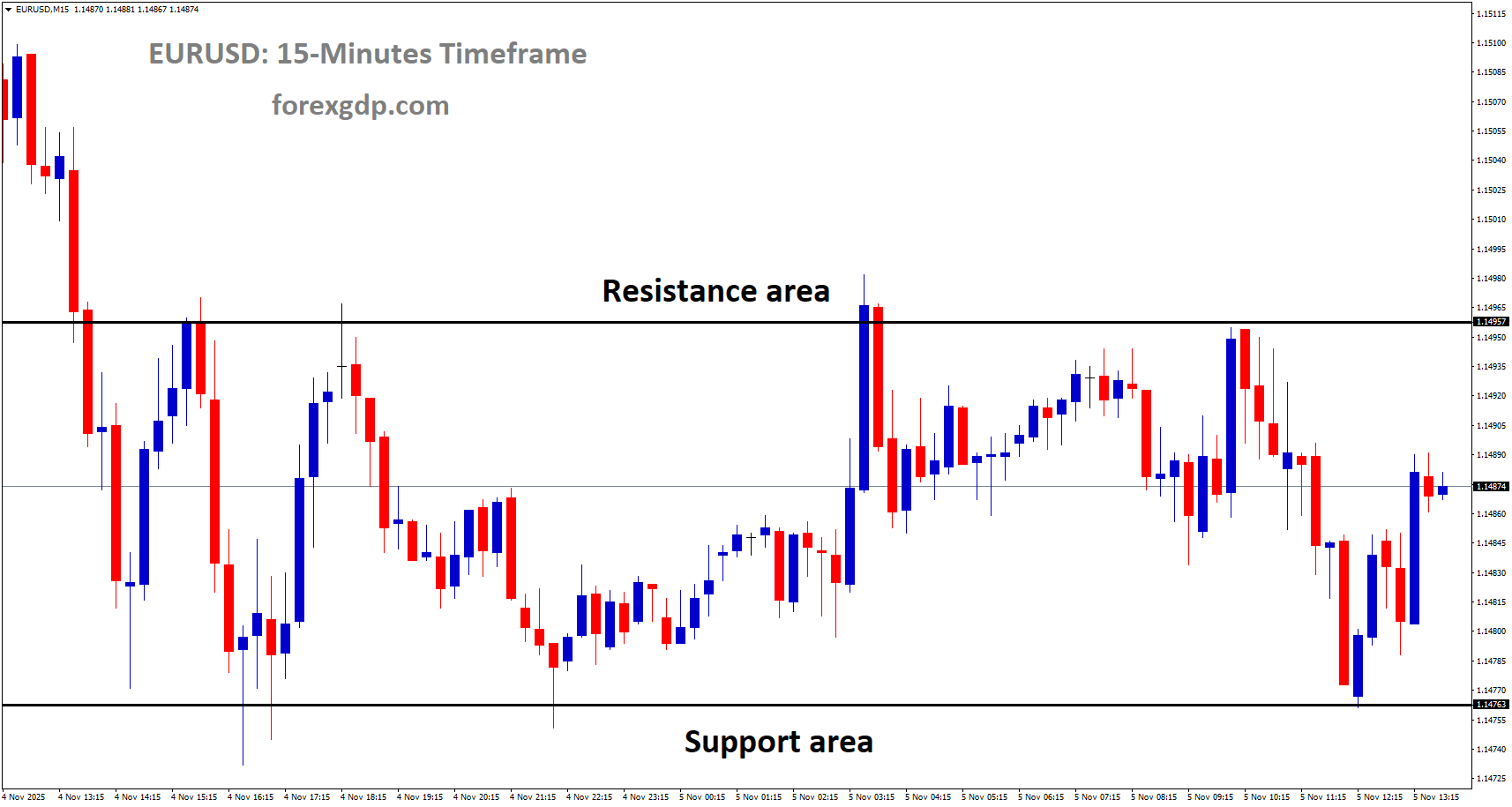
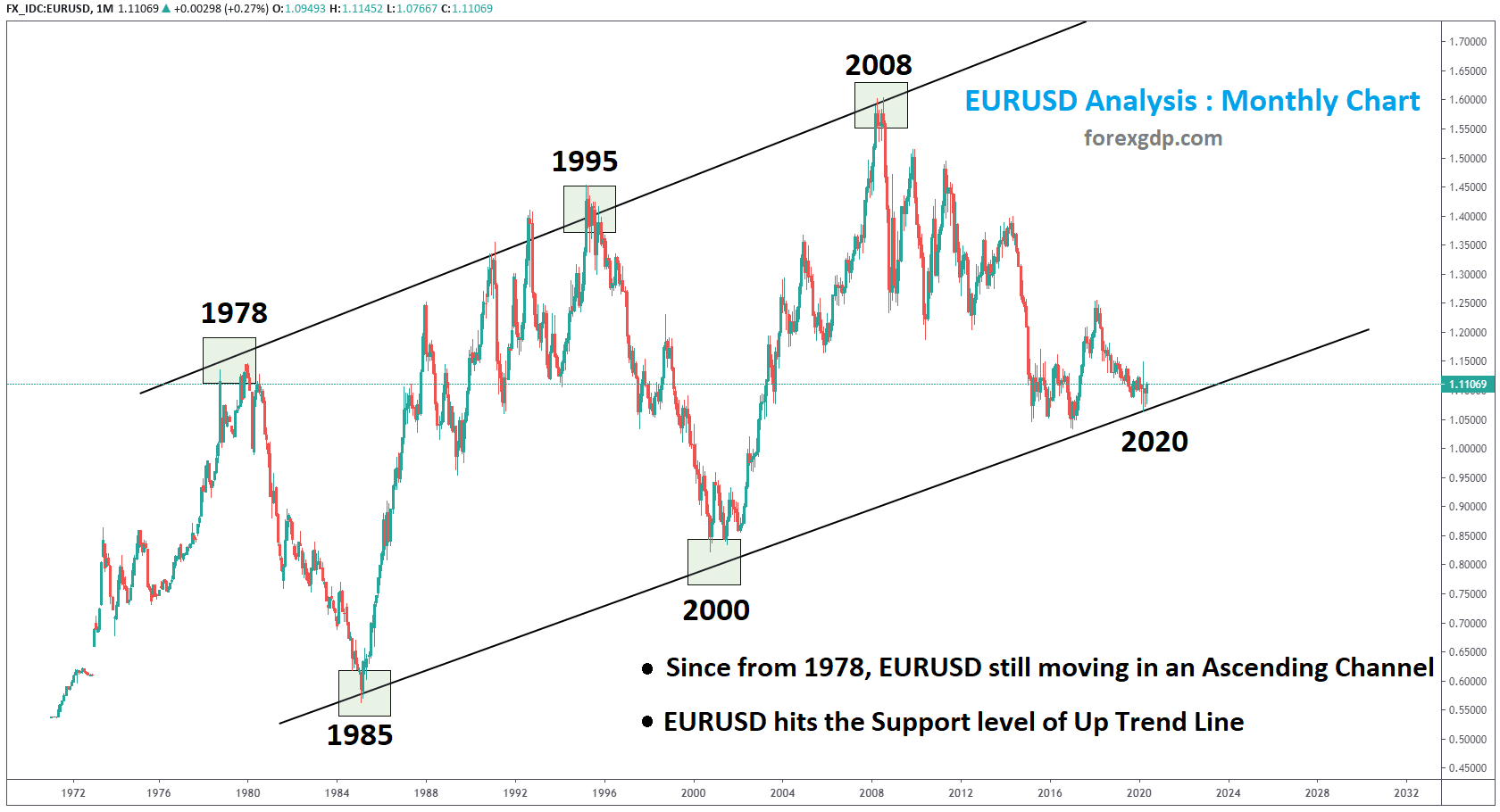
EURUSD is moving in a box pattern, and the market has rebounded from the support area of the pattern
Despite positive signs from European service sectors, the broader sentiment remains negative. The Eurozone’s latest data showed improvement in business activity, particularly in Germany, but traders and investors seem hesitant to take that as a sign of recovery. The fear of prolonged economic stagnation and uncertainty surrounding US fiscal developments has kept market confidence subdued.
Europe’s Service Sector: A Small Spark in the Gloom
Recent reports indicated that both Germany and the wider Eurozone experienced stronger-than-expected growth in their services sectors. In Germany, activity rose to its highest level in over a year, suggesting that domestic demand is holding up better than many had anticipated. Across the Eurozone, service providers also saw moderate expansion, showing that the region’s largest economies still have some resilience left.
However, this growth hasn’t translated into optimism for the Euro. Investors are still cautious, particularly as the region continues to face sluggish industrial output and ongoing price deflation in some sectors. It’s clear that while service-based industries are doing their part, they can’t fully offset the broader slowdown across Europe’s economy.
The US Dollar Gains Strength from Caution and Policy Expectations
Across the Atlantic, the US Dollar continues to gain strength as global investors seek safety amid uncertainty. With major stock markets under pressure and concerns growing about economic slowdowns in multiple regions, the Dollar has once again become the preferred asset for many.
Adding to this, the US government’s extended shutdown has become a key talking point. It has now lasted several weeks, raising concerns about its potential economic impact. However, it’s also created more demand for the Dollar, as investors expect the US economy to eventually rebound strongly once political tensions ease.
Fed Policy in Focus
One of the main reasons investors are flocking to the Dollar is the ongoing debate over the Federal Reserve’s monetary policy. The Fed has been sending mixed signals lately—while some policymakers hint at possible easing in the months ahead, others maintain a cautious tone, emphasizing inflation concerns and the need for patience before adjusting rates again.
This uncertainty around future policy moves has led to increased market volatility. However, because the Dollar tends to perform well during uncertain times, these developments have only strengthened it further.
Key Economic Reports Fuel the Market Mood
In both the US and the Eurozone, traders are paying close attention to fresh economic data for clues about what lies ahead.
Eurozone’s Economic Pulse

In Europe, the recent data on factory orders and service sector activity have painted a mixed picture. German factory orders saw a modest increase after a previous decline, suggesting that parts of the manufacturing sector are stabilizing. But the overall tone remains cautious, as year-on-year comparisons still show contraction.
At the same time, inflation pressures across the Eurozone appear to be cooling, which has sparked fresh discussions about how the European Central Bank (ECB) will handle its monetary policy. A prolonged period of weak inflation could force the ECB to maintain a more accommodative stance for longer, which might weigh further on the Euro.
US Employment and Services Data Under the Spotlight
In the United States, attention has shifted toward employment and services data. The ADP Employment Report and ISM Services Index are two closely watched indicators that give insight into the health of the economy.
The ADP report, which measures private-sector job growth, is expected to show only modest improvement compared to the previous month. This adds to the perception that the labor market might be losing momentum, even though it remains relatively strong compared to other major economies.
Meanwhile, the ISM Services Index is anticipated to show a slight rebound, indicating steady—though not exceptional—growth in one of the US economy’s most important sectors. Together, these reports could influence how investors interpret the Fed’s next policy moves.
Why the Market Mood Remains Cautious
Even though there are glimpses of improvement in certain economic indicators, overall confidence remains fragile. Global markets have been swinging between optimism and fear, and this unpredictability makes investors more defensive in their choices.
The continuing concerns about political gridlock in the US, slower global trade, and inflation uncertainties have all contributed to a “wait-and-see” environment. Traders are reluctant to take large positions, especially in riskier assets like the Euro, until there is clearer direction from policymakers or more stable market signals.
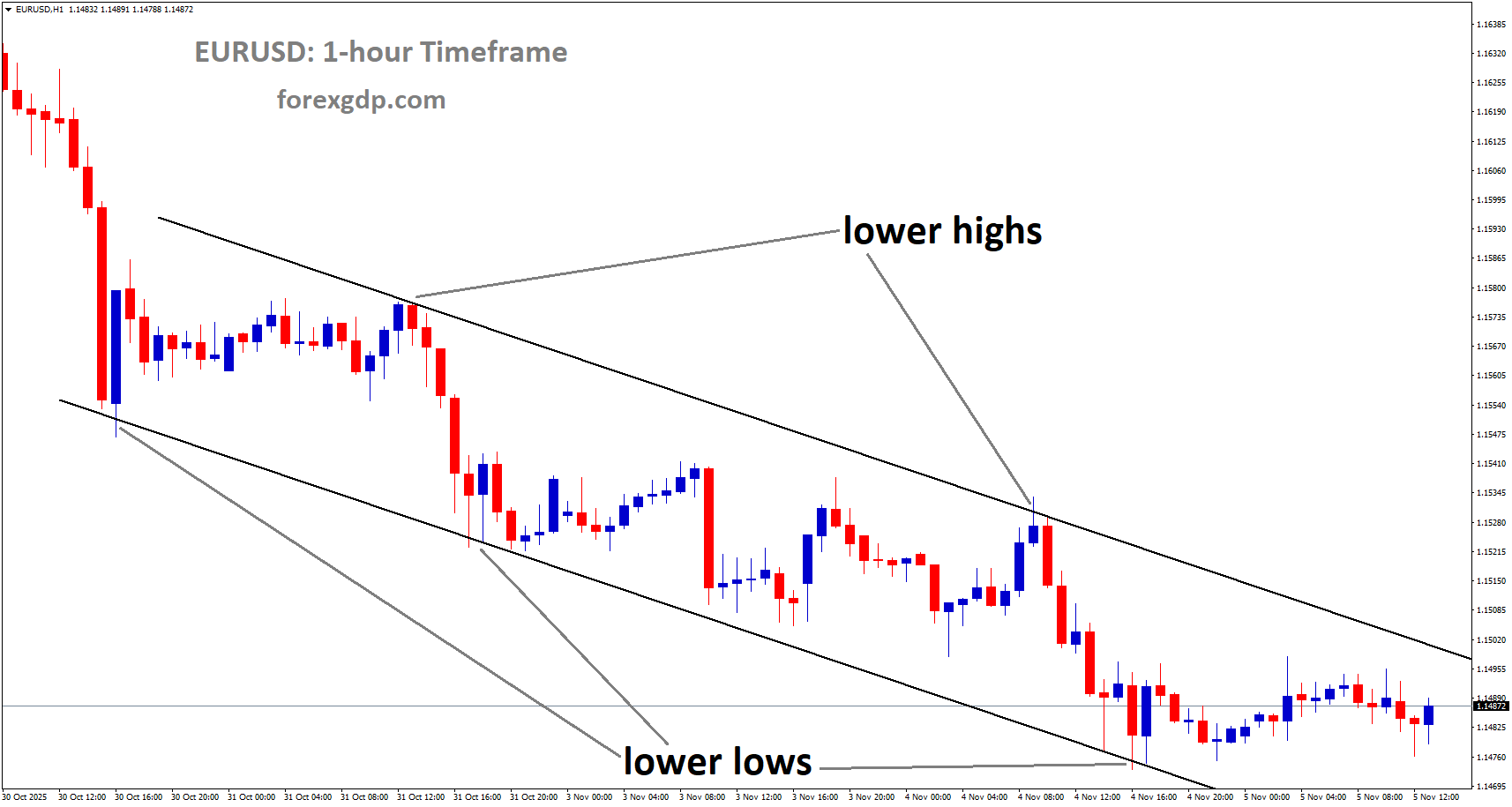
EURUSD is moving in a downtrend channel, and the market has rebounded from the lower low area of the channel
In simple terms, the global financial atmosphere feels tense. Each piece of data is being closely examined, not for what it says about the present, but for what it might hint about the future.
Final Summary
The Euro’s struggle against the US Dollar isn’t just about numbers—it’s about sentiment, confidence, and the tug-of-war between risk and safety. While Europe’s service sectors are showing encouraging signs of life, investors remain cautious due to ongoing global uncertainty and differing central bank strategies.
The US Dollar, on the other hand, continues to benefit from its reputation as a safe haven during turbulent times. With political tensions in the US and mixed messages from the Federal Reserve, markets are likely to remain volatile in the near term.
For now, the Euro’s path will depend largely on whether optimism about European recovery can outweigh fears of prolonged stagnation. Until then, traders seem content to play it safe—keeping one foot firmly in the Dollar’s corner while waiting for clearer signals about the world’s economic direction.
GBPUSD Strengthens Slightly with Focus Turning to US Labor Figures
The British Pound is showing mild gains against the US Dollar as the mid-week trading session begins in Europe. The movement in the GBP/USD pair reflects a cautious optimism in the market as traders balance between UK fiscal expectations and upcoming US economic data. The currency pair has seen a modest lift supported by a slightly weaker US Dollar, but the momentum remains uncertain as major economic announcements approach.
UK Budget Expectations Stir Market Sentiment
The spotlight this week is firmly on UK Finance Minister Rachel Reeves and her upcoming Autumn Budget. Reeves has been making headlines after addressing growing speculation about potential tax hikes. Her latest remarks have made it clear that changes in taxation could be on the way as part of the government’s efforts to stabilize public finances.
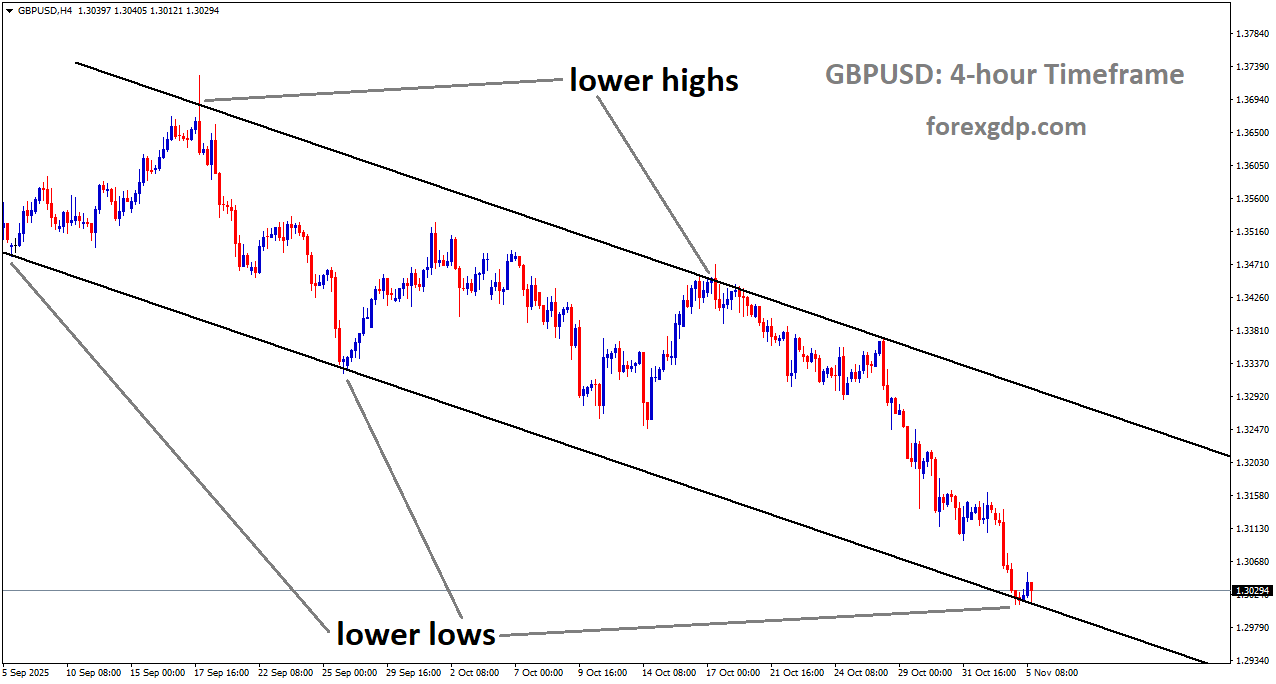
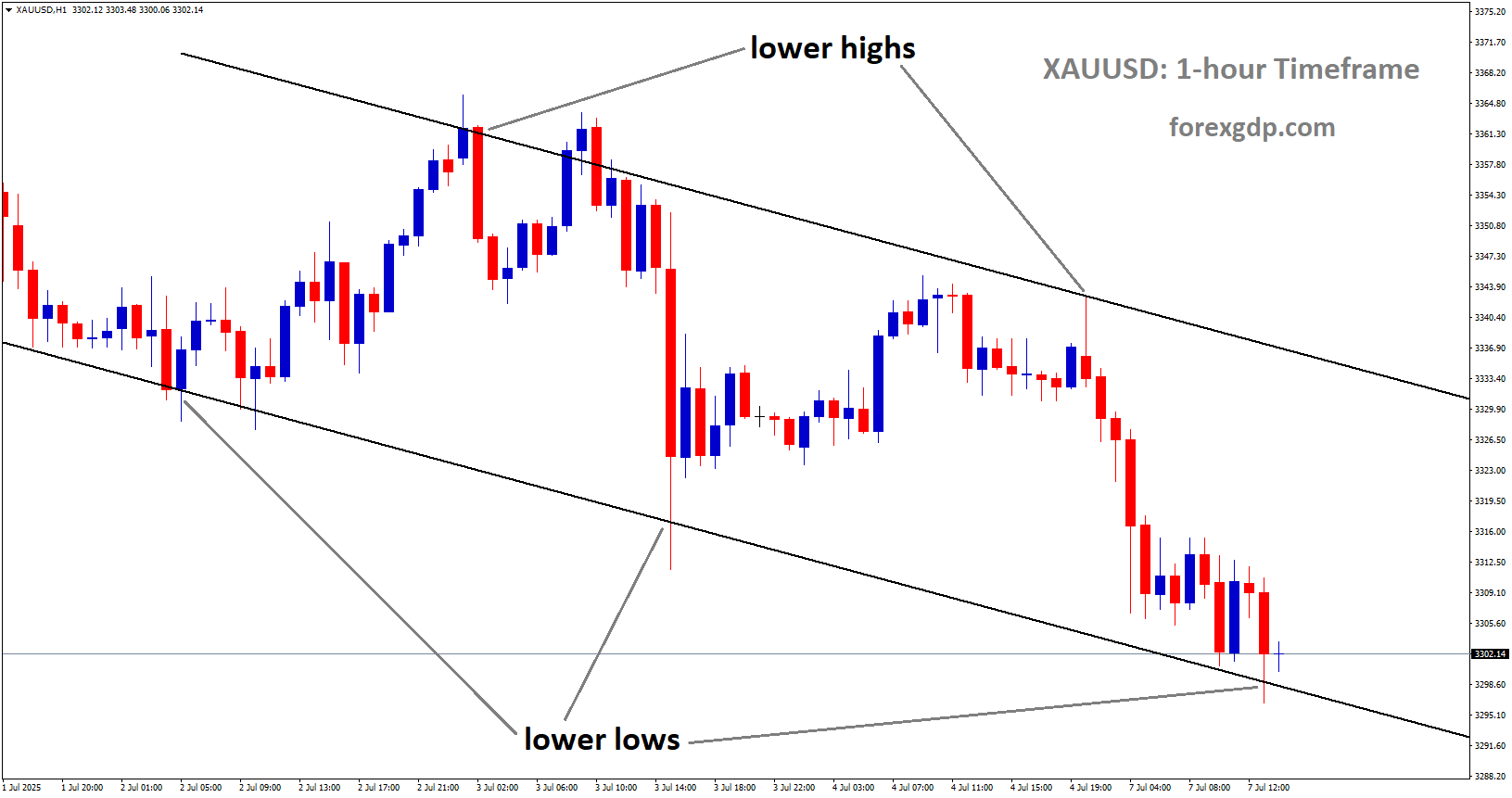
GBPUSD is moving in a downtrend channel, and the market has reached the lower low area of the channel
Focus on Fiscal Discipline
Reeves emphasized that her fiscal rules are “iron-clad,” signaling a firm commitment to responsible budgeting. According to reports, she and her team are exploring over a hundred possible options related to tax and spending reforms. Many of these proposals are believed to target the upper tier of earners, aiming to generate additional government revenue without burdening middle and lower-income groups.
This strategy, while aimed at maintaining long-term economic health, has made investors a bit cautious. Markets often respond nervously to talk of tax increases, as they can affect consumer spending and corporate profitability. As a result, traders are taking a watchful approach ahead of the official announcement.
Possible Impact on the Pound
The anticipation surrounding the Autumn Budget has kept the Pound in a tight trading range. While optimism exists due to the government’s apparent commitment to fiscal discipline, uncertainty about the details of the upcoming policy changes limits enthusiasm. Any unexpected tax decisions could trigger volatility in the currency markets, particularly if they are perceived as growth-restrictive.
US Economic Reports Could Shift Momentum
Across the Atlantic, traders are preparing for a series of key US economic releases that could influence short-term market direction. Among these are the private payroll numbers and the ISM Services PMI for October, both set to be released later today.
Why the US Data Matters
The US economy continues to play a pivotal role in shaping global market sentiment. Stronger-than-expected data often boosts the US Dollar, as it signals economic resilience and supports the possibility of the Federal Reserve maintaining tighter monetary policy for longer.
On the other hand, weaker readings from either the payroll report or the PMI could weigh on the Dollar, giving a temporary advantage to the Pound. For GBP/USD traders, this means the upcoming data could act as a short-term catalyst for movement after a relatively quiet start to the week.
Traders Eye the ADP Payroll Figures
The ADP private employment report is a closely watched indicator that offers early insight into the broader US labor market. After a previous month showing job losses, investors are hoping for signs of stabilization. Any rebound in hiring numbers could strengthen the Dollar, while continued weakness would likely cap its gains.
Given that both the UK and the US are navigating uncertain economic landscapes, currency traders are focusing more on data-driven clues rather than purely speculative positioning.
Bank of England’s Upcoming Decision
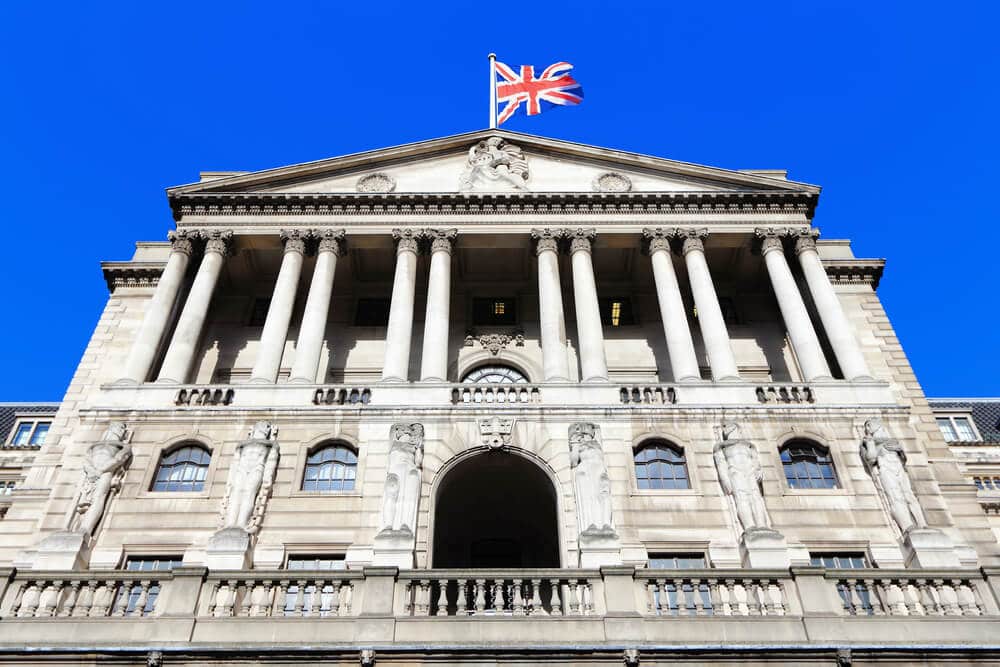
The Bank of England (BoE) is another key player in this week’s narrative. The central bank is expected to maintain its current interest rate at 4.0% during its upcoming policy meeting. However, market observers note that the decision may be a close call, given the delicate balance between economic slowdown risks and persistent inflation concerns.
Waiting for Fiscal Clarity
One reason the BoE might hold off on any immediate rate changes is the upcoming UK Budget announcement. Monetary policymakers may prefer to assess the government’s fiscal direction before adjusting their stance. If Reeves’ proposed measures significantly influence public spending or taxation, it could alter inflation expectations and future rate decisions.
For now, traders expect the BoE to maintain a cautious tone, emphasizing its readiness to act if inflationary pressures resurface. The combination of fiscal tightening and steady interest rates could help the Pound stabilize, provided global conditions remain supportive.
Broader Market Mood and Outlook
Global markets have also been dealing with a mix of uncertainty and fatigue following extended periods of volatility. The recent US government shutdown added to the confusion by delaying the release of several important data sets, leaving traders without clear direction. With macroeconomic reports gradually resuming, investors now have more material to base their strategies on.
The GBP/USD pair remains sensitive to shifts in risk sentiment, with traders closely tracking political and economic developments on both sides of the Atlantic. While near-term fluctuations are likely, the broader outlook for the Pound may depend heavily on how effectively the UK government balances its fiscal plans with the country’s growth ambitions.
What Traders Are Watching Next
Over the coming days, attention will likely stay fixed on three major factors:
-
UK Fiscal Policy Announcements: Any details about taxation or spending changes could immediately impact market sentiment and the Pound’s strength.
-
US Economic Data Performance: The upcoming employment and service-sector reports will set the tone for the Dollar’s short-term direction.
-
BoE Policy Communication: Investors will be watching closely for any hints about future rate decisions or shifts in the central bank’s inflation outlook.
If the data from the US disappoints and the UK’s budget approach is viewed as stable and responsible, GBP/USD could maintain its upward bias. However, stronger US numbers or aggressive UK tax measures could quickly reverse that momentum.
Final Summary
The British Pound’s recent performance reflects a market walking a fine line between optimism and caution. Traders are encouraged by signs of fiscal responsibility from the UK government but remain wary of potential tax changes that could curb growth. Meanwhile, the US Dollar’s movements will hinge on the strength of upcoming labor and services data.
As the week unfolds, both economic and political developments are set to play pivotal roles in shaping the next phase of the GBP/USD trend. For now, traders are adopting a wait-and-see approach, balancing expectations between UK fiscal decisions and the broader direction of the US economy.
The coming days promise more clarity — and potentially more volatility — as investors digest the results of these critical announcements.
USDJPY struggles to recover as traders seek refuge in the Yen
The USD/JPY currency pair has been under pressure lately, extending its decline for the second straight day. The Japanese Yen (JPY) has gained strength as investors seek safety during a wave of global market uncertainty. Concerns over inflated valuations in technology sectors and warnings from financial leaders have pushed traders to move away from riskier assets. As a result, the Yen, often considered a safe-haven currency, is once again in demand.
This shift in sentiment comes as Japan’s Finance Minister Satsuki Katayama reaffirmed that the government remains vigilant about sudden fluctuations in the foreign exchange market. Her remarks highlight Japan’s growing concern over potential volatility in its currency markets.
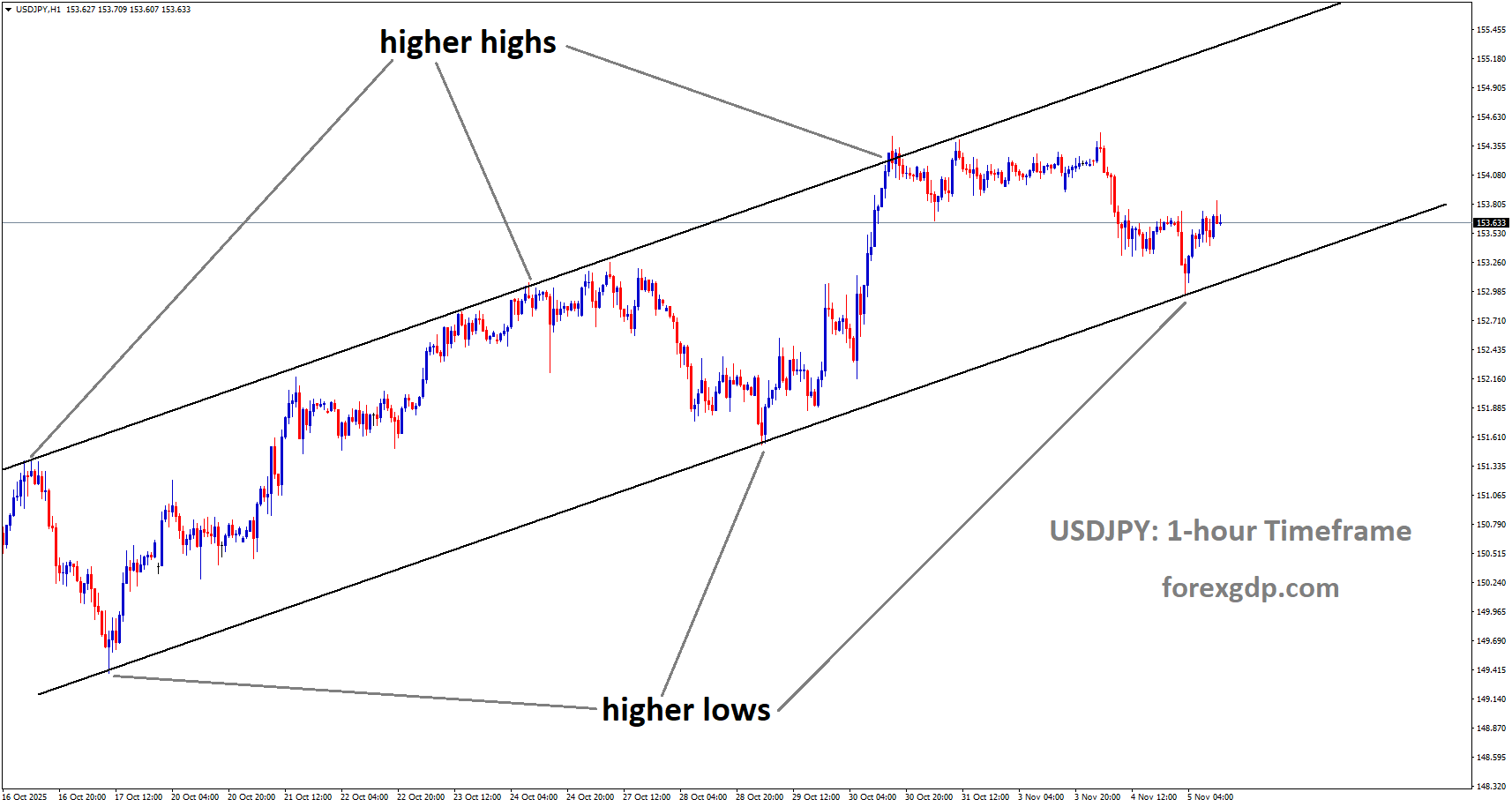
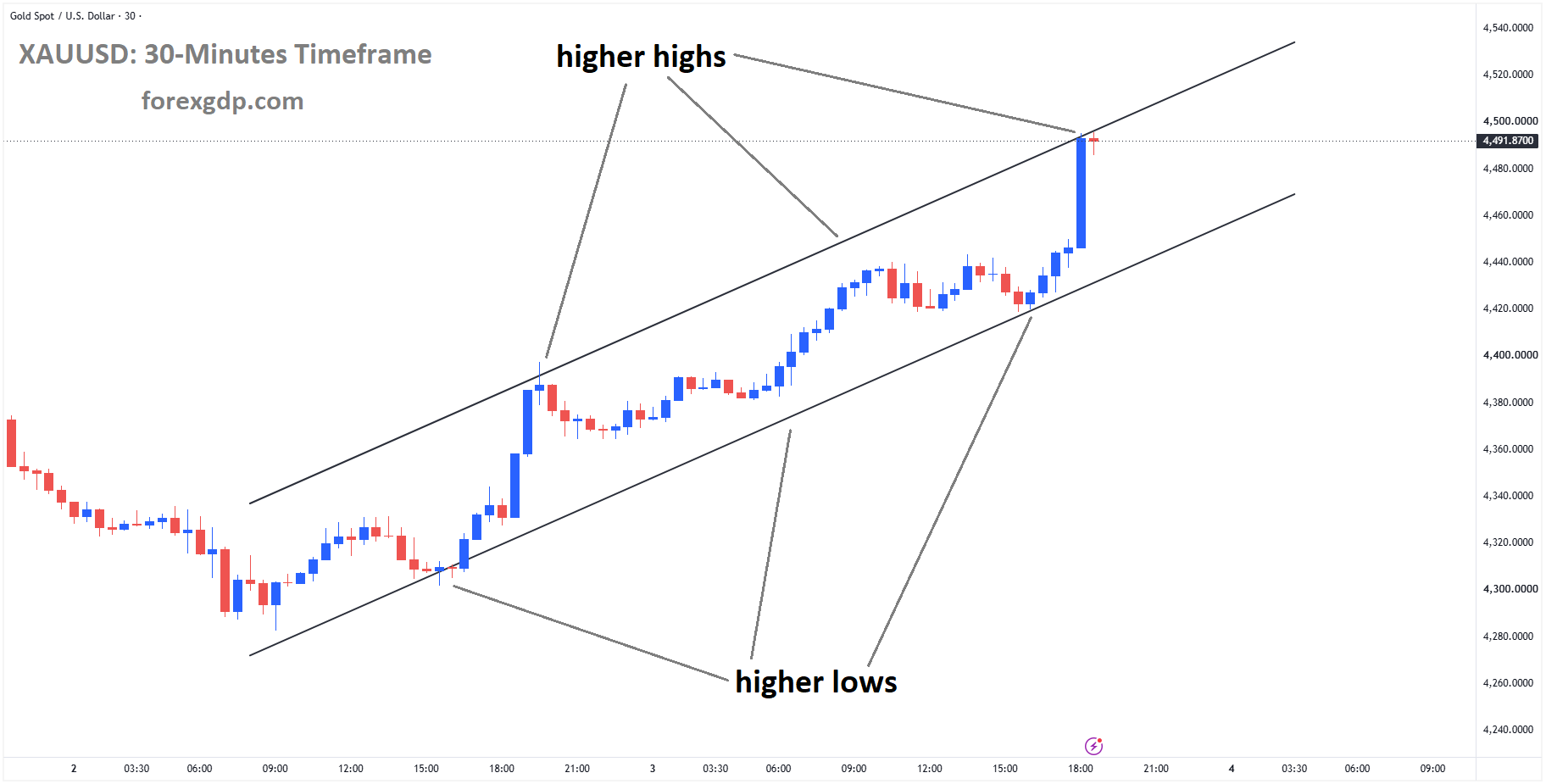
USDJPY is moving in an uptrend channel, and the market has rebounded from the higher low area of the channel
At the same time, the US Dollar (USD) has weakened as the United States continues to struggle with a prolonged government shutdown, creating another layer of caution for traders around the world.
The Yen’s Strength: A Reflection of Global Fear
When global markets start showing signs of stress, investors typically flock to safer assets—and the Japanese Yen is often one of their top choices. Over the past week, worries about the global economic outlook have intensified.
Investors Turn Defensive
Global stock markets have witnessed widespread declines, largely driven by fears that the rapid growth in artificial intelligence and technology stocks may have created inflated valuations. Investors are becoming increasingly cautious, seeking assets that can hold value even during volatile times.
As market participants become more risk-averse, currencies like the Yen tend to benefit. The JPY is perceived as a stable and secure option during times of uncertainty because Japan maintains a strong current account surplus and holds large reserves of foreign assets.
Japan’s Policy Approach and Verbal Intervention
Adding to the Yen’s support, Japan’s Finance Minister Satsuki Katayama made it clear that the government is watching currency movements very closely. Her comments suggest that Japan is ready to act if the Yen’s fluctuations become too extreme.
Such “verbal interventions” are common tactics used by Japanese officials to prevent speculative attacks on the currency or sharp moves that could harm the economy.
Prime Minister Sanae Takaichi also noted that the country has yet to see stable inflation supported by wage growth—a sign that Japan remains cautious about tightening its monetary policy too quickly. This careful approach helps maintain a balanced environment, even as global markets grow more turbulent.
The US Dollar Struggles Amid Political Gridlock
While the Yen benefits from global uncertainty, the US Dollar has been weighed down by domestic political challenges. The ongoing US government shutdown has entered its sixth week, with no resolution in sight.
Prolonged Shutdown Creates Uncertainty
The deadlock has now become one of the longest federal funding lapses in American history. The repeated failure of the Senate to pass temporary funding bills has shaken investor confidence. The most recent proposal—backed by Republican lawmakers—was rejected for the fourteenth time.
This continued impasse has led to growing concern about the potential impact on government operations, economic data releases, and public services. Many traders are staying cautious until there’s clearer progress toward reopening the government.
Fed’s Uncertain Policy Outlook
Another factor limiting the Dollar’s strength is the uncertainty surrounding the Federal Reserve’s next move.
During a recent press conference, Fed Chair Jerome Powell expressed a cautious tone, suggesting that the central bank may hold off on further rate cuts until it receives updated economic data. However, with the government shutdown delaying official data releases, policymakers are effectively operating in the dark.
Powell’s statement that another rate cut in December remains “uncertain” has added to the sense of hesitation in the markets. Traders now find themselves weighing both domestic political risk and monetary policy uncertainty when assessing the Dollar’s future path.
Safe-Haven Demand Shapes the USD/JPY Trend
The tug-of-war between the Dollar’s weakness and the Yen’s strength has shaped the recent moves in the USD/JPY pair. With global investors increasingly risk-averse, safe-haven assets such as the Yen, gold, and US Treasury bonds have seen stronger demand.

Market Sentiment and Investor Psychology
In financial markets, sentiment can shift quickly, and fear often spreads faster than optimism. The latest developments highlight how external factors—like political gridlock, corporate warnings, or changes in global risk appetite—can drive significant movements in currency pairs.
Even without major shifts in interest rate policy or economic fundamentals, the perception of safety plays a powerful role. Traders typically respond by unwinding risky positions and buying currencies that are seen as more stable—like the Yen.
Looking Ahead
Market watchers are now paying close attention to two key areas: the progress of the US government negotiations and any new comments from Japanese officials. If the US fails to resolve the shutdown soon, the Dollar may remain under pressure. Conversely, if Japan signals discomfort with the Yen’s rapid appreciation, traders may anticipate some level of intervention to slow it down.
In the coming weeks, volatility could persist as investors continue to adjust their portfolios based on shifting global conditions.
Global Economic Caution Could Keep the Yen Supported
The broader economic backdrop also plays a role in shaping currency trends. Slowing growth in major economies, rising geopolitical tensions, and uncertainty in energy markets have all contributed to the current cautious sentiment.
Japan, as one of the world’s largest exporters, remains particularly sensitive to global economic health. When international trade slows or investors grow nervous about growth prospects, the Yen tends to rise—not necessarily because of Japan’s economic strength, but because of its safe-haven reputation.
This dynamic creates a challenge for Japanese policymakers: a strong Yen can make exports less competitive, which in turn affects the nation’s growth and inflation outlook. As a result, Tokyo often walks a fine line between allowing natural market forces and stepping in to curb excessive volatility.
Final Summary
The recent drop in the USD/JPY exchange rate reflects a classic case of global risk aversion meeting domestic uncertainty. The Japanese Yen has strengthened as investors seek safety amid falling global stock prices and warnings of potential market corrections. Meanwhile, the US Dollar faces headwinds from a prolonged government shutdown and the Federal Reserve’s cautious stance on future rate decisions.
Japan’s finance officials continue to monitor market movements closely, emphasizing their commitment to stability, while US policymakers struggle to find common ground. Until confidence returns to both political and financial systems, investors are likely to remain defensive—keeping the Yen in a favorable position.
In short, as long as global uncertainty lingers and the US grapples with internal challenges, the Yen’s safe-haven appeal could continue to shape the direction of USD/JPY in the near term.
EURJPY pushes upward supported by ECB’s measured guidance
The EUR/JPY currency pair showed positive momentum during early European trading on Wednesday. The Euro strengthened against the Japanese Yen as investors reacted to recent comments from European Central Bank (ECB) officials and ongoing signals from Japanese policymakers. Let’s take a closer look at what’s driving this move and what it might mean for traders and investors.
Euro Finds Support from the ECB’s Cautious Approach
The Euro is gaining attention once again, and much of it has to do with the European Central Bank’s current policy direction. Recently, ECB policymakers emphasized that their decisions will continue to be guided by incoming data. This “data-dependent” approach signals a careful stance — not too aggressive, but not overly relaxed either.

EURJPY is moving in an uptrend channel
The ECB has decided to keep its deposit rate unchanged at 2.0%, maintaining this level for the third consecutive meeting. This stability indicates the central bank’s cautious optimism about Europe’s economic performance. Policymakers have acknowledged that inflation is gradually stabilizing and that growth continues, even if uncertainties linger.
ECB President Christine Lagarde commented that the bank is “in a good place,” suggesting that while there’s no immediate need for drastic changes, the ECB remains ready to act if conditions shift. This type of steady, measured communication has helped boost confidence in the Euro, especially among investors who value predictability during uncertain economic times.
What the ECB’s Position Means for the Euro
The ECB’s neutral stance creates a balance between controlling inflation and supporting growth. By not rushing into rate cuts or hikes, the central bank allows markets to adjust naturally. Investors view this stability as a sign that Europe’s financial environment remains under control.
Additionally, comments from other ECB members like Joachim Nagel and Francois Villeroy de Galhau reinforced this tone. Nagel noted that current economic data align closely with the ECB’s projections, while Villeroy expressed confidence that the bank’s recent policy decisions have positioned it well for the months ahead.
In essence, the ECB seems comfortable where it stands, keeping the Euro relatively strong against other currencies like the Yen, which is facing its own set of challenges.
Japan’s Watchful Eye on Currency Volatility
On the other side of the exchange rate, the Japanese Yen remains under scrutiny from both traders and government officials. The Japanese government has long emphasized the importance of stability in foreign exchange markets, and recent statements from top officials reflect this ongoing concern.
Japan’s Finance Minister Satsuki Katayama recently highlighted that currency movements should reflect true economic fundamentals rather than being driven by speculation or sudden market reactions. He also mentioned that the government is closely monitoring currency fluctuations with a high sense of urgency, signaling that any extreme volatility could prompt an official response.
This type of verbal intervention often acts as a psychological anchor for the Yen. Even if no direct action is taken, such comments remind traders that the authorities are prepared to step in if the Yen weakens too quickly or moves erratically.
Bank of Japan’s Policy Tensions
Adding another layer to the Yen’s story, the Bank of Japan (BoJ) has been debating its next steps regarding interest rates. The minutes from the BoJ’s September meeting revealed growing support for another interest rate hike. However, not all policymakers are convinced, as Japan’s long struggle with deflation makes some hesitant to tighten too quickly.

This internal debate reflects the delicate balance Japan faces: while a stronger currency can curb import costs and support purchasing power, it can also hurt export competitiveness. The BoJ’s cautious approach mirrors that of the ECB — a shared commitment to stability over sudden moves.
Why Traders Are Paying Attention to EUR/JPY
The EUR/JPY pair is often seen as a gauge of risk sentiment between Europe and Asia. When the Euro strengthens and the Yen weakens, it usually indicates optimism in global markets. Conversely, when the Yen gains, investors may be seeking safety amid uncertainty.
Currently, the Euro’s resilience combined with Japan’s cautious tone gives the EUR/JPY pair a supportive backdrop. Traders are watching for upcoming data releases — particularly the Eurozone retail sales figures — which could offer more clues about the region’s economic momentum.
While short-term movements in this currency pair can be influenced by daily market sentiment, the broader trends depend heavily on the policy direction of the ECB and BoJ. If the ECB continues to project steady confidence and the BoJ remains divided on rate changes, the Euro may maintain its advantage in the near term.
Investor Outlook
For investors, the EUR/JPY pair represents an interesting intersection of two different economic philosophies. The ECB is focused on controlled normalization, while Japan remains cautious about tightening too quickly. This divergence creates opportunities for those who understand how monetary policy differences drive currency values.
Many market participants are also watching how global inflation trends evolve. If inflation in Europe cools further without hurting growth, it could strengthen the ECB’s hand in maintaining stability — a factor that often favors the Euro. On the other hand, any surprise tightening from Japan could reverse momentum, giving the Yen a short-term boost.
Broader Economic Context and What Lies Ahead
The ongoing dynamics between the Euro and the Yen go beyond just interest rates. Both economies are navigating complex challenges in a shifting global landscape — from energy prices to trade flows and geopolitical uncertainty.
In Europe, consumer demand remains uneven across regions, but overall growth has proven more resilient than many analysts expected earlier in the year. This has supported the ECB’s confidence in its current position.
Meanwhile, Japan’s economy continues to recover gradually, but structural challenges persist. The BoJ is under pressure to strike a balance between stimulating growth and preventing excessive currency weakness. Its next policy meetings will likely reveal whether the growing calls for tightening will translate into concrete action.
For currency traders, these developments underscore the importance of watching policy signals closely. While economic indicators like retail sales and inflation figures influence short-term moves, long-term trends depend more on how central banks interpret and react to these data points.
Final Summary
The EUR/JPY exchange rate reflects a fascinating contrast between two major economies taking measured but distinct approaches to monetary policy. The European Central Bank’s steady, data-driven strategy has reinforced confidence in the Euro, while Japan’s cautious stance and verbal interventions continue to shape the Yen’s path.
With both central banks prioritizing stability, the pair’s direction in the coming weeks will likely hinge on new economic data and subtle shifts in tone from policymakers. Traders and investors who stay alert to these developments can better anticipate where opportunities may arise.
Ultimately, the story of EUR/JPY is one of balance, patience, and policy precision — a reminder that in global finance, steady signals often speak louder than sudden moves.