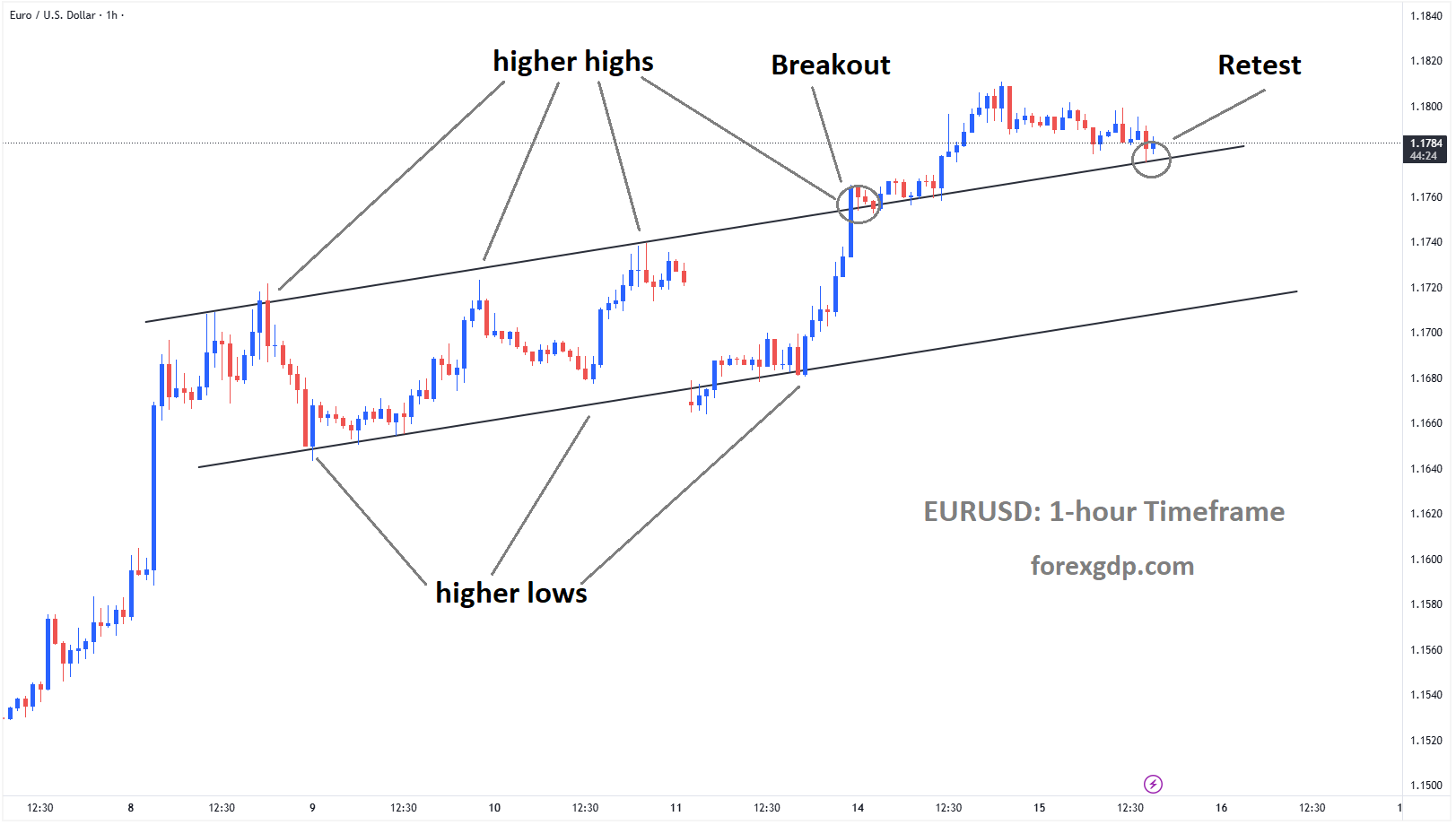
EURUSD reached retest area of the broken Ascending channel
EURUSD slips to 1.1775 even as strong factory data lifts Eurozone outlook
The EUR/USD currency pair has taken a modest step back after recently climbing to multi-week highs. While the Euro had been gaining strength for several days, a mix of global developments and economic data has created a more cautious tone in the market. Investors are now balancing positive signals from Europe with ongoing geopolitical tensions and shifting expectations in the United States.
Euro Pulls Back After Strong Run
After reaching levels above 1.1800 earlier in the week, the Euro has eased slightly against the US Dollar. This marks the first daily decline in over a week, suggesting that the upward momentum may be slowing, at least for now.
Despite this dip, the Euro remains close to recent highs. The pullback appears to be more of a pause rather than a sharp reversal. Traders are reassessing their positions as new information comes into play, particularly from global political developments and economic reports.
Strong Eurozone Data Fails to Impress Markets
Recent data from the Eurozone offered some encouraging signs. Industrial production, a key measure of economic activity, showed growth in February. Output rose by 0.4%, recovering from a decline in January and slightly exceeding expectations.
This improvement suggests that the manufacturing sector may be stabilizing after a weaker start to the year. However, the market response was muted. Investors seemed hesitant to place too much weight on this data, possibly because it reflects past conditions rather than the current situation.
There is also concern that the figures do not fully capture the impact of ongoing geopolitical tensions, especially those involving Iran. As a result, traders are focusing more on forward-looking risks than on historical data.
Middle East Developments Influence Market Sentiment
Geopolitical tensions in the Middle East continue to play a significant role in shaping investor behavior. Recent comments from US officials have raised hopes that diplomatic talks with Iran could resume soon. This has helped improve overall market sentiment, reducing demand for traditionally safer assets like the US Dollar.
The possibility of renewed negotiations has introduced a sense of cautious optimism. While there has been no official confirmation from Iran, statements from international leaders suggest that discussions may take place in the near future.
At the same time, the situation remains complex. The US military has confirmed the implementation of a blockade in the Strait of Hormuz, a critical route for global oil shipments. This move is aimed at increasing pressure on Iran but also raises concerns about disruptions to energy supply worldwide.
These mixed signals—hope for diplomacy alongside escalating actions—have created an uncertain environment. Investors are closely monitoring developments, as any major change could quickly shift market dynamics.
Impact of Energy Supply Concerns
The Strait of Hormuz is one of the most important النفط routes in the world, and any disruption there can have far-reaching effects. With a significant portion of Iran’s economy tied to sea trade, the blockade adds pressure on the country while also influencing global energy markets.
Concerns about oil supply can affect currencies in different ways. Rising energy prices often lead to inflationary pressures, which can influence central bank decisions. This, in turn, impacts currency values.
For now, the situation is contributing to a cautious market tone. Traders are weighing the risks of supply disruptions against the possibility of diplomatic progress.
European Central Bank Maintains Flexible Approach
The European Central Bank (ECB) continues to take a careful and flexible stance on monetary policy. President Christine Lagarde recently indicated that the region’s economy is navigating between expected and more challenging scenarios.

Rather than committing to a clear path for interest rates, the ECB is relying on incoming data to guide its decisions. This approach reflects the uncertainty surrounding both economic conditions and global events.
Investors are watching closely for any signals from the ECB. While the central bank has not ruled out further action, it is clear that decisions will depend on how the situation evolves.
US Inflation Data Shows Mixed Signals
In the United States, recent data on producer prices has added another layer of complexity. The Producer Price Index (PPI), which measures inflation at the wholesale level, showed a rise compared to the previous month.
However, the increase was smaller than expected. When excluding food and energy, the core measure remained steady and also came in below forecasts.
This suggests that while inflation pressures are still present, they may not be accelerating as quickly as some had feared. For investors, this creates uncertainty about future policy moves by the Federal Reserve.
A slower pace of inflation could reduce the urgency for aggressive action, which may limit support for the US Dollar. At the same time, the overall picture remains mixed, keeping traders cautious.
Balancing Optimism and Uncertainty
The current movement in EUR/USD reflects a broader theme in global markets: a balance between optimism and uncertainty. On one hand, positive economic data and hopes for diplomatic progress are supporting risk appetite. On the other, geopolitical tensions and mixed economic signals are encouraging caution.
This tug-of-war is keeping the currency pair within a relatively tight range. Neither side has a clear advantage, and the direction may depend on how upcoming events unfold.
What Traders Are Watching Next
Looking ahead, investors will continue to monitor several key factors. Developments in the Middle East will remain a major focus, particularly any confirmation of talks between the US and Iran.
Economic data from both the Eurozone and the United States will also play a role. Updates on inflation, growth, and industrial activity could influence expectations for central bank policies.
In addition, comments from policymakers will be closely analyzed for any hints about future actions. With both the ECB and the Federal Reserve taking data-driven approaches, each new piece of information could have an impact.
Summary
The EUR/USD pair has paused after a strong upward move, reflecting a mix of global influences. While the Eurozone has shown signs of economic improvement, markets are more focused on geopolitical developments and future risks. Hopes for renewed US-Iran talks are supporting a more positive outlook, but ongoing tensions and energy concerns continue to create uncertainty. At the same time, mixed signals from US inflation data and a cautious approach from central banks are keeping investors on edge. As a result, the currency pair remains stable near recent highs, with its next move likely to depend on how these factors evolve.
GBPUSD Dips as Stronger Dollar Outshines Middle East Peace Optimism
The GBP/USD currency pair has recently shown a shift in direction after several days of steady gains. During early Wednesday trading in the Asian session, the pair moved lower and hovered around the 1.3560 level. This change comes as the US Dollar begins to strengthen, even though global markets remain hopeful about easing tensions in the Middle East.
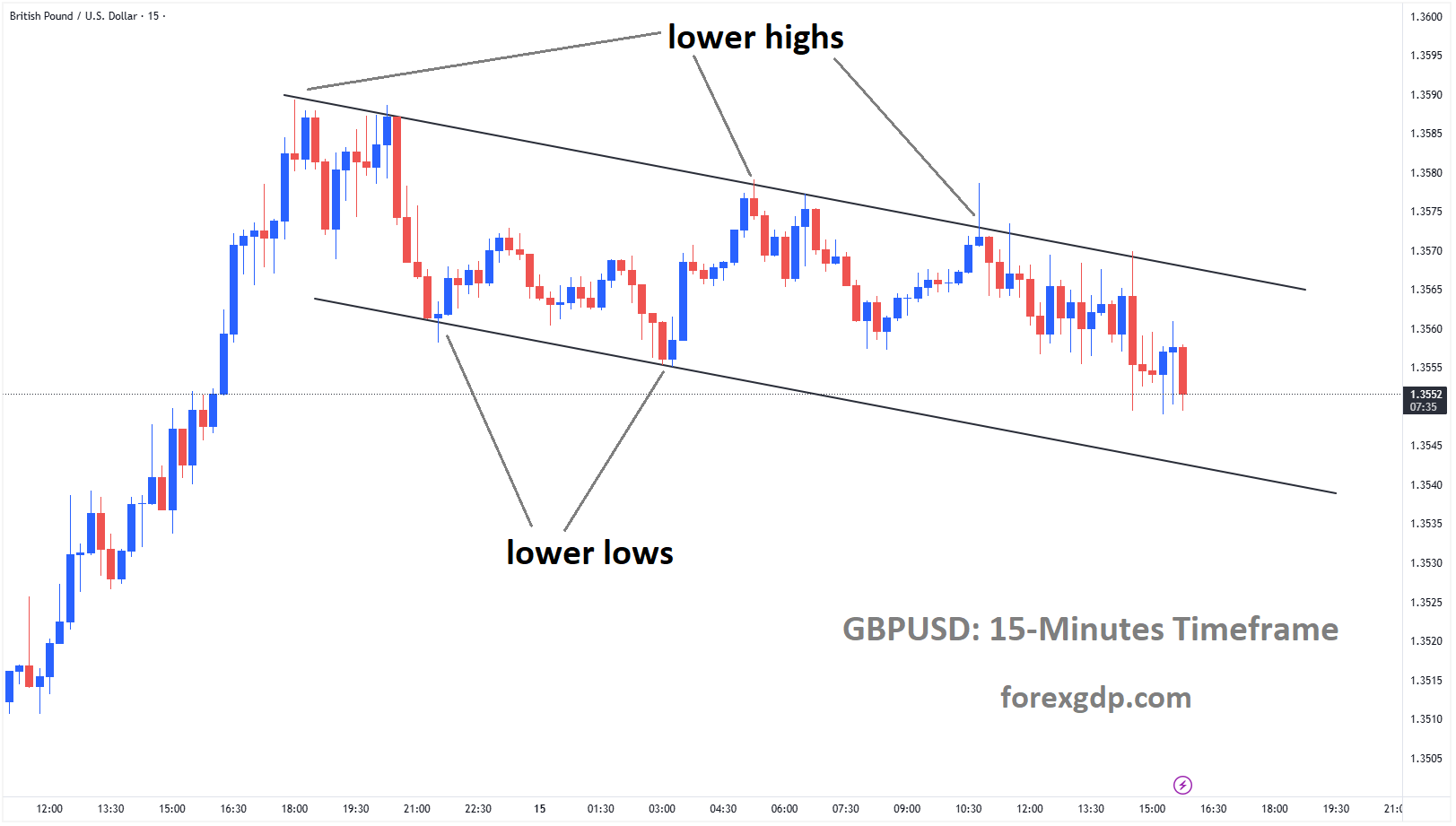
GBPUSD is moving in a descending channel, and market has fallen from the lower high area of the channel
In the past week, the British Pound had been gaining momentum against the US Dollar. However, the latest developments in global politics, inflation data, and bond markets have started to influence the pair in a different direction. Let’s take a closer look at the key factors driving these movements.
Growing Optimism Around Middle East Diplomacy
One of the main reasons behind the current market sentiment is the renewed hope for peace talks between the United States and Iran. Reports suggest that both countries are preparing for another round of discussions before the current two-week ceasefire period ends.
The Strait of Hormuz, a key route for global oil shipments, has seen rising tensions in recent weeks. This has raised concerns about possible disruptions to energy supply worldwide. However, the possibility of fresh talks has given markets a sense of relief.
US President Donald Trump has indicated that negotiations could resume soon, possibly within the week. At the same time, he has expressed his disagreement with a long-term pause in Iran’s nuclear program. This shows that while talks are progressing, there are still differences that need to be resolved.
Progress in Initial Discussions
US Vice President JD Vance recently commented on the situation, noting that the first round of talks showed “significant progress.” These initial discussions were held in Pakistan and seem to have laid the groundwork for further negotiations.
The fact that both sides are willing to continue discussions is seen as a positive sign by investors. It suggests that a peaceful solution may be possible, which could help reduce global uncertainty and stabilize markets.
US Inflation Data Supports Dollar Strength
Another key factor influencing the GBP/USD pair is the latest inflation data from the United States. The Producer Price Index (PPI), which measures changes in the prices received by producers, came in lower than expected.
On a monthly basis, the PPI rose by 0.5%, falling short of the expected 1.2% increase. The core PPI, which excludes volatile food and energy prices, increased by just 0.1%, again missing forecasts of 0.6%.
On a yearly basis, PPI rose by 4%, below the expected 4.6%. Core PPI remained steady at 3.8%, unchanged from the previous month.
Impact on Federal Reserve Policy
These lower inflation figures suggest that price pressures in the US economy may be easing. As a result, the Federal Reserve may feel less pressure to raise interest rates in the near future.
Normally, lower interest rate expectations can weaken a currency. However, in this case, the US Dollar is still gaining strength due to improved global sentiment and reduced demand for safe-haven assets like gold.
UK Bond Yields Decline as Oil Prices Ease
In the United Kingdom, the situation is slightly different. The yield on the 10-year government bond, also known as the gilt, has fallen toward 4.7%. This decline is mainly due to falling oil prices, which are linked to the hopes of renewed US-Iran negotiations.
Lower oil prices help reduce inflation concerns, especially in countries like the UK that rely heavily on energy imports. As inflation fears ease, bond yields tend to move lower.
Strong Demand for UK Government Bonds
Despite the drop in yields, demand for UK bonds remains strong. A recent sale of 10-year gilts attracted record bids totaling £148 billion. This shows that investors continue to have confidence in UK government debt.
However, the earlier rise in energy prices has already influenced expectations for future interest rate decisions. Markets are now predicting that the Bank of England may raise rates nearly twice by the end of 2026 to control inflation.
How These Factors Affect GBP/USD
The movement of the GBP/USD pair is shaped by a combination of global and domestic factors. The strengthening of the US Dollar, supported by easing inflation and positive diplomatic signals, has put pressure on the British Pound.
At the same time, falling UK bond yields and expectations of future rate hikes add complexity to the outlook for the Pound. While strong demand for UK bonds shows investor confidence, it is not enough to offset the current strength of the US Dollar.
What Traders and Investors Should Watch
There are several key developments to keep an eye on in the coming days:
- Updates on US-Iran negotiations and whether talks move forward
- Changes in oil prices based on geopolitical developments
- New economic data from both the US and the UK
- Signals from central banks regarding future interest rate decisions
These factors will likely play an important role in shaping the direction of the GBP/USD pair.
Summary
The GBP/USD pair has paused its recent upward trend as the US Dollar gains strength. This shift is influenced by growing optimism around Middle East diplomacy, lower-than-expected US inflation data, and changes in UK bond yields. While global sentiment is improving, the balance between economic data and geopolitical developments will continue to drive currency movements in the days ahead.
USDCAD gains momentum toward 1.3800 as mixed Iran updates shake sentiment
The USD/CAD currency pair has shown a modest recovery after recently slipping to its lowest level in three weeks. This movement reflects a mix of global political developments and economic data that continue to shape investor sentiment. While the US Dollar has regained some strength, the broader outlook remains uncertain as markets digest conflicting signals from both geopolitical and economic fronts.
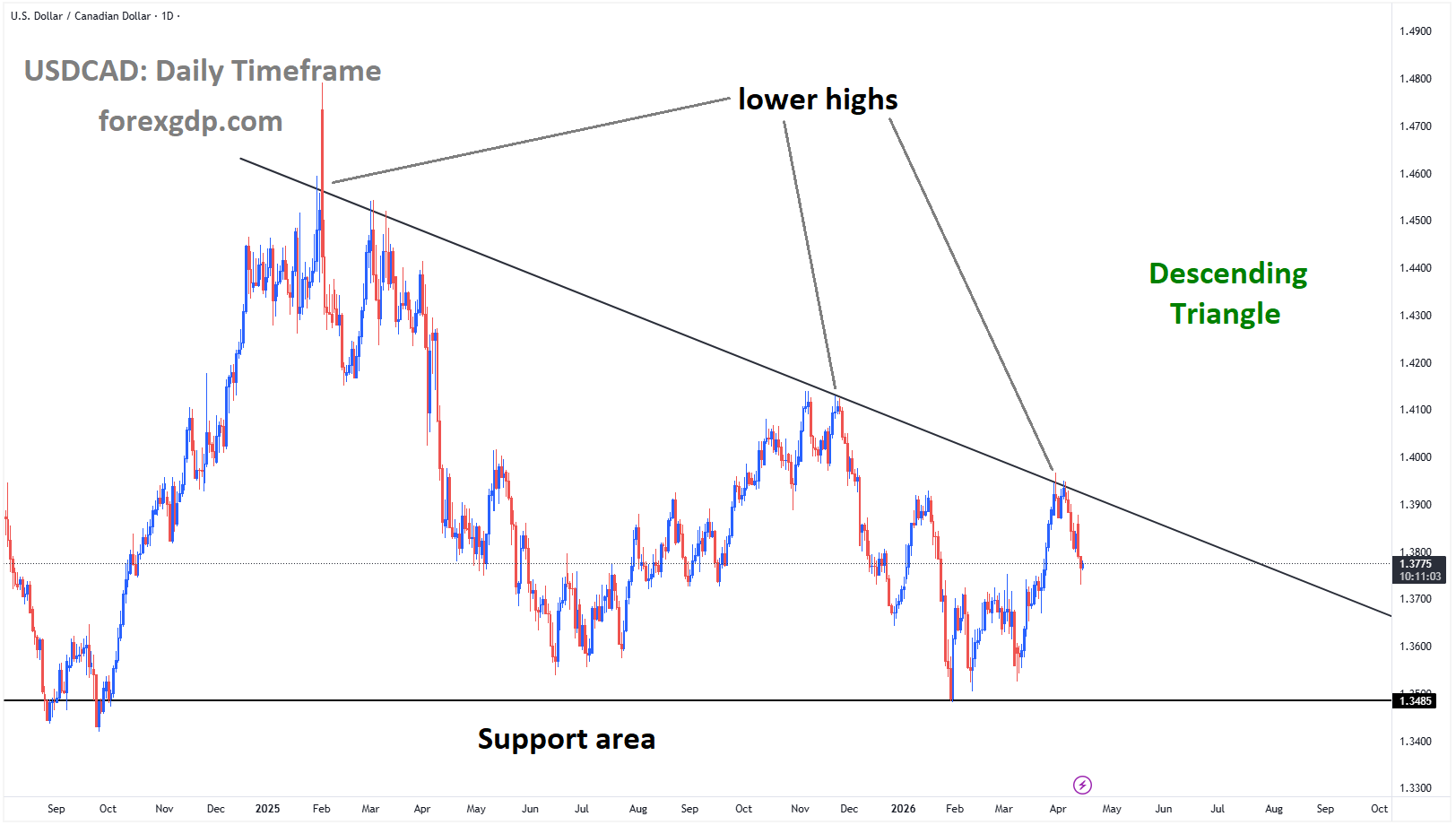
USDCAD is falling from the lower high area of the descending triangle pattern
Recent Movement in USD/CAD
The USD/CAD pair recently dropped to around 1.3730, marking a three-week low. However, it quickly rebounded and moved back toward the 1.3775 level. This bounce suggests that buyers are stepping in at lower levels, preventing further declines for now.
Even with this recovery, the pair is still trading more than 1% below the highs seen last week. This indicates that the overall trend has softened slightly, and the recent gains are more of a correction rather than a strong upward move.
The US Dollar Index (DXY), which tracks the value of the US Dollar against a group of major currencies, has also shown signs of stabilization. After hitting a six-week low, it has started to move higher again. This shift has provided some support to the USD/CAD pair.
Influence of Geopolitical Developments
One of the key drivers behind the recent movements in the USD/CAD pair is the ongoing geopolitical situation involving the United States, Israel, and Iran. Markets are closely watching these developments, as they have the potential to impact global trade, energy supply, and overall economic stability.
Mixed Signals from US Leadership
US President Donald Trump recently made comments that raised hopes for a peaceful resolution. In an interview, he suggested that discussions aimed at easing tensions could resume soon, possibly in Pakistan. This statement brought a sense of optimism to the markets, as investors tend to favor stability and reduced conflict.
However, this positive tone was not consistent across all official channels.
Military Actions and Rising Concerns
At the same time, the US military confirmed that a blockade of the Strait of Hormuz had been fully implemented. This move has significant implications, as the Strait of Hormuz is a critical route for global oil shipments.
Iran strongly criticized the blockade, calling it illegal and comparing it to acts of piracy. Such strong reactions highlight the seriousness of the situation and the risk of further escalation.
Adding to the uncertainty, reports have emerged that the US is planning to send thousands of additional troops to the Middle East. This step is widely seen as an effort to increase pressure on Iran to come to an agreement. However, it also raises concerns about the possibility of deeper conflict.
Market Reaction to Uncertainty
Financial markets tend to react quickly to geopolitical uncertainty. In this case, the mixed messages—ranging from peace talks to military escalation—have created a cautious environment. Investors are unsure which direction events will take, leading to fluctuations in currency values.
The US Dollar, often considered a safe-haven currency, can benefit during times of uncertainty. This helps explain why it has managed to recover some of its recent losses against the Canadian Dollar.
Economic Data and Its Impact
Beyond geopolitical factors, economic data also plays a crucial role in shaping currency movements. One of the key reports influencing the market recently is the US Producer Price Index (PPI).
Understanding the PPI Report
The PPI measures the average change in prices received by producers for their goods and services. It is an important indicator of inflation at the wholesale level and can provide early signals about price trends in the broader economy.
The latest PPI data confirmed that the ongoing conflict involving Iran has had an inflationary effect. Rising tensions often lead to higher energy costs, which can push up production expenses.
Lower-Than-Expected Figures
Despite the inflationary pressures, the March PPI came in lower than expected. This was a positive surprise for the markets, as it suggests that inflation may not be rising as quickly as feared.
Lower inflation can ease concerns for policymakers and reduce the need for immediate action.
Implications for the Federal Reserve
The Federal Reserve closely monitors inflation data when making decisions about interest rates. With the PPI coming in below expectations, the Fed has more flexibility to keep rates unchanged in the near term.
This approach allows the central bank to gather more data before making any major policy changes. For investors, this creates a more stable environment, as sudden shifts in interest rates can lead to volatility in currency markets.
The Role of the Canadian Dollar
While much of the focus has been on the US Dollar, it is also important to consider the Canadian Dollar’s position in this equation.
The Canadian Dollar is often influenced by commodity prices, especially oil. Given the current tensions in the Middle East, oil markets are under close watch. Any disruption to supply routes, such as the Strait of Hormuz, can lead to changes in oil prices.
Higher oil prices generally support the Canadian Dollar, as Canada is a major oil exporter. However, the uncertainty surrounding the situation makes it difficult to predict how this factor will play out in the coming days.
Broader Market Sentiment
The current environment is defined by uncertainty and mixed signals. On one hand, there are signs of possible diplomatic progress. On the other hand, military actions and troop deployments suggest that tensions remain high.
This combination creates a challenging landscape for investors. Many are choosing to stay cautious, avoiding large positions until there is more clarity.
Currency markets, including USD/CAD, reflect this cautious approach. Movements are relatively modest, with traders reacting to headlines and data releases rather than committing to strong trends.
What Traders Are Watching Next

Looking ahead, several factors will continue to influence the USD/CAD pair:
Geopolitical Updates
Any new developments in the Middle East will be closely monitored. Positive news about negotiations could weaken the US Dollar, while signs of escalation may strengthen it.
Economic Reports
Future data releases, especially those related to inflation and employment, will provide further insights into the health of the US economy.
Central Bank Signals
Comments from the Federal Reserve will be important in shaping expectations about interest rates and monetary policy.
Oil Market Movements
As a key driver of the Canadian Dollar, oil prices will remain a major factor to watch.
Summary
The USD/CAD pair has recovered slightly after hitting recent lows, supported by a modest rebound in the US Dollar. However, it remains below last week’s peak, reflecting ongoing uncertainty.
Geopolitical tensions involving the United States, Israel, and Iran are playing a major role in shaping market sentiment. Conflicting signals—from potential peace talks to increased military presence—have created a cautious environment for investors.
At the same time, economic data such as the US Producer Price Index has provided some relief, suggesting that inflation pressures may not be as strong as expected. This gives the Federal Reserve room to maintain its current policy stance for now.
With multiple factors at play, the USD/CAD pair is likely to remain sensitive to both global events and economic updates. Traders and investors will continue to watch closely as the situation evolves.
USDCHF struggles near lows with fresh US-Iran negotiations on the horizon
The USD/CHF currency pair has been moving cautiously in recent sessions, reflecting a broader shift in market sentiment. While the pair has remained relatively stable during parts of the trading day, it continues to hover near recent lows. This movement is closely tied to a weakening US Dollar and growing optimism surrounding geopolitical developments between the United States and Iran.
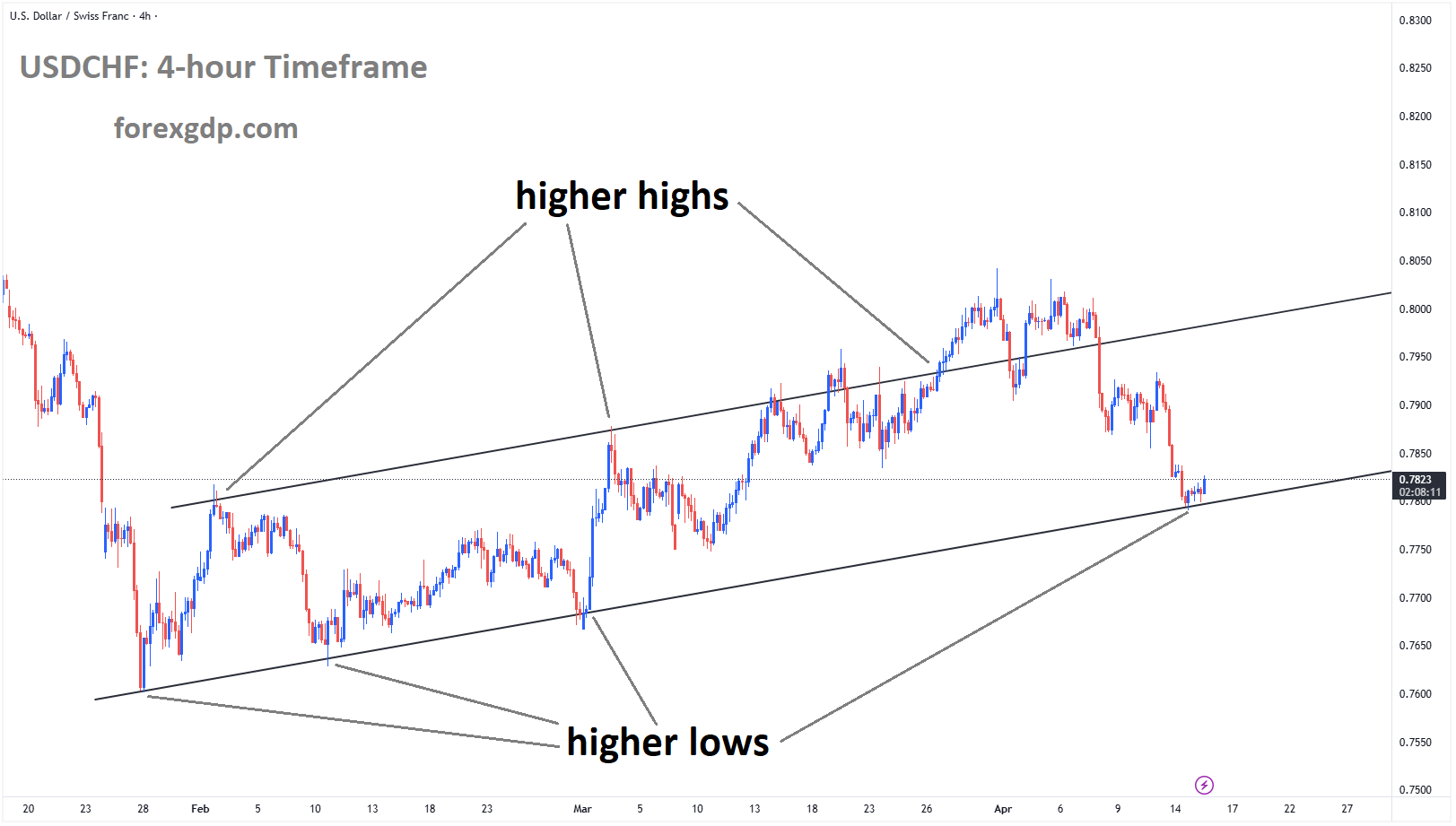
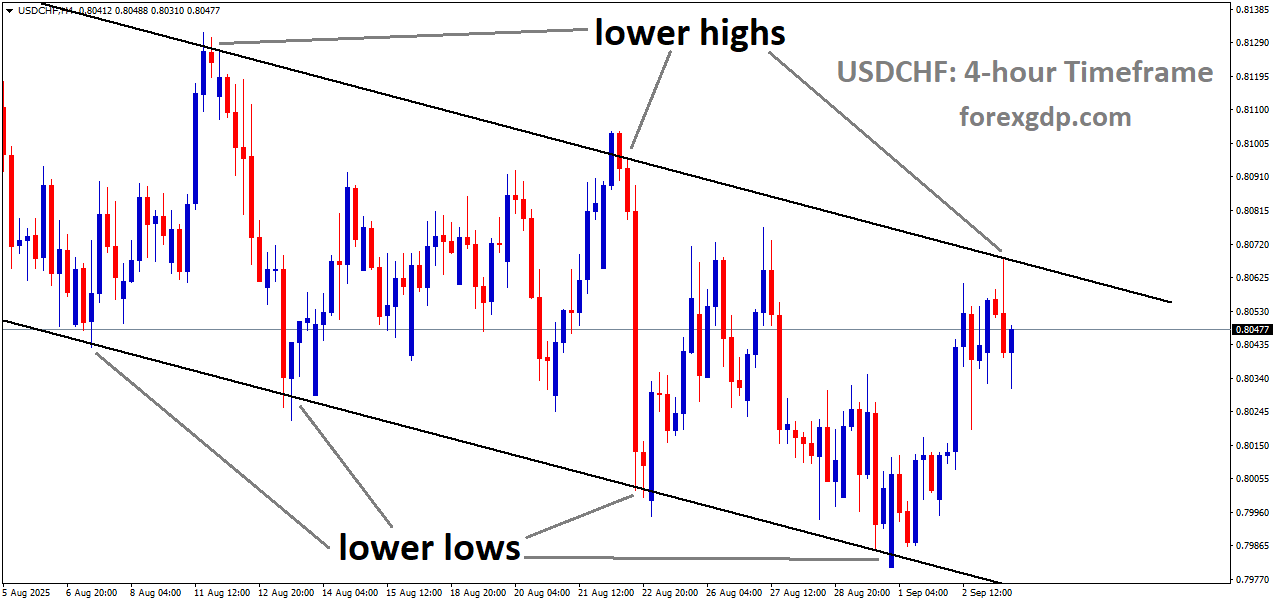
USDCHF is moving in ascending channel and market has reached higher low area of the channel
As traders react to evolving global events, the Swiss Franc has found renewed strength, while the US Dollar struggles to maintain momentum. This dynamic highlights how sensitive currency markets can be to both political developments and changes in economic expectations.
USD/CHF Stays Near Recent Lows
During the late Asian trading session, USD/CHF was seen trading around the 0.7812 level. Although the movement appeared flat on the surface, the pair remained close to its monthly low, which was recorded just a day earlier. This suggests that the overall pressure on the pair has not eased.
The Swiss Franc, often considered a safe-haven currency, has been gaining ground as the US Dollar loses strength against multiple currencies. Even small shifts in sentiment can lead to noticeable changes in this pair, especially when uncertainty in global markets begins to fade.
The US Dollar Index, which measures the Dollar’s performance against a basket of major currencies, showed a slight uptick. However, it still remained close to its lowest levels in several weeks. This indicates that the Dollar’s recovery attempts are limited and not yet strong enough to reverse the broader trend.
Growing Optimism Over US-Iran Relations
One of the key factors influencing the current market mood is the improving outlook for relations between the United States and Iran. Recent statements from US leadership have fueled expectations that tensions may soon ease.
In a recent interview, US President Donald Trump expressed confidence that the ongoing conflict with Iran is nearing its end. His remarks suggested that both sides are moving closer to a resolution, which has encouraged investors to adopt a more optimistic outlook.
Additionally, there have been indications that diplomatic talks between the two nations could resume soon. Reports suggest that discussions may take place through channels involving Pakistan, highlighting ongoing efforts to find common ground.
US Vice President JD Vance also reinforced this narrative during a public appearance, noting that communication between the two countries is continuing through various channels. His comments pointed to a shared willingness on both sides to work toward a deal.
This shift toward diplomacy has played a significant role in shaping market sentiment. When geopolitical tensions ease, investors often move away from safe-haven assets and adjust their positions accordingly. However, in this case, the weakening Dollar has allowed the Swiss Franc to remain strong despite the improved outlook.
Impact on the US Dollar
The US Dollar’s recent performance reflects a combination of geopolitical developments and changing expectations about monetary policy. While positive news on the geopolitical front might typically support the Dollar, the current situation has had the opposite effect.
One reason for this is the changing outlook for interest rates in the United States. Earlier in the year, markets had anticipated the possibility of multiple rate hikes by the Federal Reserve. These expectations were driven in part by concerns about inflation during the early stages of the conflict.
However, as optimism around a potential ceasefire has grown, those expectations have shifted significantly. Traders are no longer pricing in rate hikes for the remainder of the year. This change has reduced the appeal of the US Dollar, as higher interest rates often attract investors seeking better returns.
The adjustment in expectations has been swift and notable. What was once seen as a tightening cycle has now turned into a more cautious outlook, with the Federal Reserve expected to remain on hold.
Why the Swiss Franc Remains Strong
The Swiss Franc’s resilience in this environment may seem surprising at first. Typically, safe-haven currencies like the Franc gain strength during times of uncertainty and lose ground when risks decline. However, the current situation is more complex.
Even as geopolitical tensions appear to be easing, the weakening US Dollar has provided support for the Franc. Currency markets often react to relative strength rather than absolute conditions. In this case, the Franc is benefiting from the Dollar’s struggles.
Switzerland’s stable economic environment and strong financial system also contribute to the Franc’s appeal. Investors often view it as a reliable option during periods of transition, even when broader risks are diminishing.
Market Sentiment and Trader Behavior
Market sentiment plays a crucial role in currency movements, and the current environment is a clear example of this. Traders are responding not only to actual developments but also to expectations about what might happen next.
The possibility of renewed diplomatic talks and a lasting ceasefire has created a sense of cautious optimism. This has influenced how investors position themselves, leading to shifts in demand for different currencies.
At the same time, the absence of expected interest rate hikes has changed the overall outlook for the US Dollar. When key assumptions about economic policy change, markets tend to adjust quickly, often leading to increased volatility.
The combination of these factors has kept USD/CHF under pressure, even as some elements of uncertainty begin to fade.
What to Watch Going Forward
Looking ahead, several factors will likely influence the direction of the USD/CHF pair. Developments in US-Iran relations will remain a key driver, especially if talks progress and lead to concrete agreements.
Any updates from US officials regarding negotiations or ceasefire conditions could have an immediate impact on market sentiment. Positive news may continue to weigh on the Dollar, while setbacks could lead to renewed volatility.
In addition, attention will remain on the Federal Reserve and its policy stance. Even subtle changes in communication from central bank officials can shift expectations and influence currency movements.
Global economic conditions and investor confidence will also play a role. As markets adjust to new realities, the balance between risk and stability will continue to shape demand for currencies like the Swiss Franc.
Summary
The USD/CHF pair is currently navigating a period of uncertainty driven by both geopolitical and economic factors. While the pair has shown limited movement in the short term, it remains close to recent lows, reflecting ongoing pressure on the US Dollar.
Optimism surrounding a potential end to tensions between the United States and Iran has shifted market sentiment, encouraging a move away from earlier expectations of rising interest rates. This change has reduced support for the Dollar and contributed to its broader weakness.
At the same time, the Swiss Franc has maintained its strength, supported by its reputation as a stable and reliable currency. The interplay between these forces highlights the complex nature of currency markets, where multiple factors often interact in unexpected ways.
As developments continue to unfold, traders will remain focused on geopolitical updates and central bank signals, both of which will play a key role in shaping the path of USD/CHF in the days ahead.
BTCUSD Holds Firm Near 74K as Ongoing Middle East Uncertainty Persists
Bitcoin is currently showing signs of stability, holding near the $74,000 level after a brief pullback from a recent high earlier in the week. This movement comes at a time when investors across global markets are closely watching developments in the Middle East, especially ongoing concerns related to the Strait of Hormuz, a critical route for global oil supply.
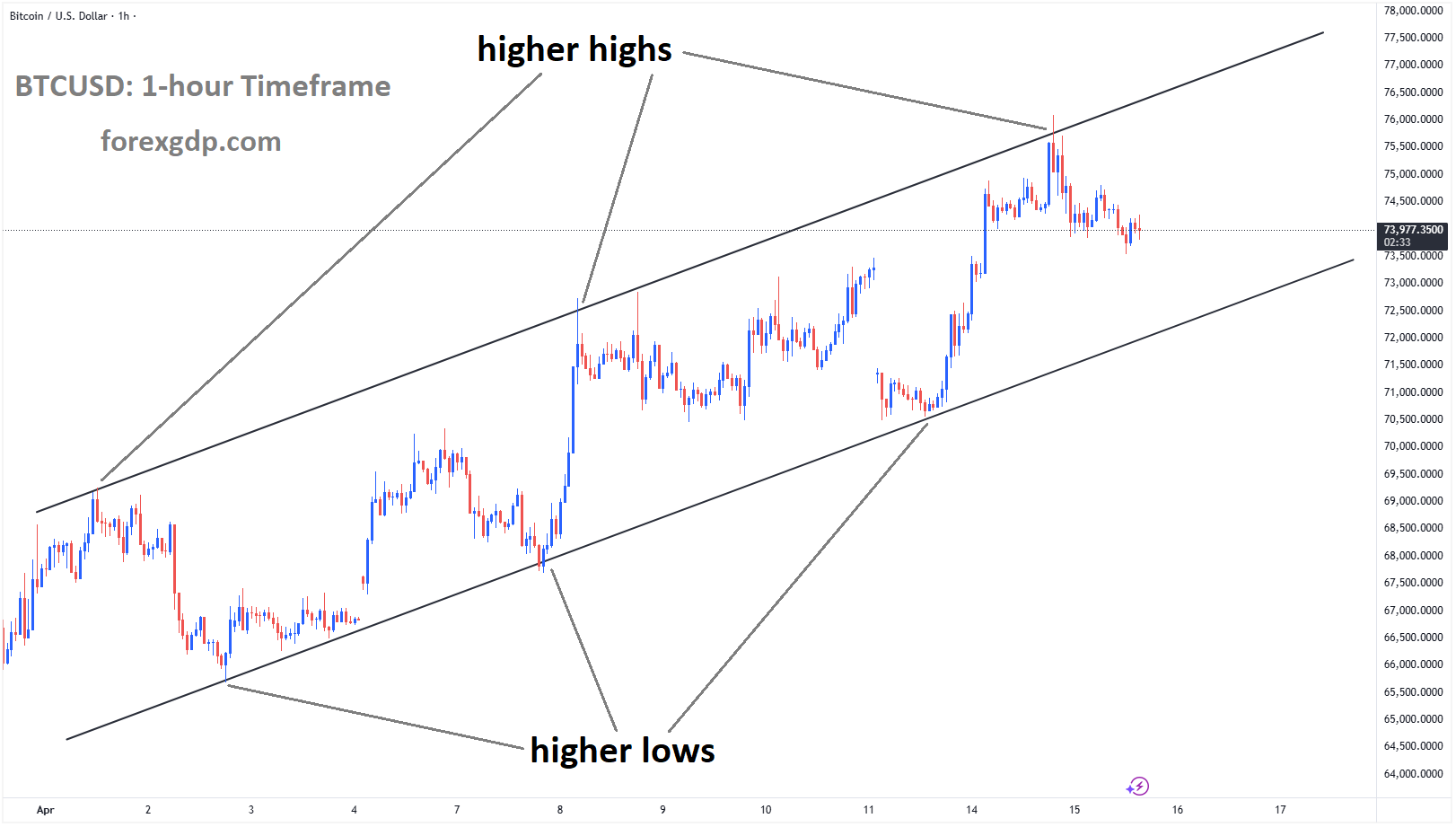
BTCUSD is moving in an ascending channel, and the market has fallen from the higher high area of the channel
At the beginning of the week, Bitcoin climbed from around $70,000 and reached a monthly high of $76,000 before easing back slightly. Ethereum followed a similar pattern, gaining strong momentum early in the week and then cooling off. While both cryptocurrencies have shown resilience, their upward momentum has slowed as traders wait for clearer signals about geopolitical stability.
Global Events Continue to Influence Crypto Markets
The current market environment is shaped by a mix of conflicting global signals. On one hand, tensions in the Middle East have raised concerns about energy supply disruptions. Reports confirming a blockade affecting Iranian ports have contributed to rising oil prices, which can influence inflation and overall market sentiment.
On the other hand, there are signs that diplomatic efforts may reduce tensions. Statements suggesting that negotiations could be underway have helped calm some fears. This balance between risk and potential resolution has created uncertainty, keeping markets cautious.
Two Key Forces at Play
The crypto market is currently being pulled in two directions:
- Concerns about rising inflation due to supply disruptions can weigh on risk assets like Bitcoin.
- Hopes for easing tensions and improved global stability can support investor confidence and encourage growth.
Because of these opposing forces, many investors are taking a wait-and-see approach, leading to a pause in strong price movements.
Cooling Inflation Data Supports Market Sentiment
Recent economic data from the United States has provided some relief to investors. Inflation figures have come in lower than expected, suggesting that price pressures may not be rising as quickly as feared. This has helped improve sentiment across financial markets.
At the same time, government bond yields have been trending downward. Lower yields often make alternative assets like Bitcoin more attractive, as the opportunity cost of holding non-interest-bearing investments decreases. This shift can encourage more capital to flow into cryptocurrencies and equities.
Why Lower Yields Matter
When yields fall, it usually signals that financial conditions are becoming more supportive. This can lead to:
- Increased liquidity in the market
- Higher investor willingness to take risks
- Stronger demand for assets like Bitcoin and stocks
These conditions have helped both crypto and equity markets maintain their recent gains.
Strong Performance in Traditional Markets Reflects Broader Confidence
Stock markets in the United States have shown impressive strength recently. Major indexes have experienced a series of gains, with the technology sector leading the way. This positive performance has been mirrored in the crypto space, where Bitcoin has also recorded notable gains over the month.
Link Between Crypto and Traditional Markets

Bitcoin’s price movements are increasingly influenced by broader economic trends rather than just developments within the crypto industry. This means:
- Global economic news can directly impact Bitcoin prices
- Investor sentiment in stock markets often carries over to crypto
- Risk appetite plays a key role in determining price direction
Because of this connection, headlines related to geopolitical events and economic policy continue to play a major role in shaping crypto market behavior.
Growing Institutional Interest Strengthens Bitcoin’s Position
One of the most important trends supporting Bitcoin is the growing involvement of large financial institutions. Exchange-traded funds (ETFs) linked to Bitcoin have seen strong inflows, reflecting increasing demand from investors.
Recent data shows significant amounts of capital entering these funds, indicating steady interest even during periods of market uncertainty. This trend highlights a broader shift in how Bitcoin is viewed within the financial world.
Expansion of Institutional Participation
Major financial firms are continuing to explore opportunities in the crypto space. New investment products are being introduced, allowing traditional investors easier access to Bitcoin. This includes:
- The launch of Bitcoin-related funds by established financial institutions
- Increased participation from banks and asset managers
- Continued development of regulated investment options
This growing acceptance is helping Bitcoin gain recognition as a legitimate asset class, attracting both retail and institutional investors.
Market Outlook Remains Tied to Global Developments
While Bitcoin has shown resilience, its near-term direction will likely depend on how global events unfold. Investors are paying close attention to geopolitical developments, economic data, and financial market trends.
Key Factors to Watch
- Updates on Middle East tensions and potential resolutions
- Changes in inflation trends and interest rate expectations
- Movements in traditional financial markets
- Continued growth in institutional investment
Each of these elements has the potential to influence market sentiment and shape Bitcoin’s price trajectory.
Summary
Bitcoin is currently holding steady after recent gains, reflecting a balance between cautious optimism and global uncertainty. The market is being shaped by geopolitical tensions, improving economic data, and growing institutional interest. While momentum has slowed for now, underlying support remains strong. As global conditions evolve, Bitcoin’s path forward will likely continue to reflect broader economic and geopolitical trends.
Don’t trade all the time, trade forex only at the confirmed trade setups
Get more confirmed trade signals at premium or supreme – Click here to get more signals, 2200%, 800% growth in Real Live USD trading account of our users – click here to see , or If you want to get FREE Trial signals, You can Join FREE Signals Now!