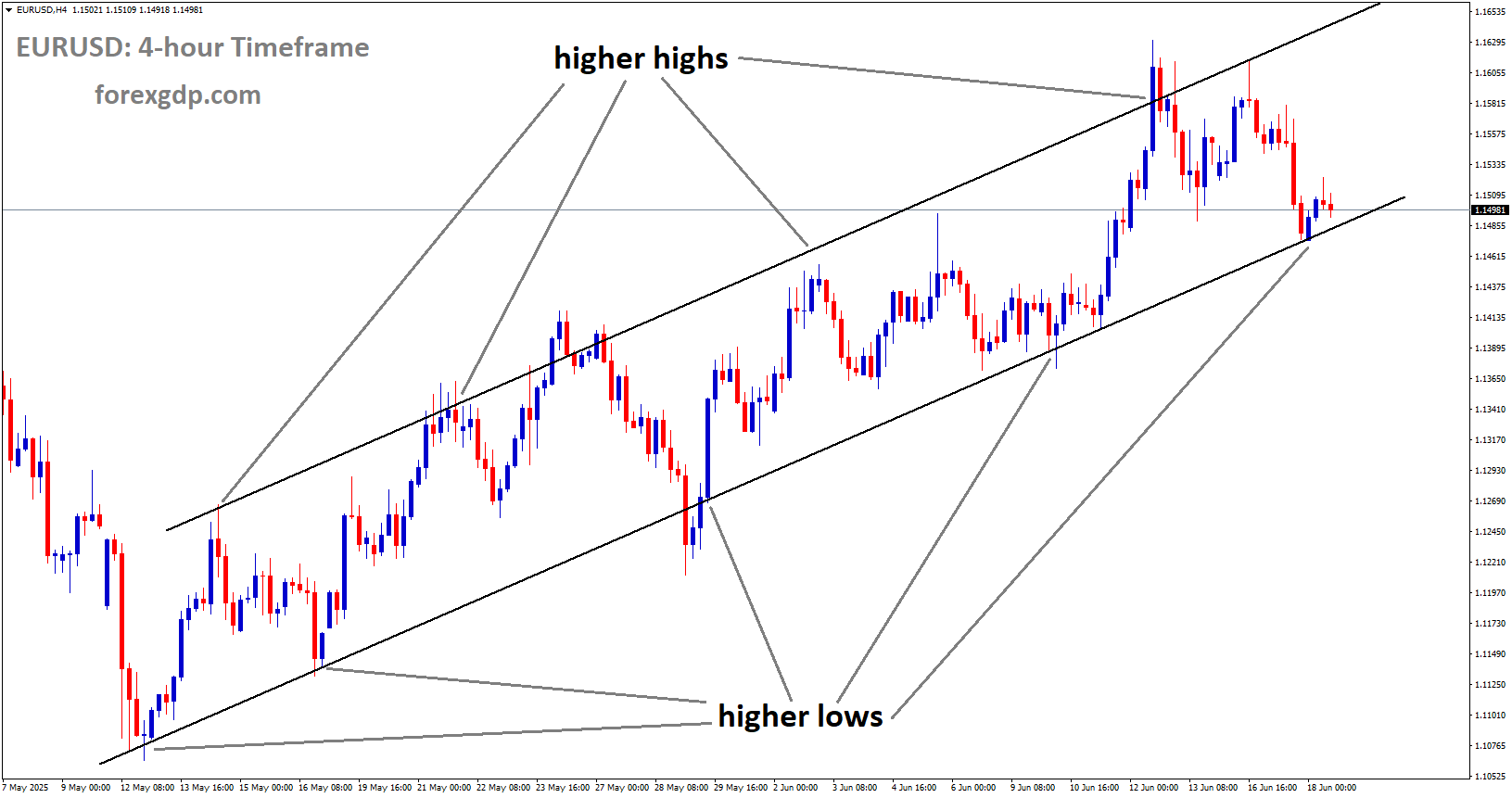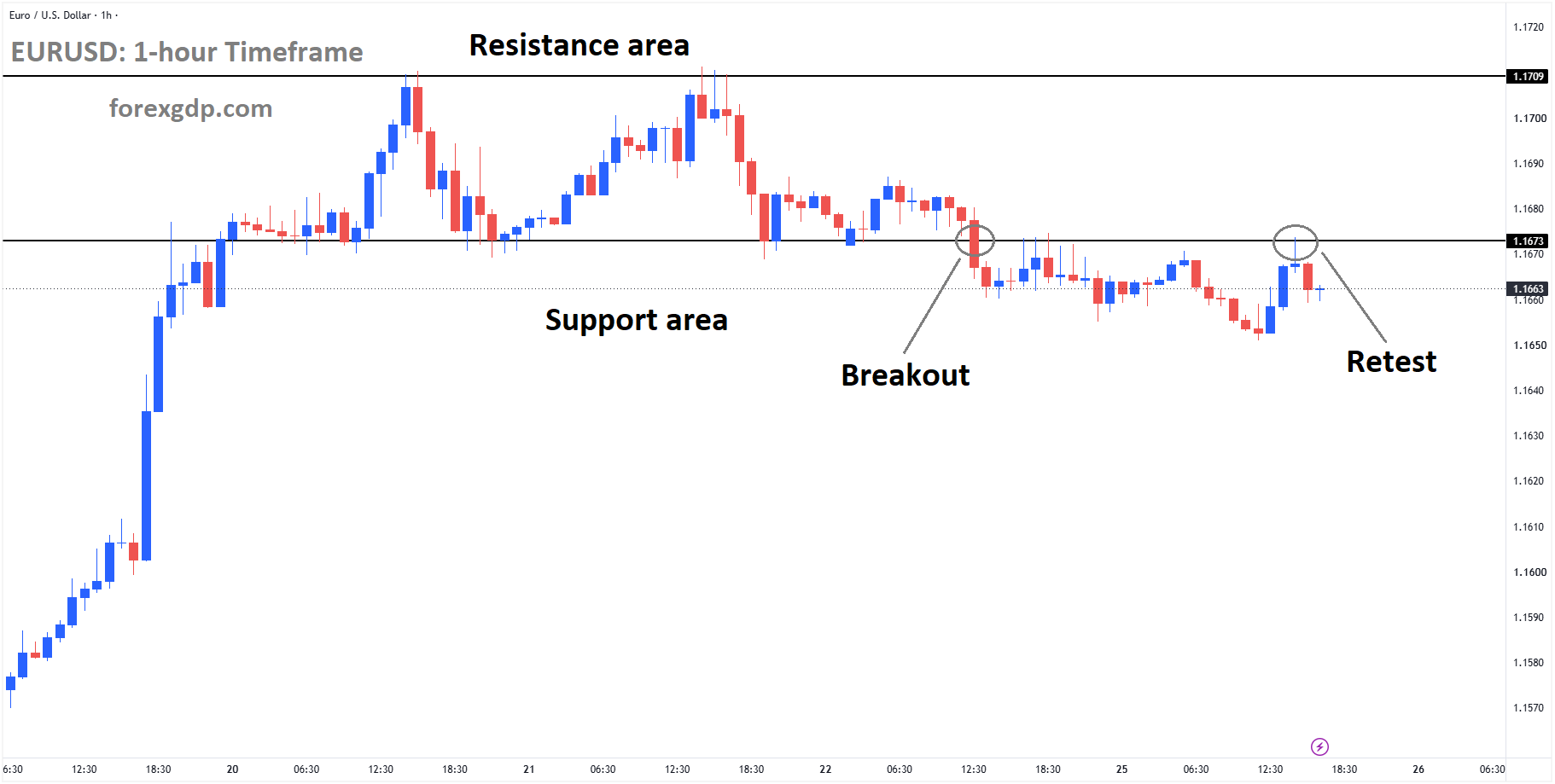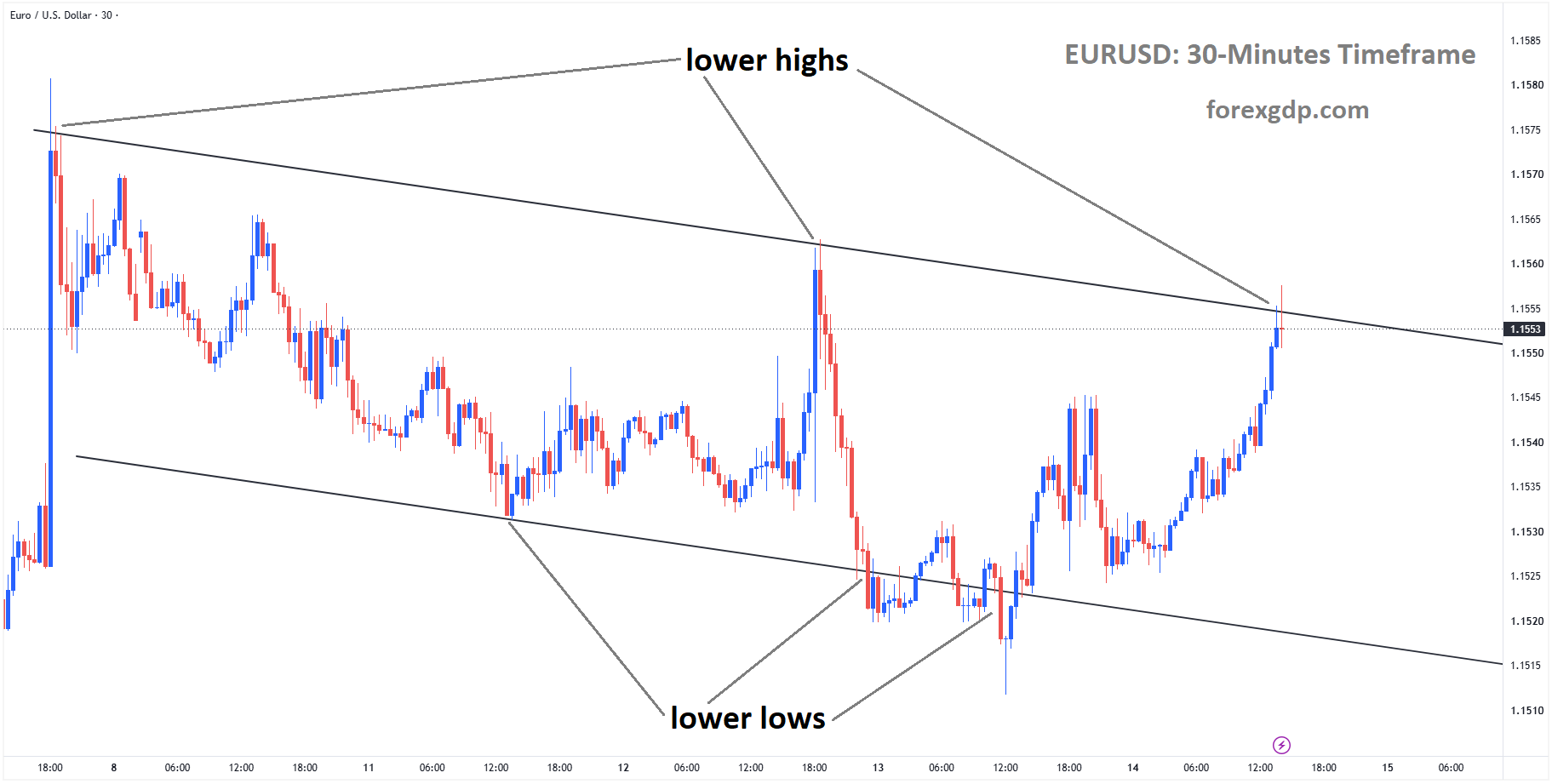
EURUSD reached a lower high area of the descending channel
EURUSD Gains Momentum on Resilient Eurozone Growth Signals
The Euro gained ground against the US Dollar on Friday as investors responded to encouraging economic figures from the Eurozone and softer inflation signals from the United States. The latest data showed that the European economy continued to expand during the second quarter, while the region’s trade balance performed better than economists had expected.
At the same time, the US Dollar weakened against several major currencies. Recent American inflation reports reduced expectations that the Federal Reserve would raise interest rates in the immediate future. This change in outlook gave the Euro an opportunity to recover from the losses recorded during the previous session.
The latest developments highlight the different forces currently shaping the EUR/USD currency pair. The Euro is receiving support from signs of economic stability in the currency bloc, while the Dollar is facing pressure as investors reconsider the likely path of US monetary policy.
Eurozone GDP Confirms Continued Economic Expansion
Eurostat’s second estimate confirmed that the Eurozone economy expanded by 0.4% during the second quarter. The result matched earlier forecasts and suggested that economic activity across the region improved after a flat performance during the first three months of the year.
The figures provide some reassurance about the condition of the European economy. Businesses and households across the region have faced several challenges, including high borrowing costs, weak global demand and uncertainty surrounding international trade. Despite these pressures, the Eurozone managed to return to growth.
Compared with the same quarter a year earlier, the economy grew by 1%. This represented an improvement from the annual expansion recorded in the previous quarter. Although the pace remains modest, the stronger yearly result indicates that the region may be gradually moving away from the period of stagnation that affected several major European economies.
A steady recovery could strengthen confidence among companies and consumers. It may also help reduce concerns that tight financial conditions will push the region into a broader downturn. However, the outlook remains dependent on household spending, business investment and demand for European exports.
Employment Data Shows the Labour Market Remains Stable
The latest report also offered a positive picture of employment conditions. The number of employed people in the Eurozone increased by 0.1% during the second quarter, matching the earlier estimate.
Employment was also 0.5% higher than it had been during the same period a year earlier. These figures suggest that companies continued to retain and hire workers even as economic growth remained relatively slow.
A stable labour market is important for the wider recovery. When employment remains strong, households are more likely to maintain their spending because they feel more confident about their income. Consumer demand can then support businesses, particularly in service industries and other areas that depend heavily on domestic activity.
The limited quarterly increase, however, shows that the labour market is not expanding rapidly. Companies may still be cautious about adding workers because of higher financing costs and an uncertain international environment. Future employment reports will therefore be closely watched for signs that the economic recovery is becoming strong enough to create more jobs.
Trade Balance Adds Support for the Euro
Eurozone trade figures for June also exceeded market expectations. A stronger-than-forecast trade balance can support confidence in the regional economy because it shows that the value of exported goods is performing well compared with imports.
Trade remains a major part of the Eurozone’s economic strength. Many member countries depend heavily on the sale of machinery, vehicles, chemicals, medicines and other manufactured products to customers around the world.
Better trade results may help offset weakness in other areas of the economy. They can also provide support to the Euro by creating demand for the currency from international companies purchasing European goods.
Still, the region faces several external risks. Changes in global demand, political tensions and possible trade restrictions could affect European exporters. Energy costs and supply-chain disruptions may also influence production. The encouraging June figures therefore offer a positive signal, but they do not remove the broader uncertainty facing businesses.
Cooling US Inflation Weighs on the Dollar
The US Dollar came under pressure after recent inflation data reduced expectations of an immediate interest-rate increase by the Federal Reserve. When inflation appears to be easing, the central bank has less reason to tighten monetary policy further.
Interest-rate expectations play a major role in the currency market. Higher rates can make a currency more attractive because investors may receive better returns from assets linked to that currency. If traders believe the Federal Reserve is less likely to raise rates, demand for the Dollar can weaken.
The latest inflation signals do not guarantee that the Fed will change policy soon. Officials are likely to study a wide range of information, including employment, consumer spending, wage growth and future inflation reports, before making a decision.
Federal Reserve policymakers have repeatedly focused on the need for lasting evidence that inflation is moving under control. A single report may influence market expectations, but the central bank generally looks for a clear trend across several months.
For now, softer inflation has reduced some of the pressure for additional tightening. That shift has helped the Euro regain momentum against the Dollar, even though the longer-term direction will continue to depend on economic developments in both regions.
Central Bank Expectations Remain Important
Investors will now compare the policy outlooks of the Federal Reserve and the European Central Bank. Both institutions must balance inflation risks against the need to protect economic growth.
The Eurozone’s latest GDP and employment figures suggest that the regional economy is expanding without showing signs of rapid overheating. This could give European policymakers room to remain patient while assessing future inflation and economic activity.
In the United States, cooling inflation may encourage the Fed to avoid another increase in borrowing costs. However, any renewed rise in price pressures or unexpectedly strong economic data could quickly change that outlook.
As a result, the EUR/USD pair is likely to remain sensitive to upcoming inflation, employment and growth reports. Speeches from central bank officials may also influence expectations by offering clues about how policymakers view the economic outlook.
Summary
The Euro recovered against the US Dollar as Eurozone economic data met or exceeded expectations. Revised figures confirmed that the regional economy grew by 0.4% in the second quarter after showing no growth in the previous three months. Annual economic expansion also improved, while employment continued to increase at a modest and stable pace.
A better-than-expected June trade balance provided additional support for confidence in the Eurozone. Meanwhile, the US Dollar weakened as softer American inflation reduced expectations that the Federal Reserve would raise interest rates soon.
The currency pair’s next direction will depend heavily on future economic reports and central bank guidance. For the moment, steady Eurozone growth and fading expectations of tighter US policy have created a more supportive environment for the Euro.
GBPUSD Advances as Fed Expectations Pressure Dollar, Yet Uncertainty Persists
The British Pound regained some ground against the US Dollar on Friday after weakening during the previous two sessions. The recovery came as investors reduced expectations that the Federal Reserve would raise interest rates again, putting pressure on the US currency.
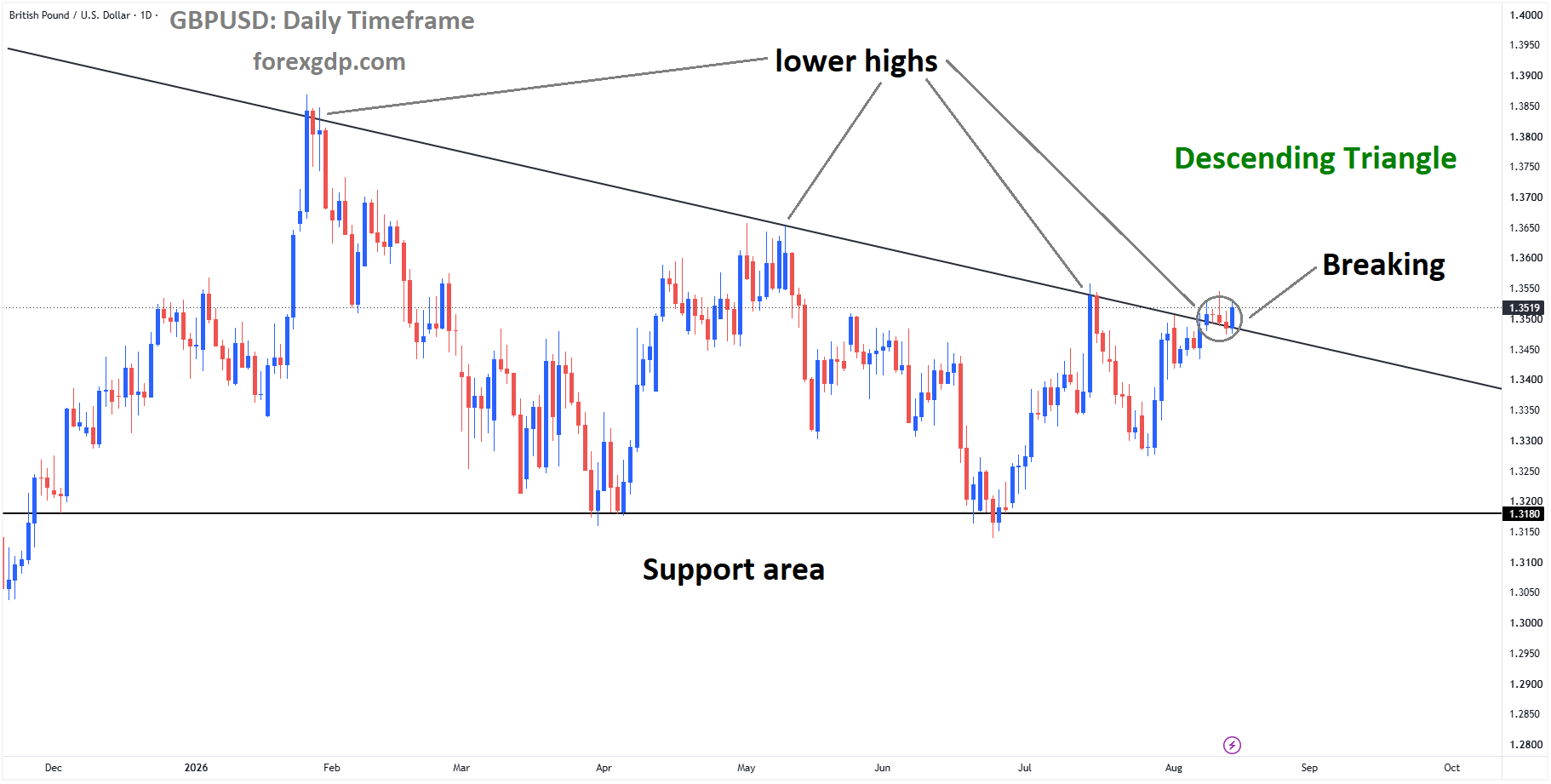
GBPUSD is breaking the lower high area of the descending triangle pattern
However, the Pound struggled to build strong momentum. Growing tensions between the United States and Iran continued to support demand for the safe-haven Dollar. Mixed economic figures from the United Kingdom also gave traders little reason to become more confident about the British currency.
With monetary policy expectations, economic releases, and geopolitical developments all pulling the pair in different directions, GBP/USD appeared likely to finish the week without a major change.
Lower US Inflation Reduces Pressure on the Federal Reserve
Recent inflation figures from the United States played an important role in weakening demand for the Dollar.
The latest Producer Price Index report showed softer inflation at the wholesale level. The index measures changes in the prices that businesses receive for their goods and services. Because higher production costs can eventually be passed on to consumers, the report is closely watched for early signs of inflation pressure.
The weaker reading suggested that price growth within the US economy may be continuing to cool. It followed the release of the Consumer Price Index, which came broadly in line with expectations and did not deliver any major upward surprise.
Together, the two reports reduced concerns that inflation could force the Federal Reserve to raise borrowing costs again. Investors consequently became less willing to position for another increase in US interest rates.
This change in expectations weighed on the Dollar and helped the Pound recover. Higher interest rates often make a currency more attractive because investors can potentially earn better returns from assets linked to that currency. When the chances of additional rate increases decline, some of that attraction can fade.
Federal Reserve Can Afford to Remain Patient
Cooling inflation gives the Federal Reserve more freedom when deciding its next policy move. The central bank has been trying to bring inflation under control without causing unnecessary damage to economic activity or employment.
If price pressures continue to weaken, policymakers may prefer to leave interest rates unchanged while they study incoming data. This would allow them to observe how previous increases are affecting households, businesses, and the wider economy.
The recent inflation reports do not guarantee that the Fed has finished tightening policy. Officials will still want to see clear and lasting evidence that inflation is moving in the desired direction. Employment figures, consumer spending, wage growth, and business activity will remain important parts of the discussion.
Even so, the latest data have made an immediate rate increase appear less likely. That shift has removed some support from the US Dollar and created room for GBP/USD to recover from its recent weakness.
Comments from Federal Reserve officials could still influence expectations. Any suggestion that policymakers remain worried about persistent inflation may support the Dollar. A more cautious message, however, could reinforce the belief that interest rates will remain steady.
Middle East Tensions Support Safe-Haven Demand
Although reduced Fed rate expectations pressured the Dollar, geopolitical uncertainty prevented the currency from falling more sharply.
The confrontation between the United States and Iran remained a major concern for global investors. US Treasury Secretary Scott Bessent said Washington was preparing measures against Iran that had not previously been used. His comments raised questions about how the dispute could develop and whether additional economic or political pressure might increase tensions.
Iranian officials also maintained a firm position. Senior Islamic Revolutionary Guard Corps adviser Mohammad Reza Naqdi said Tehran wanted to make any conflict so costly that future US administrations would hesitate before considering military action.
Statements from both sides highlighted the risk of further escalation. When international tensions rise, investors often move toward assets that are considered relatively secure. The US Dollar commonly benefits from this type of defensive demand because of its central role in global trade, finance, and reserve holdings.
As a result, traders remained reluctant to sell the Dollar aggressively, even as expectations for tighter Federal Reserve policy declined.
Strait of Hormuz Dispute Keeps Investors Cautious
The situation surrounding the Strait of Hormuz added another layer of uncertainty. The waterway is one of the world’s most important energy shipping routes, and any disruption could have broad consequences for international trade and economic confidence.
President Donald Trump again said that the United States had complete control over the strategic passage. Iran, meanwhile, indicated that it intended to keep the strait closed until its demands were met.
These competing claims kept geopolitical risk at the center of market attention. Investors remained alert to the possibility that the standoff could affect shipping activity, energy supplies, and relations across the Middle East.
The uncertainty provided continued support for the Dollar’s safe-haven role. It also limited the Pound’s ability to benefit fully from changing expectations about Federal Reserve policy.
Future headlines could quickly shift sentiment. Signs of diplomatic progress would likely reduce defensive demand, while further threats or military developments could strengthen demand for traditional safe-haven assets.
Mixed UK Data Restrains the British Pound
The Pound faced its own challenges following a mixed set of economic reports from the United Kingdom on Thursday.
The figures did not present a clear picture of the British economy. Some areas showed resilience, while others pointed to continued weakness. This uncertainty made it difficult for investors to form a strong view on the outlook for UK growth or Bank of England policy.
The British central bank must balance inflation risks against pressure on households and businesses. Keeping borrowing costs elevated for too long could weaken economic activity, but easing policy too quickly could allow inflation to become more persistent.
Mixed economic results complicate that decision. Without clear evidence of stronger growth or sustained progress on inflation, traders may hesitate to build large positions in the Pound.
This caution helped prevent GBP/USD from extending its Friday recovery. The move was supported mainly by a softer Dollar rather than a major improvement in confidence toward the UK economy.
US Retail Sales and Consumer Confidence Take Focus

The United Kingdom was not scheduled to release any major market-moving economic reports on Friday. Attention was therefore expected to turn toward the US economic calendar.
Monthly retail sales figures were among the main releases in focus. Consumer spending is a major part of the US economy, making retail activity an important measure of economic strength. A strong result could suggest that households remain willing to spend despite higher borrowing costs. A weak report could increase concerns about slowing growth.
The preliminary University of Michigan Consumer Sentiment Index was also due for release. This survey provides insight into how American consumers view current economic conditions and their financial prospects.
Both reports could influence expectations for Federal Reserve policy. Stronger data might support the view that the US economy can withstand restrictive interest rates, while weaker readings could strengthen the case for a more patient approach.
Summary
GBP/USD recovered on Friday as softer US inflation data encouraged investors to reduce expectations for another Federal Reserve rate increase. The resulting pressure on the Dollar allowed the British Pound to regain part of its earlier losses.
However, the recovery remained limited. The continuing US-Iran confrontation and uncertainty surrounding the Strait of Hormuz supported safe-haven demand for the Dollar. At the same time, mixed UK economic data prevented investors from developing a stronger outlook for the Pound.
US retail sales, consumer confidence figures, Federal Reserve comments, and geopolitical headlines were expected to guide sentiment during the remainder of the session. With several opposing forces influencing both currencies, GBP/USD remained on course for a relatively quiet end to the week.
USDJPY Slips as BoJ Tightening Expectations Revive Yen Demand
The Japanese yen strengthened modestly against the US dollar on Friday after fresh reports suggested that the Bank of Japan could accelerate its interest rate increases. At the same time, signs of easing inflation in the United States placed some pressure on the dollar.
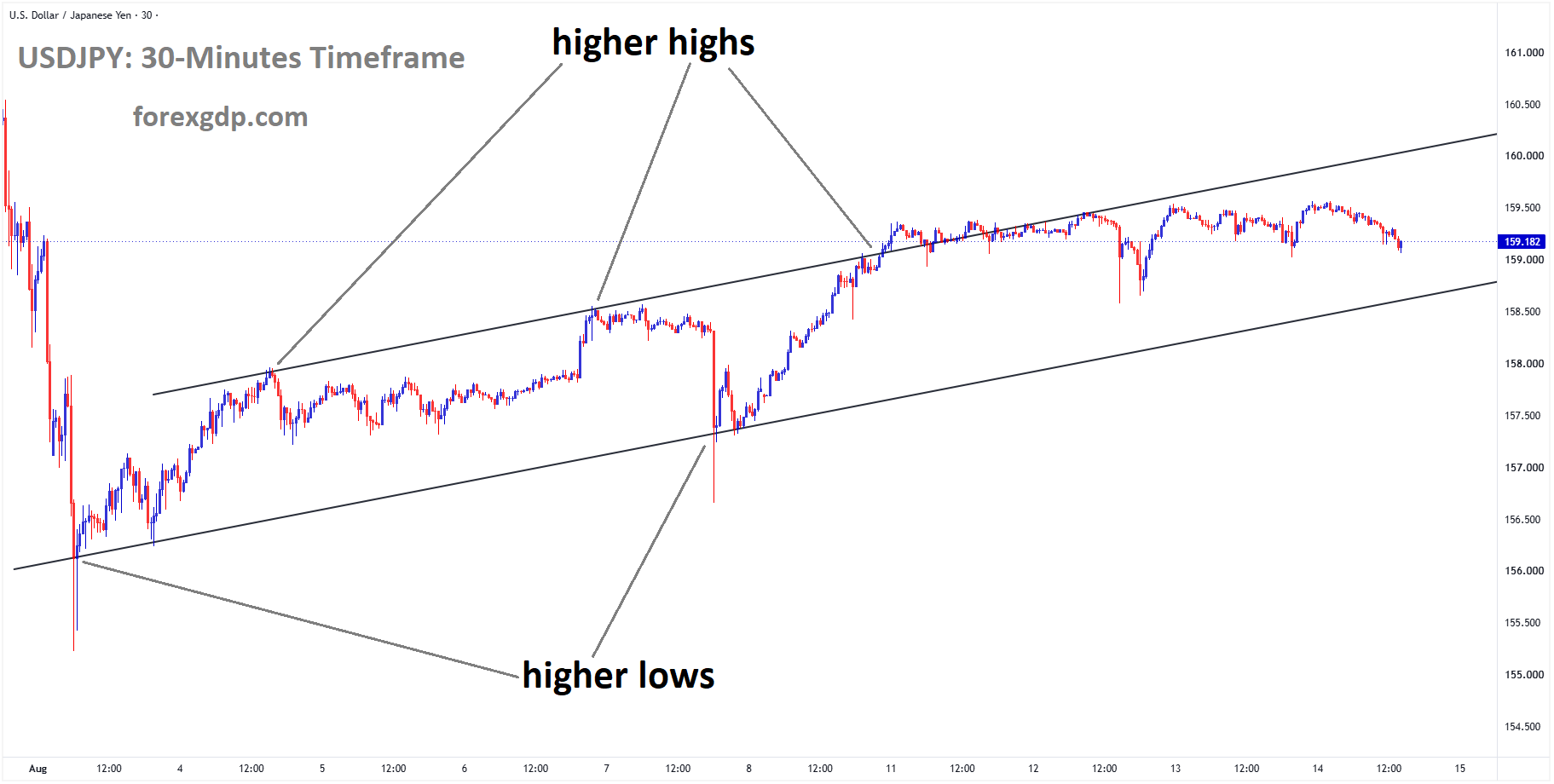
USDJPY is moving in an ascending channel, and the market has fallen from the higher high area of the channel
Despite the pullback, the broader movement in USD/JPY remained relatively firm. The currency pair stayed close to the two-week high reached during the previous session and was heading toward another strong weekly performance.
Several competing forces are shaping the outlook. Expectations of tighter monetary policy in Japan are helping the yen, while geopolitical concerns and the large interest rate difference between Japan and the United States continue to offer support to the dollar.
Bank of Japan Rate Hike Reports Lift the Yen
The yen received support following reports that the Bank of Japan may raise interest rates as early as September. The central bank could also increase borrowing costs more frequently after that, moving away from the gradual pace it has followed so far.
Japan spent many years maintaining extremely low interest rates to encourage borrowing, investment, and inflation. However, the economic environment has changed. Higher wages and stronger inflation have created room for the Bank of Japan to move toward a more conventional monetary policy.
A faster series of rate increases would make Japanese assets more attractive to some investors. It would also reduce the gap between Japanese borrowing costs and those available in other major economies.
Expectations of more aggressive action therefore gave the yen a modest boost. Traders who had been betting heavily against the Japanese currency may also become more cautious if they believe the central bank is preparing to tighten policy sooner than previously expected.
Still, the Bank of Japan faces a difficult task. Officials must control inflation without placing too much pressure on households, businesses, or government finances. Raising rates too quickly could slow economic activity and increase debt-related costs. This means the central bank is likely to remain careful even if it decides to move faster.
Cooling US Inflation Weighs on the Dollar

The US dollar faced pressure after inflation data showed signs that price growth was losing momentum. Softer inflation can reduce the need for the Federal Reserve to raise interest rates immediately.
When inflation cools, policymakers have more flexibility to keep borrowing costs unchanged while they study employment, consumer demand, and broader economic conditions. This possibility encouraged some investors to reduce their exposure to the dollar.
The relationship between inflation and interest rates plays an important role in currency markets. Higher US interest rates often support the dollar because they can make dollar-based investments more appealing. If investors expect the Federal Reserve to pause for longer, that advantage may weaken.
However, the outlook for US monetary policy remains uncertain. Traders have not completely ruled out another increase in borrowing costs before the end of the year. Continued strength in employment, consumer spending, or business activity could persuade the Federal Reserve to take further action.
Federal Reserve officials are also likely to seek more evidence that inflation is moving sustainably toward their goal. A single softer reading may not be enough to produce a lasting change in policy expectations.
As a result, the dollar’s losses remained limited. Investors are now watching upcoming US economic reports for more information about inflation, growth, and the possible direction of interest rates.
Geopolitical Tensions Keep Demand for the Dollar Alive
Geopolitical uncertainty linked to tensions between the United States and Iran is another important influence on the currency market. During periods of international instability, investors often seek assets that are viewed as relatively secure.
Both the dollar and the yen have traditionally attracted safe-haven demand. However, the dollar may have an advantage when concerns involve global trade, energy supplies, or financial liquidity.
The US currency plays a central role in international payments and remains widely used in global reserves. This can increase demand for the dollar when investors become worried about political conflict or economic disruption.
Concerns about possible interruptions to energy supplies could also have mixed effects on the yen. Japan depends heavily on imported energy, meaning prolonged supply problems or higher import costs could place additional pressure on the country’s economy.
Energy-related risks may also worsen Japan’s fiscal challenges. The government already carries a large debt burden, and any need for additional support measures could make it more difficult for policymakers to manage public finances. These concerns may prevent the yen from gaining strongly even when Bank of Japan rate expectations are supportive.
Wide US-Japan Rate Gap Remains a Major Factor
The large difference between interest rates in the United States and Japan continues to influence USD/JPY. Although the Bank of Japan has started moving away from its ultra-loose policy, Japanese borrowing costs remain much lower than those in the United States and several other major economies.
This difference encourages the use of the carry trade. In this strategy, investors borrow money in a currency with low interest rates, such as the yen, and use those funds to purchase assets that may offer higher returns elsewhere.
Carry trades can create steady selling pressure on the yen because investors must exchange the Japanese currency for another currency before buying foreign assets. As long as the interest rate advantage remains meaningful and global markets stay relatively calm, this strategy may continue to limit yen strength.
A faster pace of rate increases from the Bank of Japan could make the carry trade less attractive over time. However, the interest rate gap is unlikely to disappear quickly. Japan would need to raise borrowing costs considerably, or the Federal Reserve would need to begin cutting rates, for the difference to narrow substantially.
The future direction of the currency pair will therefore depend not only on what the Bank of Japan does, but also on how US monetary policy develops.
Investors Await Fresh US Economic Data
Market participants are turning their attention to upcoming US economic releases for the next major signal. Data covering inflation, employment, consumer activity, and overall growth could influence expectations surrounding the Federal Reserve.
Stronger figures may revive the possibility of another US rate increase and provide renewed support to the dollar. Weaker results could strengthen the argument for an extended pause, potentially giving the yen more room to recover.
Investors will also closely follow comments from officials at both central banks. Clear guidance from the Bank of Japan about the pace of future tightening could significantly affect confidence in the yen. Meanwhile, Federal Reserve statements may determine whether traders continue to expect higher US borrowing costs later in the year.
For now, uncertainty on both sides is preventing a decisive shift. The yen is benefiting from expectations of tighter Japanese policy, but the dollar remains supported by geopolitical risks and the continued interest rate advantage enjoyed by the United States.
Summary
USD/JPY moved lower after reports suggested that the Bank of Japan could begin raising interest rates more aggressively. Cooling US inflation also reduced immediate pressure on the Federal Reserve to tighten policy, creating modest weakness in the dollar.
However, several factors continue to limit the yen’s recovery. Geopolitical uncertainty is supporting demand for the safe-haven dollar, while possible energy supply disruptions could create economic and fiscal difficulties for Japan. The wide interest rate gap between the two countries also keeps carry trades attractive.
Upcoming US economic data and guidance from both central banks will be important in determining whether the yen can build on its recent improvement or whether the dollar regains momentum.
USDCAD Slides as Oil Strength and Fed Outlook Lift the Loonie
The US Dollar continued to lose ground against the Canadian Dollar for a second consecutive session as several fundamental forces worked in favor of the Canadian currency. Changing expectations for Federal Reserve policy placed pressure on the Greenback, while concerns about global energy supplies supported crude oil and strengthened the commodity-linked Loonie.
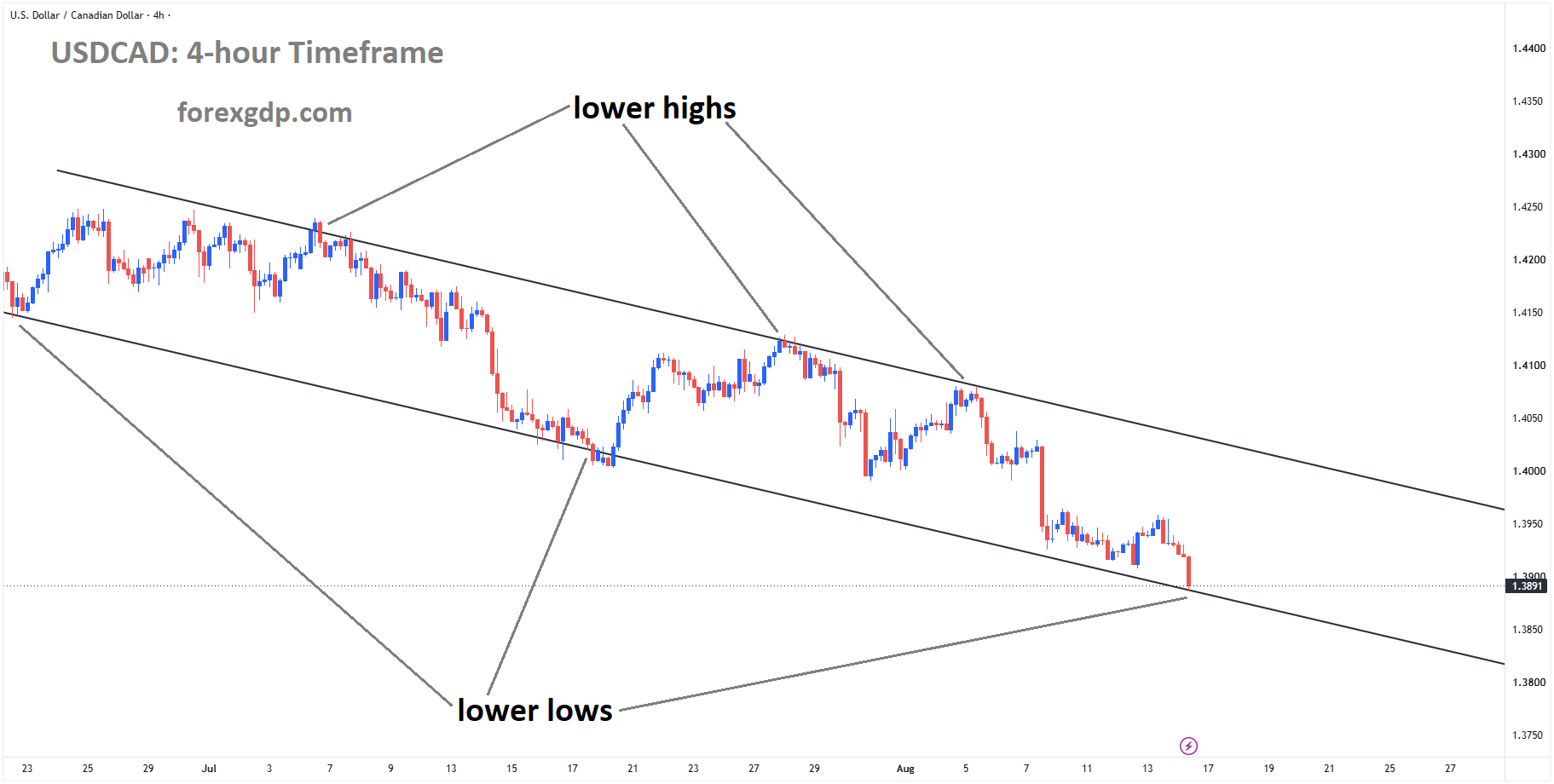
USDCAD reached the lower low area of the descending channel
The latest move extended the retreat that began after USD/CAD reached the upper end of its weekly range. Selling pressure increased as traders responded to softer US inflation figures, weaker employment data, and growing confidence that the Federal Reserve may avoid making an immediate change to interest rates.
At the same time, tensions involving the United States and Iran raised fresh questions about the security of important shipping routes in the Middle East. These developments helped oil remain supported, providing another source of strength for the Canadian Dollar.
Softer US Inflation Reduces Pressure on the Federal Reserve
Recent US inflation reports have encouraged investors to scale back expectations for an immediate Federal Reserve interest rate increase. The Producer Price Index showed weaker price pressure at the wholesale level, suggesting that businesses may be facing less rapid growth in input costs.
This followed a Consumer Price Index report that also showed signs of cooling inflation. Together, the two reports indicated that price pressures in the United States may not be accelerating as quickly as some policymakers and market participants had feared.
Inflation remains an important issue for the Federal Reserve because the central bank must balance price stability with the health of the wider economy. When inflation is rising too quickly, higher interest rates can be used to reduce demand. However, when inflation begins to ease, policymakers have more room to leave borrowing costs unchanged.
The softer inflation readings therefore reduced the urgency for another rate increase. This change in expectations weighed on the US Dollar, which had previously benefited from speculation that American interest rates could remain higher or rise further.
Weak Employment Data Adds to Economic Concerns
The inflation reports were not the only reason investors became more cautious about the US Dollar. The latest Nonfarm Payrolls data had already raised questions about the strength of the American labor market.
Employment figures are closely watched because consumer spending depends heavily on job creation and wage growth. If businesses slow hiring, household confidence and economic activity may weaken over time. A softer labor market could also make the Federal Reserve less willing to tighten monetary policy.
When weaker employment data is combined with cooling inflation, the case for holding interest rates steady becomes stronger. Policymakers may prefer to wait for more evidence before deciding whether additional action is necessary.
This backdrop kept the Greenback under pressure despite its recent recovery. Although the US Dollar remains supported by the possibility of a future policy move, expectations for an immediate increase have clearly faded.
Rising Oil Supports the Canadian Dollar
The Canadian Dollar received additional support from stronger crude oil sentiment. Canada is a major energy exporter, meaning that developments in the oil market can have a significant influence on its currency.
When concerns about supply disruption increase, oil often attracts greater demand. A stronger energy sector can improve Canada’s export outlook and increase the flow of foreign income into the economy. This relationship is one reason the Canadian Dollar is frequently described as a commodity-linked currency.
The latest supply concerns are connected to the growing confrontation between the United States and Iran. The Strait of Hormuz remains central to the situation because it is one of the world’s most important routes for transporting energy supplies.
Any prolonged disruption in this area could affect shipments and create uncertainty across global markets. Even without a complete halt in exports, the threat of interference can be enough to keep energy traders focused on supply security.
US-Iran Tensions Increase Supply Fears

US Treasury Secretary Scott Bessent said Washington was preparing unusually strong measures against Iran, including continued restrictions involving Iranian ports. Such statements added to concerns that the dispute could become more severe and affect regional trade.
Iran, meanwhile, has indicated that the Strait of Hormuz will remain closed until its demands are addressed. President Donald Trump has claimed that the United States maintains control over the strategic waterway, highlighting the sharp disagreement between the two sides.
The situation has become more complicated because of renewed activity by the Iran-backed Houthi movement in Yemen. The group reportedly intensified attacks near the Red Sea and the Bab el-Mandeb Strait, another important route for international shipping.
The Houthis also claimed responsibility for a drone attack on a Saudi Aramco refinery. These developments increased fears that the conflict could spread beyond its current boundaries and threaten more energy facilities or transportation routes.
For Canada’s currency, the resulting support for oil created a favorable environment. As energy supply risks grew, the Loonie benefited and added to the downward pressure on USD/CAD.
Safe-Haven Demand May Protect the US Dollar
Although the US Dollar faced several negative influences, its losses may remain limited. The Greenback is widely viewed as a safe-haven currency, meaning investors often turn to it when political or economic uncertainty rises.
An escalation in the Middle East could therefore create two opposing forces. Oil supply fears may strengthen the Canadian Dollar, but broader concerns about global stability may also increase demand for the US Dollar.
Investors have also not completely abandoned the possibility of another Federal Reserve interest rate increase. While expectations for an immediate move have weakened, traders still see a meaningful chance that policymakers could act later in the year if inflation returns or economic conditions change.
This possibility may prevent the US Dollar from falling too quickly. Federal Reserve officials are likely to remain cautious and emphasize that future decisions will depend on incoming economic information.
US Data and Federal Reserve Comments Take Center Stage
Attention will now turn to upcoming US economic releases, including monthly Retail Sales and the preliminary University of Michigan Consumer Sentiment Index.
Retail Sales will provide fresh information about household spending, a major driver of the American economy. Strong results could ease concerns about slowing growth and offer some support to the US Dollar. Weak figures, however, may reinforce expectations that the Federal Reserve will remain patient.
The consumer sentiment report will show how households view current conditions and the economic outlook. Confidence can influence spending decisions, particularly when families are worried about employment, inflation, or borrowing costs.
Comments from influential Federal Open Market Committee members will also be closely followed. Traders will be looking for any indication that policymakers are becoming more concerned about slowing inflation or weaker employment.
Beyond the US calendar, developments in the Middle East will remain a major source of uncertainty. Changes in shipping conditions, military activity, diplomatic negotiations, and oil supply expectations could quickly affect both currencies.
Summary
USD/CAD remained under pressure as softer US inflation and employment data reduced expectations for an immediate Federal Reserve interest rate increase. This policy shift weakened the US Dollar and encouraged further demand for the Canadian currency.
The Loonie also benefited from oil supply concerns linked to the confrontation between the United States and Iran, tensions around the Strait of Hormuz, and renewed Houthi activity near key shipping routes.
However, continued geopolitical uncertainty could create safe-haven demand for the US Dollar and limit its decline. Upcoming US consumer data, Federal Reserve commentary, Middle East developments, and changes in global oil supply expectations are likely to guide the currency pair’s next move.
USDCHF Turns Lower After US Inflation Report Boosts the Swiss Franc
The US Dollar came under renewed pressure against the Swiss Franc after fresh inflation figures from the United States suggested that price pressures were continuing to ease. The shift ended a four-day period of gains for USD/CHF and encouraged traders to reconsider the chances of another Federal Reserve interest rate increase.
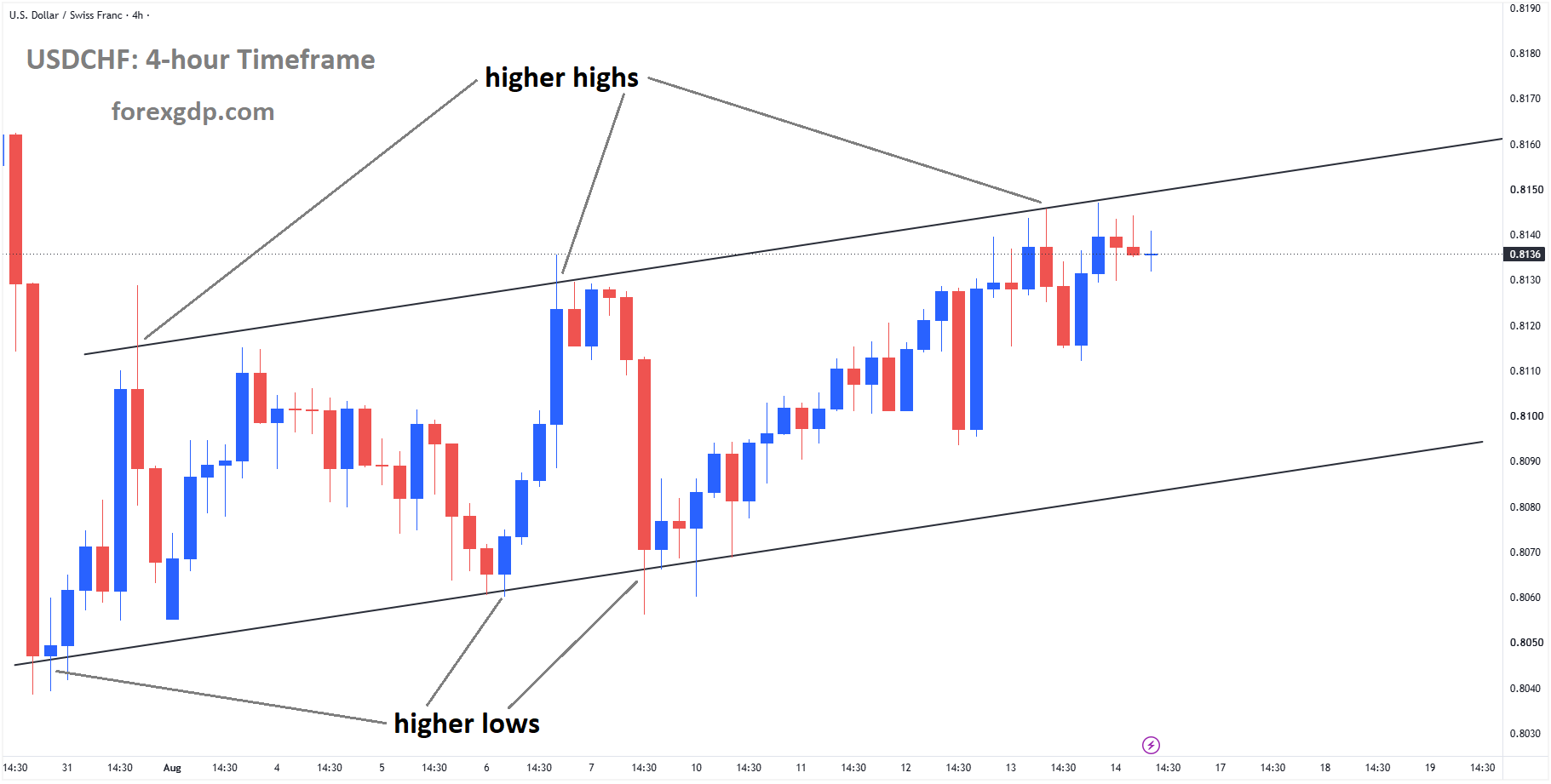
USDCHF reached the higher high area of the ascending channel
Recent US economic data has provided more evidence that inflation is moving in a cooler direction. Consumer inflation was weaker than expected, while wholesale prices showed little change during July. Together, these reports reduced the urgency for the Federal Reserve to tighten monetary policy again at its next meeting.
Investors are now waiting for the latest US retail sales figures. The report could offer important information about consumer demand and the wider health of the American economy. Strong household spending may support the Dollar, while a disappointing result could add to concerns that economic activity is losing momentum.
US Wholesale Inflation Shows Further Signs of Cooling
The latest Producer Price Index report showed that wholesale costs for goods and services were unchanged in July. Economists had expected a modest monthly increase, making the flat reading another sign that inflationary pressure may be weakening before it reaches consumers.
The previous month’s figure was also revised to show a small decline. This suggests that businesses have faced limited growth in production-related costs over the past two months.
Core producer inflation, which removes food and energy because of their frequent price swings, recorded a moderate monthly increase. However, it still came in below economists’ forecasts. The result indicates that underlying wholesale inflation remains present but is not rising as quickly as expected.
On a yearly basis, both headline and core producer inflation continued to show noticeable growth. Even so, the monthly figures attracted greater attention because they may provide a more current picture of how price pressures are developing.
Wholesale inflation matters because changes in business costs can eventually affect the prices paid by consumers. If companies face higher costs for materials, transport, labor, or services, they may pass some of those expenses on to customers. When producer prices remain stable, businesses have less reason to raise consumer prices sharply.
The latest figures therefore strengthened the argument that inflation is gradually becoming less of a threat to the US economy.
Federal Reserve Rate Expectations Shift
Cooling inflation has caused investors to reduce their expectations for another Federal Reserve rate hike in September. The estimated probability of an increase fell to nearly 35%, compared with around 40% shortly after the producer inflation report was published.
This change shows how sensitive monetary policy expectations have become to each new economic release. The Federal Reserve has not committed to a fixed path and continues to assess inflation, employment, consumer spending, and economic growth before making its decisions.
Lower inflation reduces the need for higher interest rates. The Fed raises borrowing costs when it wants to slow demand and control price growth. If inflation continues to soften without a major economic downturn, officials may have more room to leave rates unchanged.
However, one report is unlikely to settle the debate completely. Policymakers will want to see a sustained improvement across several inflation measures. They will also watch whether the labor market remains strong and whether consumers continue to spend at a healthy pace.
Retail Sales Become the Next Major Focus
The upcoming US retail sales report could influence the Dollar’s next move. Consumer spending plays a major role in the American economy, so the data will help investors judge whether higher borrowing costs are affecting household demand.
A strong retail sales result could suggest that consumers remain willing to spend despite tighter financial conditions. This might support expectations that the Federal Reserve can keep monetary policy restrictive for longer.
On the other hand, weak retail activity could strengthen the case for caution. Slower spending may indicate that households are becoming more careful because of expensive credit, reduced savings, or uncertainty about the economic outlook.
For USD/CHF, the report may determine whether the Dollar can regain some support or remain under pressure against the Swiss Franc.
Swiss Inflation Falls to a Four-Month Low
Inflation has also eased in Switzerland. The country’s annual inflation rate slipped to 0.4% in July from 0.5% previously, reaching its lowest point in four months.
The decline suggests that geopolitical tensions and higher energy costs have not created a major inflation problem for Swiss households. Switzerland has often experienced lower inflation than many other developed economies, partly because of the strength of the Swiss Franc and the structure of the domestic economy.
A stronger currency can reduce the cost of imported products, including fuel, food, and industrial materials. This can help protect consumers from some external price increases.
The latest inflation result was slightly different from the Swiss National Bank’s expectation that price growth would pick up modestly in the near term. The central bank recently kept its main interest rate unchanged, reflecting its view that current policy remains appropriate.
SNB Expected to Keep Rates Steady

Most economists expect the Swiss National Bank to leave borrowing costs unchanged for the rest of the year. Further interest rate cuts are generally seen as an emergency option rather than the most likely policy choice.
One reason for this cautious approach is that Swiss banks have not experienced severe damage from the current interest rate environment. Without major stress in the financial system or a sharp deterioration in the economy, the SNB has little reason to make an immediate policy change.
At the same time, very low inflation makes a near-term rate increase unlikely. Economists broadly expect the central bank to wait until early 2028 before delivering its first hike. Currency markets, however, are preparing for the possibility of an earlier move, with expectations pointing toward March 2027.
This difference highlights the uncertainty surrounding Switzerland’s long-term monetary policy. The timing of any future increase will depend on inflation, economic growth, the condition of the banking sector, and movements in the Swiss Franc.
US and Swiss Policy Outlooks Shape USD/CHF
The direction of USD/CHF is being influenced by changing expectations on both sides of the pair. In the United States, softer inflation is reducing confidence that the Federal Reserve will raise rates again soon. In Switzerland, low inflation supports a steady policy stance, although investors still expect the SNB to tighten eventually.
The Swiss Franc may continue to benefit when uncertainty rises or when the US Dollar loses support from interest rate expectations. Still, future economic reports from both countries could quickly change the outlook.
US retail sales will provide the next important signal, followed by additional inflation and employment data. In Switzerland, attention will remain focused on whether inflation stays low and whether the SNB changes its guidance.
Summary
USD/CHF moved lower as softer US inflation data weakened demand for the Dollar and reduced expectations for a September Federal Reserve rate hike. Flat wholesale prices and a smaller-than-expected increase in core producer inflation added to signs that US price pressures are easing.
Investors are now watching US retail sales for more evidence about consumer strength and the broader economy. Meanwhile, Swiss inflation has fallen to a four-month low, supporting expectations that the Swiss National Bank will keep interest rates unchanged throughout the year. Although economists expect the SNB’s next hike to remain distant, currency markets continue to prepare for the possibility of an earlier policy shift.
Don’t trade all the time, trade forex only at the confirmed trade setups
Get more confirmed trade signals at premium or supreme – Click here to get more signals, 2200%, 800% growth in Real Live USD trading account of our users – click here to see , or If you want to get FREE Trial signals, You can Join FREE Signals Now!