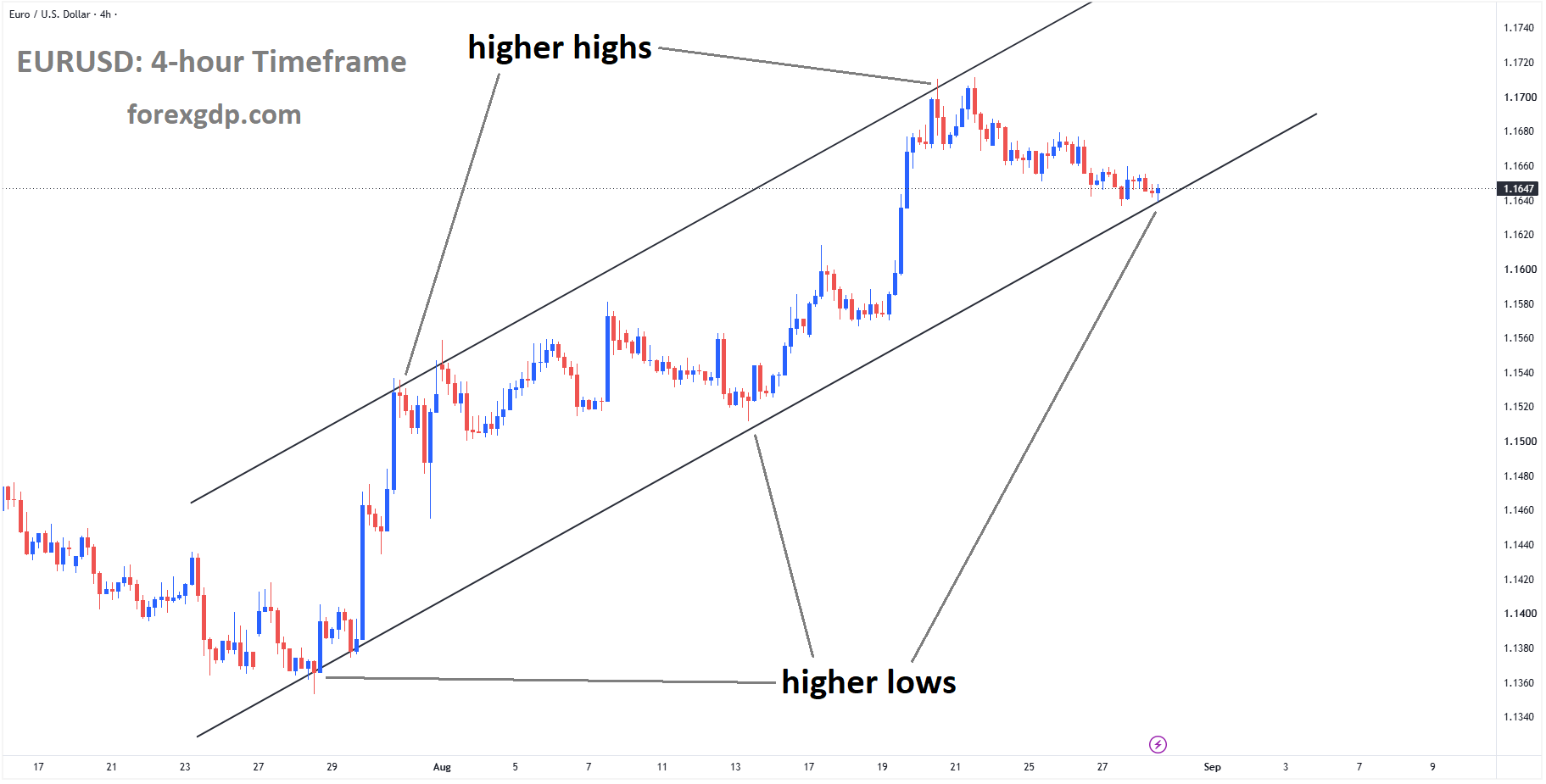
EURUSD reached a higher low area of the ascending channel
EURUSD Loses Momentum Before Major Central Bank Event
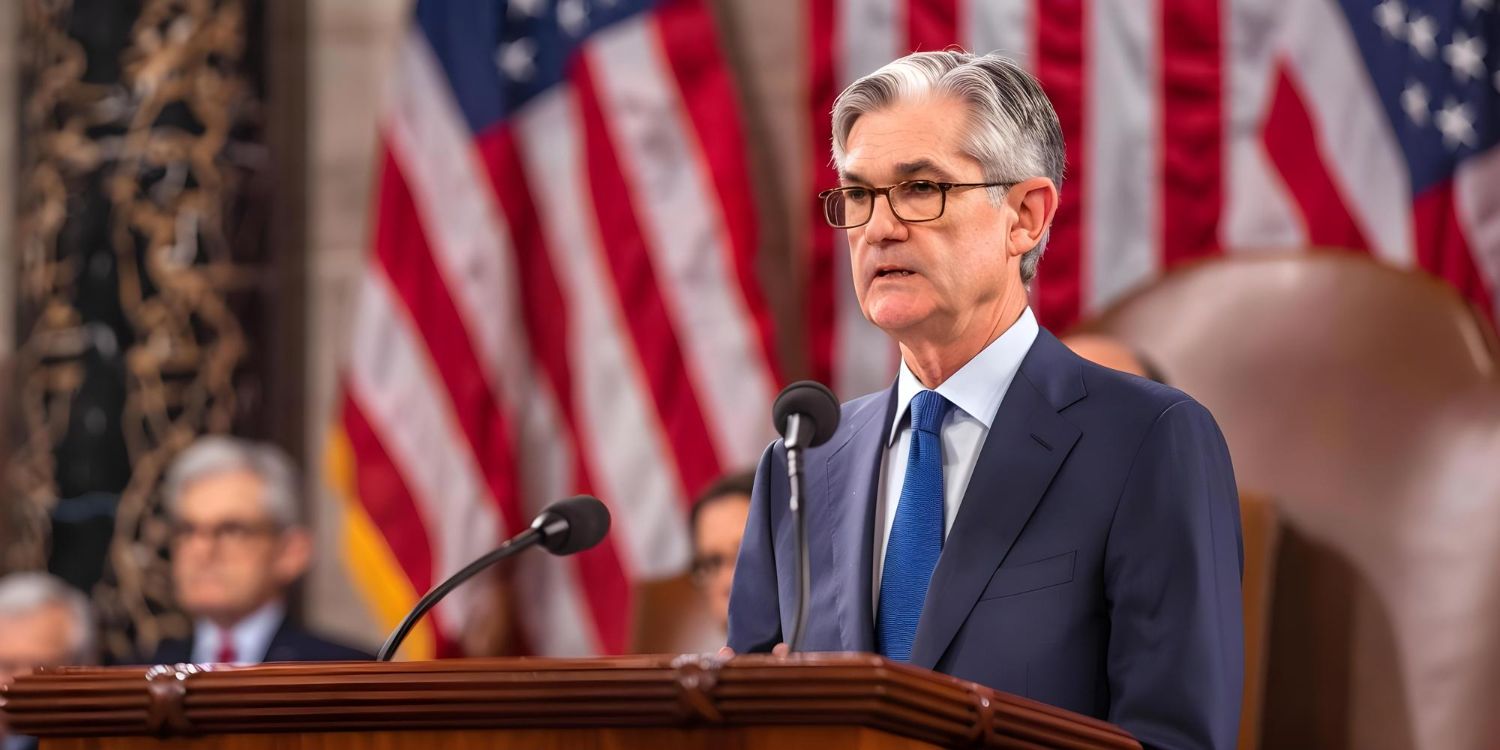
The Euro weakened against the US Dollar on Friday as investors became more cautious before a major speech from Federal Reserve Chairman Kevin Warsh at the Jackson Hole Symposium. The currency pair was also heading toward a weekly loss after recording strong gains during the previous month.
Attention has shifted toward the Federal Reserve because inflation in the United States remains stubbornly high. Several Fed officials have suggested that stronger action may be necessary to bring price growth under control. Their comments have increased expectations that monetary policy could remain tight or become even stricter.
This change in mood has helped the US Dollar regain some strength. Meanwhile, the Euro has struggled to attract fresh demand as investors wait for clearer information about the Fed’s next move.
Jackson Hole Speech Takes Centre Stage
The Jackson Hole Symposium is one of the most closely watched central banking events of the year. Policymakers, economists, and financial leaders gather to discuss major challenges facing the global economy. Speeches delivered at this meeting often influence expectations about interest rates and future monetary policy.
Kevin Warsh’s speech is receiving particular attention because investors want to understand how the Federal Reserve plans to deal with persistent inflation. His comments could offer useful clues about whether the central bank is preparing to tighten policy further or remain patient while studying upcoming economic data.
Warsh has generally avoided giving strong guidance about future decisions. However, that has not reduced market interest. In fact, the lack of clear direction has made the speech even more important. Investors are searching for small changes in his tone that may reveal how concerned the Fed has become about inflation.
If Warsh sounds more worried about rising prices, expectations for tighter monetary policy could grow. A more cautious message, however, may reduce some of the recent support for the US Dollar.
Fed Officials Push for Stronger Action
Comments from other Federal Reserve officials have already created a more serious mood. Some policymakers believe inflation is not falling quickly enough and have called for stronger measures to control it.
Kansas City Fed President Jeffrey Schmid described inflation as sticky and said the central bank must continue searching for ways to overcome the problem. His comments showed that certain officials are uncomfortable with the slow progress toward the Fed’s inflation goal.
Cleveland Fed President Beth Hammack also delivered a firm message. She suggested that the time had come for action, referring to the possibility of higher interest rates. Such statements have encouraged investors to consider whether the Fed may maintain restrictive conditions for longer than previously expected.
Higher interest rates can make the US Dollar more attractive because investors may receive better returns from dollar-based assets. This does not guarantee continuous Dollar strength, but it can improve demand when the Federal Reserve appears more aggressive than other major central banks.
US Inflation Remains a Serious Concern
The latest Personal Consumption Expenditures data showed that inflationary pressure continues to trouble the US economy. Consumer prices rose faster than economists had expected during the latest reporting period, while annual inflation remained far above the Federal Reserve’s target.
The core measure, which removes more volatile food and energy costs, also remained elevated. The Fed closely monitors this reading because it can provide a clearer view of underlying price pressure. When core inflation stays high, policymakers may hesitate to make borrowing conditions easier.
Persistent inflation creates a difficult situation for the central bank. Keeping interest rates high may slow economic growth and make loans more expensive for households and businesses. However, lowering rates too early could allow inflation to become stronger again.
The Federal Reserve must therefore balance two risks. It needs to prevent inflation from becoming deeply rooted while avoiding unnecessary damage to employment and economic activity. This difficult choice explains why every speech and economic report receives so much attention.
The Euro Struggles Against Renewed Dollar Demand
The Euro had performed well during the previous several weeks, but that momentum weakened as demand for the US Dollar returned. Investors appear to be reducing some of their earlier positions while waiting for the Fed chairman’s comments.
The Euro’s weakness does not necessarily reflect a sudden collapse in confidence. Much of the movement is connected to changing expectations surrounding US monetary policy. When investors believe the Fed could take a tougher position, the Dollar often receives support against other major currencies.
The wider outlook also depends on the policy gap between the Federal Reserve and the European Central Bank. If the Fed keeps borrowing costs higher while the European Central Bank adopts a softer approach, the Dollar may gain an advantage. If that difference becomes smaller, the Euro may find room to recover.
Economic growth, inflation, employment, and business confidence across both regions will continue to influence this relationship. Investors will carefully compare incoming data from the United States and the Eurozone before forming a stronger view.
Investors May Be Underestimating the Event

Some currency strategists believe the market may be too relaxed before the Jackson Hole speech. Major central bank events have caused sharp changes in investor expectations in the past, especially when policymakers deliver an unexpected message.
Current market behaviour suggests that many participants are not preparing for a large reaction. That calm approach could become risky if Warsh uses stronger language than expected. A clear warning about inflation or a direct call for tighter policy could quickly change the outlook.
On the other hand, a balanced speech that avoids firm commitments may leave investors with more questions than answers. In that case, attention would return to future inflation, employment, and economic growth reports.
The Dollar’s recent recovery may also represent a temporary adjustment after an extended period of weakness. Its longer-term direction will depend on whether the Federal Reserve’s actions match the stronger tone coming from some policymakers.
What Comes Next for EURUSD
The next phase for EURUSD will be shaped by the Federal Reserve’s message and the way investors interpret it. A tougher stance on inflation may keep the Dollar supported, while a cautious tone could ease pressure on the Euro.
Beyond Jackson Hole, upcoming US economic reports will play an important role. Inflation must show clear and lasting improvement before the Fed can feel comfortable changing direction. Labour market conditions will also matter because policymakers want to control prices without causing a severe slowdown.
The Eurozone’s economic performance will be equally important. Better regional data could improve confidence in the Euro, while weak growth or softer inflation may encourage expectations of easier European Central Bank policy.
Final Summary
EURUSD came under renewed pressure as the US Dollar benefited from stronger calls for monetary tightening. Recent inflation figures showed that price growth remains well above the Federal Reserve’s goal, increasing the importance of Kevin Warsh’s Jackson Hole speech.
Several Fed officials have already argued that firmer action may be necessary. Investors will now listen closely for clues about future interest-rate decisions. The speech could shape short-term sentiment, but the broader direction of EURUSD will continue to depend on inflation, economic growth, and the policy choices of both the Federal Reserve and the European Central Bank.
GBPUSD Gains Ground While UK Tightening Hopes Fade
The British Pound recovered slightly after facing losses during the previous two sessions. However, the currency still lacks a strong domestic reason to extend its advance. Falling Brent crude oil costs have reduced some of the immediate inflation worries surrounding the UK economy.
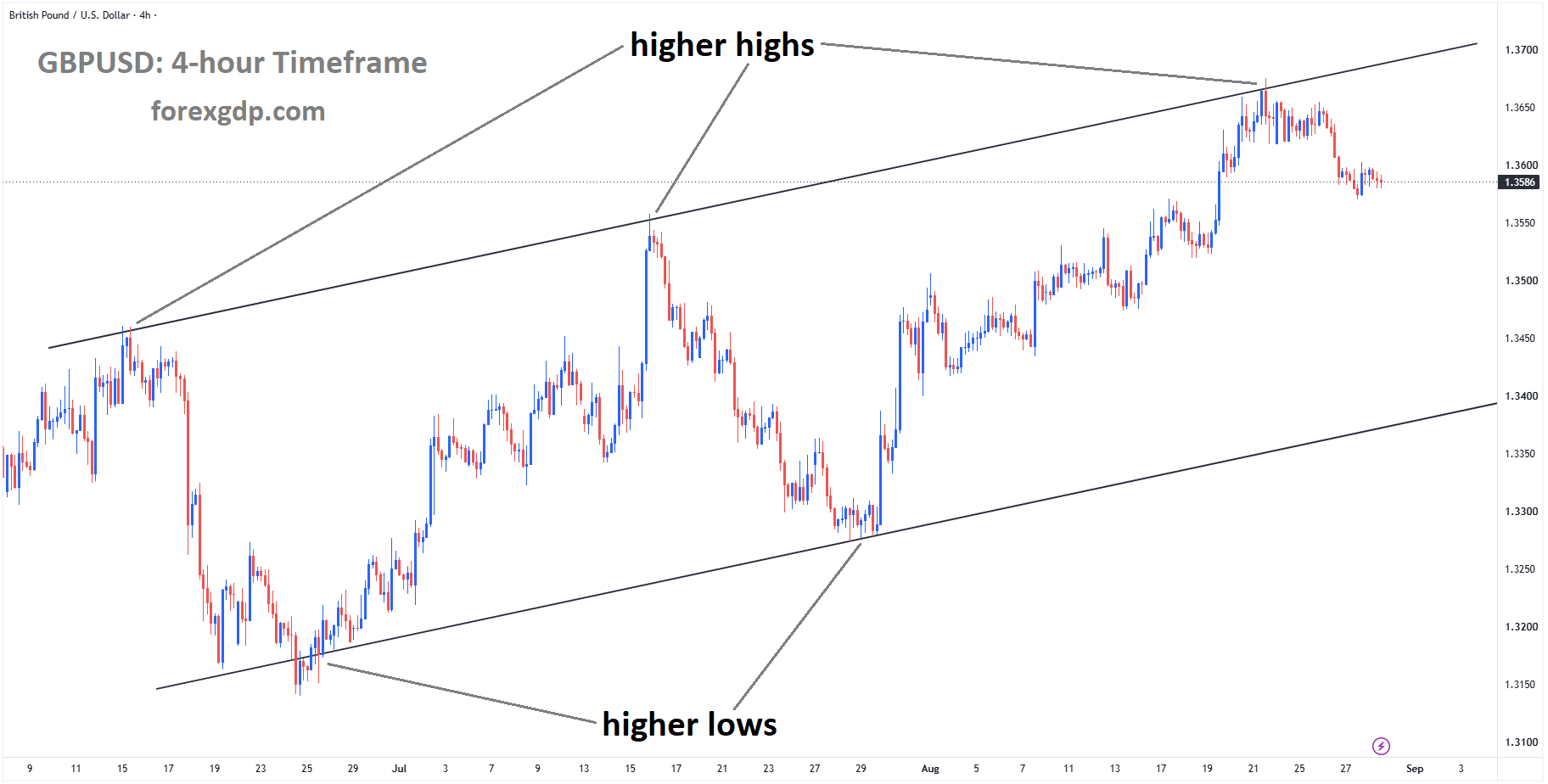
GBPUSD is moving in an ascending channel, and the market has fallen from the higher high area of the channel
Energy expenses can have a major influence on inflation because they affect households, transportation, manufacturing, and business operations. When oil costs decline, companies may spend less on production and delivery. Consumers may also face less pressure from fuel and other energy-related expenses. This can eventually slow the pace of price increases across the economy.
The recent drop in crude oil costs has therefore reduced concerns that the Bank of England may need to raise interest rates soon. Earlier fears about a possible escalation in tensions between the United States and Iran had encouraged speculation that energy costs could rise sharply. Such an increase could have placed fresh pressure on UK inflation and forced the central bank to consider tighter monetary policy.
Those concerns have since eased. As the risk of an immediate energy shock has weakened, financial markets have pushed their expectations for the next Bank of England rate increase further into the future.
BoE Rate Increase Expectations Move Into 2027
Market participants now expect very little policy tightening at the Bank of England’s September meeting. The probability of an immediate rate increase remains low, and most economists believe policymakers will keep borrowing costs unchanged through the remainder of the year.
Expectations for the next potential rate increase have shifted from late 2026 into early 2027. This change matters for the Pound because higher interest rates can make a currency more attractive to international investors. When investors no longer expect an early increase, some of that potential support can disappear.
The Bank of England must still remain careful. Inflation continues to sit above its desired level, partly because of higher household energy bills. Price growth may also remain elevated as the year progresses. However, inflation is only one part of the central bank’s decision.
Policymakers must also consider employment conditions, consumer demand, wage growth, and the overall strength of the economy. Signs of weakness in the UK labour market may discourage the Bank from increasing borrowing costs too quickly. Higher rates could place additional pressure on households and businesses that are already dealing with expensive credit and uncertain economic conditions.
This creates a difficult situation. The central bank cannot ignore persistent inflation, but it must avoid taking action that could damage an already fragile economy. For now, most economists believe keeping policy steady is the most likely path.
Quiet UK Calendar Limits Support for the Pound
The UK economic calendar has offered very little fresh information capable of driving the Pound. Without major economic releases, currency traders have fewer reasons to make strong decisions based on the domestic outlook.
Important reports can quickly change expectations for inflation, economic growth, employment, and central bank policy. When the calendar is quiet, however, markets often rely more heavily on global events and changes in sentiment. This leaves the Pound vulnerable to movements in the US Dollar and broader financial conditions.
Attention will eventually turn toward the final UK Purchasing Managers’ Index reports. These figures can provide useful information about activity across the manufacturing and service sectors. Until those reports arrive, uncertainty about the strength of the British economy may keep traders cautious.
Communication from the Bank of England has also been limited. Policymakers have not provided many fresh clues about when they may consider another rate adjustment. The lack of guidance has made it harder for investors to build confidence around the future direction of UK monetary policy.
At the same time, the recent reduction in rate increase expectations has softened sentiment toward the British Pound. Even if the currency manages to recover occasionally, it may struggle to gain lasting momentum without stronger economic news or a noticeable change in the Bank of England’s message.
Mixed UK Economy Creates a Difficult Policy Choice

The British economy continues to send conflicting signals. Inflation remains uncomfortable, but some parts of the economy appear weak. This mixed picture gives the Bank of England little room to move confidently in either direction.
Household energy expenses have been an important source of inflation pressure. When families spend more on electricity, heating, and other essential services, they have less money available for other purchases. Businesses can also face higher operating costs, which may eventually be passed on to customers.
Meanwhile, weakness in the labour market suggests economic demand may not be strong enough to tolerate tighter policy. If companies slow hiring or reduce their workforce, consumer confidence can decline. Lower confidence often leads households to delay large purchases and control unnecessary spending.
Raising interest rates under these conditions could create additional strain. Yet leaving policy unchanged for too long may allow inflation to remain above the central bank’s preferred level. The Bank of England must balance these risks carefully, which explains why economists expect a cautious approach rather than an immediate rate increase.
Jackson Hole Speech Takes Centre Stage
With limited developments in the UK, attention has moved toward the annual Jackson Hole economic gathering in Wyoming. The event brings together central bankers, economists, financial officials, and other influential figures to discuss major economic and policy challenges.
Forex traders are especially focused on an upcoming speech from Federal Reserve Chair Kevin Warsh. His comments may offer important hints about the future direction of US interest rates and the central bank’s view of the American economy.
Any discussion of inflation, employment, economic growth, or future policy decisions could influence demand for the US Dollar. Because GBPUSD reflects the relationship between the Pound and the Dollar, changes in expectations for Federal Reserve policy can have a direct impact on the pair.
If the Federal Reserve Chair adopts a firm position on inflation, investors may expect US interest rates to remain restrictive for longer. That could support the Dollar and create pressure for the Pound. A more cautious message about economic growth or employment could produce a different reaction.
The wording and tone of the speech may therefore matter just as much as any direct policy statement. Traders will closely examine whether the Federal Reserve appears more concerned about inflation or weakening economic activity.
Markets May Be Underestimating Event Risk
Jackson Hole speeches have previously caused meaningful changes in financial market expectations. Despite that history, current market behaviour suggests many participants are not preparing for a major reaction.
This calm approach could become risky if the Federal Reserve Chair delivers an unexpected message. When investors are positioned for a quiet event, surprising comments can produce a stronger response because traders may need to adjust their expectations quickly.
The US Dollar has shown some firmness ahead of the event, but overall sentiment remains relatively relaxed. That contrast suggests investors recognise the importance of the speech without fully expecting it to change the policy outlook.
For GBPUSD, this means the immediate direction may depend more on the Federal Reserve than on the Bank of England. The Pound currently lacks strong domestic support, while expectations for UK policy tightening have weakened. A clear message from Jackson Hole could therefore become the main driver of market sentiment.
Final Summary
The British Pound has recovered modestly, but its wider outlook remains uncertain. Lower Brent crude oil costs have eased fears of another inflation shock and encouraged markets to delay expectations for the Bank of England’s next rate increase until 2027.
Although UK inflation remains a concern, weakness in the labour market and an uneven economy may persuade policymakers to keep interest rates unchanged. A quiet domestic calendar and limited communication from the Bank of England have also left the Pound without a strong source of support.
Attention has now shifted to the Jackson Hole gathering and the Federal Reserve Chair’s speech. His comments could reshape expectations for US interest rates and influence the Dollar. With markets appearing relatively calm ahead of an event that has moved sentiment in the past, GBPUSD may remain sensitive to any unexpected policy signals.
USDJPY Gains Strength as Strong Japan Data Fails to Lift Yen
The Japanese Yen remained under pressure against the US Dollar on Friday, extending its weakness for a fifth straight day. This decline came even though Japan released encouraging inflation and employment figures earlier in the session.
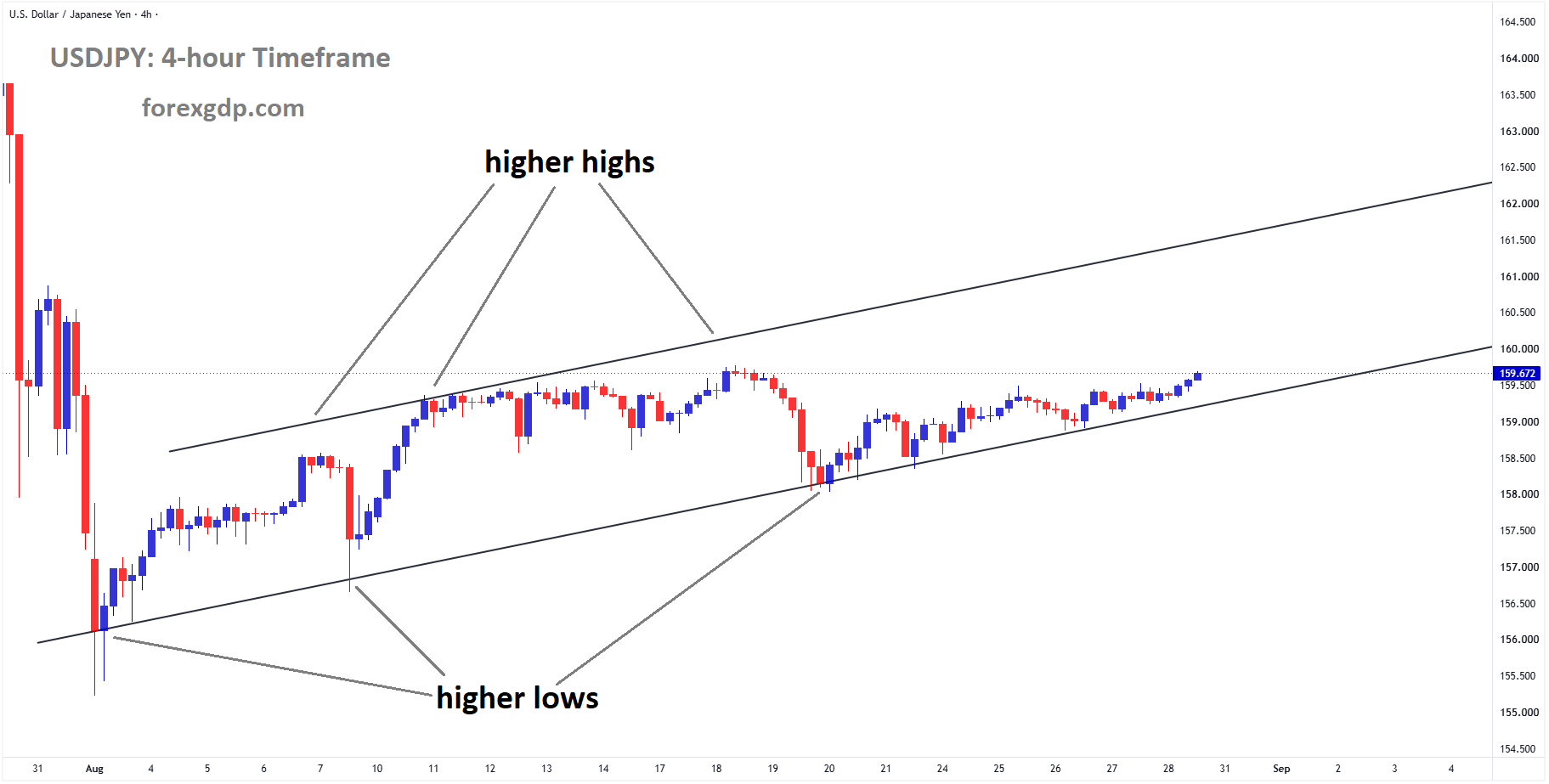
USDJPY is moving in an ascending channel
Tokyo’s core inflation increased faster than economists expected, while the national unemployment rate unexpectedly fell. Both developments could support the case for the Bank of Japan to raise interest rates. However, the Yen received little lasting benefit from the reports.
At the same time, the US Dollar showed renewed strength as investors prepared for Federal Reserve Chairman Kevin Warsh’s speech at the Jackson Hole gathering. His comments may provide important clues about the future direction of US monetary policy.
Japanese Yen Struggles Despite Positive Data
The Yen’s continued weakness surprised some investors because the latest Japanese economic reports were broadly supportive. Inflation remained close to the Bank of Japan’s goal, and the labour market showed signs of improvement.
Normally, stronger inflation and lower unemployment could increase expectations of tighter monetary policy. Higher interest rates often make a currency more attractive because investors can earn better returns from assets linked to that currency.
However, the Yen failed to gain meaningful support. This suggests that investors remain cautious about how quickly the Bank of Japan will act. The central bank has spent many years maintaining a loose policy to encourage economic activity and stable inflation. As a result, markets may need clearer signals before becoming confident that a significant policy change is approaching.
The strength of the US Dollar also limited demand for the Japanese currency. Investors appeared more interested in the Federal Reserve’s next steps than in the possibility of a Bank of Japan rate increase.
Tokyo Inflation Keeps Pressure on the Bank of Japan
The latest Tokyo Consumer Price Index showed that overall inflation eased slightly compared with the previous month. However, the core measure, which is more closely watched by the Bank of Japan, moved higher and exceeded market expectations.
Core inflation is important because it removes some of the more volatile elements that can cause sudden changes in the overall figure. It can therefore provide a clearer picture of underlying price pressure across the economy.
The increase brought Tokyo’s core inflation closer to the Bank of Japan’s target. This could strengthen the argument that Japan no longer needs extremely supportive monetary conditions.
Persistent inflation can become a serious problem if wages and household income do not rise at a similar pace. Consumers may reduce spending as everyday costs increase, placing pressure on businesses and slowing economic growth. The central bank must therefore decide whether inflation is strong enough to justify higher borrowing costs without damaging the wider economy.
BoJ Officials Warn About Growing Inflation Risks
The inflation report followed comments from Bank of Japan Deputy Governor Ryozo Himino, who warned that price pressures were becoming more noticeable. He suggested that interest rates may need to rise at the right time to prevent inflation from becoming difficult to control.
His comments highlighted the risks of waiting too long. If inflation rises sharply, the Bank of Japan could later be forced to increase interest rates more aggressively. Sudden policy changes may place heavy pressure on borrowers, companies and households.
A gradual approach would allow businesses and consumers more time to adjust. However, the central bank also needs convincing evidence that inflation can remain stable over a longer period.
Japan has experienced weak price growth for many years, so officials are unlikely to rush into a major policy shift based on one or two reports. They will probably continue examining wage growth, consumer spending, business activity and global economic conditions before making their next decision.
Stronger Labour Market Supports Rate Hike Expectations
Japan’s latest employment report added another positive signal. The unemployment rate unexpectedly declined and reached its lowest point in a year.
A healthy labour market can support economic growth because more people earning wages usually leads to stronger household spending. It may also encourage businesses to offer better salaries when competition for workers increases.
Rising wages are especially important for the Bank of Japan. Policymakers want inflation to be supported by sustainable income growth rather than temporary increases in energy, food or import costs.
The employment figures increased speculation that the central bank may consider raising interest rates at its next policy meeting. Even so, investors appear uncertain about whether officials are ready to move immediately.
The Bank of Japan may want to see further evidence that wage gains and inflation are spreading across the economy. Until its message becomes more direct, expectations surrounding future rate increases may continue to change with each new economic report.
Federal Reserve Policy Takes Centre Stage
While Japan’s economic figures attracted attention, the main focus shifted toward the Jackson Hole meeting. Investors are waiting for Federal Reserve Chairman Kevin Warsh to explain how the US central bank plans to respond to continued inflation pressure.
The Jackson Hole gathering is closely followed because central bankers often use it to discuss major economic challenges and future policy priorities. Even small changes in language can affect expectations surrounding interest rates and the US Dollar.
Investors will want to know whether Warsh believes another rate increase may be needed soon. A firm message supporting tighter policy could strengthen expectations that US borrowing costs will remain elevated or move higher.
On the other hand, a cautious speech could suggest that the Federal Reserve wants more economic evidence before taking further action. That would leave markets focused on upcoming inflation, employment and consumer spending data.
Fed Officials Call for Stronger Action

Several Federal Reserve officials have already expressed concern about stubborn inflation. Their comments have increased pressure on the central bank to show that it remains committed to restoring price stability.
Kansas City Fed President Jeffrey Schmid said inflation remained persistent and stressed the need to find effective ways to reduce it. Cleveland Fed President Beth Hammack also argued that the time had come for action, pointing toward the possibility of higher interest rates.
These remarks suggest that some policymakers are uncomfortable with allowing inflation to stay above the central bank’s target for too long. When high inflation continues, consumers lose purchasing power and businesses face greater uncertainty over future costs.
However, raising interest rates also carries risks. More expensive borrowing can reduce business investment, weaken household spending and slow job creation. The Federal Reserve must balance the need to control inflation with the responsibility of protecting economic stability.
What Investors Expect From Warsh’s Speech
Markets are likely to focus on two major subjects during Warsh’s remarks. The first is whether he gives a clear signal about the possibility of an interest rate increase at the next major policy meeting.
A direct message could quickly reshape expectations. If Warsh strongly supports tighter policy, the Dollar may remain well supported as investors anticipate higher returns from US assets.
The second issue involves the Federal Reserve’s inflation framework. Investors will listen carefully for any suggestion that the central bank could change how it defines or applies its inflation target.
Any adjustment to that framework could have long-term effects on monetary policy. It could influence how quickly the Federal Reserve responds to rising prices and how much inflation it is willing to tolerate before acting.
For now, uncertainty surrounding the speech is supporting the US Dollar and limiting the Yen’s ability to benefit from stronger domestic data.
Final Summary
The Japanese Yen remained weak even after Tokyo’s core inflation exceeded expectations and Japan’s unemployment rate declined. These reports strengthened the case for a future Bank of Japan rate increase, but investors still appear doubtful about how quickly policymakers will act.
Attention has now moved to Federal Reserve Chairman Kevin Warsh’s Jackson Hole speech. Markets will closely examine his comments for clues about upcoming interest rate decisions and possible changes to the Fed’s inflation policy. Until the central banks provide clearer guidance, differences between US and Japanese policy expectations are likely to remain the main influence on USDJPY sentiment.
USDCHF Gains Momentum Ahead of Warsh’s Key Speech
The Swiss Franc remained slightly weaker against the US Dollar as investors waited for fresh comments from Federal Reserve Chairman Kevin Warsh at the Jackson Hole Symposium. Trading activity was calm, with many market participants choosing to remain cautious before the highly anticipated speech.
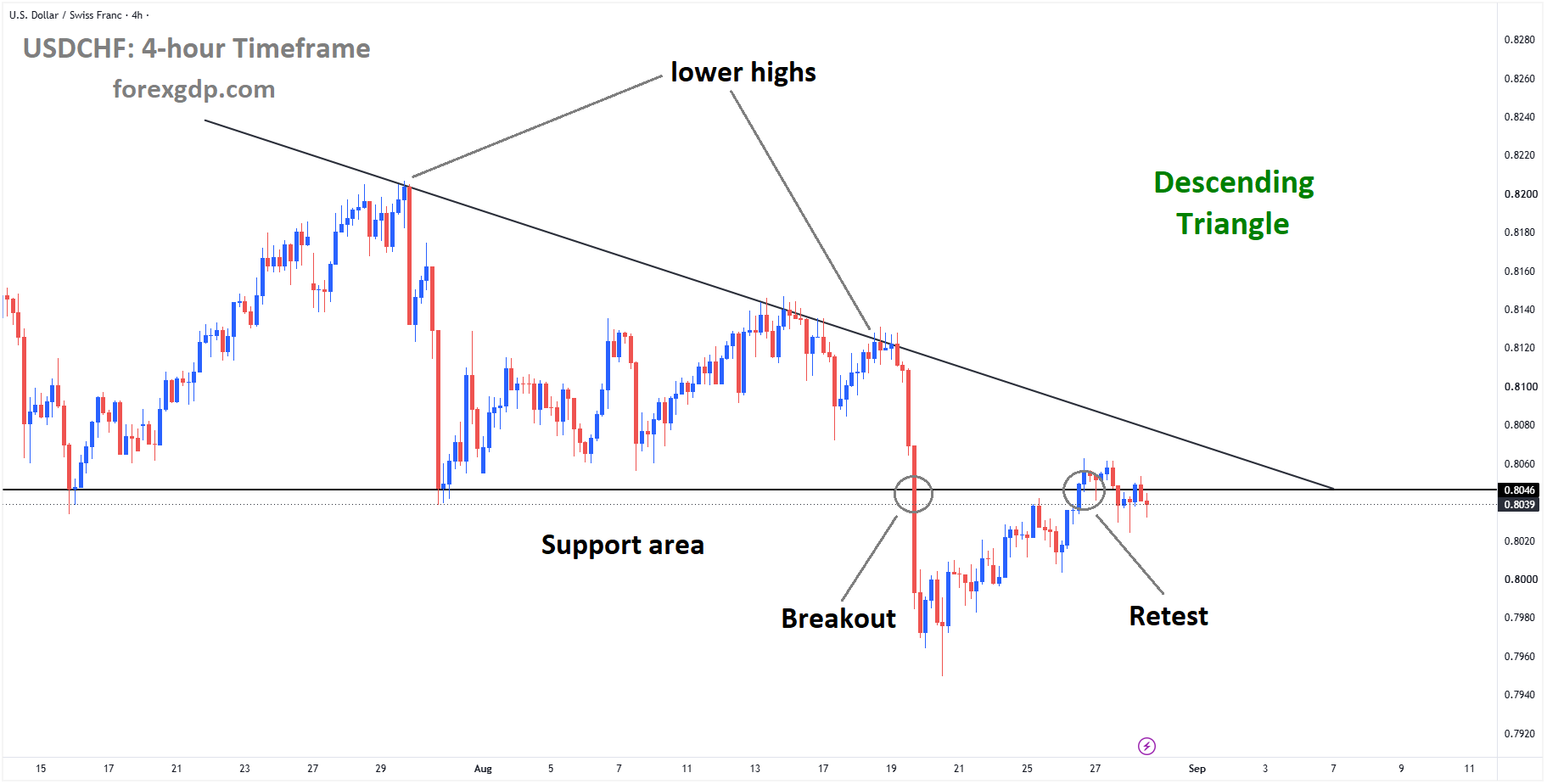
USDCHF reached the retest area of the broken descending Triangle pattern
The US Dollar found moderate support after several Federal Reserve officials called for tighter monetary policy. Their comments strengthened expectations that the central bank may need to take stronger action to control persistent inflation.
Meanwhile, encouraging employment figures from Switzerland showed that the country’s labour market remains resilient. However, the positive report was not enough to give the Swiss Franc a meaningful lift, as attention remained firmly focused on the Federal Reserve’s next policy steps.
Federal Reserve Speech Takes Centre Stage
Kevin Warsh’s speech at Jackson Hole is one of the most closely watched events for global financial markets. Investors hope his remarks will offer a clearer picture of how the Federal Reserve plans to deal with inflation and manage the wider US economy.
The previous monetary policy meeting left many questions unanswered. Although Warsh had sounded firm about inflation in his earlier speeches, markets are still waiting to see whether his words will be followed by clear policy action.
That uncertainty has encouraged investors to avoid making large decisions before the Jackson Hole address. Any strong message about interest rates could influence the US Dollar, government bonds and broader market sentiment.
However, a cautious or general speech may leave investors with little new information. In that case, attention would quickly return to incoming economic reports and future statements from other Federal Reserve officials.
Persistent Inflation Keeps Pressure on the Fed
Recent US inflation figures have added to concerns that price pressures are not easing quickly enough. Persistent inflation reduces the Federal Reserve’s flexibility because keeping monetary policy too relaxed could allow prices to rise further.
Several officials have therefore argued that higher interest rates may be necessary. Kansas City Fed President Jeffrey Schmidt described inflation as stubborn and stressed that policymakers must continue searching for effective ways to bring it under control.
Cleveland Fed President Beth Hammack also supported stronger action. Her remarks suggested that waiting too long could make the inflation problem harder to manage later.
These comments gave the US Dollar some support because higher interest rates can make dollar-based assets more attractive to global investors. Still, the overall reaction remained limited as markets waited to hear whether Warsh would support the same message.
The Federal Reserve must carefully balance inflation control with economic stability. Raising rates too aggressively could weaken business activity and increase pressure on households. Moving too slowly, however, could damage confidence in the central bank’s commitment to price stability.
Investors Question How Much Warsh Will Reveal
Not every market observer expects the Jackson Hole speech to provide firm policy guidance. Bas van Geffen of Rabobank has expressed doubts about whether Warsh will offer detailed information about the Federal Open Market Committee’s future decisions.
One possibility is that the Fed chairman will stay close to a prepared message and avoid committing to a particular course of action. Central bank leaders often prefer to keep their options open, especially when the economic outlook is uncertain.
Another possibility is that Warsh could speak more directly following comments from Treasury Secretary Scott Bessent about the interest rate market. Such interventions may increase pressure on the Federal Reserve to explain its thinking more clearly.
Rabobank believes the structure of this year’s Jackson Hole programme may point towards a cautious approach. The absence of a dedicated monetary policy panel suggests that officials may not be preparing to announce a major shift.
If Warsh avoids strong guidance, uncertainty surrounding future rate decisions could continue. Investors would then focus more heavily on inflation, employment, consumer spending and economic growth data.
The US Dollar Gains From Policy Expectations

The US Dollar has benefited from the growing belief that American interest rates could remain elevated or move higher. When investors expect tighter Federal Reserve policy, demand for the currency often improves because US assets may offer more attractive returns.
However, the Dollar’s strength is not based only on interest rate expectations. Global uncertainty has also encouraged demand for highly liquid assets. Ongoing tensions in the Middle East and concerns about energy supplies continue to influence investor behaviour.
The American currency may receive additional support if Warsh confirms that fighting inflation remains the central bank’s main priority. A firm message would show that policymakers are prepared to act even if tighter financial conditions create short-term challenges for the economy.
On the other hand, a softer message could reduce confidence in further policy tightening. This makes the wording and tone of the speech especially important.
Swiss Labour Market Shows Encouraging Strength
Switzerland’s latest employment figures offered a positive view of the domestic economy. The report suggested that the labour market continues to perform well despite uncertainty linked to the Middle East conflict and pressure on global energy markets.
A stable labour market is important because it supports household income, consumer confidence and domestic spending. It can also help protect the wider economy when international conditions become difficult.
The data showed that Swiss businesses have continued to manage external pressures without a major decline in employment. This resilience is encouraging, particularly for a country that depends heavily on international trade and can be affected by changes in global demand.
Even so, the Swiss Franc received little support from the report. Investors were more focused on developments in the United States, where expectations surrounding Federal Reserve policy had a stronger influence on currency sentiment.
Global Risks Remain Important for the Swiss Franc
The Swiss Franc is widely viewed as a safe-haven currency. Demand for it can increase when investors become concerned about political conflict, financial instability or a sharp slowdown in the global economy.
Middle East tensions remain a significant source of uncertainty. Any escalation could disrupt energy supplies, raise inflation concerns and encourage investors to move towards assets they consider more stable.
So far, however, the Swiss Franc’s safe-haven appeal has been balanced by expectations of tighter US monetary policy. This has allowed the US Dollar to remain firm even while geopolitical risks continue.
The future direction of the currency pair may therefore depend on whether investors place greater importance on Federal Reserve policy or global uncertainty. Stronger US rate expectations could support the Dollar, while a rise in risk aversion could improve demand for the Franc.
Final Summary
USDCHF remained calm as investors waited for Kevin Warsh’s Jackson Hole speech. The US Dollar received moderate support after Federal Reserve officials argued that stronger action may be needed to control stubborn inflation.
Markets are hoping for clearer guidance about future interest rate decisions, although some analysts believe Warsh may avoid making firm commitments. If his speech provides few details, investors will return their attention to upcoming US economic data and comments from other policymakers.
Switzerland’s resilient employment figures offered an encouraging signal about the domestic economy, but they failed to strengthen the Franc significantly. For now, Federal Reserve expectations, persistent inflation and geopolitical uncertainty remain the main forces shaping sentiment around USDCHF.
AUDUSD Extends Its Rally Before Warsh Takes Centre Stage
The Australian Dollar continued to strengthen against the US Dollar, extending its positive run for a fourth straight trading day. The currency pair reached its highest point in around three months as investors showed renewed interest in the Aussie.
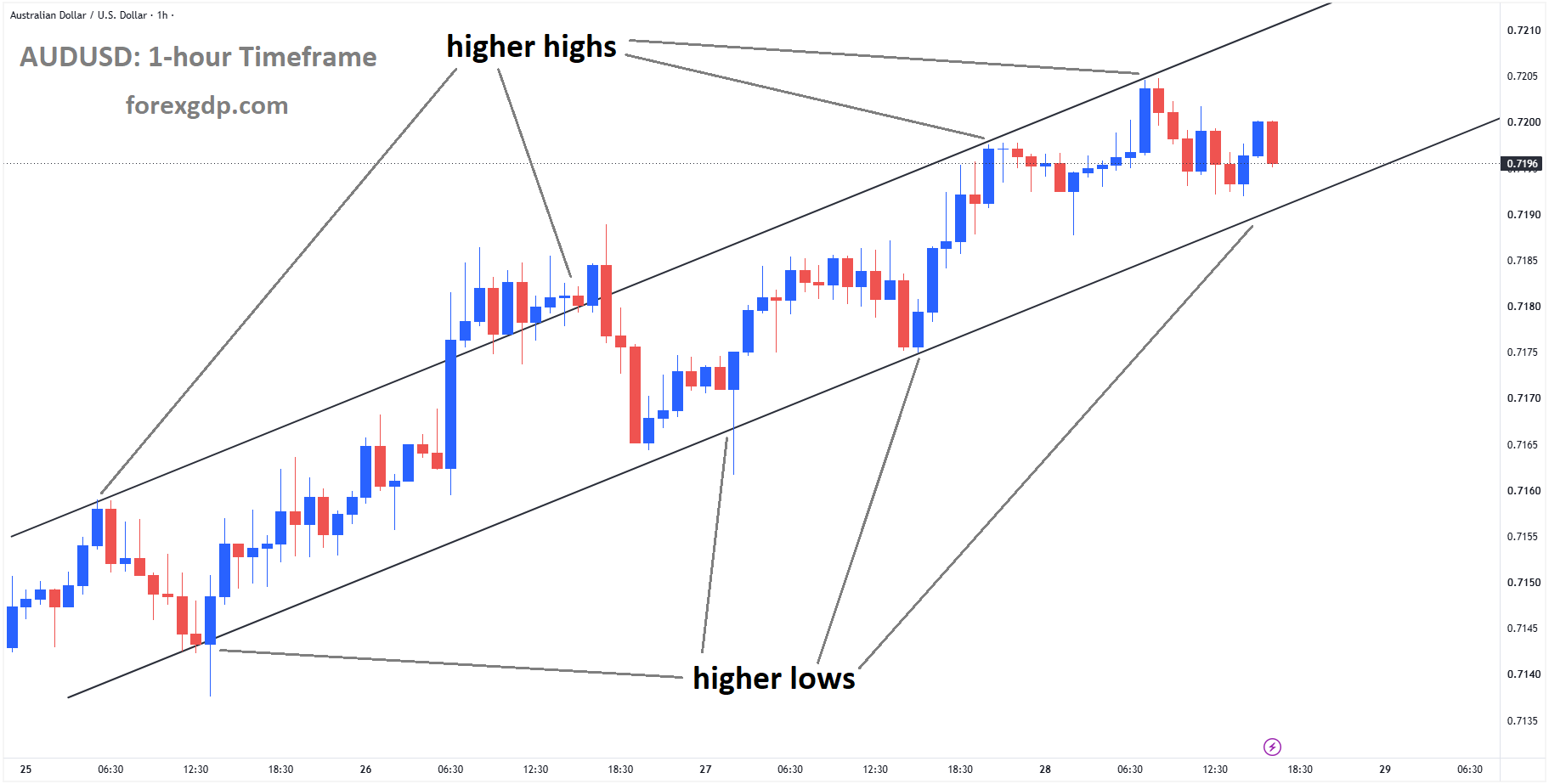
AUDUSD is moving in an ascending channel
Two major central bank stories are driving market sentiment. In the United States, attention has turned to Federal Reserve Chairman Kevin Warsh and his highly anticipated speech at the Jackson Hole Symposium. Meanwhile, the Reserve Bank of Australia has kept the possibility of further monetary tightening alive by warning that domestic inflation remains elevated.
The contrasting expectations surrounding the Fed and the RBA have encouraged demand for the Australian Dollar. However, investors remain cautious because fresh guidance from the Fed Chair could quickly change the direction of the US Dollar.
Jackson Hole Speech Keeps Investors on Alert
The Jackson Hole Symposium is one of the most closely followed central banking events of the year. Policymakers, economists, and financial leaders gather to discuss major economic challenges and the future direction of monetary policy.
Kevin Warsh’s speech is especially important because investors are looking for clearer guidance after the Federal Reserve’s July meeting. That meeting failed to provide a strong indication of what the central bank might do next, leaving financial markets uncertain about the future path of interest rates.
Investors want to know whether the Fed believes inflation is still serious enough to require tighter policy. They are also watching for any comments about economic growth, employment, consumer spending, and the broader risks facing the US economy.
Even a small change in language could influence expectations. A firm message about inflation may strengthen the case for higher interest rates, while a more cautious tone could suggest that the Fed prefers to wait for additional economic data.
US Dollar Remains Quiet Before Fresh Fed Guidance
The US Dollar showed limited movement as investors avoided making large decisions before Warsh’s appearance. This cautious mood is understandable because central bank speeches can sometimes create sharp reactions, particularly when the market is unsure about future policy.
Analysts at MUFG/BTMU described the current situation as highly uncertain under a relatively new Fed Chair. They also observed that recent options activity has not shown investors building strong positions in one clear direction.
This balanced positioning means markets may be more sensitive than usual to any surprise. If Warsh directly signals whether the Fed is leaning towards higher rates or a more patient approach, the US Dollar could experience a significant move.
The uncertainty has allowed the Australian Dollar to maintain its recent strength. However, that support may be tested if Warsh delivers a forceful message favouring tighter US monetary policy.
Fed Officials Continue to Warn About Inflation
Several Federal Reserve officials have already argued that the central bank should take stronger action against inflation. Their comments have increased expectations that the Fed may still consider additional interest rate increases.
Kansas City Fed President Jeffrey Schmidt warned that inflation remains sticky and said policymakers must continue searching for ways to bring it under control. His remarks suggested that the battle against rising prices is not yet finished.
Cleveland Fed President Beth Hammack also supported immediate action, stating that it was time for the central bank to respond. Her comments added to the view that some officials are becoming uncomfortable with waiting too long before tightening policy again.
These statements have placed additional pressure on Warsh to clarify the Fed’s position. Investors will want to know whether he agrees with calls for immediate action or believes the central bank should remain patient.
A strong inflation-focused message could support the US Dollar. On the other hand, a balanced speech that highlights economic risks may reduce expectations for aggressive rate increases.
RBA Bulletin Supports the Australian Dollar
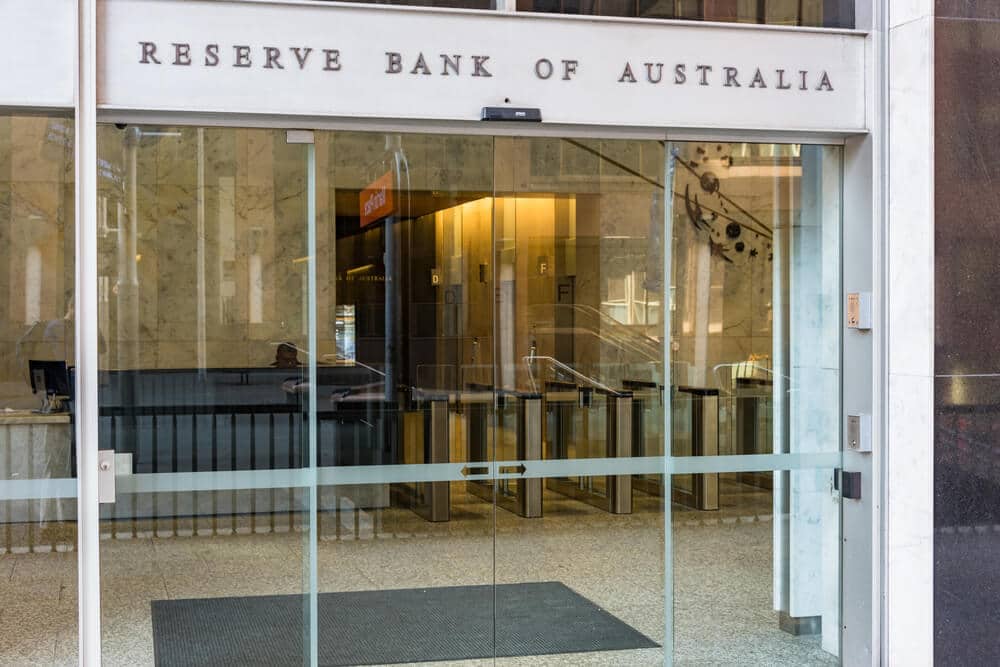
While the market waits for the Fed Chair, the Australian Dollar has received domestic support from the Reserve Bank of Australia’s latest bulletin. The RBA acknowledged that consumer prices have remained elevated for much of the period following the pandemic.
Inflation has stayed above the central bank’s preferred target range for an extended period. This has raised concerns that price pressures may be more persistent than policymakers initially expected.
The bulletin strengthened expectations that the RBA could raise interest rates again in the coming months. Some investors believe another increase may be necessary before the end of the year if inflation does not cool at a faster pace.
Higher interest rates can make a currency more attractive because they may offer better returns on assets linked to that economy. This expectation has helped maintain demand for the Australian Dollar during its recent advance.
Still, the RBA will need to balance inflation risks against the pressure that higher borrowing costs place on households and businesses. Mortgage holders are already dealing with expensive repayments, while companies face higher financing costs.
Australian Inflation Falls More Slowly Than Expected
Australia’s latest inflation figures showed that headline price growth eased in July. However, the decline was smaller than economists had predicted, suggesting that inflation remains difficult to control.
The headline Consumer Price Index slowed compared with the previous month, but it stayed above market expectations. This indicates that price pressures are cooling gradually rather than falling quickly.
The Trimmed Mean CPI, which removes some of the most volatile price movements, also remained stronger than anticipated. This measure is closely watched by the RBA because it provides a clearer picture of underlying inflation.
The lack of meaningful improvement in underlying price growth may concern policymakers. If inflation remains persistent, the RBA could decide that maintaining current policy is not enough to return prices to its target within a reasonable period.
At the same time, the bank must consider whether another rate increase could weaken economic activity too sharply. Household budgets remain stretched, and higher interest expenses may reduce consumer demand further.
Different Central Bank Expectations Shape AUDUSD Sentiment
The recent strength in AUDUSD reflects the different expectations surrounding the two central banks. In Australia, persistent inflation has encouraged speculation about another RBA rate increase. In the United States, investors remain unsure about how quickly the Federal Reserve may tighten policy.
This difference has temporarily favoured the Australian Dollar. Yet the situation remains sensitive because expectations can change quickly after major speeches or economic releases.
If the RBA continues to warn about inflation while the Fed offers limited support for immediate action, the Aussie may retain investor interest. However, a tougher message from Warsh could strengthen the US Dollar and reduce some of the Australian currency’s recent momentum.
For now, market participants are likely to pay close attention to central bank language rather than rely on firm assumptions. Both institutions are dealing with stubborn inflation, but their economies face different pressures and risks.
Final Summary
The Australian Dollar extended its winning run as investors responded to expectations of further monetary tightening from the Reserve Bank of Australia. The RBA’s latest bulletin and stronger-than-expected underlying inflation data suggest that domestic price pressures remain a serious concern.
Meanwhile, the US Dollar stayed relatively quiet ahead of Kevin Warsh’s Jackson Hole speech. With Federal Reserve officials calling for action against persistent inflation, his comments could provide an important signal about the future direction of US monetary policy.
AUDUSD sentiment will continue to depend on the changing outlook for both central banks. The RBA’s inflation concerns currently support the Australian Dollar, but clear guidance from the Fed could quickly reshape market expectations.
Don’t trade all the time, trade forex only at the confirmed trade setups
Get more confirmed trade signals at premium or supreme – Click here to get more signals, 2200%, 800% growth in Real Live USD trading account of our users – click here to see , or If you want to get FREE Trial signals, You can Join FREE Signals Now!