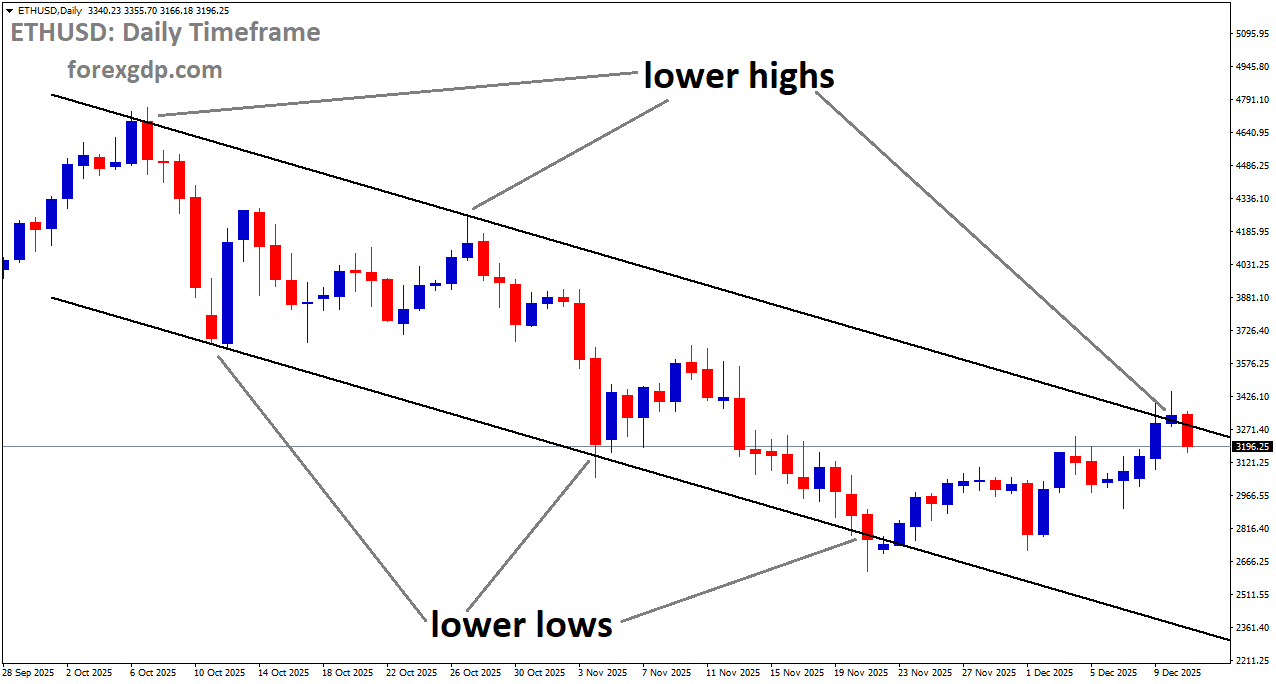
ETHUSD is moving in a descending channel, and the market has reached the lower high area of the channel
ETHUSD climbs on fresh ETF inflows even as leveraged traders hold back
After a quiet stretch, traditional finance is stepping back into the Ethereum market through exchange-traded funds (ETFs). These regulated products, which let investors gain exposure to ETH without holding the asset directly, have recently seen a strong comeback in demand.
On Tuesday, Ethereum ETFs attracted around $177.6 million in net inflows, according to data provider SoSoValue. That single day marked their best performance in weeks and also extended a small streak of positive flows. For many observers, this is an important sign: big, regulated investors who had been cautious for a while are once again moving capital into Ethereum-linked products.
This renewed interest comes after a period in which ETF flows were negative, reflecting hesitancy and risk-off sentiment. That outflow trend shifted in late November, when Ethereum’s multi-week slide began to stabilize. Since then, ETF data has suggested that traditional investors are slowly regaining confidence.
Rather than short-term traders on crypto exchanges, it appears that longer-term, more conservative money is helping to support Ethereum’s latest recovery phase. That alone does not guarantee a lasting uptrend, but it does change the tone of the market compared to the earlier weeks of selling and uncertainty.
Why ETF Flows Matter for Ethereum
ETF flows have become one of the key metrics people watch to understand how traditional finance views major cryptocurrencies. When more money moves into Ethereum ETFs:
-
It shows that regulated platforms and brokerages are actively offering and promoting these products.
-
It signals that investors who prefer familiar structures like funds and retirement accounts see value in adding ETH exposure.
-
It can encourage more institutions to consider Ethereum as a legitimate asset for portfolios, alongside stocks, bonds, and commodities.

These products often attract investors who are not interested in setting up wallets, managing private keys, or learning how to use crypto exchanges. Instead, they want something they can buy in a regular brokerage account. When this group is adding ETH exposure, it broadens the base of holders and can contribute to more stable demand over time.
The recent surge in inflows suggests that, even after a period of weakness, there is still a strong underlying belief in Ethereum’s long-term story. That story includes its role as a leading smart contract platform, the backbone for many decentralized applications, and a key infrastructure layer for the broader digital asset ecosystem.
A Cautious Derivatives Market
While ETFs hint at growing confidence from traditional investors, other parts of the Ethereum market are sending a more cautious message.
One of the main areas analysts watch is the derivatives segment, especially funding rates on perpetual futures. Funding rates are periodic payments between traders that help keep futures prices in line with spot prices. When funding is very high, it usually means many traders are aggressively betting on further gains using leverage. When funding is low or neutral, it suggests that the market is less speculative.
In Ethereum’s case, funding rates have remained modest even as the asset has bounced off recent lows. Compared with earlier in the year, when sentiment was overly optimistic and leveraged long positions piled up, the current environment looks restrained.
CryptoQuant contributor ShayanMarkets described this as a “subdued funding environment,” noting that it shows buyers are present but not acting with the same intensity seen in previous impulsive phases. The rally appears to be driven more by direct spot buying and accumulation, rather than by highly leveraged traders in the derivatives markets.
This more balanced setup has two important implications:
-
Room for growth: Because speculative leverage is not stretched, there is space for additional demand to come in without immediately overheating the market.
-
Fragile momentum: At the same time, without aggressive derivatives positioning, short-term momentum can fade quickly if enthusiasm drops or if negative news appears.
In other words, the foundation of the current move looks healthier than a purely speculative surge, but it is also not yet powered by strong conviction across all segments of the market.
Open Interest: A Market Still in Recovery Mode
Another useful data point is open interest, or OI, which measures the total number of outstanding futures and options contracts that have not been settled. Higher open interest can signal greater participation and engagement from traders, while lower levels can reflect caution or indifference.
According to figures from Coinglass, Ethereum’s open interest has been relatively flat and is hovering near levels last seen during a previous low point earlier in the year. This suggests that, despite the recent bounce and renewed ETF inflows, many participants in the derivatives market are still sitting on the sidelines or keeping their positions small.
A flat OI profile supports the idea of a market in transition:
-
Speculative traders have not yet returned in full force.
-
Many investors may still be waiting for clearer signals before increasing their risk.
-
The market is relying more on steady spot demand than on layers of complex leveraged positions.
From a structural perspective, this is not necessarily negative. A slow rebuilding of interest can sometimes lead to a more sustainable trend, as gains are based on patient buying rather than a rush of leveraged bets that can unwind violently.
The Role of Traditional and Crypto-Native Investors
The current moment for Ethereum is shaped by two different but overlapping groups: traditional investors using ETFs and crypto-native traders using derivatives and spot exchanges.
Traditional investors via ETFs
These participants tend to think in longer time frames. They may be family offices, funds, wealth managers, or individuals using retirement accounts. For them, Ethereum is often a strategic allocation rather than a quick trade. Steady inflows from this group can provide a stable base of demand, especially during periods of volatility.
Crypto-native participants in derivatives and spot markets
This group is more comfortable with exchanges, wallets, and leverage. Their activity can create short-term swings in price and sentiment. When their leverage is high and funding rates are elevated, markets can become frothy and vulnerable to sharp corrections. When they are cautious, as current funding and open interest data suggest, the market can feel calmer but also lacks explosive momentum.
Right now, the balance between these groups appears to favor a measured recovery. Traditional finance is quietly adding exposure through ETFs, while the derivatives crowd has yet to fully commit. If both sides align with growing confidence in Ethereum’s outlook, the market could see a stronger and more broad-based upswing in the future.
What This Means for Ethereum’s Outlook
Putting all of these signals together paints a picture of a market that is healing but not euphoric:
-
ETF inflows show that regulated capital and traditional investors are rediscovering their appetite for Ethereum.
-
Modest funding rates indicate that speculative leverage is under control.
-
Flat open interest reflects caution and room for engagement to grow.
This mix can be healthy. It reduces the risk of sudden, leverage-driven shocks and allows time for fundamentals, such as network activity and ecosystem growth, to catch up with market sentiment.
Of course, the path ahead is not guaranteed. If demand from ETFs slows or negative macroeconomic news hits risk assets more broadly, Ethereum could face new challenges. On the other hand, if traditional inflows continue and crypto-native traders gradually rebuild their positions, the market may gain stronger footing.
Final Summary
Ethereum is experiencing a quiet but meaningful shift in its market dynamics. After weeks of uncertainty, exchange-traded funds linked to ETH are once again attracting substantial inflows, signaling renewed interest from traditional finance. These ETF flows suggest that long-term, regulated investors still see Ethereum as a valuable part of diversified portfolios.
At the same time, the derivatives market is behaving cautiously. Funding rates are subdued, and open interest remains near previous low levels. This tells us that while buyers are returning, they are not relying heavily on leverage, and many traders are still in wait-and-see mode.
Together, these trends describe a market in recovery: supported by steady spot demand and traditional capital, yet still conservative in speculative positioning. If confidence continues to build and more participants engage, Ethereum could move into a stronger phase backed by both traditional and crypto-native investors, rather than short-lived bursts of enthusiasm.
EURUSD pushes upward as Dollar weakens and optimism returns
The Euro is enjoying a period of strength against the US Dollar as traders respond to a softer tone from the Federal Reserve and shifting risk sentiment in global markets. While the move higher has not been completely smooth, the overall direction has favoured the Euro, helped by a weaker Dollar and a sense that US interest rates are more likely to fall than rise over the coming years.
At the same time, worries about a possible bubble in the artificial intelligence sector and disappointing guidance from a major US tech company have made investors more cautious. This mix of currency moves, central bank decisions, and changing market mood is shaping the current EUR/USD story.
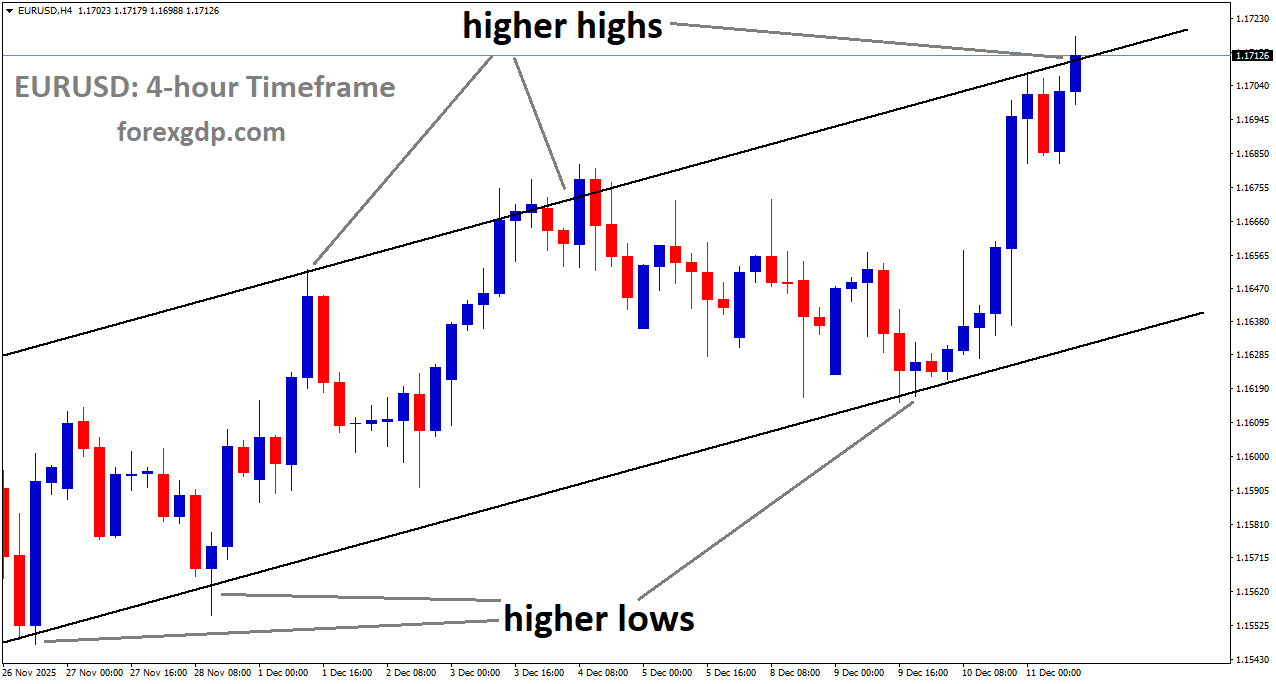
EURUSD is moving in an uptrend channel, and the market has reached a higher high area of the channel
Fed’s Softer Tone Puts Pressure on the US Dollar
The main driver behind the recent move in EUR/USD has been the latest decision and comments from the US Federal Reserve. The Fed delivered a widely expected interest rate cut of a quarter of a percentage point. On its own, that move was not a surprise. What caught the attention of traders was how relaxed policymakers seemed about inflation and how little appetite there was for a more hawkish stance.
The updated rate projections showed only a very small number of additional cuts pencilled in for 2026. More importantly, there was little sign of internal resistance to easing policy. Only a couple of officials argued for keeping rates steady, and Fed Chair Jerome Powell clearly pushed back against the idea of rate hikes returning any time soon.
For currency markets, this matters a lot. When a central bank signals that rates are more likely to go down or stay low, its currency often loses some appeal compared to others. That is exactly what has happened to the US Dollar. With the Fed sounding more comfortable about inflation and open to further easing, investors have become more confident that borrowing costs in the US will continue to drift lower over time. This has made the Dollar less attractive and given the Euro room to climb.
Speculation About Fed Leadership Adds to the Dovish Story
On top of the official Fed message, markets are also reacting to political and personnel expectations. There is growing talk that Jerome Powell could be replaced at the end of his term by Kevin Hassett, a former White House economic adviser known for favouring easier policy.
Hassett recently said there is “plenty of room” for further rate cuts. Comments like that feed into the idea that US monetary policy could become even more supportive in the future. Whether or not the appointment eventually happens, traders often move ahead of time based on what they think is likely. That speculation adds another layer of downside pressure on the Dollar.
The Fed also surprised markets by announcing a new bond-buying program set to begin in mid-December. By purchasing a large amount of bonds, the central bank aims to support liquidity and keep financial conditions loose. Such programs usually lower yields and can further weaken a currency, and investors quickly picked up on that.
AI Bubble Concerns and Risk Appetite
While monetary policy has been the main story for currencies, sentiment around the broader market has been influenced by the technology sector, and especially by the ongoing excitement around artificial intelligence.
A key trigger came from the cloud computing and software company Oracle, which released disappointing forecasts for sales and revenue. Because Oracle is heavily involved in cloud infrastructure and AI-related services, its cautious outlook raised fresh questions about whether the AI boom has run ahead of reality. The fear is that valuations in the AI space may have become stretched and that any slowdown in earnings could lead to a sharp correction.
These concerns weighed on risk appetite, at least at first. European stock markets opened in the red as investors reacted to the Oracle news and reassessed their exposure to high-growth technology names. However, sentiment later improved, and European indices managed to recover into positive territory. In contrast, US futures were still pointing to moderate losses, showing that some caution remains on Wall Street.
For EUR/USD, risk appetite is important. When markets are feeling confident and willing to hold riskier assets, the Euro often benefits. When fear rises, the Dollar can regain its appeal as a safe-haven currency. Recently, the softer Fed stance has been the stronger force, but lingering concerns about an AI bubble could still slow the Euro’s progress if risk aversion returns.
Euro Benefits from Contrast With the ECB
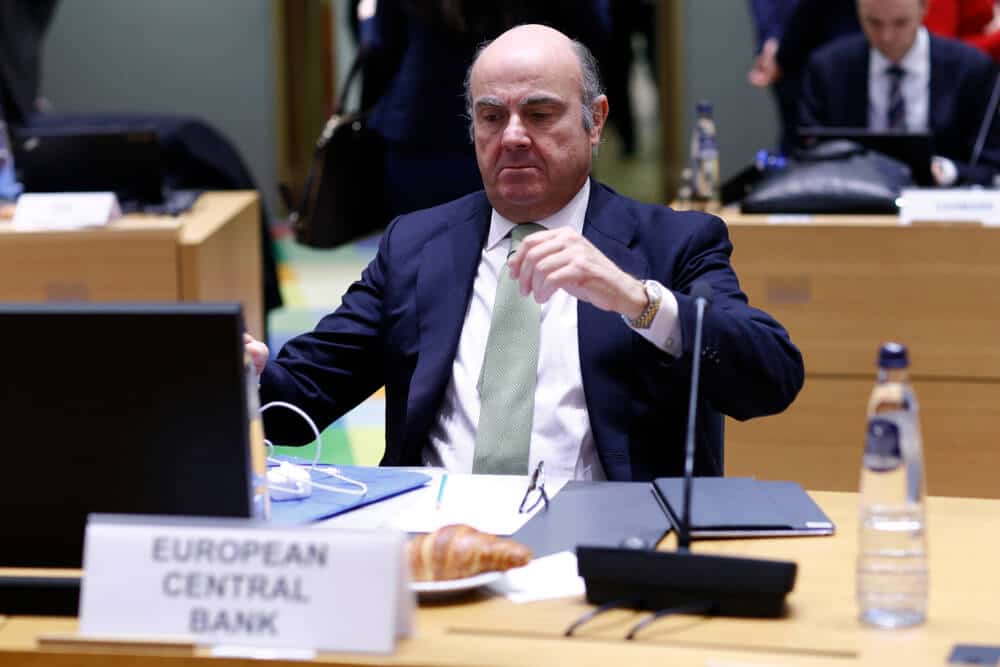
On the European side, the message from the European Central Bank has been more stable. ECB President Christine Lagarde recently spoke at a major conference in London, where she repeated that the Bank’s policy stance remains appropriate and well calibrated.
She also hinted that ECB officials might raise their growth forecasts again, suggesting that the Eurozone economy may be doing slightly better than many had feared earlier in the year. That, in turn, supports the idea that the ECB may be close to, or already at, the end of its easing cycle.
This contrast with the Federal Reserve is supportive for the Euro. If the ECB is seen as being on pause while the Fed is still open to cutting rates further, the interest rate gap between the Euro area and the United States could slowly narrow. That reduces one of the main advantages the Dollar has enjoyed over the past few years and helps the EUR/USD pair find support on dips.
A Quiet European Data Calendar
Another factor helping the Euro hold its ground is the lack of major economic releases from the Eurozone in the very near term. With the European calendar relatively empty, there are fewer immediate threats that could suddenly change the outlook. In moments like this, traders tend to focus more on global themes such as the Fed’s direction and broader risk sentiment, both of which currently lean in favour of the Euro.
US Labour Market Data in Focus
In the United States, the next notable piece of data on the radar is the weekly report on initial jobless claims. This indicator tracks how many people are filing for unemployment benefits for the first time and gives a timely snapshot of the health of the labour market.
Last week’s figures showed a decline in claims, but many analysts suspect that the move may have been influenced by the Thanksgiving holiday rather than a genuine improvement in hiring. This week’s reading will therefore be watched closely. If jobless claims stay low or fall further, it could suggest the labour market is still relatively strong. If they bounce higher, it may confirm that the earlier drop was only temporary.
Either way, the data will feed into expectations about future Fed policy. A softer job market would strengthen the case for more rate cuts, which would generally weigh on the Dollar and support the Euro. A surprisingly strong labour market could give the Dollar some breathing room, at least in the short term, by making traders question how aggressive the Fed can really be with easing.
How Risk Sentiment Could Shape the Next Move
The Euro’s recent jump came largely on the back of Dollar weakness after the Fed decision, but that rally has not been completely smooth. When worries about AI valuations and tech earnings flare up, investors can quickly turn more cautious. In those moments, the Euro’s advance tends to stall and even reverse as traders move back into safer assets.
However, any pullbacks so far have been contained, thanks to the underlying support from the Fed’s dovish tilt and the possibility of more easing in the US. As long as markets remain confident that rates in the United States are on a downward path, deeper Euro corrections are likely to attract buyers.
The balance between these forces—Fed policy, ECB stability, AI-related market worries, and incoming US data—will determine whether EUR/USD can push higher or stays stuck in a choppy range.
Summary
EUR/USD has been climbing as the US Dollar loses strength, mainly because the Federal Reserve has signalled a more relaxed stance on inflation and left the door open to further rate cuts. Speculation about future Fed leadership, a new bond-buying program, and firm expectations of easier policy all weigh on the Dollar.
At the same time, concerns about a possible AI bubble and disappointing forecasts from a major tech and cloud company have shaken risk appetite, though European stocks have managed to recover from early losses. The Euro is also supported by a steady message from the European Central Bank, where President Christine Lagarde has suggested that growth prospects may improve and that the easing cycle is likely near its end.
With little key data coming from Europe and US jobless claims in focus, traders are watching to see whether the labour market will confirm the case for more Fed cuts. For now, the combination of a softer Dollar, a firm ECB stance, and cautious but not panicked risk sentiment keeps the balance tilted in favour of the Euro.
GBPUSD remains firm with Greenback under pressure after Fed decision
The Pound Sterling has cooled slightly against many major currencies, even though it is still trading not far from recent highs against the US Dollar. Traders are pausing for breath as they look ahead to a busy period of UK economic releases, starting with monthly GDP figures for October. At the same time, markets are digesting the latest decision from the US Federal Reserve and preparing for a possible interest rate cut from the Bank of England.
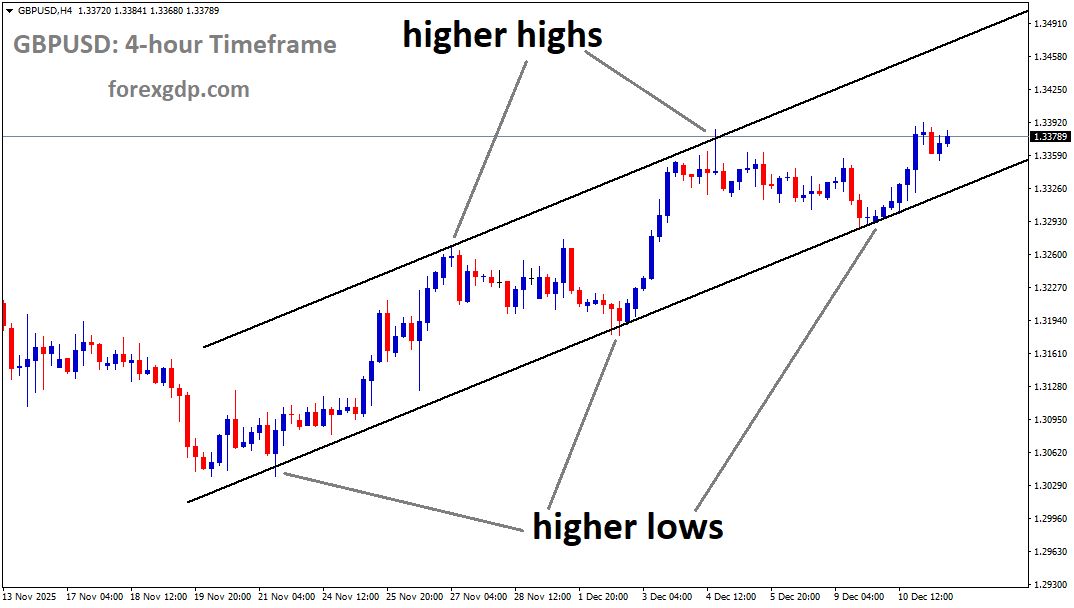
GBPUSD is moving in an uptrend channel, and the market has reached a higher low area of the channel
With both central banks in focus and several key data points on the calendar, the Pound–Dollar relationship is being driven less by short-term headlines and more by how investors see the broader economic path for the UK and the United States over the coming months.
Pound Sterling After the Fed: Strong but Losing a Little Momentum
The Pound has been trading close to its highest levels in several weeks against the US Dollar. The main reason for this strength is not just renewed optimism around the UK, but also a weaker Dollar after the Federal Reserve’s recent interest-rate decision.
The Fed cut its key interest rate by a modest quarter of a percentage point, a move that markets had been expecting. What really caught traders’ attention, however, was the tone of the central bank’s message. Alongside the rate cut, the Fed signaled that it still sees only very limited room for further reductions in coming years. Its projections suggest only one more cut further out in the future.
Even so, the Dollar has stayed under pressure. The Fed’s statement highlighted that inflation is now expected to cool more than previously thought and pointed to recent signs of softening in the labor market, including a rise in unemployment. Officials also suggested that price growth in goods should ease as long as there are no fresh shocks, such as new tariffs. These details gave the decision a more dovish feel, encouraging investors to move out of the Dollar and into other currencies, including Sterling.
That said, the move is not one-way. Fed Chair Jerome Powell also stressed that the bar for cutting rates again is high and that the central bank is in no rush. By saying the Fed is “well positioned to wait and see” how the economy develops, he reminded markets that policy could remain relatively tight if growth holds up and inflation proves sticky. This mix of cautious optimism and lingering concern is exactly what is shaping currency markets right now.
UK Data in the Spotlight: GDP, Jobs, and Inflation
For the Pound, attention is now turning firmly to the UK’s own economic picture. Over the coming days, the Office for National Statistics will release several important reports that could influence expectations for growth and interest rates.
The first key release is the monthly GDP figure for October. Economists generally expect a small rebound after a mild contraction in the previous month. If the data confirm that the economy managed to grow at the start of the fourth quarter, it would help support the view that the UK is avoiding a deep downturn, even if overall growth remains modest.
Beyond the headline GDP number, traders will look closely at the breakdown. Manufacturing and industrial production figures, which are published at the same time, will be watched to see if activity is picking up. Because these sectors are being compared against a weaker base in previous months, there is room for an improvement in the monthly numbers. Any signs that factories and industrial firms are stabilizing or expanding could support confidence in the UK outlook.
Later in the week, labor market data for the three months to October will show how employers are responding to the slower growth environment. Wage growth, job creation, and unemployment figures all matter here. Signs of a cooling job market would support expectations that inflation pressures will continue to ease, but they could also reinforce concerns that the economy is losing momentum.
Inflation data are also due, with the Consumer Price Index for November offering fresh insight into how quickly price pressures are fading. The combination of GDP, jobs, and inflation numbers will give investors a much clearer view of where the UK stands heading into the Bank of England’s next policy meeting.
Bank of England Outlook: Why Markets Expect a Rate Cut
On the monetary policy front, traders are increasingly confident that the Bank of England will cut interest rates at its upcoming meeting. The consensus is for a reduction of a quarter of a percentage point, taking borrowing costs down but still keeping them at relatively restrictive levels compared with the years before inflation surged.
Several factors are driving this expectation. First, the UK economy has been growing only slowly, with periods of flat or negative output. While the worst fears of a severe recession have not materialized, the pace of expansion remains weak. Second, there are signs that the labor market is softening, with vacancies easing and unemployment edging higher from very low levels. These trends suggest that the BoE may have room to reduce interest rates without immediately reigniting inflation.
Third, inflation itself, while still above the Bank’s target, has been moderating. As energy prices stabilize and supply-chain disruptions fade, price growth has cooled from its peak. If upcoming data confirm that underlying inflation pressures are easing, it will strengthen the case for a more supportive stance.
However, the BoE also needs to protect its credibility on inflation. Policymakers will want to avoid cutting too quickly and then being forced to reverse course if prices climb again. That is why upcoming GDP, labor market, and CPI releases are so important: they will either validate or challenge the idea that a gentle easing cycle can begin.
For the Pound, a rate cut is not automatically negative. What matters is how the move compares with expectations and what the Bank signals about future policy. If the BoE sounds cautious and suggests that any further cuts will be limited and gradual, the currency could remain supported, especially if the UK economic data surprise on the upside.
US Data Watch: Jobless Claims and the Dollar’s Next Move

While the UK data calendar is busy, developments in the United States will continue to influence the Pound–Dollar pair. One of the near-term releases to watch is the weekly Initial Jobless Claims report, which tracks how many people file for unemployment benefits for the first time.
Markets expect claims to be somewhat higher than in the previous week, pointing to a cooling labor market. If the report confirms a gradual rise in jobless claims, it would fit with the Fed’s cautious tone and could keep pressure on the Dollar. A weaker Dollar tends to support GBP/USD, all else being equal.
On the other hand, if claims remain low and other US data come in stronger than expected, investors might reassess how many future rate cuts from the Fed are likely. That could give the Dollar some support and limit the Pound’s gains.
In this environment, currency traders are constantly weighing the relative strength of the US and UK economies, as well as the timing and scale of interest-rate moves on both sides of the Atlantic.
Final Summary
The Pound Sterling has eased slightly but remains relatively firm against the US Dollar as markets navigate a complex mix of monetary policy signals and upcoming economic data. The Federal Reserve’s recent rate cut, combined with softer inflation expectations and signs of a cooling US labor market, has taken some shine off the Dollar, even though the Fed continues to stress caution about further easing.
In the UK, a busy run of data releases—covering GDP, manufacturing and industrial production, the labor market, and inflation—will shape expectations for growth and the Bank of England’s next move. Many traders believe a modest rate cut is likely, driven by subdued economic momentum and easing price pressures, though the BoE will be careful to maintain its inflation-fighting credibility.
At the same time, US jobless claims and other indicators will keep influencing the Dollar’s direction. For now, the balance of risks suggests that the Pound’s performance will depend on whether UK data can deliver enough positive surprises to justify current optimism, while the Fed and the BoE each try to guide their economies through a delicate phase of slower growth and moderating inflation.
USDJPY drifts as Yen sellers pause with BoJ hike speculation building
The Japanese Yen continues to navigate a complicated environment as it struggles to build on modest gains against a strengthening US Dollar. While the Yen has shown brief moments of support, a mix of economic concerns in Japan and evolving expectations for monetary policy in both countries has kept traders on alert. As markets digest new data and await signals from central banks, the currency landscape remains full of uncertainty.
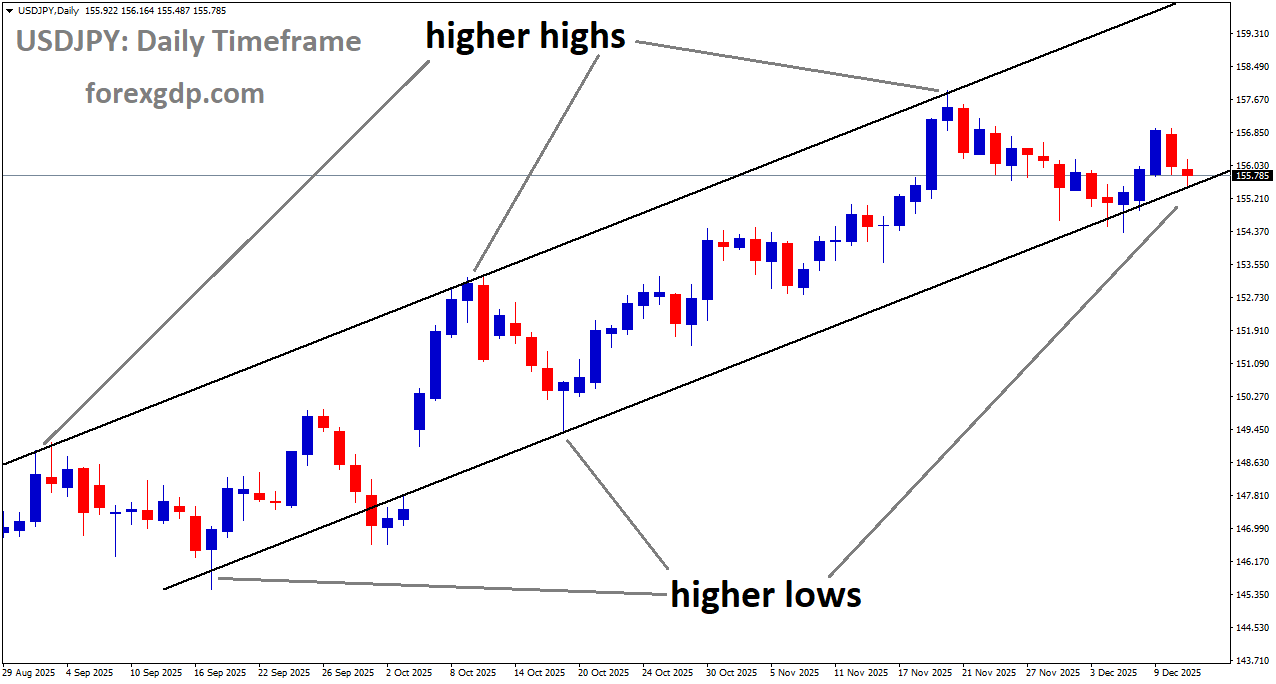
USDJPY is moving in an uptrend channel, and the market has reached a higher low area of the channel
Japan’s Economic Challenges Shape Market Sentiment
Japan faces a complex mix of fiscal and growth challenges that have weighed on confidence in the Yen. Increased government spending under Prime Minister Sanae Takaichi has raised questions about the country’s long-term financial health. These concerns make investors cautious, even as the Yen occasionally picks up momentum.
Market participants are also waiting for clearer direction on the Bank of Japan’s policy path. The central bank’s next meeting has attracted significant attention, especially as speculation builds around a possible rate hike. This anticipation offers some support to the Yen, but it also limits how aggressively traders are willing to position themselves.
Fiscal Concerns Add Pressure
Japan’s push for economic reflation includes ambitious spending programs aimed at reviving growth. While these efforts may help stimulate the economy, they also magnify worries about rising public debt. Investors are keeping a close eye on how the government balances near-term economic support with long-term fiscal stability.
Slowing Growth Weighs on Expectations
Recent data showing a contraction in Japan’s economy has added another layer of uncertainty. Revised figures indicated a 0.6% decline in the July–September quarter and a 2.3% annual drop, marking the steepest pace of contraction since the third quarter of 2023. Although this performance raised concerns, expectations of rising wages offer some optimism. Higher incomes could lift household spending, support inflation from the demand side, and ultimately help the economy regain momentum.
Diverging Central Bank Policies Influence Currency Movements
One of the most significant forces shaping the Yen-Dollar relationship is the widening contrast between monetary policies in Japan and the United States. As investors assess the likelihood of policy shifts, this divergence continues to guide currency flows.
Bank of Japan Signals a Change in Direction
Bank of Japan Governor Kazuo Ueda has emphasized that the central bank’s outlook for economic and price conditions is becoming more achievable. This has fueled expectations that Japan may soon move further toward policy normalization. Recent inflation indicators, including the Corporate Goods Price Index, suggest that price pressures remain elevated. These trends strengthen the case for a potential rate hike sooner rather than later.
If the BoJ does raise rates in the near term, it would mark a pivotal moment after years of extremely accommodative policy. Such a move would also stand in stark contrast to the current direction of US policy, giving the Yen a potential advantage.
The Federal Reserve Leans Toward Easing
On the US side, the Federal Reserve recently lowered interest rates, signaling a more cautious stance toward economic risks. The central bank also indicated that another rate cut may come in 2026. Fed Chair Jerome Powell highlighted concerns about the labor market, underscoring the risks of slowing job creation.
These developments have led traders to expect multiple rate cuts in 2026. As expectations shift, the US Dollar has lost some support, making room for the Yen to maintain its position despite Japan’s own economic uncertainties.
Market Reactions and What Traders Are Watching Now
With both nations navigating their own economic challenges, markets remain sensitive to incoming data and policy statements. Traders continue to assess how each central bank’s decisions will shape currency trends over the coming months.
A Two-Day BoJ Meeting Holds the Market’s Focus

The possibility of an interest rate hike from the Bank of Japan has drawn significant attention. Investors are looking for stronger signals on how aggressively the BoJ plans to tighten policy, especially after years of maintaining one of the world’s most accommodative stances. Any shift could have major implications for global currency markets.
US Jobs Data and Trade Figures in the Spotlight
In the US, upcoming Weekly Initial Jobless Claims and Trade Balance data are expected to play a role in shaping Dollar sentiment. While these reports may not carry the weight of major policy decisions, they often offer valuable insight into the underlying health of the US economy. Even modest changes in labor or trade conditions can influence how traders position themselves in the Dollar-Yen pair.
A Currency Pair Defined by Uncertainty and Opportunity
The Yen and Dollar remain locked in a delicate balance, influenced by diverging monetary policies, evolving economic conditions, and shifting market expectations. The possibility of a BoJ rate hike gives Yen supporters some reason for confidence, while concerns about Japan’s fiscal stability create hesitation. Meanwhile, the Fed’s more cautious stance and the prospect of future rate cuts add another layer of complexity.
As both economies face their own challenges, traders are moving carefully, weighing each new piece of information. The coming days, especially with key policy meetings on the horizon, could bring fresh direction to a currency pair that continues to draw global attention.
Summary
The Japanese Yen is struggling to maintain momentum against a recovering US Dollar, held back by concerns over Japan’s fiscal health and slowing economic growth. At the same time, expectations of an upcoming Bank of Japan rate hike offer important support, especially as the US Federal Reserve moves in a more dovish direction. Diverging policies, economic pressures, and upcoming data releases all play a role in shaping the outlook for the USD/JPY pair. With major decisions approaching, the path ahead remains uncertain, offering both challenges and opportunities for market participants.
NZDUSD strengthens over 0.5800 as dovish Fed outlook fuels Kiwi demand
The New Zealand dollar continues to find strong support in global markets, with NZD/USD climbing for five consecutive sessions. A mix of a softer US dollar, improving risk appetite, and a more confident stance from New Zealand’s central bank has helped keep the currency pair steady above the 0.5800 level. With momentum favoring buyers, the pair remains close to its highest point in more than two months.
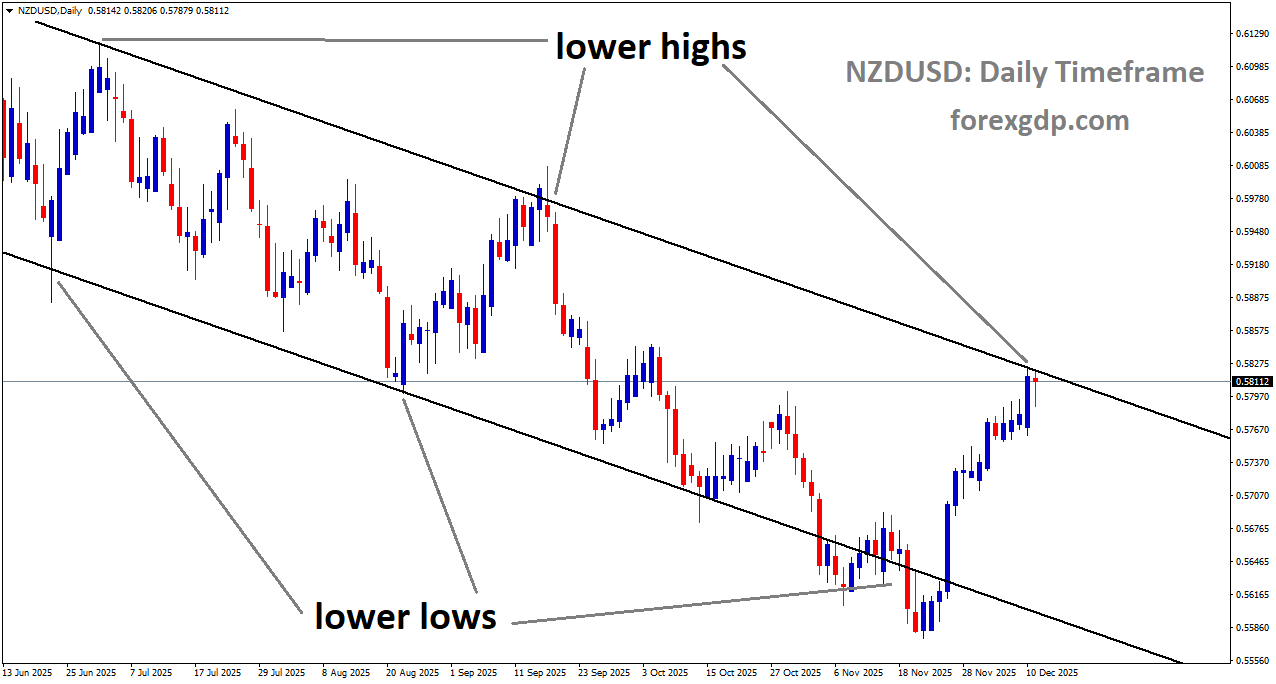
NZDUSD is moving in a descending channel, and the market has reached the lower high area of the channel
US Dollar Weakness Opens the Door for Kiwi Strength
The US dollar has been under pressure after the Federal Reserve delivered a rate cut that many investors had anticipated. While the cut itself did not shock markets, the tone surrounding the decision played a major role in driving the dollar to its lowest level since late October.
During its latest meeting, the Fed reduced interest rates and hinted that it may hold off on further easing in January. Policymakers also suggested that long-term rate cuts would remain limited, projecting only one additional small reduction in 2026. Despite this cautious outlook, traders responded more strongly to comments from Fed Chair Jerome Powell, who pointed to growing risks in the US labor market.
Powell emphasized that the central bank does not want policy decisions to slow job creation, and that downside risks in employment remain a concern. These remarks encouraged investors to believe more reductions may be needed over time, prompting markets to price in two extra cuts for 2026. As expectations shifted, the US dollar weakened further, giving the New Zealand dollar an additional boost.
Risk Appetite Supports the Pair
Global markets have been leaning toward a more optimistic tone, and this improved sentiment has helped lift currencies tied to economic growth and risk-taking. The New Zealand dollar is often viewed as a beneficiary in such environments, thanks to the country’s connection to trade, commodities, and broader market confidence.
As investors stepped away from the safety of the US dollar, the Kiwi became more attractive. The positive mood across financial markets has continued to act as a steady tailwind, reinforcing the upward path for NZD/USD as the new trading day unfolded in Asia.
RBNZ’s Hawkish Tone Further Lifts New Zealand Dollar
While US policy has been shifting toward a more flexible, dovish stance, New Zealand’s central bank has taken a firmer tone. The Reserve Bank of New Zealand recently delivered a 25-basis-point rate cut, bringing its benchmark rate to the lowest level in over three years. However, alongside this move, officials signaled that the easing cycle may now be over.

This outlook stands in sharp contrast to expectations surrounding the Federal Reserve. With the RBNZ hinting at stability or even future tightening, investors see the Kiwi as having stronger policy backing than the dollar. The divergence between the two central banks supports the view that NZD/USD may continue to climb in the near term.
Moreover, with no major economic data releases scheduled for New Zealand on Thursday, market participants remain focused on the broader policy landscape. The RBNZ’s tone provides a foundation of confidence, helping the currency hold its ground and attract steady demand.
A Market Environment Favoring Buyers
Taken together, the weaker US dollar, improving risk sentiment, and supportive stance from New Zealand’s central bank create an environment that favors upward movement for NZD/USD. The pair staying above the 0.5800 level reflects this combination of forces, as buyers continue to dominate trading activity.
The market reaction to Powell’s comments shows how sensitive traders remain to signs of economic cooling in the United States. At the same time, the contrast between the Fed’s cautious path and the RBNZ’s firmer tone adds another layer of support for the Kiwi. As long as these conditions hold, the pair may find it easier to maintain its upward bias.
Summary
NZD/USD has gained momentum thanks to a blend of US dollar softness, stronger risk appetite, and a confident signal from New Zealand’s central bank. While the Federal Reserve’s latest rate cut and Powell’s remarks opened the door for expectations of further easing, the RBNZ’s stance suggests a pause in New Zealand’s own easing cycle. This divergence supports the Kiwi and keeps the pair near multi-month highs. With market sentiment still leaning positive, buyers remain in a favorable position as the week continues.
Don’t trade all the time, trade forex only at the confirmed trade setups
Get more confirmed trade signals at premium or supreme – Click here to get more signals, 2200%, 800% growth in Real Live USD trading account of our users – click here to see , or If you want to get FREE Trial signals, You can Join FREE Signals Now!