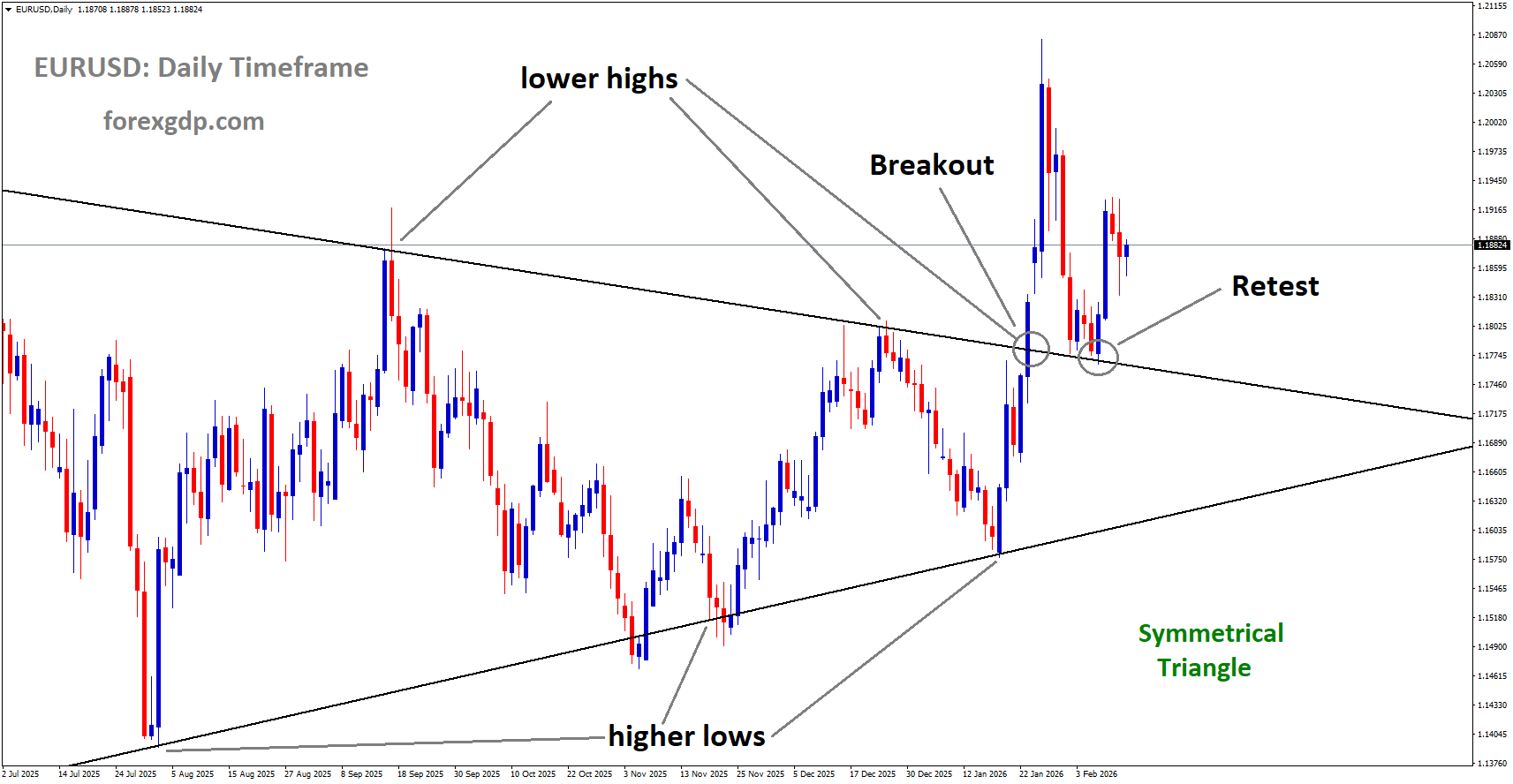
EURUSD is rebounding from the retest area of the broken symmetrical triangle pattern
EURUSD Pushes Upward as Dollar Recovery Weakens
The Euro has shown signs of recovery against the US Dollar after slipping earlier in the week. The EUR/USD pair bounced back from recent lows near 1.1833 and moved closer to the 1.1900 mark. While the rebound is modest, it reflects changing market sentiment and a shift in focus toward upcoming economic events and central bank commentary.
Stronger-than-expected US jobs data recently gave the US Dollar a boost. However, as the initial reaction fades, traders are now looking ahead to fresh signals from policymakers in both the United States and the Eurozone.
EUR/USD Edges Higher After Midweek Drop
On Thursday, the Euro traded slightly higher against the US Dollar, hovering around 1.1880. This marks a recovery from Wednesday’s dip, when the pair fell to 1.1833. The move upward suggests that the pressure on the Euro has eased somewhat, even though the currency pair remains below the important 1.1900 level.
This bounce comes at a time when market sentiment appears more stable. Investors are showing a moderate appetite for risk, which has helped support the Euro. At the same time, the earlier strength in the US Dollar, fueled by positive labor market data, is beginning to lose some momentum.
While the Dollar remains supported by solid economic figures, traders are adjusting their expectations and reassessing the broader outlook.
Strong US Jobs Report Supports the Dollar
One of the main drivers behind recent currency movements has been the latest US Nonfarm Payrolls (NFP) report. The January employment data showed that the US economy added 130,000 new jobs. This figure was significantly higher than the 70,000 jobs that analysts had expected.
In addition to stronger job growth, the unemployment rate dipped slightly to 4.3%, down from 4.4% the previous month. These results helped ease concerns that had emerged after weaker employment data releases earlier in the month.
Mixed Details Behind the Headline Numbers
Although the overall jobs report looked positive, a closer look revealed some areas of concern. Nearly two-thirds of the new jobs created in January came from the healthcare sector. This concentration suggests that job growth was not evenly spread across the economy.
There was also a sharp downward revision to employment figures for 2025, which tempered some of the optimism. Investors took note of these details, which limited the impact of the otherwise strong headline numbers.
Still, the latest NFP report helped calm fears about the health of the US labor market. Earlier data, such as the ADP Employment Change and JOLTS Job Openings reports, had painted a weaker picture. The stronger official payroll figures provided reassurance that the job market remains relatively stable.
Federal Reserve Rate Cut Expectations Shift

Following the release of the jobs report, expectations around US interest rate cuts have changed. Traders are now less confident that the Federal Reserve will move quickly to lower borrowing costs.
Before the NFP data, there had been growing speculation that the Fed could cut rates as soon as March or April. However, after the stronger employment figures, those expectations have been scaled back significantly.
The likelihood of a rate cut in March has dropped sharply, with markets now seeing only a small chance of such a move. The probability of a cut in April has also fallen. Instead, investors are increasingly looking toward June as the earliest likely timing for any policy easing.
This shift in expectations has helped support the US Dollar in recent sessions. When markets believe that interest rates will remain higher for longer, the Dollar often benefits because higher rates can attract foreign investment.
June Meeting Gains Importance
The Federal Reserve’s June meeting is now seen as a key moment for potential action. It will also be the first meeting chaired by Kevin Warsh, adding an additional layer of interest.
Markets are currently leaning toward the idea that if the Fed decides to cut rates, June would be the most likely starting point. Until then, economic data releases, especially inflation reports, will play a crucial role in shaping expectations.
ECB Officials in the Spotlight
While US data has dominated recent headlines, attention is now turning to the Eurozone. On Thursday, several European Central Bank (ECB) officials are scheduled to speak, including board members Piero Cipollone and Philip Lane, as well as Bundesbank President Joachim Nagel.
Their comments could provide fresh clues about the ECB’s policy outlook. Investors are eager to understand whether the central bank sees any need to adjust its current stance in response to economic conditions.
If ECB officials signal confidence in the Eurozone economy or hint at a steady approach to monetary policy, the Euro could receive additional support. On the other hand, any cautious or dovish remarks might limit the currency’s upside.
Key US Data Still Ahead
Although the focus has shifted toward ECB speeches, the US economic calendar still holds important events. Weekly Initial Jobless Claims and Home Sales figures are due for release. These reports may create some short-term volatility in the market.
However, traders are likely to remain cautious ahead of Friday’s Consumer Prices Index (CPI) report. Inflation data plays a central role in shaping Federal Reserve policy decisions. A stronger-than-expected inflation reading could further reduce the chances of early rate cuts, potentially supporting the Dollar. Conversely, softer inflation data might revive expectations for policy easing.
For now, market participants appear to be waiting for a clearer picture before making larger moves.
Broader Market Sentiment and Risk Appetite
Another factor influencing EUR/USD is general market sentiment. When investors feel more comfortable taking risks, currencies like the Euro often perform better against the Dollar. This is because the US Dollar is sometimes seen as a safe-haven currency, attracting demand during times of uncertainty.
The recent recovery in EUR/USD suggests that fears about the US economy have eased somewhat. The strong labor data has reassured markets that the economy is not slowing as quickly as some had feared.
At the same time, the absence of fresh negative news from the Eurozone has helped stabilize the Euro. Even modest improvements in risk appetite can be enough to lift the pair after a sharp drop.
What to Watch Next
Looking ahead, the direction of EUR/USD will likely depend on a combination of central bank signals and incoming economic data.
For the US, inflation remains the key variable. If price pressures stay elevated, the Federal Reserve may keep interest rates unchanged for longer than previously expected. That would tend to favor the Dollar.
For the Eurozone, investors will closely monitor comments from ECB officials and any new economic indicators that could influence policy decisions. Signs of resilience in the Eurozone economy could support the Euro.
In the short term, market movements may remain cautious and measured as traders wait for clearer guidance.
Final Thoughts
The EUR/USD pair has managed to recover from recent lows, helped by fading momentum in the US Dollar and a moderate improvement in risk sentiment. While strong US jobs data initially strengthened the Dollar, its impact has softened as markets reassess expectations for Federal Reserve rate cuts.
With ECB officials set to speak and key US inflation data on the horizon, the currency pair is likely to remain sensitive to headlines. Investors are now focused on central bank signals and fresh economic reports to determine the next direction.
As the balance between growth, inflation, and policy expectations continues to evolve, EUR/USD traders will be watching closely for any signs that could shift the outlook in either direction.
GBPUSD Steady Past 1.3600 as Sluggish UK Data Weighs on Pound
The British Pound has been under pressure after a fresh set of disappointing economic reports from the United Kingdom. Even so, the GBP/USD currency pair has managed to stay above the 1.3600 level, showing some resilience despite the softer data.
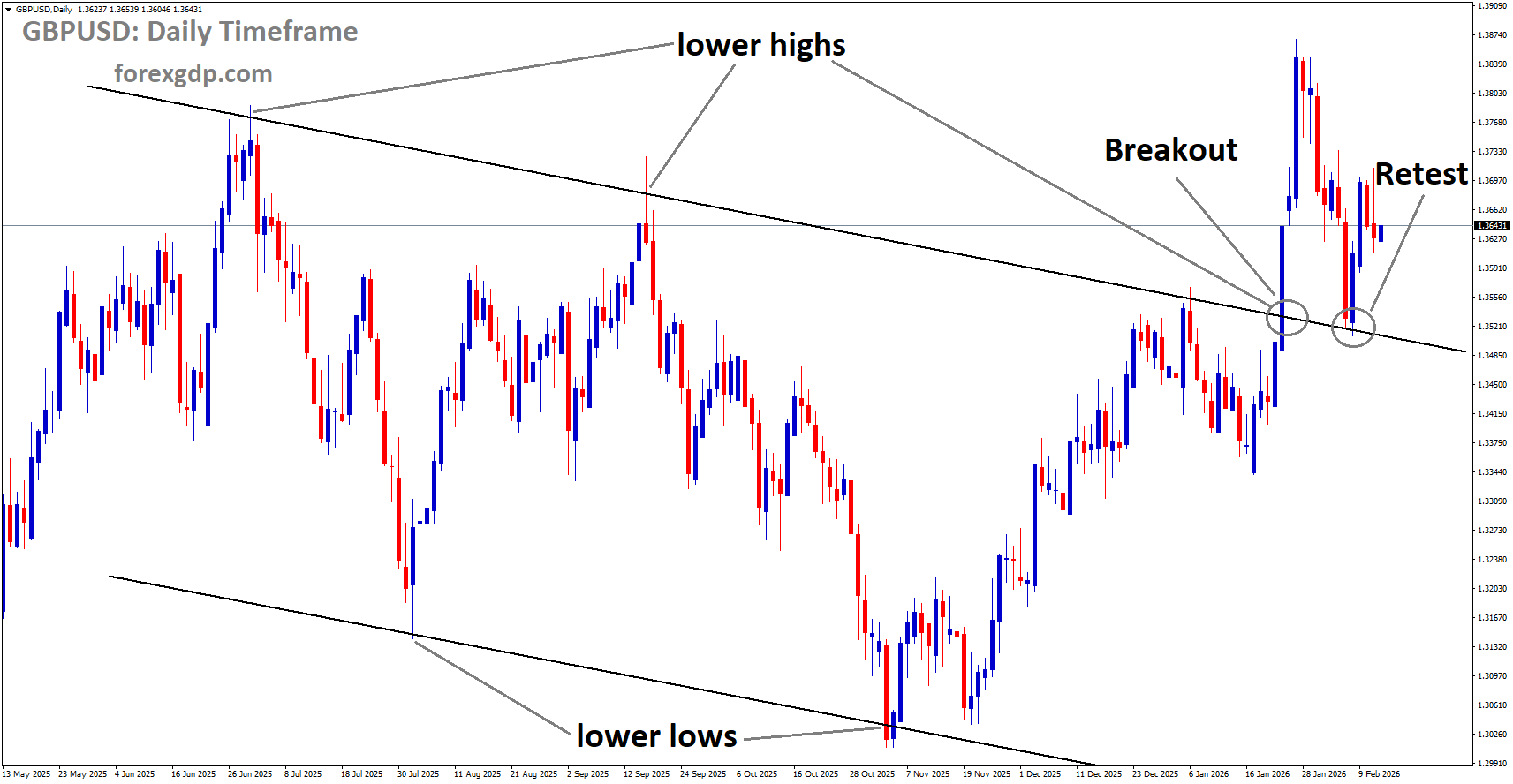
GBPUSD is rebounding from the retest area of the broken symmetrical triangle pattern
While the Pound has struggled against several major currencies, it continues to hold steady against the US Dollar for now. At the same time, strong labor market data from the United States has provided support to the Dollar, though it has not been enough to spark a strong rebound.
Let’s take a closer look at what is driving the movement in GBP/USD and what it could mean going forward.
UK Economic Growth Slows in Late 2025
Fresh data shows that the UK economy barely expanded in the final quarter of 2025. According to preliminary figures, Gross Domestic Product (GDP) grew by just 0.1% compared to the previous quarter. On a yearly basis, growth reached 1%, falling short of expectations.
Economists had predicted stronger numbers. Many were looking for quarterly growth of 0.2% and annual growth closer to 1.2%. The latest results therefore suggest that economic momentum is weaker than hoped.
Adding to concerns, third-quarter GDP was revised slightly lower. Earlier estimates showed a stronger expansion, but updated figures now paint a more modest picture of the UK’s economic performance heading into the end of the year.
These softer growth numbers have raised questions about how quickly the UK economy can regain strength.
Manufacturing and Services Show Signs of Weakness
The slowdown in overall growth was driven mainly by weaker performance in key sectors of the economy.
Manufacturing Output Falls
Manufacturing production declined in December, reversing gains seen in November. Output contracted by 0.5%, which surprised many observers who were hoping for more stability in the sector.
Although November had shown solid growth, even that reading was revised slightly lower. The decline in December suggests that factories are facing headwinds, possibly due to weaker demand both at home and abroad.
A struggling manufacturing sector can have a wide impact, affecting employment, business confidence, and investment plans.
Services Sector Stalls
The services sector, which makes up the largest share of the UK economy, also failed to provide support. Output remained flat during the fourth quarter. Economists had expected modest growth, but activity did not increase as anticipated.
When services slow down, it is often seen as a warning sign because the sector covers areas such as finance, retail, hospitality, and professional services. A lack of growth here suggests that consumers and businesses may be more cautious with their spending.
Taken together, weak manufacturing and flat services output explain why overall GDP growth was so limited.
Bank of England Rate Cut Expectations Grow
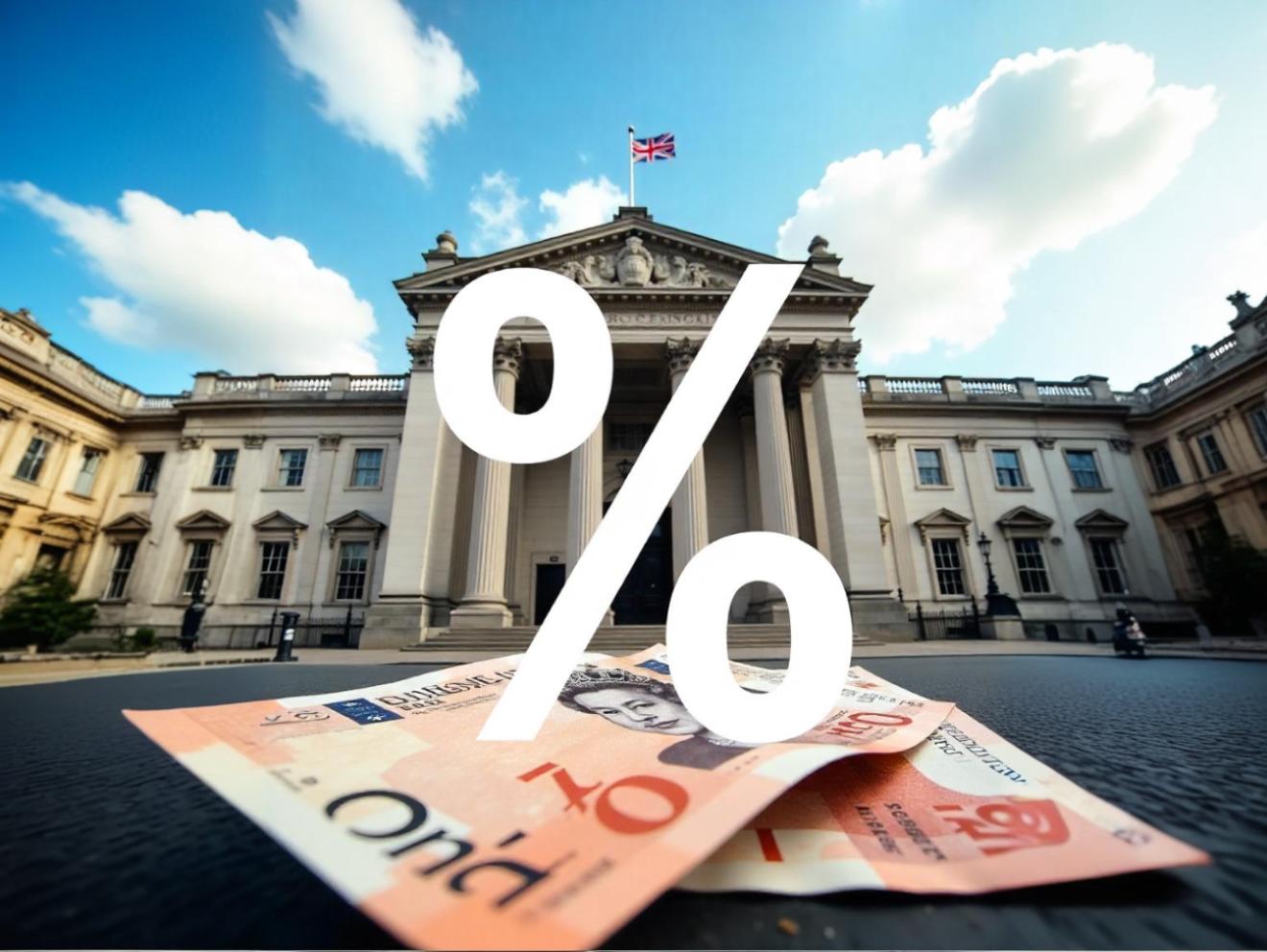
The disappointing data has strengthened the belief that the Bank of England may need to lower interest rates further to support the economy.
Central banks adjust borrowing costs to manage growth and inflation. When growth slows more than expected, policymakers often consider cutting rates to encourage spending and investment.
Many investors now expect the Bank of England to take a more supportive stance in the months ahead. Lower interest rates can make borrowing cheaper for households and businesses, but they can also reduce the appeal of a country’s currency.
For the British Pound, rising expectations of rate cuts may limit gains. If investors believe that UK interest rates will fall further, they may look for better returns elsewhere, which can weaken demand for the Pound.
GBP/USD Remains Resilient Despite Pressure
Despite these concerns, GBP/USD has managed to stay above 1.3600. The pair even recovered toward 1.3640 during recent trading, keeping alive a mild upward trend that began after last week’s lows.
This suggests that while the Pound faces challenges, it is not collapsing. The currency is finding some support, possibly due to broader market dynamics or positioning among traders.
Still, any significant shift in expectations about Bank of England policy could influence the pair’s direction in the near term.
Strong US Jobs Data Supports the Dollar
On the other side of the equation, the US Dollar has received a boost from strong labor market data.
The latest Nonfarm Payrolls report showed that job growth exceeded expectations. A healthy jobs market often signals economic strength, as it means businesses are hiring and consumers are likely to keep spending.
When employment remains strong, the Federal Reserve may feel less pressure to cut interest rates quickly. This has led investors to reduce their bets on immediate rate reductions in the United States.
As a result, the US Dollar found support following the release of the data.
Limits to the Dollar’s Recovery
However, the Dollar has not surged sharply higher. Several factors have kept its gains in check.
First, a large share of January’s job growth was concentrated in specific areas, raising questions about how broad-based the strength truly is. Second, employment growth figures for 2025 were revised lower, which may suggest that earlier optimism was slightly overstated.
These revisions have prevented a full recovery in the Dollar. While the US currency has found some stability, it has struggled to bounce decisively from recent lows.
This balance between stronger US data and weaker UK data helps explain why GBP/USD remains relatively steady rather than moving sharply in one direction.
What Could Drive GBP/USD Next?
Looking ahead, several factors could shape the future path of GBP/USD.
Upcoming UK Data
Investors will be watching closely for further signs of economic performance in the UK. If growth continues to disappoint, expectations for more Bank of England rate cuts could increase, putting additional pressure on the Pound.
On the other hand, any surprise improvement in business activity or consumer spending could help restore confidence and support the currency.
Federal Reserve Policy Signals
In the United States, future decisions by the Federal Reserve will also play a key role. If inflation remains under control and job growth stays solid, the Fed may take a cautious approach to lowering rates.
Stronger US economic signals could keep the Dollar supported, while weaker data might shift expectations and weigh on the currency.
Global Market Sentiment
Broader market sentiment can also influence currency pairs like GBP/USD. When investors feel confident and are willing to take risks, they may favor certain currencies over others. In times of uncertainty, demand can shift quickly.
For now, both the Pound and the Dollar are reacting mainly to domestic economic developments.
Final Summary
The British Pound has faced renewed pressure after weaker-than-expected UK GDP data showed minimal growth in the final quarter of 2025. Declines in manufacturing output and flat services activity have raised concerns about the strength of the UK economy.
As a result, expectations for further Bank of England rate cuts have increased, limiting enthusiasm for the Pound. At the same time, strong US jobs data has provided support to the Dollar, although revisions to earlier employment figures have prevented a strong rebound.
Despite these mixed forces, GBP/USD remains above 1.3600, holding onto a modest upward trend. The next moves for the pair will likely depend on fresh economic data and shifting expectations around central bank policies in both the UK and the US.
USDJPY Remains Resilient Around 153 as Markets Scale Back Dovish Fed Outlook
The USD/JPY currency pair is currently trading in a tight range after recently touching a two-week low near 152.25. It has since stabilized around the 153.00 level, as both the US Dollar and the Japanese Yen respond to major economic and political developments.
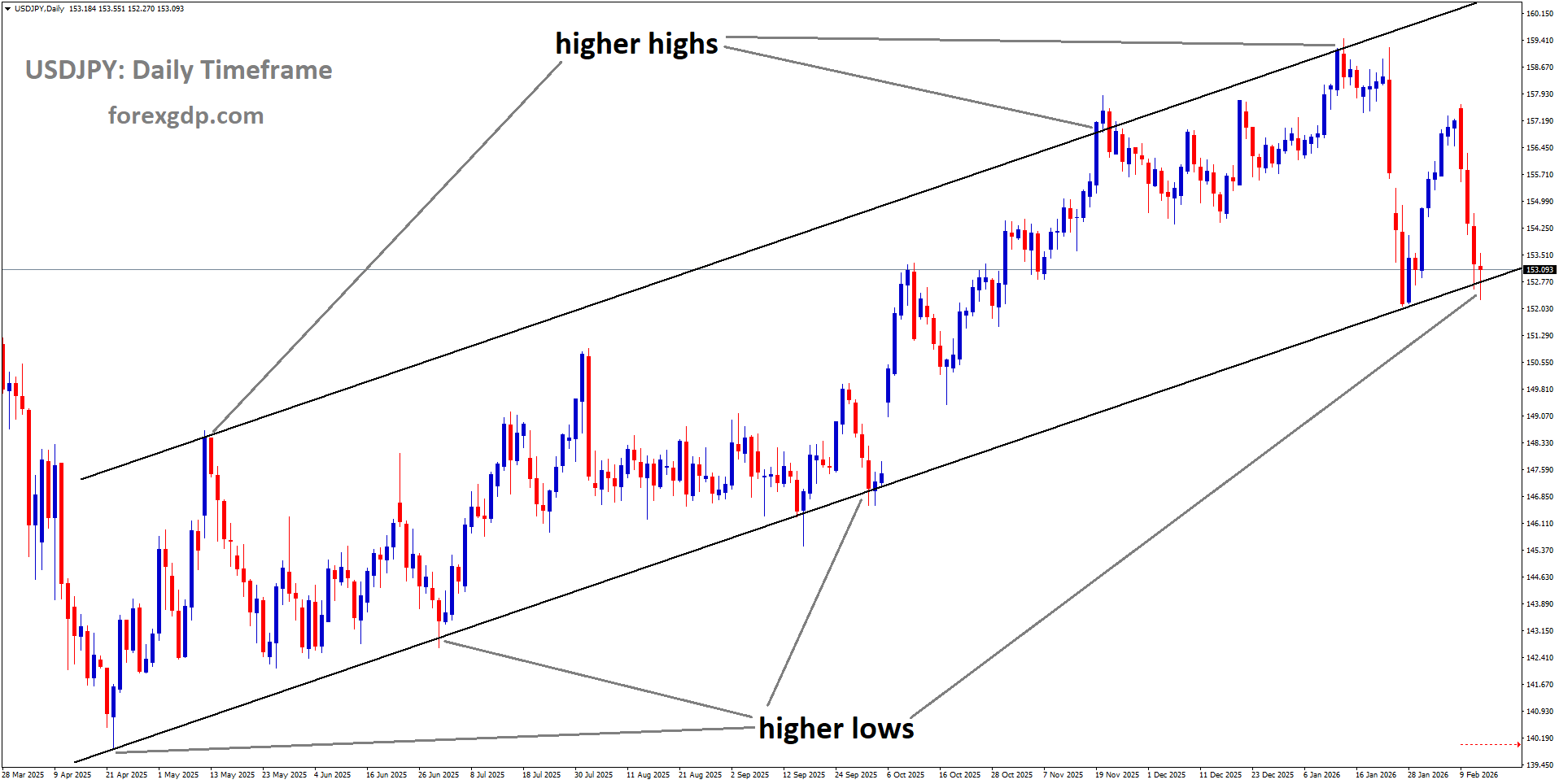
USDJPY is moving in an uptrend channel, andthe market has reached a higher low area of the channel
On one side, strong employment data from the United States has provided fresh support for the Dollar. On the other, the Japanese Yen is gaining strength following a major political victory in Japan. These opposing forces are keeping the pair balanced for now, but the broader trend is being shaped by deeper economic expectations in both countries.
Strong US Jobs Report Lifts the Dollar
The US Dollar found renewed support after the release of the latest Nonfarm Payrolls report. This report, one of the most closely watched indicators of the US economy, showed that job growth was stronger than expected.
According to the data, the US economy added 130,000 jobs, significantly beating forecasts of 70,000. At the same time, the unemployment rate declined slightly from 4.4% to 4.3%. These figures suggest that the labor market remains resilient despite ongoing economic uncertainties.
A healthy labor market usually signals that businesses are confident enough to hire more workers. It also means consumers may continue spending, which supports overall economic growth. Because of this, investors quickly adjusted their expectations regarding future interest rate cuts by the Federal Reserve.
Changing Expectations Around Federal Reserve Policy
Before the jobs data was released, many investors believed the Federal Reserve might move quickly to reduce interest rates. However, the stronger employment figures have caused markets to rethink that view.
If the US economy remains stable and job growth continues, the Fed may feel less pressure to cut rates in the near term. As a result, expectations for immediate rate reductions have been scaled back. This shift in outlook has helped the US Dollar recover from recent weakness.
However, not all aspects of the report were entirely positive.
Concerns Beneath the Headline Numbers
While the overall job creation number beat expectations, there were some concerns about the details. A large portion of the new jobs—more than 80,000—came from the healthcare sector. This heavy concentration raises questions about whether job growth is broad-based across the economy.
In addition, previously reported job data for 2025 was revised sharply lower. Earlier estimates suggested 584,000 net new jobs, but the updated figure now stands at 181,000. That downward revision has tempered some of the initial optimism surrounding the latest report.
Because of these mixed signals, the Dollar’s gains have remained modest rather than explosive. Investors appear cautious, weighing both the positive and less encouraging aspects of the data.
Japanese Yen Surges After Political Shift
While the US Dollar has found support, the Japanese Yen has been the standout performer this week among major global currencies. The Yen is on track for its strongest weekly performance in more than a year, gaining approximately 2.6%.
The primary driver behind this move is the decisive election victory of Prime Minister Takaichi. Her landslide win has reduced political uncertainty in Japan and strengthened expectations of a stable government.
Political stability is often welcomed by financial markets, especially in economies facing structural challenges. Investors appear encouraged by the clarity and direction provided by the election results.
Market Optimism Around Stimulus Plans
Prime Minister Takaichi has proposed large stimulus programs and tax cuts aimed at supporting Japan’s economy. Initially, some analysts expressed concern about how these measures would be financed, especially given Japan’s already high public debt.
However, investors are now focusing more on the potential benefits rather than the risks.
Stimulus measures can increase government spending, support businesses, and encourage consumer activity. Tax cuts may also leave households with more disposable income, which could boost domestic demand. These policies, combined with a previously weak Yen, may help strengthen economic activity and increase inflation.
That shift in focus has helped fuel the Yen’s rally this week.
Expectations for the Bank of Japan

Another key factor behind the Yen’s strength is growing speculation about future interest rate hikes by the Bank of Japan (BoJ).
For years, Japan maintained extremely low interest rates in an effort to fight deflation and stimulate growth. However, rising inflation and signs of improving economic conditions have changed the conversation.
If Takaichi’s stimulus measures successfully boost consumer demand and inflation, the BoJ may feel compelled to tighten monetary policy further. Markets are increasingly betting that the central bank could raise interest rates as soon as March, with the possibility of one or two additional increases later in the year.
Higher interest rates in Japan would make the Yen more attractive to investors, especially if US rate cuts eventually resume. This shift in monetary policy expectations is creating downward pressure on the USD/JPY pair.
The Tug of War Between the Fed and the BoJ
At the heart of the current USD/JPY movement is a clear contrast between US and Japanese monetary policy expectations.
In the United States, the Federal Reserve is still considered to be in an easing cycle, although the pace and timing of further rate cuts are now less certain. In Japan, by contrast, markets are preparing for potential rate hikes.
When interest rate expectations move in opposite directions between two countries, their currencies often react strongly. If the Fed delays rate cuts while the BoJ raises rates, the gap between US and Japanese interest rates could narrow. That scenario would typically support the Yen and limit upside potential for USD/JPY.
For now, the pair remains steady as investors digest new information from both sides.
Broader Implications for the Global Economy
The recent movements in USD/JPY reflect more than just short-term fluctuations. They highlight broader themes shaping the global economy.
In the United States, the labor market continues to show resilience, but questions remain about the sustainability and distribution of job growth. In Japan, political change is driving renewed confidence, while monetary policy could finally be shifting away from ultra-loose settings.
These developments matter not only for currency traders but also for businesses, investors, and policymakers worldwide. Exchange rate movements affect trade, investment flows, and inflation dynamics across borders.
What Could Happen Next?
Looking ahead, several factors could influence the direction of USD/JPY.
Future US economic data will play a crucial role in shaping Federal Reserve decisions. If job growth remains strong and inflation stays elevated, expectations for rate cuts could be pushed further into the future.
At the same time, investors will closely monitor Japan’s economic indicators and official comments from the Bank of Japan. Any confirmation of upcoming rate hikes could provide additional support to the Yen.
Political developments in Japan will also remain important, especially as Takaichi’s government begins implementing its stimulus agenda.
Final Summary
The USD/JPY pair is currently stabilizing near 153.00 after touching recent lows, as strong US employment data offers support to the Dollar. However, the Japanese Yen is enjoying one of its best weeks in over a year, driven by political stability and growing expectations of interest rate hikes from the Bank of Japan.
While the US labor market remains solid, concerns about job concentration and downward revisions have limited the Dollar’s gains. Meanwhile, optimism surrounding Japan’s new leadership and stimulus plans is strengthening the Yen.
With shifting interest rate expectations in both countries, the balance between the Federal Reserve and the Bank of Japan will likely determine the next major move for USD/JPY. Investors remain attentive, watching for fresh economic signals that could tip the scale in either direction.
EURGBP Climbs Back After Slower UK Economy Weighs on Pound
The EUR/GBP currency pair showed signs of stability during Thursday’s early European session, hovering around the 0.8710 level. After facing recent pressure, the pair managed to trim some of its losses as fresh economic data from the United Kingdom influenced market sentiment.
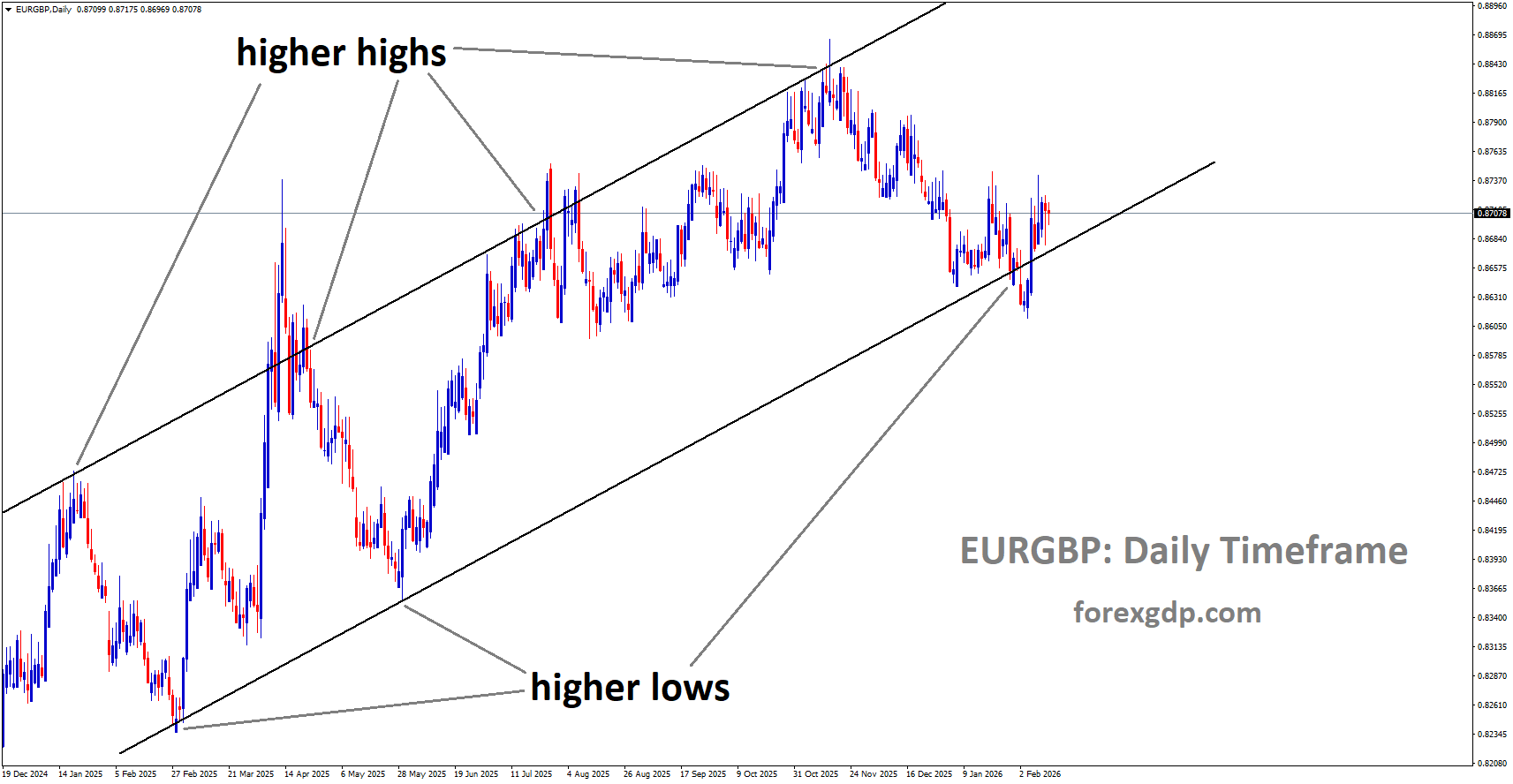
EURGBP is moving in an uptrend channel, andthe market has reached a higher low area of the channel
The British Pound came under mild pressure following the release of weaker-than-expected growth figures. At the same time, attention is now shifting toward the upcoming Eurozone Gross Domestic Product (GDP) report, which could play a key role in shaping the next move for the euro against the pound.
UK Economy Grows Modestly in Fourth Quarter
The latest data from the UK’s Office for National Statistics revealed that the British economy expanded by 0.1% quarter-on-quarter in the fourth quarter of 2025. While this marks continued growth, it fell short of expectations. Analysts had predicted a stronger expansion of 0.2% for the period.
Interestingly, the fourth-quarter figure matched the previous quarter’s growth rate of 0.1%. This suggests that the UK economy has been moving forward, but only at a very slow pace.
On a yearly basis, the UK economy grew by 1.0% in the fourth quarter compared to the same period the year before. This was slightly lower than the previous reading of 1.2%, which had itself been revised down from an earlier estimate. Market participants had expected growth to hold at 1.2%, making the actual result another disappointment.
Monthly data also painted a cautious picture. The UK economy expanded by 0.1% in December, following a 0.2% increase in November. While December’s result matched expectations, it still reflected slower momentum compared to earlier months.
Overall, the numbers suggest that while the UK economy is not shrinking, it is growing at a very modest rate. This softer performance has weighed slightly on the British Pound.
Immediate Impact on the British Pound
Following the release of the GDP figures, the Pound edged lower against the Euro. The reaction was not dramatic, but it reflected a sense of caution among traders.
When economic growth comes in below expectations, it can affect confidence in a country’s outlook. Slower growth may limit the ability of policymakers to tighten monetary conditions or could increase concerns about future economic performance. As a result, investors often reassess their positions in the currency.
In this case, the weaker UK growth data reduced some of the Pound’s recent strength, allowing the EUR/GBP pair to recover from earlier losses.
European Central Bank Maintains Steady Policy
While the UK data grabbed headlines, developments in the Eurozone have also been supporting the euro.
Last week, the European Central Bank (ECB) decided to keep its benchmark interest rate unchanged at 2.0%. This marked the fifth consecutive meeting where the central bank left rates steady, a move that was widely anticipated.
The ECB’s decision signals a cautious and stable approach to monetary policy. Traders now increasingly believe that the central bank could maintain this stance throughout the year before considering any potential adjustments next year.
This expectation of steady policy has provided underlying support for the euro. When markets see a central bank as consistent and predictable, it can help strengthen confidence in the currency.
As a result, the euro has found some footing against the British Pound, particularly after the softer UK growth figures.
All Eyes on Eurozone GDP
The next major event for the EUR/GBP pair will be the preliminary Eurozone GDP report for the fourth quarter. This data is scheduled for release later on Friday and is expected to provide important clues about the health of the regional economy.
Why the Eurozone GDP Matters
GDP figures are closely watched because they offer a clear snapshot of economic performance. Strong growth can signal rising business activity, job creation, and consumer spending. Weak growth, on the other hand, may raise concerns about slowing demand or broader economic challenges.
If the Eurozone GDP report shows solid expansion, it could further strengthen the euro. Investors may view steady or improving growth as a sign that the region’s economy remains resilient.
However, if the data points to slowing or weaker-than-expected growth, the euro could face renewed pressure. In that case, the EUR/GBP pair might move lower as traders shift their focus back to relative economic strength.
Comparing UK and Eurozone Growth
With the UK showing modest and below-forecast growth, the Eurozone figures will offer an interesting comparison. If the Eurozone performs better than the UK, it may reinforce the idea that the euro area is currently in a stronger position.
On the other hand, if both regions show similar signs of slow growth, the currency pair could remain range-bound as investors weigh the outlook for both economies.
Market Sentiment Remains Cautious
At the moment, overall sentiment appears cautious rather than strongly directional. The EUR/GBP pair is moving within a relatively tight range as traders wait for clearer signals.
Economic growth remains a key theme. For both the UK and the Eurozone, steady but slow expansion suggests that policymakers may continue to take a careful approach. Major policy changes are not expected in the near term, which may limit sharp currency movements unless new data surprises the market.
Investors are also mindful of global economic conditions, as external factors can influence both the UK and Eurozone economies. However, for now, domestic growth figures are taking center stage.
What to Watch in the Coming Days
Looking ahead, several factors could shape the direction of the EUR/GBP pair:
-
The final details within the Eurozone GDP report, including which sectors are driving growth.
-
Any revisions to previous growth figures in either region.
-
Comments from officials at the ECB or the Bank of England that may hint at future policy changes.
-
Broader economic indicators such as inflation and employment data.
For traders and investors, the balance between UK and Eurozone growth remains crucial. Small differences in economic performance can influence expectations about future policy decisions, which in turn impact currency movements.
Final Summary
The EUR/GBP pair has steadied near 0.8710 after trimming earlier losses during Thursday’s European session. The British Pound softened slightly following weaker-than-expected UK GDP data, which showed slow but continued economic growth in the fourth quarter.
At the same time, the euro has been supported by the European Central Bank’s steady policy stance and growing expectations that rates will remain unchanged for an extended period.
Attention now turns to the upcoming Eurozone GDP report. The results will play a key role in determining whether the euro can maintain its recent resilience or whether fresh weakness could shift momentum back in favor of the Pound.
With both economies showing modest growth, the EUR/GBP pair may continue to move cautiously as investors wait for clearer signals about the future direction of economic activity and monetary policy in Europe.
BTCUSD Defies Pressure Following Strong US Employment Growth Report
Bitcoin is trading close to $67,000 after a sharp move triggered by the latest US jobs report. The sudden spike in volatility caught the attention of traders across the crypto market. While Bitcoin and several major altcoins slipped lower, some privacy-focused and decentralized finance (DeFi) tokens moved in the opposite direction and posted solid gains.
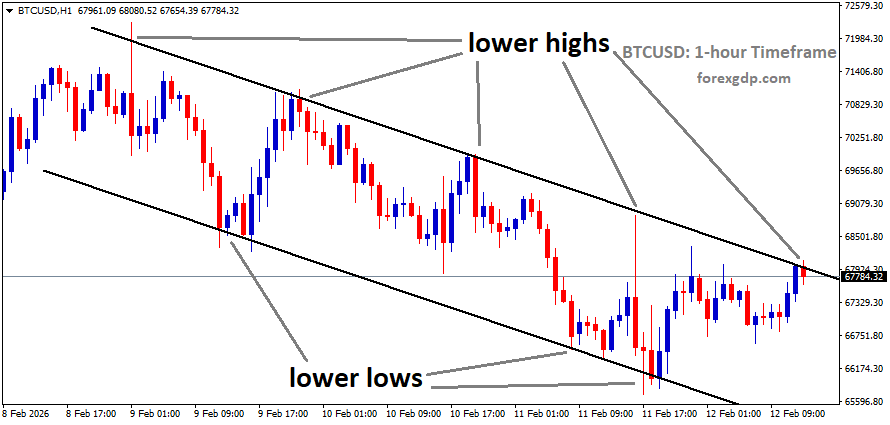
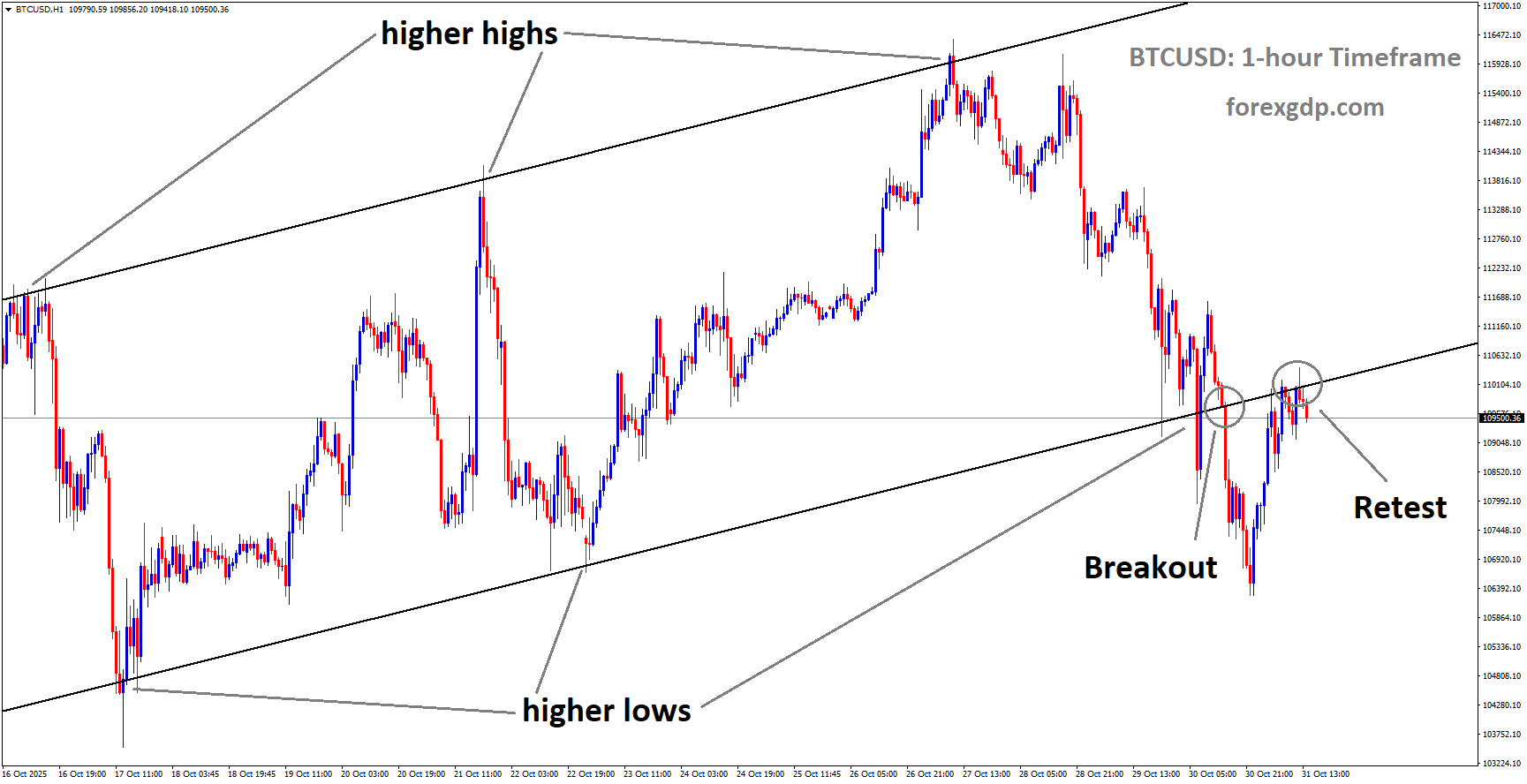
BTCUSD is moving in a descending channel, and the market has reached the lower high area of the channel
At the same time, fresh economic data from the United States has shifted expectations around future interest rate decisions. The January labor report showed stronger-than-expected job growth, which reduced hopes for a near-term rate cut. This change in outlook has influenced investor sentiment across financial markets, including cryptocurrencies.
Bitcoin Reacts to January Jobs Report
Bitcoin experienced a quick jump from around $66,000 to above $68,000 shortly after the US January jobs report was released. However, the rally did not last long. The digital asset gave back some of its gains and settled near $67,000, marking a modest daily decline.
This type of fast price movement is common when major economic news hits the market. Investors often adjust their positions quickly based on new data, especially when it could affect interest rates or broader financial conditions.
The wider crypto market mirrored Bitcoin’s behavior. Major altcoins such as Ethereum (ETH), XRP, and Solana (SOL) also trended lower. Their pullback suggests that overall sentiment turned cautious following the economic update.
Despite the dip in leading cryptocurrencies, the market was not entirely negative.
Privacy and DeFi Tokens Stand Out
While top altcoins struggled, several privacy-based and DeFi tokens managed to outperform. Monero (XMR), Zcash (ZEC), Uniswap (UNI), and Aster (ASTER) recorded gains ranging between 4% and 8%.
This divergence highlights how different segments of the crypto market can react differently to broader trends. Privacy coins, for example, often attract interest during periods of uncertainty because they focus on transaction anonymity. DeFi tokens can also gain attention when traders look for opportunities outside of large-cap assets.
The mixed performance shows that investors are becoming more selective. Instead of moving the entire market in one direction, capital appears to be rotating into specific projects with unique use cases or strong communities.
Strong Labor Market Reduces Rate Cut Hopes
The biggest driver behind the recent volatility was the January Nonfarm Payrolls (NFP) report from the US Bureau of Labor Statistics.
According to the data, the US economy added 130,000 jobs in January. This figure was nearly double analysts’ expectations of 70,000 new jobs. In addition, the unemployment rate dropped from 4.4% to 4.3% on a yearly basis, beating forecasts that had predicted no change.
On the surface, strong job growth is positive news for the economy. However, in the current environment, it complicates the outlook for interest rates.
When the labor market remains strong, it can keep inflation pressures alive. As a result, the Federal Reserve may feel less urgency to lower interest rates. Lower rates tend to support risk assets like cryptocurrencies, while higher or steady rates can limit upside momentum.
Downward Job Revisions Add Context
The January report also included a significant downward revision of 862,000 jobs for 2025. This suggests that the US labor market was much weaker last year than previously believed.
Even with this revision, the latest data still points to resilience in the current labor market. For investors, what matters most right now is the direction of future policy decisions rather than past performance.
Federal Reserve Outlook Shifts
Before the jobs report, there was some hope that the Federal Reserve might consider cutting rates at its upcoming March 18 meeting. However, the strong employment data quickly changed that outlook.
Expectations for a rate cut dropped sharply. According to market-based projections, the probability of a March rate reduction fell from around 20% to roughly 8% following the report.
Comments from Federal Reserve officials added to the cautious tone. Kansas City Fed President Jeffrey Schmid warned that inflation could remain persistent if the central bank moves too quickly to ease policy. His remarks reinforced the idea that policymakers are likely to remain patient.
For crypto investors, this shift matters a great deal.
Why Interest Rates Matter for Crypto

Cryptocurrencies are often seen as high-risk assets. When interest rates are low and liquidity is abundant, investors are more willing to take on risk. This environment has historically supported Bitcoin and other digital assets.
On the other hand, when monetary policy is tight and borrowing costs remain high, investors may move money into safer assets. This can reduce demand for crypto.
Bitcoin has previously struggled during periods of restrictive policy. For example, after the Federal Reserve decided to keep rates unchanged at its January meeting, Bitcoin saw additional weakness. Political developments, including leadership nominations at the central bank, have also influenced sentiment.
The current environment suggests that the Fed is in no rush to ease conditions. That uncertainty is weighing on parts of the crypto market.
Signs of Cautious Market Structure
Beyond price movements, several market indicators point to cautious sentiment among traders.
Funding rates across multiple major cryptocurrencies have turned negative at times. Negative funding rates often indicate that more traders are betting on lower prices than higher ones. While this does not guarantee further declines, it reflects a defensive mindset.
Another measure of sentiment is the Bitcoin Coinbase Premium Index, which tracks the difference between Bitcoin prices on Coinbase and other major exchanges. A negative reading suggests weaker demand from US-based investors.
Recently, this index has remained slightly below zero, showing that American investors are not aggressively buying at the moment.
However, there is also a small positive sign.
Steady Inflows into Bitcoin ETFs
US spot Bitcoin exchange-traded funds (ETFs) recorded net inflows of over $166 million in a single day. This suggests that institutional and retail investors are still allocating capital to Bitcoin, even during periods of uncertainty.
ETF inflows can provide steady demand, helping to support the broader market over time. While short-term volatility may continue, ongoing investment through regulated products reflects long-term interest in the asset class.
What This Means for Investors
The recent price swings highlight how closely Bitcoin and the broader crypto market are tied to macroeconomic developments.
Strong US jobs data has reduced expectations for near-term rate cuts. As a result, traders are adjusting their positions and becoming more selective. Major cryptocurrencies have shown weakness, while certain privacy and DeFi tokens have managed to outperform.
The market is currently balancing two forces: solid economic data that delays policy easing, and continued interest in crypto through ETF inflows and selective buying.
For investors, this environment requires patience and careful risk management. Volatility can create opportunities, but it can also lead to sudden reversals.
Final Thoughts
Bitcoin is holding near $67,000 after reacting sharply to stronger-than-expected US job growth. The broader crypto market remains mixed, with large-cap assets under pressure while some privacy and DeFi tokens post gains.
The key factor shaping sentiment right now is the outlook for US interest rates. A resilient labor market reduces the likelihood of quick rate cuts, which can limit momentum in risk assets like cryptocurrencies.
At the same time, steady ETF inflows show that long-term interest in Bitcoin remains intact. As economic data continues to guide policy decisions, crypto markets are likely to stay sensitive to every major update.
Investors should watch upcoming Federal Reserve meetings and economic releases closely, as they will play a central role in shaping the next phase of the crypto market.
Don’t trade all the time, trade forex only at the confirmed trade setups
Get more confirmed trade signals at premium or supreme – Click here to get more signals, 2200%, 800% growth in Real Live USD trading account of our users – click here to see , or If you want to get FREE Trial signals, You can Join FREE Signals Now!