
Weekly Forecast Video on Forex, BTCUSD, XAUUSD
Stay ahead in the markets with our detailed analysis of gold and forex trade setups for this upcoming week, Oct 20 to Oct 24.
XAUUSD Tumbles as Risk Appetite Grows After Trump Cools Trade Tensions
Gold has always been viewed as a safe haven during uncertain times. However, when the global mood shifts toward optimism and economic stability, this shiny metal tends to lose some of its appeal. Recently, gold prices saw a noticeable dip after a strong rally, driven mainly by comments from U.S. President Donald Trump and rising U.S. Treasury yields. Let’s break down what’s been happening in the gold market and what might be influencing investors’ decisions right now.
A Softer Tone from Trump Sparks Market Confidence
One of the biggest factors affecting gold’s movement lately has been political news — particularly statements from President Trump. His latest comments suggested that the previously threatened triple-digit tariffs on China might not be sustainable. This slight softening of tone brought a sigh of relief to investors who had been bracing for prolonged trade tensions between the world’s two largest economies.
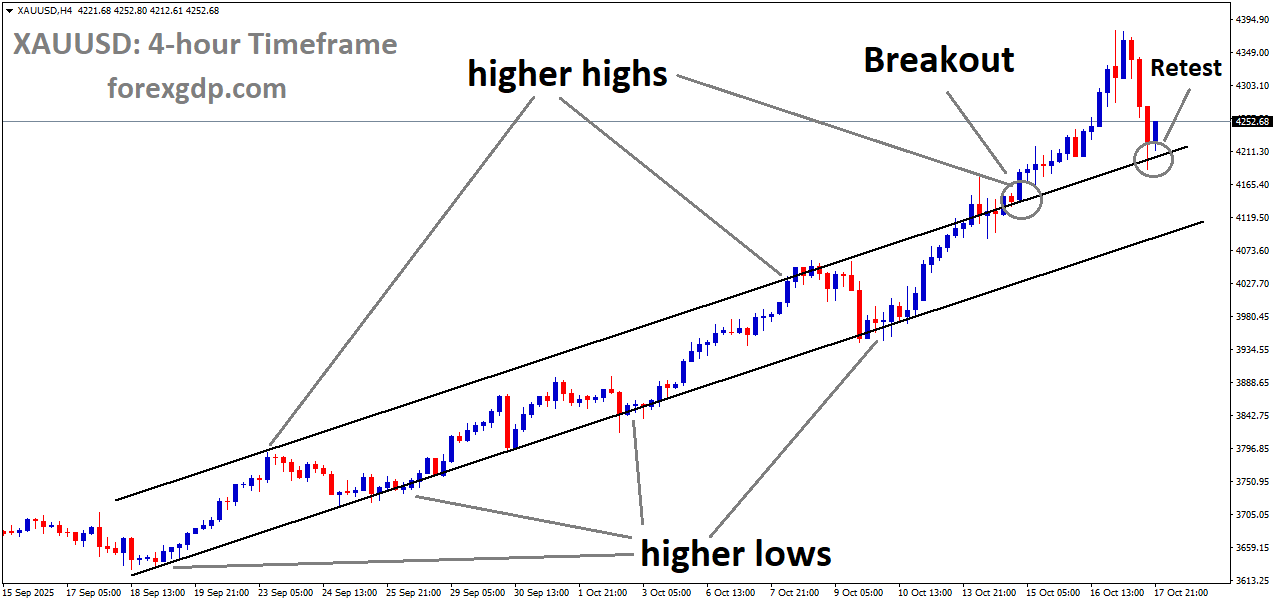
XAUUSD reached the retest area of the broken uptrend channel
Trump also mentioned that he expects to meet Chinese President Xi Jinping in the coming weeks in South Korea. Such diplomatic hints often signal a move toward negotiation rather than confrontation. As a result, risk appetite improved globally. Investors who had been seeking shelter in gold started shifting their focus back to other assets like equities and the U.S. dollar, leading to a decline in gold prices.
Why Risk Sentiment Matters
Gold typically shines when markets are uncertain. But as soon as investors see potential stability or progress in international relations, they tend to move toward assets that promise better returns, like stocks or bonds. This shift reduces demand for gold, which is considered a non-yielding asset — it doesn’t earn interest or dividends. When confidence returns to the markets, gold’s appeal as a safety net naturally decreases.
Rising Treasury Yields Add More Pressure on Gold
Another key driver behind gold’s recent drop has been the movement in U.S. Treasury yields. The 10-year Treasury yield rose by a few basis points, reflecting a stronger outlook for the U.S. economy. When yields rise, they offer investors better returns compared to holding gold, which doesn’t provide any income. As a result, investors often sell off some of their gold holdings to invest in bonds or other interest-bearing assets.

At the same time, the U.S. dollar has been strengthening. The dollar and gold usually move in opposite directions because gold is priced in dollars. When the greenback gains value, it becomes more expensive for foreign investors to buy gold, which reduces global demand.
The Fed’s Role in Shaping Expectations
Federal Reserve officials have been clear about their ongoing commitment to bringing inflation back to their 2% target. Although some, like St. Louis Fed President Alberto Musalem, support rate cuts in upcoming meetings, others remain cautious about easing monetary policy too quickly. These mixed signals create uncertainty about the pace of future rate changes — and that, in turn, affects gold prices.
Lower interest rates typically benefit gold because they make non-yielding assets more attractive compared to bonds. But with the Fed keeping a firm stance on inflation control, the market isn’t yet seeing a major shift toward aggressive rate cuts. That keeps pressure on gold in the short term.
Market Confidence and Credit Concerns
While optimism about trade relations and the economy is growing, not all news has been positive. Late last week, concerns surfaced when two regional U.S. banks reported significant loan losses. Though this raised some questions about credit stability, the White House quickly reassured the public that U.S. banks remain well-capitalized and have enough reserves to handle such setbacks.
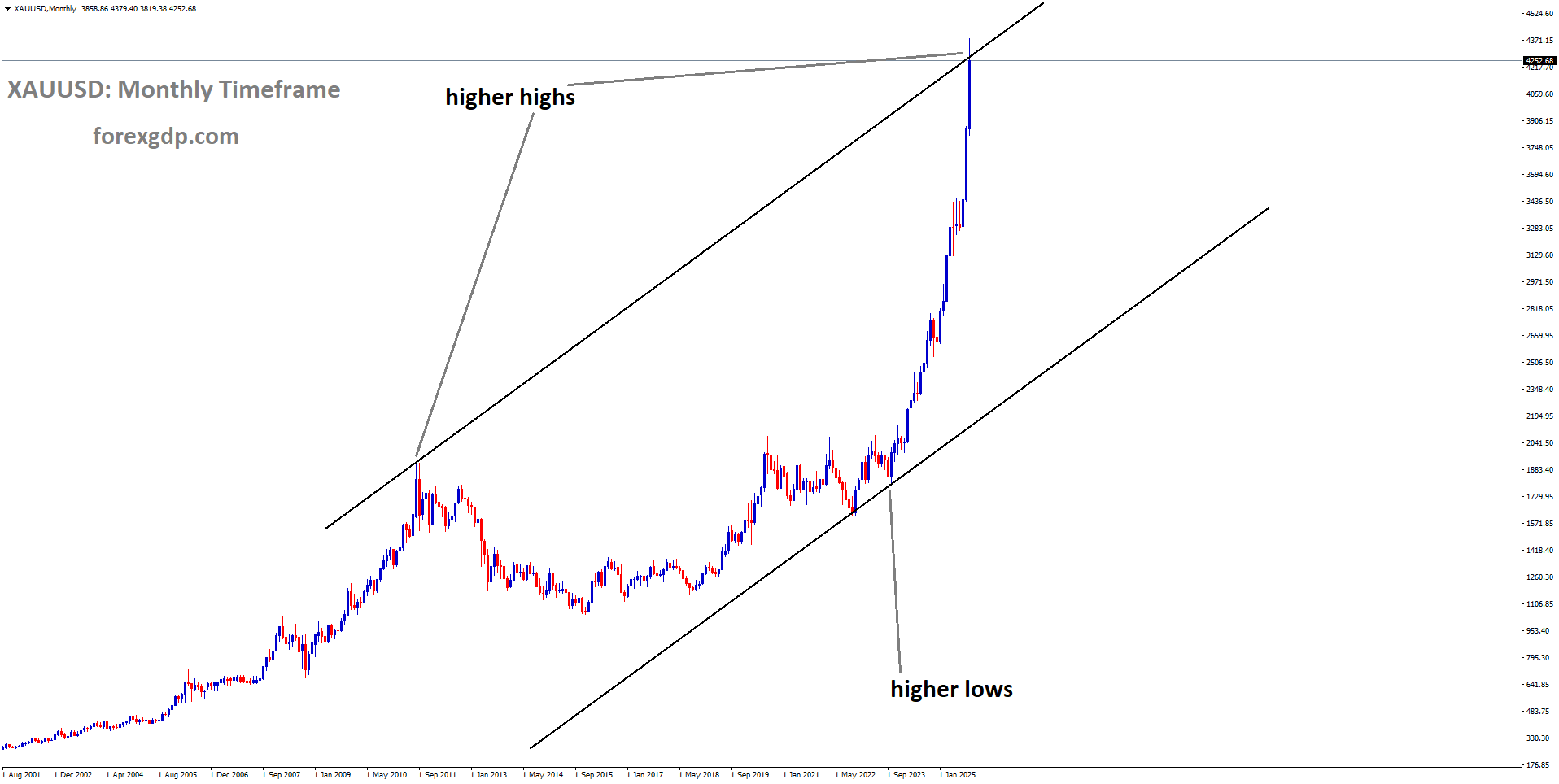
XAUUSD is moving in an Ascending channel
This reassurance from senior officials, including White House Adviser Kevin Hassett, helped stabilize market sentiment. The administration’s confidence in the financial system also strengthened belief that the U.S. economy remains resilient, further supporting the dollar and treasury yields — both of which weigh against gold’s short-term momentum.
Why the Dollar’s Strength Hurts Gold
A stronger dollar reduces the purchasing power of other currencies, making commodities like gold more expensive in non-dollar markets. This dynamic often triggers selling pressure, especially among international investors who prefer to lock in profits when the dollar surges. So, even though some traders might still view gold as a good long-term store of value, its immediate attractiveness tends to fade when the dollar performs well.
Gold’s Journey So Far and What’s Next
Even after this pullback, gold remains one of the best-performing assets of the year. It has gained significantly in 2025 due to multiple factors such as geopolitical tensions, central bank purchases, and the global trend of de-dollarization. Many countries are diversifying their reserves by adding more gold, reducing dependency on the U.S. dollar. This trend has been a powerful long-term support for gold prices.

In addition, exchange-traded funds (ETFs) that hold physical gold have seen strong inflows, showing that investor interest remains robust despite short-term corrections. Analysts from major banks have also shared optimistic projections for gold’s future. Some expect the metal to average higher prices in 2026 as central banks continue buying and global uncertainty persists.
Looking Ahead: The Upcoming CPI Data
All eyes are now on the U.S. Consumer Price Index (CPI) report, scheduled for release next week. Inflation data has always been a crucial indicator for markets because it influences the Federal Reserve’s next policy moves. If inflation shows signs of cooling, it might increase the chances of a rate cut later in the year, which could give gold a new boost. On the other hand, if inflation stays sticky, the Fed might keep rates higher for longer, putting further pressure on gold prices.
Investor Sentiment and Market Outlook
Despite recent declines, many investors continue to view gold as a strategic part of their portfolio. It acts as a hedge against both inflation and economic uncertainty. The short-term correction doesn’t necessarily change gold’s long-term potential. Markets are dynamic, and investor behavior can shift quickly depending on global developments.
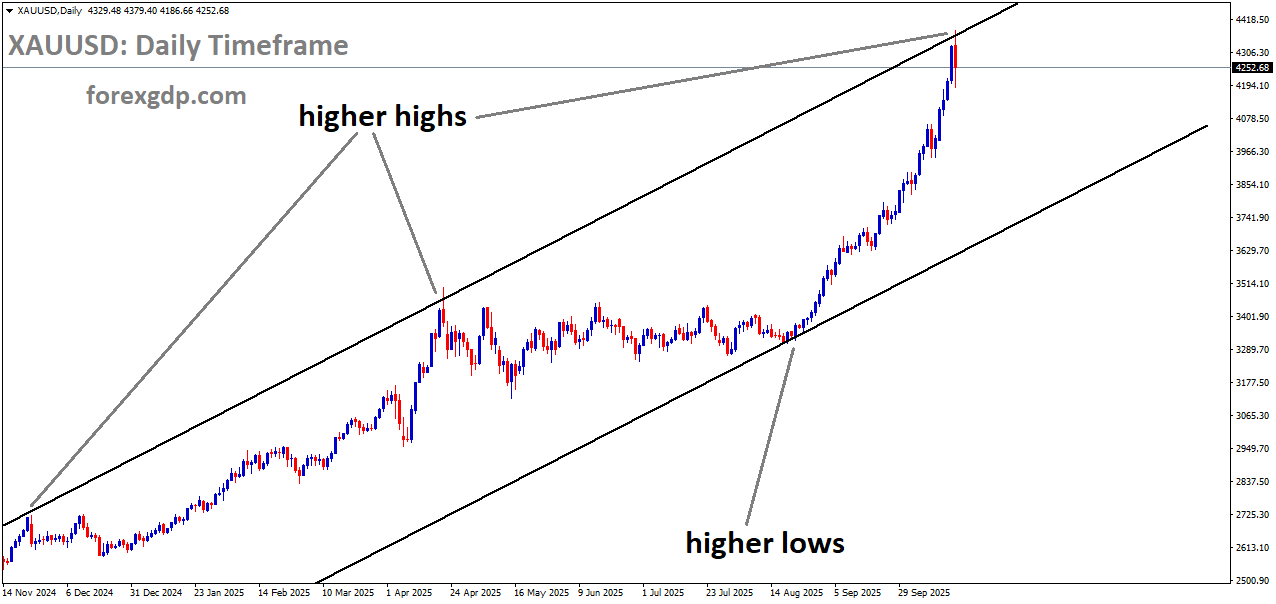
XAUUSD is moving in an uptrend channel
There’s also the psychological aspect of gold investment. When headlines start hinting at stability, people often step away from safe assets — but when the unexpected happens, they return quickly. That’s part of what makes gold so fascinating: it’s not just about economics; it’s about human emotion and confidence.
As the world watches for more clarity from the Federal Reserve and upcoming economic reports, gold’s next move will depend largely on whether market optimism continues or fades. A renewed wave of uncertainty, whether from global politics or the financial system, could quickly bring gold back into favor.
Final Summary
Gold’s recent decline reflects a classic shift in market sentiment — from fear to optimism. As President Trump’s softer trade stance and stronger U.S. economic signals improved investor confidence, the demand for safe havens like gold naturally weakened. Rising Treasury yields and a firmer dollar added to the pressure, leading to a short-term dip in gold prices.
However, the story doesn’t end there. With inflation data on the horizon and ongoing global economic shifts, gold remains a vital part of the investment landscape. Its long-term outlook stays bright, supported by central bank buying, geopolitical risks, and global diversification trends.
In essence, gold may be down for now, but its shine hasn’t faded — it’s just waiting for the next spark to reignite investor interest.
EURUSD Slides as Trump’s Shift on China Tariffs Reignites Dollar Demand
When it comes to global markets, every word from political and central bank leaders carries weight. Recently, remarks from former U.S. President Donald Trump and top Federal Reserve (Fed) officials sent ripples across the financial world. Investors watched closely as trade tensions showed signs of easing while inflation and interest rate expectations continued to dominate market conversations.
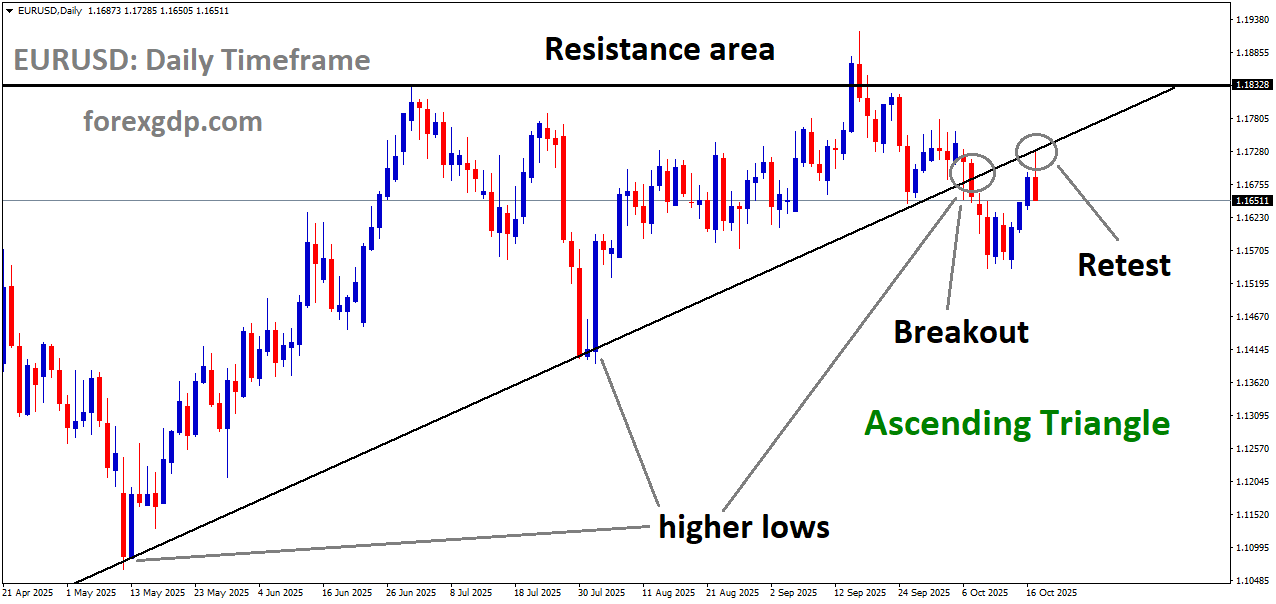
EURUSD reached the retest area of the broken Ascending Triangle pattern
Let’s take a deep dive into how Trump’s comments, the Fed’s latest stance, and steady Eurozone inflation figures are shaping market sentiment.
Trump’s Trade Comments Calm Market Nerves
For months, traders have been on edge over the ongoing trade tensions between the United States and China. But Trump’s latest statement that “high tariffs on China are not sustainable” offered a sigh of relief to global markets. The remark suggested a potential shift toward a more cooperative trade environment—something that investors have long been waiting for.
This change in tone helped restore some risk appetite among traders. Many market participants saw Trump’s words as an acknowledgment that prolonged trade conflicts could harm both economies. When Trump also mentioned plans to meet Chinese President Xi Jinping at an upcoming international summit, it fueled optimism that diplomatic talks could lead to meaningful progress.
As confidence returned, the U.S. Dollar strengthened, showing that investors were regaining trust in the stability of the American economy. Even without major economic data releases that day, market sentiment alone was enough to sway currency movements.
Federal Reserve Officials Show Dovish Leanings
While Trump’s softer trade rhetoric boosted market optimism, the Federal Reserve maintained a cautious but supportive stance toward potential rate cuts. Multiple Fed officials, including Christopher Waller, Alberto Musalem, and Neel Kashkari, shared similar messages: they remain open to further policy easing, but they’re still keeping a close eye on inflation trends.
What the Fed Said
-
Governor Christopher Waller signaled that more rate cuts could be appropriate if inflation doesn’t cool off soon, emphasizing that the central bank must strike a careful balance.
-
St. Louis Fed President Alberto Musalem also favored a rate cut, highlighting the Fed’s ongoing commitment to bringing inflation closer to the 2% target.
-
Minneapolis Fed President Neel Kashkari took a slightly different tone, pointing out that the U.S. economy “is not slowing as much as we think,” suggesting underlying resilience.
Together, these remarks painted a picture of a cautiously dovish Federal Reserve—one that’s willing to act if inflation stays hot, but not panicking about short-term fluctuations.
Why It Matters for Traders
Fed comments often play a key role in shaping market expectations. When central bank officials hint at rate adjustments, it directly influences how investors position themselves in bonds, equities, and foreign exchange markets. The current tone implies that while monetary easing remains on the table, policymakers want to avoid fueling inflationary pressure.
Market odds reflect that expectation. Investors widely anticipate a 25-basis-point rate cut in the upcoming Fed meeting, a move designed to gently support the economy without overstimulating it.
Eurozone Inflation Holds Steady
Across the Atlantic, the Eurozone’s inflation data for September came in largely in line with market expectations. Both headline and core inflation remained stable, showing that prices are neither surging nor collapsing—an encouraging sign for policymakers at the European Central Bank (ECB).

A Stable Yet Cautious Picture
ECB officials, including Olaf Sleijpen and Joachim Nagel, commented on the region’s economic conditions with cautious optimism. Sleijpen mentioned that while the policy stance is currently “in a good place,” it may not remain that way indefinitely. His words hint that the ECB is keeping its options open in case economic growth slows or inflation pressures change.
Nagel added that there’s no urgent need for immediate rate changes, as the economy has shown more resilience than many analysts expected. This cautious but confident approach reflects the ECB’s broader goal—maintaining price stability while ensuring growth is not stifled by premature policy tightening.
Market Takeaway
For traders, stable Eurozone inflation provides clarity. It suggests the ECB won’t rush into aggressive policy changes, keeping markets steady and predictable. This stability helps balance out the global picture, especially as the U.S. continues to navigate its inflation and rate cut debates.
All Eyes on the U.S. CPI Report
With most recent data already priced in, the next major event on traders’ calendars is the U.S. Consumer Price Index (CPI) report. Scheduled for release next week, this report will reveal how inflation is trending and could heavily influence the Fed’s next move.
If CPI data shows that inflation is cooling, it would strengthen the case for another rate cut, giving the economy room to breathe. On the other hand, if inflation remains stubbornly high, the Fed might choose to hold off on additional easing. Either way, the CPI release is expected to be a major market mover.
A Broader Look at Global Sentiment
When combining all these developments—Trump’s comments, the Fed’s careful stance, and steady European inflation—a clear pattern emerges: global markets are entering a phase of cautious optimism.
-
Investors are regaining confidence that trade relations between the U.S. and China may stabilize.
-
The Fed appears ready to fine-tune its approach without overreacting.
-
The Eurozone is maintaining steady economic performance, avoiding sudden policy shifts.
This environment encourages more balanced trading behavior. Instead of reacting sharply to single events, traders are beginning to focus on broader economic trends. The result? A calmer, more calculated market mood.
Final Summary
In simple terms, recent developments in both U.S. and European markets signal a turning point toward stability and moderation. Trump’s softer comments on China offered relief to traders worried about escalating trade wars. The Federal Reserve, meanwhile, remains flexible—ready to support the economy if needed but mindful of keeping inflation under control. Over in Europe, inflation staying steady reassures investors that the region’s recovery remains intact.
As the world watches the upcoming U.S. CPI report, the balance between optimism and caution continues to shape financial sentiment. For now, the tone is positive: trade tensions are easing, policymakers are alert but not alarmed, and investors are finding a bit of breathing room in an otherwise uncertain global economy.
GBPUSD slips as Trump eases tone on China, giving the Dollar fresh momentum
The British pound has seen a slight pullback against the U.S. dollar after touching its highest level in a week. This move comes as global markets digest new remarks from former U.S. President Donald Trump about tariffs on China and shifting expectations for central bank policies on both sides of the Atlantic.
While traders were previously optimistic about the pound’s momentum, a combination of political uncertainty, weaker U.K. data, and renewed confidence in the dollar has reshaped market sentiment. Let’s dive into what’s really happening and what’s driving the current tone in the GBP/USD market.
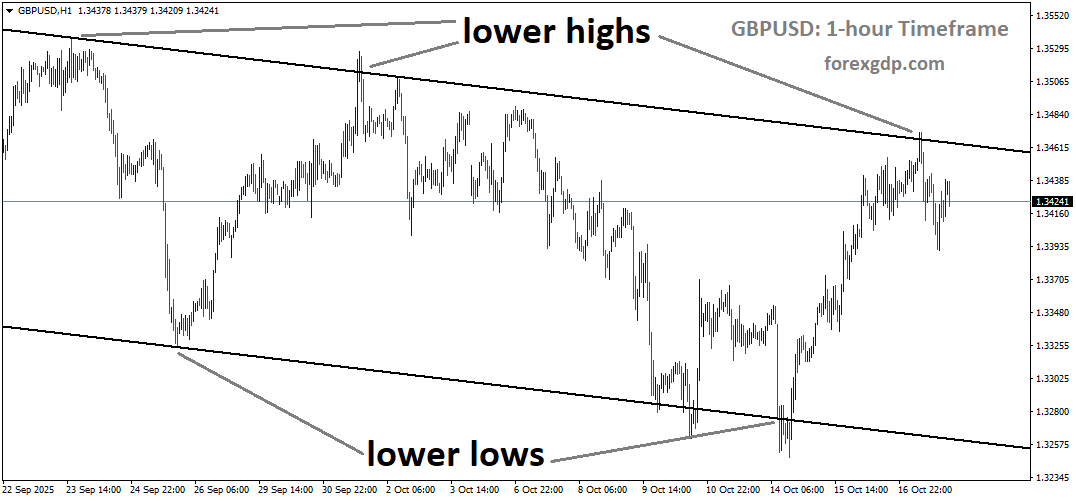
GBPUSD is moving in a downtrend channel, and the market has reached the lower high area of the channel
The U.S. Dollar Strengthens Amid Trump’s Trade Talk Shift
One of the main factors behind the dollar’s recent recovery is Donald Trump’s latest comments on U.S.-China trade relations. In an interview with Fox Business, he admitted that the high tariffs placed on Chinese goods were “not sustainable,” but he emphasized the need for a fair deal. He also hinted at an upcoming meeting with Chinese President Xi Jinping in South Korea within the next couple of weeks.
These statements struck a balance between criticism and optimism — suggesting that while the trade tensions might ease, the U.S. won’t compromise easily. This reassurance of a potential trade resolution encouraged traders to buy back into the dollar, especially since it remains the world’s safe-haven currency in times of political uncertainty.
Adding to the overall nervousness was the ongoing U.S. government shutdown, which has stretched into its seventeenth day. The standoff between the White House and Democrats shows little progress, creating concerns about delayed government spending and potential economic fallout. Yet, ironically, this uncertainty often strengthens the dollar as global investors look for safety.
To make matters worse, reports of fraudulent loans at two U.S. regional banks triggered fresh worries about the stability of the financial system. Though the issue remains contained for now, it has revived memories of past credit crises — another reason some investors are staying defensive and holding onto the dollar.
Sterling’s Early Gains Fade as Traders Bet on More Fed Easing
The pound initially gained traction earlier in the week, touching its highest level in several days. Much of this optimism came from expectations that the U.S. Federal Reserve would cut interest rates again soon. Recent dovish comments from Fed Chair Jerome Powell signaled that the central bank is ready to ease monetary policy further if economic conditions demand it.
Markets are already pricing in a 25-basis-point cut at the Fed’s next meeting in October. This expectation has been fueled by slower growth indicators and the financial uncertainty surrounding the potential credit issues. According to traders, there’s only about a 1% chance of a deeper 50-basis-point cut, suggesting that most expect the Fed to move cautiously rather than aggressively.
For the pound, however, this early advantage didn’t last long. Once the U.K.’s economic data came out, the sentiment quickly shifted. Although the latest figures showed that the U.K. economy expanded slightly by 0.1% in August — a small rebound after July’s contraction — the broader outlook remains weak.
U.K. Economic Growth Fails to Impress, Raising BoE Cut Expectations
Britain’s economy continues to show signs of fatigue. The latest numbers from the Office for National Statistics (ONS) confirmed that while there was modest growth in August, the recovery is fragile at best. The jobs market, which has been one of the strongest parts of the U.K. economy for years, is now showing cracks.

Wage growth slowed down notably, suggesting that employers are becoming cautious amid persistent inflation pressures and global uncertainty. When wages cool, consumer spending typically follows — putting additional pressure on economic activity.
This combination of slow growth and softer labor data has led many traders to believe that the Bank of England (BoE) may have no choice but to begin cutting interest rates soon. While inflation has been a concern in the past year, the risk of stagnation and weak demand is now becoming a bigger threat.
At the moment, markets are giving around a 44% probability of a BoE rate cut in December. By early next year, most analysts expect an easing move to be fully priced in. Looking even further out, projections suggest total rate cuts could amount to around 50 basis points by the end of 2026 — signaling a slow but steady shift toward a more accommodative policy stance.
Global Uncertainty Keeps Traders Cautious
What’s interesting about the current market environment is that both the U.S. and U.K. central banks are facing similar dilemmas. Inflation has cooled in both economies, but neither wants to risk a deep slowdown. At the same time, political issues — from Washington’s shutdown drama to London’s post-Brexit challenges — make it difficult to predict policy moves with confidence.
In the U.S., even as Trump talks about making trade fairer, businesses remain wary of the unpredictable nature of global tariffs. Meanwhile, in the U.K., consumer confidence remains fragile, and the housing market has slowed sharply, all while high living costs continue to squeeze households.
This environment of uncertainty keeps traders on edge. Every new headline — whether it’s a political comment, a piece of economic data, or a central bank speech — can trigger sharp movements in major currencies like GBP/USD.
What to Watch Next
Looking ahead, investors will keep a close eye on several key developments:
-
Trade Negotiations: Trump’s meeting with Xi Jinping could reshape global sentiment. If talks move toward easing tariffs, risk appetite may rise, lifting currencies like the pound.
-
Central Bank Decisions: Both the Fed and the BoE face pressure to act cautiously. Any unexpected signals of deeper cuts or prolonged pauses could swing the market quickly.
-
Economic Data: U.K. employment and inflation reports will play a big role in shaping expectations for rate cuts. In the U.S., consumer spending and credit data will reveal how much the shutdown and credit concerns are affecting the economy.
For traders, staying flexible and watching policy guidance closely will be key to navigating this shifting environment.
Final Summary
The recent dip in GBP/USD is more than just a market adjustment — it reflects the push and pull between political headlines, global economic concerns, and shifting interest rate expectations. Trump’s latest remarks about China and the lingering government shutdown have strengthened the dollar for now, while weak U.K. economic indicators have dimmed the outlook for the pound.
Although both the Federal Reserve and the Bank of England are expected to adopt a softer stance in the coming months, uncertainty remains the biggest driver of market sentiment. In such conditions, traders and investors are better off staying alert, flexible, and ready for volatility — because in today’s global economy, confidence can change in an instant.
USDJPY Gains Ground After Trump Eases Trade Tensions with China
The Japanese Yen has recently seen a drop in value as investors’ appetite for risk improved following U.S. President Donald Trump’s more conciliatory remarks toward China. His comments suggesting that extremely high tariffs on Chinese imports are “not sustainable” helped calm financial markets, reducing demand for traditional safe-haven currencies like the Yen.
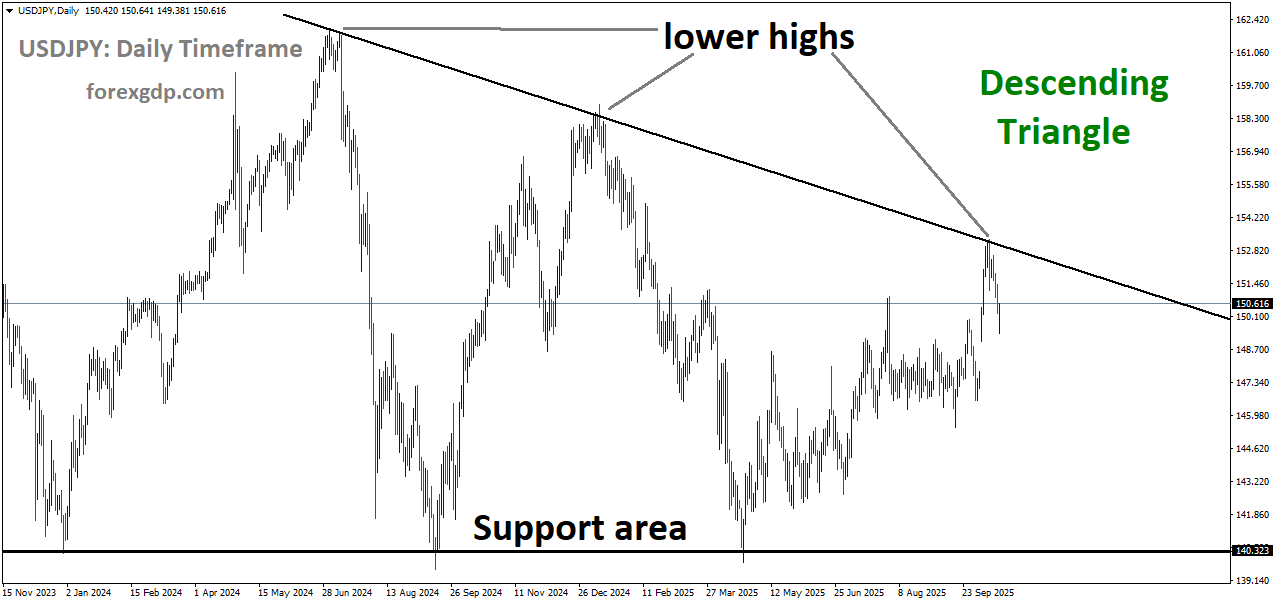
USDJPY is moving in a descending triangle pattern, and the market has reached the lower high area of the channel
As investors shifted back into riskier assets, the U.S. Dollar regained strength against most major currencies, including the Japanese Yen. Let’s explore what’s driving this movement, how political developments are shaping the market mood, and what might lie ahead for the Yen.
A Shift in Tone: Trump’s Comments Calm the Markets
Rhetoric Turns Softer on China
President Trump’s recent remarks have captured global attention. By calling the idea of maintaining 100% tariffs on all Chinese imports “unsustainable,” he took a significant step back from his earlier aggressive trade stance. This shift in tone has sparked renewed optimism that tensions between the U.S. and China may ease, or at least not escalate further.
Markets have reacted quickly. Investors who had previously rushed to safe-haven assets like the Yen began pulling back, moving instead into riskier assets such as stocks and commodities. This shift naturally led to the Yen weakening against the Dollar.
Expectations for Diplomatic Engagement
Adding to the optimism, Trump confirmed his plan to meet Chinese President Xi Jinping at the upcoming APEC Summit in South Korea. Traders view this as a potential turning point for improving trade relations between the two global economic giants. Any sign of cooperation or diplomatic progress between Washington and Beijing often boosts investor confidence, leading to higher demand for the Dollar and lower demand for the Yen.
Market Sentiment and Investor Behavior
From Fear to Confidence
When uncertainty looms — such as during trade wars or global instability — investors typically seek the safety of currencies like the Japanese Yen or Swiss Franc. However, when political tension shows signs of cooling, that fear-driven demand fades.
The latest developments in the U.S.-China relationship encouraged investors to take on more risk, leading to a selloff in the Yen. Simply put, when traders feel more confident, they move away from “safe” assets and seek opportunities with higher returns elsewhere.
U.S. Dollar Gains the Upper Hand
With improved market sentiment, the U.S. Dollar has regained traction across the board. Even though traders expect the Federal Reserve to continue cutting interest rates later this year, the Dollar remains supported by its safe-haven appeal and global reserve status.
Moreover, some Federal Reserve officials have signaled a cautious approach, emphasizing flexibility rather than pre-committed rate paths. This stance reassures investors that the Fed will act to balance growth and inflation risks, rather than push the economy too aggressively in either direction.
Japan’s Central Bank Maintains a Careful Approach
BoJ Focused on Data and Wage Trends
While global markets respond to U.S. policy shifts, Japan’s central bank — the Bank of Japan (BoJ) — continues to tread carefully. Governor Kazuo Ueda recently stated that the BoJ has “no preconceptions” about its next move. Instead, he emphasized the importance of waiting for more economic data before adjusting policy.
This patience reflects Japan’s complex economic environment. Inflation has remained above target for some time, yet policymakers are cautious about declaring victory. The BoJ wants to see steady wage growth and sustainable price momentum before taking any major policy steps.
Limited Expectations for Rate Changes
Market participants are not expecting any dramatic policy changes from the BoJ in the near term. Current market pricing suggests only a small chance of a rate hike at the upcoming policy meeting. The central bank’s cautious stance is likely to continue until Japan’s economy shows stronger signs of durable inflation and wage growth.
Japan’s Inflation Shows Mixed Signals
A recent Reuters poll indicated that Japan’s core inflation likely picked up in September, rising to 2.9% year-over-year from 2.7% in August. This acceleration suggests that price pressures remain steady, but still not at a level that would push the BoJ into a tighter policy stance.
The data paints a picture of gradual recovery rather than overheating. While inflation is above the BoJ’s official 2% target, the bank views sustainability as key — meaning inflation should remain consistent and supported by wage increases before it considers major tightening measures.
This cautious approach contrasts with the Federal Reserve’s more active stance, further widening the policy gap between Japan and the U.S., which often contributes to Yen weakness.
What This Means for the Yen Going Forward
Short-Term Outlook
In the near term, the Yen may remain under pressure if global risk sentiment continues to improve. Investors will be closely watching developments at the APEC Summit, where any signs of U.S.-China cooperation could further lift the Dollar and weigh on the Yen.

At the same time, the Federal Reserve’s policy decisions will play a major role. If the Fed continues to ease rates but maintains a balanced tone, it may limit the downside for the Dollar, keeping the Yen on the weaker side of the equation.
Long-Term Considerations
Looking ahead, the Yen’s direction will depend on several factors — including Japan’s domestic inflation trends, wage growth, and overall economic performance. If inflation becomes more stable and supported by stronger wages, the BoJ may eventually tighten its policy, potentially giving the Yen some relief.
However, as long as global markets remain optimistic and the U.S.-China relationship stays calm, the demand for safe-haven assets like the Yen is likely to stay muted.
Final Summary
The recent weakness of the Japanese Yen reflects a broader improvement in global investor confidence after President Trump’s softer comments on China’s trade policies. His remarks — particularly calling 100% tariffs “unsustainable” — signaled a more cooperative tone ahead of his meeting with President Xi at the APEC Summit.
This change in rhetoric has boosted risk appetite, leading investors to move away from safe assets such as the Yen and toward riskier investments. Meanwhile, the Bank of Japan continues its patient, data-driven approach, waiting for consistent inflation and wage growth before adjusting its stance.
In contrast, the Federal Reserve’s flexible outlook and ongoing rate cut expectations have helped the U.S. Dollar maintain strength. Together, these factors create an environment where the Yen remains under pressure, at least in the short term.
For now, the Yen’s path will be shaped by global political developments and domestic economic signals — and while short-term weakness may persist, its long-term story will depend on how Japan’s inflation and growth unfold in the months to come.
USDCHF Drops as Investors React to Escalating Trade Tensions and Fed Caution
The global financial market has entered another period of uncertainty, and the US Dollar (USD) is once again feeling the heat. With rising trade tensions between the United States and China, a prolonged government deadlock, and growing speculation about the Federal Reserve’s next move, investors have shifted their attention to safer assets like the Swiss Franc (CHF). Let’s take a deeper look at how all these factors are shaping the current economic mood and what they mean for traders and investors around the world.
Rising Trade Tensions Shake Investor Confidence
The ongoing standoff between the US and China has continued to rattle global markets. Trade relationships between the two largest economies have grown increasingly hostile, and it’s beginning to show in the financial sector. Each new announcement from Washington or Beijing has the power to swing currencies and shake up investor sentiment.
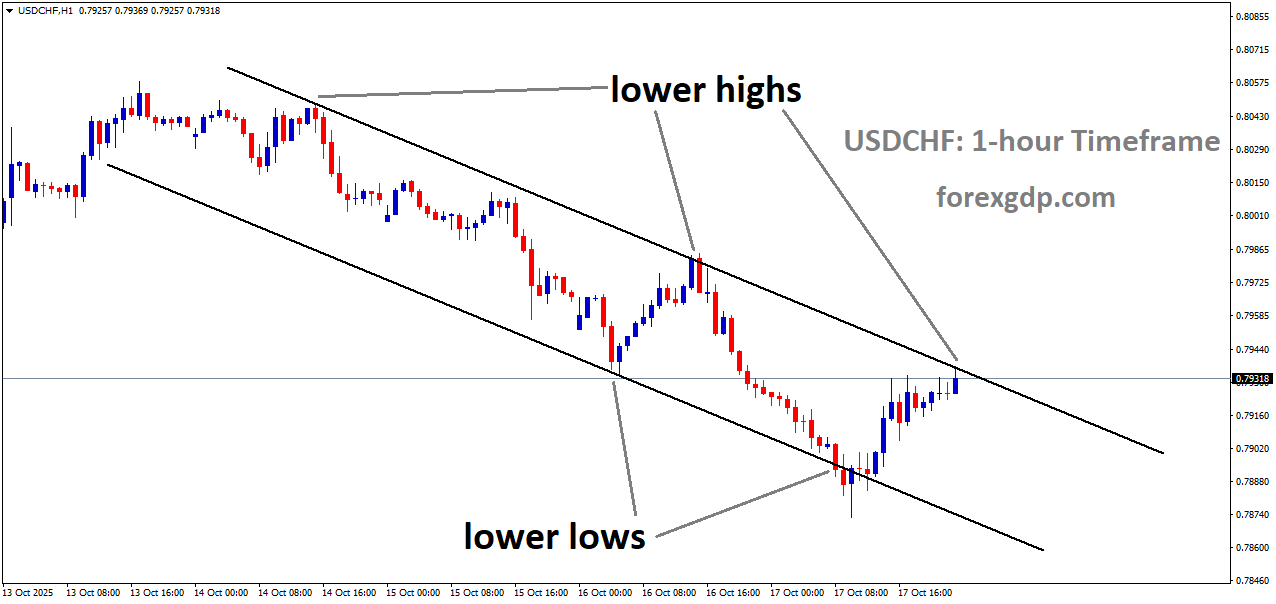
USDCHF is moving in a descending channel, and the market has reached the lower high area of the channel
US President Donald Trump’s recent comments about possibly raising tariffs on Chinese imports to 100% sent shockwaves through markets. China’s counteractions, including fresh export restrictions on key materials, have fueled concerns of an all-out trade war. These moves have left investors wondering how much further the situation could escalate, especially as both nations impose new trade barriers.
For traders, uncertainty is the real enemy. When governments clash and global trade slows, businesses face higher costs and reduced profits. This kind of environment tends to drive investors away from riskier assets like stocks and emerging market currencies—and toward safer ones such as gold, bonds, and the Swiss Franc.
The Federal Reserve and the Weakening Dollar
Another key factor weighing on the US Dollar is the growing expectation that the Federal Reserve may cut interest rates again soon. Investors closely follow signals from the Fed, and the recent reports have not been encouraging. The Beige Book, a periodic summary of US economic conditions, showed worrying signs of weaker consumer spending and a slowing job market.
These developments have led many traders to believe that the Fed might accelerate its rate-cutting path to support the economy. According to data from market analysts, most now expect at least two more rate cuts before the end of the year. Lower interest rates typically make a currency less attractive to foreign investors because they reduce the potential returns from holding assets denominated in that currency. As a result, the US Dollar has been losing ground against most major currencies.
The US government shutdown has only added to the pressure. The ongoing political deadlock in Congress has left parts of the federal government without funding, raising fears of a deeper economic slowdown. Investors are concerned that continued inaction could affect business confidence and consumer sentiment, further weakening the economic outlook.
The Swiss Franc Gains from Safe-Haven Demand
While the US Dollar struggles, the Swiss Franc (CHF) has quietly strengthened. Switzerland has long been viewed as one of the safest places to park money during uncertain times, and this reputation is now paying off. Whenever global tensions rise, the CHF tends to appreciate as investors flock to stability.
Even though Switzerland’s domestic data hasn’t been particularly strong—producer prices have fallen for several months, and GDP growth forecasts have been trimmed—international demand for the currency remains high. The State Secretariat for Economic Affairs (SECO) recently projected modest economic growth for 2025, but that hasn’t discouraged investors seeking safety from global turmoil.
The irony is clear: while Switzerland’s economy is slowing, its currency is benefiting precisely because of global instability. When markets are calm, traders look for growth; when fear dominates, they look for safety. The Swiss Franc stands out as one of the most trusted safe-haven assets in such moments.
Political Uncertainty Deepens in the US
The internal political situation in the United States is adding another layer of instability. With the government shutdown dragging on and multiple funding bills being rejected in the Senate, the uncertainty is spilling into the economy. Every additional day without a resolution increases the risk of delayed public services, unpaid workers, and lost productivity.
For investors, this sends a worrying message: the US government seems unable to address critical issues on time. Combined with the trade tensions and the slowing economy, this political dysfunction amplifies doubts about the US Dollar’s near-term strength.

However, there was a brief moment of relief after President Trump softened his tone regarding China. In a recent interview, he acknowledged that a 100% tariff would not be sustainable and emphasized the need for a fair trade deal. He also hinted at an upcoming meeting with Chinese President Xi Jinping, which raised hopes of renewed dialogue and eased market fears temporarily.
Still, optimism remains fragile. Market participants know that even a small misstep in these discussions could reignite tensions, leading to further volatility in the foreign exchange market.
Global Markets at a Crossroads
The world economy is currently walking a fine line between stability and chaos. The mix of trade disputes, political gridlock, and shifting monetary policy expectations is shaping a challenging landscape for both investors and policymakers. For those who follow currency markets, the US Dollar’s weakness is not just a short-term reaction—it could signal a larger trend if these issues persist.
The Swiss Franc, on the other hand, continues to benefit from its reputation as a safe haven. But even Switzerland is not immune to the global slowdown. If trade tensions escalate further or the US economy continues to weaken, smaller economies could also feel the ripple effects.
At this stage, many traders are choosing to stay cautious. They’re focusing more on long-term stability rather than short-term profit. The broader sentiment is that it’s better to preserve capital than chase risky opportunities in such a volatile environment.
Final Summary
The current market atmosphere is dominated by fear, uncertainty, and cautious optimism. The US Dollar remains under heavy pressure as investors react to escalating trade tensions, political paralysis, and expectations of more aggressive Federal Reserve rate cuts. Meanwhile, the Swiss Franc has emerged as a clear winner, gaining from its long-standing reputation as a safe-haven currency, even as Switzerland’s own economy faces headwinds.
Looking ahead, everything depends on how quickly Washington and Beijing can find common ground and how effectively the US government resolves its internal gridlock. A renewed sense of cooperation could restore confidence in the markets, but continued confrontation would likely keep the US Dollar on the defensive and strengthen the appeal of safe-haven assets like the Swiss Franc.
For now, investors are watching closely, weighing every headline and policy statement. In this delicate balance between politics, policy, and perception, even small developments could shape the financial landscape for months to come.
USDCAD Slips as Greenback Struggles and Crude Oil Loses Steam
The USD/CAD currency pair has been moving sideways for several days, showing signs of uncertainty in the market. Despite small ups and downs, the pair continues to trade within a limited range, unable to find a clear direction. This situation reflects how both currencies are being pulled by different forces — with the U.S. Dollar facing pressure from domestic and international challenges, while the Canadian Dollar struggles under the weight of declining oil prices.
In recent weeks, political tensions in Washington and growing trade friction between the United States and China have dampened investor confidence in the greenback. Meanwhile, the Canadian Dollar, often supported by rising oil prices, has lost momentum as crude oil hit its lowest level in months. The result is a cautious and directionless market, where traders are waiting for clarity before taking major positions.
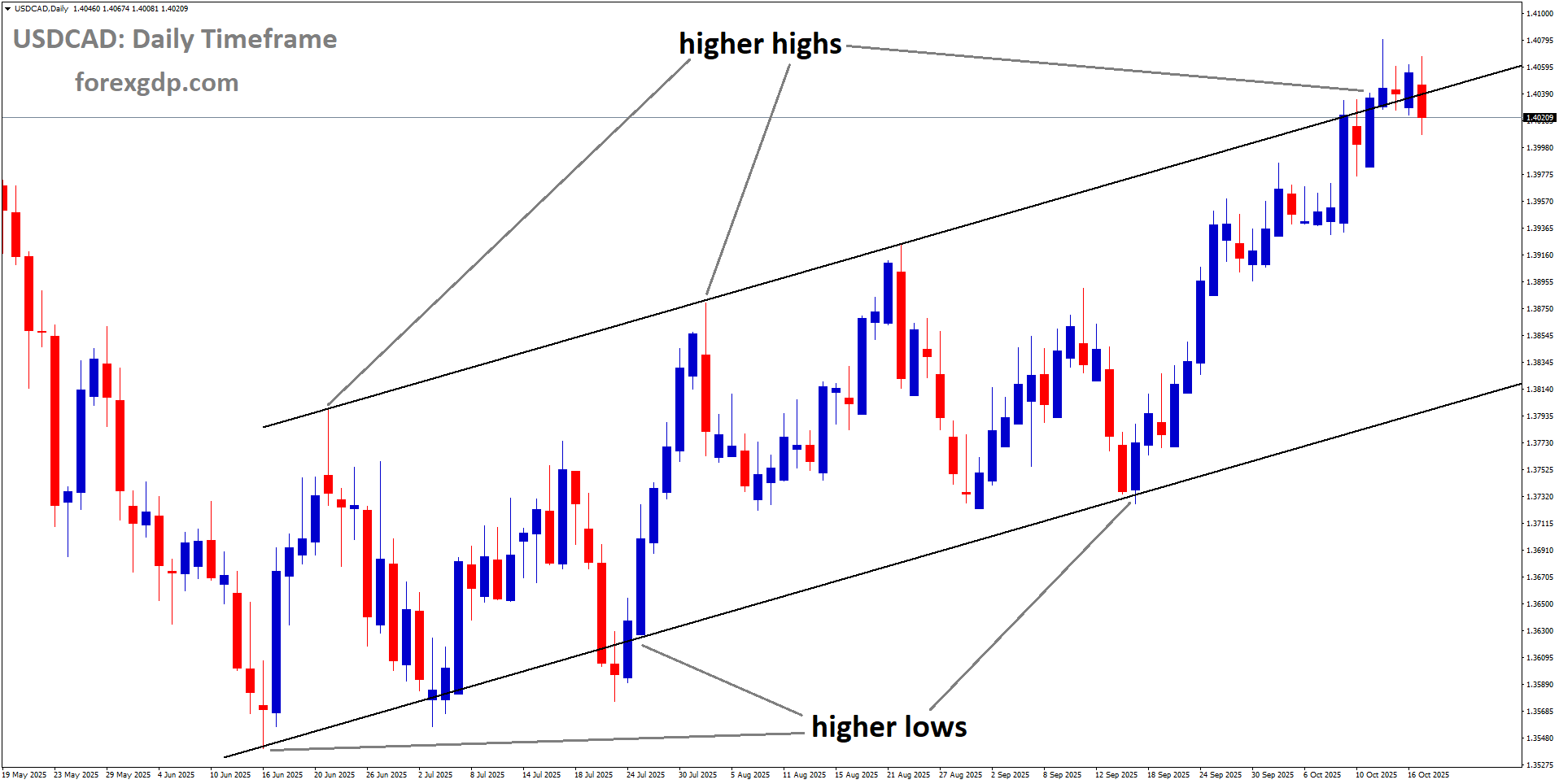
USDCAD is moving in an Ascending channel, and the market has reached a higher high area of the channel
Why the U.S. Dollar Is Losing Strength
The Budget Standoff in Washington
The biggest story weighing on the U.S. Dollar right now is the ongoing government shutdown. Lawmakers in Washington have been unable to agree on a new budget, leading to a complete deadlock. This has left thousands of government employees uncertain about their jobs and pay, with reports suggesting that more than 10,000 federal workers could be temporarily furloughed if the situation continues.
This prolonged shutdown is not just a political drama — it also has real economic consequences. When government departments close or slow down, it affects everything from public services to business contracts and consumer confidence. Investors often react to this kind of instability by avoiding the U.S. Dollar, viewing it as a risky bet in uncertain times.
The Federal Reserve’s Dovish Outlook
Adding to the Dollar’s troubles is the shift in tone from the Federal Reserve (Fed). Several Fed officials have hinted at the possibility of another interest rate cut in the upcoming policy meeting. Fed Governor Christopher Waller has openly supported reducing rates, while economist Stephen Miran has gone even further, suggesting that a more aggressive approach might be needed to support economic growth.
Lower interest rates generally make a currency less attractive to investors since they reduce the potential returns on investments denominated in that currency. As a result, the growing expectation of a rate cut has made traders cautious about holding onto U.S. Dollars, contributing to its recent weakness.
Trade War Tensions Return to the Spotlight
The U.S.-China Relationship Takes Another Hit
Just when markets were hoping for calm, the U.S.-China trade conflict flared up again. Tensions between the two largest economies in the world have resurfaced after a series of harsh statements from political leaders. U.S. President Donald Trump remarked that the two nations were already “engaged in a trade war,” signaling a harder stance on negotiations.

To make matters worse, U.S. Treasury Secretary Scott Bessent used inflammatory language when referring to China’s lead negotiator, calling him an “unhinged wolf warrior.” The term “wolf warrior” is commonly used to describe Chinese diplomats known for their aggressive tone, and using it in this context further aggravated the situation.
These developments have spooked global investors, pushing them toward safer assets like gold and the Japanese yen. Unfortunately for the U.S. Dollar, it hasn’t benefited much from this flight to safety — partly because of the domestic political uncertainty surrounding the government shutdown.
Canada’s Balancing Act: Strong Jobs but Weak Oil Prices
Oil Prices Drag Down the Loonie
For the Canadian Dollar, also known as the Loonie, the main challenge has been the recent decline in oil prices. Since Canada is one of the world’s largest oil exporters and supplies a major portion of U.S. oil imports, its currency tends to move in tandem with the oil market. When oil prices drop, Canada’s export revenues decline, which can weaken the Loonie’s overall performance.
This has made it difficult for the Canadian Dollar to capitalize on the U.S. Dollar’s weakness. Even though the greenback has been under pressure, the falling value of oil has kept USD/CAD from breaking lower.
A Positive Twist: Canada’s Strong Employment Report
On the brighter side, Canada’s recent employment data offered some good news. The country recorded a surprise increase in jobs during September, defying expectations of a slowdown. This stronger labor market could give the Bank of Canada (BoC) more confidence to hold off on additional interest rate cuts in the coming months.
A healthy job market often signals economic stability, which can attract foreign investment and support the currency. While this has provided some cushion for the Canadian Dollar, it hasn’t been enough to trigger a major rally due to the negative drag from oil.
A Market Waiting for Direction
At the moment, the USD/CAD pair appears to be caught in a tug-of-war between negative and positive influences. On one side, the U.S. Dollar is struggling due to political deadlock and dovish monetary signals. On the other side, the Canadian Dollar is held back by weak oil prices, even as its economy shows signs of resilience.
For traders and investors, this means uncertainty. Many are staying on the sidelines, waiting for clearer signals from upcoming economic data releases, central bank decisions, and geopolitical developments. If the U.S. manages to resolve its budget crisis and restore investor confidence, the Dollar might regain strength. Conversely, if oil prices recover, the Loonie could see a renewed push upward.
In short, both currencies have their own challenges — and neither seems strong enough to dominate the other right now. That’s why the pair has been moving sideways, with no clear winner emerging.
Final Summary
The USD/CAD pair’s recent performance tells the story of a market stuck in balance, shaped by political tension, economic uncertainty, and fluctuating commodity prices. The U.S. Dollar is under pressure due to the government shutdown, trade tensions, and the possibility of lower interest rates, while the Canadian Dollar struggles with falling oil prices despite positive domestic data.
In such an environment, traders are likely to remain cautious, avoiding major bets until a more decisive trend forms. The near future of USD/CAD will depend heavily on how quickly the U.S. resolves its political gridlock, how the Fed handles its rate policy, and whether oil prices can stabilize enough to give the Canadian economy a boost.
Until then, the pair’s sideways consolidation may continue, reflecting a world where both economies are battling their own internal and external pressures — and investors are watching closely to see who blinks first.
EURJPY under pressure as BoJ eyes rate hike and ECB stays on hold
The Euro has been steadily losing ground against the Japanese Yen, recently slipping to its lowest point in two weeks. While market watchers often focus on price movements, the real story lies beneath the surface—central bank policies, political developments, and broader economic trends are shaping this currency pair’s direction. Let’s dive into what’s fueling the Yen’s rise and why the Euro seems to be struggling.
The Bank of Japan’s Firm Stance – A New Chapter in Monetary Policy
For years, Japan was known for its ultra-loose monetary policies, with near-zero or even negative interest rates. However, things are changing quickly. The Bank of Japan (BoJ) has been sending strong signals that it’s ready to tighten its policy as the economy shows signs of steady recovery.
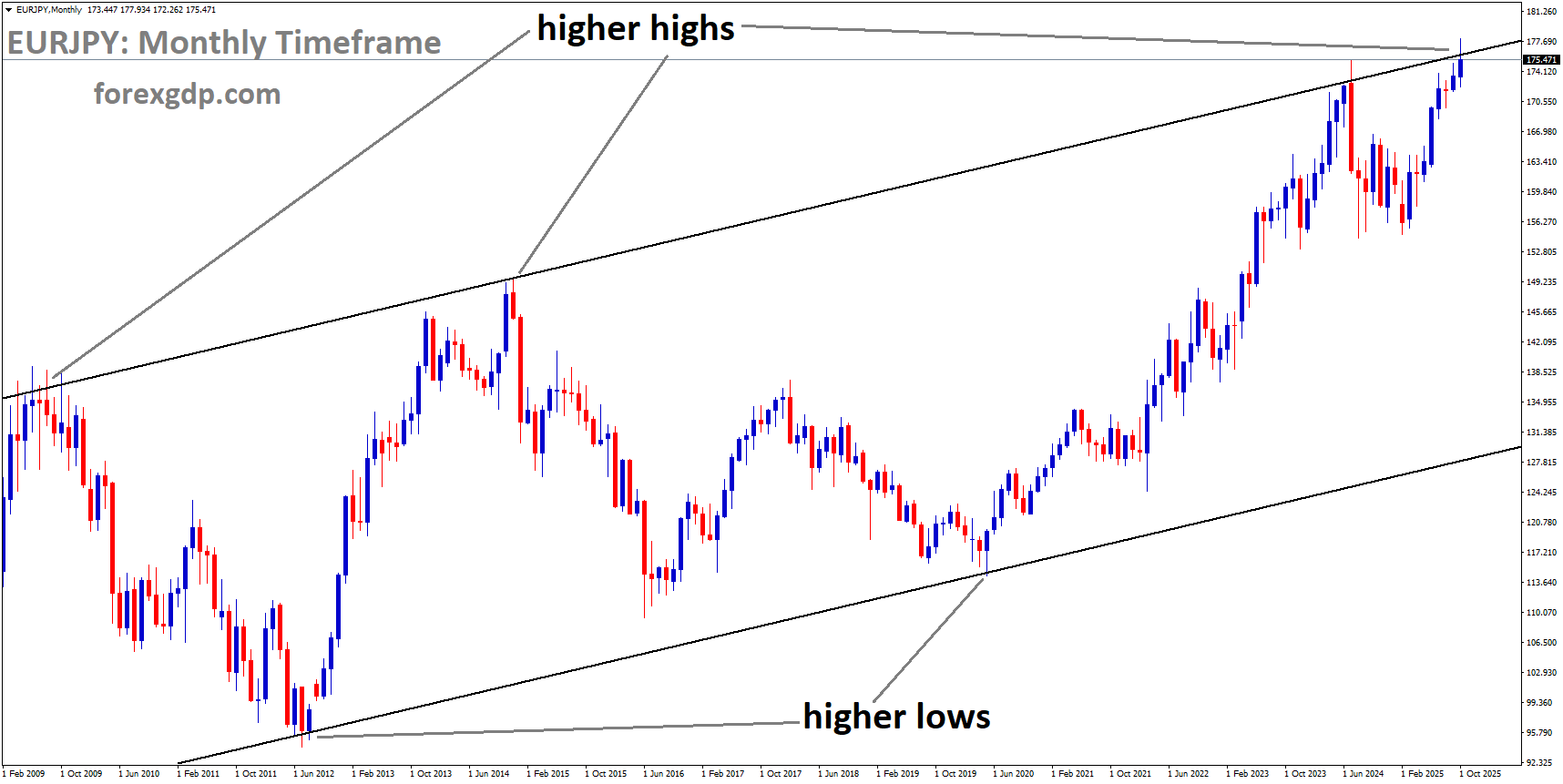
EURJPY is moving in an Ascending channel, and the market has reached a higher high area of the channel
A Shift Toward Tightening
BoJ Deputy Governor Shinichi Uchida recently commented that Japan’s economy is “recovering moderately,” suggesting that the central bank could raise rates if growth continues as expected. His statement aligns with remarks from Governor Kazuo Ueda, who mentioned that the BoJ will “adjust the degree of monetary easing” once they gain more confidence in the economic outlook.
This is a major shift for Japan. For decades, low inflation and sluggish growth kept the BoJ cautious. Now, with wage growth improving and consumer prices rising gradually, the bank is hinting at a more proactive approach. Such talk naturally strengthens the Yen because investors expect higher returns from assets denominated in JPY in the future.
Market Expectations and Reactions
When central banks talk about tightening, markets react swiftly. Traders often buy the currency that’s expected to benefit from higher interest rates. In this case, that’s the Yen. As investors anticipate a BoJ rate hike before the end of the year, the Yen becomes more attractive, especially against currencies like the Euro, where monetary easing might continue longer.
Political Uncertainty in Japan – A Double-Edged Sword
While the Bank of Japan’s stance supports the Yen, Japan’s political landscape adds another layer of complexity. Political shifts can sometimes create short-term volatility, but they can also stabilize markets in unexpected ways.
Changing Alliances and Leadership
Recent political movements surrounding the Liberal Democratic Party (LDP) have drawn attention. The emergence of Sanae Takaichi as a new party leader could trigger changes in government alliances. Analysts suggest this reshuffling might lead to a period of uncertainty, slowing down bold reforms but possibly promoting steadier currency behavior.
Interestingly, some experts believe that this political environment might actually reduce wild currency swings. A cautious government focused on maintaining balance can bring a sense of predictability, something global investors always appreciate.
Upcoming Parliamentary Developments
Observers are also keeping an eye on the upcoming parliamentary coalition discussions. The October 21 election is expected to influence Japan’s fiscal and monetary path. Depending on how alliances form, the government’s economic priorities—like spending programs or tax reforms—could either reinforce or counteract the BoJ’s tightening tone.
In short, politics in Japan is becoming as influential as central bank decisions. The Yen’s strength isn’t just about monetary policy; it’s also about how stable Japan looks to investors globally.
The Eurozone’s Slow Recovery – Inflation Still a Concern
Across the sea, the Eurozone faces its own set of challenges. Economic data continues to show uneven recovery, and inflation—though not as high as before—remains sticky.
Inflation Edges Higher
Recent data revealed that the Eurozone’s Harmonized Index of Consumer Prices (HICP) rose by 2.2% year-on-year in September. Meanwhile, core inflation, which excludes volatile food and energy prices, climbed to 2.4%, marking its highest level since April. These figures suggest that price pressures haven’t completely faded, making policymakers cautious about further rate cuts.
ECB’s Wait-and-See Approach
European Central Bank (ECB) officials have hinted that the current interest rate level might stay in place for an extended period. While many expected a faster shift toward easing, the stubborn nature of inflation has forced the ECB to hold off. Policymakers are aware that cutting rates too early could reignite inflation, but keeping them high for too long might hurt growth.
This careful balancing act leaves the Euro vulnerable. Unlike Japan, where tightening seems imminent, Europe’s monetary stance feels uncertain. Investors see a growing gap between the BoJ’s direction and the ECB’s cautious tone, leading to a weaker Euro against the Yen.
Political Tensions and Market Confidence
France recently offered a brief sigh of relief after Prime Minister Sébastien Lecornu survived two no-confidence votes. This outcome temporarily eased fears about political instability in one of the Eurozone’s major economies. However, the broader European political landscape remains fragile, with ongoing debates about fiscal discipline and economic reforms.
Political calm in France might be short-lived, and any new disruptions could weigh further on the Euro. Markets crave stability, and even a hint of political unrest can push investors toward safer currencies like the Yen.
Why the Euro Is Losing and the Yen Is Winning
When you put it all together, the contrast between Japan and Europe becomes clear. Japan is stepping into a phase of controlled tightening and cautious optimism, while the Eurozone is stuck in a period of hesitation and uncertainty.
The BoJ’s willingness to reduce monetary support shows confidence in Japan’s recovery. In contrast, the ECB’s approach signals worry about economic fragility. Investors, always looking for clarity and direction, are naturally gravitating toward the Yen.
Investor Sentiment and Currency Flows
The financial market’s behavior often reflects psychology as much as economics. When investors sense that one central bank is moving decisively while another is hesitating, they act accordingly. The Yen’s recent strength is a perfect example of that.
As capital flows toward Japan, the Euro faces additional downward pressure. This movement might continue if Japan confirms a policy tightening while Europe remains in pause mode. Essentially, the Yen’s rise isn’t just about one country’s growth—it’s about relative confidence between two major economies.
Final Summary
The ongoing decline of the Euro against the Yen tells a deeper story about shifting global dynamics. Japan, once associated with endless monetary easing, is now signaling readiness to tighten its policies. Its economy is stabilizing, and political transitions might bring more balance than chaos. On the other hand, Europe is still trying to find its footing, with inflation worries and political uncertainty keeping the ECB cautious.
As long as this contrast continues, the Yen is likely to remain in a stronger position. Investors are drawn to clear direction, and Japan seems to be offering just that. For now, the Euro’s recovery will depend on how quickly the Eurozone can regain economic confidence and stability—something that still seems some distance away.
EURGBP rises as France restores calm while UK faces budget pressure
Over the past few weeks, France has been at the center of political tension. However, the situation finally took a positive turn when Prime Minister Sébastien Lecornu successfully survived two no-confidence votes in parliament. This outcome brought much-needed calm to French politics, reassuring investors and strengthening the Euro. After weeks of uncertainty, the French government’s stability helped restore confidence in the nation’s economic direction, and the Euro benefited from that relief.
When political uncertainty fades, markets often react positively. In this case, France’s ability to maintain its leadership signaled that the country could focus again on economic growth and European cooperation. This political stability not only boosted investor trust but also gave the Euro a gentle lift against other major currencies, especially the British Pound.
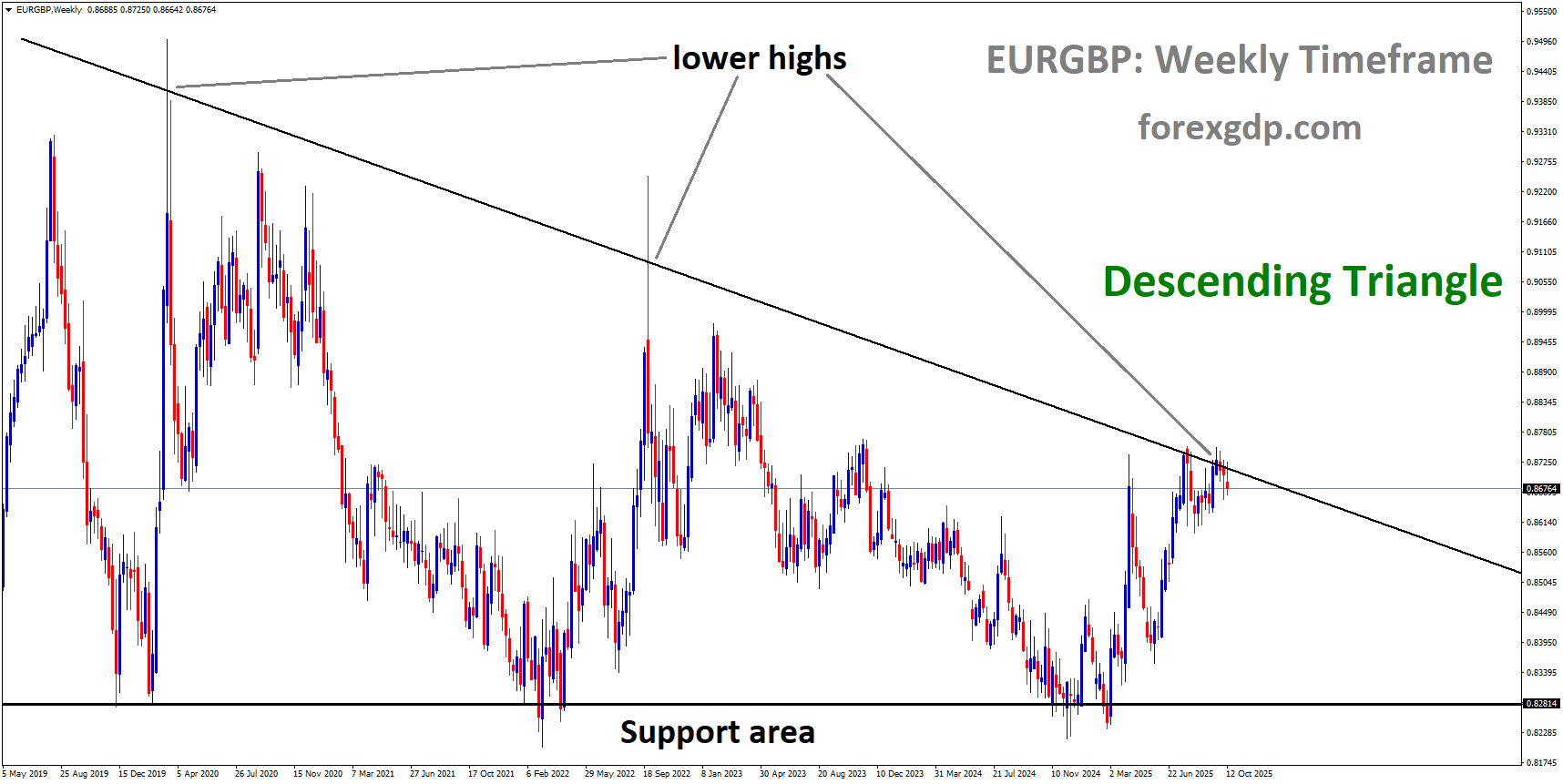
EURGBP is moving in a descending triangle pattern, and the market has reached the lower high area of the pattern
For traders and market watchers, stability in a key Eurozone economy like France sends a clear message: Europe’s financial foundation remains solid. As long as the French government continues to show unity and control, the Euro is likely to stay supported.
UK’s Modest Growth Meets Fiscal Reality
Across the Channel, the United Kingdom showed a glimpse of progress — but it came with strings attached. According to recent data from the Office for National Statistics (ONS), the UK economy grew by a modest 0.1% in August, recovering slightly after a small contraction the previous month. Industrial production also ticked up, signaling that some manufacturing sectors are bouncing back.
However, the optimism was short-lived. Chancellor Rachel Reeves confirmed that the upcoming Autumn Budget will include new tax increases designed to stabilize the country’s finances. While this move aims to strengthen long-term fiscal health, it could also slow down domestic spending and weaken short-term growth.
For businesses and households, higher taxes often mean tighter budgets. Consumers may hold back on spending, and companies could delay investments, both of which could limit economic momentum. Despite small signs of recovery, the UK still faces challenges balancing growth with fiscal responsibility. The government’s focus on repairing its finances shows a cautious approach, but it might come at the cost of slowing down the recovery process.
In simple terms, while the UK economy isn’t shrinking, it’s also not booming. The modest progress is overshadowed by the looming impact of new taxes and the ongoing pressure of maintaining stability in a post-Brexit world.
Eurozone Confidence: Inflation Stable, Policy Near Balance
Meanwhile, in the Eurozone, inflation remains under control — but not yet at the ideal level. The latest data shows that consumer prices rose by 2.2% compared to last year, while core inflation, which excludes volatile items like food and energy, stayed around 2.4%. This suggests that price pressures have eased slightly but are still above the European Central Bank’s (ECB) target.
Several ECB officials have indicated that interest rates are now close to their neutral point, meaning they’re neither stimulating nor restricting the economy too much. In other words, the central bank may not have much room left for rate cuts without risking inflation to rise again. For now, maintaining a steady policy seems to be the preferred approach.
This balanced stance reflects the ECB’s confidence that inflation is gradually cooling down while growth remains steady. Investors tend to favor currencies backed by stable monetary policy, and that’s another reason the Euro continues to hold its ground against the Pound.
The Eurozone’s ability to keep inflation contained while avoiding a major slowdown is a sign of economic resilience. Even with global uncertainty, Europe’s steady hand in monetary policy offers a sense of reliability that traders find attractive.
EUR vs GBP: The Ongoing Tug of Confidence
The Euro and the British Pound have always had a close and competitive relationship. Both represent strong economies, but right now, market sentiment leans toward the Euro. The combination of French political calm and Eurozone stability makes it a more appealing choice compared to the UK’s cautious fiscal outlook.

While the British Pound finds some support from the country’s modest growth, it remains weighed down by concerns about higher taxes and weaker consumer confidence. On the other hand, the Euro enjoys a slight advantage from improved investor trust and fewer political disruptions.
In global currency markets, perception matters as much as performance. The sense that Europe is regaining stability while the UK faces tightening fiscal measures gives the Euro a stronger position in the short term. Investors looking for a safer and steadier currency may prefer the Euro for now.
Looking Ahead: What Could Shape the Next Moves
The coming weeks will be crucial in determining how both currencies perform. For the Euro, continued political calm in France and stable inflation across the Eurozone will likely keep it supported. Any new signs of unity or progress in European economies could strengthen its position further.
For the British Pound, much depends on how the new fiscal measures are received. If higher taxes succeed in restoring confidence without damaging growth, the Pound could recover some ground. However, if consumer demand weakens too much, it might struggle to maintain momentum.
Both currencies also face global factors like energy prices, trade shifts, and central bank actions from other major economies. These external influences could either magnify or cushion the effects of domestic policies.
In short, the Euro seems to have the upper hand for now, but the balance could shift again depending on how events unfold in both regions.
Final Summary
The Euro has gained strength after France restored political calm, with Prime Minister Sébastien Lecornu successfully overcoming two no-confidence votes. This stability reassured investors and helped the Euro hold firm. In contrast, the British Pound is facing mixed signals — slight economic growth paired with concerns over upcoming tax hikes and fiscal tightening.
While both regions show resilience, Europe’s steadier outlook currently makes the Euro more appealing in global markets. As France moves past political turbulence and the Eurozone keeps inflation in check, the shared currency stands on stronger footing. The UK, meanwhile, continues to navigate a delicate balance between supporting growth and restoring financial discipline.
In the end, it’s a story of two economies moving cautiously forward — one buoyed by renewed confidence, and the other burdened by fiscal challenges. For now, the Euro seems to be winning the confidence battle.
AUD/USD Stays Firm as Trump’s Gentle Approach Toward China Eases Market Tensions, DXY Edges Up
The foreign exchange market saw a wave of optimism as the Australian Dollar (AUD) held strong against the US Dollar (USD). The positive momentum came after former US President Donald Trump made comments signaling a softer approach toward China, easing the tension that had been weighing on global risk sentiment. Traders and investors responded with renewed confidence in riskier assets, especially those closely tied to China’s economy—like the Australian Dollar.
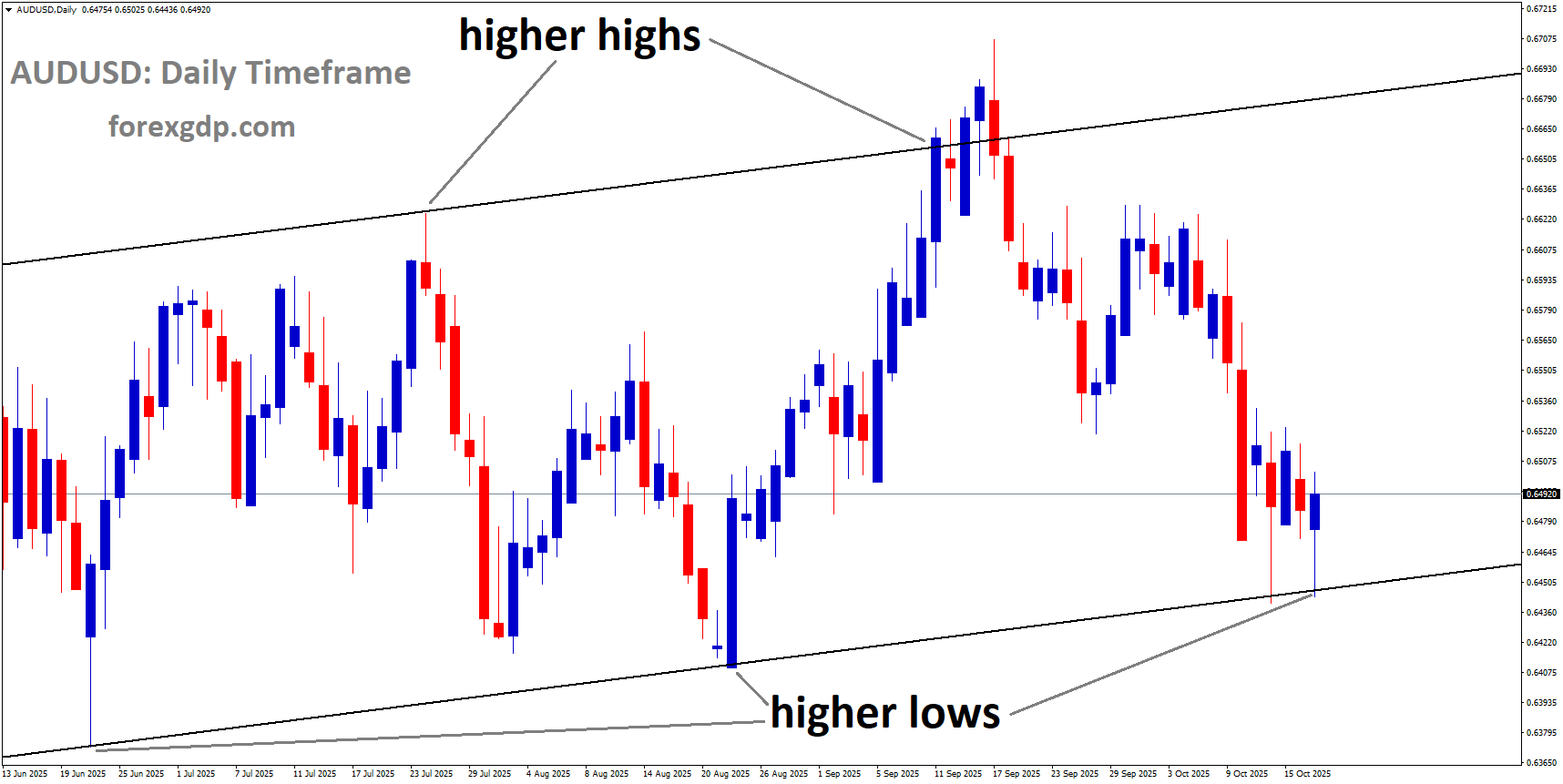
AUDUSD is moving in an Ascending channel, and the market has reached the higher low area of the channel
A Shift in Tone from Washington Sparks Optimism
Markets have always been sensitive to political statements, especially when they involve trade relations between the world’s two largest economies. Recently, Trump remarked that his proposed 100% tariffs on Chinese imports were “not sustainable.” This statement marked a significant change from his earlier hardline trade stance.
By acknowledging that such tariffs might hurt both economies, Trump hinted at the possibility of smoother trade relations ahead. This comment came with another major announcement—plans to meet Chinese President Xi Jinping at the upcoming APEC Summit in South Korea.
For global investors, these developments were enough to ignite optimism. The potential for dialogue between the two leaders raised hopes for improved economic cooperation and a reduction in trade tensions that had previously slowed global growth.
The Australian Dollar, which often reflects global risk appetite due to Australia’s strong trade links with China, reacted immediately. Traders saw the softer tone as a sign that the trade environment might stabilize, leading to a stronger outlook for Australia’s exports and, in turn, its currency.
Why the Australian Dollar Benefits from China’s Stability
Australia’s Close Economic Relationship with China
Australia’s economy is deeply connected to China’s growth. China is Australia’s largest trading partner, importing vast quantities of iron ore, coal, and agricultural goods. So, when relations between the US and China ease, Australia indirectly benefits through trade stability.
Any sign of improved relations between Washington and Beijing often translates into better prospects for Australia’s export-driven economy. When China’s economy grows, it demands more raw materials from Australia—driving demand for the AUD in global currency markets.
Investor Confidence and Risk Sentiment
Currency markets thrive on sentiment, and few things influence that sentiment as much as global politics. A more peaceful tone between two major economies can quickly shift investors’ attitudes from fear to optimism. When traders feel confident, they move away from “safe-haven” currencies like the US Dollar and toward “riskier” ones like the Australian Dollar.
This is exactly what happened after Trump’s recent remarks. Even though the US Dollar Index (DXY) made a mild recovery from its two-week low, it remained weaker for the week overall. Investors preferred to place their bets on currencies that would benefit from an improving global trade environment.
The Power of Perception in the Forex Market
One of the most fascinating aspects of the foreign exchange market is that it doesn’t just respond to facts—it responds to expectations. Even though no trade deal has yet been made, the mere possibility of cooperation between the US and China was enough to lift the AUD.
This psychological effect often drives short-term currency movements. Traders anticipate future developments and adjust their positions accordingly, sometimes days or weeks before any official changes happen.
The US Dollar Faces Challenges Amid Political Uncertainty
While the Australian Dollar gained ground, the US Dollar had a tougher week. The US Dollar Index, which measures the currency’s performance against a group of major currencies, managed only a modest rebound. Despite this, it remained on track for a weekly loss, reflecting the market’s broader preference for riskier assets.
Political Factors Weighing on the Greenback
Investors tend to move away from the US Dollar when political headlines suggest uncertainty or a change in trade policy direction. Trump’s softer comments, while positive for global markets, introduced a layer of ambiguity about the future of US trade policy.
Some traders saw this as a potential sign that the US might compromise in upcoming negotiations, which could reduce the Dollar’s strength relative to other major currencies. This shift in perception gave the Australian Dollar more room to appreciate.
Economic Data and Market Expectations
Beyond politics, market participants have also been closely watching US economic data. Any signs of slowing growth, weaker job creation, or cooling inflation could further pressure the Dollar. In contrast, Australia’s economy, supported by strong commodity exports and improving risk sentiment, stands to benefit.
Even though the AUD is sensitive to global uncertainty, the broader market environment currently favors currencies tied to growth and global trade recovery—both areas where the Australian economy plays a major role.
What This Means for Traders and Investors
For traders, this situation highlights how interconnected global politics and currency markets are. The AUD/USD pair has become a reflection of not only economic indicators but also geopolitical developments.
When influential leaders like Trump and Xi Jinping show openness to dialogue, markets tend to react positively. The Australian Dollar’s resilience amid these developments suggests that traders see value in risk-based currencies when tensions appear to ease.
For long-term investors, this moment reinforces the importance of understanding macroeconomic trends. It’s not just about interest rates or inflation data—political stability and diplomatic relations can shape market movements just as strongly.
Looking Ahead: What Could Shape AUD/USD Next
The market’s next focus will likely be the APEC Summit in South Korea, where Trump and Xi are expected to meet. This event could set the tone for future trade discussions and potentially determine whether the current optimism is short-lived or the start of a lasting trend.
If both leaders present a cooperative stance and hint at future trade collaboration, it could fuel further demand for the Australian Dollar. On the other hand, if talks fail to produce a clear path forward, traders might revert to caution, leading to a temporary pullback in risk appetite.
Either way, the AUD/USD pair will continue to serve as a barometer for global economic confidence. The pair’s movements will likely depend on how trade expectations evolve, as well as broader market factors like inflation, employment, and central bank policies.
Final Summary
The Australian Dollar’s strength against the US Dollar highlights how quickly global market sentiment can shift based on political developments. Trump’s softer stance toward China has reignited optimism, encouraging traders to re-enter riskier markets and boosting currencies like the AUD that are closely tied to global trade.
Australia’s strong trade relationship with China makes its currency particularly responsive to any sign of easing tensions between the two superpowers. Meanwhile, the US Dollar, though showing brief signs of recovery, remains weighed down by uncertainty and shifting political narratives.
As the world awaits the outcome of the APEC Summit, the market’s focus remains on how Trump and Xi will shape the future of trade relations. One thing is certain: as global cooperation improves, the Australian Dollar is likely to continue shining as a symbol of renewed optimism and economic confidence.
BTCUSD Dips Again as Market Turmoil and Economic Worries Hit Crypto Confidence
Bitcoin has once again grabbed headlines as its price took a noticeable dip this week, falling nearly 9%. While many traders are quick to react to the red candles on their screens, there’s much more to this decline than what meets the eye. The cryptocurrency market isn’t just reacting to numbers; it’s responding to a combination of global politics, economic uncertainty, and shifting investor sentiment. Let’s take a closer look at what’s really going on and what it might mean for Bitcoin’s next move.
The Global Jitters: US-China Tensions Stir Investor Fear
The financial world doesn’t operate in isolation, and Bitcoin is no exception. Over the past week, tensions between the United States and China have flared up once again, rattling investors across multiple sectors.
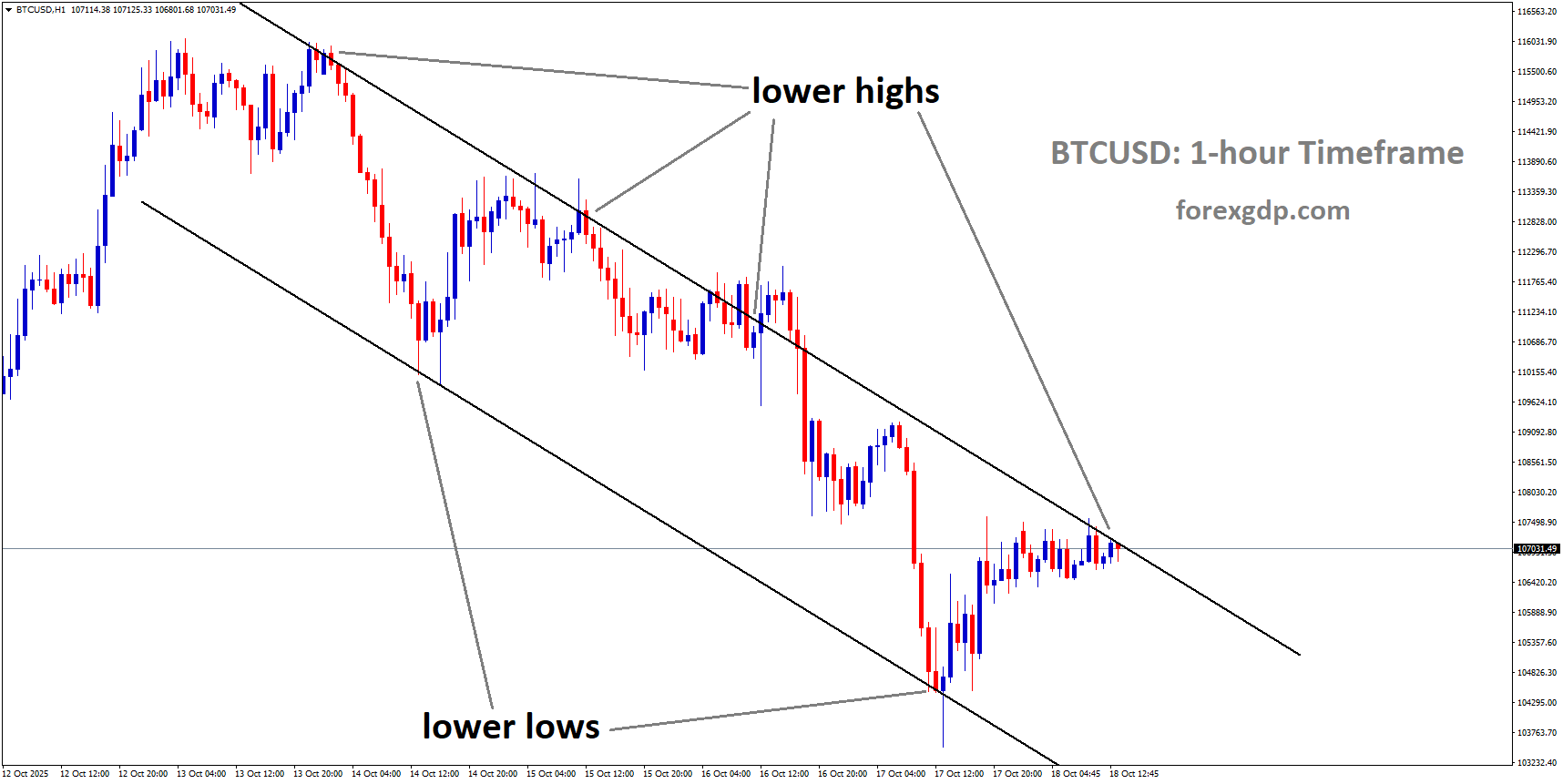
BTCUSD is moving in a downtrend channel, and the market has reached the lower high area of the channel
Trade Disputes Fuel Uncertainty
The latest round of trade disagreements has revived memories of the earlier trade wars that disrupted global markets. Reports suggest that both countries have been taking firm stances on trade restrictions. This escalation is shaking confidence in global growth and pushing investors toward safer assets — unfortunately leaving cryptocurrencies, which are often considered “riskier,” on the sidelines.
When two of the world’s largest economies lock horns, the ripple effect is enormous. Bitcoin, despite being decentralized, often moves in line with broader risk sentiment. As trade tensions deepen, many institutional investors prefer to pull back capital, waiting for the uncertainty to clear.
Broader Geopolitical Concerns Add Pressure

Beyond trade conflicts, geopolitical instability in other parts of the world continues to unsettle markets. Rising military actions and diplomatic disagreements have amplified the sense of global unease. When such tensions rise, investors typically favor traditional safe havens like gold or government bonds. As a result, assets like Bitcoin experience short-term volatility as risk appetite fades.
It’s important to remember that Bitcoin’s nature as “digital gold” doesn’t always shield it from global stress. During times of fear, liquidity matters most — and traders often sell assets, including crypto, to manage risk or raise cash.
The Ongoing US Government Shutdown and Its Ripple Effects
While global politics play a big part, domestic issues in the United States have been just as influential. The continuing US government shutdown has created significant uncertainty that extends beyond politics and directly affects the economy.
A Stalled Economy and Market Confusion
The government shutdown, now dragging into multiple weeks, has disrupted several economic activities and delayed key data reports. Without updated economic indicators, the Federal Reserve has less clarity on the state of the economy, making its next moves unpredictable. This lack of direction from the Fed leads to cautious sentiment across all financial markets — including cryptocurrencies.
The deadlock in Congress shows no sign of ending soon, which leaves traders in a difficult position. Without transparency in government spending or upcoming fiscal plans, investors tend to reduce exposure to volatile markets.
Crypto-Specific Impacts
Interestingly, the shutdown has also affected the cryptocurrency sector directly. Several pending exchange-traded fund (ETF) applications tied to Bitcoin and other cryptocurrencies have been delayed. These ETFs were expected to bring fresh institutional investment into the crypto space, potentially acting as a positive catalyst. But with the delays, enthusiasm has cooled, and the market’s momentum has temporarily slowed down.
This bureaucratic holdup highlights how closely the crypto world is now tied to traditional finance. Even though Bitcoin was designed to operate outside government influence, the growing integration with institutional finance means that political gridlock can still influence its short-term price direction.
Institutional Activity: Cooling Demand and Outflows
Another factor contributing to Bitcoin’s weekly decline is the slowdown in institutional participation. Recent reports show that Bitcoin spot exchange-traded funds (ETFs) have seen substantial outflows after enjoying a steady run of inflows earlier in the month.
When institutional investors pull money out, it signals caution among the biggest market players. These funds often manage billions of dollars and can influence short-term price action through large inflows or redemptions.
Why Institutions Are Hesitating
Several reasons might explain this cooling demand. First, global uncertainty has made investors more cautious across all risk assets. Second, many institutions are still waiting for clearer regulatory guidance before making major commitments to digital assets. Finally, after months of strong performance earlier in the year, some profit-taking is natural as investors rebalance their portfolios.
Despite this pause, many analysts believe institutional adoption is still in its early stages. While weekly outflows might suggest weakness, they can also signal a healthy reset — a breather before renewed growth.
A Silver Lining: Why This Correction Might Be Healthy
It’s easy to get caught up in the fear of a market drop, but seasoned traders know that corrections are a natural and often necessary part of any market cycle.
The Opportunity Beneath the Fear
Market corrections serve an important purpose: they flush out excessive leverage, shake weak hands, and allow for a healthier base of investors to build up again. According to several market observers, the current pullback could open a favorable accumulation window — especially for those who believe in Bitcoin’s long-term potential.
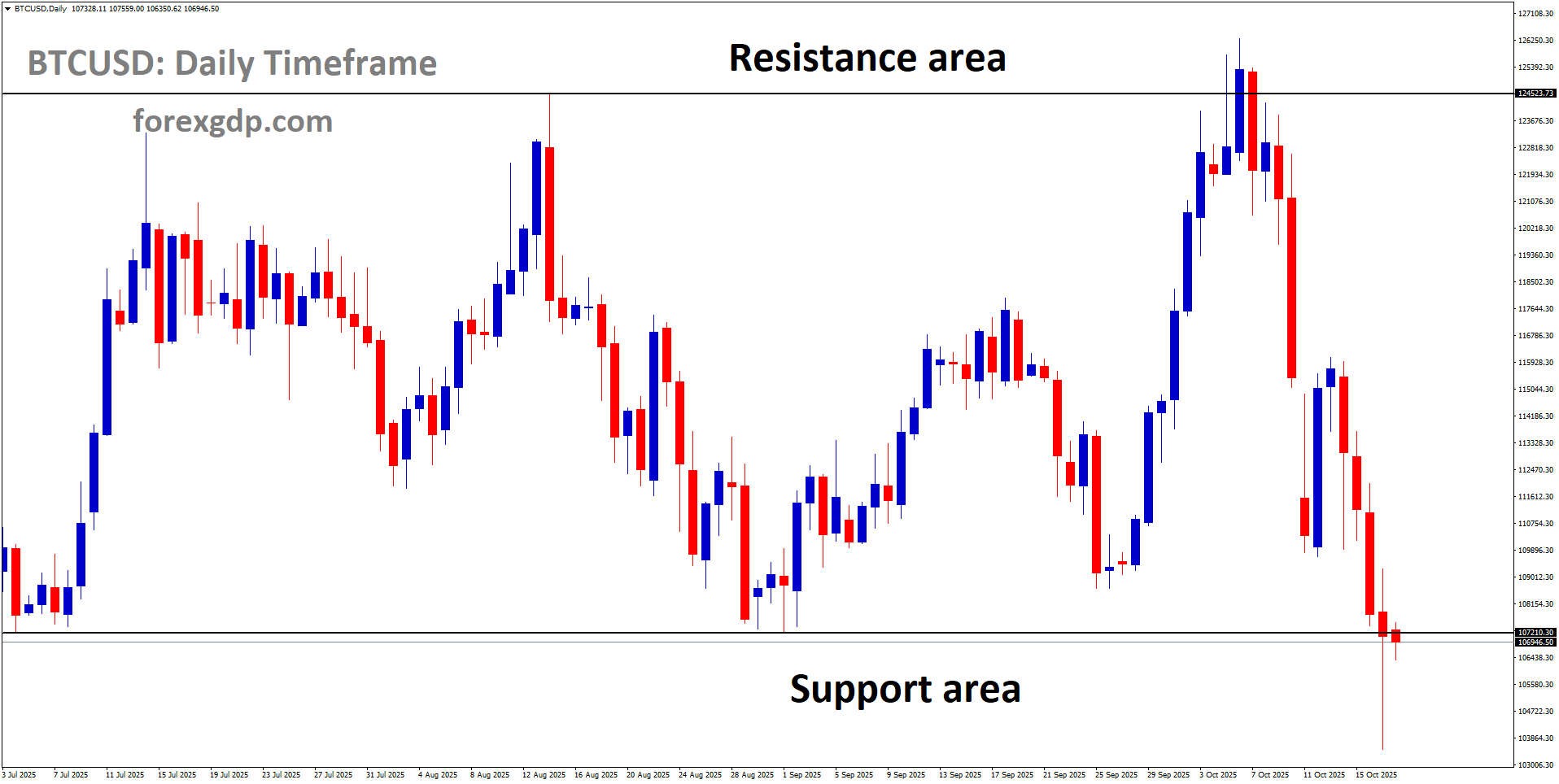
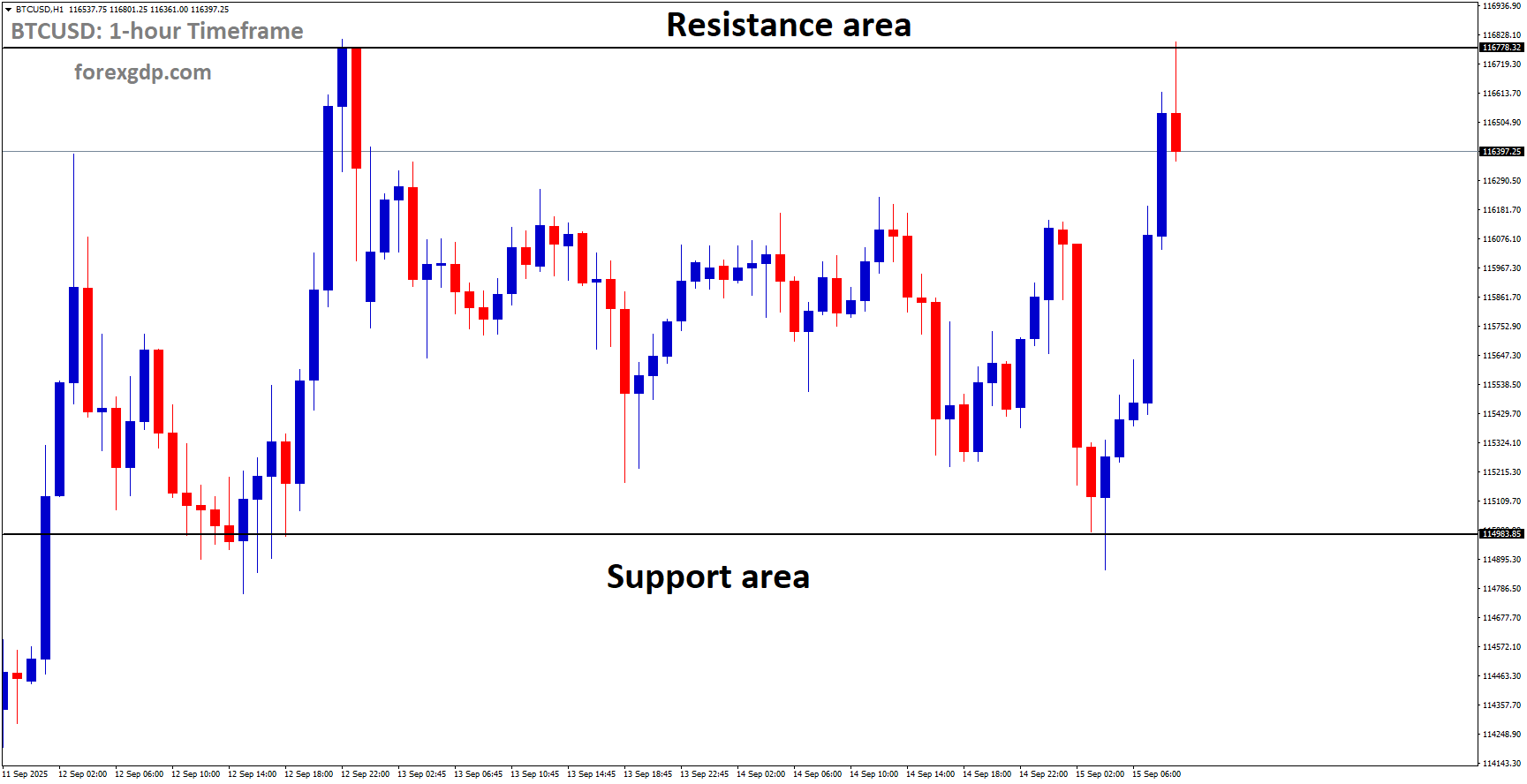
BTCUSD is moving in a box pattern, and the market has reached the support area of the pattern
When short-term traders exit and funding conditions stabilize, it often sets the stage for a more sustainable rally. The crypto market is notorious for quick shifts in sentiment, and once the dust settles, opportunities tend to emerge quietly when most people are fearful.
Normalization Could Spark Fresh Momentum
The reset happening across perpetual markets and derivatives could be the foundation for future growth. When funding rates and leverage return to normal levels, it usually means that the market has purged excess speculation. This more balanced environment can create the right conditions for a steady, organic recovery rather than a short-lived rally driven by hype.
Final Summary
Bitcoin’s recent price decline isn’t just about numbers on a chart — it reflects a complex mix of global and domestic challenges. From rising geopolitical tensions and trade disputes to the US government shutdown and weakening institutional flows, the world’s leading cryptocurrency is navigating a storm of external pressures.
However, within every market downturn lies opportunity. The recent correction could very well serve as a reset, allowing Bitcoin to build a stronger foundation for the next wave of growth. Investors who focus on the bigger picture — rather than the day-to-day volatility — might find that periods like these offer the best chances for long-term gains.
As markets stabilize and the noise fades, Bitcoin’s underlying story of scarcity, decentralization, and innovation remains intact. The short-term pullback might just be another chapter in the long-term journey of the world’s most recognized digital asset.
Don’t trade all the time, trade forex only at the confirmed trade setups
Get more confirmed trade signals at premium or supreme – Click here to get more signals, 2200%, 800% growth in Real Live USD trading account of our users – click here to see , or If you want to get FREE Trial signals, You can Join FREE Signals Now!